Lavender essential oil benefits: how to spot a real bottle (and what the calm evidence actually says)
Few oils carry as much promise, or as much confusion, as lavender. Search for lavender essential oil benefits and you will find endless lists: calm, sleep, clearer skin, soothed nerves. What almost none of them tell you is the part that actually protects your money and your skin. Lavender is one of the most adulterated oils on the shelf, and the calm it is famous for is more nuanced than the headlines suggest. This guide takes the honest route. We will teach you the plant, the chemistry, and the evidence, so you can read a label with confidence and never be fooled by a pretty purple bottle again.
We craft in Bali, and we will say plainly where lavender does and does not fit that story. What we care about here is that you leave knowing more than the person trying to sell you the cheapest bottle. If you like this way of learning, our essential oils uses chart and our longer list of essential oils and their uses are good companions to keep nearby.
What lavender essential oil actually is
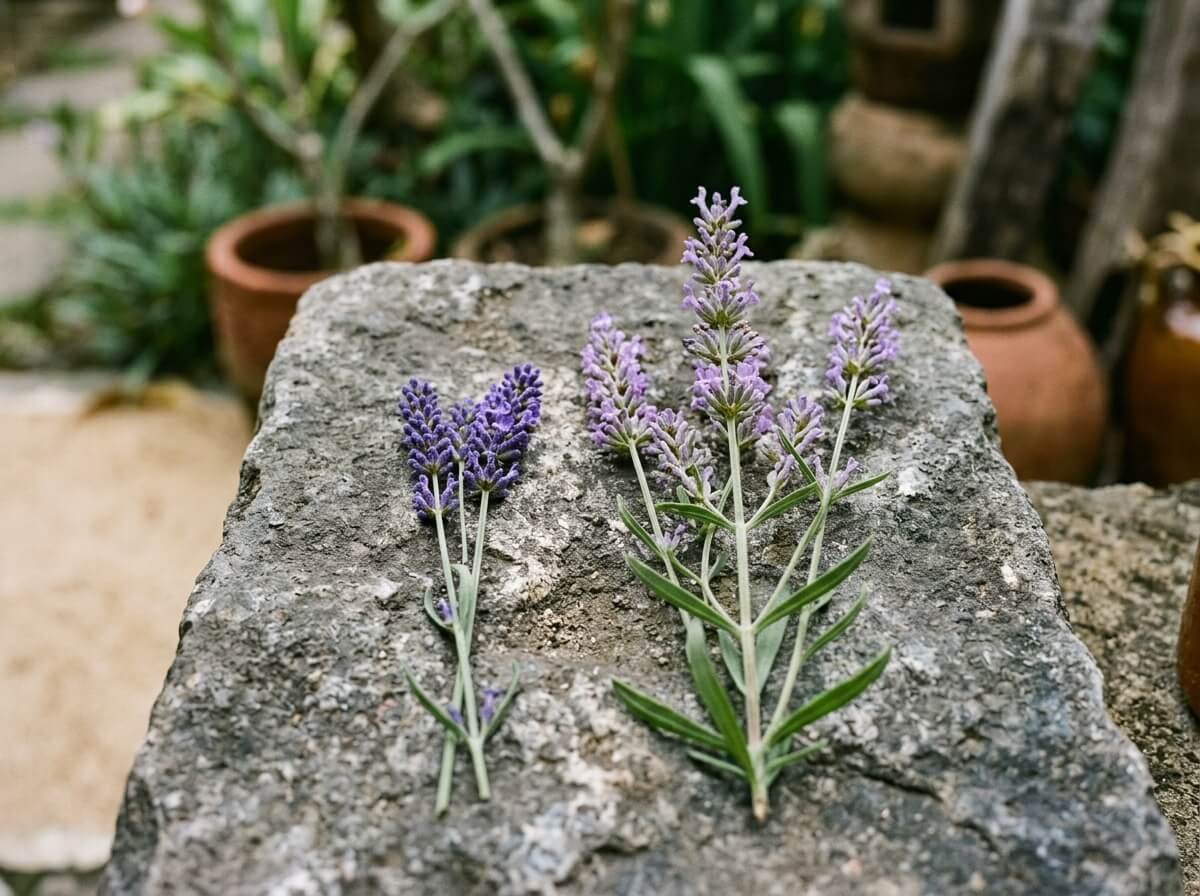
Lavender is not a single plant, and this is where most buyers get lost. The word on the label matters more than the picture. Three species dominate what gets sold as lavender oil, and they are genuinely different in scent, chemistry, and price.
True lavender (Lavandula angustifolia)
This is the classic, the one behind lavender’s gentle reputation. Grown at higher altitudes in temperate regions, it carries a soft, sweet, slightly fruity aroma and a chemistry weighted toward the calming molecules we will meet in a moment. It yields less oil per plant, so it costs more. When a study talks about lavender for relaxation, this is usually the species in the bottle.
Lavandin (Lavandula x intermedia)
Lavandin is a natural hybrid, bigger, hardier, and far more generous with oil. That makes it cheaper, which is exactly why it is so often passed off as true lavender. It smells sharper and more camphorous, and it contains more camphor and cineole. It is a perfectly honest oil when it is sold as what it is. The problem is that it frequently is not. A great deal of inexpensive “lavender” is lavandin wearing a nicer name.
Spike lavender (Lavandula latifolia)
Spike lavender is the most medicinal and camphorous of the three, higher again in cineole and camphor. It has its uses, but it is not the soft, sleepy lavender most people are reaching for. If calm is your goal, spike lavender will surprise you, and not gently.
You can often feel the difference before you read it. Draw a little air across true lavender and it lands soft, sweet, and rounded, with a floral warmth that settles the shoulders. Lavandin arrives brighter and more herbal, with a cool camphor edge that reads almost like a clean laundry product. Neither is wrong, but only one is the calm, sleepy lavender the studies and the folklore are talking about. Training your nose is part of becoming a confident buyer, and it costs nothing.
The takeaway is simple. The species printed in Latin on the label changes everything about what you are buying. No Latin name, no confidence. For a wider view of how single oils compare, our guide to cananga essential oil walks through the same species-first thinking for another commonly confused botanical.
The two molecules behind lavender essential oil benefits
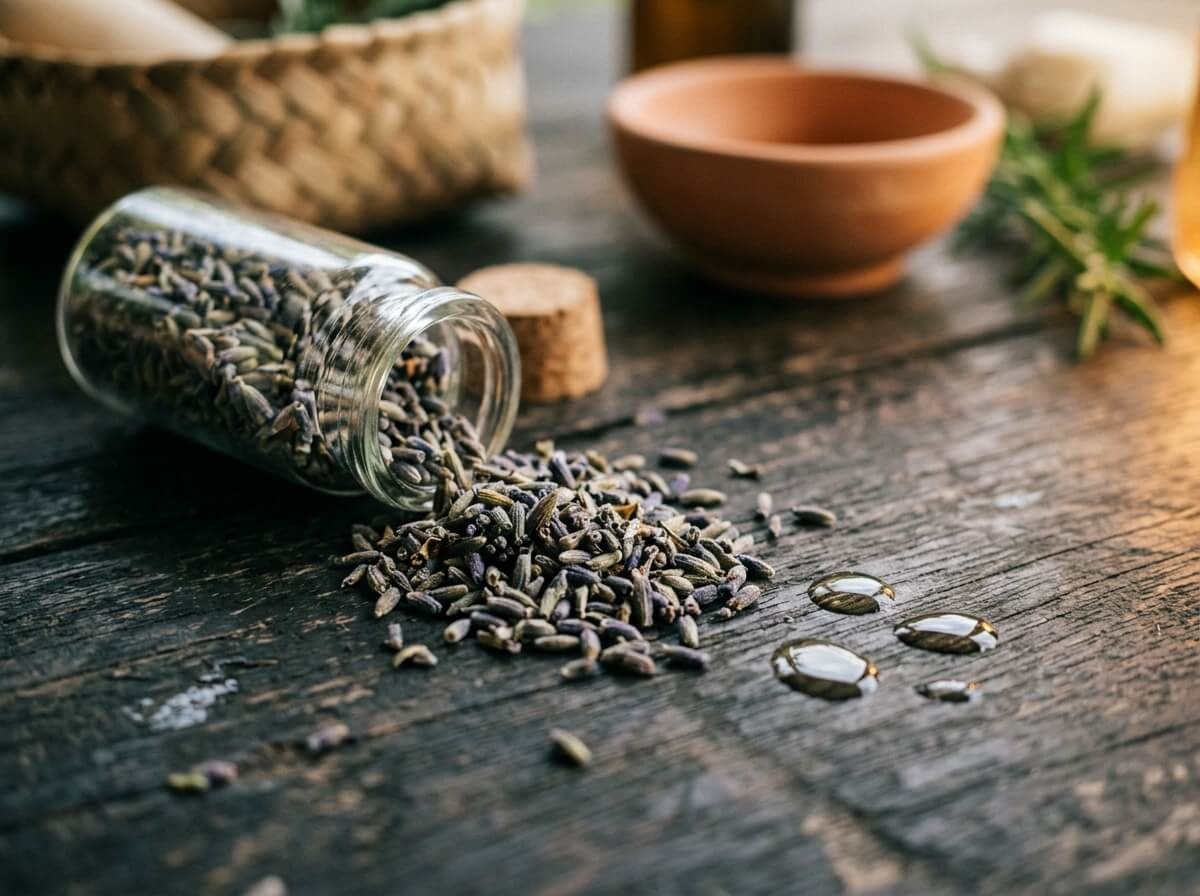
Almost everything worth knowing about lavender essential oil benefits comes down to two aroma molecules: linalool and linalyl acetate. In true lavender they often make up more than half of the oil combined, and their balance is a fingerprint of quality.
Linalool is a naturally occurring terpene alcohol found across many calming plants. Research links it to a soothing, tension-easing effect on the nervous system, and it carries much of lavender’s soft floral character. Linalyl acetate is the ester that rounds off the sharpness and gives good lavender its sweet, mellow finish. Together they are why true lavender smells calm rather than sharp.
This balance is also why the ratio between the two molecules is such a useful signal. A gas chromatography report on good true lavender tends to show linalool and linalyl acetate in a fairly even partnership, with only modest camphor. When a report is heavy on camphor and cineole, you are almost certainly looking at lavandin or spike lavender, whatever the front label says. You do not need to be a chemist to use this. You only need to know that the chemistry is knowable, and that an honest seller will let you see it.
There is an honest footnote here, and we will not skip it. Linalool oxidises as it ages, and oxidised linalool is the main reason a small number of people develop skin sensitisation to lavender. This is not a reason to fear the oil. It is a reason to buy fresh, store it well, and dilute it, all of which we cover below. A quiet, well-made oil like our Lavender Essential Oil is worth more than a large cheap bottle you will still be using two summers from now.
What the calm and sleep evidence actually says
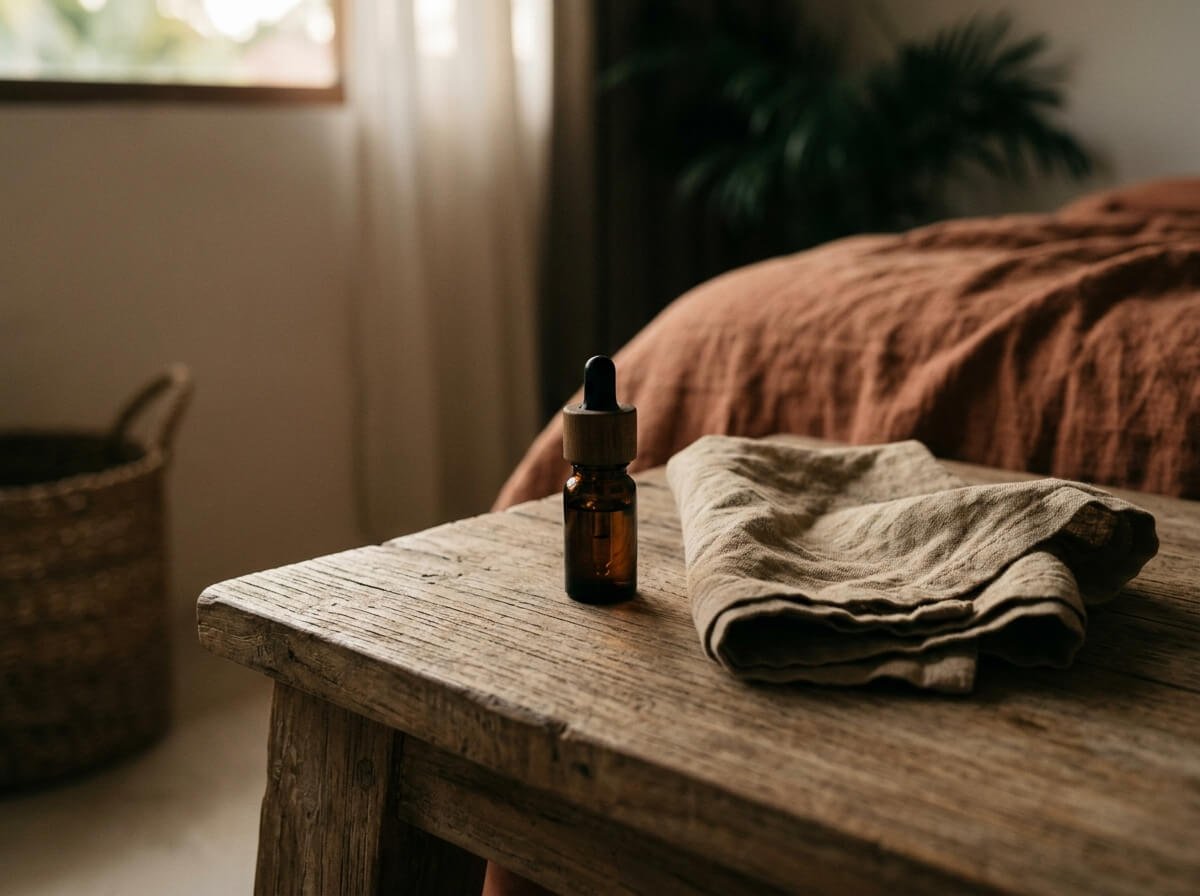
This is where honesty matters most, because the internet tends to promise the moon. Lavender does have real, measurable calming effects, but the strength of the evidence depends heavily on how you use it.
Aromatic use, the everyday ritual
Inhaled lavender, from a diffuser, a pillow mist, or simply a drop on a tissue, has been studied for easing situational anxiety and supporting better sleep quality. The effects are gentle and real, closer to a warm bath than a sedative. If your evenings feel wired, pairing lavender with an intentional wind-down ritual tends to matter as much as the oil itself. Our notes on essential oils for stress and anxiety go deeper into building that kind of practice, and our aromatherapy diffuser blend recipes give you a starting point for the diffuser.
Oral standardised extracts, a different tool
Some of the strongest clinical results come from a standardised oral lavender preparation studied for anxiety. That is a specific, regulated product taken by mouth under guidance, and it is not the same as putting your kitchen bottle in a diffuser. We mention it so you understand why the headlines sound so confident, and why that confidence does not automatically transfer to topical or aromatic use at home.
If you want to put this to work tonight, keep it simple. About an hour before bed, add a few drops to a diffuser in the bedroom, or put one drop on a tissue tucked near your pillow. Dim the lights, put the screens down, and let the scent become the signal that the day is closing. The oil is not doing the whole job on its own. It is a cue, and cues work best when they are consistent. Give the same scent to the same moment for a week or two, and your nervous system starts to recognise it.
So here is the straight read. Lavender is a credible, well-tolerated aid for calm and sleep when inhaled, with modest, honest effects. It is not a cure for insomnia or anxiety, and any bottle promising a miracle is telling you more about its marketing than its chemistry. For a gentle, ready-made evening scent, many people reach for a lavender-forward blend such as our Bali Night essential oil blend rather than measuring single oils each night.

Lavender essential oil benefits for skin, told straight
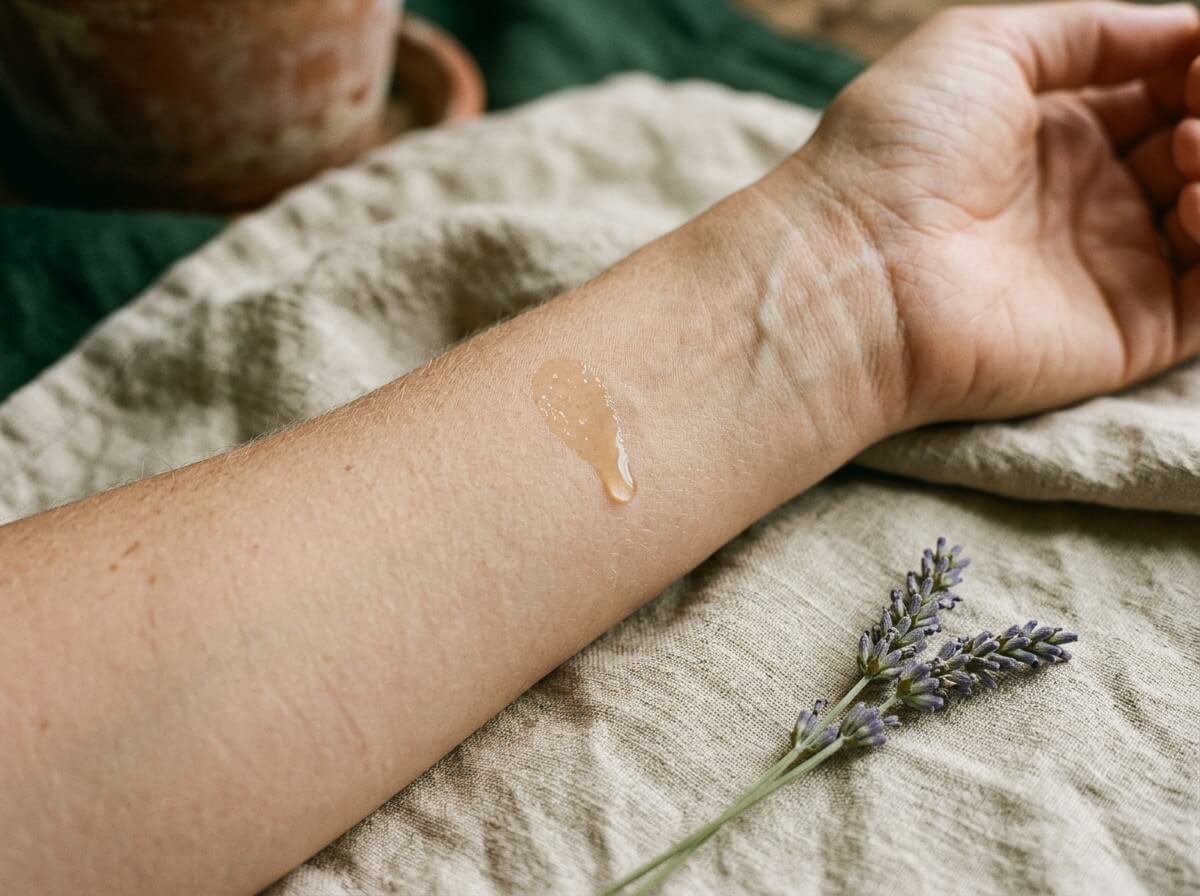
Lavender has a long, earned reputation in skin care, and some of it holds up well while some of it is thinner than the internet suggests. Here is where the evidence is reasonable, and where it is more tradition than proof.
- Soothing minor irritation and redness. Lavender’s calming molecules make it a common choice for calming the look of stressed, reactive skin when properly diluted.
- After-sun and post-shave comfort. A well-diluted lavender blend can feel cooling and settling on skin that has had a hard day, though it is a comfort measure, not a burn treatment.
- Blemish-prone skin. Lavender is often included in blends for its gentle, balancing character, usually alongside stronger actives rather than as the hero.
The carrier oil you choose matters as much as the lavender. A light, fast-absorbing oil suits the face, while a richer, more cushioning oil is lovely for the body after a bath. Coconut and jojoba are both forgiving, widely available, and kind to most skin types. Warm a small amount between your palms, breathe it in first, and then press it gently into skin that is still slightly damp so it seals in moisture. The point is not to chase a result. It is to turn a few quiet minutes into a ritual your skin can rely on.
Where the claims outrun the evidence is anti-wrinkle and deep wound-healing language. Lavender is a supportive, soothing botanical, not a rebuilding one, and we would rather tell you that than sell you a story. Whatever the goal, the rule never changes: lavender belongs diluted in a carrier oil, never neat on the skin. If you enjoy blended aromatics on the body, a calming everyday option like our Bliss essential oil blend is formulated to be gentle in a ritual, though you will still dilute a pure single oil yourself.
How to spot a real bottle of lavender essential oil
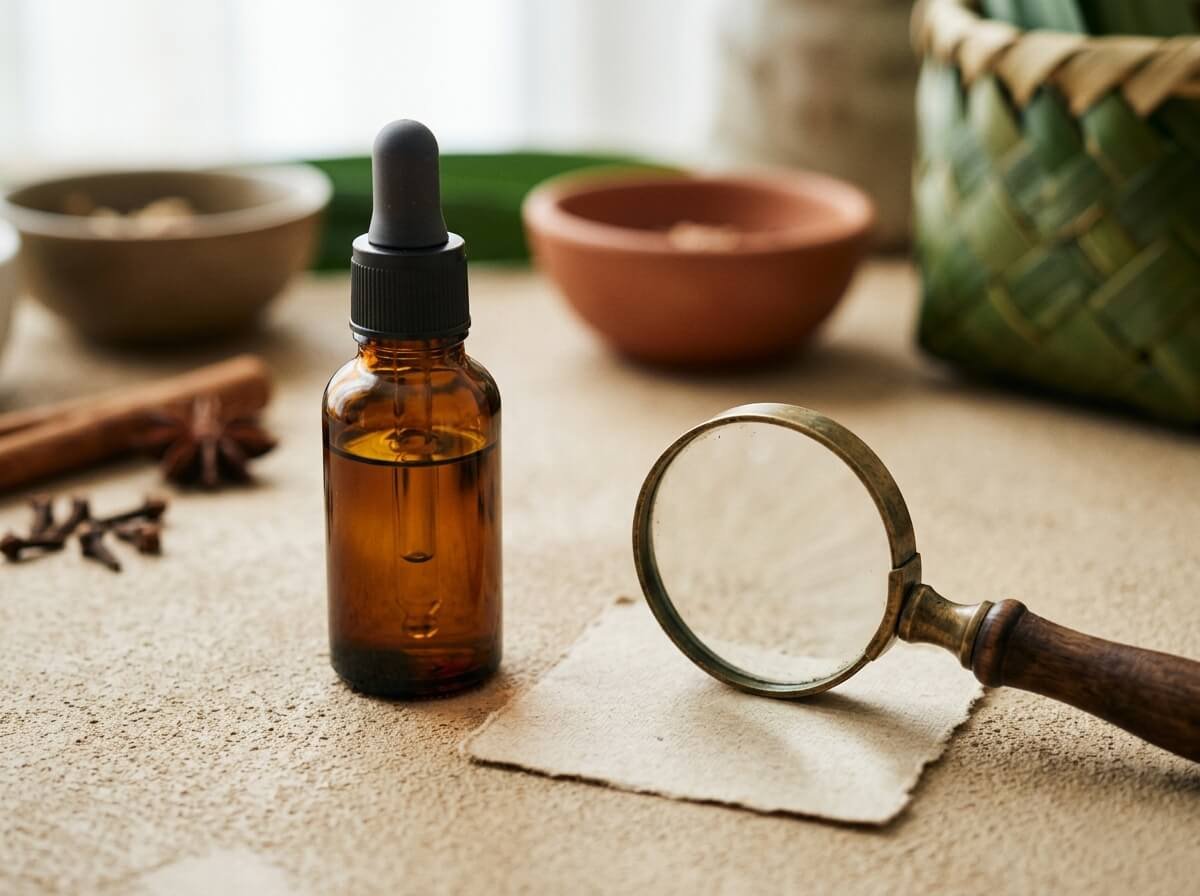
This is the section the sellers hope you skip. Lavender is adulterated more than almost any oil on the market, cut with synthetic linalool and linalyl acetate, or quietly swapped for cheaper lavandin. A few honest checks will protect you every time.
- Look for the Latin name. True lavender reads Lavandula angustifolia. If the label only says “lavender” with no species, treat it as unknown.
- Check the country of origin. Lavender is a temperate-climate crop. A trustworthy seller names where it was grown rather than hiding it.
- Ask for batch transparency. Reputable oils are testable. A supplier who can point to GC/MS testing or clear batch information is telling you they have nothing to hide.
- Respect the price reality. True lavender costs more than lavandin because it yields less oil. A large bottle at a suspiciously low price is usually not what it claims.
- Avoid the fragrance oil trap. If the label says “fragrance oil” or “perfume oil,” it is a scent, not an essential oil, and it belongs to a different conversation entirely.
There is a simple test you can run at home too. Place a single drop on a plain paper blotter or a strip of unbleached paper and leave it for an hour or two. A true essential oil will fade and change as its lighter notes lift away, and it should not leave a greasy, lasting ring the way a diluted or synthetic product often does. It is not laboratory proof, but combined with the label checks above it will catch a great many pretenders. Trust the pattern, not a single clue.
If you want to understand why that last point matters so much, our piece on essential oil safety explains how synthetic fragrance and true botanicals behave very differently on skin. Reading a label well is a small act of care that pays you back for years.
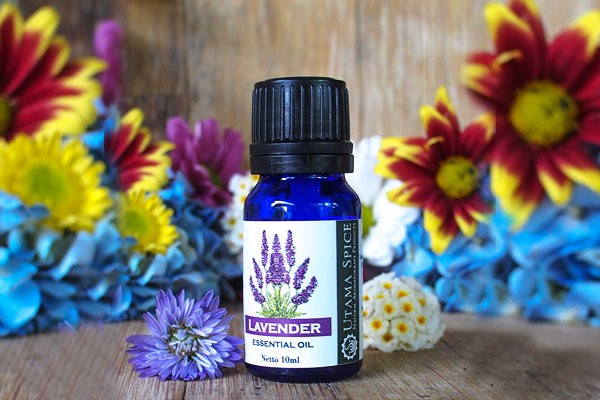
A lavender oil you can actually trust
Single-species, honestly sourced, and small-batch. Our Lavender Essential Oil is made for the calm evening ritual, diluted with care and backed by transparency, not hype.
How to use lavender essential oil safely
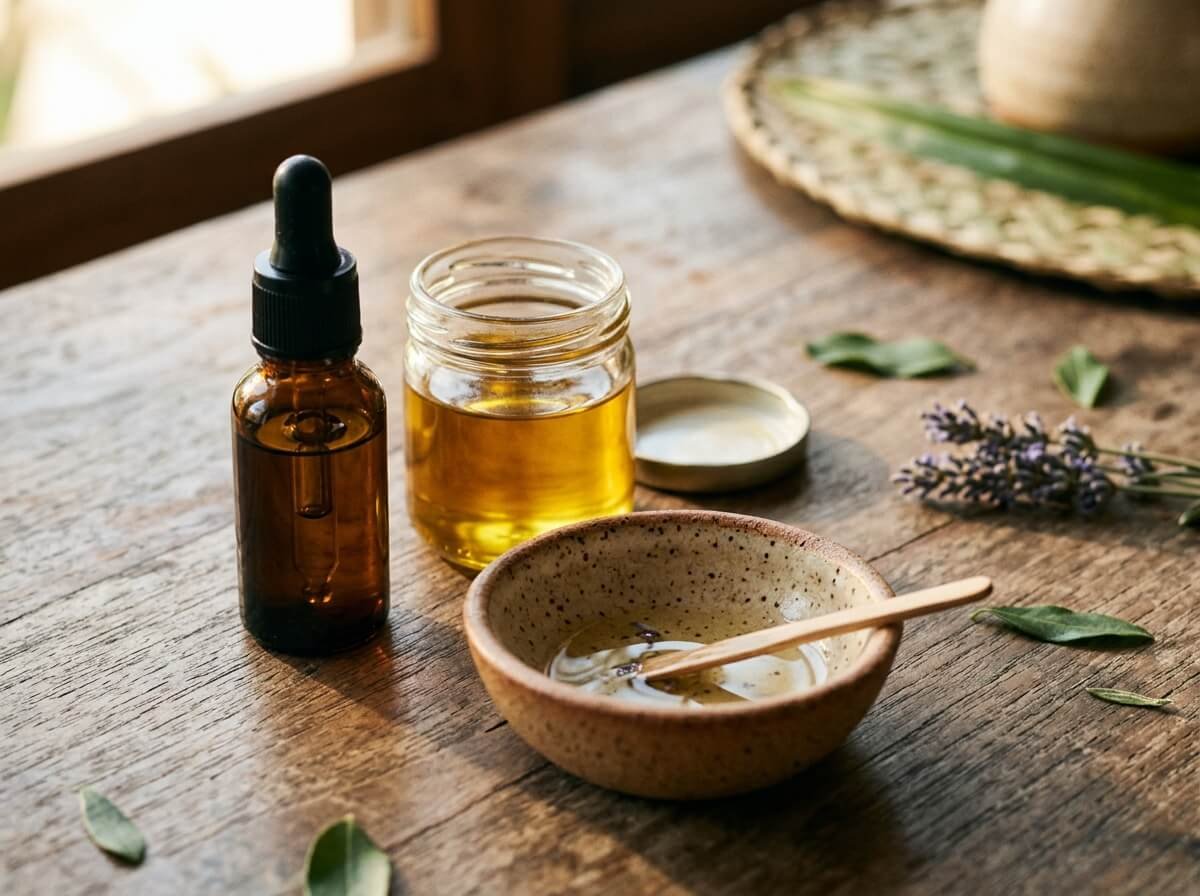
Lavender is one of the gentler essential oils, but gentle is not the same as consequence-free. A few grounded habits keep it that way.
- Always dilute. For most adult skin, a 1% to 2% dilution is sensible, roughly 6 to 12 drops of lavender in 30 ml of a carrier oil such as coconut or jojoba. Never apply it neat.
- Patch test first. Apply a small diluted amount to your inner forearm and wait 24 hours, especially if your skin runs reactive.
- Mind pregnancy and children. Keep dilutions lower and check with a professional during pregnancy and for young children, and keep all essential oils out of reach.
- Store it well. Because linalool oxidises, keep the bottle tightly closed, cool, and out of sunlight, and use it within a year or two of opening.
For hands-off calm with no dilution to think about, aromatic tools do the work for you. A reed diffuser scents a room slowly and steadily, and if you are new to them our guide to the reed diffuser explains how they carry aroma without heat. A calming candle offers the same quiet ritual with a flame instead.
Common questions about lavender essential oil
Is lavender essential oil safe to use every day?
For most people, yes, when it is properly diluted and stored well. Daily aromatic use in a diffuser is gentle, and diluted topical use is fine for skin that tolerates it. If your skin is reactive, alternate days and keep the dilution low. Buying fresh and using the bottle within a year or two matters more than most people realise, because oxidised oil is the usual culprit behind irritation.
Can I put lavender oil directly on my skin?
We do not recommend it. Even though lavender is one of the gentler oils, applying it neat raises the risk of sensitisation over time. Dilute it in a carrier oil first, every time. The small extra step is what keeps the oil something your skin welcomes rather than something it learns to react against.
Does lavender oil really help you sleep?
It can help you wind down, which in turn supports sleep. Inhaled lavender has modest, genuine calming effects, and it works best as part of a consistent evening routine rather than as a switch that turns sleep on. Think of it as a signal to your nervous system, not a sedative.
How can I tell if my lavender oil is real?
Start with the label. Look for the Latin name Lavandula angustifolia, a named country of origin, and a seller who can share batch or GC/MS information. Be wary of a large bottle sold cheaply, and never mistake a “fragrance oil” for an essential oil. No single clue is proof, but the pattern rarely lies.
Is lavandin the same as lavender?
No. Lavandin is a hardier hybrid that yields more oil and costs less, with a sharper, more camphorous scent. It is a legitimate oil in its own right, but it is often sold as true lavender, which is where buyers get short-changed. If calm is your goal, true lavender is the one to seek.
Where does Utama Spice lavender come from?
Lavender is a temperate-climate botanical, not a Balinese one, so we source it from growers in climates suited to it and keep our batches small for freshness. We would rather tell you that plainly than pretend it grows on the island. Honesty about origin is part of how we craft.
Where our lavender sits, and an honest sourcing note
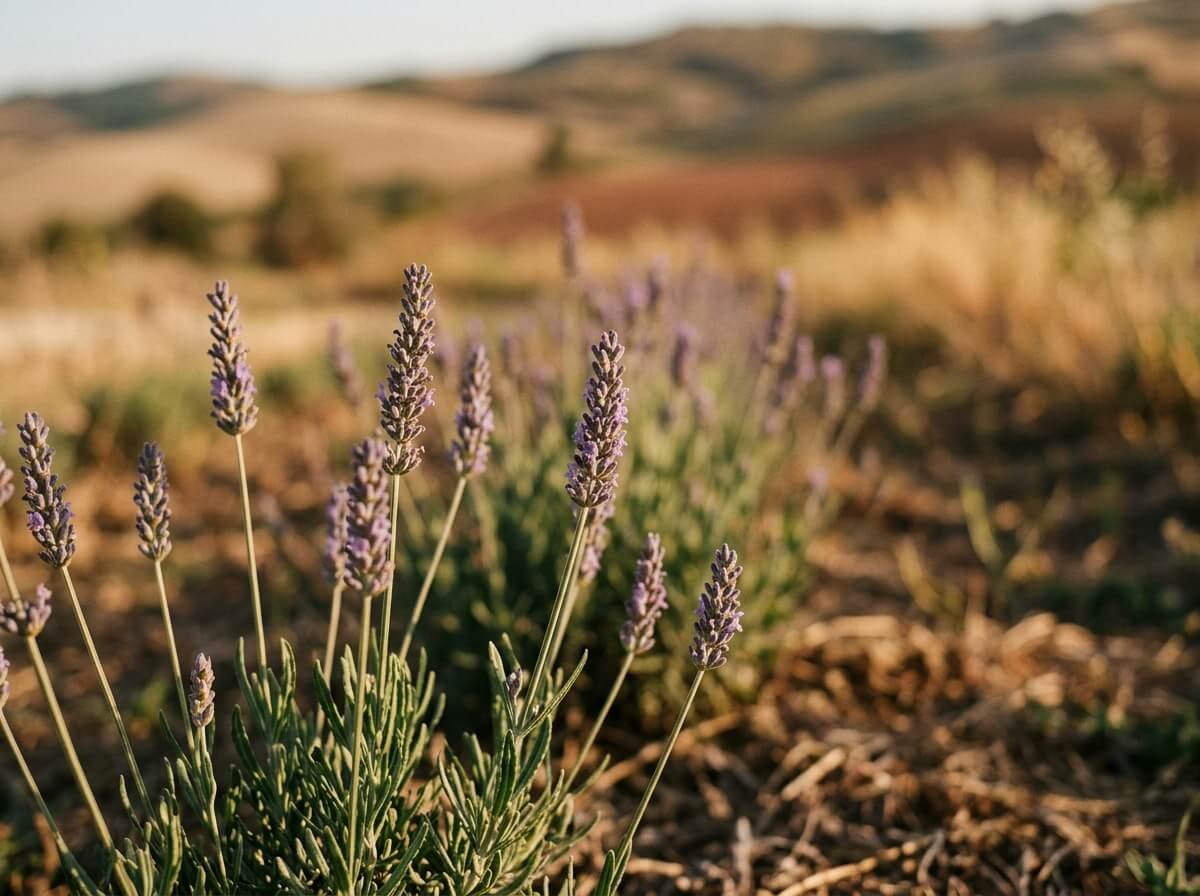
We are a Balinese brand, and honesty means telling you what is and is not ours to claim. Lavender is a temperate-climate botanical. It is not native to Bali, and we will not dress it up as an ancestral island tradition when it is not. That would be the kind of greenwashing we stand against.
What we can promise is how we treat it. We source lavender from growers who work in the right climate for it, we keep our batches small so the oil stays fresh, and we hold it to the same transparency we ask of every ingredient we craft in Bali. It sits within our aromatherapy line as a calm, dependable single oil, alongside the blends and botanicals that do carry deeper roots in Balinese ritual. Real care means rethinking the whole system, including being straight about origin.
That is the honest version of lavender. A beautiful, genuinely calming oil when you buy the real thing, use it diluted, and hold its claims to the light. Learn the plant, read the label, and let the ritual, not the marketing, be the point. What you give a little attention here, your skin and your evenings will give back.