Nebulizing diffuser: the honest guide to how it works, and how to use one safely
A nebulizing diffuser is the quiet workhorse of aromatherapy: no water, no heat, just a pressurized stream of air that shears pure essential oil into a fine mist. If you have shopped for a diffuser and felt lost between ultrasonic, reed, and nebulizing options, you are not alone. Most buying guides online are written by the seller of a single model, so the comparison is never neutral. This is a plain explanation: how a nebulizing diffuser actually works, where it outperforms a water-based diffuser and where it does not, which oils belong in one, and the safety rules that matter more here, because the oil never gets diluted.
We wrote this from the formulation side, not the retail side. We blend essential oils in Ubud, and we sell two nebulizing diffusers ourselves, so we have every reason to be honest about what the format is genuinely good at and where it asks more of you.
What is a nebulizing diffuser
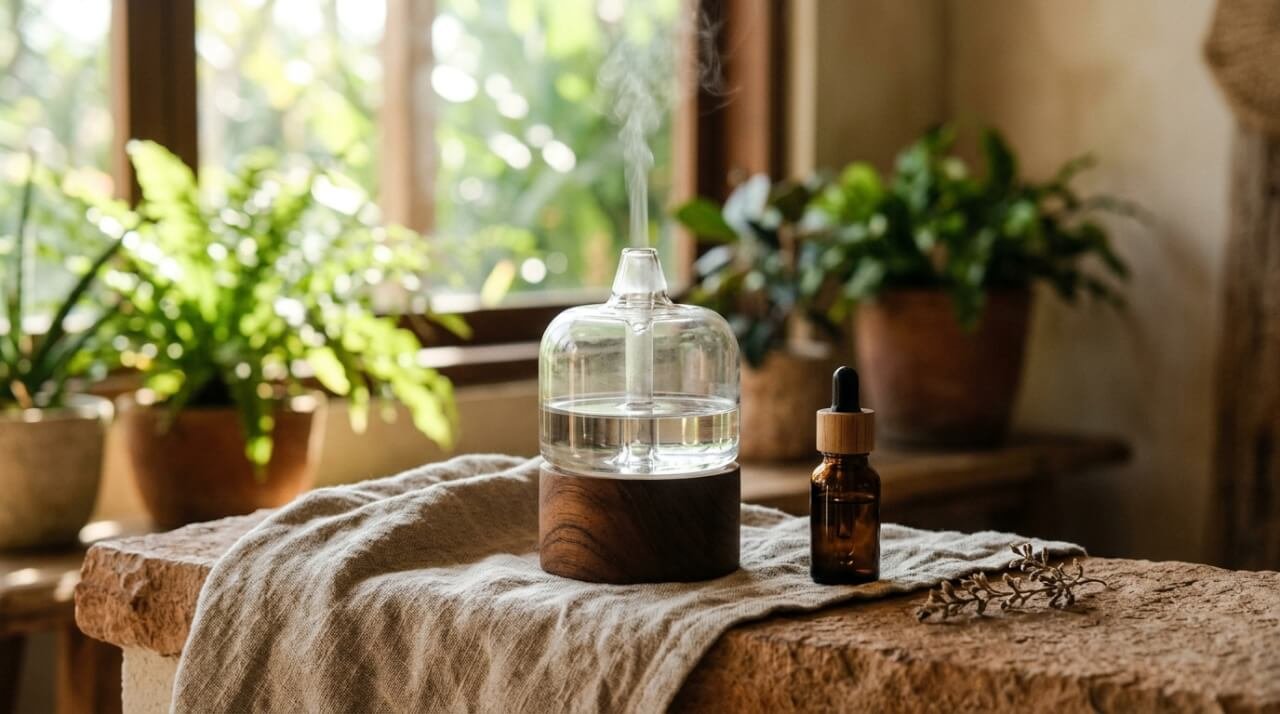
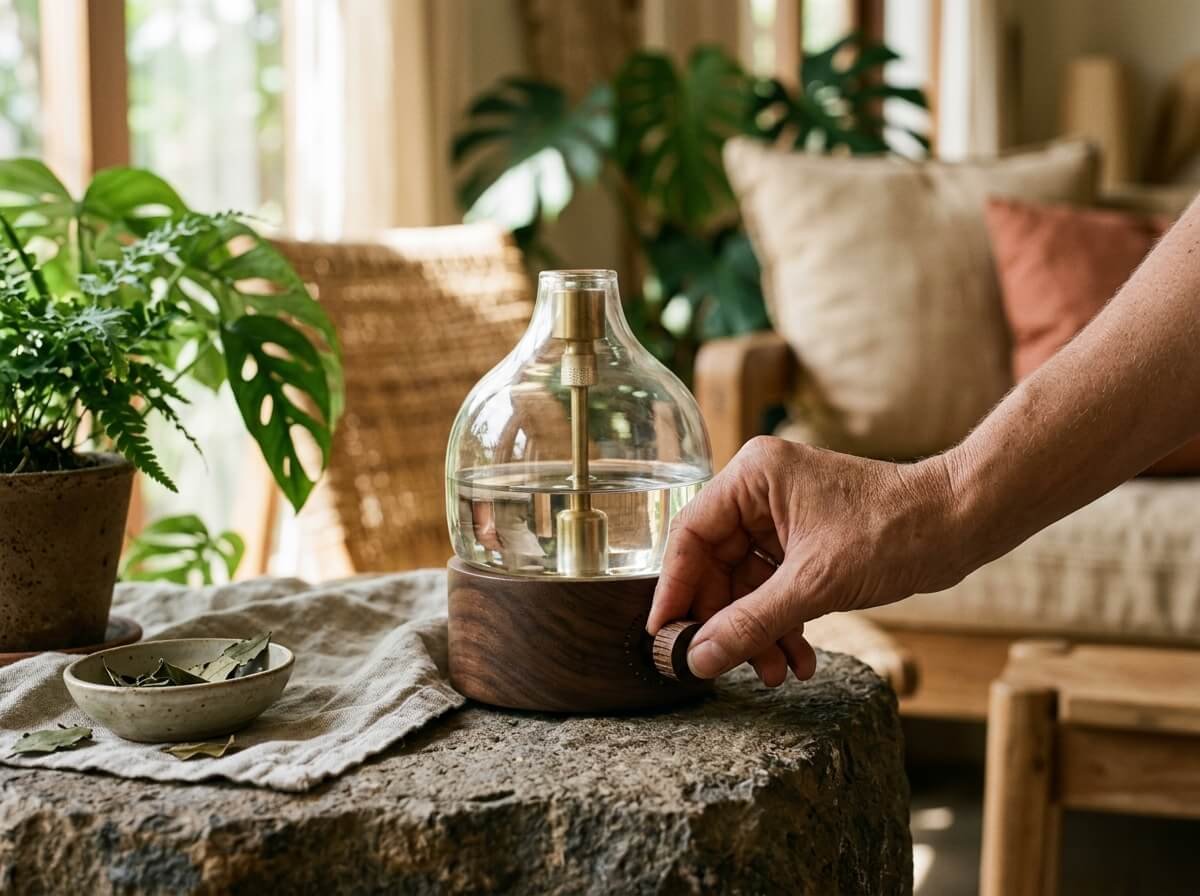
A nebulizing diffuser (sometimes called an atomizing diffuser) uses a small air pump to push air through a narrow glass tube at speed. As that pressurized air crosses the mouth of a second tube sitting in neat essential oil, it creates suction, the Bernoulli effect at work, and draws the oil upward into the airstream. The stream shears the oil into a micro-fine mist without ever heating it or mixing it with water. What leaves the glass is the essential oil itself, unchanged, carried on air.
That last point is the whole story. Because there is no water and no heat, nothing dilutes the oil and nothing degrades its chemistry before it reaches you. A nebulizing diffuser is essentially a small, controlled way of releasing the full aromatic profile of an oil into a room, closer to opening the bottle itself than to any humidifier-style device.
Most nebulizing diffusers, including our own Danau Satu and Danau Dua, use a glass reservoir rather than plastic. Glass matters here in a way it does not with a water-based diffuser: since the oil sits neat and concentrated in the reservoir, a plastic vessel can slowly off-gas into it or absorb scent over time. Glass stays inert, and it is easier to see, and clean, when resin starts to build up.
The mechanism itself is not new. Long before electric pumps, Balinese households scented rooms and temple spaces with open bowls of oil and resin, warmed gently or simply left to release scent on their own, a slow, passive version of the same idea: let the aromatic compound reach the air unchanged, rather than carried in water. The modern nebulizing diffuser is really that same principle, an air pump instead of open air, glass instead of a clay bowl, but the underlying belief that scent is truest when nothing dilutes it has been around far longer than the device.
Nebulizing versus ultrasonic, heat, and reed diffusers
There are four common ways to scent a room with essential oil, and they work on genuinely different principles. Knowing the mechanism tells you what to expect from each one, rather than trusting a marketing claim.
- Nebulizing (waterless): pressurized air atomizes neat oil. Strongest, purest scent throw of the four. No water, no heat.
- Ultrasonic: a small disc vibrates at high frequency in a water and oil mixture, breaking it into a fine, cool mist. Scent is real but diluted, and the device also releases water vapor into the room. Read more in our essential oil diffuser humidifier guide.
- Heat diffusion: a candle or small heating element warms oil so it evaporates faster. Convenient and low-cost, but heat can break down some of an oil’s lighter aromatic compounds, softening the scent and, some formulators argue, some of the benefit.
- Passive (reed or evaporative): oil wicks up reed sticks or evaporates slowly from a porous surface with no motor at all. Quiet, low-maintenance, but the gentlest throw of the four. See our reed diffuser guide if that fits your space better.
Nebulizing sits at the intense end of that spectrum on purpose. If you want the truest possible read on an oil’s scent, or the strongest coverage in a large or open room, nebulizing does that job better than the other three. If you want gentle, all-day background scent in a bedroom, a reed diffuser or an ultrasonic model at low output will usually suit you better, and we say that even though we sell nebulizing diffusers ourselves.
Humidity is worth a separate mention for anyone living somewhere tropical. An ultrasonic diffuser adds water vapor to the air it scents, which is unwelcome in a climate that is already humid for most of the year. A nebulizing diffuser adds none. That single difference is a quiet, practical reason nebulizing has stayed popular in Bali long after ultrasonic devices became the global default.
Room size changes the calculation too. In a small bathroom or a single desk area, an ultrasonic diffuser’s gentle mist is already plenty, and a nebulizing diffuser can feel like overkill within minutes. In an open living room, a studio, or a reception space, nebulizing carries scent across a real distance in a way the other three formats struggle to match. Match the tool to the room rather than assuming one format is universally correct.

The honest trade-offs of a nebulizing diffuser
We would rather you know the trade-offs before you buy than discover them after. A nebulizing diffuser asks more of you than a set-and-forget ultrasonic model, in exchange for a stronger, truer scent.
Oil use is faster. Because the device draws neat oil rather than a few drops diluted in water, a nebulizing diffuser will use more oil per hour of run time than an ultrasonic one. Most people manage this with a timer, intermittent bursts of a minute or two on, several minutes off, rather than continuous running. This also protects your nose: strong, undiluted scent fills a room quickly, and running longer does not make it stronger, it just uses more oil.
They run louder. The air pump has a distinct hum, more noticeable than the near-silent vibration of an ultrasonic disc. Most people find it unobtrusive in a living room or office, less ideal next to a bed overnight.
They need real cleaning. Oil residue left in the glass tubing will oxidize and thicken, eventually clogging the narrow passages the mist depends on. A nebulizing diffuser rewards a short cleaning ritual; an ultrasonic diffuser is more forgiving if you skip a week.
In return, you get the truest possible representation of an oil’s aroma, no dilution, no heat, no water muting the top notes, and strong enough throw to scent a real living space rather than a small corner of it. Whether that trade is worth it comes down to how you want to use scent: as a bold, intentional ritual a few times a day, or as constant, gentle background. Nebulizing is built for the first.
Think about the running cost honestly before you buy. A few short sessions a day will use a ten-milliliter bottle of essential oil over a few weeks rather than a few months, depending on the oil and how often you run the diffuser. That is a real, ongoing cost, and it is worth budgeting for rather than discovering after your first bottle empties faster than expected. Buying oil in a size that matches your actual use, and reaching for lower-cost oils like citrus or lemongrass for daily rotation, keeps the ritual sustainable rather than something you quietly stop doing once the bottle runs dry.

Safety rules that matter more with neat oil
Every essential oil safety rule you already know applies here, and a few matter more, because a nebulizing diffuser disperses oil at full strength rather than diluted in water.
- Citrus oils and light. Cold-pressed citrus oils are phototoxic on skin, and while diffusing does not put oil on skin directly, a heavily scented room with fine oil particles in the air is not the place to sit in direct sun for an extended stretch. Keep citrus diffusing to normal indoor settings, away from direct sunlight through a window.
- Cats specifically. Cats lack a liver enzyme that most mammals use to process certain plant compounds, including many essential oil constituents. A nebulizing diffuser’s stronger, undiluted output makes this more relevant than it is with a light ultrasonic mist. If you share your home with a cat, run the diffuser in a room they can leave, with the door open, rather than a closed space, and watch for signs of discomfort.
- Children and nurseries. Skip nebulizing diffusers in a nursery or a small child’s closed bedroom. The concentration that makes nebulizing effective in a living room is too much for a small body in a small, closed space overnight.
- Asthma and sensitive airways. Strong, undiluted aromatic compounds can trigger a reaction in some people with asthma or fragrance sensitivity. Start with short bursts and good ventilation, and stop if anyone in the room reports tightness or irritation.
- Ventilation and timers. Crack a window or door, and use a built-in or plug-in timer if your model has one. Intermittent operation is not just an oil-saving habit, it is the safety habit that keeps concentration from building past what a room, and the people or pets in it, are comfortable with.
None of this is a reason to avoid nebulizing. It is a reason to run it the way it is designed to run: in bursts, in a ventilated room, away from small children and curious cats, with citrus oils used sensibly. That is the same care we would want you to bring to any concentrated botanical, in a diffuser or on skin.
One more rule worth stating plainly: if you are pregnant, breastfeeding, managing a respiratory condition, or caring for someone who is, check with a doctor before making any essential oil, diffused or otherwise, part of a daily routine. General diffusing guidance is not a substitute for medical advice specific to your situation, and a nebulizing diffuser’s stronger output is exactly the reason to ask first rather than after.


Try nebulizing the honest way
The Danau Satu is a waterless, glass-reservoir diffuser built for exactly the ritual this guide describes: short, intentional bursts of pure scent, no water, no heat. Pair it with any of our single-note essential oils and run it the way your room, and your nose, actually need.
Which oils belong in a nebulizing diffuser
Not every essential oil atomizes cleanly. The narrow glass tubing that makes a nebulizing diffuser work so well with the right oil is the same tubing that clogs with the wrong one.
Thin, volatile oils atomize well. Citrus oils, tea tree, cajeput, and lemongrass all have a light, fluid viscosity that moves easily through the glass tube and shears into a fine mist without leaving much behind. Our tea tree essential oil benefits guide and lemongrass essential oil benefits guide go deeper on each oil if you want to build a rotation.
Thick, resinous oils and absolutes clog the glass. Vetiver, patchouli, and sandalwood are viscous by nature, they sit deep, grounding, and resinous, and that same density resists atomizing. Used neat in a nebulizer, they build up residue in the tubing far faster than a citrus or herbaceous oil. These oils are better suited to a reed diffuser, a body oil, or a warm compress, where their weight is an asset rather than a mechanical problem.
Blends work, with the same caveat. A pre-made blend that leans citrus or herbaceous, like our own diffuser blend recipes, will run cleanly. A blend built around a heavy resin as its base note will still clog, even diluted with lighter oils, because the base note is often present in meaningful volume. Check what is actually in a blend before running it neat in a nebulizer.
If you want a starting rotation: a bright citrus in the morning, lemongrass or citronella for an early evening on the terrace, and tea tree when you want a cleaner, more clinical air in the room. For more structured combinations, our aromatherapy diffuser blend recipes and essential oil blends for diffuser guides both include ratios you can scale down for nebulizing.
Because a nebulizing diffuser gives you an honest, undiluted read on an oil, it is also the easiest format for testing a single note before you commit to it in a blend. Run tea tree alone for a short burst one evening, lemongrass alone the next, and you will learn what each oil actually smells like on its own, information that gets lost once oils are blended or diluted in water. A few single-note sessions before you build a custom blend will save you from combinations that looked good on paper but clash in the air.

Caring for your nebulizing diffuser
A short cleaning ritual, done regularly, is what keeps a nebulizing diffuser running the way it did on the first day. It is a small act of maintenance, and it pays for itself in mist quality.

Frequently asked questions about nebulizing diffusers
Is a nebulizing diffuser better than an ultrasonic one
Better depends on what you want. A nebulizing diffuser gives a stronger, undiluted scent and adds no water vapor, which makes it the better choice for a real, noticeable aromatherapy session or for a humid climate. An ultrasonic diffuser gives a gentler, longer-lasting mist with lower oil use, which suits all-day background scent or a bedroom overnight. Many households keep one of each.
Does a nebulizing diffuser waste oil
It uses more oil per hour than an ultrasonic diffuser because it disperses neat oil rather than a diluted mixture, but none of that oil is wasted in the sense of being lost or ineffective. Running it in short, timed bursts rather than continuously is the simplest way to manage the cost without giving up the stronger throw.
Is it safe to run overnight
We would not recommend it, and most manufacturers agree. The concentration a nebulizing diffuser produces is meant for intermittent bursts in a room you are actively using, not for hours of continuous overnight exposure in a closed bedroom. If you want scent while you sleep, a low-output ultrasonic diffuser or a reed diffuser is the gentler, more appropriate choice.
Which type suits a humid climate
Nebulizing. It adds zero water vapor to a room, which matters in a climate that is already humid for most of the year. An ultrasonic diffuser, by contrast, adds moisture on top of the scent it delivers, which can feel like one humid layer too many in a tropical home.
Can I mix oils in a nebulizing diffuser
Yes, as long as every oil in the mix is thin enough to atomize cleanly. A citrus and herbaceous combination, like lemongrass and grapefruit, will run without trouble. Adding a heavy resin or a thick absolute to the mix, even as a smaller component, raises the chance of tubing residue, so keep custom blends built from lighter oils if you plan to run them neat in a nebulizer.
The honest bottom line
A nebulizing diffuser is not the right choice for every room or every routine, and any guide that tells you otherwise is probably selling one. What it does offer is the truest, strongest read on an essential oil available from any home diffuser, waterless, unheated, and honest about what is actually in the bottle. Run it in bursts, keep it clean, choose oils that suit the mechanism, and it will reward you with the kind of scent ritual water-based diffusers cannot quite match.