Essential oil blends for diffuser: a guide to building scent rituals that work
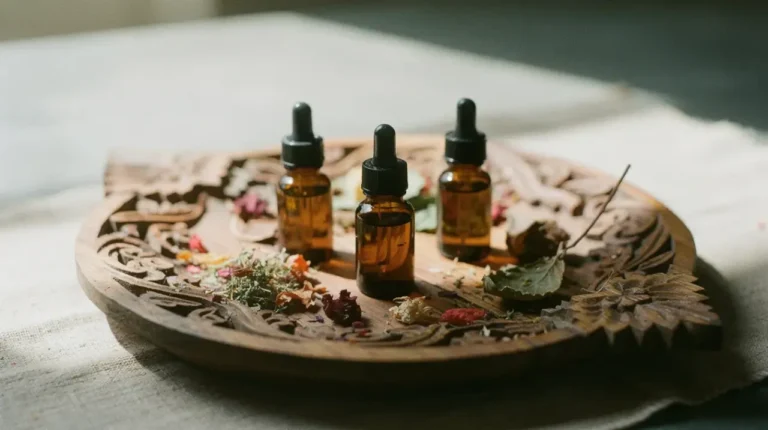
Essential oil blends for diffuser are how scent stops being decoration and starts becoming ritual. A single oil can shift a room, but a thoughtful blend can shift a mood, a morning, a whole way of being at home. In Bali, where we have been blending botanicals since 1989, we treat the diffuser as more than a device. It is a quiet invitation, a way of bringing the forest, the floral garden, and the spice harvest into your space, one slow exhale at a time.
This guide is a working companion. We will cover how blends behave inside a diffuser, share five tried recipes you can mix tonight, walk through diffuser type by type, and address the safety questions most articles skim past. Whether you have a new ultrasonic on your desk or a reed set quietly working in the corner, you will leave with a sense of how to choose, how to layer, and how to refill instead of restock. That is the heart of essential oil blends for diffuser practice: care that compounds.
What makes a diffuser blend work: notes, ratios, and a little chemistry
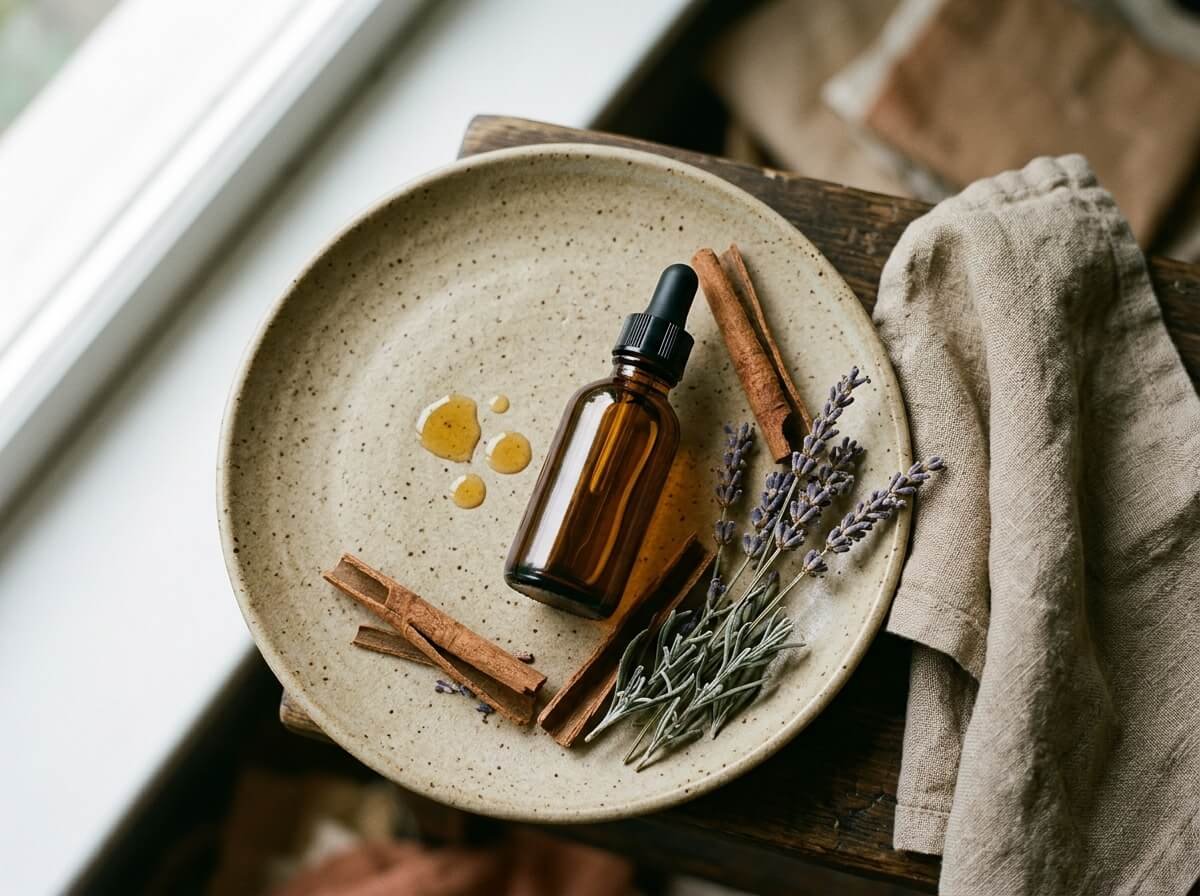
A diffuser blend is a small piece of perfumery, scaled for the air. Like a well-built fragrance, it leans on three layers: top notes that announce the blend, middle notes that carry the body of the scent, and base notes that hold everything together long after the diffuser stops. Citrus oils like lemon, grapefruit, and tangerine sit in the top register. Floral and herbal oils such as lavender, rose geranium, and clary sage occupy the middle. Woody, resinous, and grounding oils like vetivert, sandalwood, frankincense, and patchouli anchor the base.
A simple working ratio for diffuser blends is three top, two middle, one base, adjusted by drop. For a 100 ml ultrasonic reservoir, six total drops is a gentle starting point, eight is moderate, and ten is rich. The right number depends on your room size, your sensitivity, and what your diffuser asks for. Always begin lighter than you think. You can always add another drop. You cannot subtract one once the room is saturated.
The chemistry is straightforward. Essential oils are volatile, which means they evaporate readily into the air. A diffuser speeds and shapes that evaporation. Heavier base oils evaporate more slowly than citrus, which is why a blend without a base note tends to feel bright at first and then disappear. Pairing fast-evaporating top notes with slower base notes gives the blend a longer, more layered presence in the room. If you want a deeper foundation for your own blending vocabulary, our guide to essential oil blends covers scent families and synergy in detail.
One more piece of context worth holding: not every oil belongs in a diffuser. Heavy resins like benzoin and absolutes like jasmine can gum up ultrasonic plates. Some citrus oils oxidize faster than others, which shortens the life of a blend left mixed. Buying smaller bottles, blending in smaller batches, and refilling more often is both better practice and better stewardship.
Five Balinese-inspired essential oil blends for diffuser, with drop counts
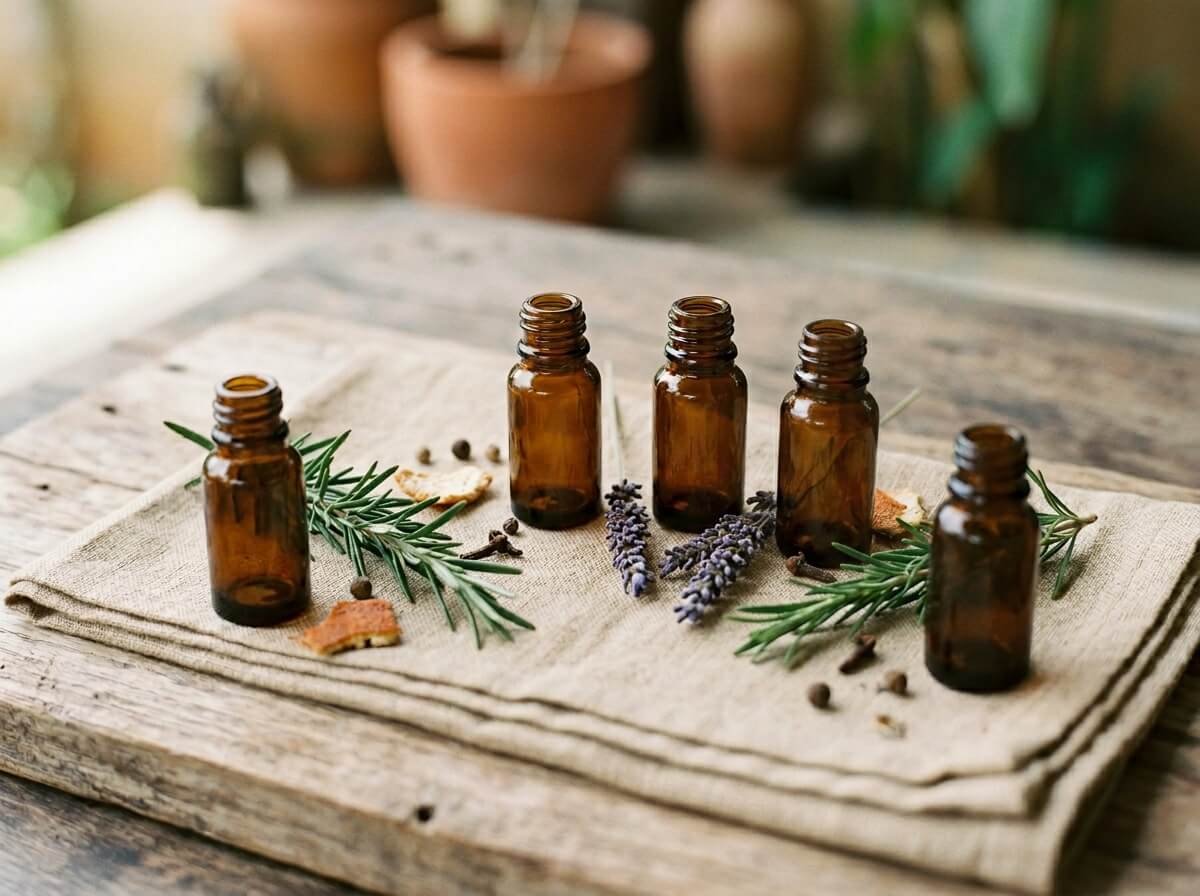
These five recipes draw on oils we know intimately, because we work with them at the source. Each is built for a 100 ml ultrasonic diffuser. Scale up or down by half-drop logic, and trust your nose more than the formula.
Bali night, for slow evenings
Three drops tangerine, two drops ylang ylang, one drop vetivert. Tangerine opens with a bright, sun-warmed sweetness. Ylang ylang carries a soft floral body, rich without being heady. Vetivert grounds the blend in earth, the kind of green that smells like a forest floor after rain. This is the same scent profile that lives in our pre-blended Bali Night Essential Oil Blend, made for people who want the layering done for them.
Morning clearing, for focus and reset
Three drops lemon, two drops rosemary, one drop peppermint. A clean, bright trio that wakes up a room without overwhelming it. Lemon offers immediate lift. Rosemary brings clarity that has been studied for memory and attention. Peppermint cools the edges and keeps the blend from feeling sugary. If you spend mornings at a desk, this is a good companion. Our existing Clearing Essential Oil Blend follows the same philosophy with a slightly broader cast of supporting oils.
Forest breath, for grounding
Two drops frankincense, two drops cedarwood, one drop rosemary, one drop lemon. This blend leans woody and resinous, with a thread of citrus to keep it from feeling closed-in. Frankincense and cedarwood share a long history in meditative and ritual practice across cultures. Reach for this one when you want the room to feel still, contained, deliberate.
Sunday softness, for slow afternoons
Three drops bergamot, two drops lavender, one drop rose geranium. Bergamot is a citrus with floral depth, which makes it a wonderful bridge between top and middle notes. Lavender does what lavender does. Rose geranium adds a quiet, rosy hum that keeps the blend feeling unhurried. This is a Sunday-into-Monday transition blend.
Deep calming, for sleep preparation
Three drops lavender, two drops clary sage, one drop vetivert. A classic wind-down trio. Lavender for the well-documented calming effect on the nervous system. Clary sage to soften and round the floral. Vetivert as the slow, earthy anchor that holds the blend in the room. Diffuse for 30 to 60 minutes before bed, then let the room settle. Our Deep Calming Essential Oil Blend uses a similar architecture if you prefer ready-made.
How to choose oils for your diffuser type
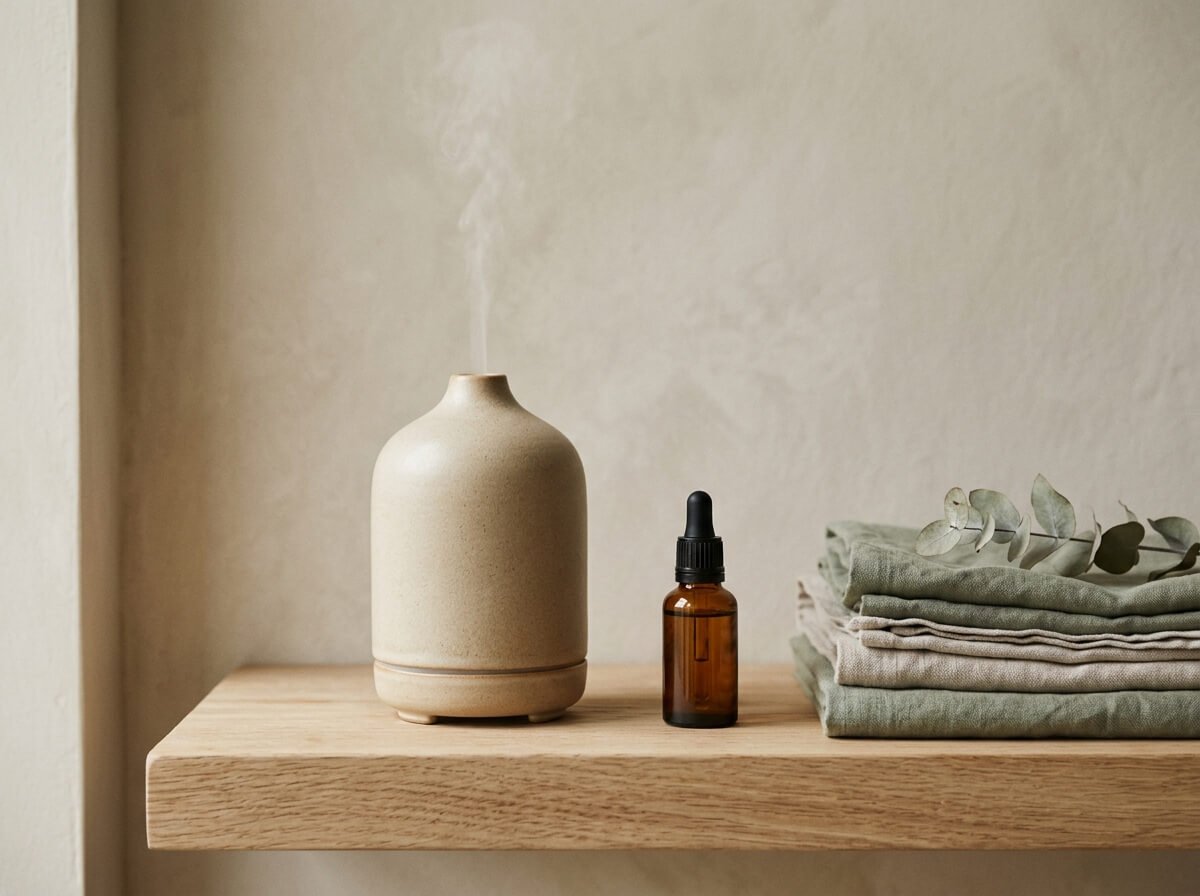
Not every blend behaves the same in every diffuser. The four common diffuser types each have their own quirks, and choosing oils that suit the device matters as much as the recipe itself. If you are still deciding which type of diffuser fits your space, our companion guide to the best essential oil diffuser walks through the trade-offs in detail.
Ultrasonic diffusers
The most common type. Water plus essential oil sits in a reservoir. A small vibrating plate breaks the mixture into fine mist. Ultrasonic diffusers handle most oils gracefully, though very thick oils such as undiluted sandalwood, vetivert, and patchouli can build up on the plate over time. If you blend with heavier base notes, clean the plate weekly with a cotton swab and a drop of plain alcohol. Six to ten drops total per fill is typical.
Nebulizing diffusers
Waterless, more concentrated, and louder than ultrasonic. A nebulizer atomizes pure oil into the air, which means the scent is stronger, the throw is wider, and oil consumption is faster. Use thinner, more volatile oils here. Citrus, lavender, eucalyptus, and rosemary work well. Avoid the heaviest resins and absolutes. Run for shorter intervals, 15 to 30 minutes, with longer rests in between.
Reed diffusers
Quiet, passive, and beautifully suited to small rooms. A blend of oil and a carrier travels up porous reeds and evaporates from the tips. Reeds do not handle highly viscous oils well, since they cannot wick. Lighter blends, particularly those with citrus, floral, and herbal notes, suit reeds best. Flip the reeds every two or three days to keep the scent fresh. A good reed set can hold a room for six to eight weeks, and pairs well with a citrus-and-floral blend such as our Kaffir Lime Blend.
Heat and evaporative diffusers
Less common in modern aromatherapy practice, but worth a note. Heat-based diffusers warm the oil to encourage evaporation, which changes the chemistry of more delicate oils and can dull their therapeutic edge. Evaporative diffusers, where oil sits on a pad or stone and releases passively, are gentler. If you use either, lean toward heartier oils that hold up under warmth: rosemary, lemongrass, cedarwood, eucalyptus.
Essential oil blends for diffuser, by mood and moment
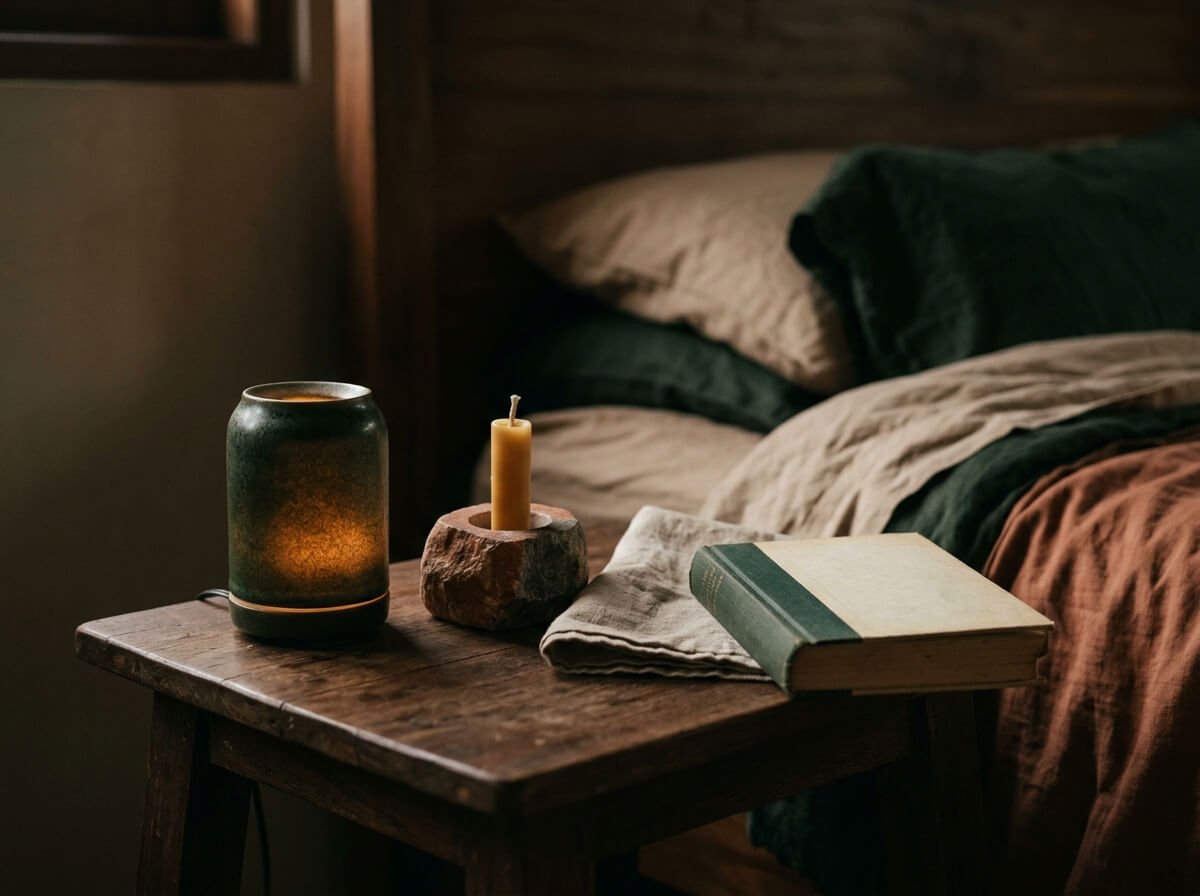
The most useful way to think about diffuser blends is not by scent family, but by what you want the room to do. The Balinese approach to aromatic practice is rooted in this kind of intentionality: scent is a tool for shifting the energy of a space, not an ornament. Here are the moods we return to most.

For sleep and rest
Lavender remains the most studied oil for sleep support. Pair it with vetivert, cedarwood, or Roman chamomile. Run the diffuser for 30 to 60 minutes before bed, then turn it off. A saturated room actually disrupts sleep more than it supports it. The goal is a gentle thread of scent at the edge of awareness, not a fog. For more on the nervous-system side of scent, our guide to essential oils for stress and anxiety walks through the science in detail.
For focus and clear thinking
Rosemary, peppermint, and lemon are the classic focus trio, and the research on rosemary in particular is genuinely interesting. Add a small amount of basil or eucalyptus if you want a sharper edge. Use during deep work, not as a continuous background. Twenty minutes on, an hour off, gives your nose a chance to register the scent again when you return to it.
For grounding and meditation
Frankincense, sandalwood, and cedarwood. These three carry deep history in spiritual and meditative practice across many cultures, and their scent character supports stillness in a way citrus and floral oils do not. A simple two drops frankincense, two drops cedarwood, one drop bergamot blend is a reliable companion for breath practice or quiet reading.
For uplift and energy
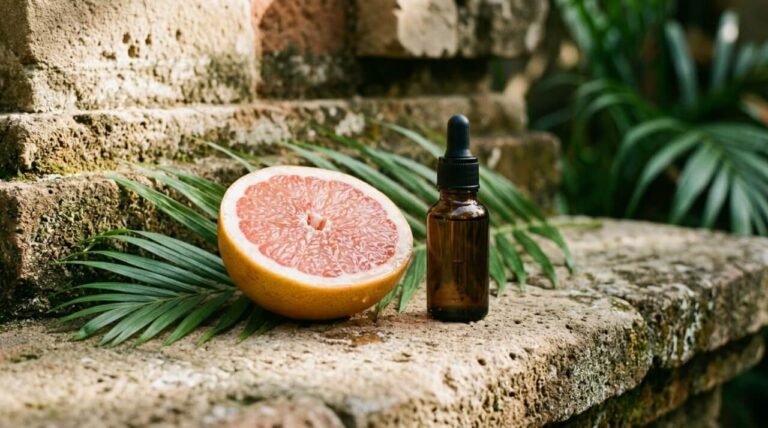
The citrus family does this work better than any other. Lemon, grapefruit, orange, lime, and bergamot diffuse easily, brighten quickly, and combine well with each other. Add a single drop of peppermint or lemongrass for an extra lift. This is the blend type to reach for on grey afternoons, or during the transition from work to dinner.
For ritual and ceremony
Bali has a long tradition of using scent in ceremony, often combining floral, resinous, and grounding oils to mark a moment as sacred. Try ylang ylang with frankincense and a touch of patchouli, or sandalwood with lavender and bergamot. The point is not the recipe. The point is treating scent as a signal: this is no longer ordinary time. For a wider look at this approach, our guide to aromatherapy oils covers the ritual dimension at length.
Safety, duration, and the case for refill
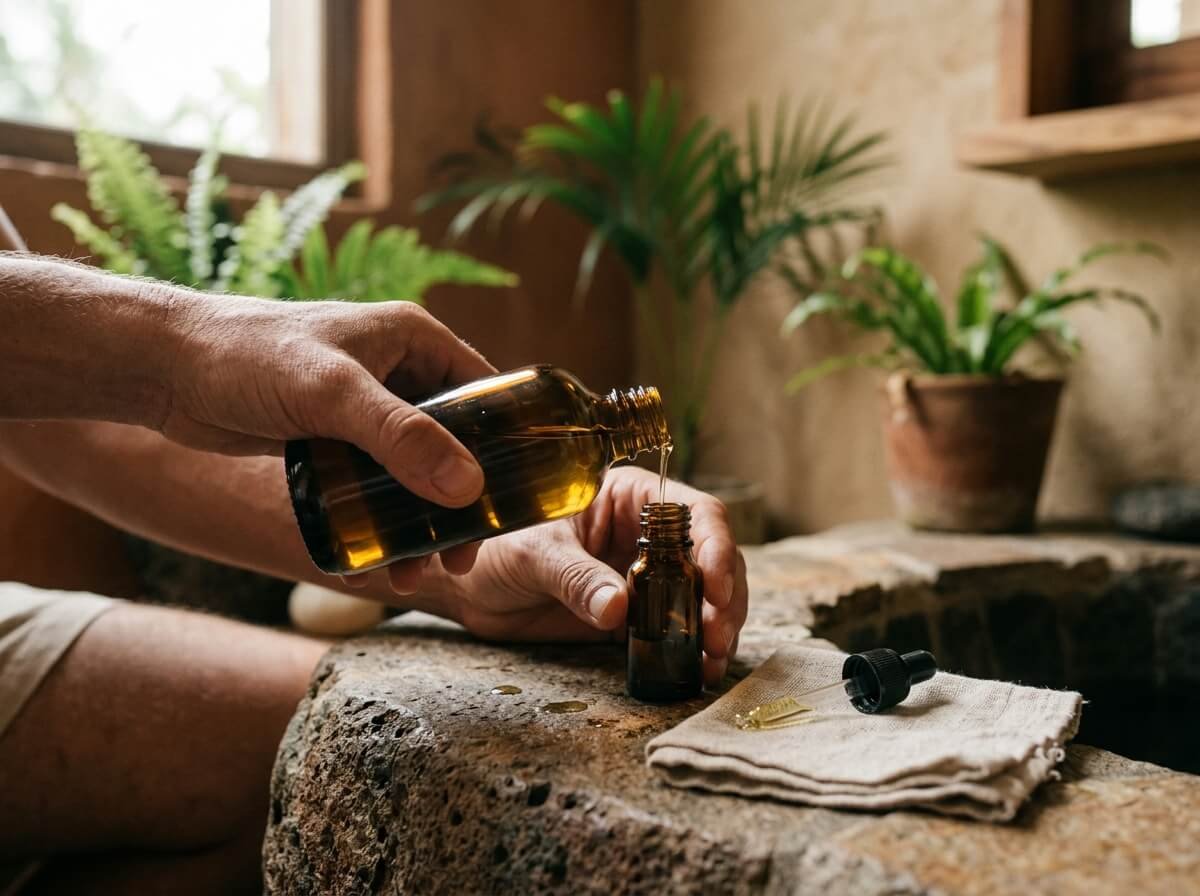
Most articles about essential oil blends for diffuser skip the harder questions. We will not, because honest practice is part of the brand we are trying to build. A few things are worth thinking through.
Pets and small children
Cats lack a key liver enzyme that processes terpenes, which makes them especially sensitive to essential oils. Avoid diffusing tea tree, citrus, peppermint, eucalyptus, and pine in spaces where cats cannot leave the room. Dogs are more tolerant but still benefit from open doors and shorter diffusion times. With infants and toddlers, the conservative practice is to avoid camphor-heavy oils like rosemary, peppermint, and eucalyptus in shared rooms during sleep. When in doubt, diffuse in a separate room with the door open, and let the scent travel rather than concentrate.
Duration and ventilation
A common mistake is leaving a diffuser running all day. Olfactory fatigue sets in within 15 to 20 minutes, which means you stop registering the scent long before the diffuser stops releasing it. Twenty to thirty minutes on, an hour off, is a reasonable rhythm for most rooms. Always run a diffuser in a ventilated space. Closed rooms concentrate oils to a degree that can irritate eyes and airways, particularly with stronger oils like peppermint, tea tree, and eucalyptus.
Refill, instead of restock
This is where we move from technique to philosophy. The personal-care industry produces an enormous volume of single-use packaging, and aromatherapy is no exception. Tiny amber bottles, plastic dropper caps, foam-padded boxes, the whole apparatus of small-quantity oil shopping adds up. We built our refill program for this reason. Bring your empty bottle back, and we refill it. In 2025 alone we saved 2,245 bottles from landfill this way. Care should compound. So should the savings. Our position on refill is not a marketing line. It is the actual operating logic of the business.
Sourcing transparency
Where an oil comes from matters as much as what is on the label. Lavender from a regenerative French farm is a different substance from synthetic lavender oil produced from petrochemical byproducts. Vetivert wild-harvested in Java has a depth that mass-distilled vetivert does not. When you buy essential oils for blending, ask where they came from, who harvested them, and what tradition they belong to. If the seller cannot answer, that is information too.
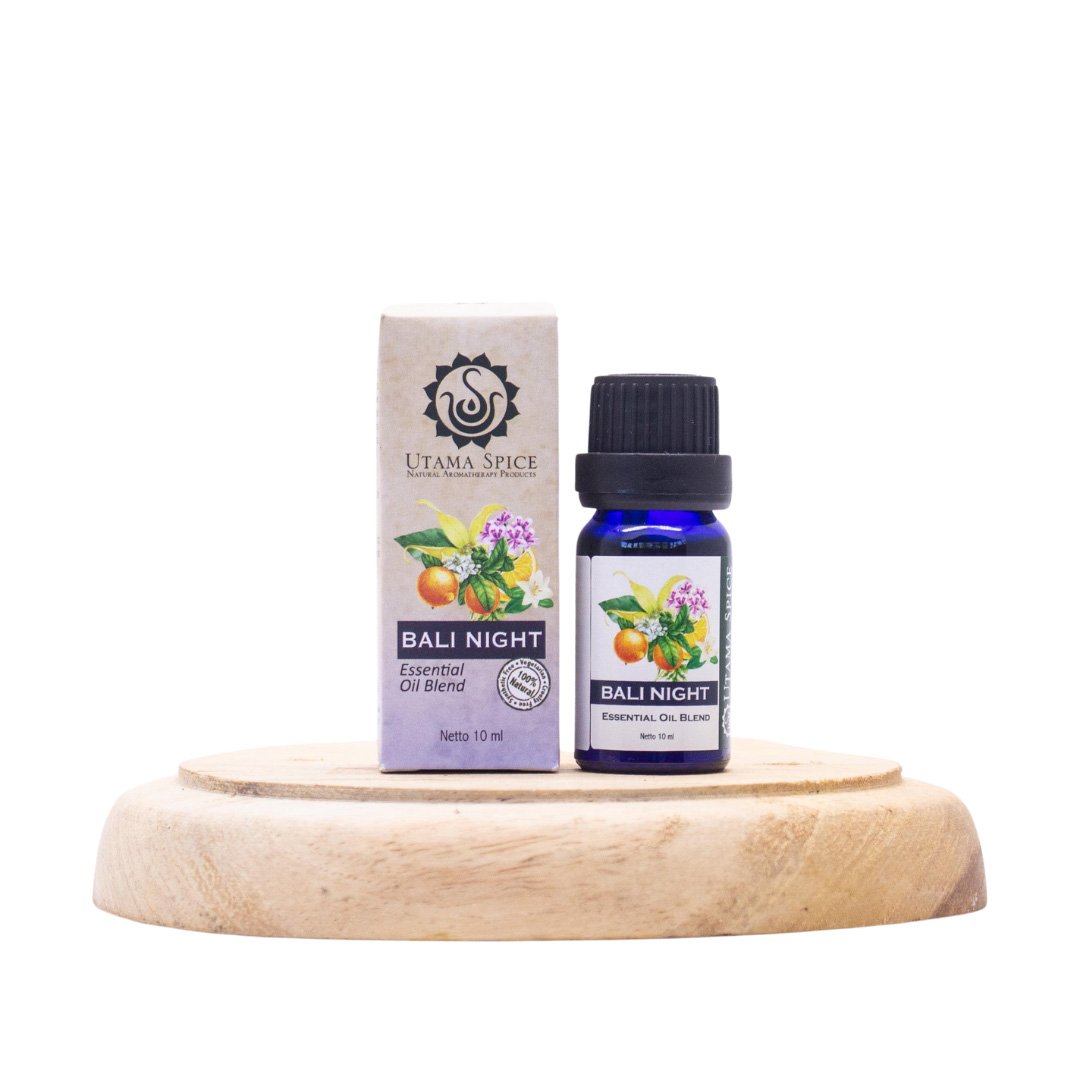
Bali Night Essential Oil Blend, layered for slow evenings
Seven pure essential oils blended in small batches in Bali. Tangerine and lemon open with sun-warmed citrus, ylang ylang and cananga carry a soft floral middle, vetivert and rose geranium anchor the base in green earth. Add a few drops to your diffuser, or refill the bottle when it runs low. Crafted in Bali since 1989.
Frequently asked questions about essential oil blends for diffuser
How many drops of essential oil should I use in a diffuser?
For a standard 100 ml ultrasonic diffuser, six drops is a gentle starting point, eight is a moderate level, and ten is rich. Smaller diffusers and nebulizers need fewer drops, and you should always begin lighter than you expect to. Olfactory fatigue happens quickly, so a saturated room is rarely the goal.
Can I mix essential oils in the diffuser water?
Yes. Add drops directly to the water reservoir. For repeated use of the same blend, you can also pre-mix the oils in a small dark glass bottle and add drops from there, which keeps your ratios consistent and your hands cleaner.
Which essential oil blends are best for sleep?
Lavender is the most studied. Pair it with vetivert, cedarwood, or Roman chamomile for a fuller blend. Diffuse for 30 to 60 minutes before bed, then turn the diffuser off. A continuous run during sleep tends to disrupt rather than support rest.
How long should I run my diffuser?
Twenty to thirty minutes on, an hour off, is a reasonable rhythm for most rooms. This gives your nose time to reset and reduces the risk of irritating airways. Some intermittent settings on modern diffusers do this automatically.
Are essential oil blends safe to diffuse around pets?
Cats are particularly sensitive to citrus, tea tree, peppermint, eucalyptus, and pine. Diffuse only in rooms that pets can leave freely. Dogs are more tolerant, but still benefit from open doors and shorter sessions. When in doubt, diffuse elsewhere and let the scent travel.
Do I need a different blend for an ultrasonic diffuser versus a reed diffuser?
The recipe principles are the same, but lighter oils tend to wick better in reeds. Heavy resins, absolutes, and very viscous oils like undiluted vetivert or patchouli are better suited to ultrasonics or nebulizers, where evaporation is mechanically assisted. Our guide to aromatherapy diffuser oils goes deeper into oil selection by device type.
A quieter way to scent a space
Essential oil blends for diffuser are simple in concept and rich in practice. Three notes, a clear intention, a device that suits the room, and a willingness to begin lightly and adjust. That is most of the craft. The rest is the slower work of learning your own preferences, paying attention to what each oil does when it lands in your space, and keeping the practice honest by noticing where your oils come from, how often you refill, and whether your home feels more grounded for the ritual.
What you give, you get back. That is the line we keep coming back to. A diffuser blend, treated with care, gives back more than scent. It gives back attention. It gives back a sense of place. It gives back a slow, daily reminder that ritual is small, and small is enough.