Essential oil blends: a guide to aromatherapy combinations that work
Essential oil blends are more than a sum of their parts. When two or more plant extracts combine in the right proportions, something shifts: the scent deepens, the therapeutic effect strengthens, and the experience becomes something no single oil could deliver alone. In Bali, where we have been blending botanicals since 1989, this principle is not new. It is the foundation of every formulation we craft.
Whether you are drawn to aromatherapy for relaxation, mental clarity, or simply because you love how a well-made blend fills a room, understanding how essential oil blends work gives you more than a pleasant scent. It gives you a tool for daily wellness, grounded in both science and tradition. This guide walks through the principles of blending, the scent families worth knowing, purpose-built combinations for real life, and simple recipes you can try at home.
What are essential oil blends (and why they matter)
An essential oil blend is a deliberate combination of two or more pure essential oils, mixed in specific ratios to achieve a particular aroma, mood, or therapeutic outcome. Unlike single-note oils, which carry one plant’s concentrated essence, blends create layered profiles that evolve as you inhale them.
The practice of blending plant extracts stretches back thousands of years across cultures. In Indonesian traditional herbal knowledge, complex botanical combinations have long been central to both wellness rituals and daily care. Balinese healers, known as balian, work with layered herbal preparations where each ingredient supports and amplifies the others. This same philosophy guides how we approach formulation at Utama Spice.
Modern aromatherapy research supports what traditional practitioners have understood intuitively. A 2021 study published in the Journal of Ethnopharmacology found that certain essential oil combinations demonstrated stronger antimicrobial activity together than any single oil alone. This phenomenon, called synergy, is what makes blending so powerful. The whole genuinely becomes greater than the parts.
For practical purposes, essential oil blends fall into two broad categories: aromatic blends, designed primarily for their scent profile (used in diffusers, candles, and room sprays), and therapeutic blends, formulated for specific wellness outcomes like stress relief, respiratory support, or skin nourishment. Many blends serve both purposes at once, which is one reason aromatherapy oils for skin have become such a significant category in natural wellness.
How essential oil blending works: notes, ratios, and synergy
The art of blending borrows language from perfumery. Every essential oil is classified by its “note,” which describes how quickly it evaporates and when you perceive it in a blend.
- Top notes are the first impression. They are light, bright, and evaporate quickly (within 30 minutes to two hours). Citrus oils like lemon, bergamot, and sweet orange are classic top notes. So are eucalyptus and peppermint.
- Middle notes (sometimes called heart notes) form the body of the blend. They emerge as top notes fade and linger for two to four hours. Lavender, geranium, ylang ylang, and rosemary sit here.
- Base notes are deep, rich, and grounding. They anchor the blend, giving it staying power that can last for hours. Sandalwood, vetiver, patchouli, and cedarwood are reliable base notes.
A well-constructed essential oil blend typically follows a ratio of roughly 30% top notes, 50% middle notes, and 20% base notes. This is not a rigid formula. Experienced blenders adjust based on the specific oils and the desired effect. But as a starting framework, it reliably produces balanced, evolving scent profiles.
Beyond scent architecture, synergy is the deeper principle at work. Certain chemical compounds in essential oils enhance each other when combined. Linalool (found in lavender) and limonene (found in citrus oils) together create a calming effect more pronounced than either compound alone. This is why thoughtful blending is not simply mixing pleasant scents: it is designing a botanical interaction with a purpose.
Safety also matters in the blending process. Essential oils are highly concentrated plant extracts. When creating blends for topical use, always dilute in a carrier oil. Coconut oil, jojoba, and tamanu are excellent carriers. We use cold-pressed coconut oil across many of our formulations because it absorbs cleanly and carries botanical compounds into the skin without clogging pores.
Five scent families every blender should know
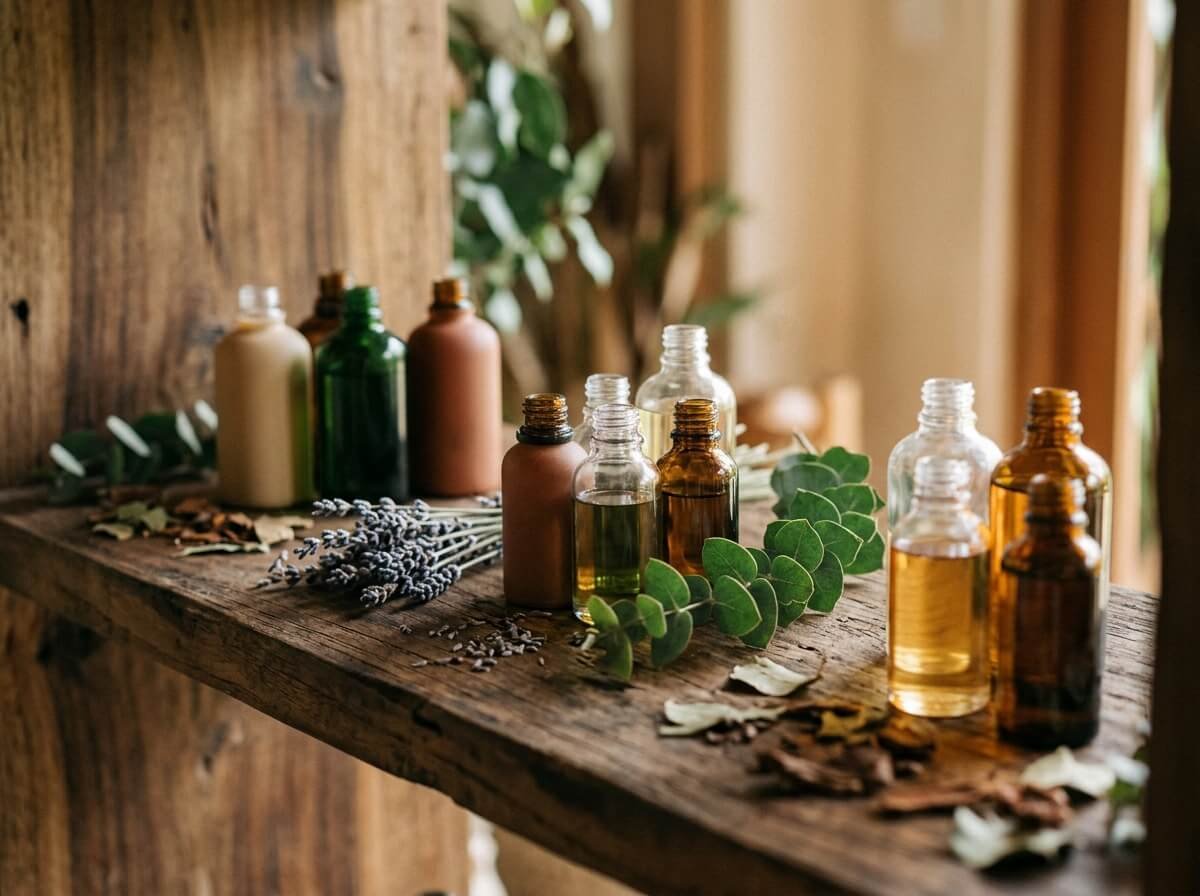
Understanding scent families helps you predict which oils will harmonize. Think of each family as a palette. Oils within the same family blend effortlessly, while oils from neighboring families create interesting contrast and depth.
Floral
Lavender, ylang ylang, geranium, jasmine, and rose. Floral oils bring warmth, softness, and emotional balance. They are the backbone of many relaxation blends and pair naturally with citrus and woody families. Ylang ylang, which grows abundantly across Bali’s tropical landscape, carries a rich, slightly sweet profile that anchors our Bliss Essential Oil Blend and several skincare formulations.
Citrus
Sweet orange, lemon, bergamot, grapefruit, and lime. Bright, uplifting, and energizing. Citrus oils are the most accessible entry point for beginners because they blend well with almost everything. They are also among the most volatile (fast-evaporating), so they work best as top notes in a layered blend.
Herbaceous
Rosemary, basil, clary sage, thyme, and marjoram. Green, fresh, and clarifying. Herbaceous oils bring mental sharpness and are staples in focus and concentration blends. They bridge the gap between citrus brightness and woody depth.
Woody
Sandalwood, cedarwood, vetiver, and pine. Grounding, earthy, and meditative. Woody oils are the preferred base notes for blends designed to calm, center, or create a contemplative atmosphere. If you enjoy natural incense, you already know these scent profiles well.
Resinous and spicy
Frankincense, myrrh, cinnamon, clove, and black pepper. These add warmth, complexity, and sensory depth. A few drops of frankincense can transform a simple floral blend into something ritualistic and grounding. Spice notes should be used sparingly: they are potent and can overwhelm a blend if over-applied.
Essential oil blends for relaxation, focus, and energy
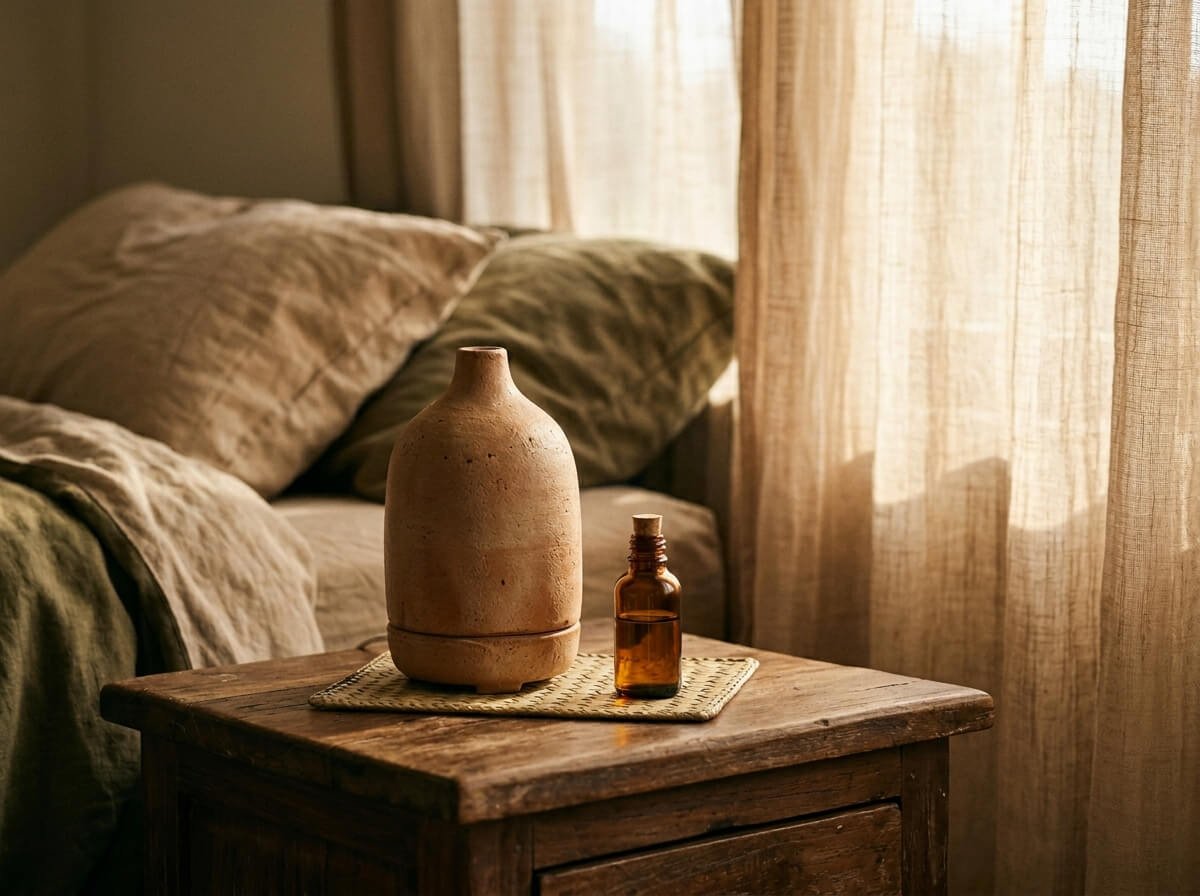
One of the most practical reasons to learn about essential oil blends is that different combinations serve different purposes throughout your day. Here are three categories of blends, each with a distinct function, that reflect how we think about aromatherapy at Utama Spice.
Blends for relaxation and sleep
Relaxation blends prioritize calming compounds like linalool, linalyl acetate, and alpha-pinene. The classic combination is lavender, cedarwood, and bergamot: a floral-citrus top that settles into a woody, meditative base. For deeper relaxation, add vetiver or sandalwood.
Diffusing a relaxation blend 30 minutes before sleep signals your nervous system to begin winding down. A nebulizing diffuser delivers the full aromatic profile without heat, which preserves the volatile compounds that make essential oils effective in the first place.
You can also apply a pre-diluted blend topically. Our Bliss Essential Oil Roller combines ylang ylang, patchouli, and other calming botanicals in a coconut oil base, ready to apply to pulse points before bed or during moments that call for quiet.

Blends for focus and clarity
Concentration blends lean on herbaceous and citrus oils. Rosemary, peppermint, and lemon is a time-tested combination for mental sharpness. The 1,8-cineole in rosemary has been studied for its effects on cognitive performance, with a 2012 study in Therapeutic Advances in Psychopharmacology reporting improved speed and accuracy on mental tasks after rosemary exposure.
For a gentler focus blend, try sweet orange, basil, and frankincense. The citrus lifts attention, the basil sharpens it, and the frankincense provides a grounding base that keeps the blend from feeling jittery.
Blends for energy and uplift
When you need vitality without overstimulation, reach for citrus-forward blends. Grapefruit, lemongrass, and black pepper creates a clean, warming energy. Peppermint and eucalyptus together deliver an immediate sense of alertness and open breathing.
The Blue Tansy Essential Oil Roller is worth exploring if you are curious about how blue tansy’s distinctive aroma adds a cooling, herbaceous dimension to a blend. Blue tansy contains chamazulene, the same compound that gives German chamomile its calming properties, but in a profile that feels more invigorating than sedating.

Experience a blend crafted for calm
Our Bliss Essential Oil Blend combines ylang ylang, patchouli, and other Balinese botanicals into a single 10 ml bottle. Hand-blended in Ubud since 1989. Diffuse it, add it to a carrier oil, or simply open the bottle and breathe.
How to use essential oil blends in daily life
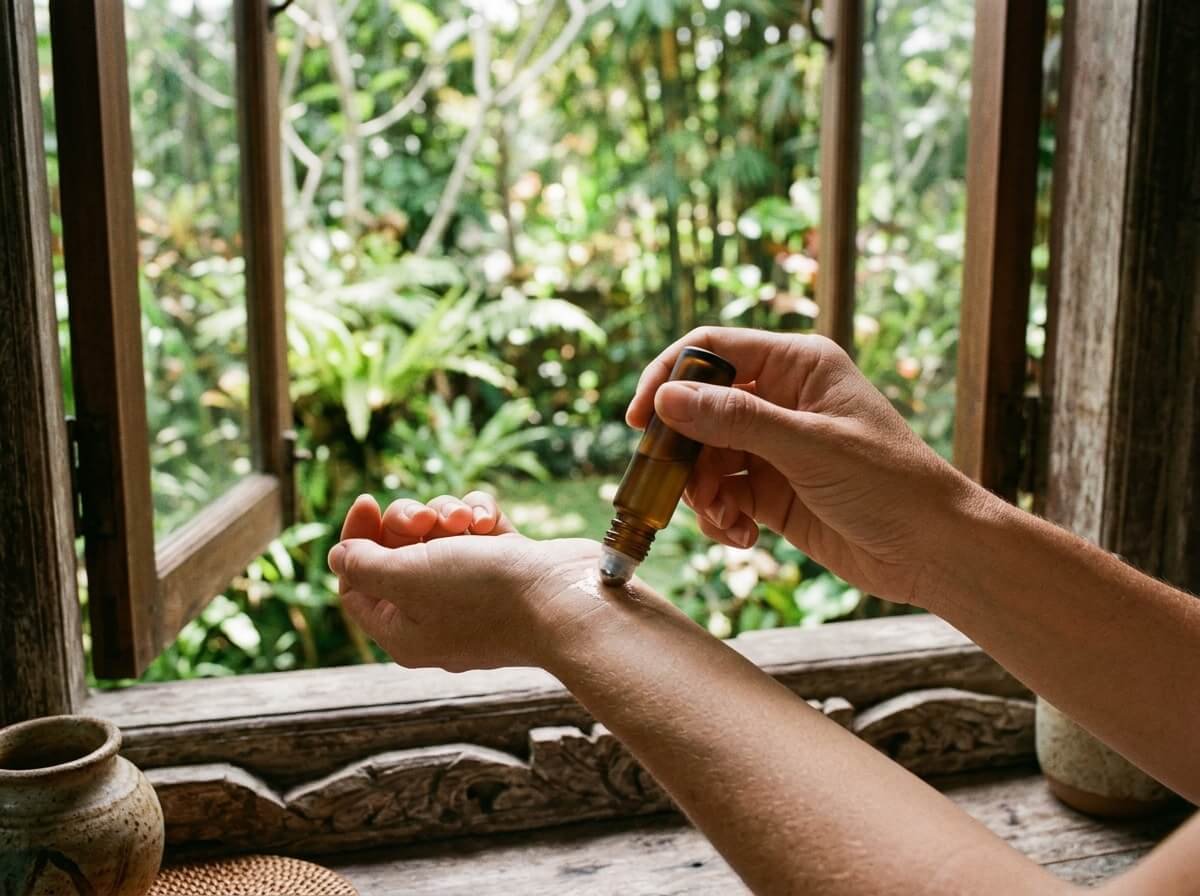
Essential oil blends are versatile enough to fit into almost any routine. The key is choosing the right delivery method for the moment.
Diffusion
The simplest way to experience a blend. Add five to eight drops to a diffuser and let the aroma fill your space. Nebulizing diffusers (which use no water or heat) preserve the full chemical profile of the oils. Ultrasonic diffusers (which use water) dilute the scent but add humidity, which some people prefer. Either works. We use nebulizing diffusers in our Ubud workshop because they deliver the most authentic scent representation.
Topical application
Always dilute essential oils in a carrier before applying to skin. A safe general ratio for adults is 2% to 3%: roughly 12 to 18 drops of essential oil per 30 ml of carrier oil. Apply to pulse points (inner wrists, behind ears, base of throat) where body heat helps release the aroma throughout the day.
Pre-blended rollers remove the guesswork. They are already diluted to safe concentrations and designed for on-the-go use, whether at your desk, on a flight, or as part of a morning ritual.
Home fragrance
Beyond diffusers, essential oil blends work beautifully in homemade linen sprays, bath soaks, and candles. A few drops of a relaxation blend on your pillowcase before bed, or a citrus-spice blend in a warm bath on a cold evening, can shift the atmosphere of your entire home. Our Calming Candle uses a curated essential oil blend (not synthetic fragrance) to create the same kind of layered, evolving scent profile we have been describing.
Skincare and body care
Many essential oil blends have properties that benefit the skin directly. Tea tree and lavender together offer gentle antibacterial and soothing effects. Frankincense and geranium support skin cell renewal. When formulated properly and paired with quality carrier oils, these blends do double duty: your skin absorbs the nourishing botanical compounds while you inhale the therapeutic aroma. It is one reason we include carefully calibrated essential oil blends in our deodorant formulations and face serums.
Three simple essential oil blend recipes to try at home
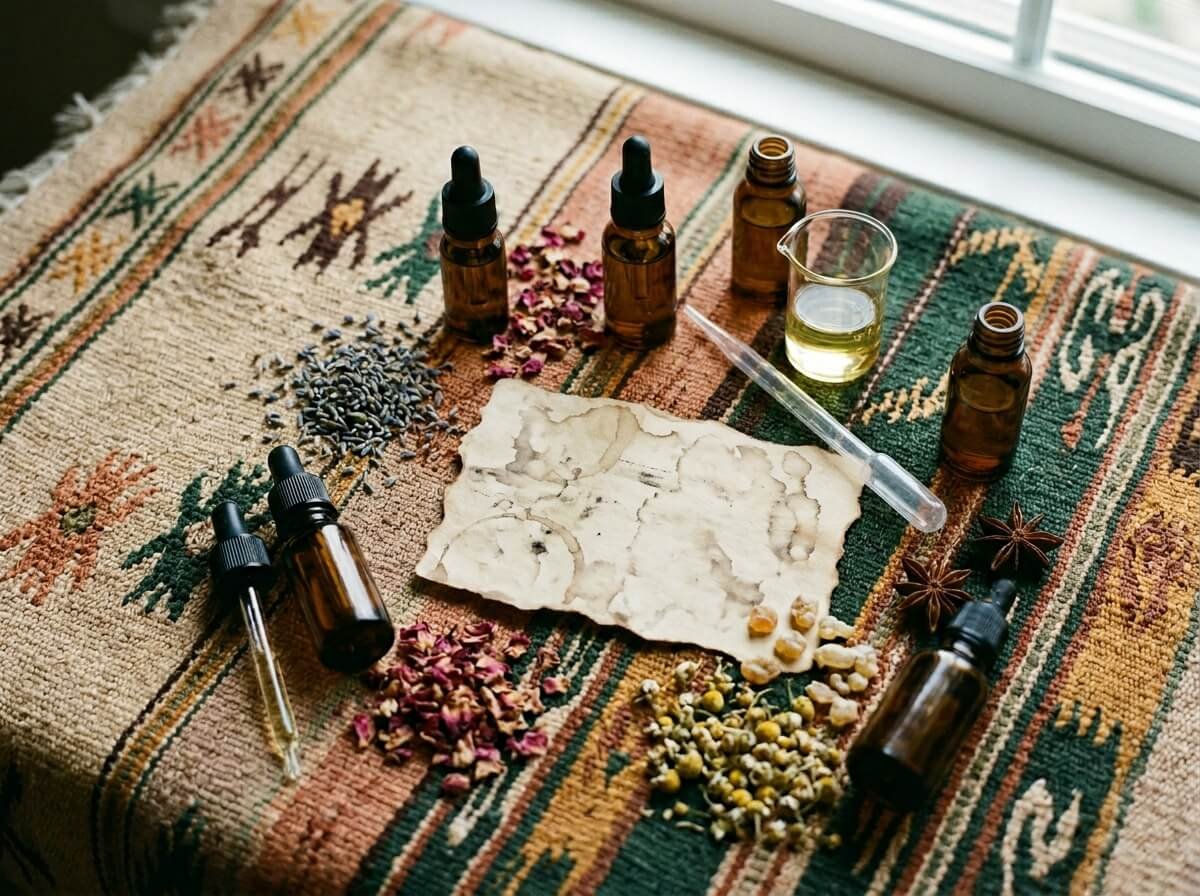
You do not need a laboratory to start blending. A few quality essential oils, a carrier oil, and a clean glass bottle are enough. Here are three blends we return to again and again, each rooted in the same principles our team uses when developing new formulations in Bali.
Evening wind-down blend (diffuser)
- Four drops lavender (middle note, calming)
- Two drops cedarwood (base note, grounding)
- Two drops bergamot (top note, gentle uplift that eases into calm)
Add to your diffuser 30 minutes before you want to sleep. The bergamot provides an initial brightness that fades gracefully into the warm lavender-cedarwood base. This blend follows the classic 30/50/20 note ratio almost exactly.
Morning clarity blend (roller or diffuser)
- Three drops sweet orange (top note, energizing)
- Three drops rosemary (middle note, clarifying)
- Two drops frankincense (base note, centering)
For a roller: combine with 10 ml of jojoba or fractionated coconut oil in a roll-on bottle. Apply to inner wrists and temples before your morning work session. For diffusion, use the drops as listed.
Weekend reset blend (bath or body oil)
- Three drops ylang ylang (middle note, sensory and balancing)
- Two drops patchouli (base note, earthy and grounding)
- Two drops grapefruit (top note, fresh and cleansing)
- One drop clove bud (spice accent, warming)
Mix into 30 ml of carrier oil for a body oil, or add six to eight drops directly to a warm bath. The ylang ylang and patchouli create a rich, tropical base that echoes the Balinese botanical tradition we draw from every day. The grapefruit and clove add brightness and warmth. This is the kind of blend that makes a Saturday afternoon feel like a ritual rather than a routine.
Frequently asked questions about essential oil blends
How many essential oils should be in a blend?
Most effective blends use three to five oils. Fewer than three can feel one-dimensional, while more than five risks muddling the scent profile. Start simple: a top, middle, and base note. As your nose develops, add complexity gradually.
Can you mix any essential oils together?
Most essential oils are safe to combine, but not all combinations are pleasant or beneficial. Oils within the same scent family or adjacent families generally harmonize well. Some combinations to approach carefully: clove with citrus (overpowering), peppermint with ylang ylang (competing profiles). When in doubt, blend one drop of each on a cotton pad and smell them together before committing to a full bottle.
Do essential oil blends expire?
Yes. Most essential oil blends retain their full potency for one to two years when stored properly: in dark glass bottles, away from direct sunlight, at room temperature. Citrus-heavy blends tend to oxidize faster (six to 12 months), while resinous blends like frankincense-based combinations can last longer. Always store blends with the cap tightly sealed.
Are essential oil blends safe for children and pets?
Some essential oils are not suitable for children under six or for use around certain pets (cats are particularly sensitive to phenol-rich oils like tea tree, clove, and thyme). For children, stick to gentle oils like lavender and chamomile at lower dilution rates (0.5% to 1%). For households with pets, diffuse in well-ventilated spaces and avoid applying undiluted oils to animals. When in doubt, consult a qualified aromatherapist.
What is the difference between essential oil blends and fragrance oils?
Essential oils are distilled or cold-pressed from actual plant material. Fragrance oils are synthetic formulations designed to mimic a scent. The difference matters: essential oils carry the therapeutic compounds of the source plant, while fragrance oils offer scent only. At Utama Spice, every blend we formulate uses pure essential oils, never synthetic fragrance. Transparency about ingredients is not optional for us; it is the starting point.