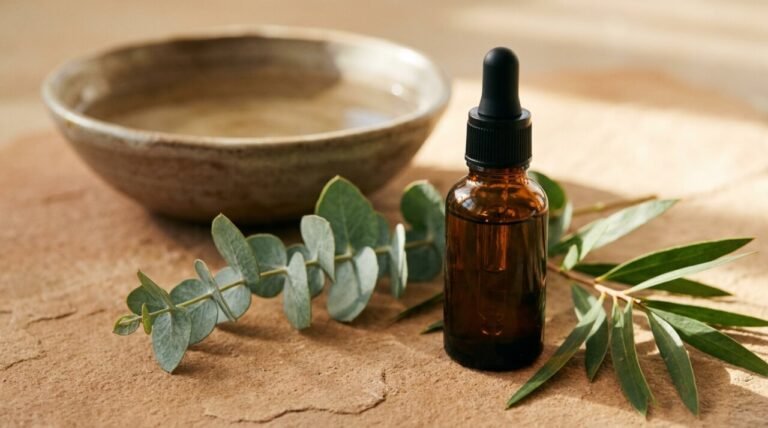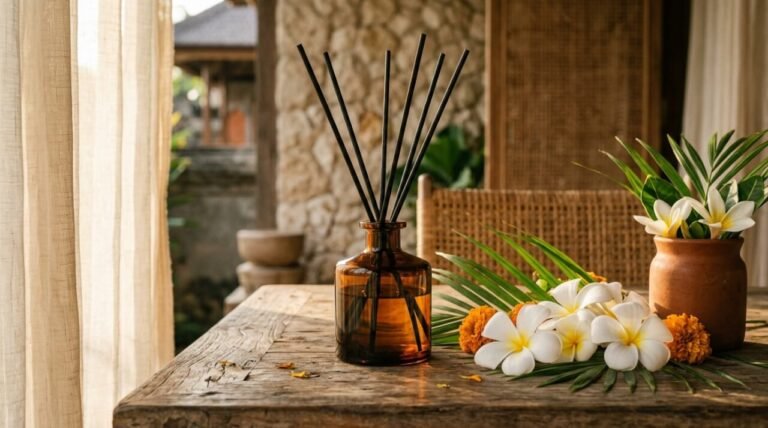
Balinese massage oil: the botanicals, the ritual, and how to choose a real one for home use
A real Balinese massage oil is not a spa souvenir. It is a formulation tradition with a thousand-year lineage, written in tropical carrier oils, in temple-grown botanicals, and in the daily rituals that turn a bottle of oil into a household tool for rest, warmth, and care. Most of what is sold under the name today, in resort gift shops and on global marketplaces, borrows the aesthetic without the lineage. This guide is the formulator-led explainer the search results have been missing.
Here we go inside what an oil from Bali actually contains, why each carrier and each botanical was chosen, and how the daily rhythm of urut Bali (the home-based Balinese self-massage), boreh (warming body paste), and melukat (water cleansing) shape how oil is used from sundown to morning. By the end you will know what to look for on a label, how to dilute and store one at home, and how to use the ten quiet minutes that the tradition asks for. The goal is simple: that you can choose a real Balinese massage oil with the same confidence a Balinese household would, and use it as the daily ritual it was made for.
What makes an oil Balinese: the formulation tradition behind the bottle
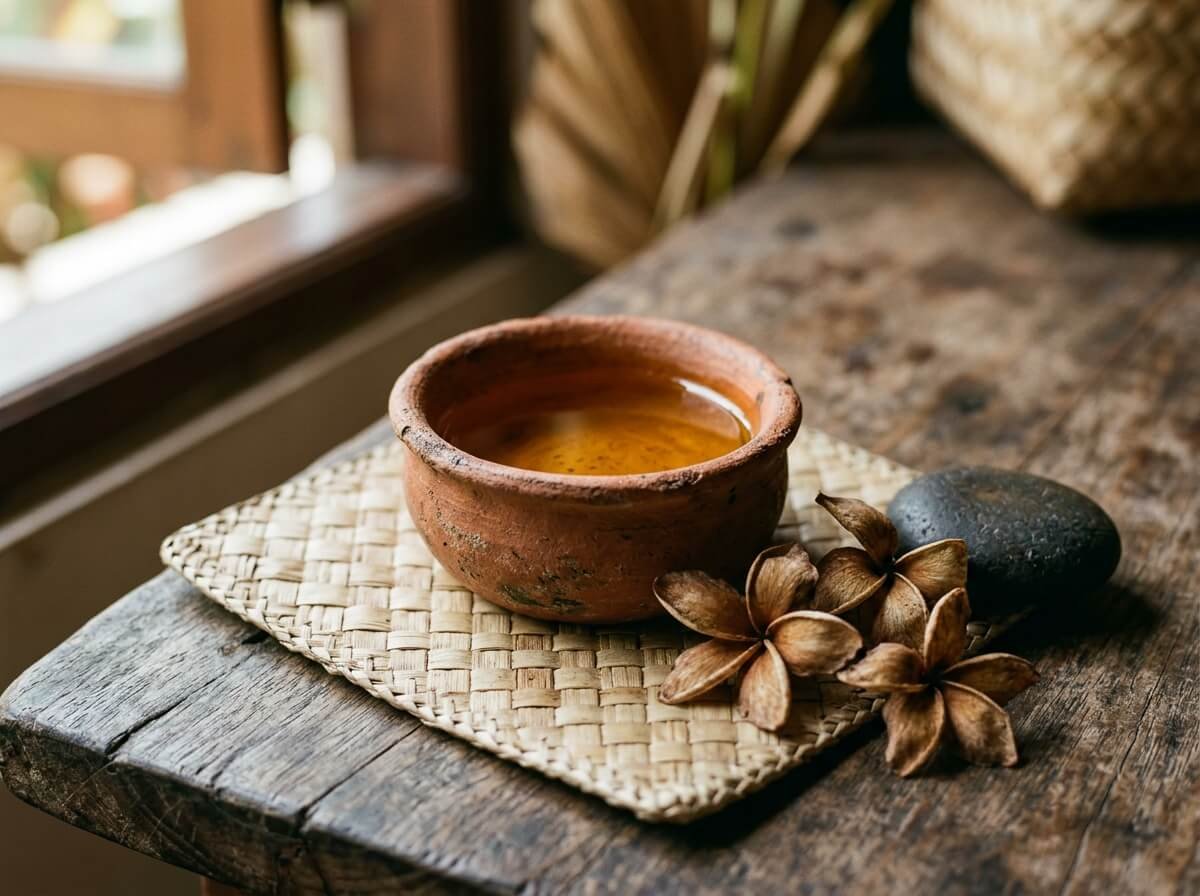
The first thing to understand is that, in Bali, oil is rarely thought of as a single product category. It is closer to a verb. The same household will press coconut oil for cooking in the morning, blend a softer oil for a baby’s evening massage, and warm a stronger one between the palms before bed for a sleep ritual. The bottle on the shelf is the end of a long chain that begins in the garden, runs through the kitchen, and ends in quiet contact with skin. To say an oil is Balinese is to place it inside that chain.
What separates the tradition from a generic spa massage oil is the way carriers and botanicals are matched to season, to time of day, and to the person being cared for. A new mother is given a different oil than a farmer with sore shoulders. A child receives a lighter dilution than an elder. The oil for the cool of the morning is not the same oil that closes the day. None of this is exotic, and none of it requires a certification. It is just the slow accumulation of household knowledge that older Balinese formulators still consult and that our work at Utama Spice is built on. Our guide to Balinese skincare walks the broader heritage in more detail.
The second thing is that the oil is never the centerpiece. The hand is. A Balinese massage oil is built to support the work of the palm sliding along the limb, of the thumb finding the sore line above the shoulder blade, of the warm fingertips at the temples. The oil thins skin friction and carries the botanicals, and then it gets out of the way. A good one disappears into use. A poor one sits on the surface, gummy or greasy, and reminds you it is there. That practical, daily-use test matters more than any marketing claim. If a Balinese household would not use it on a sleepy child, it is not a Balinese massage oil.
The carrier oils: coconut, sesame, and kemiri behind the base
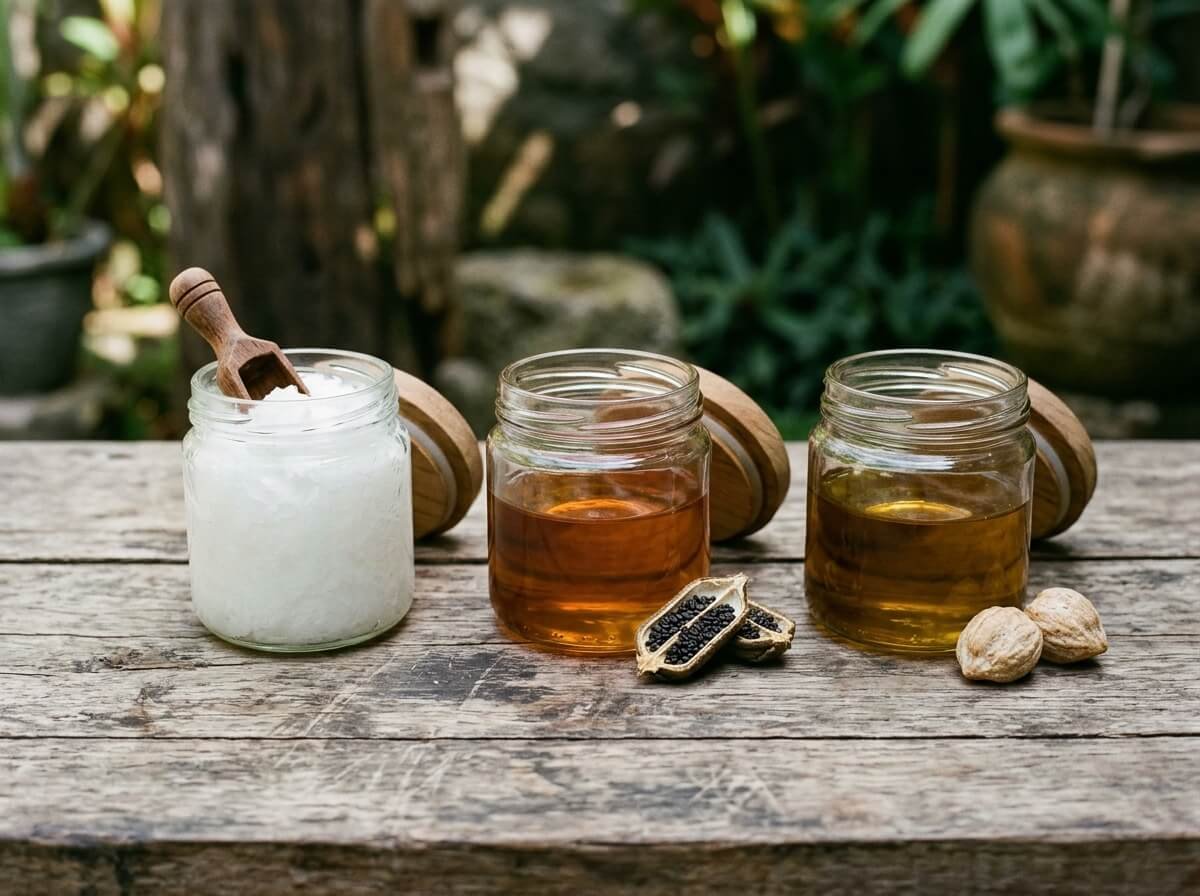
Every Balinese massage oil starts with a carrier. The carrier is the slow, fatty, mostly unscented base that holds the botanicals and that does the actual contact work with the skin. Three carriers dominate the tradition: coconut, sesame, and kemiri, the candlenut. Each was chosen because it grew in the island’s soil, because it pressed cleanly without industrial machinery, and because its fatty-acid profile suited a humid climate. Modern formulators add argan, sweet almond, and jojoba, but the local three still anchor the category.
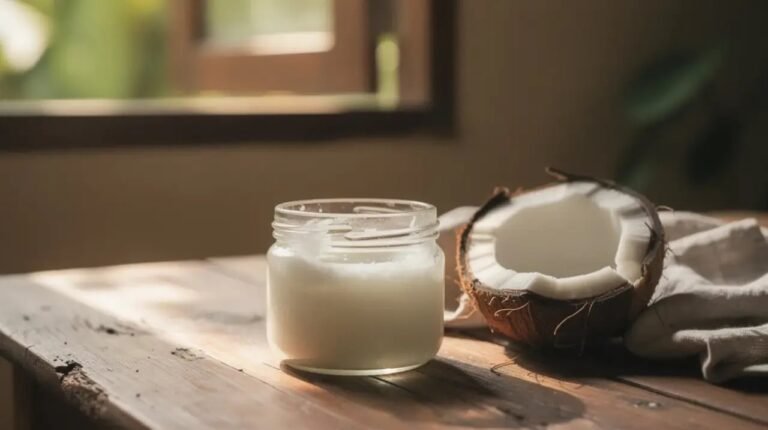
Coconut is the warmest carrier, and the most common. Cold-pressed virgin coconut oil is rich in medium-chain triglycerides, which absorb relatively quickly and leave a soft, dry-feeling finish. Bali grows the nuts and presses the oil on the same coast, so the supply chain is honest. We cover the practical details in our best coconut oil for skin guide, but the short version is that coconut carries warm botanicals well, holds clove and ginger especially gracefully, and behaves predictably across seasons. It is the carrier most often used in baby oil and in the gentler urut Bali blends.
Sesame is the heat carrier. Cold-pressed sesame is denser than coconut, slower to absorb, and historically used for muscle work on adults. Traditional Balinese formulators use it for the deeper massage that follows a long day of physical labor. It pairs naturally with sandalwood and clove. Kemiri, the candlenut, sits between the two. Pressed from the seed of Aleurites moluccanus, it is closer in feel to the Hawaiian kukui (the two trees are botanical cousins, and you can read more in our kukui oil guide). Kemiri is lighter than sesame, slightly more emollient than coconut, and the carrier most often used in hair-and-scalp oils.
A modern Balinese formulation may also use argan or jojoba as a stabilizing fraction, especially in higher-priced finished oils. Argan brings vitamin E and a faster sink-in, and it pairs cleanly with floral aromatics. Our Argan Oil 30ml is the carrier reference we use when blending small batches at home. The principle is the same across all four: a good carrier is single-origin, cold-pressed, and stored away from heat and light.
The botanical palette: frangipani, ylang-ylang, sandalwood, and the supporting cast
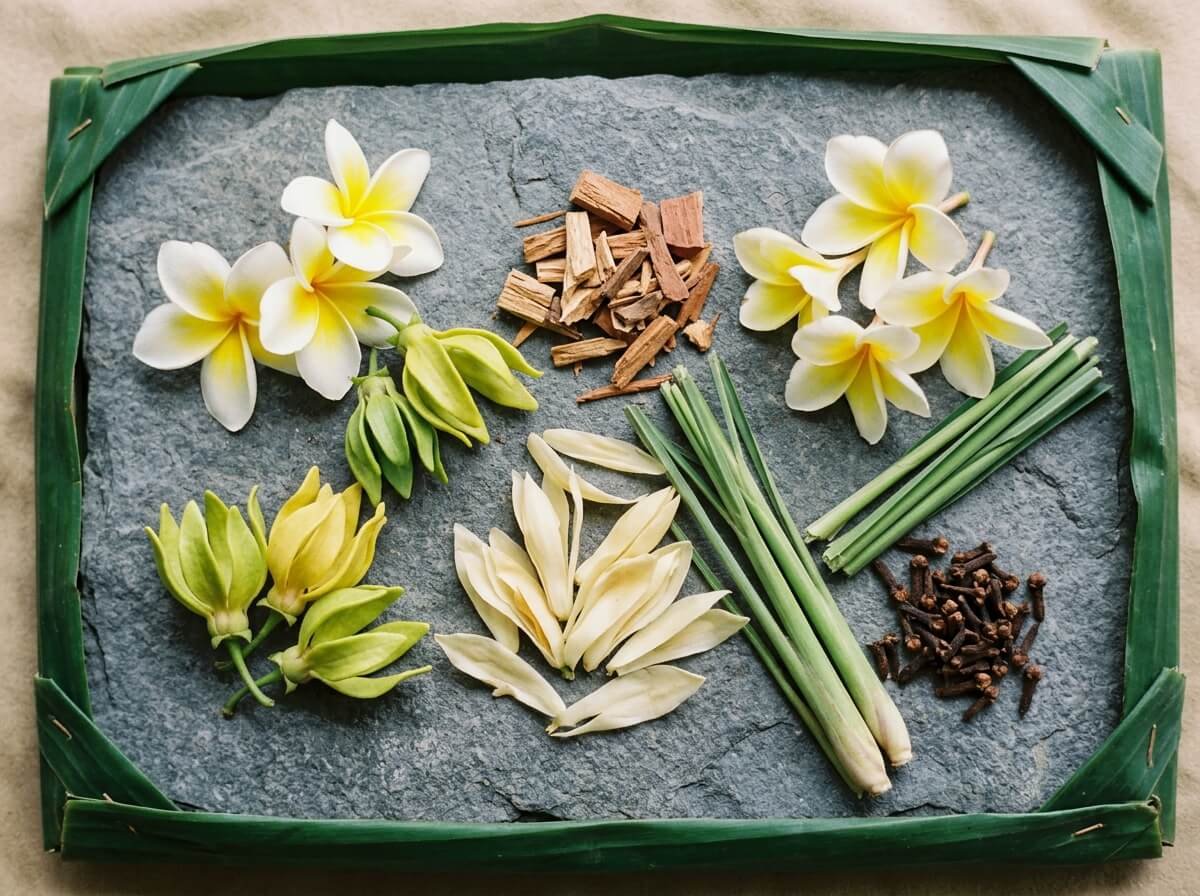
The botanicals are where the oil declares its dialect. Six botanicals form the working palette of a traditional Balinese massage oil, and most finished bottles contain three or four of them. Frangipani (the Balinese jepun) is the warm floral with a soft, honey edge. It is the scent of temple offerings and the scent most western visitors first associate with the island. In oil form, frangipani lifts a blend without ever feeling sharp, and pairs gracefully with both coconut and sesame carriers.
Kenanga, sold internationally as ylang-ylang, is the darker, more resonant floral. The two trees are close cousins. Kenanga is grown across the Indonesian archipelago and steam-distilled into a heady, slightly fruit-edged oil. Our Ylang Ylang Essential Oil is a single-origin Indonesian distillation that anchors many of our heritage blends. Sandalwood, cendana, is the third cardinal botanical. Indian sandalwood is now under CITES protection, which has rightly reshaped sourcing. Honest Balinese formulators have moved toward Australian sandalwood or to Santalum austrocaledonicum from New Caledonia, both of which deliver the dry, woody base note that the tradition asks for. If a label is not transparent about its sandalwood origin, treat that as a flag.
Cempaka is the quieter floral. It carries a fresher, slightly green-citrus note and is often used in morning blends. Sereh (lemongrass) is the cooling herb that lifts the head and gives the blend a sharp, alive top note. Cengkeh (clove) is the warming spice. In small percentages it brings a touch of warmth to the skin and a base-note grounding to the aromatic profile. The supporting cast also includes ginger, vetiver, jasmine, and turmeric leaf, depending on the formulator’s lineage. Most evening blends will contain frangipani plus kenanga plus a wood base plus a small percentage of clove or vetiver. Our Bali Night Essential Oil Blend 10ml is the bottled expression of that classic evening combination, and it gives a useful template for what a balanced Balinese aromatic profile should feel like.
The daily oil rhythm: urut Bali, boreh, and the post-bath layering
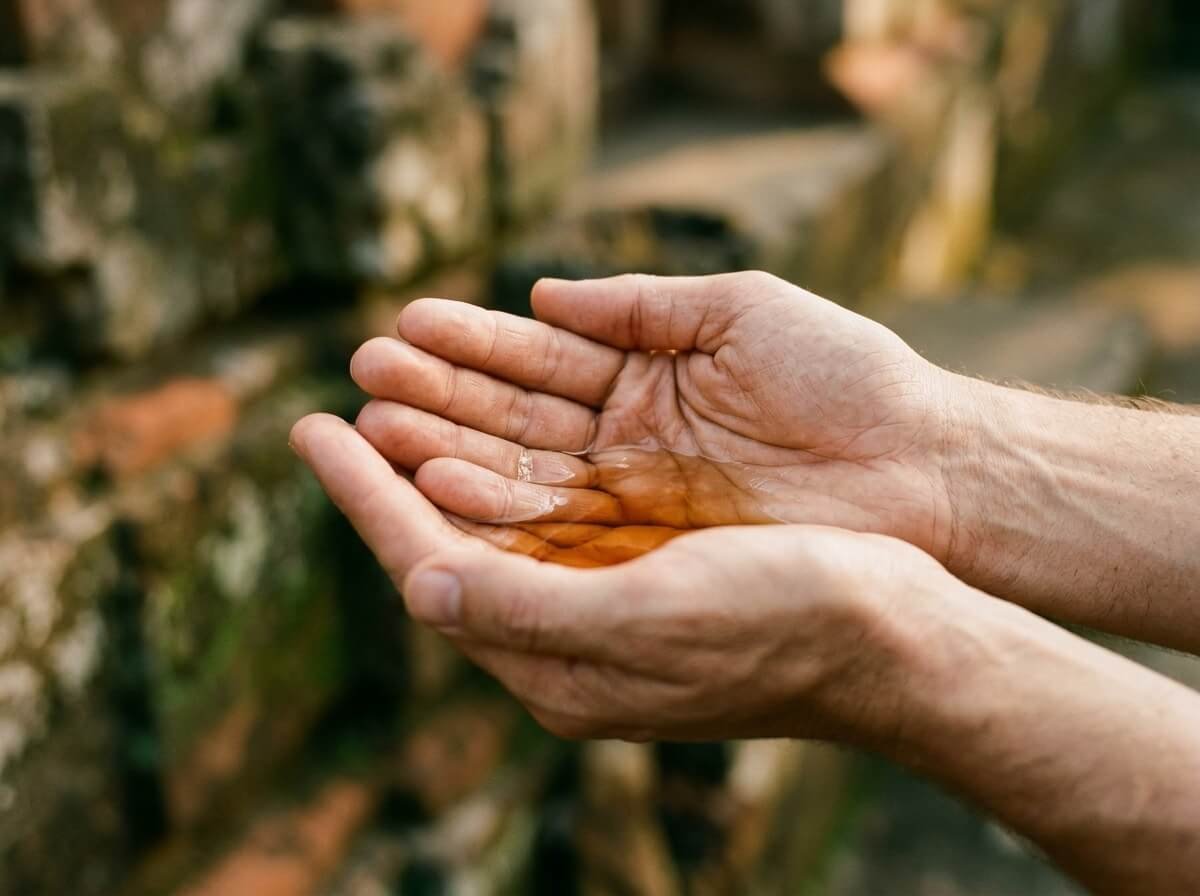
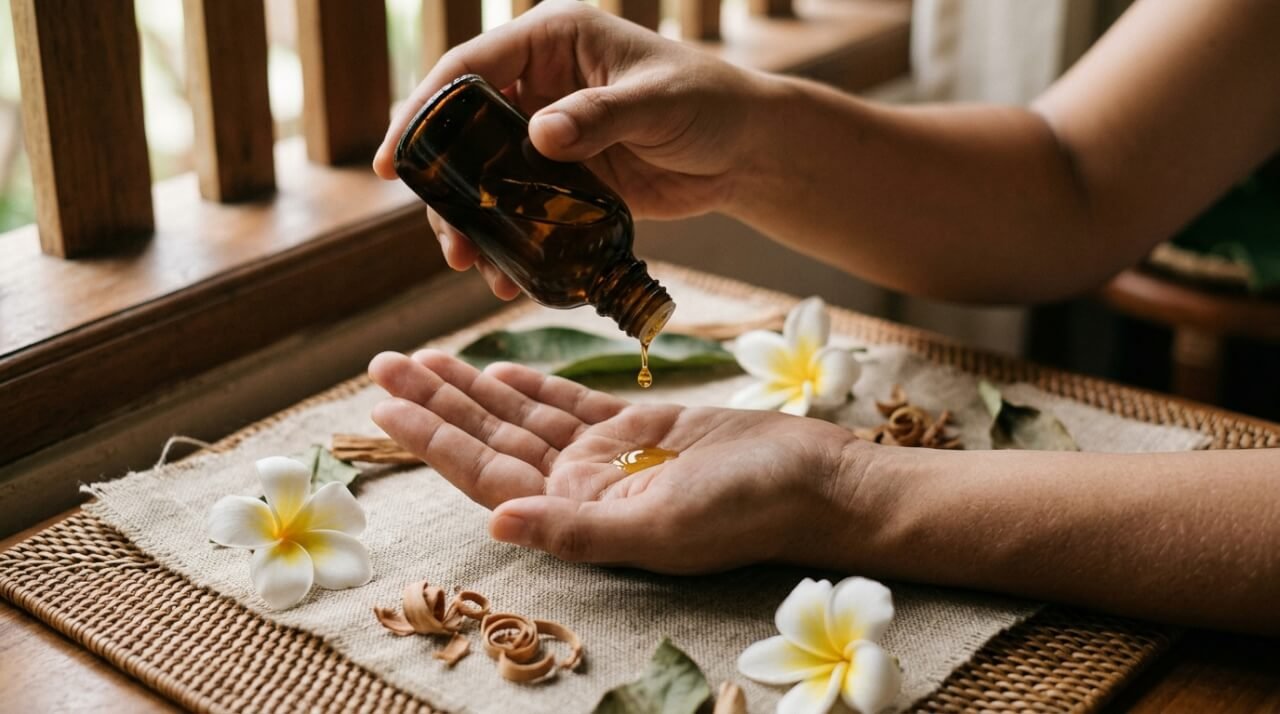
Knowing the ingredients is only half the work. The Balinese tradition uses oil on a rhythm, and that rhythm is what separates a daily ritual from an occasional treatment. There are three core practices to know. Urut Bali is the home-based self-massage that closes the day. It is usually done after the late-afternoon bath, when the skin is warm and slightly damp, and it uses long, calm strokes along the limbs, drawing toward the heart. The oil is warmed first between the palms, then applied with the flats of the hands, not the fingertips. Our guide to aromatherapy oils for massage covers the practical hand technique in more detail.

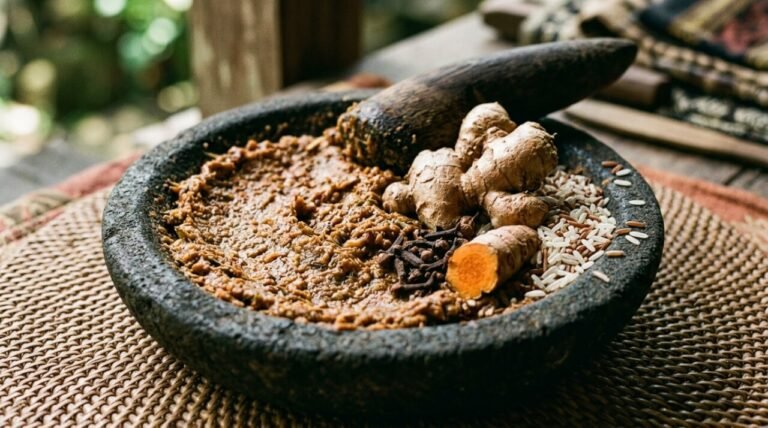
Boreh is the warming body paste, traditionally a blend of rice flour, ginger, clove, and turmeric loosened with oil. It is applied in cool months, after rain, or when someone is recovering from physical strain. Boreh is not technically a massage oil, but the oil it is loosened with is part of the same kitchen palette: coconut warmed gently on the stove, with two or three drops of the household aromatic blend stirred in. The paste is left on the skin for fifteen or twenty minutes, then rinsed away. The skin underneath is left warm, slightly flushed, and easy to oil again.
Melukat sits adjacent to massage rather than inside it. It is the water cleansing ritual at temple springs, often before a ceremony or after a period of grief or transition. Oil is applied later, once the skin has dried, as a way of closing the body back to the world. The aromatic the household reaches for in that moment is usually frangipani or sandalwood, the same botanicals offered at the temple itself. None of these practices require complicated tools. Each of them does require oil that respects skin and time. The richer body context lives in our illipe butter benefits article, which traces the Kalimantan rainforest botanicals that share the same regenerative thread as Bali’s oils.
How to choose a real balinese massage oil for home use
Here is the practical buyer’s checklist. The four questions to ask any bottle that calls itself a Balinese massage oil are simple, and they will surface most of what matters. First, what is the carrier, and is it single-origin and cold-pressed? A label that lists “vegetable oil” or “fragrance carrier” is not honest. Look for “cold-pressed virgin coconut oil,” “cold-pressed sesame oil,” or “cold-pressed kemiri / candlenut oil,” and a second carrier such as argan, jojoba, or sweet almond if the blend is layered.
Second, what is the aromatic dilution? Traditional Balinese household oils sit between 1 and 3 percent essential oil by volume. That is enough scent to carry the ritual, low enough to be safe for daily skin contact. Anything labeled as “massage oil” with no essential oil concentration noted, but with strong scent at the cap, is likely either an undeclared synthetic fragrance or an unsafely high essential oil dilution. Both are reasons to pass.
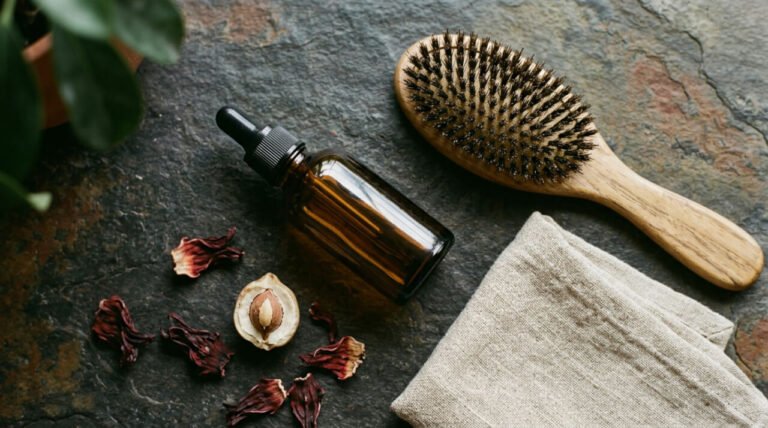
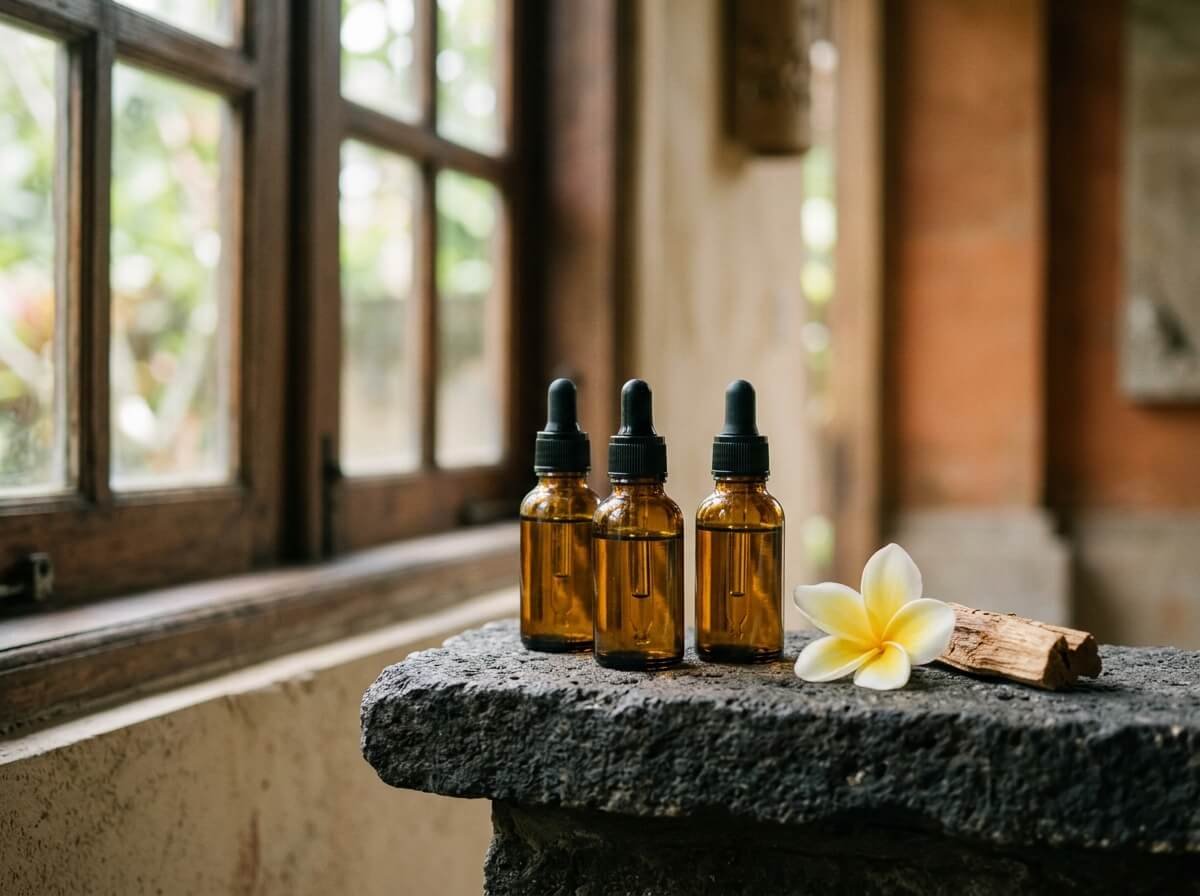
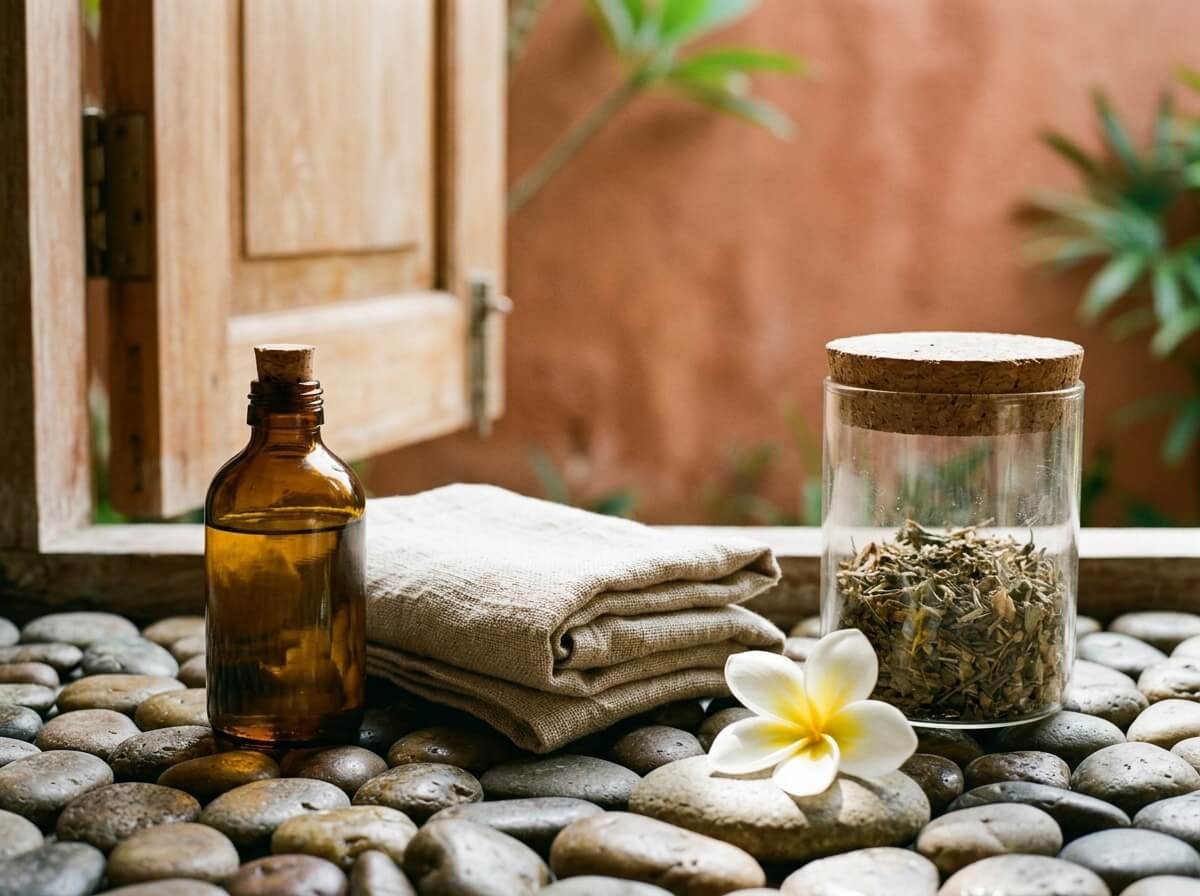
Third, how is the bottle packaged and stored? Cold-pressed carriers oxidize with light and heat. The best home oils ship in amber or dark cobalt glass and recommend refrigeration after opening (or at least a cool, dark cabinet). A clear plastic bottle on a hot shelf is a sign the formulator is more concerned with shelf aesthetic than with the oil inside. Shelf life on a well-stored Balinese massage oil sits around six to twelve months once opened, depending on the carrier mix. Our Balinese face oil article walks through the same shelf-life math for the lighter facial blends.
Fourth, what does the brand say about its sandalwood? This is the quiet sourcing question, and the answer tells you most of what you need to know about the brand. Indian sandalwood, Santalum album, is CITES Appendix II protected. Honest formulators state their species and country of origin (Australian, New Caledonian, or sustainably farmed Indian plantation stock). Brands that just print “sandalwood” with no source detail are either lazy or hiding something. Same goes for “frangipani extract” with no botanical name, or “essential oil blend” with no ingredient list. A real Balinese massage oil has nothing to hide on a label.

Rose Allure Body Oil: the closest single-bottle expression
Coconut and argan carriers, with frangipani, geranium, and a quiet base of sandalwood. Built for the warm-between-the-palms moment at the end of the day. Shelf-stable in dark glass, dilution within the traditional 1 to 3 percent range, and made in small batches at our workshop in Bali.
The self-massage method: ten quiet minutes
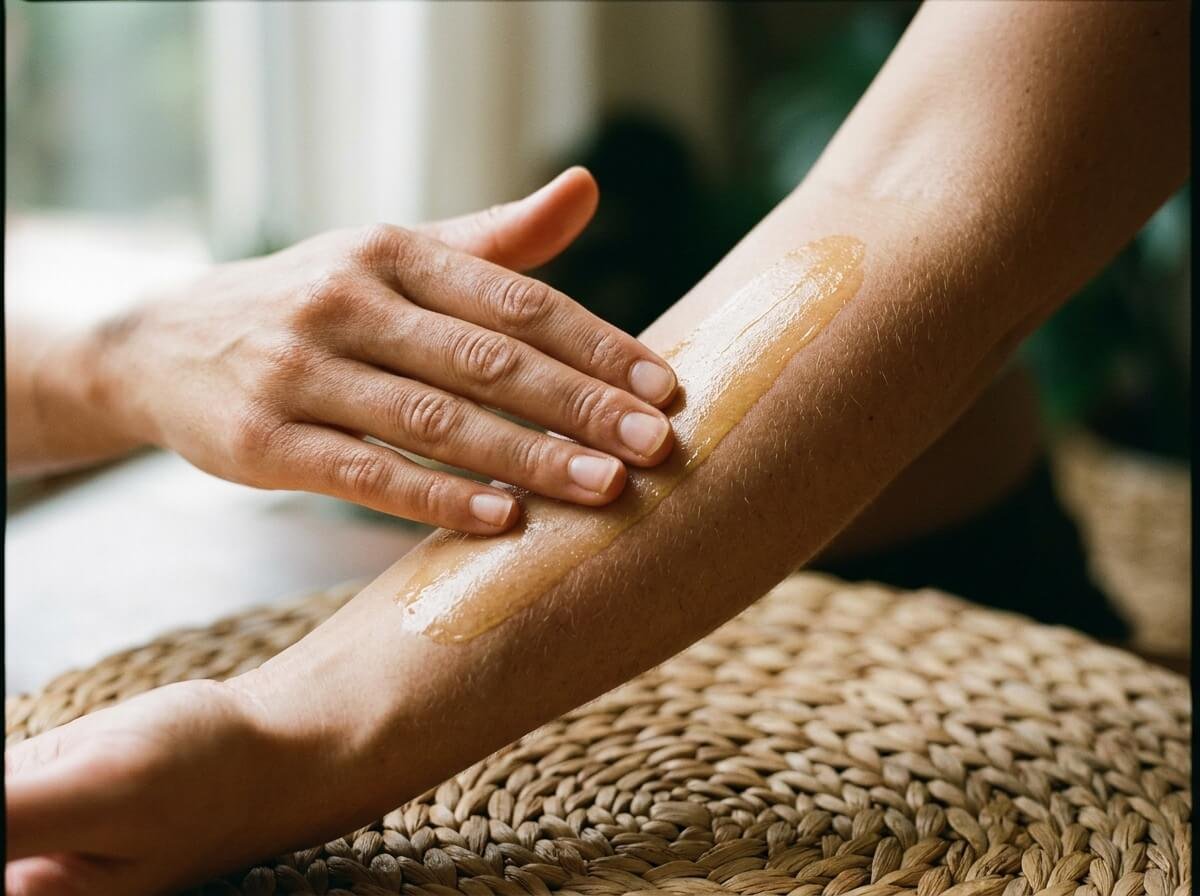
Urut Bali, the self-massage that the tradition is built around, asks for less time than people expect. Ten quiet minutes is the working duration. The sequence below is the household-grade version, the one a Balinese grandmother would teach a teenager, not a spa-protocol version. It begins after a warm shower or bath, with the skin slightly damp and the bathroom mirror behind you. The order is simple: feet first, then calves, then thighs, then arms, then shoulders, then the back of the neck. Always toward the heart.
- Pour a teaspoon of oil into one cupped palm. Close the other hand over it. Hold for a slow count of ten so the oil warms to skin temperature.
- Start at the soles. Press the flats of both thumbs along the arch from heel to toe, five passes each foot. The point is contact, not force.
- Move to the calves. Long strokes upward, palms wrapped around the leg, drawing toward the knee. Repeat on the thighs, drawing upward toward the hip.
- On the arms, work from wrist to shoulder in the same long-stroke way, both inside and outside of the forearm. Slow the pace.
- End at the shoulders and the back of the neck. Use the heel of the hand, not the fingertips, and press for a count of ten on the two points just above the shoulder blades.
The ritual is closed by sitting still for two or three minutes before dressing. The skin is now warm, the carrier is settling, and the botanicals are starting their slow work on the nervous system through the olfactory bulb. This last pause is the whole point. Without it, the massage is just an application. With it, it becomes the daily reset the tradition was built for.
Layering with your routine: morning, evening, and the refill question
A Balinese massage oil is not the only oil on the shelf, and it is not meant to be. The household tradition assumes layering. In the morning, a lighter, citrus-bright body oil is the typical choice, often a coconut base with a bright top note of sereh or kaffir lime. The morning oil sits closer to a body moisturizer in feel: applied to damp skin after the bath, absorbed within a few minutes, dressed over. It is not used for massage, just for finishing.
The evening oil is the massage oil proper. It is denser, with a higher percentage of base-note botanicals (sandalwood, frangipani, kenanga), and it is used with the slow self-massage described above. The two are not interchangeable. Using an evening oil in the morning leaves you scented for the day in a way the brain reads as residue; using a morning oil in the evening cheats you out of the grounding work the base notes are doing. Honest brands will tell you which window each blend is built for. If a label calls a single bottle a “morning, noon, and night oil,” it is most likely doing none of the three well.
The refill question is the last piece, and it is the place where heritage oil-making and contemporary sustainability meet most cleanly. Carrier oils oxidize, and so smaller bottles are better for the home shelf than large ones. The refill model, where you bring the bottle back and have it filled from a glass-stored bulk supply, is how Bali has handled this for generations, and it is how a modern conscious brand should handle it now. Our refillable body care guide walks through how to evaluate a real refill program (and the greenwashing patterns to avoid). The principle is simple: smaller bottles, refilled more often, oils that are still fresh when they reach your skin.
None of this needs to be complicated. A real Balinese massage oil is one part lineage and three parts daily use. Find a carrier you trust, a botanical profile that matches the time of day you want to reach for it, and a brand that tells you where its sandalwood came from and how the bottle gets refilled. Then give yourself the ten quiet minutes. That is the ritual the tradition was always pointing at, and it is the part no label can do for you.