Illipe butter benefits: the Kalimantan rainforest secret behind your body butter
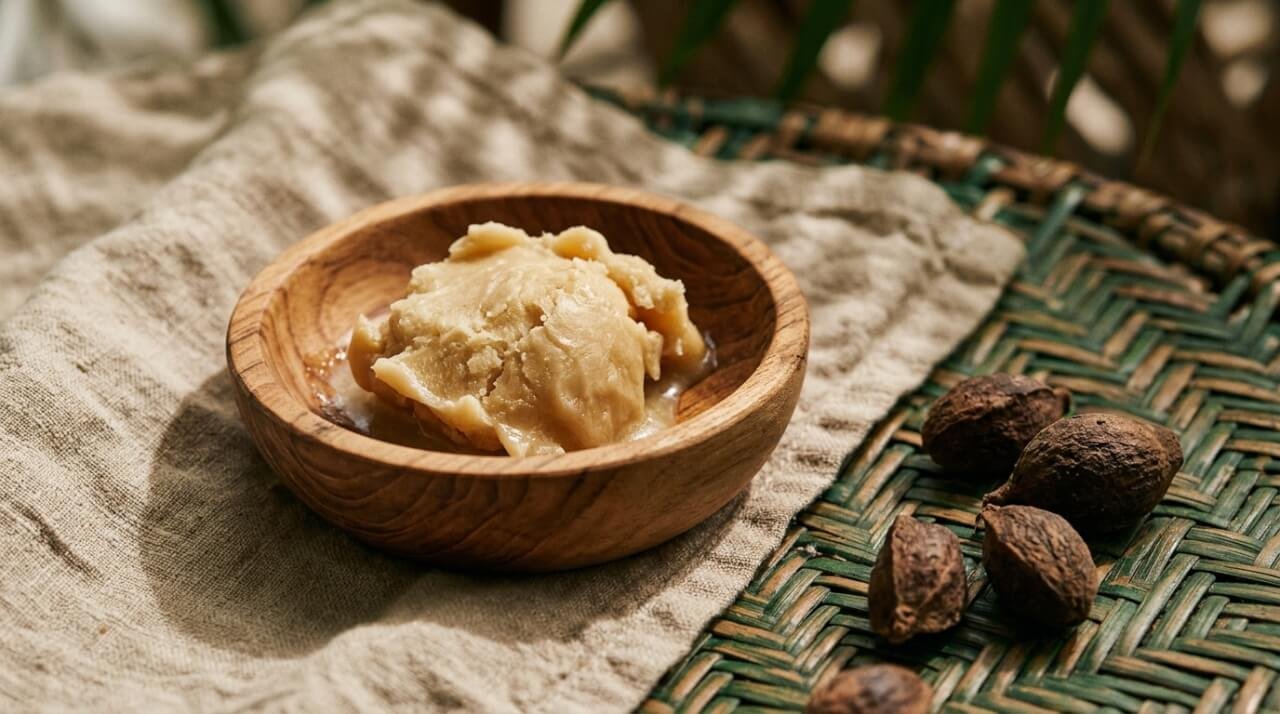
The first time you press a fingerprint into a tub of illipe butter, two things happen. The surface yields almost too easily for something so solid. And by the time you have rubbed it between your palms, it is already turning to oil. That melt point is the start of the story, and it is the reason illipe butter benefits the skin and hair in ways that softer, more forgiving butters do not. Illipe is the unhurried workhorse of the rainforest, a Kalimantan-grown plant butter that has carried generations of Dayak skincare practice and now sits at the center of a small but determined body-care revival.
This guide is what we wished the search results would give us when we first started formulating with illipe at Utama Spice. The basic skin-and-hair claims are easy to find. What is harder to find is the science under those claims, the rainforest economics behind every kilo of pressed kernel, and an honest comparison against the more famous butters (shea, cocoa, kokum). We will walk through all of it, and end with how we actually use it in our body butter line.
What is illipe butter, really
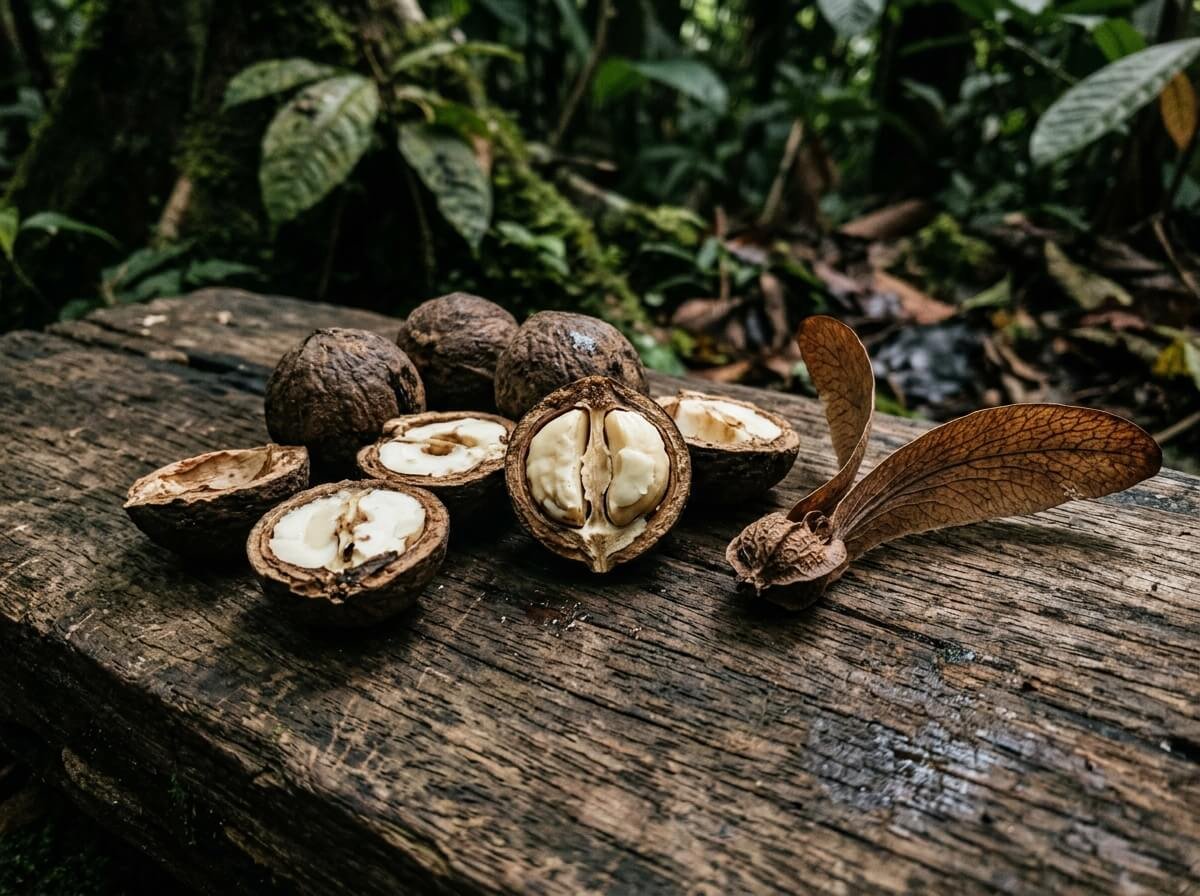
Illipe butter is a solid plant fat pressed from the kernels of Shorea stenoptera, a tall tree native to the lowland rainforests of Borneo, particularly the Indonesian province of Kalimantan. Shorea sits in the Dipterocarpaceae family, the giant hardwoods that define a healthy Bornean canopy. The kernels arrive inside a hard brown nut with two winged bracts (those wings are what gives Dipterocarpaceae its name, the Greek di-pteron-karpos: two-winged fruit), and they fall to the forest floor on a slow, multi-year cycle.
To make the butter, the nuts are gathered after they fall, dried, cracked open by hand, and the kernels are pressed. The yield is small. A mature tree might drop a few kilos of usable kernel in a good year, and the masting cycle (the synchronized fruiting event across many trees) only happens every two to seven years. This is part of why illipe is less famous than shea: there is simply less of it in the world, and it cannot be planted in monoculture rows. The supply is tied to the health of the rainforest itself.
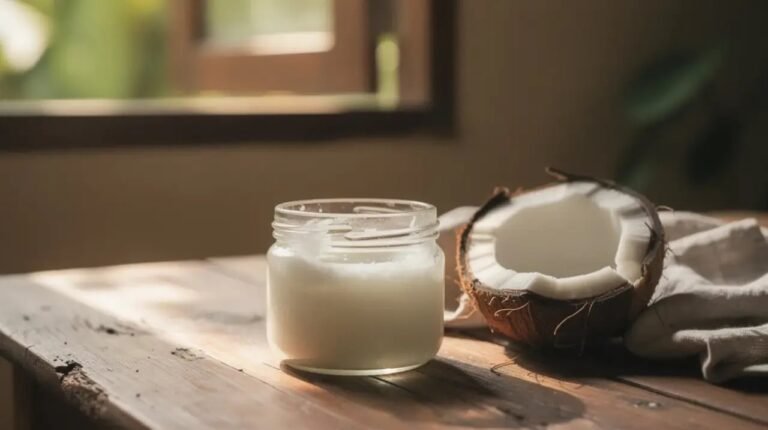
What you receive at the end of the press is a pale cream solid, almost waxy, with a faint nutty scent that disappears in finished formulations. It melts at roughly 36 to 38 degrees Celsius, which is conveniently right at the lower edge of human skin temperature. That detail will matter when we get to how illipe behaves on the body.
The fatty-acid science: why illipe acts like a ceramide-mimic
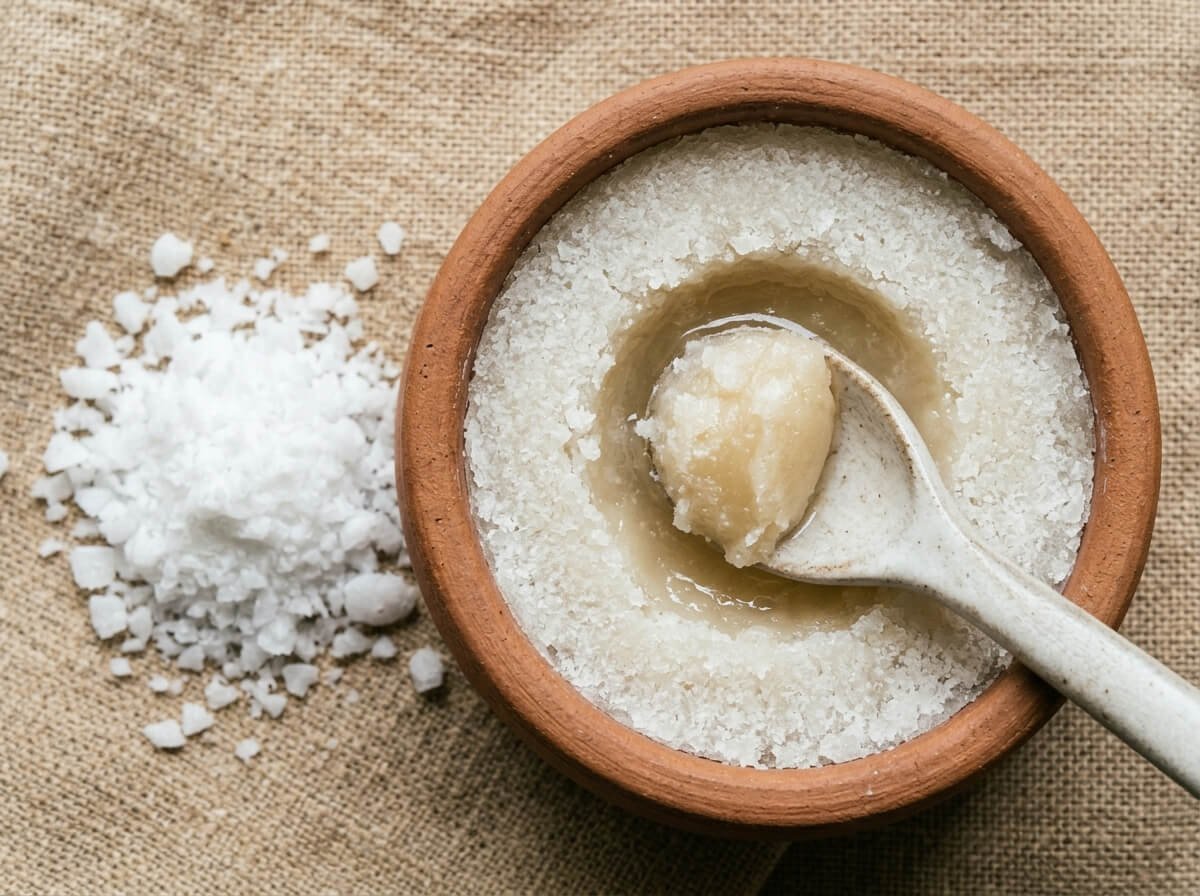
The single most useful thing to know about illipe butter is its fatty-acid profile. Roughly 45 to 50 percent of it is stearic acid (an 18-carbon saturated fatty acid) and another 35 to 40 percent is oleic acid (an 18-carbon monounsaturated fatty acid). The rest is palmitic, linoleic, and a small fraction of arachidic acid. That balance, heavy on stearic with a generous oleic shoulder, is what makes illipe behave so much like a natural ceramide on the skin.
A reminder of what ceramides do: they are the mortar between the brick-like corneocytes that make up the outermost skin barrier. When that mortar thins out, water leaves the skin faster than it should (this is called transepidermal water loss, or TEWL), and irritants come in more easily than they should. Synthetic ceramides are now a marquee ingredient in clinical skincare, but they are expensive and difficult to formulate. Stearic-heavy plant butters like illipe slot into the same gap in the stratum corneum, restoring lipid order and slowing water loss, at a fraction of the price and with a far gentler regulatory footprint.
The melt-point detail closes the loop. Because illipe softens right at skin temperature, it integrates into the surface layer rather than sitting on top as a heavy occlusive film. You feel it as warmth and slip, not as a layer you need to push around. That is also why it is a useful neighbor to lighter humectants in a finished product, the kind of pairing we use in aloe-led barrier formulations and in our natural body butter range.
Benefits for dry, mature, and sensitive skin
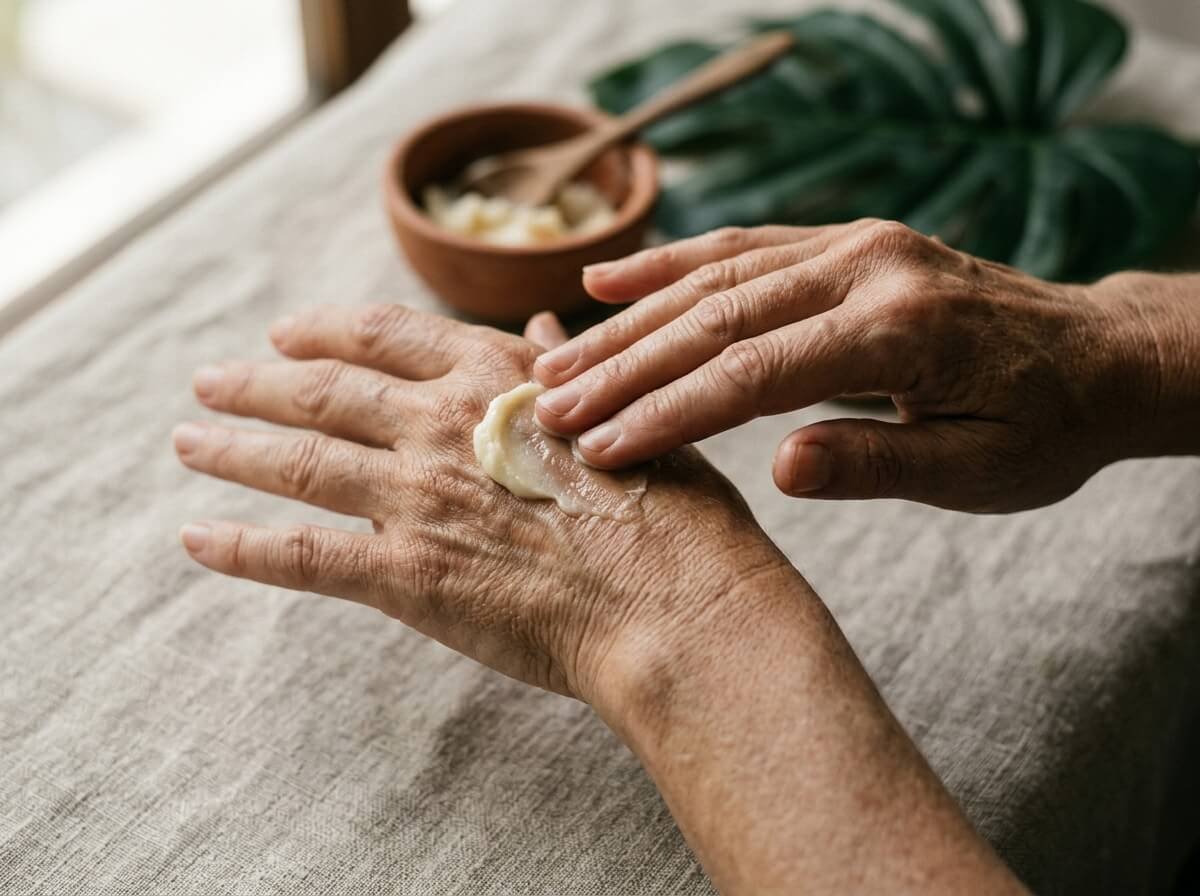
Most of what people notice about illipe butter shows up at the level of how the skin feels two or three days into using it, not in a single application. Here is what changes, and why.
- Drier skin starts to retain water. The stearic-led barrier reinforcement reduces TEWL, which is the mechanism behind every honest moisturizer claim. Skin that was tight by mid-afternoon stops being tight. This is the same logic behind the natural face moisturizer family, scaled up for the body.
- Mature skin feels more elastic. The oleic-acid fraction supports membrane fluidity at the cell level, and the stearic fraction reinforces the lipid mortar between cells. Together they help skin look less crepe-paper and more pillow.
- Sensitive and reactive skin calms down. A reinforced barrier is a less reactive barrier. People with mild eczema, perioral dermatitis, or just stinging-after-cleansing reactivity often report that illipe-rich formulations sting less than the products they were using before. This is a common pattern with stearic-heavy butters, and one of the reasons we lean on illipe rather than only on softer oils.
- Surgical-scar and stretch-mark areas soften. The combination of stearic structure and oleic permeability is well suited to areas where the skin needs both a protective film and active fatty-acid delivery. We hesitate to make medical claims here, but the anecdotal track record (from our own customers and from broader plant-butter literature) is consistent.
What illipe does not do: it does not act as a chemical exfoliant, it does not brighten pigmentation, and it does not behave like a natural retinol alternative. Anyone selling it as an anti-aging silver bullet has skipped the ingredient science. It is a barrier ingredient, and barrier health is its own quiet form of plant-based anti-aging skincare, just not the kind that makes for dramatic before-and-afters.
Illipe butter for hair and scalp
The hair use case is real, and it is the one most often shown in search results, but it tends to be poorly explained. Illipe butter is useful on hair for the same reason it is useful on skin: the stearic and oleic fatty acids penetrate the cuticle layer to a small but meaningful depth, the melt point lets it soften where you want it to soften, and the saturated fraction adds a thin, breathable protective film along the hair shaft.
Where this shows up in practice:
- Scalp hydration. A pea-sized amount of melted illipe pressed gently into a dry scalp the night before washing, then rinsed in the morning, calms the kind of itchy tightness that comes from over-cleansing.
- Post-color repair. Color treatments lift the cuticle. Illipe helps the cuticle lie flat again, which reduces frizz and the wiry feel that follows a salon visit by two or three weeks.
- Split-end prevention. Used on the ends only (think of it as a sealant rather than a leave-in conditioner), it reduces mechanical breakage between washes.
For finer hair types, illipe alone can feel heavy. We blend it with kukui and other Indonesian botanicals in our hair line for that reason. If you want a lighter, oil-led version of the same idea, our guide to kukui oil covers the pairing in more detail.
Illipe vs shea, cocoa, and kokum: which butter for which job
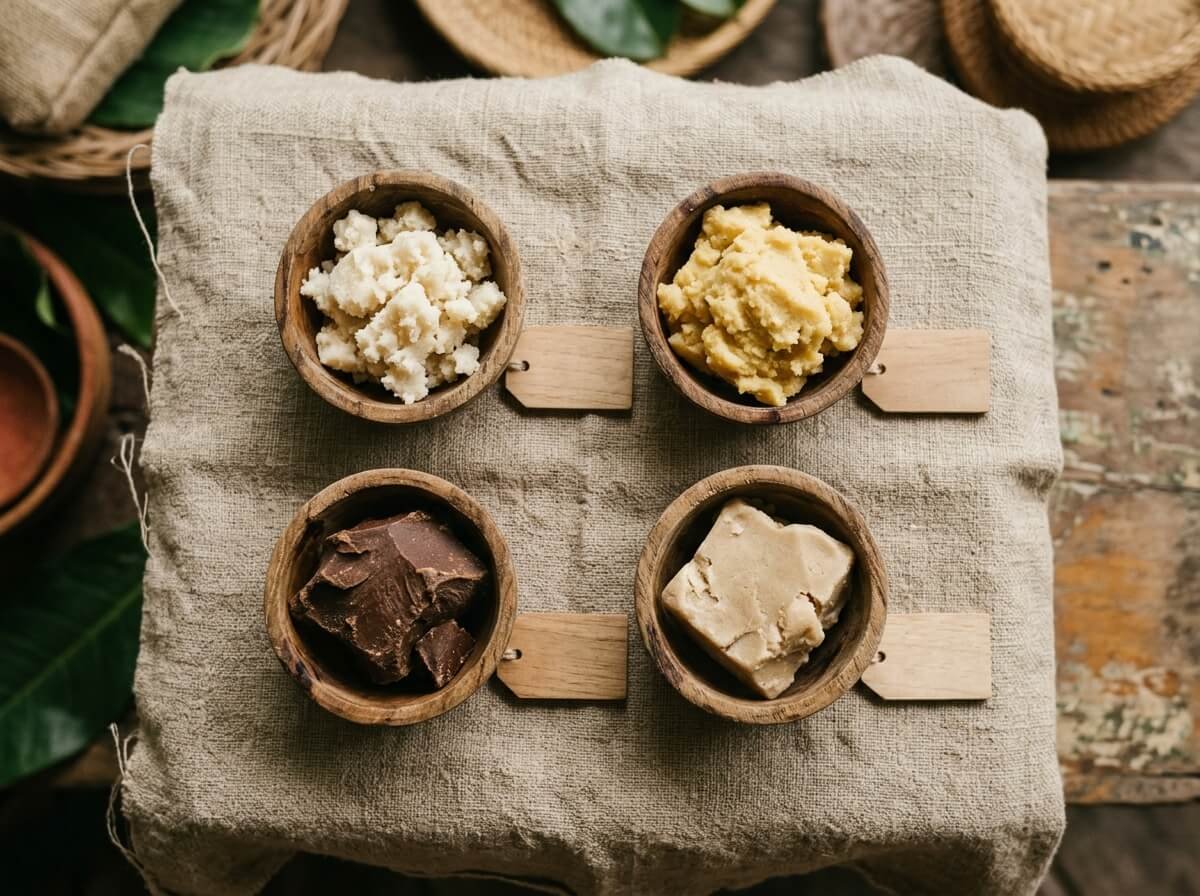
If you have spent time formulating, or even reading labels carefully, you already know that “body butter” is a category that hides four or five very different ingredients. Here is the comparison we run when we are choosing one for a given product.
- Illipe (Shorea stenoptera). Stearic-heavy, oleic-supported, melts at 36 to 38 C. Barrier work, mature skin, scar and stretch-mark areas, leave-in hair sealant. Quiet scent, smooth feel, no waxy residue.
- Shea (Vitellaria paradoxa). More oleic, more unsaponifiables (those fascinating compounds that give shea its mild anti-inflammatory edge). Softer, lower melt point, grainy if not tempered. Better for face care and for skin that wants softness over structure. Closer to a moisturizer, further from a barrier ingredient.
- Cocoa (Theobroma cacao). Hard, brittle, very high stearic content, melts a touch higher than skin. Adds structure and shelf stability, but on its own it can feel waxy. Best as a co-butter, not the lead. Our Cocoa Love Body Butter uses cocoa as the structural backbone and illipe as the second layer, which is a good way to feel the difference between the two.
- Kokum (Garcinia indica). Pale, mostly stearic and oleic in a roughly equal split, melts close to skin temperature like illipe. Excellent on lips and on small areas of cracked or compromised skin. Lower comedogenic risk than cocoa.
For everyday body use on dry or aging skin, illipe is the one we reach for first. Shea is the one we reach for when softness matters more than structure. The two are often confused on labels (some “shea” bars are actually shea-illipe blends), so reading the INCI list past the second line is always worth the minute it takes.

Feel illipe butter in a finished ritual
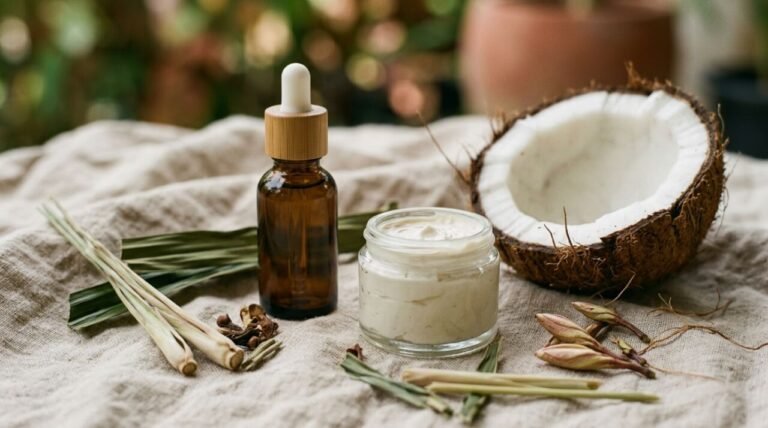
Our Bliss Body Butter pairs Kalimantan-sourced illipe with bergamot, rose geranium, sweet orange, and patchouli oils. Stearic-led barrier work, a balanced citrus-floral aroma, and the same melt-in-your-hand quality we have described. A practical place to start.
The Kalimantan harvest story: forest economics behind a body-care ingredient

This section matters more than the chemistry. Shorea stenoptera only grows in healthy lowland Bornean rainforest, and Bornean rainforest is under sustained pressure from monoculture plantations, mining concessions, and the everyday slow-grind of deforestation. The illipe trade is one of the few cash flows that values a standing tree more than a felled one. When a smallholder in West Kalimantan can earn meaningful income from gathering and selling kernels, the trees stay up. When they cannot, the trees do not.
Our supply chain runs through Forestwise, a Dutch-founded social enterprise working with smallholder communities and indigenous Dayak harvesters across West Kalimantan. The model is simple in description and complicated in practice: pay a fair price for wild-harvested kernels, invest in local processing capacity so that more of the value stays with the harvesters rather than middlemen, and make the supply chain visible enough that buyers like us can answer the question of where, exactly, this came from. We name them because partnerships only mean something when they can be checked.
None of this is a charity story. It is a sourcing decision. We could buy illipe more cheaply from a less traceable supplier, and the finished product would feel almost identical on skin. What we would lose is the confidence that the trees the butter came from will still be standing in ten years. That confidence is part of what you are paying for when you buy ingredient-led skincare at all, and it is the same logic that runs through everything we make at Utama Spice. The deeper context lives in our guide to Balinese skincare, which sits next to this Kalimantan story in the wider Indonesian botanical story we draw on.
How to use illipe butter at home, and how we formulate with it
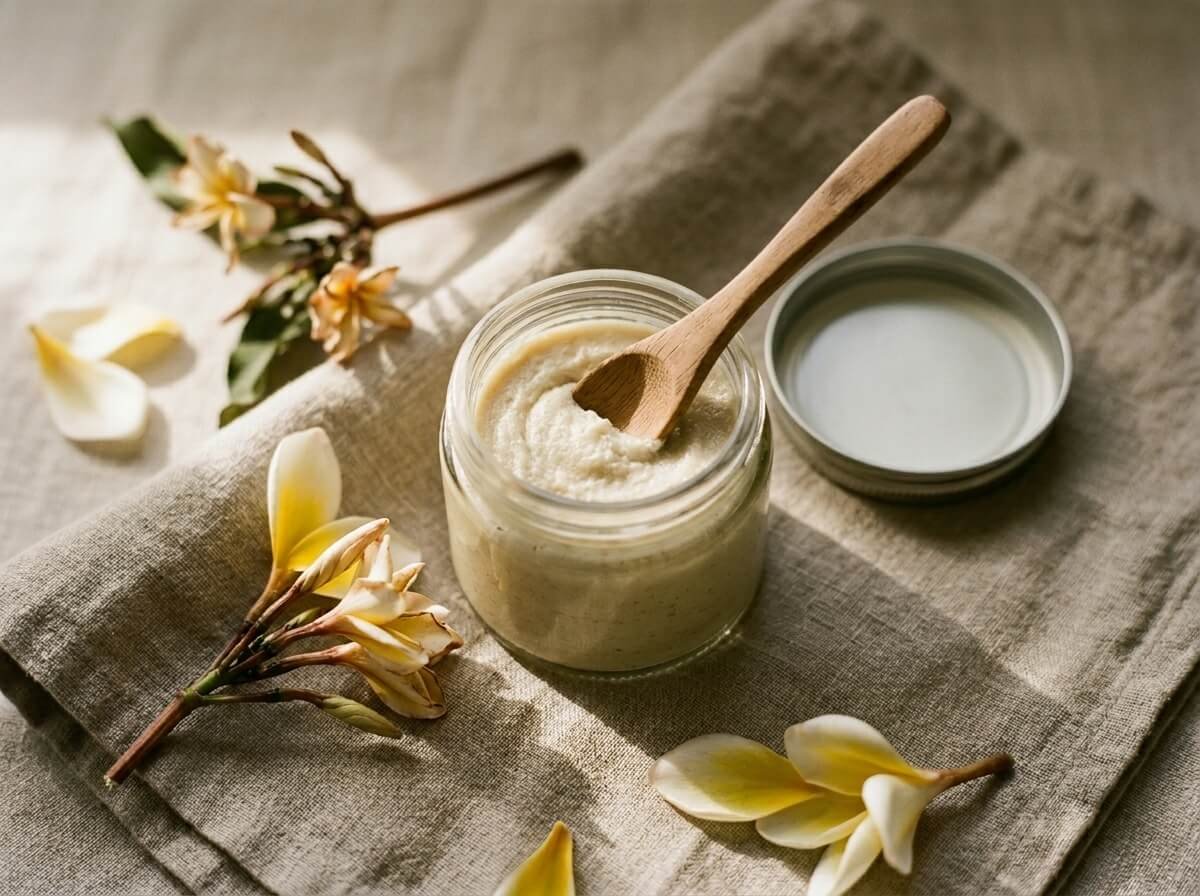
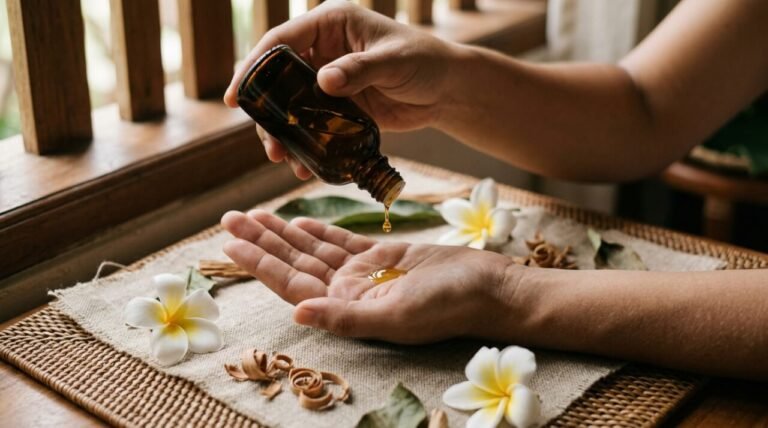
If you have raw illipe butter (the unrefined kernel press, sold as a solid block or in jars), here is the most useful starting point. Scoop a pea-sized amount, warm it between your palms for ten or fifteen seconds, and press it onto the driest places first: elbows, knees, the outside of the heels, the back of the hands. The melt point will do the work. Apply onto skin that is still slightly damp from the shower for the best barrier effect, because you are sealing in water that is already there. This is the ritual we describe in our broader natural body oil primer, applied in solid form.
For face use, illipe alone is too rich for most skin types, particularly in a tropical climate. We blend it into lighter face products and balance it against humectants and lighter oils. If face barrier care is your goal, you will get more out of a thoughtful face formulation than out of raw illipe on its own.
In our own formulations, illipe shows up across the body-butter line. Our Pure Energy Body Butter uses illipe alongside citrus and cardamom for the kind of morning ritual that earns its name. Lemongrass Ginger Delight Body Butter leans on illipe and ginger for warmth and circulation. Bliss Body Butter is the most balanced of the line and the one we point people toward first. Across all three the illipe percentage is high enough to feel the difference, and the rest of the formulation lets the butter behave the way the science suggests it should.
One last note on storage. Illipe is stable at room temperature, but tropical heat will soften it. If your jar feels liquid by mid-afternoon in a Bali kitchen, that is not a fault. Set the jar somewhere cooler for an hour and it will firm up. Repeated melt-and-set cycles can shift the texture toward graininess, the same way overworked shea will, so try to keep it out of direct sun. Used this way, a good jar of illipe butter benefits the skin for many months without needing anything more than the warmth of your own hands.
If the rainforest backstory is as interesting to you as the formulation science, the next places to read are our companion pieces on Balinese ingredient heritage and our guide to tremella mushroom skincare, which sits in the same Indonesian botanical family. Together they sketch the wider story we are trying to tell: that natural skincare is most useful when it is anchored in where the ingredients came from, who grew or gathered them, and why the science actually works the way it does.