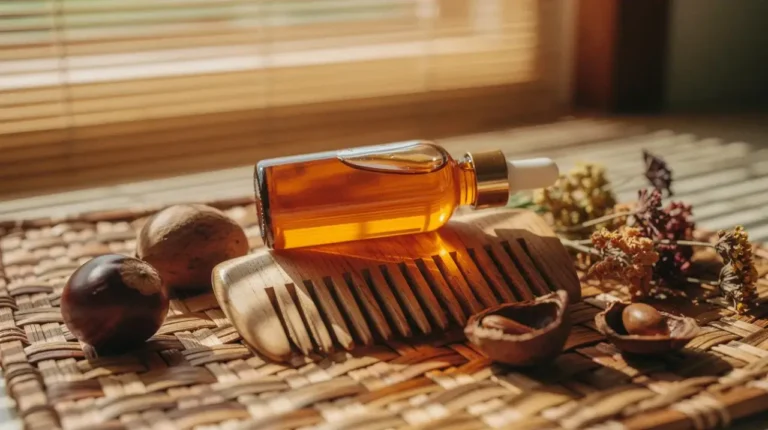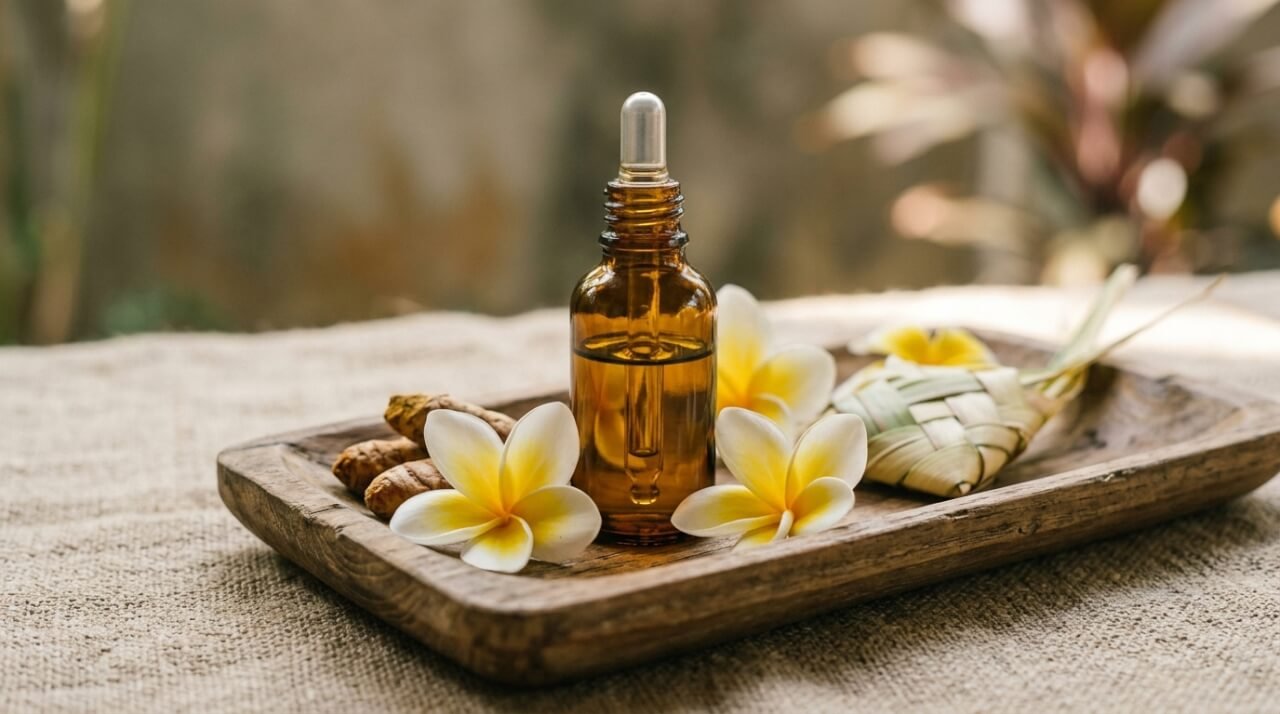
Balinese face oil: the heritage, the botanicals, and the ritual behind a real one
A real balinese face oil is not a fragrance, a trend, or a single ingredient borrowed from a tropical postcard. It is a small bottle of pressed and infused botanicals, blended in the slow, careful rhythm that the women of Ubud have practised for generations. It carries a specific aroma profile, a specific texture, and a specific way of being used, all rooted in the island’s ingredient heritage and its quiet, ritual-first relationship with the skin.
This guide explains what makes a face oil truly Balinese, which botanicals belong in one, how the oil actually works on the skin barrier, how to choose the right one for your skin type, and how to read a label without being misled by a tropical name on the front. We have been hand-blending these oils in Bali since 1989, so we will share what we know plainly, with no greenwashing.
What a balinese face oil actually is
A balinese face oil is a blend of cold-pressed and infused plant oils, drawn from botanicals native to or long cultivated in the Indonesian archipelago. The classics are coconut, kemiri (candlenut, the seed that gives us kukui oil), tamanu, illipe butter from neighbouring Kalimantan, and the aromatic essences pressed from frangipani, sandalwood, ylang-ylang, and turmeric. None of these are exotic novelties on the island. They are kitchen-cabinet ingredients, used at home for skin, hair, and wound care long before anyone called them skincare.
What sets a Balinese formulation apart from a generic tropical face oil is the blending principle. The aim is not to maximise a single hero ingredient or to chase a single benefit. The aim is balance: a carrier base that feels right on the skin, a botanical infusion that brings function, and a small percentage of essential oil that gives the blend its sensory signature. The texture should sink rather than sit. The aroma should settle rather than shout.
A useful frame is to think of a face oil as having three layers. The carrier (often a light, non-comedogenic oil like jojoba, grapeseed, or refined coconut) does the spreading and the slip. The functional botanicals (such as buah merah, tamanu, or rosehip) bring the actives that the skin responds to over time. The aromatic finish, usually a careful dose of essential oils, brings the ritual element: scent that calms, anchors, and signals the brain to slow down for the few minutes of use. Lose any of those three and you have lost the balance.
It is also worth saying what a Balinese face oil is not. It is not a body oil thinned for the face. It is not a fragrance oil with a label change. It is not a single-ingredient hero (those are precious, but they are ingredients, not blends). And it is not “100% natural miracle” anything. A real one is honest about its botany, transparent about its sourcing, and modest about its claims.
The Bali roots: heritage, botanicals, and the people behind the craft
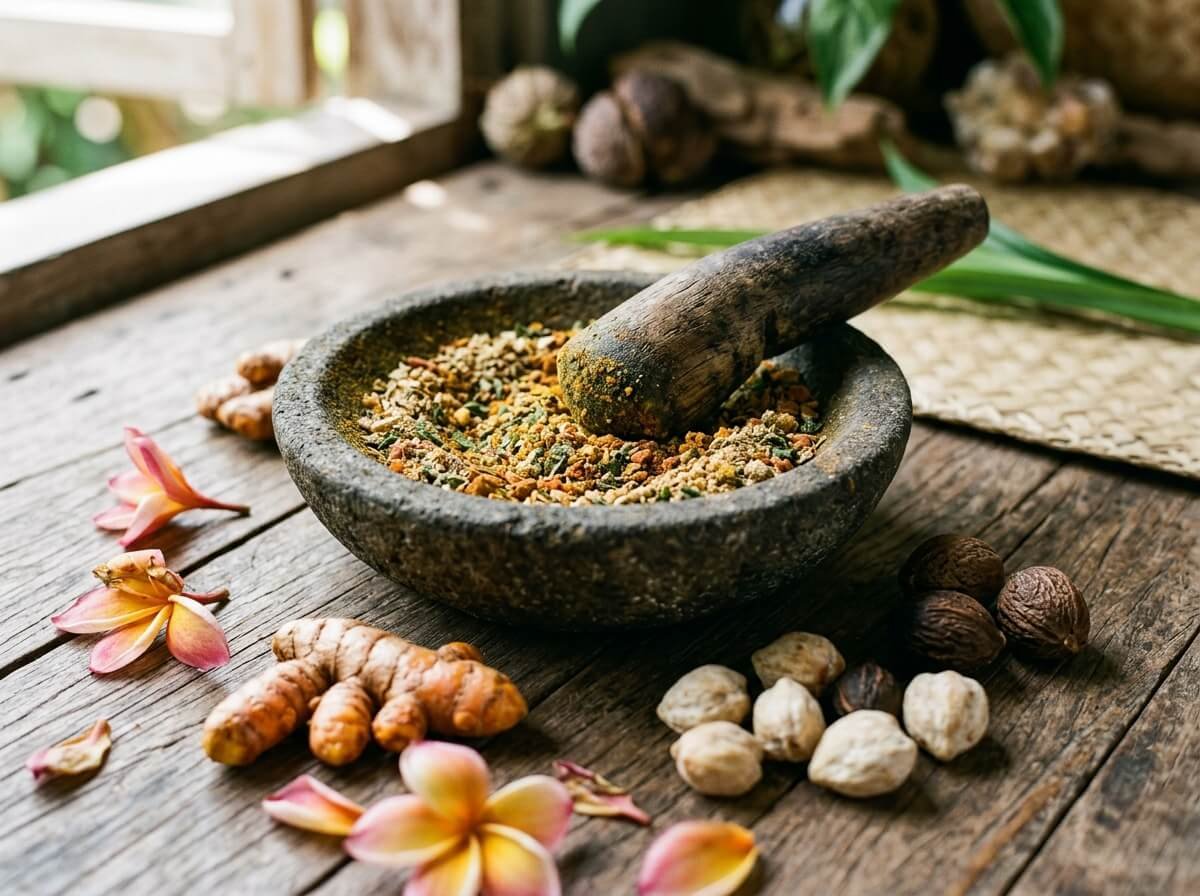
Bali’s face oil tradition is older than the word skincare. In Balinese households, the daily routine of boreh, the warming herbal paste applied to skin and joints, and the kitchen practice of pressing kemiri seeds for hair and skin care, set the cultural foundation. Oils were food, medicine, and ceremony, often the same bottle for all three uses. The line between cooking, healing, and self-care was not blurred so much as it was never drawn in the first place.
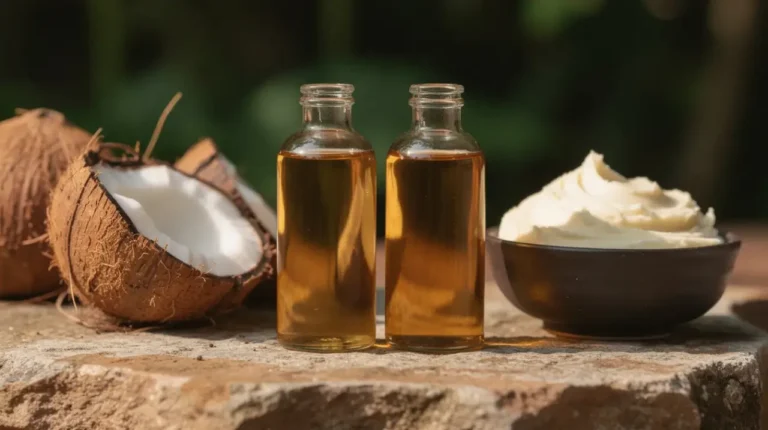
From that foundation, four ingredients become the backbone of a serious balinese face oil. Coconut oil, cold-pressed from Bali’s coastal groves, gives the bright, fast-absorbing base. Kemiri seeds yield candlenut oil, a heritage emollient that softens and protects without sitting heavily. Tamanu (nyamplung), pressed from the seed of the tropical tamanu nut tree, brings the calmative and reparative profile that traditional Balinese skin care relied on for scars and inflammation. And from Kalimantan, just across the water, illipe butter arrives, wild-harvested by families who have worked the same forest groves for generations.
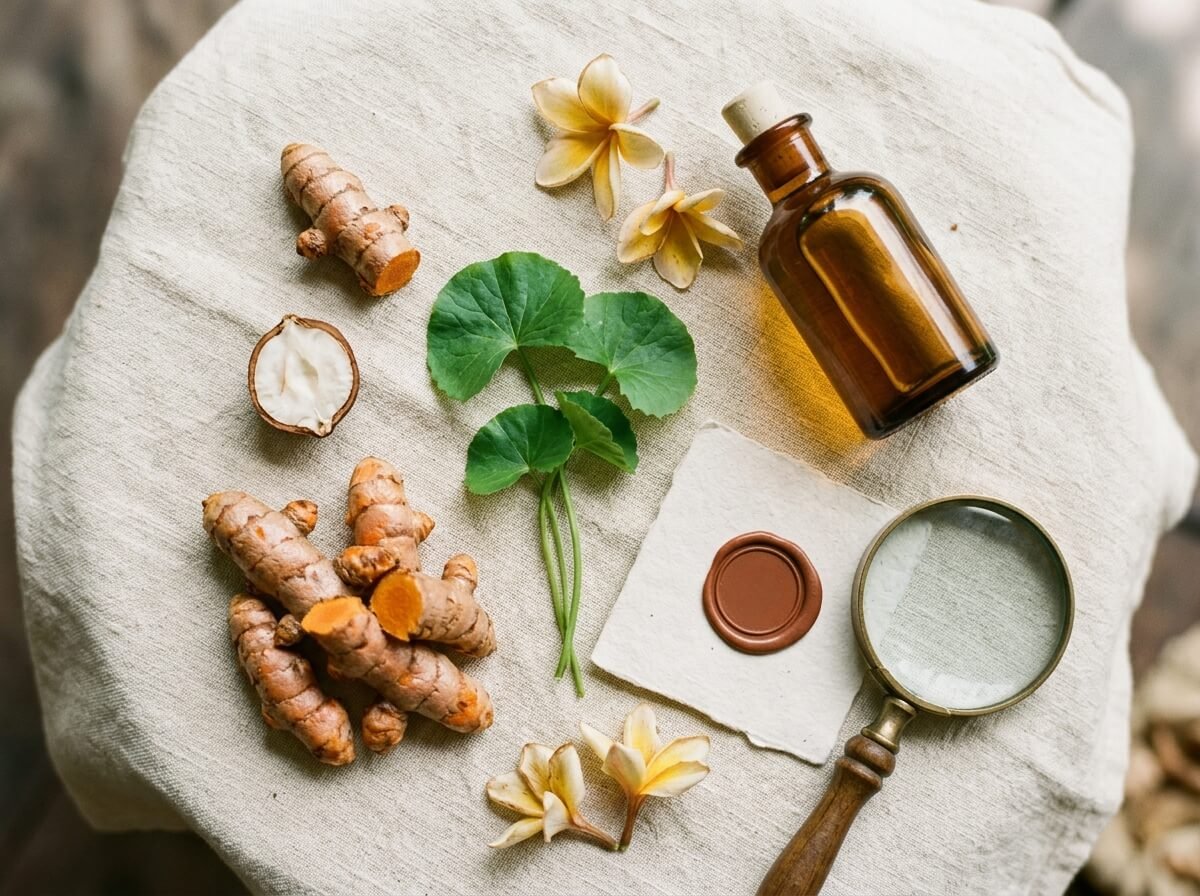
Those four base botanicals are then woven together with smaller percentages of botanical actives such as turmeric (kunyit), pegagan (gotu kola, the herb Balinese grandmothers know as a skin-healing tea), and Papua’s buah merah, the deep crimson red-fruit oil now studied for its carotenoid and tocopherol profile. The aromatic finish typically comes from frangipani, ylang-ylang, sandalwood, or the floral steam-distilled blends that Balinese aromatherapists have built their identities around.
This is also a story about people. Most of these ingredients pass through small cooperatives, women’s groups, and rainforest partnerships before they reach a blending table. At Utama Spice, our illipe and kukui come through the Forestwise partnership in Kalimantan, our coconut through the Aluan sustainable coconut programme, and the labour of our hand-blending and refill operations is carried by the women of the Munti Gunung Social Enterprise in East Bali. None of those names are decoration on the label. They are the reason the oil exists in its current form.
If a face oil is genuinely Balinese, it should be able to answer four questions: where did each oil come from, who pressed or harvested it, what tradition does the blend draw from, and whose livelihood is supported when the bottle is bought. If a brand cannot answer those four questions, what you have is a tropical-sounding fragrance product, which is something else entirely.
How a face oil works on the skin barrier
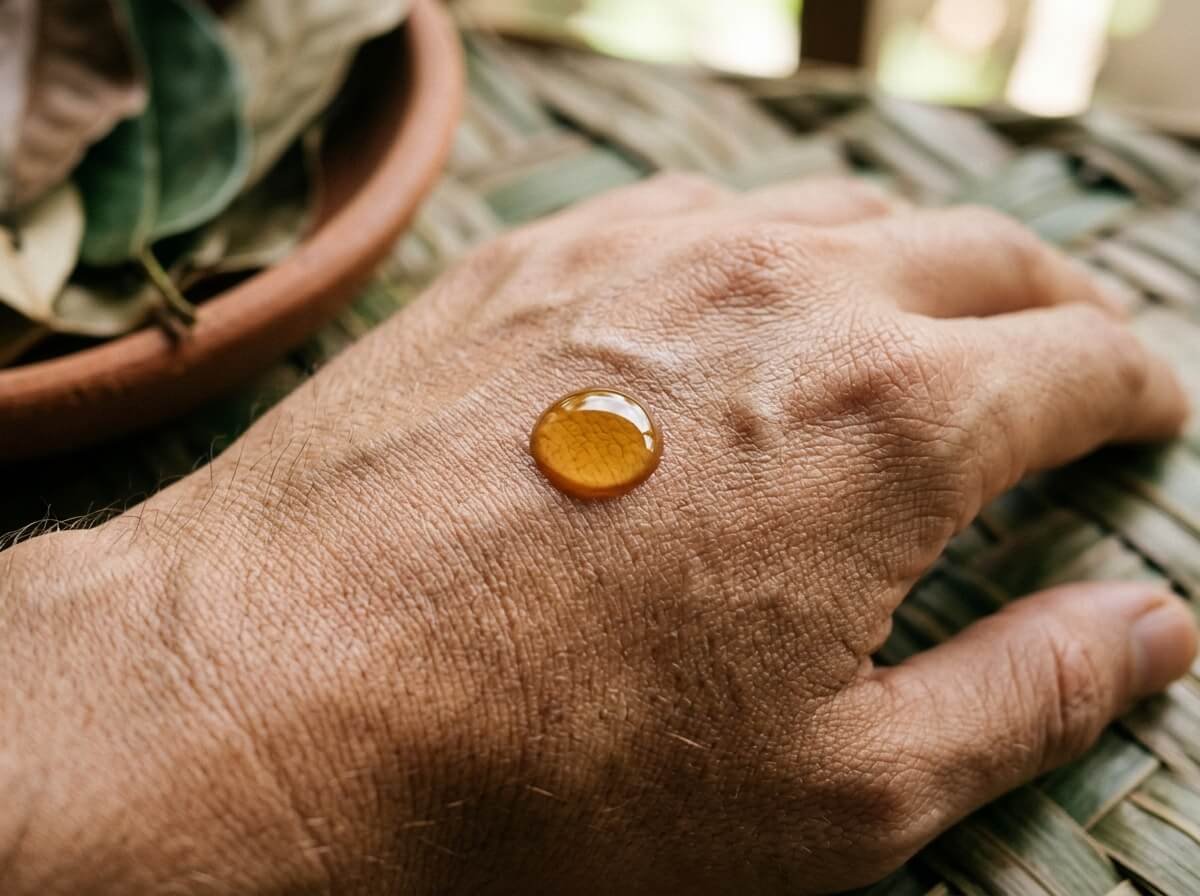
Before choosing a face oil, it helps to understand what it is actually doing once it lands on the skin. The outer layer of the skin, the stratum corneum, is built like a brick wall: keratinocyte “bricks” cemented together by a lipid matrix made primarily of ceramides, cholesterol, and free fatty acids. When that matrix is intact, water stays in and irritants stay out. When it is compromised by harsh cleansers, over-exfoliation, weather, age, or stress, the wall leaks and the skin reacts: dryness, redness, tightness, breakouts.
A well-formulated face oil supports the barrier in two distinct ways. The carrier and emollient oils contribute fatty acids that mirror, in part, the fatty acids the barrier produces naturally. Linoleic acid (abundant in grapeseed, safflower, and rosehip) is one the barrier specifically needs. Oleic acid (abundant in olive and high-oleic sunflower) is calming but used in excess can be occlusive for some skin types. A traditional Balinese blend tends to balance these by using coconut and candlenut as the brighter base and tamanu, kemiri, or rosehip as the heavier, deeper-penetrating actives.
The second action is occlusion, the polite name for forming a thin breathable film over the skin so that the water already in the tissue is not lost so quickly. Plant oils do this gently, without the heavy plastic-feel of mineral-based occlusives. The result is skin that holds onto its own hydration for hours longer than it would have unprotected. This is why a face oil is most effective when it is applied to skin that is already slightly damp, immediately after cleansing or after a hydrating mist. The oil seals the moisture in, rather than trying to bring moisture down from above.
Plant oils are also vehicles for fat-soluble actives the skin uses: vitamin E, vitamin A precursors, carotenoids, and a long list of plant-specific antioxidants and phytosterols. This is why an oil that contains pressed seed material rather than refined oil alone tends to perform differently in the long run. Some of these actives, like the carotenoids in buah merah or the polyphenols in tamanu, are exactly the kind of plant compounds that have made botanical formulators reach for them as natural retinol alternatives when working with sensitive skin.
None of this happens in one application. The barrier responds to consistent, gentle support over weeks. A face oil is a slow tool, which is exactly the point.
Matching a balinese face oil to your skin type
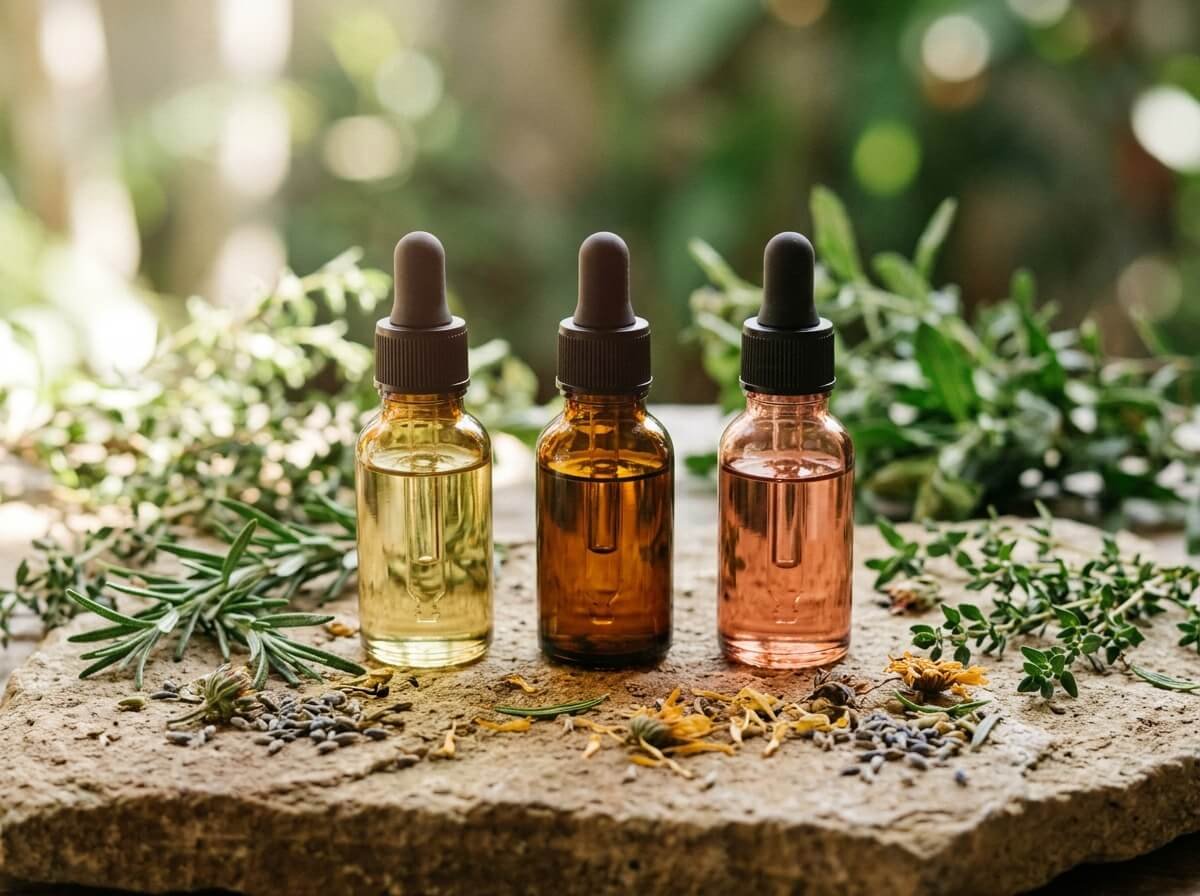
The honest answer is that no single face oil is right for every skin. Dry, oily, sensitive, congested, and mature skin all benefit from oils, but not the same ones, and not in the same proportions. Here is a practical map drawn from formulation work in our Bali workshop.
For dry or dehydrated skin
Look for richer, slower-spreading oils with a high oleic acid profile and supportive emollients. Coconut, candlenut, illipe butter, and tamanu work beautifully together. A small dose of argan or rosehip rounds out the antioxidant load. Our Argan Oil and Tamanu Oil are commonly used as targeted single-ingredient additions for chronically dry winter skin.
For oily or congestion-prone skin
Choose blends that lean lighter, with higher linoleic acid content. Jojoba (technically a wax ester) is the go-to base because it is closest to the skin’s own sebum. Grapeseed, safflower, and a careful dose of tea tree, lavender, or kaffir lime essential oil round out the formula. Our Oily Face Serum is built on this logic: jojoba as the base, water-soluble antioxidants, and a small dose of botanical anti-bacterial actives.

For sensitive or reactive skin
The principle is fewer ingredients, gentler actives, and zero unnecessary fragrance. Jojoba, evening primrose, grapeseed, and a small percentage of pegagan-infused oil work without provoking the barrier. Avoid heavy essential oil loads, and patch-test new blends on the inner forearm for 48 hours before bringing them to the face. Our Sensitive Face Serum is the closest to a single oil we would recommend in this category.
For mature or slowing skin
The lipid matrix thins with age, and the skin’s ability to retain hydration falls. Reach for blends with helichrysum (immortelle), buah merah, rosehip, and tamanu. These bring the antioxidant and regenerative profile that supports collagen, elasticity, and skin renewal over time. The companion read for this is our deeper guide on plant-based skincare for slowing skin, which goes into the ingredient mechanics in detail.
For combination skin
The trick is to choose a balanced blend rather than two different products. A jojoba base with a measured percentage of coconut, candlenut, and a single antioxidant active such as rosehip or buah merah tends to work for most combination skins without tipping either zone into excess.
Whatever your skin type, the principle is the same: start with three to four drops, let your skin tell you the truth over two weeks, and adjust from there. Skin does not need an oil to do everything. It needs the right oil to do one thing well.
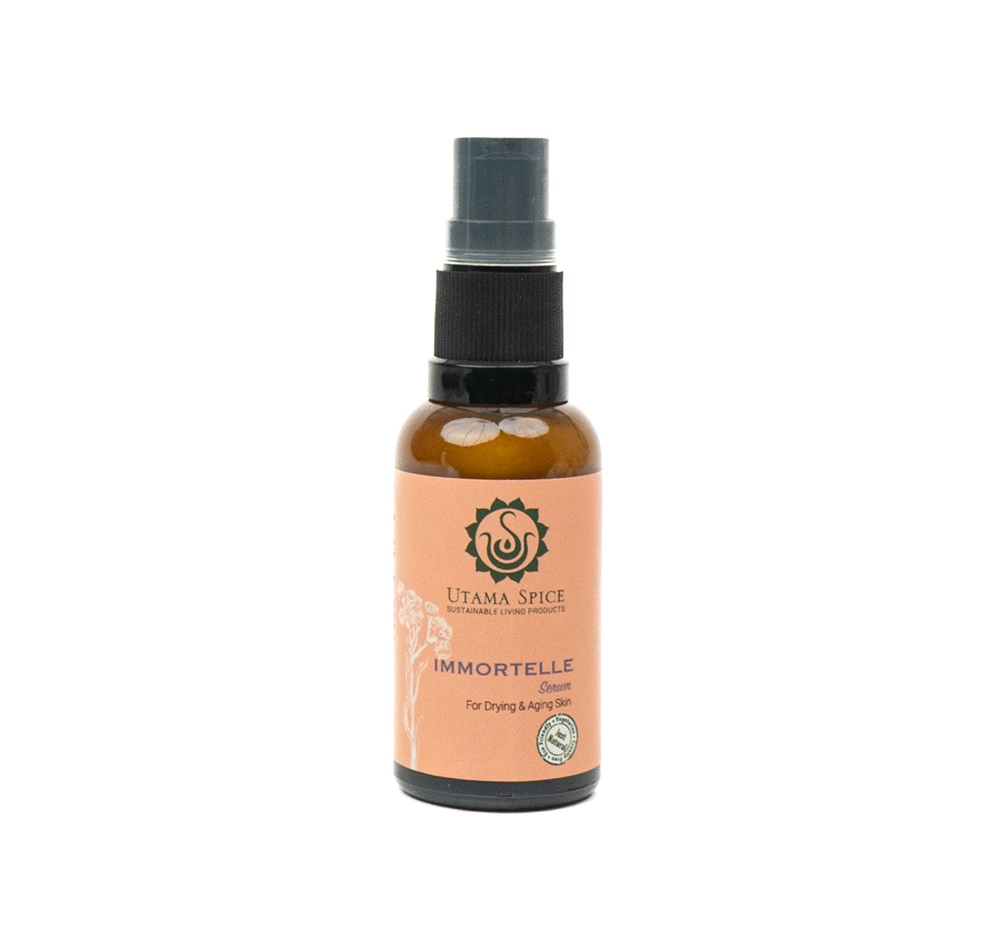
Try our Immortelle Helichrysum Face Serum
A hand-blended Balinese face serum built on jojoba, immortelle (helichrysum), and a balanced botanical infusion. Crafted in Ubud, packaged in violet glass, and refill-supported through our shop. Made for skin that wants the long, slow benefits of plant care.
The ritual: how a balinese face oil is meant to be used
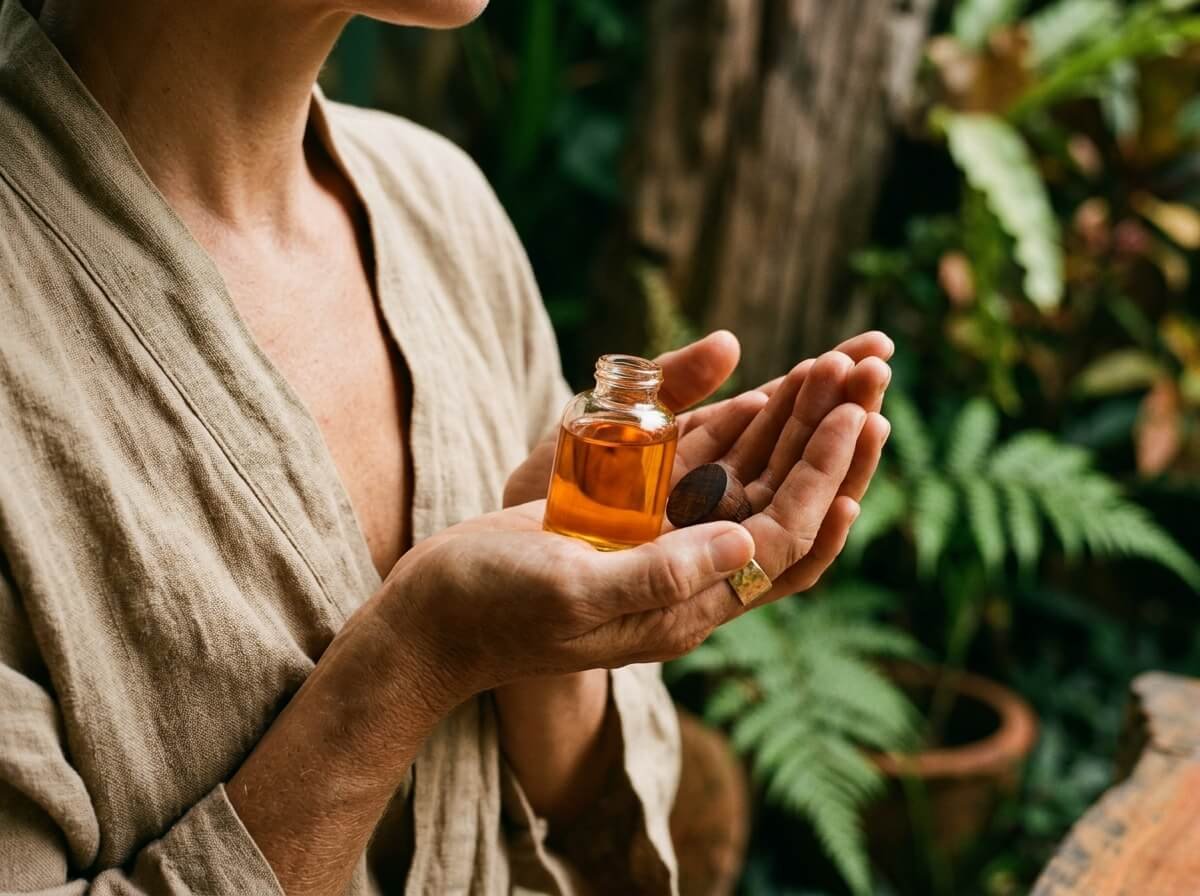
The Balinese approach to a face oil is not application, it is ritual. The difference matters, because the active ingredients are only half of what a face oil delivers. The other half is the slowing-down it asks of you, the few minutes of present attention you give to your own skin, the chance for the parasympathetic side of your nervous system to settle. In Balinese tradition, the morning and evening care of the body is itself a small ceremony, and a good oil is built to support that pace.
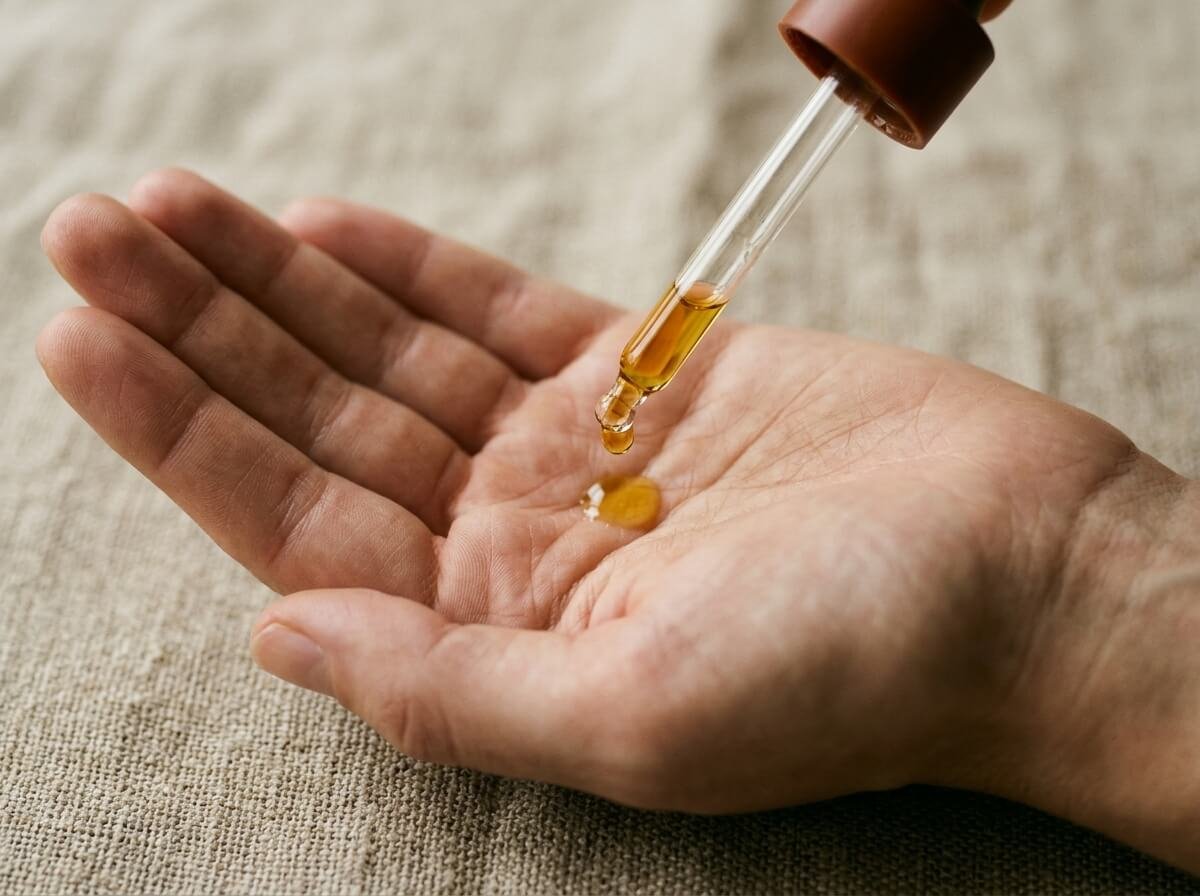
Warm three to four drops between your palms
Start with three drops in the centre of one palm. Rub the palms together gently to warm the oil to body temperature. Warming helps the oil spread further and gives the volatile aromatic top notes a chance to lift, which is part of the ritual cue your brain will start to recognise.
Press, do not rub
Bring your palms to your face and press the oil into the skin. Press, lift, move, press again. Pressing helps the oil sink into the lipid matrix without scrubbing the surface or pulling at the skin. This is also the moment to breathe. The aroma of the blend is part of the experience; let the inhale be deliberate.
Use the leftover on your neck, chest, and the backs of your hands
Nothing is wasted. The skin on the neck, chest, and hands tells the same story as the face and benefits from the same care. Many of our customers extend the same morning oil to those zones automatically.
Apply to damp skin
An oil applied to bone-dry skin will still moisturise, but an oil applied to skin that has just been misted or rinsed seals in a layer of water along with the lipids. This is the simplest single change most people can make to get more out of any face oil. Hydrate, then seal. The order matters more than the brand.
The Balinese way is to give this routine three minutes of unhurried attention. If you have built up a long morning regime and feel rushed by it, our quiet companion piece on the pause between skincare layers is worth reading. The pause is where the ritual happens.
How to read a balinese face oil label honestly
The word “Balinese” on a face oil tells you almost nothing about what is inside it. The label, by law, has to. Reading it well separates a real one from a marketed one. Here is what to look for.
Read the first three ingredients
Ingredient lists are ordered by weight. The first three ingredients are the formula. If “fragrance” or “parfum” appears in those first three, the bottle is a fragranced base with a small functional payload. If you see Cocos nucifera (coconut), Aleurites moluccana (kemiri / candlenut), Simmondsia chinensis (jojoba), or Calophyllum inophyllum (tamanu) leading the list, you are looking at a real oil. The botanical Latin names should appear next to the common names; that is industry honesty.
Check for transparency on source and partnership
Real Balinese sourcing is documented. Look for named partnerships (Forestwise, Aluan, Munti Gunung in our case), traceable origin (Kalimantan, Papua, Sulawesi, Bali coastal groves), and a clear statement of harvesting method (wild-harvested, hand-pressed, cold-pressed). Vague phrases like “natural origin,” “ethical sourcing,” and “tropical inspired” carry no information and exist to fill space.
Be honest about hyperbole
If a face oil claims to be “anti-aging,” “miracle,” “revolutionary,” or “100% natural” without context, it is using language designed for marketing rather than skin science. The skin does not age in reverse. Plant oils are powerful, but they are not magic. A brand that respects both the skin and the customer will say what an ingredient does and what it does not, in plain language. Our short reading on three quiet tests for an honest natural product goes further into the pattern.
Check the packaging story
A brand that treats packaging as part of the formula tends to take the rest seriously. Amber or violet glass protects light-sensitive oils. Refill options reduce waste. The presence of a refill programme is one of the better signals you can get of a brand’s actual posture, separate from anything written on the label. If you want a deeper read, our piece on how to choose a real refill programme covers this in detail.
Cross-reference one ingredient
Pick one ingredient on the label and look up its origin and use. If the brand has written about it (the way our team has on illipe butter and buah merah oil), you are looking at a brand that knows its own ingredients. If you find a stock-photo product page and a one-line “tropical extract” description, you have your answer.
Final thoughts on choosing a balinese face oil
A real balinese face oil is small, modest, and specific. It does not need to do everything. It needs to do one thing well: nourish the skin with the fatty acids, antioxidants, and aromatic plant compounds that the island’s heritage has been turning into care for thirty-five years and counting. It is built from named botanicals, sourced through named partnerships, blended in small batches, and packaged in a way that respects the lifespan of the oil and the lifespan of the bottle.
The skin responds to consistency, not novelty. Choose one oil that fits your skin type, give it three minutes of unhurried ritual twice a day, and stay with it for a few weeks before you judge. Track how the skin feels rather than how the bottle markets itself. You will know quickly enough whether the formula is doing the work.
What you give, you get back. That is the tagline we live by, and it applies to skincare as honestly as to anything else. Give your skin small, careful, time-tested ingredients, and you will get small, careful, time-tested results, slowly, then all at once.