Ingredient Tuesday: pegagan (gotu kola), the Balinese herb of longevity
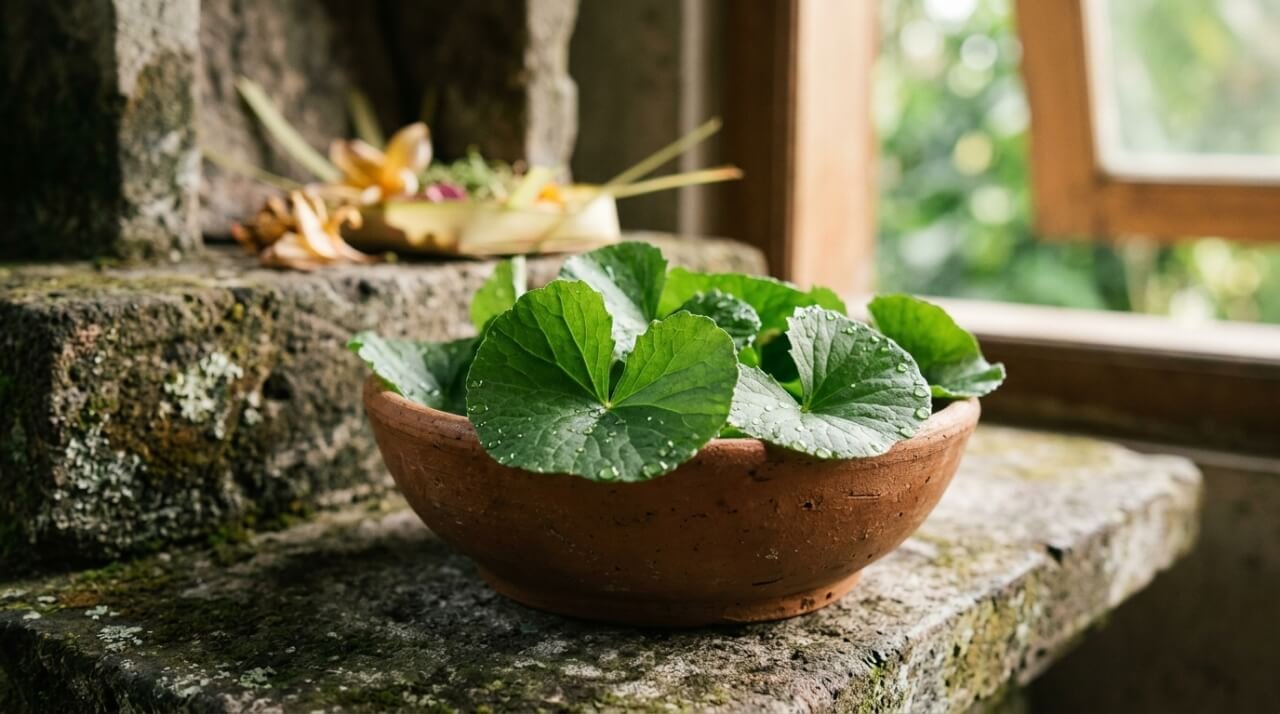
Walk through any Balinese village and you will find pegagan growing where no one planted it. The small fan-shaped leaves spread close to the ground, in damp corners of rice paddies, along temple paths, and in the cool shade beside compound walls. Western botanists call it Centella asiatica. Korean skincare made it famous as cica. In Indonesia, it has been a quiet daily herb for centuries, used by traditional healers long before the patents and the marketing.
What our grandmothers in Bali knew, the laboratories have since confirmed. Pegagan contains a small group of active compounds called triterpenes (asiaticoside, madecassoside, asiatic acid, and madecassic acid) that support the skin in three quiet, measurable ways: they encourage collagen synthesis, they help calm inflamed and reactive skin, and they assist the wound-repair process by guiding fibroblast activity. Clinical work on these compounds spans decades. The herb did not become famous because of one viral product. It became famous because the science kept agreeing with the tradition.
How Balinese tradition uses it
In jamu, the family of Indonesian herbal preparations, pegagan is taken as a fresh juice, a brewed tea, or a finely ground paste applied to small wounds and skin irritations. It is one of the herbs given to mothers during the postpartum recovery period to support tissue healing. Older Balinese still chew a few fresh leaves as a memory and clarity tonic, a practice rooted in the Ayurvedic and Sundanese herbal traditions where pegagan is considered a brain food.
What it does for the skin
If your skin is reactive, post-procedure, recovering from a barrier breach, or simply tired from too much active skincare, pegagan is one of the gentlest restorative ingredients in the plant kingdom. It works slowly. The point is not to feel a tingle or a transformation overnight. The point is that, over weeks, redness softens, the moisture barrier rebuilds, and the skin starts to behave like itself again. This is the same logic that runs through our wider Balinese skincare philosophy: the body already knows how to heal; the right herbs simply remove what was getting in the way.
How to bring it into your routine
Look for it on ingredient lists under any of these names: pegagan, gotu kola, Centella asiatica, cica, or the named actives (madecassoside, asiaticoside). Apply on damp skin, before your oil or balm step. Pair it, if you can, with another barrier-rebuilding fat such as illipe butter. Give it two weeks before deciding whether it agrees with you. Quiet ingredients ask for a little patience, and they tend to return that patience with results that last.
The takeaway: pegagan is not new, and that is the point. The herb your great-grandmother knew in her garden is the same herb the dermatology journals now study under the name Centella asiatica. Tradition and science, finally agreeing.