Essential oils for congestion: what actually helps you breathe
When your nose is blocked and your chest feels tight, you want relief you can trust, not theatrics. Essential oils for congestion have a real place in that picture, though not the overnight fix some labels promise. Used well, a few well-chosen aromatic oils can ease the feeling of a stuffy nose, soften a night-time cough, and make breathing more comfortable while your body does the actual work of clearing. Used carelessly, they can irritate airways or reach people who should never be near them. This guide is the honest version: what the research supports, how to use these oils safely at home, and the Indonesian oil most Western lists quietly skip.
We craft aromatherapy oils in Bali, so we come at this with both a formulator’s caution and generations of herbal habit behind us. Our aim here is clarity, not hype. By the end you will know which oils earn their place, how to reach for each one, who should keep well away, and how to fold the whole thing into a calm ritual rather than a frantic search through the cabinet at midnight.
How congestion works, and where essential oils fit

Congestion is mostly a swelling story, not a mucus story. When you catch a cold or meet an allergen, the blood vessels lining your nose dilate and the tissue swells. That swelling narrows the airway and makes everything feel packed, even when there is not much to blow out. The heavy, blocked sensation you notice at 2am is largely inflamed tissue, plus gravity when you lie down.
This matters because it tells you what an essential oil can and cannot do. An aromatic oil will not cure a virus or drain a sinus on its own. What certain oils can do is create a cooling, opening sensation that makes breathing feel easier, and in some cases gently support the airway while your immune system clears the infection. Warm steam does a lot of the physical work by loosening secretions and soothing irritated passages. The oil rides along with the steam, adding scent and a sensation of openness.
It also explains why congestion feels worse at night. Lying flat lets blood pool in the nasal tissue, and dry bedroom air thickens the very secretions you are trying to shift. That is why the humble combination of an extra pillow, a glass of water, and a little moisture in the air often does more than anything you can buy. Hydration keeps mucus thin and mobile, warmth keeps tissue relaxed, and calm keeps you from bracing against the discomfort. Aromatic oils layer onto that foundation, they do not replace it.
So the honest framing is this: essential oils for congestion are a comfort measure and a companion to rest, fluids, and time. They belong in the same drawer as a warm shower and an extra pillow, not in the same category as prescribed medicine. If you keep that expectation grounded, you will use them better and enjoy them more. For a wider view of how single oils map to everyday uses, our essential oils uses chart is a useful companion to this piece.
The essential oils for congestion with real evidence behind them

A handful of oils turn up again and again in the research on breathing comfort, and they share a common thread: a small set of aromatic molecules that the body reads as cooling or clearing. Here are the ones worth knowing, with realistic notes on each.
Eucalyptus and its key compound, 1,8-cineole
Eucalyptus is the classic congestion oil, and the reason is a compound called 1,8-cineole (also written as eucalyptol). Studies on cineole suggest it can support clearer breathing and comfort during airway inflammation. Its scent alone gives that familiar wide-open sensation. Cineole is also the active thread that connects several oils on this list, which is why they feel related in the nose.
Peppermint and menthol
Menthol, the star molecule in peppermint, does not actually widen your airways, but it triggers cold receptors in the nose that create a strong feeling of easier airflow. That perception is genuinely useful when you feel blocked. Peppermint is bright, sharp, and a little bracing, which is why many people reach for it first. If you want the full picture on this oil, we wrote a detailed guide to peppermint essential oil benefits.
Tea tree, for its cleansing character
Tea tree is less about that cooling hit and more about its well-documented cleansing profile. It is a common choice in a diffuser during cold season for the freshness it brings to a room. It is potent, so a little goes a long way. Our overview of tea tree essential oil benefits covers its chemistry and safety in depth.
Rosemary, the other cineole oil
Rosemary, specifically the cineole-rich type, is a quieter member of this family that deserves a mention. It carries a green, herbaceous freshness and a good share of the same 1,8-cineole that makes eucalyptus feel opening. In a diffuser it rounds out a blend and keeps it from reading as purely medicinal. It is bracing in the morning and pleasant enough that you will reach for it beyond cold season.
Warming spice oils, in the background
Warming oils such as ginger and clove are not front-line congestion oils, but they can add a comforting, grounding note to a winter blend. Ginger in particular carries a gentle warmth that pairs well with the sharper oils above, as we explain in our piece on ginger essential oil benefits.
One practical note on combining them: more oils do not make a stronger blend, they make a muddier one. Two or three of these, chosen for how they smell together, will always beat a crowded mix of six. Cajeput with a little peppermint, or eucalyptus with a whisper of rosemary, is plenty. The nose likes clarity as much as the writing does.
Cajeput: the Indonesian oil most Western lists skip
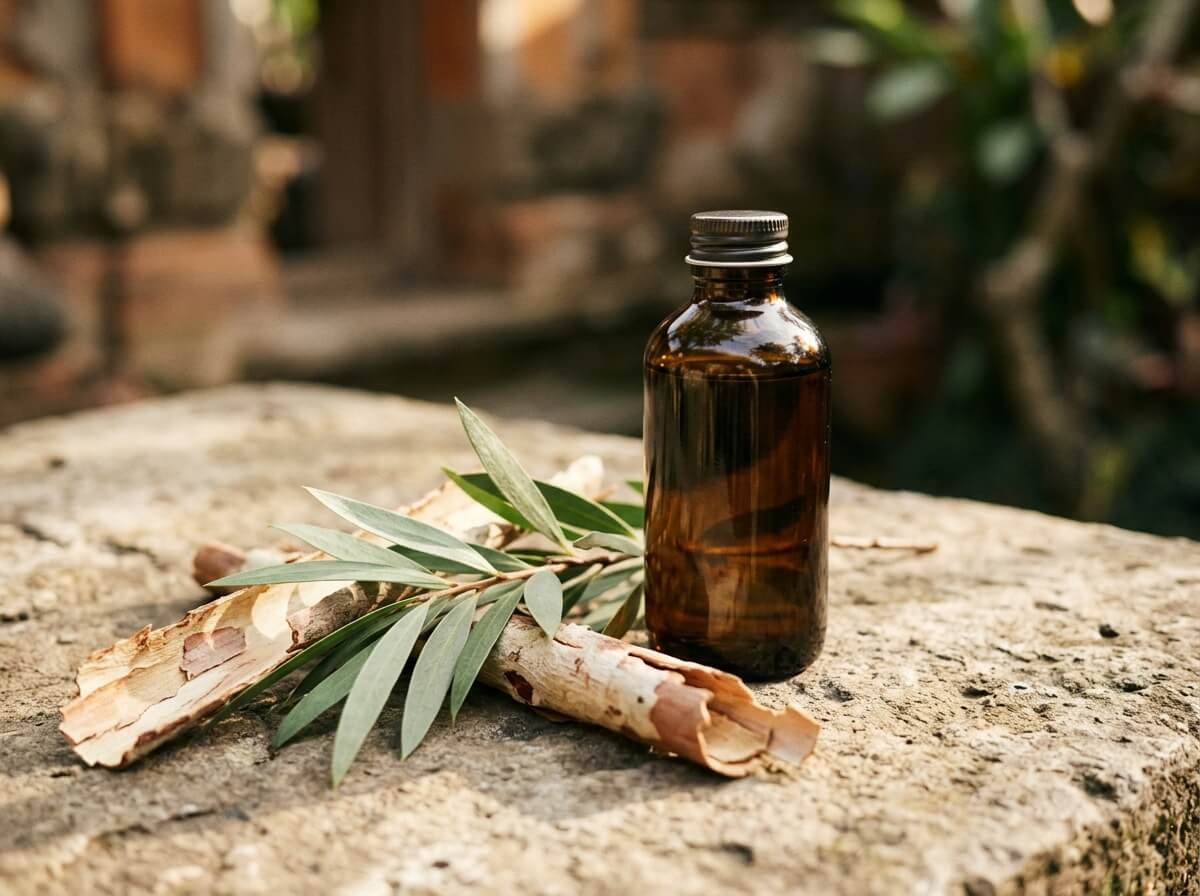
Ask anyone who grew up in Indonesia what they reach for when a nose is blocked, and the answer is almost never eucalyptus. It is minyak kayu putih, the oil of the cajeput tree, Melaleuca cajuputi. The name translates literally to white wood oil, after the tree’s pale bark. It sits in nearly every Indonesian household cabinet, rubbed on the chest of a snuffly child or dabbed at the temples of an adult with a cold. Western congestion lists rarely mention it, which says more about supply chains than about the oil.
Cajeput belongs to the same botanical family as eucalyptus and tea tree, and it is rich in the same key compound, 1,8-cineole. That is why it delivers a familiar clearing sensation, warmer and slightly softer than eucalyptus, less sharp than peppermint. For a congested evening it is a genuinely lovely oil to diffuse or to blend into a chest rub. This is a good example of one of our core beliefs, that tradition is often just innovation that arrived early: Balinese and wider Indonesian households have leaned on kayu putih for generations, long before anyone measured its cineole content in a lab.
We bottle it as a single oil because it deserves to stand on its own. Our Cajeput Essential Oil is distilled from cajeput leaves and steam-pressed into a clean, warm, camphor-bright oil that we think of as the honest heart of a congestion kit. For a deeper look at this single oil on its own, our guide to the power of cajeput essential oil goes further, and if you want the wider Indonesian aromatic story, the kaffir lime essential oil tradition sits right alongside it in our heritage.
The making of it is unhurried. Cajeput leaves and fine twigs are steam-distilled, a slow process that coaxes the volatile oil out of the leaf without harsh solvents. The result is a pale, mobile oil with that unmistakable warm, clean, faintly camphorous scent. Because the tree grows readily across the Indonesian archipelago, kayu putih has never been a luxury import at home, it is an everyday staple, which is exactly why it carries so little marketing shine and so much lived trust.
None of this makes cajeput a cure. It makes it a well-loved comfort with real chemistry behind it, and a reminder that the most useful remedy is not always the one that markets loudest.

How to use essential oils for congestion safely

The method matters as much as the oil. Here are the four sensible ways to bring these oils into a congested day, from gentlest to most direct.
Steam inhalation
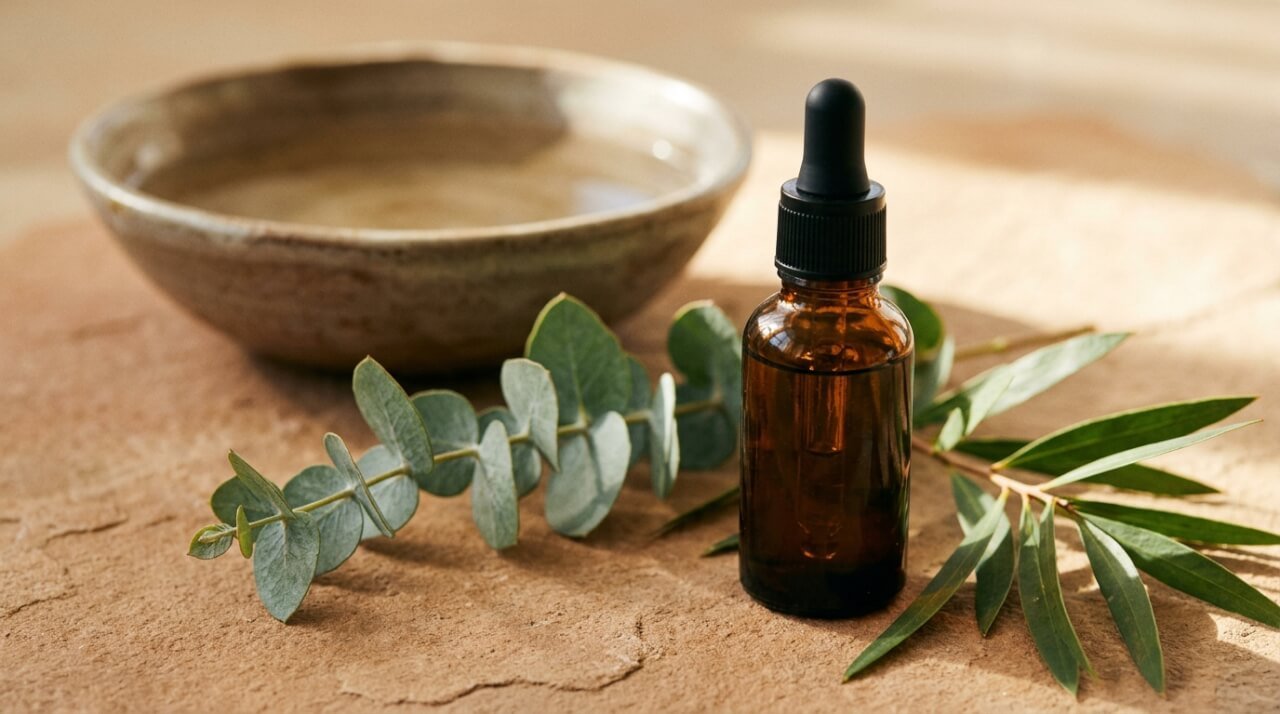
This is the traditional method and still one of the best. Add one or two drops of oil to a bowl of hot, not boiling, water. Drape a towel over your head, close your eyes, and breathe the warm vapour for a minute or two, taking breaks whenever you like. The steam loosens secretions and soothes the passages, while the oil adds its cooling character. Keep your eyes shut, since cineole and menthol vapours sting them. One drop is plenty to start.
Diffusion
A diffuser is the easiest way to keep a room feeling fresh through the day or overnight. Three to five drops in the water reservoir is enough for most rooms. Cajeput, eucalyptus, and a touch of peppermint make a clean, breathable blend. If you would rather not build your own, our Clearing Essential Oil Blend is formulated exactly for this moment, and our library of aromatherapy diffuser blend recipes has more combinations to try.
Chest and back rub
Never put essential oils neat on skin. Dilute properly: for adults, that means roughly two to three drops of essential oil per teaspoon of carrier oil, such as our Bali coconut oil. Rub gently onto the chest and upper back before bed. The warmth of your skin lifts the aroma slowly through the night. A drop of Mint Essential Oil in the blend adds a cooling lift.
Shower drops
If steam over a bowl feels like too much fuss, put a single drop of oil on the shower floor, away from the direct stream, and let the rising steam carry the scent. It is a low-effort way to start a blocked-up morning. A cleansing oil such as Tea Tree Essential Oil works well here.
A word on frequency, since more is a common temptation when you feel awful. There is no benefit to running a diffuser non-stop or reapplying a chest rub every hour. Diffuse in sessions of 30 to 60 minutes with breaks in between, and let a chest rub last the night on its own. Over-diffusing a small room can leave you with a headache rather than relief, and it wears out your nose so the scent stops registering. Gentle and intermittent beats constant every time, which is true of most good rituals.

Meet the Indonesian oil for easy breathing
Cajeput, or minyak kayu putih, is the warm, clearing oil Indonesian households have trusted for generations. Steam-distilled and bottled in Bali, it is the honest heart of a natural congestion kit.
Who should be careful, and when to skip them

This is the section that most congestion articles rush, and it is the one that matters most. Essential oils are concentrated plant chemistry, a single drop can hold the aromatic material of a whole handful of leaves, and respect for that is not fussiness, it is care. The people most likely to want relief, a snuffly toddler or a pregnant parent, are often the ones who should be most cautious, so it is worth reading this list before you reach for a bottle rather than after.
- Babies and young children. Menthol and cineole oils, including peppermint, eucalyptus, and cajeput, should not be used near the faces of infants or applied to young children’s chests without professional guidance. In very young children these compounds can affect breathing. When in doubt, keep the oils out of the room and rely on humid air instead.
- Pregnancy and breastfeeding. Several of these oils are best avoided or used only under advice during pregnancy. Check with a qualified practitioner before use.
- Asthma and reactive airways. Strong aromatic vapours can trigger some people rather than soothe them. Introduce any oil slowly, and stop at the first sign of tightening or coughing.
- Pets. Many essential oils, diffused or spilled, are toxic to cats and dogs. Diffuse only in ventilated spaces they can leave, and store bottles well out of reach.
- Skin. Always dilute in a carrier oil before applying, and patch test first. Neat oil on skin can sting, redden, or sensitise you over time.
And the plainest rule of all: if breathing is genuinely difficult, if a fever is high or persistent, or if congestion drags on past a normal cold, that is a moment for a doctor, not a diffuser. No greenwashing and no pretending here. Aromatherapy is a comfort layer, and knowing its edges is part of using it well.
Building a simple congestion ritual at home
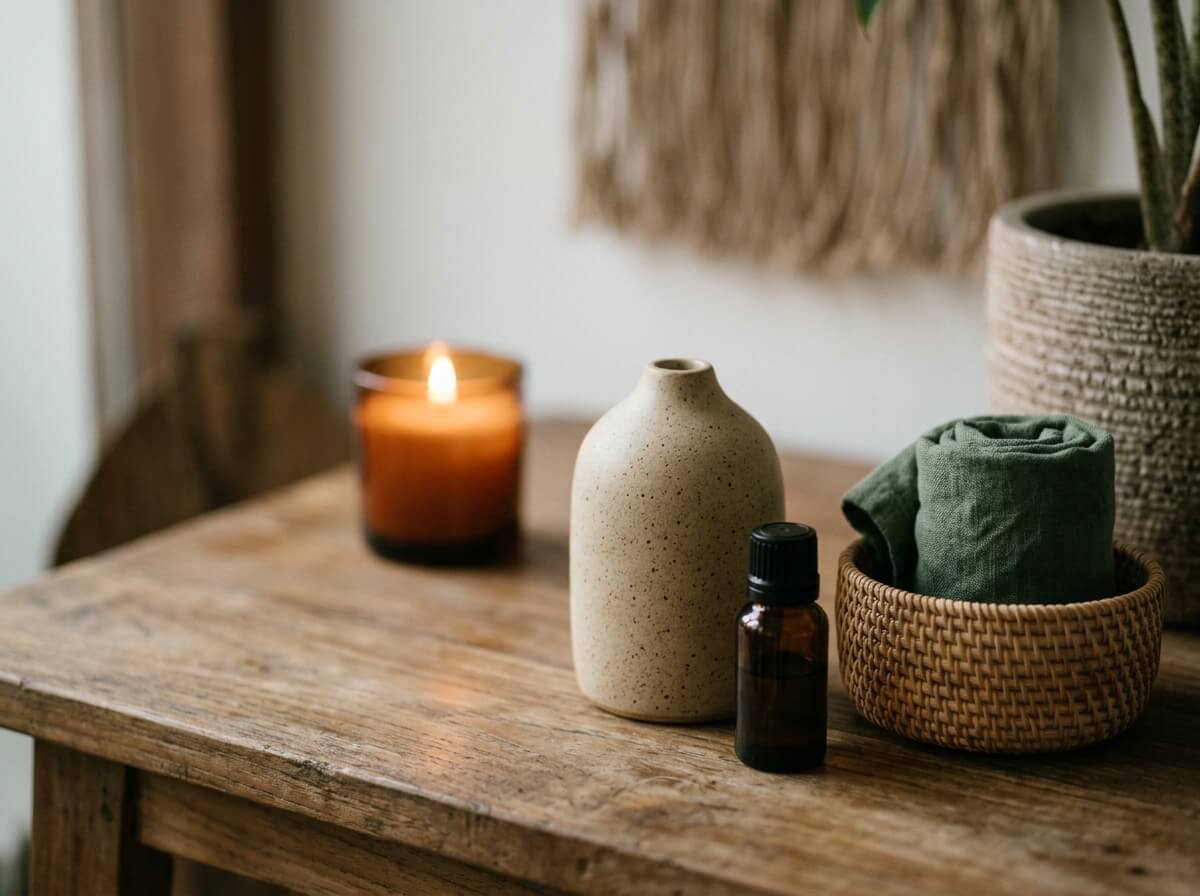
Relief feels better when it is a small ritual rather than a scramble. Here is a calm, repeatable evening routine you can lean on when a cold settles in, built from the oils above.
- Early evening. Set a diffuser going in the main room with three drops cajeput, two drops eucalyptus, and one drop peppermint. Let the space feel open while you slow down.
- Before your shower. Place one drop of cajeput on the shower floor, away from the water, and breathe as the steam rises.
- Just before bed. Warm a teaspoon of coconut oil in your palms, add two drops of a clearing oil, and rub it gently over your chest and upper back.
- Through the night. Prop an extra pillow to reduce the gravity effect, keep water nearby, and let a bedside diffuser run on a low setting if the air is dry.
In the morning, the emphasis shifts from settling to clearing. A brighter blend suits the hour: eucalyptus with a little peppermint and a touch of rosemary in the shower or diffuser gives that fresh, awake feeling and helps you start the day breathing more easily. Keep it short, one session while you get ready is enough, then let the oils rest until evening.
The point is not a rigid protocol. It is a handful of small, sensory acts of care that make an uncomfortable night more bearable, and that you can repeat without thinking. If congestion is keeping you awake, our guide to essential oils for sleep pairs naturally with this routine, since rest is where most of the real recovery happens.
Warmth, humidity, patience, and a well-chosen oil: that is the whole of it. Simple, grounded, and honest about what it can do.
Frequently asked questions about essential oils for congestion

Which essential oil is best for a blocked nose?
Eucalyptus and cajeput are the usual first choices because both are rich in 1,8-cineole, the compound behind that open, clearing sensation. Peppermint adds a strong cooling perception on top. Many people find a small blend of the three, diffused or inhaled over steam, works better than any single oil alone.
Can I put essential oils directly in my nose?
No. Never apply essential oils inside the nostrils or on the delicate skin around them. The safe routes are steam inhalation, diffusion, a shower drop, or a properly diluted chest rub. Direct contact with mucous membranes can burn and irritate.
Are essential oils for congestion safe for children?
Cineole and menthol oils are not recommended near the faces of babies or on young children’s chests without professional guidance, because they can affect breathing in the very young. For children, humid air from a warm bath or a plain humidifier is the gentler and safer choice. When unsure, ask a qualified practitioner.
How long does the relief last?
The cooling, open feeling from inhalation tends to last from a few minutes to around half an hour, which is why steam and diffusion are worth repeating through the day. Remember that these oils ease the sensation of congestion and support comfort; they do not shorten the illness itself.
What is cajeput oil, and how is it different from eucalyptus?
Cajeput, or minyak kayu putih, comes from Melaleuca cajuputi, a relative of eucalyptus and tea tree. It shares the same key cineole chemistry, so it delivers a similar clearing effect, but with a warmer, softer, slightly camphor-like character. It is the traditional Indonesian congestion oil and a lovely alternative if you find eucalyptus too sharp.
Congestion will always be, at heart, a waiting game your body plays and wins. What you give it, you get back: rest, warmth, fluids, and a little sensory comfort from oils that have earned their place. Choose them with care, use them with respect, and let them do the modest, genuine work they are good at.