Ginger essential oil benefits: the warming Indonesian oil, its chemistry, and honest use
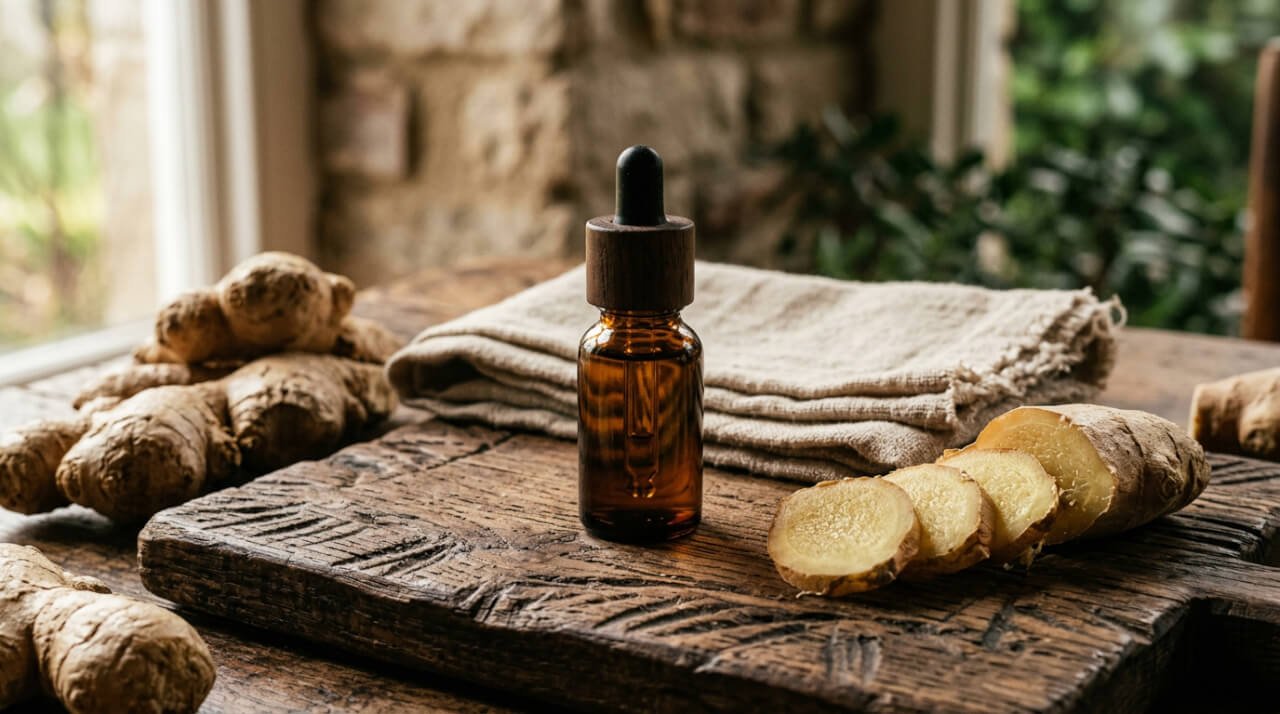
Ginger is the rhizome most of us already trust in the kitchen, warm, sharp, and grounding. Pressed into a bottle, it becomes something quieter and more concentrated, and the ginger essential oil benefits people ask us about tend to sit at the meeting point of tradition and evidence. This is an oil with a long history in Indonesian and Balinese care, and a chemistry that is often misunderstood. So we want to be honest about what it does, what it does not, and how to use it with care.
In this guide we walk through where real ginger oil comes from, the science behind its warmth, the body and mood uses that research actually supports, and the Balinese ritual of boreh that has relied on ginger for generations. We will also cover safe dilution, who should skip it, and how to choose a bottle worth keeping. If you are new to single oils, our A to Z list of essential oils and their uses is a gentle place to start.
A quick promise before we begin. We will not stretch the truth to sell an oil. Ginger is a genuinely lovely botanical with real, well-documented uses, and it also carries a good deal of internet folklore that does not hold up. Our job is to hand you the honest version, the one that lets you enjoy the oil for what it is rather than what a headline wishes it were.
What ginger essential oil actually is
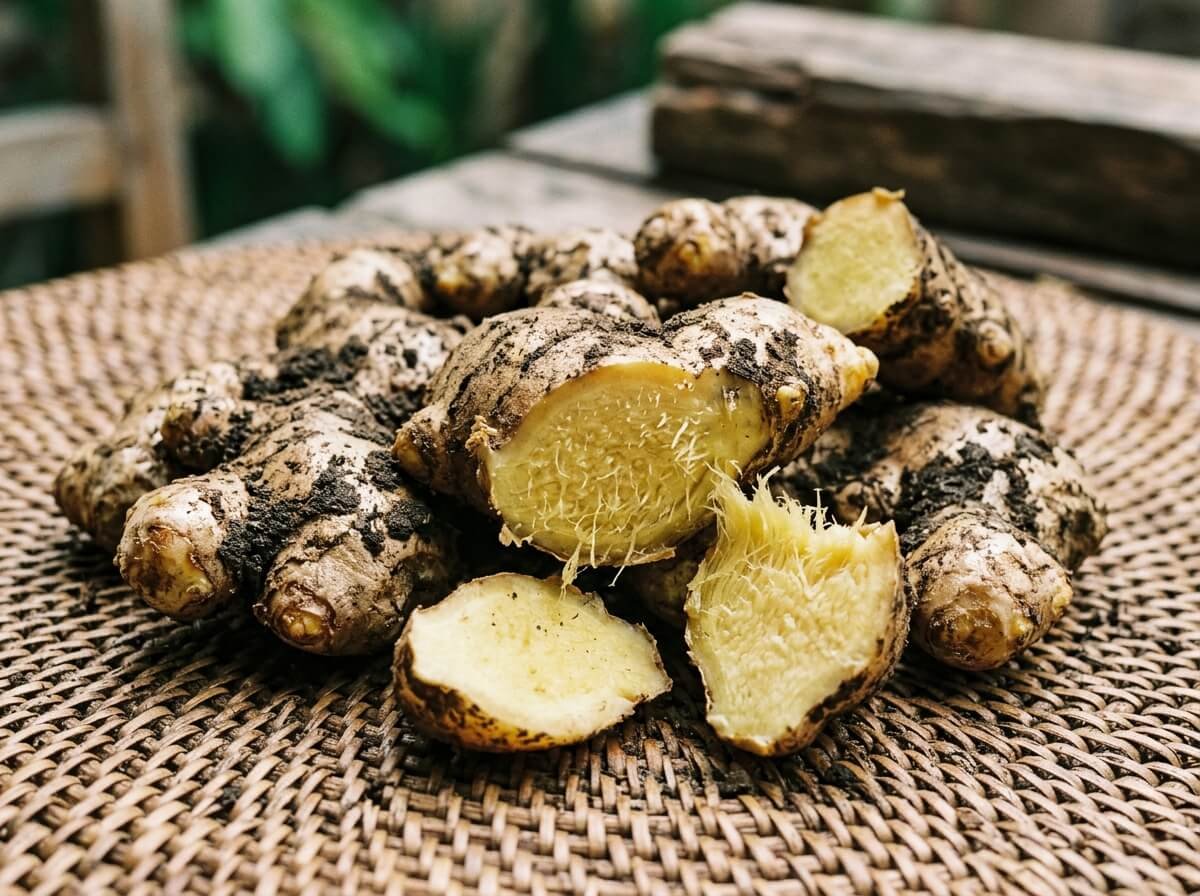
Ginger essential oil is steam-distilled from the dried rhizome of Zingiber officinale, the same plant Indonesia knows as jahe. The rhizome is washed, sliced, and dried, then steam passes through the plant material and carries the volatile aromatic compounds with it. Those compounds condense into a thin, pale-golden to amber oil with a scent that is warm, woody, and peppery, with a faint citrus lift underneath.
It helps to separate three things that share the word ginger. Fresh ginger is the root you cook with, rich in water and pungent non-volatile compounds. Ground ginger is the dried spice. Ginger essential oil is the concentrated volatile fraction, and a little goes a long way. One drop carries the aromatic weight of a great deal of plant material, which is exactly why dilution matters later in this guide.
There is also a difference in how the oil is made. Steam-distilled ginger oil captures the light, warming aromatics. A carbon-dioxide extraction, sometimes labelled a CO2 extract or absolute, pulls a fuller profile that includes more of the pungent, heavier molecules. Both are useful, and both are honest products, they simply smell and behave a little differently. Our own Ginger Essential Oil is a steam-distilled Indonesian oil, chosen for that clean, warming character.
Ginger has grown across tropical Asia for thousands of years, and Indonesia is one of the places it has always felt at home. Warm, humid soil and generations of growers who understand the plant give the rhizome its depth of aroma. When we talk about ginger, we are not talking about a novelty ingredient discovered by wellness marketing last season. We are talking about a root that has moved through kitchens, temples, and healing traditions across the archipelago for as long as anyone can remember.
The chemistry behind ginger essential oil benefits
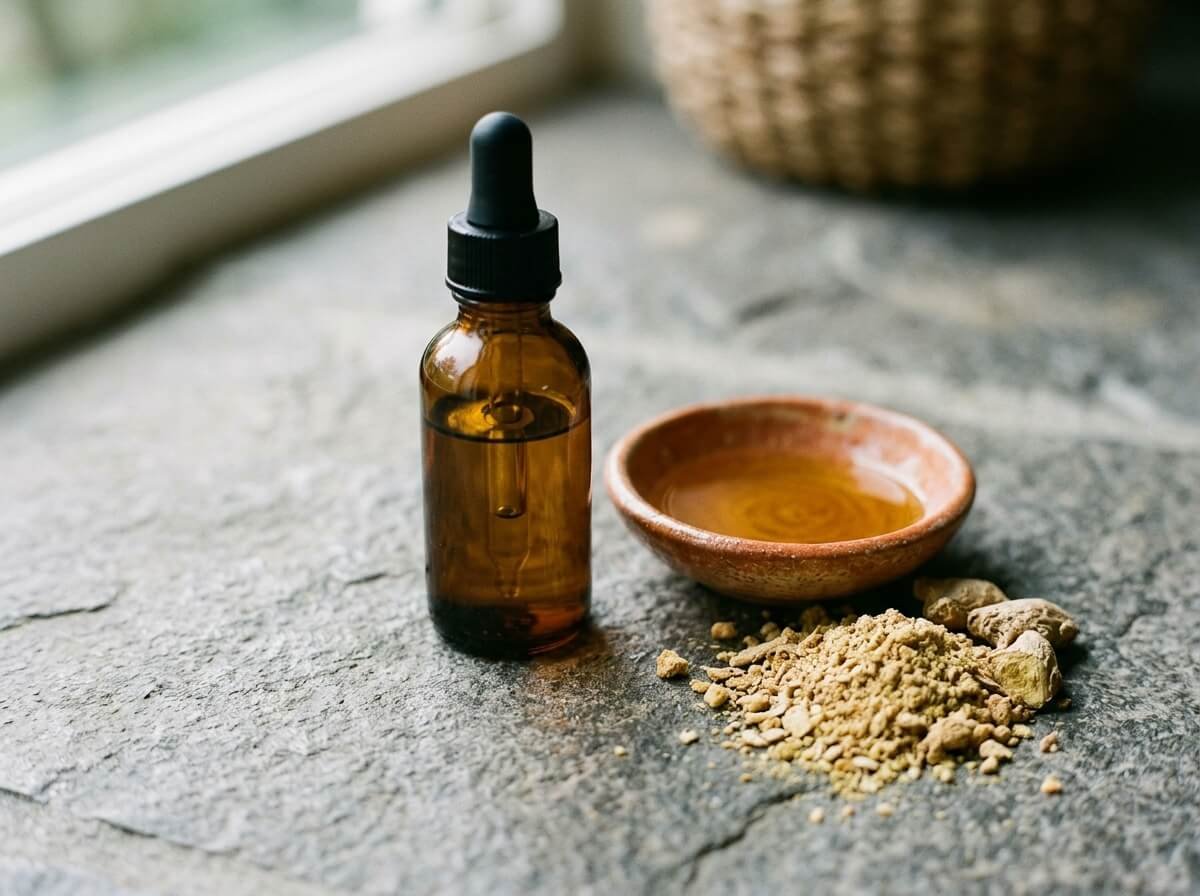
Here is the detail most articles skip, and it changes how you should read every claim. Steam-distilled ginger essential oil is dominated by sesquiterpene hydrocarbons, not by the gingerols and shogaols that give fresh ginger its fiery bite. Those pungent molecules are heavier and largely non-volatile, so they mostly stay behind in the plant during steam distillation.
The oil that comes across is rich in compounds such as zingiberene, which is often the largest single component, along with beta-sesquiphellandrene, beta-bisabolene, and alpha-farnesene. These sesquiterpenes are what you smell, and they are the molecules behind much of the oil’s aromatic and skin-conditioning behaviour.
Why does this matter? Because a lot of ginger content online borrows research done on eaten ginger or on ginger extracts, then quietly applies it to the essential oil. The two are not the same input. When we describe ginger essential oil benefits, we try to lean on studies of the aromatic oil itself, or on inhalation and topical use, rather than stretching digestion research to fit. That is the difference between a grounded claim and a hopeful one, and it is the same care we bring to clove and patchouli, two other spice oils where chemistry and marketing often drift apart.
Ginger essential oil benefits for body and mind

With that honesty in place, here is where the evidence for ginger essential oil benefits is most credible. We have grouped it by how the oil is actually used, because the delivery method shapes what is reasonable to expect.
A warming oil for tired muscles and joints
Ginger oil’s sesquiterpenes have shown anti-inflammatory activity in laboratory research, and the oil has a genuine warming quality on the skin when diluted. Blended into a carrier and massaged over tight shoulders, a stiff lower back, or aching knees, it makes a comforting rub for everyday aches. We are describing comfort and circulation-warming touch, not a cure. For a ready-made option, a Balinese massage oil already balances warming and grounding notes.
Nausea and the case for inhalation
This is the claim worth reading carefully. Eating ginger has reasonable evidence for easing nausea. For the essential oil, the more supported route is inhalation, where several small clinical studies have found that smelling ginger oil helped reduce nausea, including after surgery. That is a promising signal rather than a settled fact, and it is specific to breathing the aroma. If nausea is a regular concern, gentle inhalation from a tissue or a personal roller is a sensible, low-risk thing to try.
Mood, focus, and grounding
Warm, spicy aromas tend to feel steadying, and ginger is no exception. Diffused on a slow, low-energy afternoon, it reads as focusing and quietly energising, which is why it appears in warming blends alongside citrus and wood. Our Pure Energy essential oil roller leans on that same lifting, warming character for the pocket, and you will find more pairing ideas in our aromatherapy diffuser blend recipes.
On the skin
Well diluted, ginger oil is a warming, conditioning addition to body blends. It is not a treatment for any skin condition, and it is too warming to belong in delicate facial routines for most people. Think of it as a body and mood oil first, and keep it off sensitive or broken skin.
A simple warming body blend
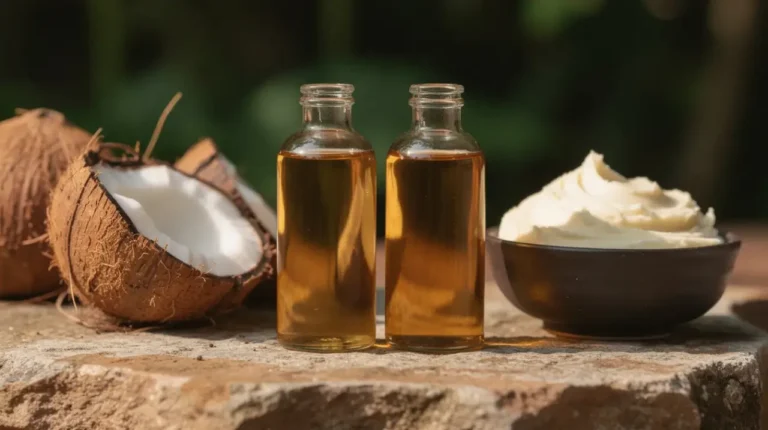
If you would like to make something at home, this is a gentle place to begin. In 30 ml of a plant carrier such as virgin coconut oil, add three drops of ginger oil, three drops of sweet orange, and two drops of a grounding wood such as vetiver or sandalwood. That lands near a 1% dilution, warm without being fierce. Warm a little between the palms and work it over the shoulders and lower back on a cool evening. It borrows the spirit of boreh in a form that fits a modern bathroom shelf, and it pairs the science of the oil with the ritual of unhurried touch.
Ginger in Balinese ritual: the warmth of boreh

Long before ginger arrived in a dropper bottle, it was already central to Balinese body care. Boreh is a traditional warming paste, ground from spices and roots and spread over the body to ease cold, fatigue, and aching muscles after long days in the fields or the rain. Ginger sits at its heart, alongside cloves, coriander, and other warming botanicals, and rice farmers have used it for generations to bring heat back into tired limbs.

What we love about boreh is that it holds the same logic modern aromatherapy is slowly rediscovering, that warmth is a form of care, and that the body responds to it. The tradition did not need a lab to know ginger warms. It knew because generations paid attention. When we work with ginger, we are borrowing from that lineage, and we treat it with respect rather than treating it as a novelty.
You do not need to recreate a full boreh to feel the thread. A few drops of ginger oil in a warming body blend, worked over the shoulders on a cool evening, carries the same intention in a simpler form. If you want the wider story of Bali’s herbal body rituals, our guide to Balinese massage oil and the boreh tradition go deeper into the heritage.

Warmth in a bottle, from Indonesian jahe
Our Ginger Essential Oil is steam-distilled from Indonesian ginger for a clean, warming, woody-peppery scent. Blend a drop or two into a carrier for a comforting massage, or breathe it in when you need to feel grounded.
How to use ginger essential oil safely at home
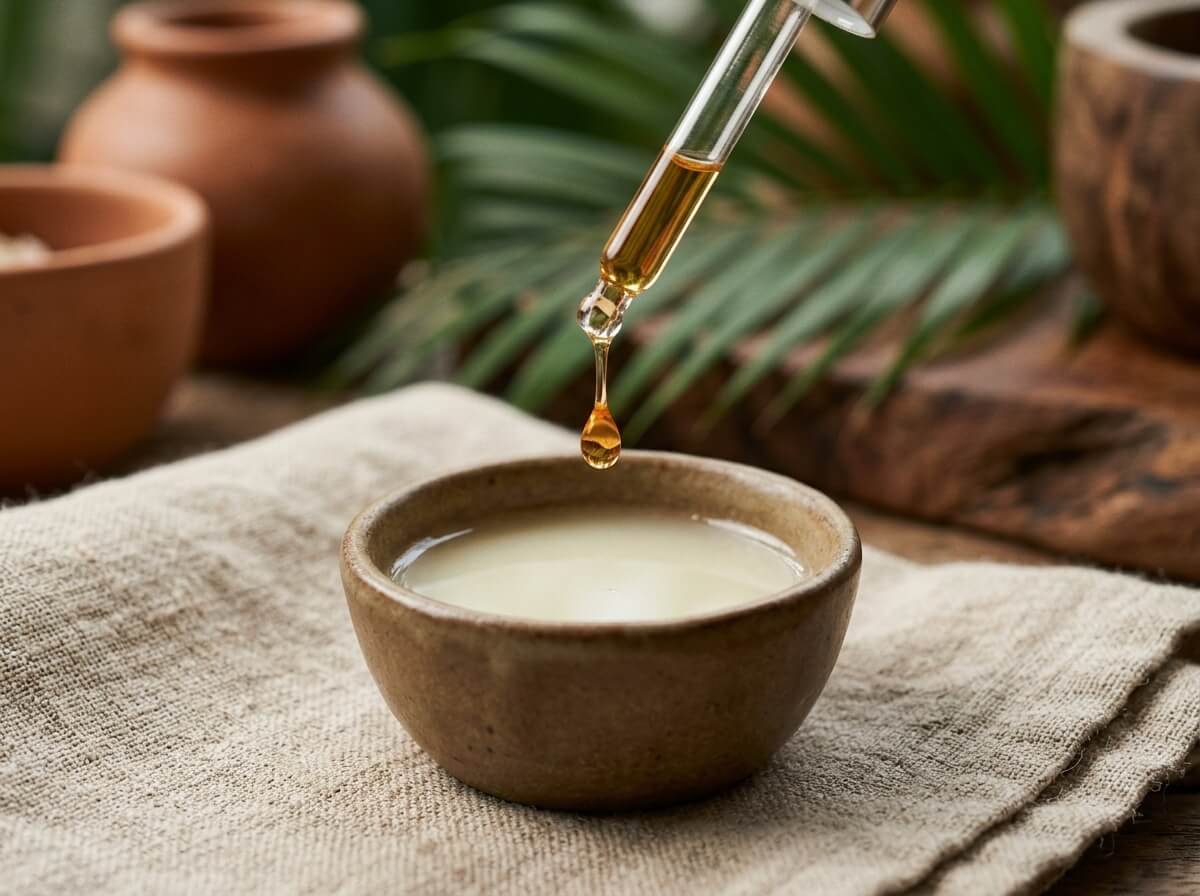
Ginger oil is warming, and warming oils reward respect. A few simple rules keep the experience comforting rather than irritating.
Always dilute for the skin
Never apply ginger essential oil neat. For most body uses, a dilution of around 1% to 2% is sensible, which is roughly six to twelve drops of oil in 30 ml of carrier. A plant carrier such as virgin coconut oil or argan oil both suits the warmth and nourishes the skin. If you would rather not mix your own, a pre-blended lotion such as our Coconut Lotion Lemongrass Ginger does the balancing for you.
Patch test first
Because ginger is warming, patch test a small diluted amount on the inner forearm and wait 24 hours before wider use. A little warmth is expected. Stinging, redness, or itching is your signal to rinse with more carrier oil, not water, and to lower the dilution or stop.
Diffusing and inhaling
For mood and nausea, inhalation is simple. Add a few drops to a diffuser, or place one drop on a tissue and breathe gently. Keep diffusing sessions to around 30 to 60 minutes with fresh air between, which is kinder to the nose and to anyone else in the room.
Who should skip it, or ask first
- People who are pregnant or breastfeeding should check with a qualified practitioner before use.
- Keep it out of reach of young children, and avoid use on infants.
- Anyone on blood-thinning medication should speak to a doctor first, as ginger is traditionally associated with circulation.
- Avoid broken, sensitive, or facial skin, and never use it in or near the eyes.
One reassuring note, unlike many citrus oils, steam-distilled ginger oil is not considered phototoxic, so it will not increase sun sensitivity the way expressed lemon or bergamot can. That still does not make it a facial oil, but it is one less thing to worry about on the body.
Choosing a real bottle: sourcing, provenance, and freshness
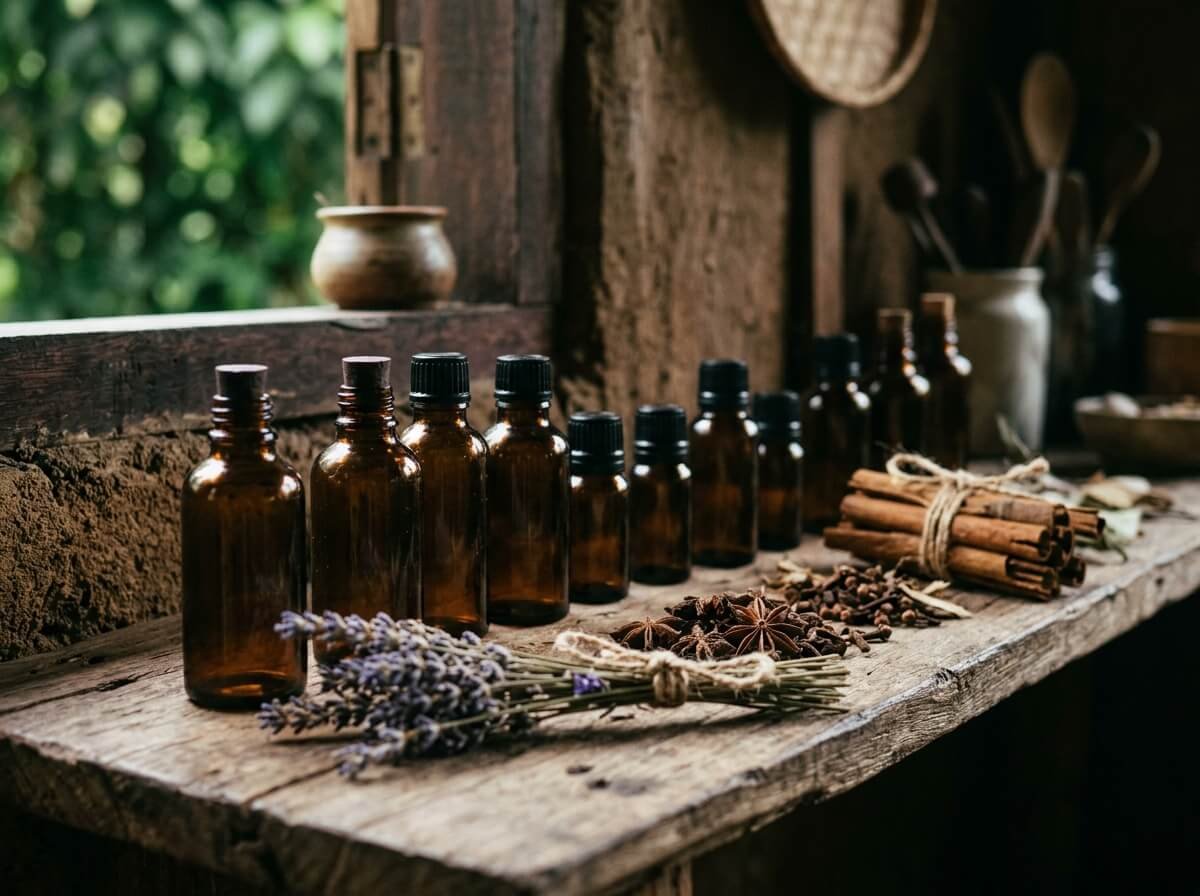
The essential oil aisle is crowded, and not every bottle is what it claims. A few honest checks help you choose well, whether you buy from us or anyone else.
- Latin name on the label. Look for Zingiber officinale. A real oil names its plant.
- Country of origin. Ginger oil is commonly distilled in Indonesia, India, and China. Provenance you can trace is a good sign.
- Extraction method. Steam-distilled or CO2 extracted should be stated, so you know what you are smelling.
- Amber or dark glass. Light degrades essential oils. Clear plastic is a warning.
- Honest language. Be wary of miracle claims or cure-all promises. Real care does not need them.
This is where provenance becomes more than a marketing word. Indonesia is one of ginger’s ancestral homes, and sourcing an Indonesian oil keeps the plant close to the tradition that shaped it. It is the same reasoning behind our vetiver and patchouli oils, both rooted in the archipelago rather than shipped in from far away and relabelled.
Store your bottle upright, cap tight, away from heat and sunlight. Used this way, ginger oil keeps its warmth for a couple of years. If the scent turns sharp, flat, or sour, it has oxidised, and it is time to retire it to a drawer sachet rather than your skin.
Frequently asked questions about ginger essential oil
Is ginger essential oil the same as eating ginger?
No. Steam-distilled ginger oil is the volatile aromatic fraction, rich in sesquiterpenes, and it lacks most of the pungent gingerols and shogaols found in fresh or ground ginger. The kitchen root and the bottle share an origin, not a chemistry, so evidence from one does not automatically transfer to the other.
Can ginger essential oil really help with nausea?
The most supported route is inhalation. Several small studies have found that breathing ginger aroma helped ease nausea, including after surgery. It is a gentle, low-risk thing to try, though it is a comfort measure rather than a medical treatment. Persistent nausea deserves a conversation with a health professional.
How do I dilute ginger oil for a massage?
Aim for roughly 1% to 2%, about six to twelve drops in 30 ml of a carrier such as virgin coconut oil. Start low, patch test, and build up only if your skin is comfortable.
Is ginger oil safe during pregnancy?
Ginger is used carefully in many traditions, but essential oils are concentrated, so we recommend checking with a qualified aromatherapist or doctor before using it topically or in strong diffusion during pregnancy or breastfeeding.
Does ginger essential oil make skin sensitive to sunlight?
No. Unlike expressed citrus oils, steam-distilled ginger oil is not phototoxic, so it will not raise your sun sensitivity. It is still a body oil rather than a facial one for most people.
Bringing ginger home, with care
Ginger essential oil is a small, honest pleasure. It warms tired muscles when diluted, steadies the mood when inhaled, and carries a lineage that runs from Indonesian fields to the Balinese boreh paste that has comforted bodies for generations. Read the claims carefully, dilute with respect, and choose a bottle whose provenance you can trust.
If ginger draws you further into single oils, our list of essential oils and their uses maps the wider garden, and the same warming spirit runs through our coconut oil rituals and evening blends like Bali Night. What you give this kind of care, in attention and in sourcing, you tend to get back.