Aloe vera for sunburn: what actually soothes, what only cools, and how to read the label
When skin has taken too much sun, the first thing most of us reach for is a jar of aloe. It is the right instinct. Used well, aloe vera for sunburn can calm heat, ease tightness, and hold water in skin that has been stripped of it. Used carelessly, or chosen from a shelf of green gels that are mostly water and alcohol, it can do very little, or even sting. This guide separates what actually soothes from what only cools, explains what the plant does and does not do, and shows how to read a label so the gel you choose earns its place in your after-sun ritual.
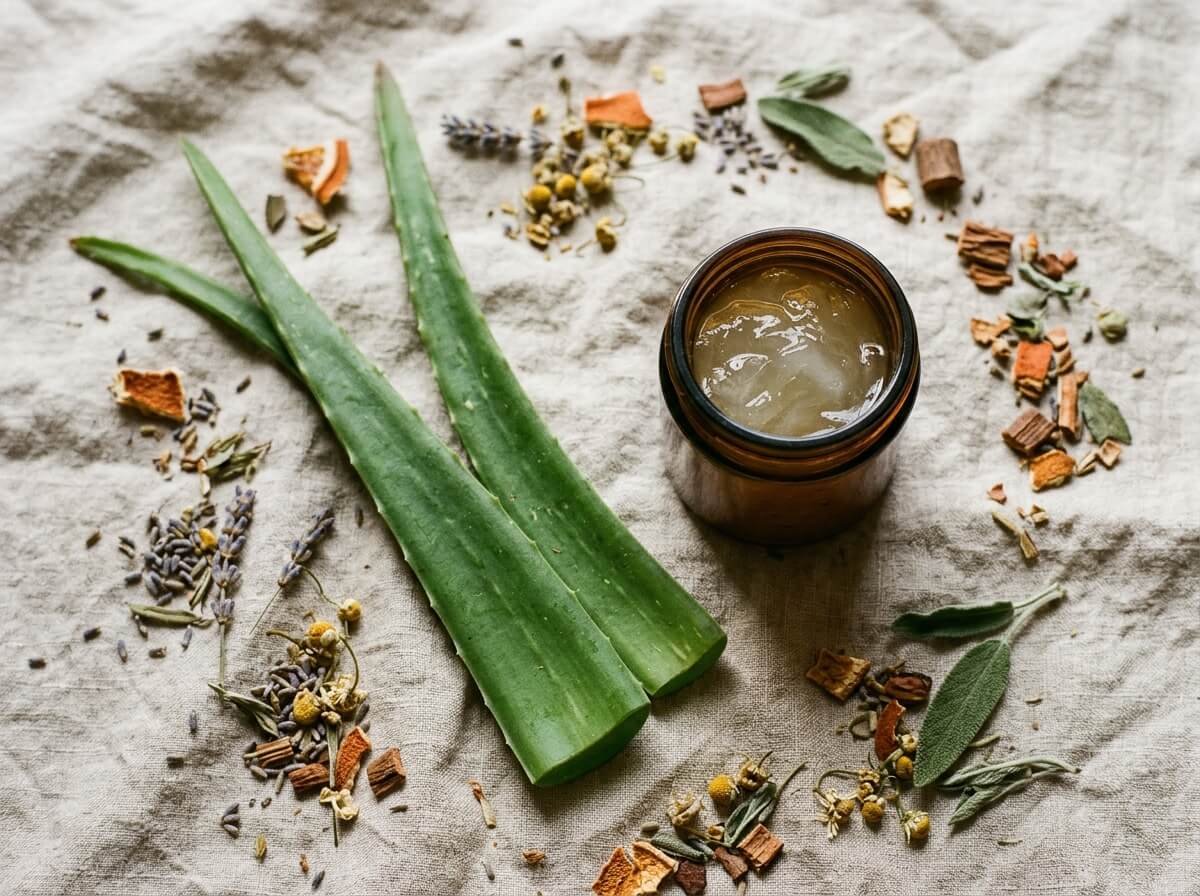
We make our own Aloe Vera Gel in Bali, blended with a little lavender, so we have spent a long time thinking about this exact question: what does honest aloe care look like after a day in the sun. What follows is the grounded version, no miracle claims, just how the plant works and how to use it with care.
What a sunburn actually is

A sunburn is not simply skin that has gone red. It is an inflammatory response to damage. Ultraviolet radiation, mostly UVB, reaches the living layers of the skin and injures the DNA inside skin cells. The body reads that injury as an emergency. Blood vessels widen to bring immune cells to the area, which is the redness and the heat you feel. Fluid moves into the tissue, which is the swelling and the tight, stretched sensation. In more serious burns, the barrier lifts away from the layers beneath and forms blisters.
Understanding this matters, because it tells you what after-sun care can and cannot do. Care cannot un-injure the cells. That repair happens quietly over days as the skin sheds damaged cells and rebuilds. What care can do is support the skin while it works: calm the inflammation, replace the water the burn has driven out, and protect the barrier so it can hold together and heal without cracking or infection.
It also explains the timing. A sunburn often looks and feels worse several hours after you leave the sun, peaking around 12 to 24 hours later, because inflammation builds over time. So the goal of after-sun care is not a single dramatic fix. It is steady, repeated, gentle support across the days that follow. This is the same barrier logic that runs through all considered skincare, and it is worth reading more on the fats that keep your skin barrier intact if you want the underlying picture.
Aloe vera for sunburn: what the gel actually does
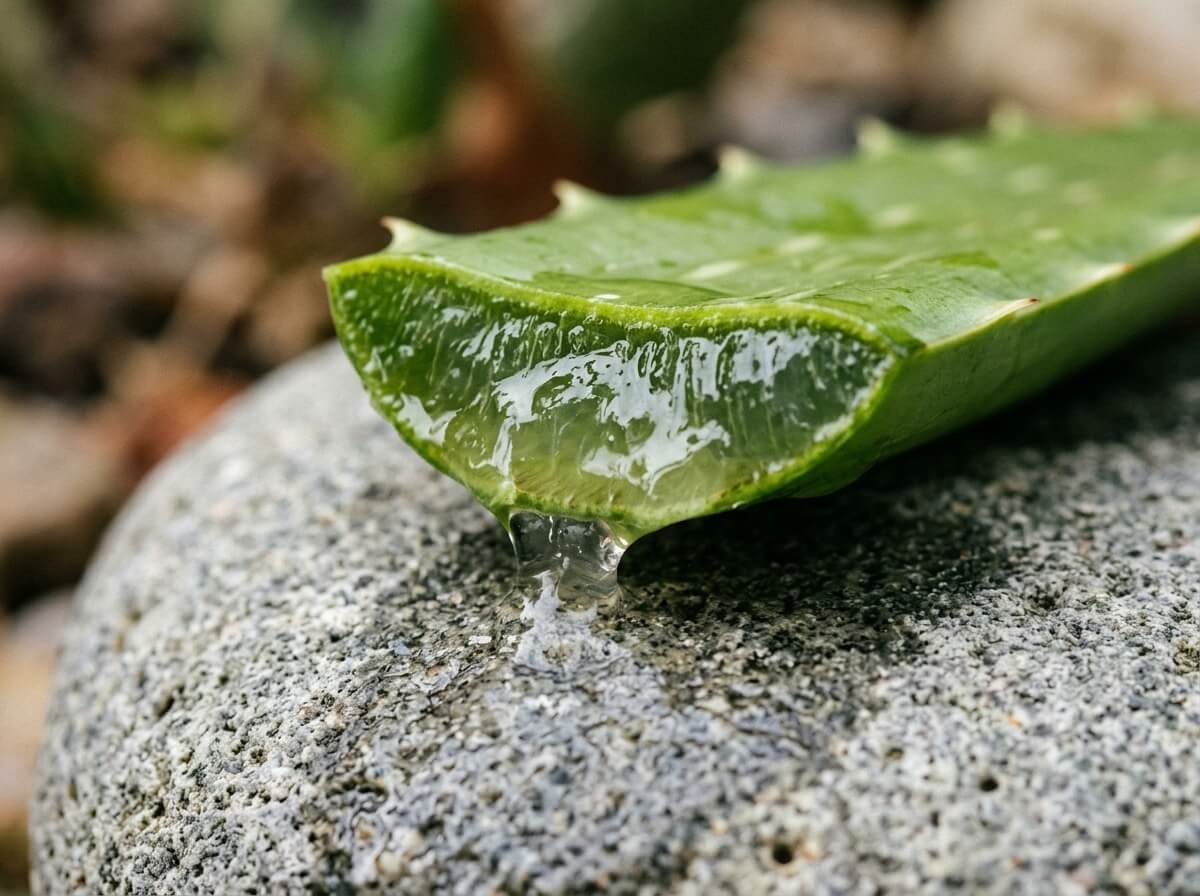
The clear inner gel of the aloe leaf is roughly 99% water. That single fact explains most of what it does, and it is the honest starting point for any claim about the plant. The remaining 1% is where the interesting part lives: long-chain sugars called polysaccharides, chief among them acemannan, along with a handful of vitamins, minerals, plant sterols, and enzymes.
Those polysaccharides do two useful things on burned skin. First, they are humectants, which means they draw water and hold it against the skin, slowing the evaporation that leaves a sunburn feeling tight and papery. Second, several small studies suggest aloe compounds have a genuinely calming, anti-inflammatory effect, easing the redness and discomfort of mild burns rather than merely masking them. The plant sterols and the enzyme bradykinase are the parts researchers most often point to here.
This is why aloe has earned its reputation over generations, long before there was research to describe the mechanism. Balinese households have reached for the split leaf for cuts, heat, and irritation for as long as anyone can remember, and that ancestral use turns out to line up with what the science now describes. If you want the broader, everyday picture of the plant beyond sunburn, we cover it in our guide to aloe vera gel for skin, and specifically for the delicate skin of the face in our piece on aloe vera gel for the face.
It helps to be clear-eyed about the evidence too. The research on aloe and burns is promising but modest: several small clinical trials have found that aloe preparations can shorten healing time and ease discomfort in mild burns, while larger, tighter reviews caution that the studies vary in quality and that aloe is no replacement for proper care in serious cases. That is a fair place to land. Aloe is a supportive botanical with a long tradition and a reasonable body of evidence behind its calming, hydrating role, not a proven cure for damaged skin. We would rather tell you that plainly than dress it up.
What aloe does not do is equally important. It is not a sunscreen, so it will not prevent the next burn. It does not reverse the DNA damage underneath. And a burn severe enough to blister widely is beyond what any topical gel should be asked to manage alone. Aloe is comfort and support for mild to moderate sunburn, not a cure.
What only cools versus what truly soothes
Here is a distinction that most sunburn advice skips, and it changes how you use the gel. Cooling and soothing are not the same thing. Cooling is physical and temporary. When you apply a cold gel, or step out of a cool shower with damp skin, the water evaporates and carries heat away. It feels wonderful for a few minutes, and then it is gone. Chill a plain gel in the fridge and you amplify that effect, but you have not changed the burn at all.
Soothing is what happens over the hours that follow: the inflammation settles, the barrier holds its water, the tightness eases and does not immediately return. That is the work of the humectant sugars and the anti-inflammatory compounds, not of the cold. A gel that only cools leaves you reaching for it again every twenty minutes. A gel that genuinely soothes buys you real, lasting relief between applications.
This is where added ingredients decide the outcome. A small amount of a calming essential oil can support the soothing side: we blend a little lavender into our aloe for exactly this reason, and lavender has a long, gentle track record on irritated skin, which we explore in the benefits of lavender essential oil. But the wrong additions push in the opposite direction. Denatured alcohol, menthol, and camphor all create a strong cooling rush that many people mistake for healing, while in fact they can dry and irritate skin that is already compromised. The rush fades, the dryness stays.
- Genuine soothing: aloe polysaccharides holding water, mild anti-inflammatory botanicals, a barrier-supporting oil layered on top.
- Only cooling (and sometimes counterproductive): denatured alcohol, menthol, camphor, artificial “cooling” fragrance, refrigeration alone.
This is also why the “put it in the fridge” advice is only half right. A chilled gel feels marvellous, and there is no harm in it, but the relief you notice in that first minute is the cold, not the plant. The relief that lasts comes from what happens after the cold has faded. So by all means keep your aloe cool for comfort, then judge it on the hours that follow, not the first touch. A gel worth keeping is one that leaves your skin calmer at bedtime, not just cooler at the moment you apply it.
How to read an aloe vera label, honestly
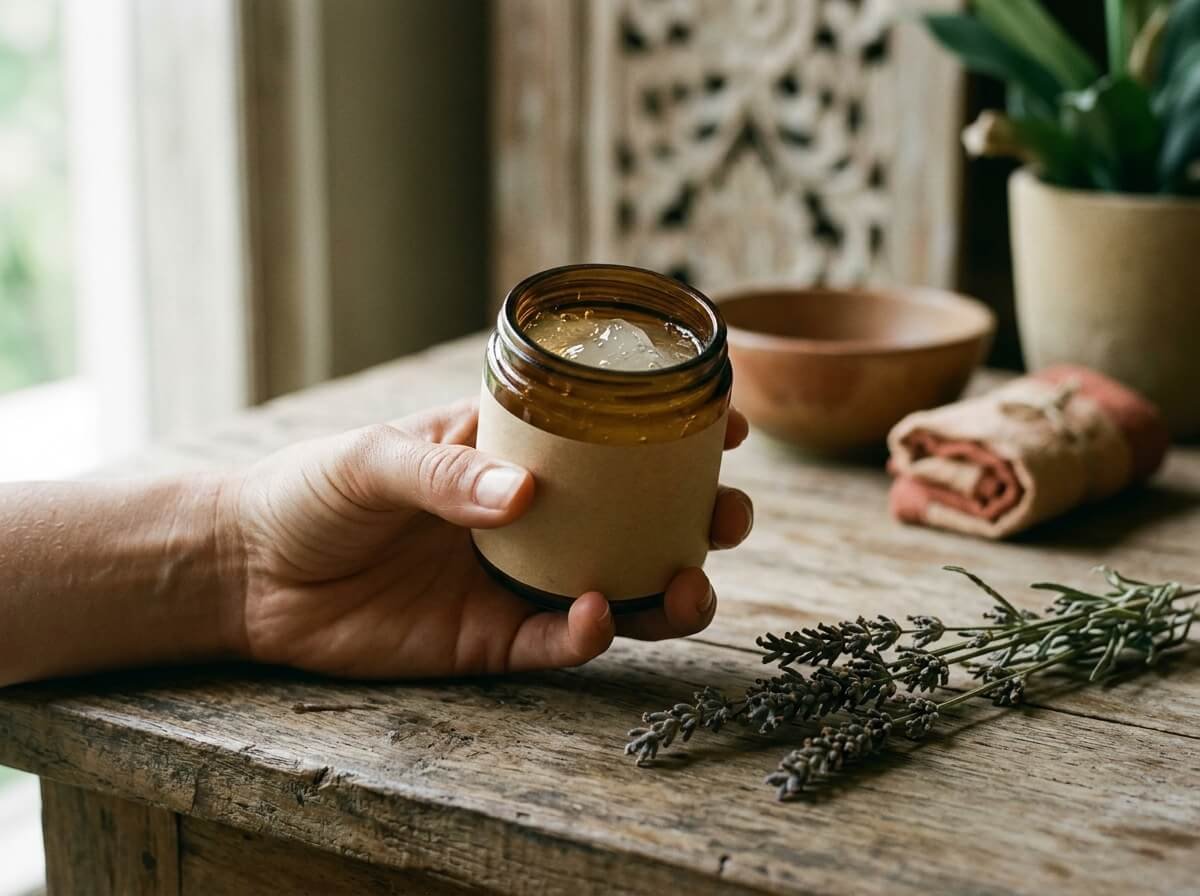
Walk down any sun-care aisle and you will find a wall of green gels promising relief. Most of them are water, a thickener, a preservative, a fragrance, and a splash of aloe near the bottom of the list. There is no rule against calling that “aloe vera gel,” which is exactly why reading the label matters more than reading the front of the jar. This is the part where we get a little bold, because the gap between what these products claim and what they contain is real.
Ingredient lists run in order of quantity. So the first question is simple: where does aloe sit? If Aloe barbadensis leaf juice or extract is at or near the top, the gel is mostly aloe. If water is first and aloe is fifth, you are buying scented water with a little plant in it. The second question is what else is in there. Watch for alcohol denat. high on the list, for synthetic colours that turn the gel a cartoon green, and for heavy synthetic fragrance, none of which a sunburn needs.
Our own Aloe Vera Gel was built to pass its own label test. Aloe leaf extract leads, a small amount of lavender essential oil does the calming work, and that is close to the whole story. No denatured alcohol to sting, no dye to colour it, no long tail of fillers. It is the same principle we apply across the face line, from a natural face serum to our washes: name what does the work, leave out what does not. If you would rather make sunscreen choices with the same clarity, our guide to natural sunscreen without the harsh chemicals approaches prevention the same honest way.
If a gel is new to you, patch test it first, especially on already-irritated skin. Smooth a little on the inside of the forearm and wait a few hours. Most people tolerate pure aloe well, but sensitivities to preservatives or added fragrance are real, and a sunburn is not the moment to discover one across your shoulders. Clean formulas with short ingredient lists give you far fewer things to react to, which is another quiet argument for reading the label before the burn, not after.

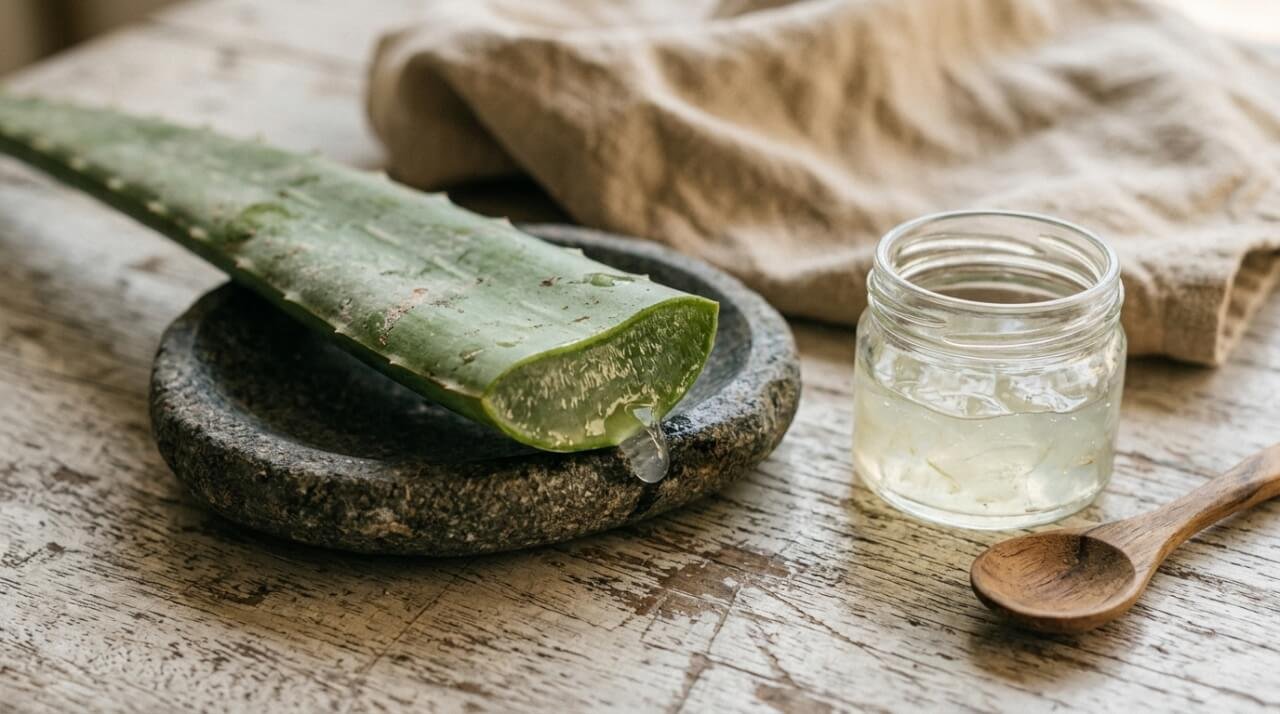
One more practical note. Fresh gel scraped straight from a leaf is lovely, but it oxidises and spoils within days and can carry the yellow latex from just under the skin of the leaf, which is irritating. A well-made bottled gel gives you the soothing inner-leaf portion, stabilised and clean, ready whenever the sun catches you out.
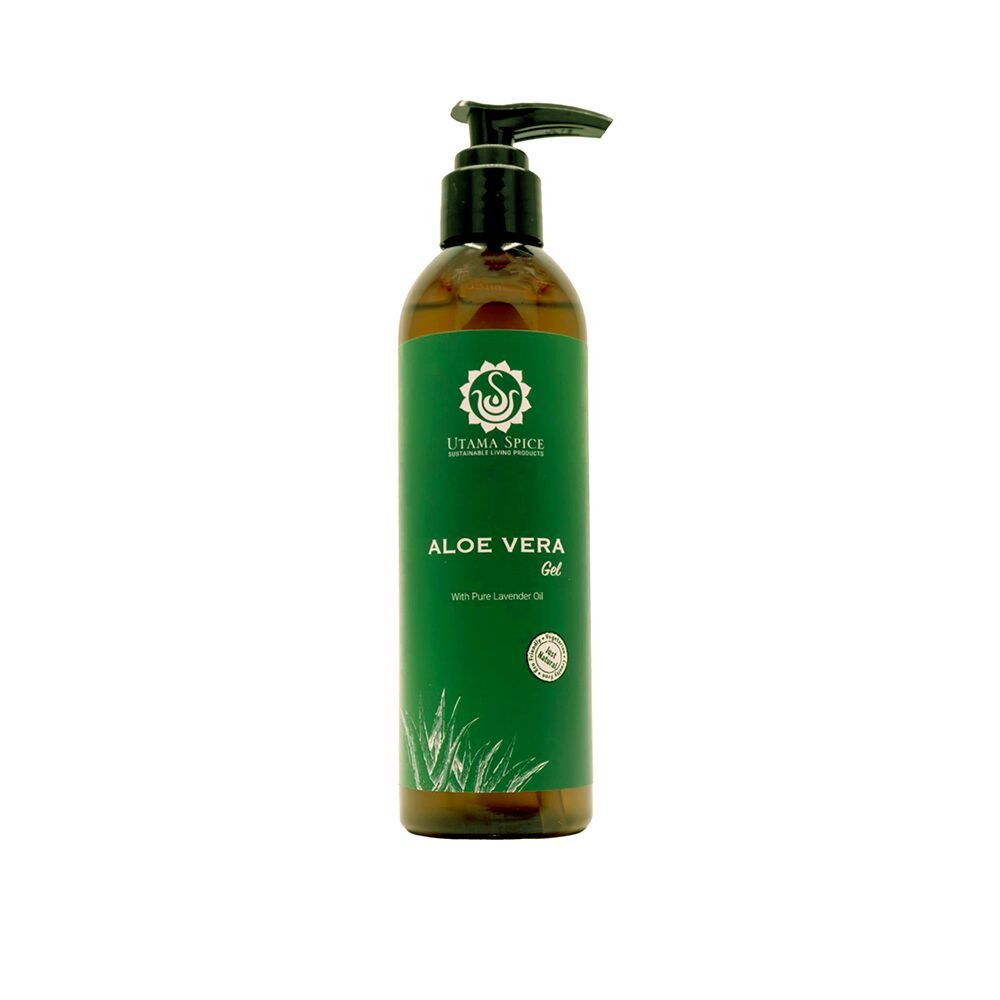
Aloe Vera Gel, made for days like this
Aloe leaf extract that leads the label, a whisper of lavender to calm the heat, and nothing that stings. Hand-blended in Bali, kept honest, ready when the sun catches you out.
An after-sun ritual that respects your skin barrier
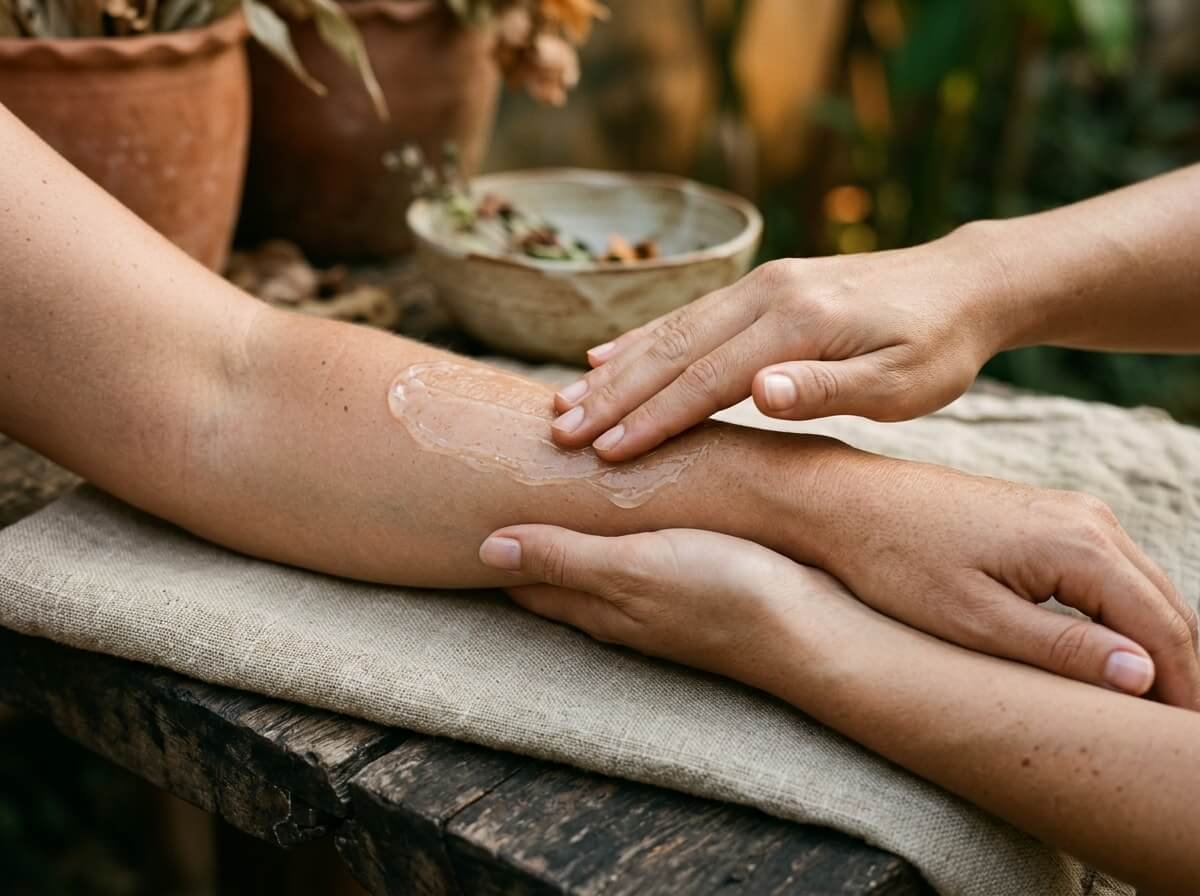
Good after-sun care is a sequence, not a single step, and the order matters. Sunburned skin has lost water and has a weakened barrier, so the plan is to cool the heat, put water back, and then hold that water in. Aloe covers the first two steps beautifully. A barrier-supporting oil or butter covers the third.
Start gently. Rinse or bathe in cool, not cold, water to bring the temperature down, and pat, never rub, the skin dry. While the skin is still slightly damp, smooth on a generous, even layer of aloe gel. Damp skin gives the humectant sugars water to grab, which is why timing beats quantity here. Let it absorb rather than working it in hard, since friction is the last thing an inflamed barrier wants. Reapply through the day whenever the skin feels tight, which on a real sunburn can be every few hours.
Once the immediate heat has calmed, usually by the evening or the next day, seal the work in. A light, non-greasy layer of Virgin Coconut Oil over the aloe slows water loss and adds fatty acids the barrier can use, and Balinese skin has leaned on cold-pressed coconut for exactly this for generations. For larger areas, or skin that has moved past the raw stage into the dry, flaking phase, a richer Bliss Body Butter or a few drops of Rose Allure Body Oil smoothed over the limbs restores suppleness without any tug. If you are curious why these fats matter so much to a healing barrier, the fats that keep your skin barrier intact goes deeper.
A few things to leave out of the ritual entirely. Skip anything with fragrance-heavy lotions, retinoids, exfoliating acids, or scrubs until the burn has fully settled, because a compromised barrier cannot take them. Keep the burned area out of further sun while it heals, cover it with loose clothing, and drink water, since a burn pulls fluid outward and the rest of you needs replacing too.
When aloe is not enough
Honesty runs both ways. Just as we will not oversell what aloe does, we will not pretend it handles every burn. Most sunburns are mild, first-degree, and a calm aloe-and-rest routine is exactly right for them. Some are not, and knowing the line keeps you safe.
Reach for more than a topical gel, and consider medical advice, if any of these appear:
- Blistering across a large area, rather than a small patch, or blisters that weep or look infected.
- Fever, chills, nausea, headache, dizziness, or a racing heart after sun exposure, which can signal sun poisoning or heat illness rather than a simple burn.
- A burn on an infant or very young child, whose skin and fluid balance are far more fragile.
- Severe swelling, spreading redness, warmth, or pus around the area after a day or two, which can mean infection.
- Signs of dehydration, such as very little urine, a dry mouth, and deep fatigue.
For those situations, aloe is a comfort measure alongside proper care, not a substitute for it. Cool the body, replace fluids, protect the skin, and get help when the signs above are present. The gentlest, most grounded thing you can do for a serious burn is to recognise that it is serious.
And the truest after-sun care of all is the care that means you never need it. Shade in the harsh middle hours, a hat and loose cloth, and a sunscreen you trust do more than any gel can once the damage is done. We take the honest-label approach to prevention too, in our guide to natural sunscreen without the harsh chemicals. What you give your skin before the sun, it gives back to you after.
Frequently asked questions
How often should I apply aloe vera to a sunburn?
As often as the skin feels tight or hot, which on an active sunburn often means every two to three hours for the first day or two. Aloe is water-based and gentle, so frequent reapplication is fine and helpful. Applying to slightly damp skin makes each layer work harder.
Is fresh aloe from the plant better than bottled gel?
Fresh inner-leaf gel is lovely, but it spoils within days and can carry the irritating yellow latex from just beneath the leaf skin if you are not careful to rinse it. A well-made bottled gel gives you the stabilised, clean inner-leaf portion whenever you need it, without the risk. The deciding factor is the label, not the source: aloe near the top, no denatured alcohol, no dye.
Can aloe vera heal a sunburn faster?
Aloe supports the skin while it heals rather than speeding the underlying cell repair, which runs on its own timeline. By easing inflammation and holding water in the barrier, it makes the healing days far more comfortable and helps prevent the tight, flaking dryness that can follow. That is meaningful help, but it is support, not a cure.
Should I put aloe on before or after moisturiser or oil?
Aloe first, on damp skin, to deliver water. Then, once the immediate heat has passed, seal it with a light oil such as coconut or a body butter to hold that water in. Water first, oil second is the order the barrier prefers.
Does aloe vera protect against the sun?
No. Aloe is after-sun care, not sun protection, and it offers no meaningful SPF. To prevent the next burn you still need shade, cover, and a proper sunscreen. Treat the two as separate jobs.
Can I use aloe vera gel on my face after sun?
Yes, aloe is gentle enough for facial skin, which is exactly why we cover it in detail in our guide to aloe vera gel for the face. Choose a clean formula without heavy fragrance or alcohol, apply a thin layer, and follow with a light facial oil or a natural face serum once the heat has calmed.
Care after the sun, the honest way
Aloe vera earns its place in after-sun care not through any miracle, but through something quieter and more reliable: water held in the skin, inflammation calmed, a barrier supported while it does its slow work of repair. That is real, and it is enough, as long as you choose a gel that is genuinely aloe rather than scented water, use it on damp skin, and seal it with a barrier-friendly oil.
Read the label, respect the burn, and know when a burn has moved beyond what a gel can hold. Cool first, water next, oil last, and shade always. When you want aloe you can trust to pass its own test, our Aloe Vera Gel is hand-blended in Bali with exactly that honesty in mind. What you give your skin, it gives back.