Aloe vera gel for skin: how to use it, what the science says, and what to look for
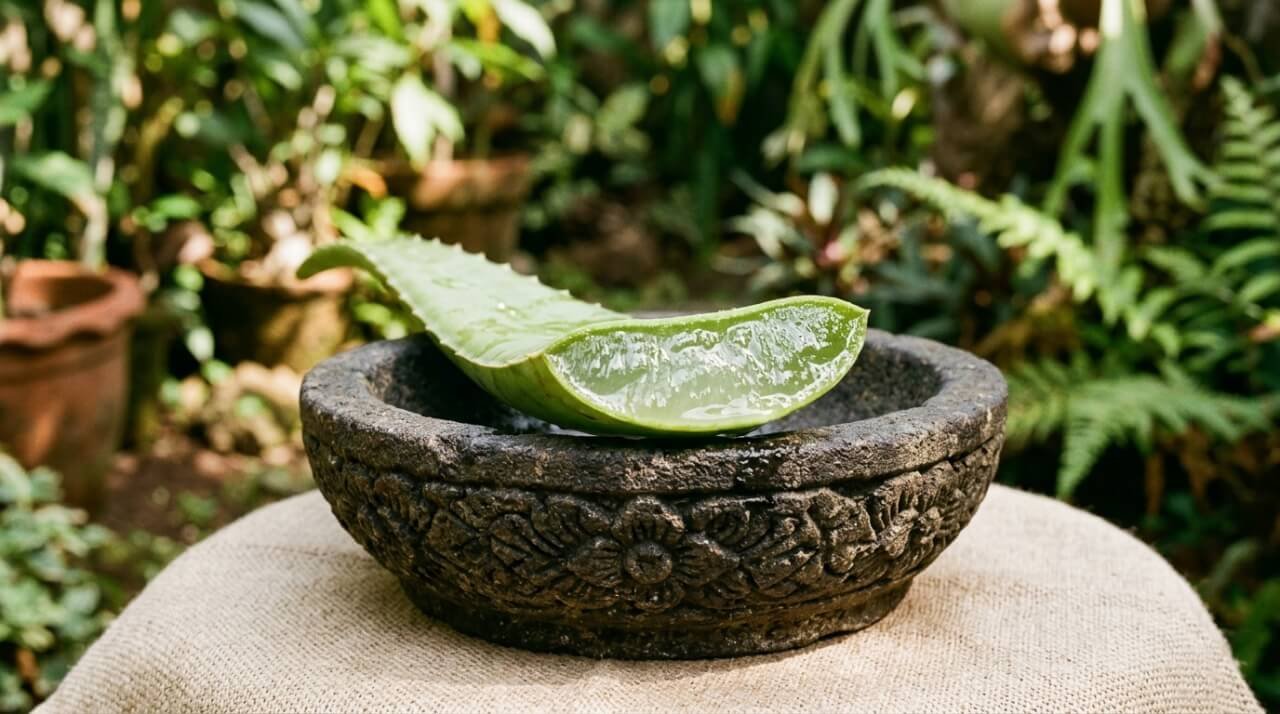
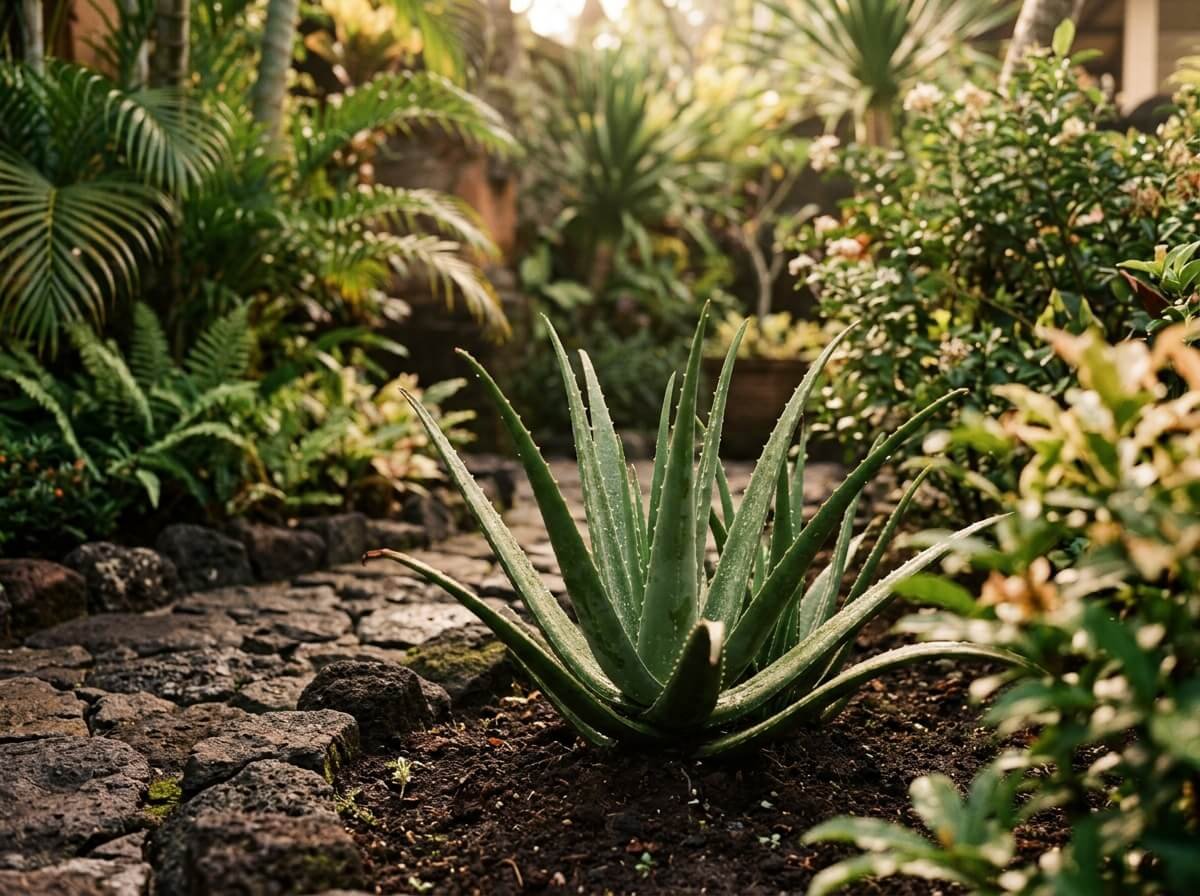
Aloe vera gel for skin is one of the most trusted botanicals in the natural wellness world, and for good reason. For thousands of years, cultures across the globe have turned to the aloe vera plant as a source of soothing, hydrating, and restorative care. In Bali, where Utama Spice has been crafting botanical skincare since 1989, aloe vera grows freely in gardens and courtyards, a quiet reminder that some of the most effective ingredients are the simplest ones.
But not all aloe vera gels are equal. The modern beauty market is filled with products that claim to contain aloe while delivering little of the plant’s actual benefit. In this guide, we explore the science behind aloe vera gel for skin, the specific ways it supports different skin types and concerns, and how to choose a product that genuinely delivers on its promise. Whether you are new to aloe or looking to deepen your understanding, this is your complete resource.
What makes aloe vera gel so effective for skin
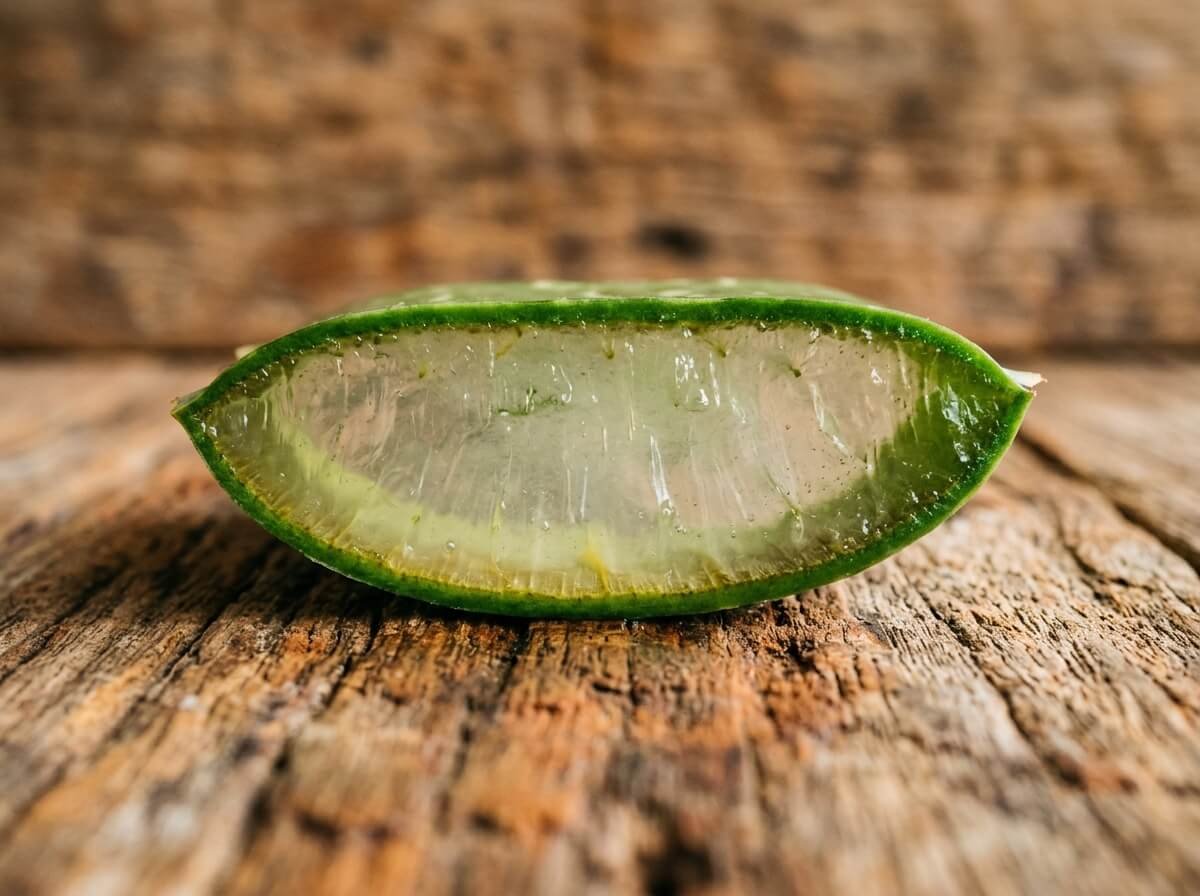
Aloe vera (Aloe barbadensis Miller) is a succulent that stores water and nutrients in its thick, fleshy leaves. The clear gel found inside those leaves contains over 75 active compounds, including vitamins, minerals, amino acids, enzymes, and polysaccharides. This is not marketing language: peer-reviewed research published in the Indian Journal of Dermatology has catalogued these compounds in detail.
The key active components include acemannan (a polysaccharide that supports the skin barrier), vitamins A, C, and E (antioxidants that protect against environmental stress), and glycoproteins that help reduce inflammation and pain. Aloe also contains salicylic acid, a natural beta-hydroxy acid that gently exfoliates and clears pores.
What sets aloe apart from synthetic alternatives is its biocompatibility. Because the gel is roughly 99% water with a pH close to that of healthy skin, it absorbs rapidly without disrupting the skin’s acid mantle. This makes it one of the few botanicals that works harmoniously with nearly every skin type, from oily to sensitive. If you are building a natural skincare routine, aloe vera is a strong foundation.
In Balinese traditional wellness, aloe has long been valued not only for its hydrating properties but as a cooling agent, used to restore balance after sun exposure or to calm irritated skin during seasonal transitions. This is ancestral knowledge that modern dermatology is only beginning to confirm.
Proven benefits of aloe vera gel for skin
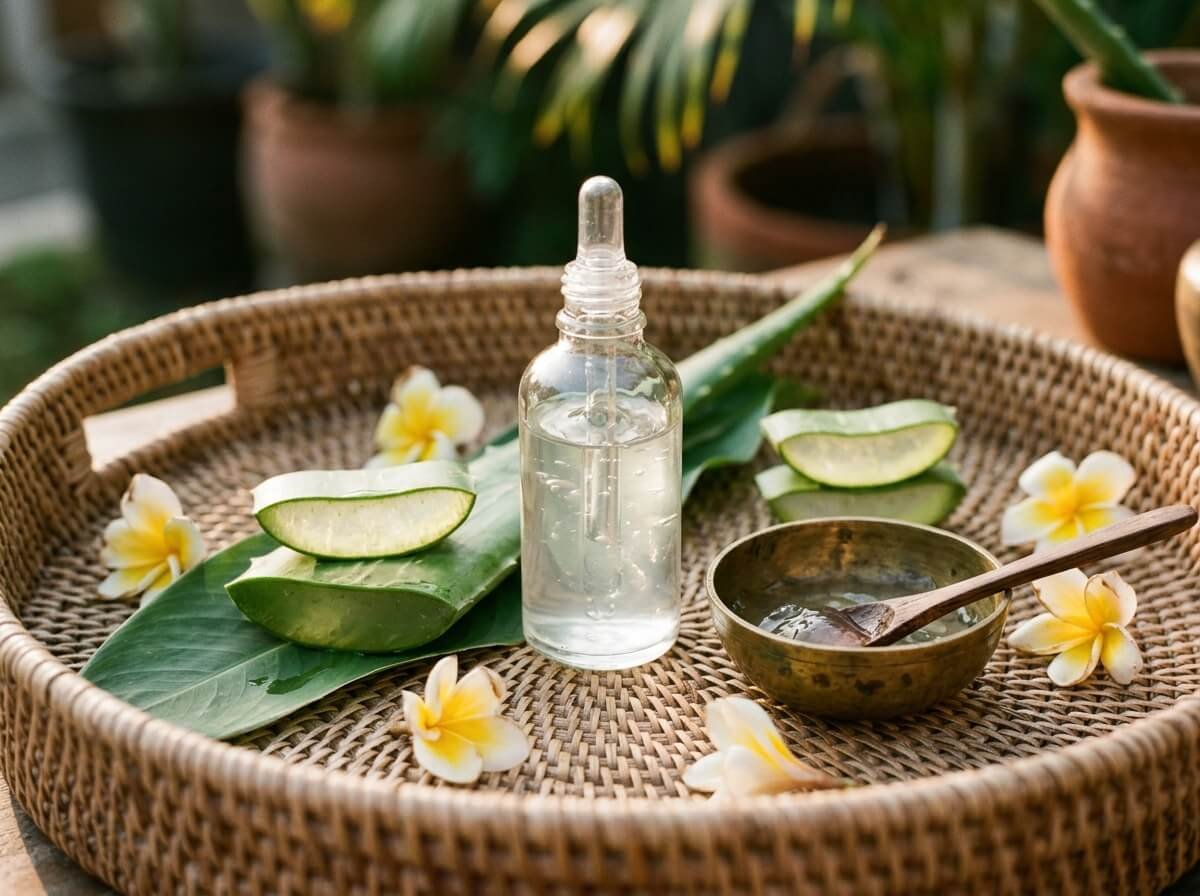
The scientific literature on aloe vera is extensive. Here are the benefits most relevant to daily skincare, each grounded in clinical evidence.
Deep hydration without heaviness
Aloe vera gel is a humectant, meaning it draws moisture from the environment into the skin. Unlike heavier moisturizers that can feel occlusive, aloe hydrates while allowing the skin to breathe. This makes it an ideal base layer before applying a natural face oil or a richer cream like our HydroBotanic 3-in-1 Hydrating Face Cream.
Anti-inflammatory and soothing
The plant’s glycoproteins reduce inflammation by inhibiting the cyclooxygenase pathway, the same mechanism targeted by over-the-counter anti-inflammatory drugs. For anyone dealing with redness, post-shave irritation, or mild dermatitis, aloe gel offers a gentle, plant-based alternative. Research in the journal Pharmacognosy Reviews confirms that aloe vera exhibits significant anti-inflammatory activity comparable to 1% hydrocortisone gel.
This is particularly valuable for people who experience chronic low-grade skin inflammation, a condition that often manifests as persistent dullness, uneven texture, or reactivity to products. Rather than masking these symptoms with synthetic actives, aloe works with the skin’s own repair systems to restore equilibrium from within.
Wound healing and skin repair
Aloe vera stimulates fibroblast activity, the cells responsible for producing collagen and elastin. A 2019 study in the Journal of Clinical Medicine found that aloe-treated wounds showed significantly faster epithelialization (new skin cell formation) compared to controls. This makes aloe especially useful for minor cuts, scrapes, and post-procedure skin recovery.
Sun damage support
While aloe vera is not a sunscreen replacement (for that, consider a natural sunscreen for face or our Zinc Natural Sunscreen SPF50), it is one of the most effective after-sun botanicals. Its cooling properties reduce the sensation of heat in sunburned skin, while its antioxidants help neutralize free radicals generated by UV exposure.
Antioxidant protection
Vitamins A, C, and E in aloe gel act as a free-radical scavenging team. Regular application can support the skin’s defense against environmental stressors like pollution, UV rays, and blue light. When paired with other antioxidant-rich botanicals, the cumulative effect is meaningful long-term skin resilience.
How to use aloe vera gel for different skin types
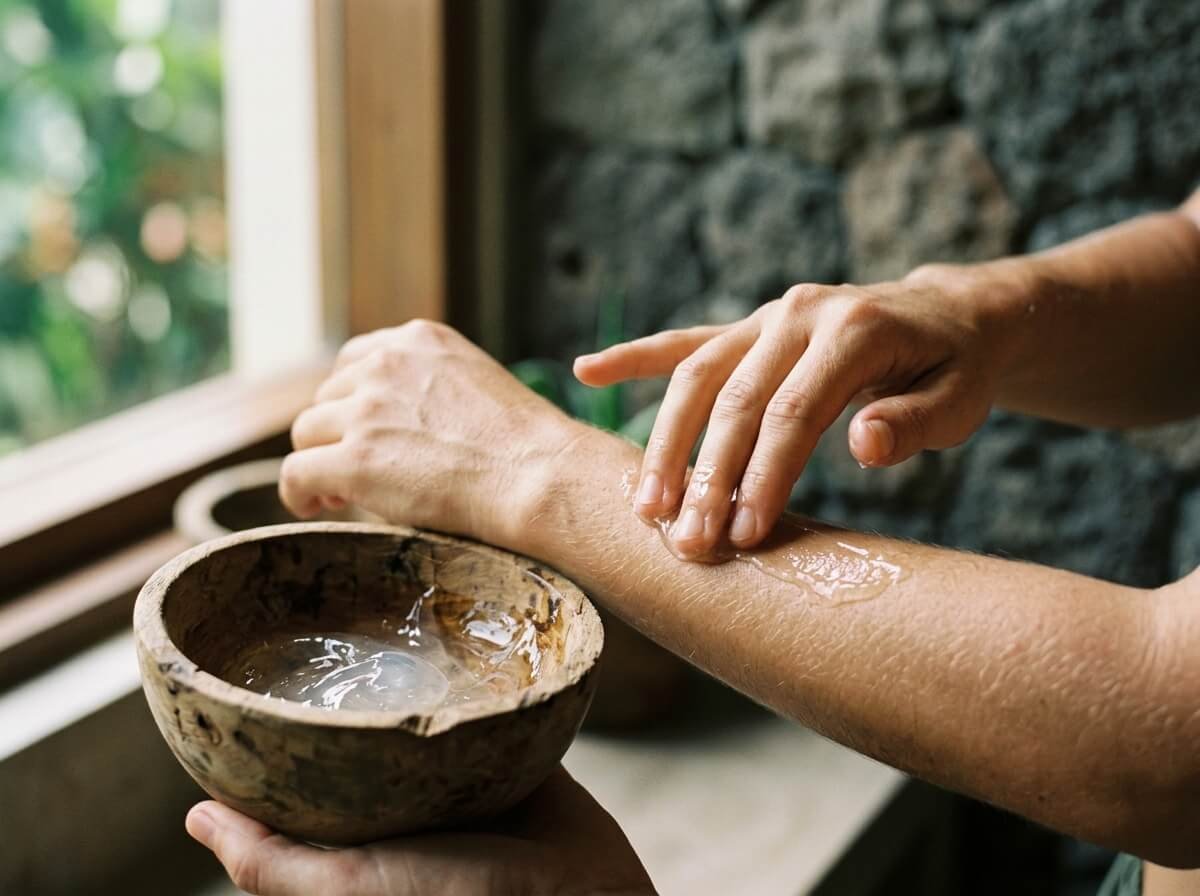
One of aloe vera’s strengths is its versatility. However, how you use it should vary based on your skin type and the rest of your routine.
Oily and acne-prone skin
Aloe vera gel is water-based and non-comedogenic, making it ideal for skin that produces excess sebum. Use it as a standalone lightweight moisturizer after cleansing with a gentle wash like our Serenity Face Wash. The natural salicylic acid in aloe helps keep pores clear, and its anti-inflammatory compounds reduce the redness and swelling associated with breakouts.
Dry skin
For dry skin, aloe works best as a hydration booster layered beneath a richer occlusive moisturizer. Apply a thin layer of aloe gel to damp skin (right after washing), let it absorb for 30 seconds, then follow with a body butter or facial oil. The aloe draws water into the skin, and the occlusive layer seals it in. This two-step approach delivers deeper, longer-lasting hydration than either product alone. For the body, try pairing it with a nourishing coconut body lotion.
Combination skin
Apply aloe gel to the entire face as a balancing first layer. It hydrates dry patches without adding oil to the T-zone. Follow with targeted treatment: a richer cream on cheeks if needed, and nothing additional on oily areas where the aloe alone provides sufficient moisture.
Mature skin
As skin ages, it produces less hyaluronic acid and collagen naturally. Aloe vera gel supports both of these processes: its polysaccharides help the skin retain moisture (functioning similarly to hyaluronic acid), while its amino acids and vitamin C support collagen synthesis. Apply aloe gel morning and evening as the first layer in your routine, followed by a nourishing facial oil or serum. Over time, this consistent hydration helps maintain skin elasticity and reduces the appearance of fine lines.
Sensitive skin
Aloe vera is generally well-tolerated by sensitive skin, but always patch-test first. Apply a small amount to the inner wrist and wait 24 hours. For reactive skin, choose an aloe gel with minimal additional ingredients. Fragrance, added dyes, and alcohol are common irritants found in commercial aloe products. A Sensitive Face Serum can complement aloe as the second step in a gentle routine.
Aloe vera gel for common skin concerns
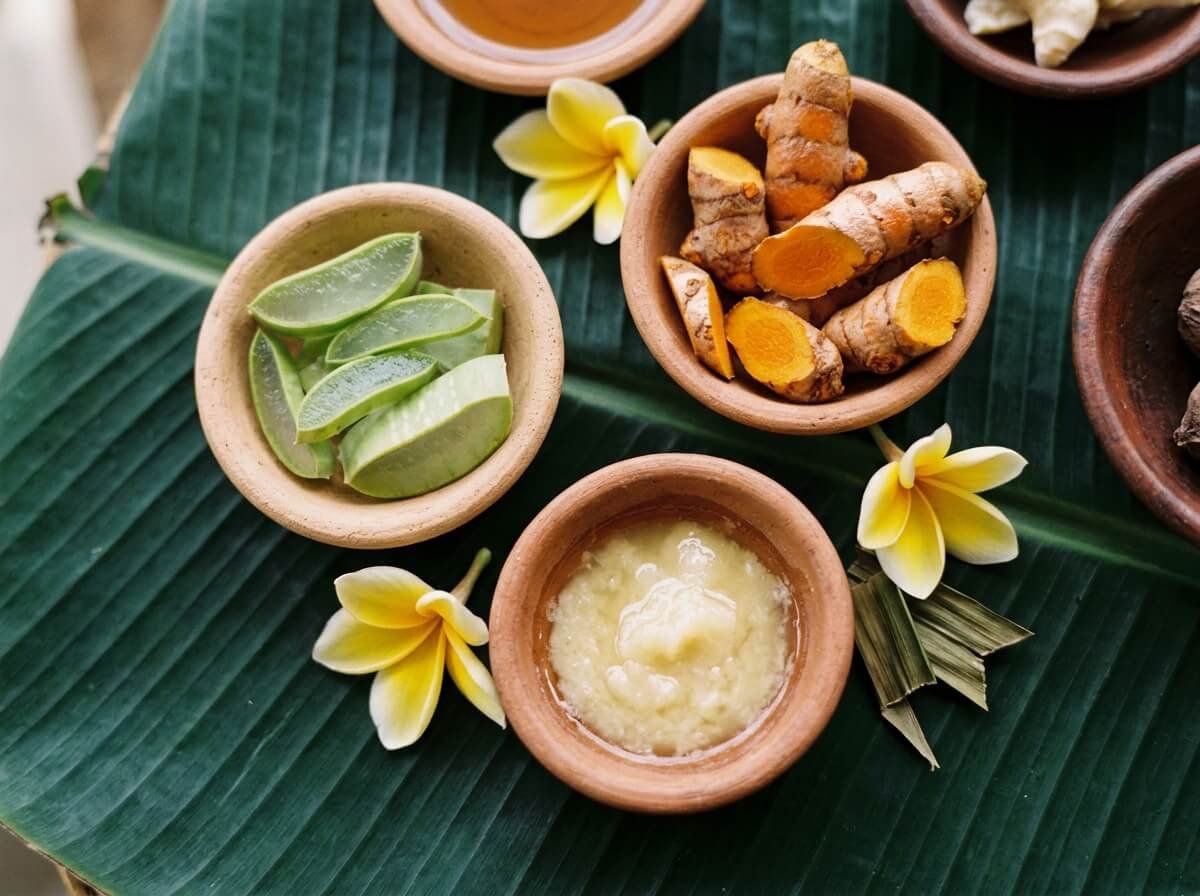
Beyond general daily care, aloe vera gel addresses several specific skin conditions. Here is what the research shows.
Acne
Aloe vera’s antibacterial properties (attributed to compounds like barbaloin and isobarbaloin) can help reduce acne-causing bacteria on the skin surface. Combined with its anti-inflammatory effect, aloe helps both the cause and the visible symptoms of breakouts. A 2014 study in the Journal of Dermatological Treatment found that combining aloe vera gel with tretinoin significantly improved acne outcomes compared to tretinoin alone.

Sunburn
This is perhaps aloe’s most well-known application. The gel provides immediate cooling relief and helps reduce peeling by supporting the skin’s natural repair mechanisms. For best results, store your aloe gel in the refrigerator during warmer months, as the cold temperature amplifies the soothing effect.
Minor eczema and psoriasis
Aloe vera can help manage mild eczema symptoms by reducing itching and flaking. A study in Tropical Medicine and Surgery found that a 0.5% aloe vera extract cream was more effective than placebo in treating chronic plaque psoriasis. While aloe is not a replacement for prescribed treatment in moderate-to-severe cases, it offers gentle complementary support.
Hyperpigmentation and dark spots
Aloesin, a compound found in aloe vera, has been shown to inhibit tyrosinase, the enzyme responsible for melanin production. Applied consistently, aloe gel can help gradually lighten dark spots and even out skin tone. This works best when combined with sun protection, since UV exposure triggers further melanin production. Our guide to aloe vera gel for face covers application techniques in more detail.
Aging and fine lines
Research published in Annals of Dermatology showed that daily aloe vera gel supplementation improved skin elasticity and increased collagen production in women over 45. Topical application supports these effects through direct fibroblast stimulation. Aloe vera gel for skin is not a reversal agent, but it is a meaningful part of a proactive, long-term care strategy.
For those building a complete botanical skincare approach, pairing aloe with ingredients like coconut oil creates a synergy of hydration and barrier protection that synthetic formulations struggle to match.
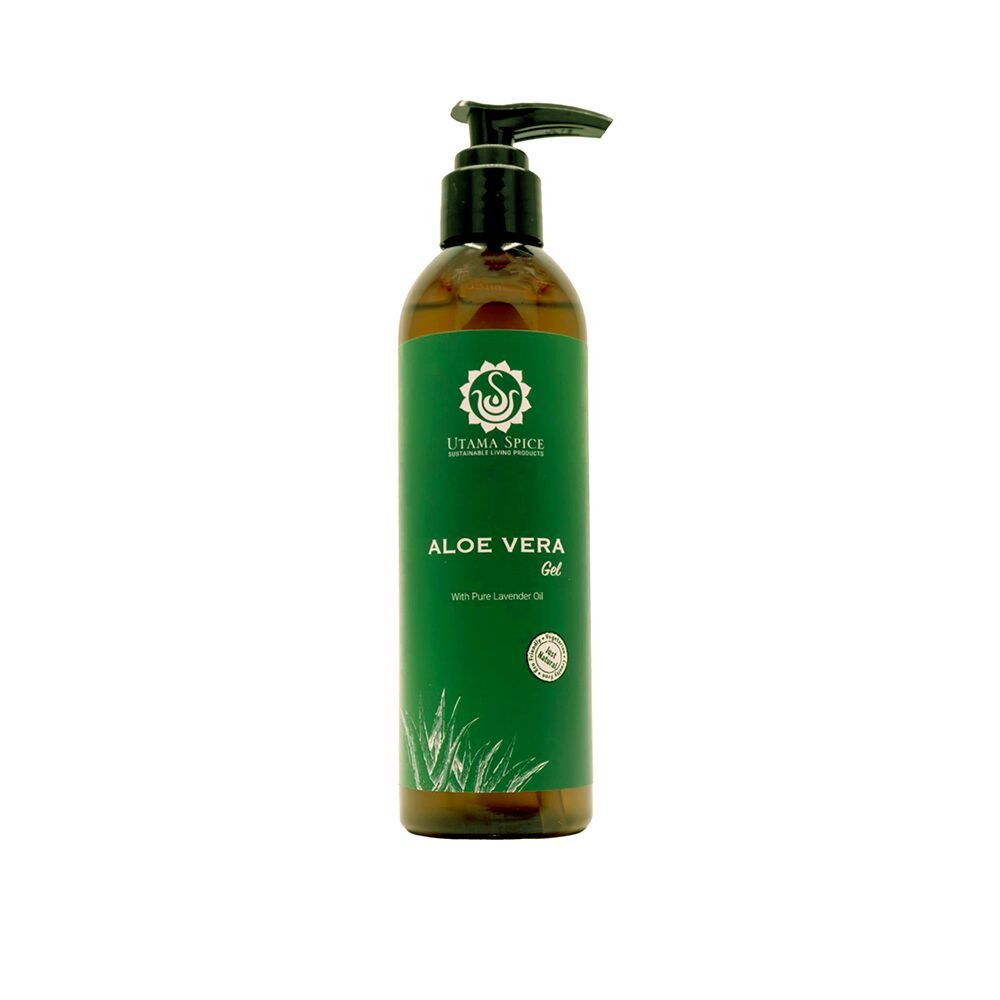
Pure aloe vera gel, crafted in Bali
Our Aloe Vera Gel is made from pure aloe barbadensis leaf extract, infused with lavender essential oil for extra soothing care. No synthetic thickeners, no artificial fragrance, no fillers. 250g of honest, botanical hydration.
How to choose quality aloe vera gel for skin
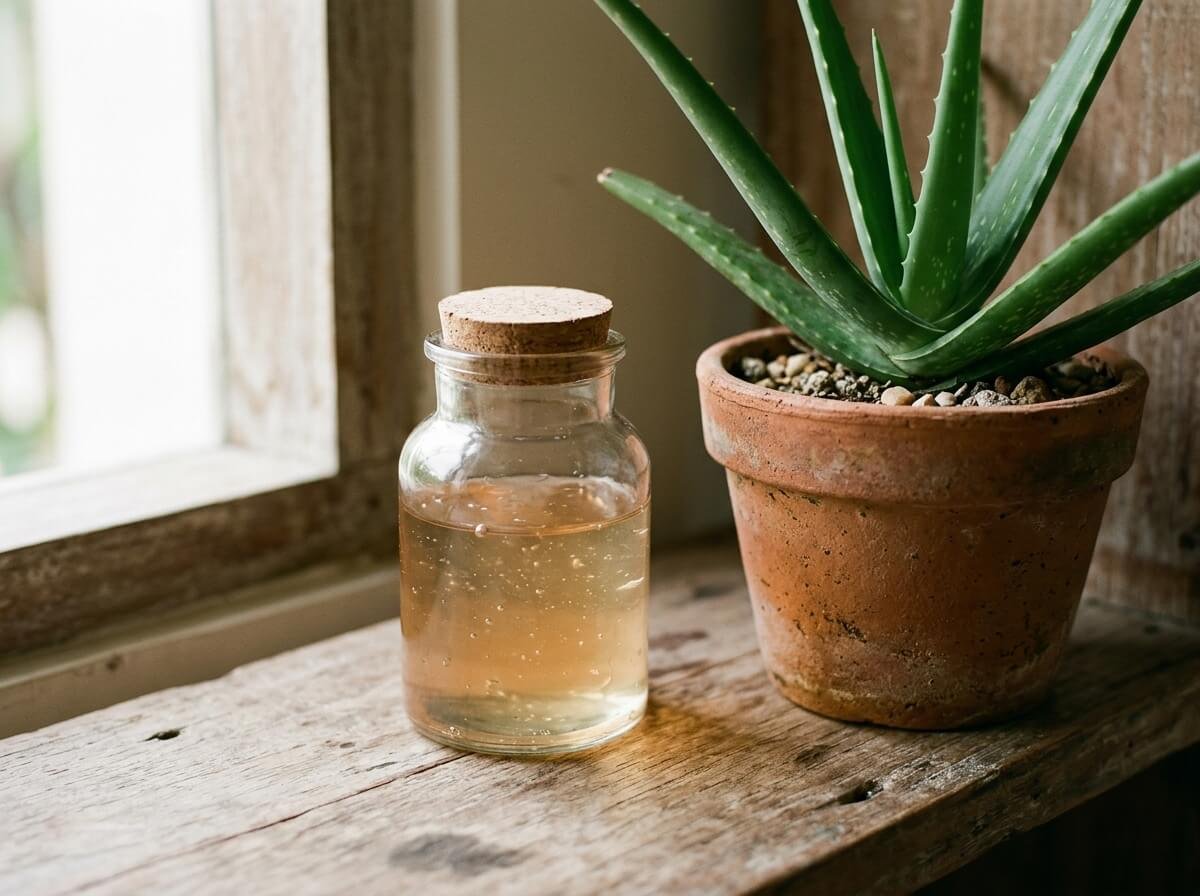
The aloe vera market has a transparency problem. Many products labeled “aloe vera gel” contain more water, thickeners, and synthetic additives than actual aloe. Here is how to read past the marketing.
Check the ingredient list order
Ingredients are listed in descending order of concentration. If “aloe barbadensis leaf extract” or “aloe barbadensis leaf juice” is not the first or second ingredient, the product contains relatively little aloe. Water-first formulations dilute the active compounds significantly.
Avoid these common additives
- Carbomer and triethanolamine: synthetic thickeners that mimic gel texture but add zero benefit.
- Artificial dyes (like FD&C Green No. 3): real aloe gel is clear to slightly yellow, not bright green.
- Alcohol denat.: drying agent that counteracts aloe’s hydrating purpose.
- Synthetic fragrance: a catch-all term for dozens of undisclosed chemicals, many of which are skin irritants.
Look for botanical companions
The best aloe vera gels pair aloe with other natural ingredients that enhance its effects. Lavender essential oil adds antibacterial and calming properties. Vitamin E supports the antioxidant profile. Coconut-derived emollients boost moisture retention. These additions should come from botanical sources, not synthetic ones. Our Aloe Vera Gel pairs pure aloe leaf extract with lavender essential oil, keeping the formula honest and effective.
Consider the sourcing
Where and how aloe vera is grown matters. Sun-dried, conventionally farmed aloe lacks the potency of carefully harvested, minimally processed gel. Ask whether the brand can trace its supply chain. At Utama Spice, ingredient traceability is not a marketing claim but a standard practice, part of the same philosophy that connects our Bliss Body Butter to its wild-harvested illipe butter origins in Kalimantan’s rainforest.
Processing method matters too. Cold-pressed or inner-leaf-only extraction preserves more of aloe’s delicate bioactive compounds than heat-processed or whole-leaf methods. Whole-leaf processing can introduce aloin, a latex compound found in the outer leaf that can cause skin irritation in concentrated amounts. Quality aloe gels remove this outer layer before extraction, preserving only the clear inner gel where the beneficial polysaccharides reside.
Frequently asked questions about aloe vera gel for skin
Can I use aloe vera gel on my face every day?
Yes. Pure aloe vera gel is gentle enough for daily use on the face. Apply it as a hydrating first layer in both morning and evening routines. If you are using active treatments like retinol or exfoliating acids, apply aloe afterward to soothe and hydrate. For more face-specific guidance, see our detailed guide to aloe vera gel for face.
Does aloe vera gel help with scars?
Aloe vera supports wound healing and can help reduce the appearance of newer scars by promoting collagen synthesis and cell regeneration. For older, established scars, results are more modest. Consistent daily application over several months yields the best outcomes.
Can I use aloe vera gel on my hair?
Absolutely. Aloe vera gel conditions the hair shaft, reduces dandruff, and helps maintain scalp health. It is especially effective as a pre-shampoo scalp treatment. We have written a dedicated guide to aloe vera gel and natural hair that covers application methods in detail.
Is aloe vera gel safe during pregnancy?
Topical application of pure aloe vera gel is generally considered safe during pregnancy. It can help with stretch marks and skin dryness, common concerns during this time. As with any skincare product, consult your healthcare provider if you have specific concerns.
How should I store aloe vera gel?
Pure aloe vera gel without preservatives should be refrigerated and used within two to three weeks. Commercially formulated aloe gels with natural preservation systems (like vitamin E or citric acid) can be stored at room temperature, away from direct sunlight, for up to 12 months after opening.
Can I mix aloe vera gel with other skincare products?
Yes. Aloe vera gel mixes well with most skincare ingredients. Common beneficial combinations include aloe with honey (added humectant power), aloe with tea tree oil (acne support), and aloe with coconut oil (deep moisture). In a layered natural skincare routine, apply aloe as the water-based step before oils and creams.
Making aloe vera gel part of your daily ritual
Skincare, at its best, is not about chasing trends or layering an ever-growing list of products. It is about finding what works and building a ritual around it. Aloe vera gel for skin is one of those rare ingredients that earns its place through consistent, quiet effectiveness rather than marketing spectacle.
Here is a simple way to start. After your morning cleanse, apply a thin layer of pure aloe vera gel to slightly damp skin. Let it absorb for about 30 seconds, then follow with your moisturizer or facial oil. In the evening, repeat the same step after washing off the day. Within two weeks of consistent use, most people notice improved hydration, reduced redness, and a calmer overall complexion. It is not dramatic, and that is exactly the point: real care works quietly.
In Bali, where Utama Spice was born, self-care has always been woven into the rhythm of daily life. Balinese healers (known as balian) have used aloe vera alongside turmeric, coconut oil, and other island botanicals for generations, applying the gel directly from freshly cut leaves as a cooling, restorative treatment. A morning application of aloe is not a “skincare step” but a moment of intention, a small act of care that connects you to the plant, the place it grew, and the tradition it comes from. This is what we mean when we say: what you give, you get back.
Whether you use aloe as a lightweight moisturizer, a sunburn soother, a hydration booster, or all three, the key is consistency and quality. Choose a gel that respects the ingredient, one that keeps its formula honest and its sourcing transparent. Your skin will respond with clarity, calm, and resilience.
And if you are ready to explore the full range of botanical skincare rooted in Balinese wellness, our natural face oil guide and coconut body lotion guide are good next reads.