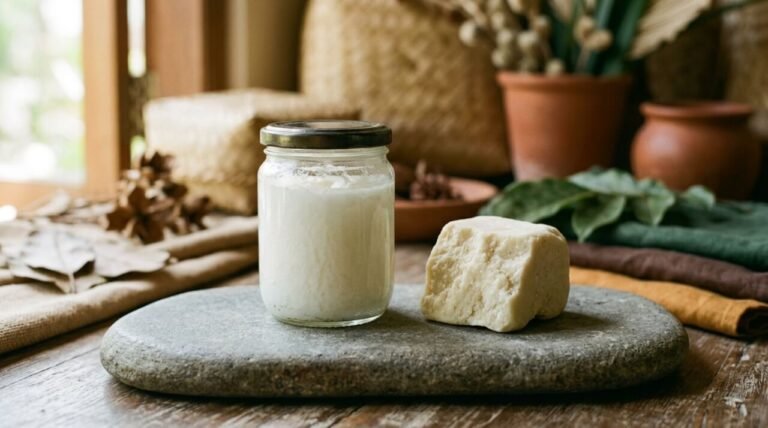
Coconut body lotion: how to choose one that is good for your skin and the planet
Coconut body lotion is one of those rare body care staples that bridges centuries of tradition with contemporary skincare science. In Bali, where our formulations are rooted, coconut has never been a trend. It is simply how people have cared for their skin, their hair, and their families for generations. The question today is not whether coconut belongs in your body care ritual. It is how to find a lotion that honors the ingredient, respects the people who grow it, and actually delivers what your skin needs. This guide walks through the science, the sourcing, the formulation choices, and the honest truths that help you choose a coconut body lotion worthy of your daily ritual.
What makes a great coconut body lotion
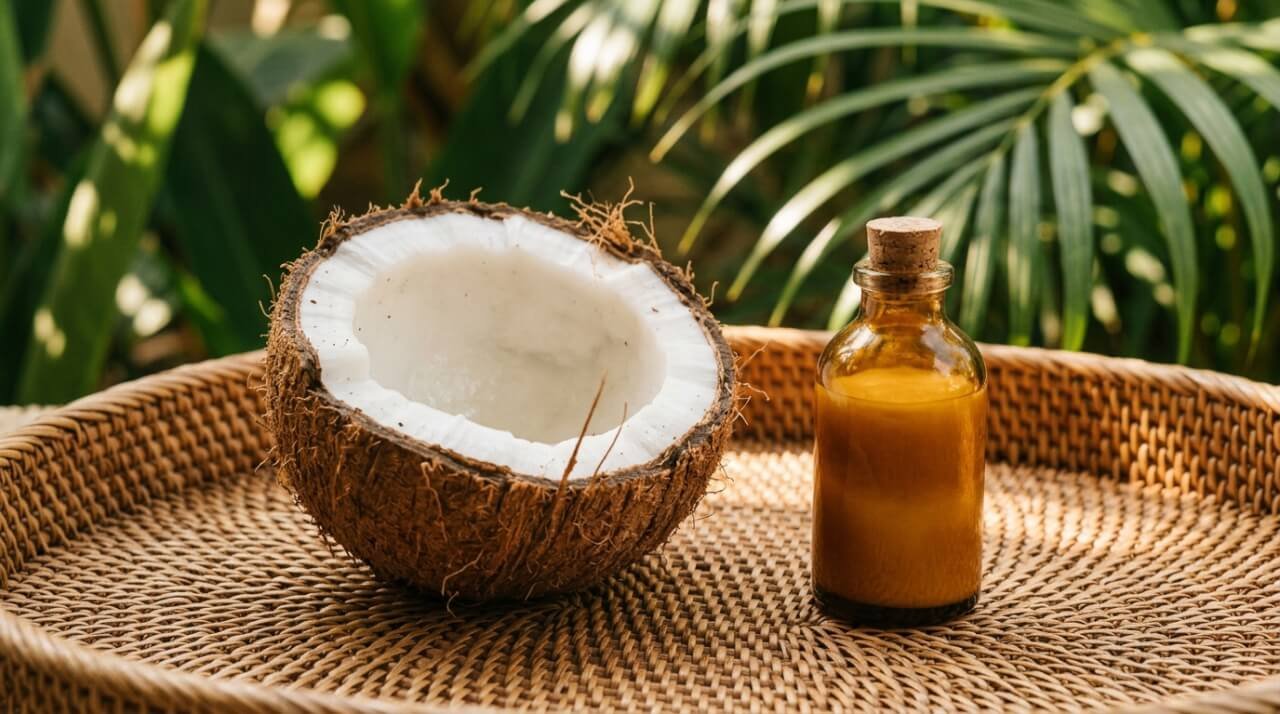
A truly great coconut body lotion starts long before the product reaches your hands. It begins with the coconut itself: where it was grown, how it was harvested, and how the oil was extracted. These upstream decisions shape everything downstream, from texture and absorption to efficacy and environmental impact.
In Balinese tradition, coconut oil is not an isolated “active ingredient.” It is the foundation of daily body care, applied after bathing in its purest form or blended with other botanicals like turmeric, frangipani, and pandan. The women in Bali’s coastal villages have understood for centuries what modern dermatology is only now confirming: coconut oil nourishes the skin barrier, softens without stripping, and carries other beneficial compounds deeper into the epidermis.
When evaluating any coconut body lotion, four factors matter most. First, ingredient quality. Is the coconut oil cold-pressed and minimally processed, or is it a commodity-grade refined oil that has lost most of its bioactive compounds? Second, sourcing transparency. Can the brand tell you where the coconuts come from and who benefits from the harvest? Third, formulation integrity. Is coconut oil a primary ingredient, listed near the top of the INCI list, or is it a marketing afterthought buried below silicones and synthetic emollifiers? Fourth, texture and absorption. A well-formulated coconut lotion should feel rich without sitting heavy on the skin. It should absorb within minutes, leaving softness rather than a greasy film.
The market is full of products that put a coconut on the label and deliver very little coconut in the bottle. That gap between promise and reality is something we take seriously, and it is worth understanding the science that separates a meaningful formulation from a marketing exercise.
What makes this ingredient enduring is its versatility. Coconut oil works across skin types, climates, and body care formats. Whether blended into a lightweight lotion for tropical humidity or whipped into a rich butter for dry winter months, it adapts. The key is finding a formulation that lets the coconut do its work without interference from synthetic fillers.
The science behind coconut oil in body lotion
Coconut oil’s reputation in skincare is grounded in a specific and well-studied fatty acid profile. Roughly 45 to 52 percent of coconut oil’s fatty acid content is lauric acid, a medium-chain fatty acid with demonstrated antimicrobial and anti-inflammatory properties. This is not marketing language. Lauric acid has been shown in peer-reviewed research to inhibit the growth of Propionibacterium acnes, Staphylococcus aureus, and several common fungal strains that contribute to skin irritation.
Beyond lauric acid, coconut oil contains meaningful concentrations of myristic acid (about 18 percent), caprylic acid (about eight percent), and capric acid (about seven percent). Together, these medium-chain triglycerides (MCTs) create a fatty acid blend that penetrates the outer layers of the epidermis more effectively than many long-chain plant oils. This is one reason coconut-based formulations feel different on the skin: they are not simply sitting on the surface creating an occlusive barrier. They are actively integrating with your skin’s lipid matrix.
That said, coconut oil does have an occlusive component as well. It forms a gentle protective layer that reduces transepidermal water loss (TEWL), which is a clinical way of saying it helps your skin hold onto its own moisture. The dual action of penetrating hydration and surface protection is what makes coconut oil so effective as a lotion base. It both delivers and seals.
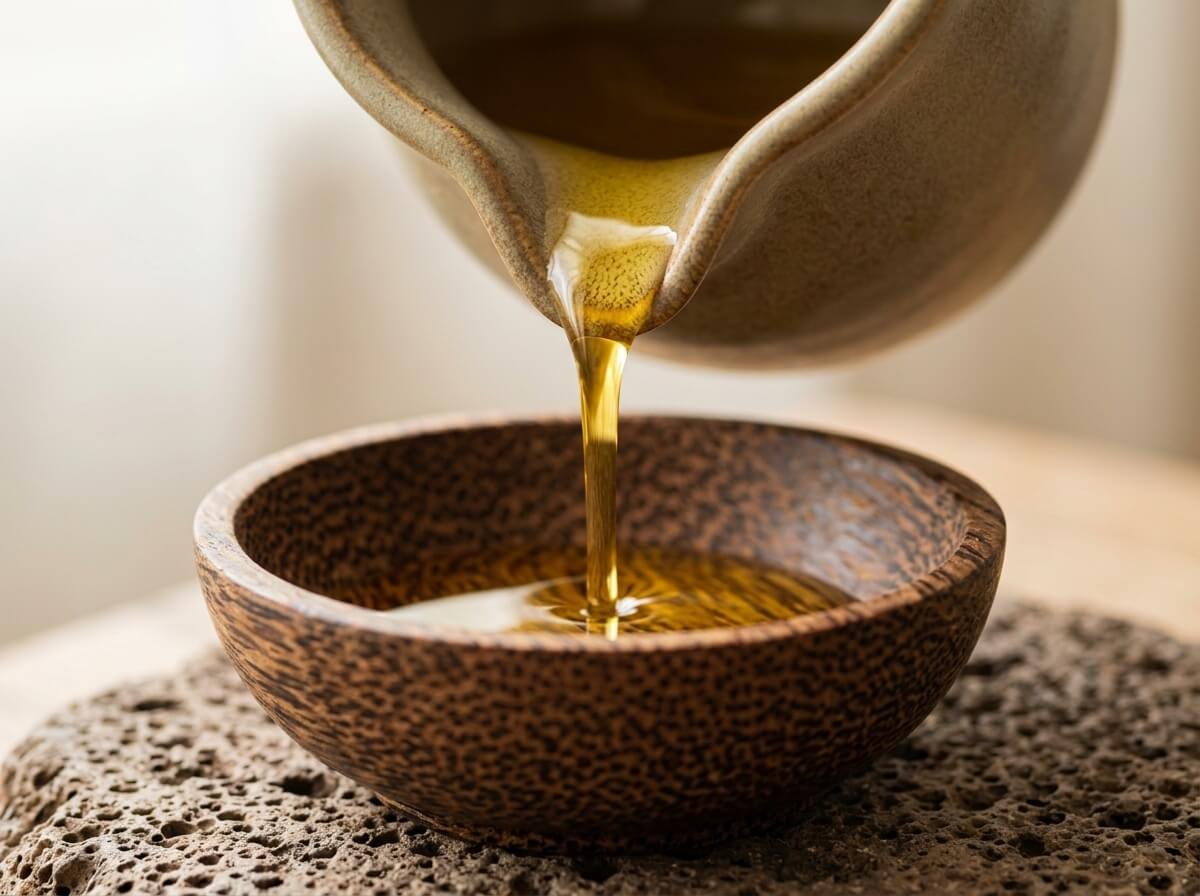
Extraction method changes everything. Cold-pressed virgin coconut oil retains the full spectrum of polyphenols, tocopherols (vitamin E), and phytosterols that contribute to its antioxidant and skin-calming properties. Refined coconut oil, extracted using heat and chemical solvents (typically hexane), loses many of these bioactive compounds. It still has the fatty acid profile, but it has been stripped of the nuance, the secondary metabolites that make coconut oil more than just a carrier fat.
For a deeper understanding of how coconut oil interacts with your skin at the molecular level, read our guide to why coconut oil is good for your skin. The short version: quality coconut oil, minimally processed, is one of the most effective and well-tolerated plant lipids for topical use. The science supports what Balinese tradition has known for a very long time.

Why sourcing matters more than the label says
Most commercial coconut lotions rely on commodity-grade refined coconut oil sourced through global bulk supply chains. The coconuts might come from the Philippines, Indonesia, India, or Sri Lanka, often blended from multiple origins with no traceability to a specific region, farm, or community. This is the norm, not the exception. And it means the label “coconut body lotion” can hide an enormous range of quality, ethics, and environmental impact.
Sourcing matters because coconut farming exists on a spectrum. At one end, large-scale monoculture plantations deplete soil health, reduce biodiversity, and keep smallholder farmers trapped in poverty-level pricing. At the other end, community-managed agroforestry systems grow coconut palms alongside cacao, fruit trees, and forest crops in a regenerative model that builds soil, sequesters carbon, and supports livelihoods.
In Bali and across Indonesia, we work within sourcing networks that prioritize the second model. Our partnerships emphasize direct relationships with farming communities, fair pricing that reflects the true cost of sustainable cultivation, and transparency about where each ingredient originates. Organizations like Forestwise, which works with communities in Kalimantan to sustainably harvest forest products (including illipe butter and other tropical botanicals), demonstrate what ethical sourcing looks like in practice. The Munti Gunung women’s program in east Bali shows how body care production can directly support economic independence for marginalized communities.
There is a concept in food and wine called terroir: the idea that place shapes character. The same principle applies to tropical botanicals. Coconut oil from Bali’s volcanic-enriched soil has a different quality than oil from sandy coastal plantations elsewhere. The mineral content of the soil, the humidity, the growing conditions: all of these factors influence the final fatty acid profile and the subtle aromatic qualities of the oil. When a body lotion is rooted in a specific place and a specific community, you can feel it in the product. There is a depth of character that commodity blending cannot replicate.
Understanding Indonesian traditional herbal knowledge helps contextualize why sourcing and formulation are inseparable in this part of the world. The knowledge of which plants to combine, when to harvest, how to process: this is living heritage, not a supply chain input. A coconut body lotion that honors its origins carries that wisdom forward.
How to choose a coconut body lotion for your skin type
Coconut-based body lotions work beautifully for most skin types, but understanding the nuance helps you make the best choice. Not all coconut formulations behave the same way on every body, and honest guidance is more useful than blanket claims.
Dry to normal skin
This is where coconut body lotion truly shines. The medium-chain fatty acids penetrate effectively, the occlusive layer locks in hydration, and the overall feel is nourishing without heaviness. For dry skin, look for formulations that pair coconut oil with complementary butters (cocoa, shea, or illipe) for deeper, longer-lasting moisturization. If you want to experience this ingredient in a daily ritual, our Cocoa Love Lotion pairs coconut oil with cocoa butter, vanilla, and cinnamon for a warm, deeply hydrating blend.
Oily or acne-prone skin
Here is where we need to be honest. Pure coconut oil is rated two to four on the comedogenicity scale (depending on the study), meaning it can clog pores for some people, particularly on the face. However, a well-formulated body lotion dilutes the coconut oil concentration significantly and pairs it with lighter emollients and water-based carriers. Most people, even those with oily skin, tolerate coconut-based body lotions well on the body (arms, legs, torso) where pores are less congestion-prone than on the face. The key is avoiding formulations that are overly thick or that layer coconut oil with additional heavy occlusives like mineral oil.
Choosing the right format
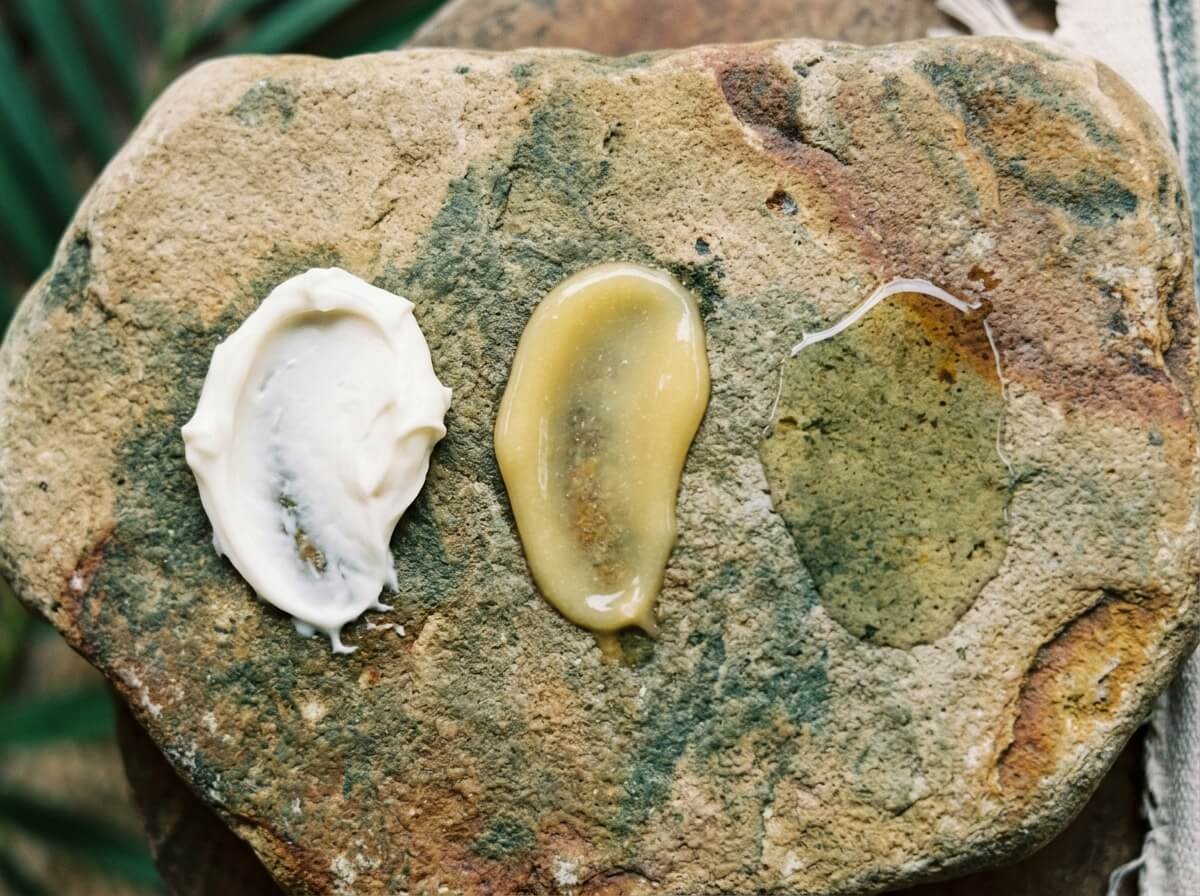
Understanding the differences between body lotion, body butter, and body oil helps you select the format that best serves your needs and your climate.

- Coconut body lotion: an emulsion of oil and water, lighter in texture, absorbs quickly, ideal for daily use in warm or humid climates. Best for normal to dry skin as a daily hydrator.
- Coconut body butter: a concentrated blend of plant butters with little to no water content, richer and slower to absorb, ideal for intense nourishment in cold or dry conditions. Our Pure Energy Body Butter and Bliss Body Butter use this format to deliver deep, sustained hydration.
- Coconut body oil: pure or blended plant oils without water, often best applied to damp skin after bathing for fast absorption. Our Rose Allure Body Oil combines coconut with rose and other botanicals for a luxurious, fast-absorbing experience.
When reading an ingredient list, look for where coconut oil (listed as Cocos Nucifera Oil in INCI nomenclature) appears. Ingredients are listed in descending order of concentration. If coconut oil is the third or fourth ingredient, the product likely contains a meaningful amount. If it appears near the bottom, below fragrance compounds and preservatives, it is present in negligible quantities, more marketing than substance.
For a broader perspective on how body lotion fits into a holistic daily routine, explore our guide to building a natural skincare routine. A coconut body lotion works best as part of a consistent, intentional practice rather than an occasional afterthought.
What to avoid in commercial coconut body lotions
This is where we need to speak plainly. The personal care industry has a transparency problem, and coconut body lotion is one of its most frequent vehicles for half-truths. Knowing what to avoid is just as important as knowing what to seek.
Synthetic fragrance
The word “Parfum” or “Fragrance” on an ingredient list is a legal loophole. Under current regulations in the US, EU, and most of Southeast Asia, it can represent a proprietary blend of dozens to hundreds of individual chemicals, none of which need to be disclosed. Research has linked synthetic fragrance compounds to allergic contact dermatitis, endocrine disruption, and respiratory sensitization. When a coconut lotion smells like a tropical vacation but lists “Parfum” as its scent source, that aroma is almost certainly synthetic. Real coconut oil has a subtle, warm, slightly sweet scent. It does not smell like a cocktail.
Silicones
Dimethicone, cyclomethicone, and their variants create an immediate sensation of smoothness. Your skin feels silky the moment you apply the product. But that sensation is a coating, not hydration. Silicones form a synthetic film over the skin that can trap debris, interfere with natural oil regulation, and create a dependency loop where your skin feels dry whenever you stop using the product. In a coconut body lotion that is supposed to nourish, silicones are a shortcut that undermines the purpose.
Parabens, phthalates, and endocrine disruptors
Parabens (methylparaben, propylparaben, butylparaben) are preservatives that mimic estrogen in the body. Phthalates, often hidden within fragrance blends, are plasticizers linked to hormonal disruption. These are not fringe concerns. The European Commission’s Scientific Committee on Consumer Safety has flagged several parabens for restricted use, and phthalates like DEHP and DBP are classified as substances of very high concern under EU REACH regulation. Natural alternatives to these preservatives exist and work well. Their continued use in body care is a cost-optimization choice, not a necessity.
Greenwashing: the coconut that is barely there
Perhaps the most pervasive issue is products that lead with coconut imagery, coconut in the product name, and coconut scent, but contain only trace amounts of actual coconut oil. The front of the bottle tells one story. The back tells another. Learning to read INCI lists is a small investment of time that pays off in every purchase decision. The rule is simple: ingredients are listed from highest concentration to lowest. If Cocos Nucifera Oil appears after the preservative system, the product contains less than one percent coconut oil. That is not a coconut body lotion. It is a regular lotion with coconut marketing.
The same principle of ingredient transparency applies across all natural body care, whether you are evaluating a natural face oil or a coconut lotion. Read the list. Trust the order. Let the formulation speak for itself.

Coconut body lotion, crafted with care
Our Cocoa Love Lotion blends coconut oil with cocoa butter, vanilla, and cinnamon for a warm, lightweight body lotion that hydrates deeply without the synthetic fillers. Small-batch, hand-blended in Bali.

Building a body care ritual with coconut lotion
In Bali, body care is not a task to complete. It is a ritual, a daily act of care that connects you to your own body, to the ingredients you choose, and to the land those ingredients come from. Applying coconut body lotion can be as mindful or as quick as your morning allows, but building even a small ritual around it transforms the experience from routine maintenance into something nourishing on more than a physical level.
Morning application
After your morning shower, while your skin is still slightly damp, is the ideal moment for coconut body lotion. Damp skin absorbs emollients more efficiently because water molecules on the surface help carry the lotion’s active compounds into the upper layers of the epidermis. Apply in long, gentle strokes, working from the extremities toward the center of the body. This is not just a hydration step. It is a moment to check in with your body, to notice where you carry tension, where the skin feels different today than yesterday. In Balinese wellness tradition, this kind of daily awareness is considered a form of self-knowledge.
Evening nourishment
Evening is the time for deeper nourishment. Your skin’s repair mechanisms are most active during sleep, so applying a coconut lotion (or layering a body oil under the lotion for extra richness) before bed gives your skin a full night to absorb and restore. Consider pairing your lotion with a few drops of essential oils like lavender or chamomile to signal relaxation. The scent becomes part of the ritual, a sensory cue that the day is closing.
Layering for different climates
Your body care ritual should adapt to where you live and the season. In tropical or humid climates, a lightweight coconut lotion alone is often sufficient. It hydrates without overwhelming the skin in heat. In dry or cold climates (winter in temperate regions, air-conditioned environments), layering becomes essential. Start with aloe vera gel on damp skin for water-based hydration, then follow with coconut body lotion to seal that moisture in. For particularly dry areas (elbows, shins, heels), finish with a body butter on top. This three-layer approach mirrors how traditional Balinese body care works: water, oil, seal.
The sensory dimension matters, too. Warm coconut, a hint of vanilla, the feeling of oil sinking into softened skin. These are not incidental. They are part of what makes body care feel like care rather than obligation. Experimenting with different essential oil blends alongside your coconut lotion helps you build a ritual that feels personal and grounded.
Frequently asked questions about coconut body lotion
Is coconut body lotion good for sensitive skin?
For most people with sensitive skin, yes. Virgin coconut oil has demonstrated anti-inflammatory properties in clinical studies, and its lauric acid content is gentle on reactive skin. However, sensitivity is individual. If you have a known allergy to tree nuts (coconut is technically a drupe, not a tree nut, but cross-reactivity exists in rare cases), patch test first. Choose formulations with minimal added ingredients to reduce the chance of irritation from secondary compounds. Avoid coconut lotions that contain synthetic fragrance, as fragrance is the most common trigger for sensitive skin reactions in body care products.
Can I use coconut lotion on my face?
Body lotions are formulated for the thicker, less pore-dense skin of the body. Facial skin is thinner, more sensitive, and more prone to congestion. While coconut oil in a diluted lotion form is less likely to cause issues than pure coconut oil, we generally recommend using products specifically formulated for the face. A dedicated facial moisturizer or a lightweight face oil will be calibrated for the unique needs of facial skin.
Does coconut body lotion clog pores?
Pure coconut oil has a comedogenicity rating of two to four, depending on the study and the individual. In a body lotion formulation, the coconut oil is diluted within a water-based emulsion, significantly reducing the concentration that contacts any given area of skin. On the body (legs, arms, torso), pore-clogging is rarely an issue. If you are prone to body acne (keratosis pilaris or folliculitis on the upper arms or back), opt for a lighter coconut lotion rather than a butter, and observe how your skin responds over two to three weeks.
How long does a bottle last with daily use?
A 250 ml bottle of body lotion, applied once daily to the full body, typically lasts four to six weeks. If you apply more sparingly (focusing on dry areas like shins, elbows, and hands) or alternate between lotion and oil, it can stretch to eight weeks or more. This is one of the reasons refillable body care makes such a difference: the bottle itself is not a single-use item. We can talk about the benefits of natural soaps all day, but the lotion you pair with a gentle cleanser is where hydration truly lives.
Is coconut body lotion reef-safe?
Coconut oil itself is a naturally occurring plant lipid and is not a known reef toxin. The reef-safety question depends on the other ingredients in the formulation. Oxybenzone and octinoxate, the two most commonly cited reef-harming chemicals, are found in chemical sunscreens, not in body lotions (unless the lotion contains SPF). If you are heading to the ocean and want to be conscientious about reef impact, pair your coconut body lotion with a mineral-based sunscreen. Our guide to the best natural sunscreen covers what to look for and what to avoid.
What is the difference between coconut lotion and coconut oil?
Coconut oil is a pure plant lipid: 100 percent fat, no water. It is excellent for deep nourishment but can feel heavy, takes longer to absorb, and may leave a visible sheen on the skin. Coconut body lotion is an emulsion that blends coconut oil (and often other plant oils and butters) with water, emulsifiers, and sometimes humectants like glycerin or hyaluronic acid. The result is a lighter texture, faster absorption, and a more versatile product for daily use. Think of coconut oil as the concentrated source and coconut lotion as the daily-wear formulation.
Choosing a coconut body lotion is ultimately an act of conscious care: for your skin, for the communities that grow and harvest the ingredients, and for the systems that move those ingredients from palm to bottle to your daily ritual. The choices are not complicated once you know what to look for. Read the ingredient list. Ask where the coconut comes from. Choose formulations that lead with real, minimally processed plant oils rather than synthetic fillers wrapped in tropical branding. And when the bottle is empty, consider whether the brand offers a refill. In 2025 alone, our refill program kept 2,245 bottles out of landfill. That number is a start, not a destination. Every conscious choice compounds. Every refill is a small, truthful act of care for the world we share.