Natural body oils: a carrier oil guide for every skin type
A natural body oil is one of the oldest forms of skin care we know, and one of the most misunderstood. Long before lotions arrived in plastic pumps, people across the tropics pressed oil from nuts, seeds, and fruit and worked it into the skin as a daily ritual. In Bali, that practice never stopped. This guide is our attempt to give the natural body oil the explanation it deserves: what these oils actually do, how to read a carrier oil by its fatty acids, and how to choose one that suits your skin rather than guessing from a pretty label.
We will move from the science to the ritual, because both matter. You will learn why an oil behaves differently from a lotion, why cold-pressing changes everything, and how Balinese tradition arrived at coconut, tamanu, and kukui long before laboratories confirmed why they work. By the end, you should be able to walk past a shelf of bottles and know exactly which one belongs in your routine, and why.
Natural body oil vs. body lotion: when to choose each
Body oil and body lotion are often shelved together, but they are not the same tool. A lotion is an emulsion: oil and water held together with emulsifiers, usually thickened, preserved, and fragranced. A natural body oil is, in the honest sense, just oil. One ingredient family, no water, no emulsifier, and little or nothing that needs preserving.
That difference shapes how each one works on skin. A lotion delivers an immediate hit of water, which is why it feels instantly cooling and absorbed. A body oil works differently. It does not add water; it slows the water already in your skin from leaving. Dermatology calls this occlusion and emolliency, and it is the quiet reason oil-using cultures tend to keep soft, resilient skin in dry and sun-exposed climates. Lotion hydrates from the outside in for an hour. Oil protects what your skin is already doing for itself.
So when do we reach for each? A lotion suits people who want a fast, light finish and dislike any slip on the skin. An oil suits dry, mature, or weather-stressed skin, post-shower routines, massage, and anyone simplifying a cabinet of half-used bottles down to a few honest products. The two are not rivals. Many people in Bali use both: a light lotion in humid afternoons, and oil at night, when skin does most of its repair work.
If you want the full comparison across formats, our guide to the difference between body balm, body butter, and body lotion breaks down where each one earns its place, and our piece on coconut body lotion looks closely at the emulsion side. One last honest point: a bottle of oil with one or two ingredients is far easier to understand than a lotion with twenty. That transparency is part of why we keep coming back to oil. There is nowhere for a weak formula to hide.
Understanding carrier oils: fatty acids, absorption, and comedogenic ratings
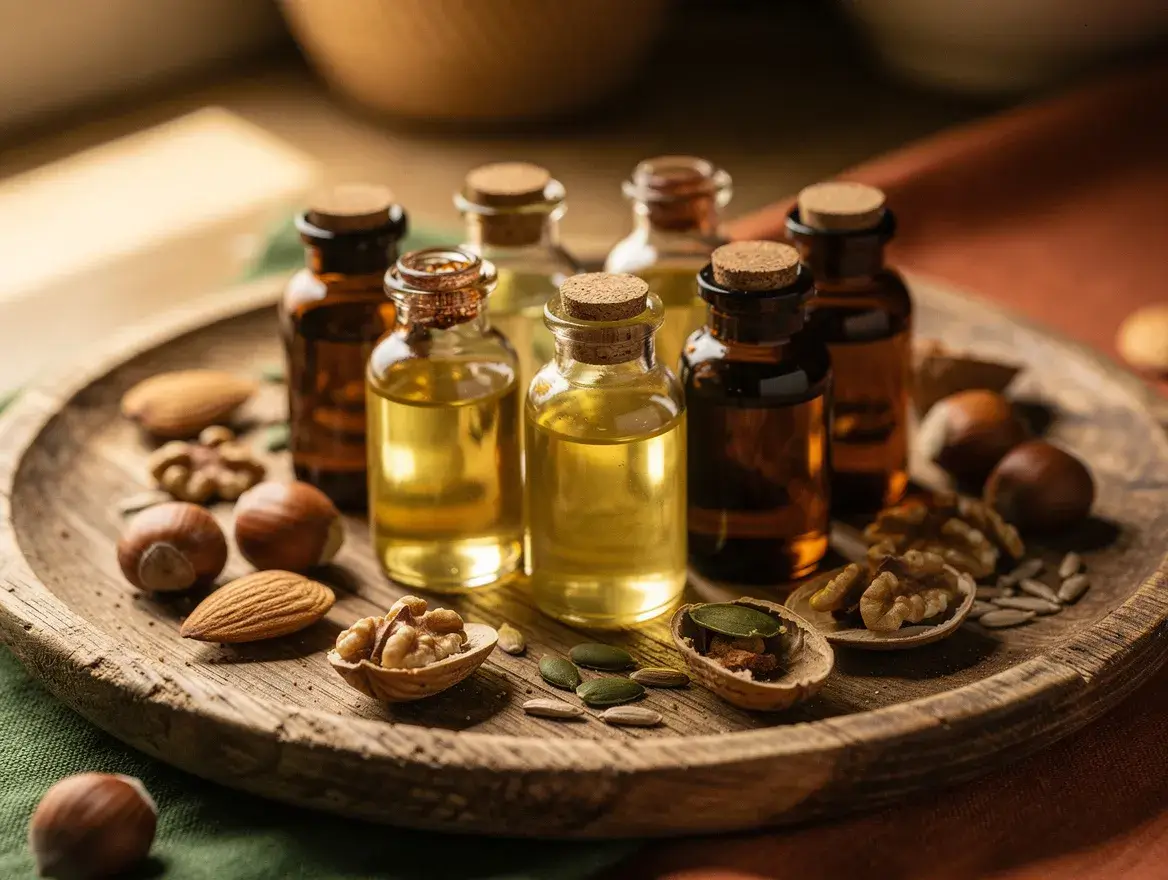
Every natural body oil is built from fatty acids, and those fatty acids decide how the oil feels, how fast it sinks in, and whether it suits your skin. This is the part most product pages skip, so it is worth slowing down here. Once you can read an oil by its fatty acid profile, you stop shopping by marketing and start choosing by fit.
Carrier oils are described by their dominant fatty acids. Oleic acid, a monounsaturated omega-9, makes an oil feel rich, cushioning, and slower to absorb; it suits dry and mature skin. Linoleic acid, a polyunsaturated omega-6, makes an oil feel light and fast, and it is the fatty acid that barrier-stressed and breakout-prone skin is often low in. Saturated fatty acids, such as the lauric acid in coconut, sit elsewhere again: stable, protective, and more occlusive. None of these is better than another. They are tools for different jobs.
Then there is the comedogenic scale, a rough zero-to-five rating of how likely an oil is to clog pores. Treat it as a guide, not a law. The real result depends on the person, the dose, and the rest of the routine. Still, it is useful. Coconut oil rates high, around four, and is wonderful on arms and legs but worth caution on acne-prone backs and chests. Argan and jojoba sit low. Our Argan Oil is a good example of a low-comedogenic, fast-absorbing oil that most skin tolerates well, which is why it shows up so often in this guide.
It helps to see this in real oils. Coconut is high in saturated lauric acid, which is why it is firm at cool temperatures, protective, and best on limbs rather than congestion-prone zones. Argan is a balanced split of oleic and linoleic acid, which is why it suits so many skin types and rarely causes trouble. Rosehip leans heavily linoleic and dries down fast, which is why it feels weightless. Jojoba is not strictly an oil at all but a liquid wax ester, structurally close to the sebum our own skin makes, which is why even oily skin tends to accept it. You do not need to memorise this. You only need to know that the label word body oil hides a wide range of behaviours, and the fatty acid profile is how you tell them apart.
Absorption rate ties all of this together. Dry oils high in linoleic acid disappear quickly and leave almost no film. Rich oils high in oleic acid linger, cushion, and protect. Neither is the better oil; they are answers to different questions. The skill is matching the oil to the job, which is exactly what the rest of this guide is for. For the facial version of the same thinking on more delicate skin, our guide to natural face oil walks through the same fatty acid logic from the jawline up.
Balinese body oil traditions: coconut, tamanu, and kukui in daily ritual

Long before fatty acid charts, Balinese and wider Indonesian wellness practice had already chosen its oils. Not by theory, but by generations of patient observation. Three of those oils still anchor how we formulate, and each plays a distinct role.
Coconut oil is the foundation. Cold-pressed from Bali coconuts, it is the most versatile carrier in our line and the one most people meet first. It is stable, protective, and deeply familiar to tropical skin. Our full guide on how to use coconut oil for skin covers both its strengths and its honest limits, and our Virgin Coconut Oil is the unblended starting point if you want to feel raw, single-ingredient coconut oil on its own before reaching for a blend.
Tamanu oil is the quiet specialist. Pressed from the nut of the tamanu tree, it is thick, green-gold, and traditionally used on tired, marked, and weather-worn skin. It is not a daily all-over oil for most people; it is the targeted one, the oil you reach for on rough patches, old marks, and skin that has taken a beating from sun and salt. Our Tamanu Oil is single-origin and undiluted for exactly that focused use.
Kukui oil, pressed from the candlenut, is the light one. It absorbs quickly, sits well under humidity, and carries a long history in Pacific and Balinese ritual care. Where coconut protects and tamanu repairs, kukui conditions without weight, which makes it a natural choice in hot months and on skin that dislikes any residue.
What ties these three together is not only chemistry. It is sourcing. The forest oils in our range are wild-harvested through our Forestwise partnership in Kalimantan, where the same families have worked the same groves for generations. Our story on how wild-harvested illipe butter ties rainforest communities to skincare explains why that matters. An oil is never only an ingredient. It is a relationship with a place and the people who keep that place standing. That is what we mean when we say what you give, you get back.
It is worth being clear about the ritual itself, because it is easy to borrow the product and miss the practice. In Bali, oiling the body has long been part of daily care and of traditional treatments such as the warming herbal boreh and post-bath massage. The common thread is not ceremony for its own sake. It is attention: a few unhurried minutes of contact with your own skin, every day, as a way of staying connected to the body rather than only maintaining it. We hold that tradition with respect rather than decoration. The oils are Balinese. The practice is Balinese. We try to represent both honestly, and to make sure the communities who carry that knowledge share in the work and the value.
Matching a natural body oil to your skin type
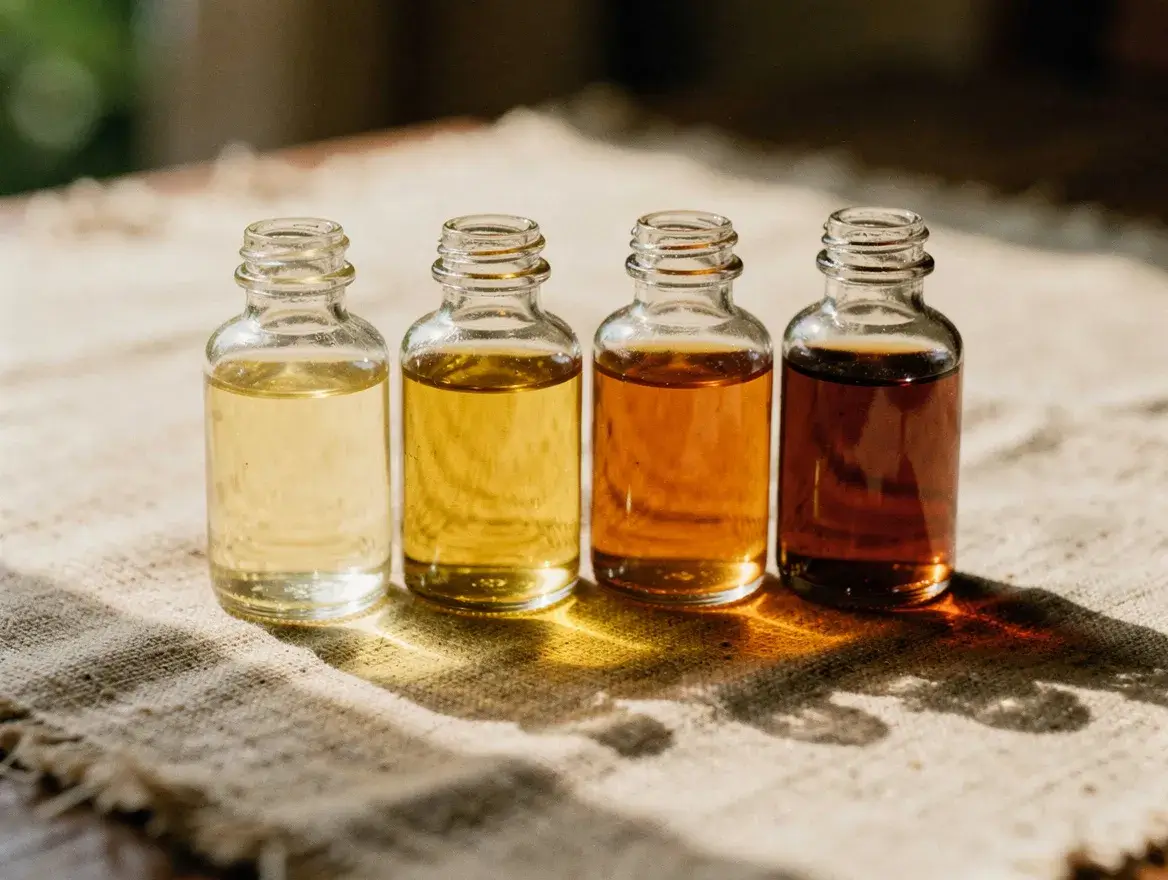
Here is where the science becomes practical. The right natural body oil is the one that suits your skin, your climate, and the time of day you use it. Use the map below as a starting point, then adjust by feel over a week or two. Skin tells the truth faster than any chart.
- Dry or mature skin: choose oleic-rich, cushioning oils. Coconut and coconut-based blends do this well. A richer blend such as our Rose Allure Body Oil, which pairs coconut with rose geranium, suits skin that drinks oil and still asks for more.
- Oily or combination skin: choose lighter, linoleic-rich, fast-absorbing oils. Kukui and argan are friends here. Use less than you think you need, and apply on slightly damp skin.
- Sensitive or reactive skin: choose simple, single-ingredient, low-fragrance oils. Fewer components mean fewer things to react to. A plain cold-pressed coconut or a low-comedogenic argan is a calm place to start.
- Breakout-prone body skin (back, chest): be selective. Keep high-comedogenic oils off these areas and favour argan or jojoba, used sparingly.
- Normal skin in a humid climate: lighter oils, smaller amounts, applied to damp skin. In dry air or winter, move toward richer oils and apply more generously.
A note we will keep repeating: start with less. Oil is concentrated. A few drops warmed between the palms and pressed into damp skin does more, and feels better, than a heavy pour that never quite absorbs. If you want a water-light layer underneath your oil, our guide to aloe vera gel for skin pairs well, and if you are building a wider routine our complete natural skincare routine guide shows exactly where body oil sits alongside everything else.

Whatever you choose, give it a fair trial. Patch test a new oil on the inner forearm for a day or two before going all over, especially if your skin reacts easily or the oil carries fragrance. Then judge it over a week, not a single use. On day one almost any oil feels good. What matters is how your skin looks after seven mornings: calmer and softer, or congested and heavy. If it is the second, you have not failed and neither has the oil. You have simply learned that your skin wanted a lighter, more linoleic option. That is the whole point of choosing by skin type rather than by the prettiest bottle on the shelf.
How to layer body oils with the rest of your skincare

Oil only works well if it goes on in the right order. The principle is simple: thinnest to thickest, water before oil. Oil is the seal, so it goes last. Get the order wrong and even a beautiful oil underperforms; get it right and an inexpensive one outperforms its price.
In practice, for the body: cleanse, apply any water-based or gel layer (an aloe or a hydrating mist) while skin is still slightly damp, then press body oil over the top to lock that moisture in. Doing this on damp skin is the single biggest upgrade most people can make. Oil on bone-dry skin softens the surface and little more. Oil pressed over damp skin traps water against the skin and genuinely hydrates. Same oil, very different result.
Timing matters too. Skin loses the most water at night, so an evening oil ritual does the most repair while you sleep. A morning application is lighter and more about protection against wind, sun exposure, and air conditioning, which is quietly dehydrating in any climate. Mixing is allowed and encouraged. A few drops of a targeted oil such as tamanu can be pressed into a rough elbow after a lighter all-over oil. A richer blend can be reserved for shins and heels while a lighter one covers the rest.
A few layering mistakes are worth naming, because they are common and easy to fix. Applying oil to fully dry skin hours after a shower seals in less, since there is little surface water left to trap. Using too much and then waiting for it to sink in usually means it never fully does; the answer is less oil, not more time. Putting a heavy oil under tight clothing right before dressing transfers most of it to fabric. And layering a rich oil under an even richer balm on already-oily skin is how congestion starts. None of these are disasters. They are just the difference between an oil that works and an oil you quietly give up on.
What we would gently push back on is the idea that more steps mean more care. They do not. A clean body, damp skin, and one well-chosen oil is a complete routine. Everything beyond that is preference, not obligation. Care is the action, not the size of the shelf.

A coconut body oil ritual, ready to use
Our Rose Allure Body Oil pairs cold-pressed Balinese coconut with rose geranium for a rich, calming oil made for damp skin after the shower. Simple ingredients, real scent, refillable by design.
Cold-pressed vs. refined: what processing does to oil efficacy
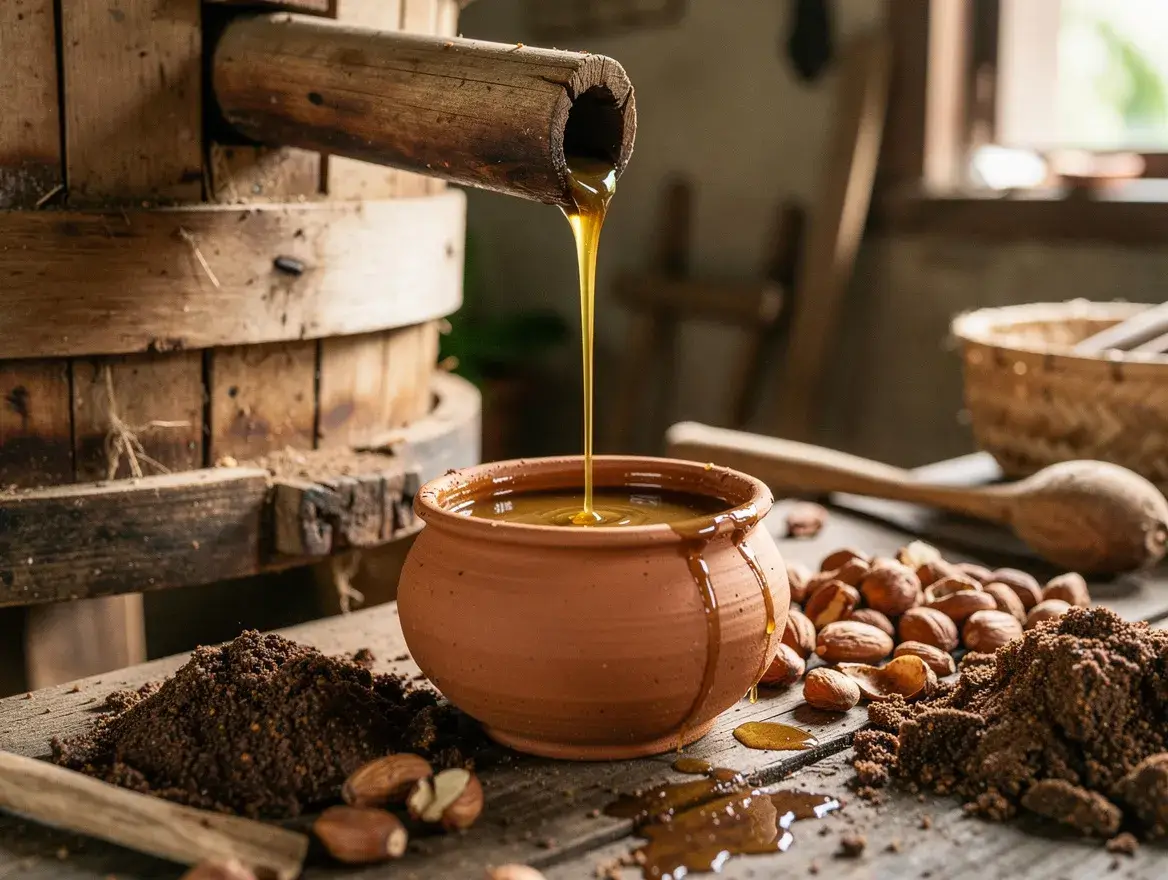
Two bottles can both say coconut oil and contain very different things. The difference is processing, and it quietly decides how much of the plant actually survives into your skin. This is the detail that separates a body oil that works from one that only moisturises.
Cold-pressing extracts oil with mechanical pressure and little or no heat. It is slower, yields less, and costs more, but it keeps the oil’s natural antioxidants, vitamins, polyphenols, and aroma intact. This is the oil that still smells like the plant it came from, and still carries the plant’s wider chemistry with it.
Refined oil is taken further: bleached, deodorised, and sometimes heat or solvent processed to make it colourless, scentless, and shelf-stable for years. Refining is not evil, and it has legitimate uses. But it strips much of the supporting nutrition and character on the way out. A refined oil moisturises. A cold-pressed oil moisturises and brings the rest of the plant along for the ride.
This is also where greenwashing likes to hide. Natural on a label is not a regulated promise. The phrase 100% natural on a refined, deodorised oil can be technically true and practically hollow. The honest signals are the ones a brand cannot fake easily: a visible colour, a real plant scent, a stated origin, a named pressing method, and a harvest story. If a body oil tells you none of those things, the bottle is asking for trust without offering evidence. We cold-press because the tradition we inherited did, and because the science agrees with the tradition. To see how that same honesty test applies across an entire cabinet, our guide to what clean beauty really means takes it room by room.
Cold-pressed oils ask for a little care in return, and this is worth knowing rather than discovering the hard way. Because they keep their natural compounds, they also keep a natural shelf life. Heat, light, and air are what turn an oil rancid, so store bottles away from the window and the shower steam, keep the cap closed, and buy sizes you will actually use within a season or two. A faint, off, crayon-like smell is the signal an oil has turned; trust your nose and let it go if so. This is not a flaw of natural oils. It is the honest cost of an oil that is alive enough to do something, rather than one deodorised into permanence. We would rather a body oil expired like food than lasted like plastic.
Building a body oil ritual that works in any climate
A natural body oil is only as good as the habit around it. The final piece is turning a product into a ritual that survives humid Julys and dry Januaries alike, without depending on willpower or a perfect morning.
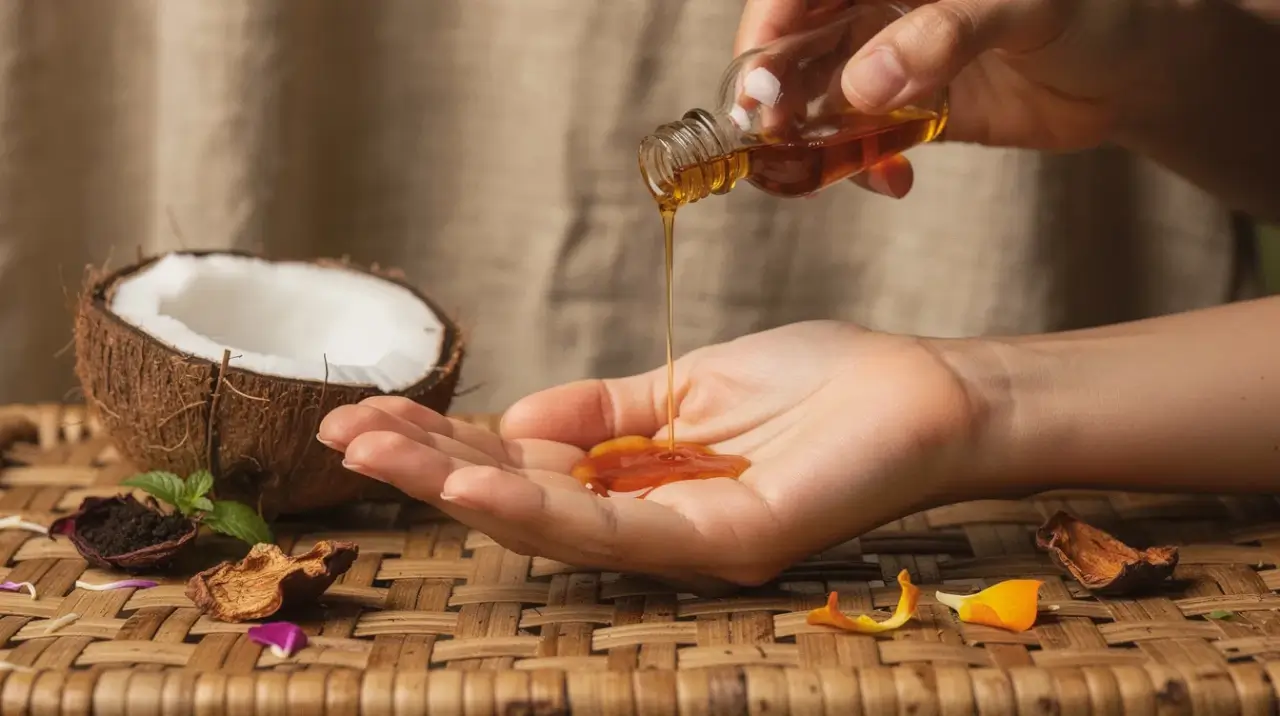
Start with the shower. Oil works best on warm, damp skin, so the easiest ritual is also the most effective. After washing, pat (do not rub) skin until it is just damp, warm a small amount of oil between your palms, and press it in from the feet upward. Ninety seconds. That is the whole practice, and it is enough.
Adjust by climate, not by rule. In heat and humidity, use a lighter oil, use less, and let the humidity do half the work. In cold, dry air or constant air conditioning, move to a richer oil, apply more, and add a second pass on shins, elbows, and heels, where skin cracks first. The same person can need two different oils across one year, and that is normal, not a failure of the product. Build the habit so it repeats on its own: one bottle within reach of where you dry off, one scent you genuinely like, one short window you already have in your day.
How often should I use a body oil?
For most people, once a day is plenty, and after the evening shower is the most useful slot because skin repairs overnight. Very dry skin or harsh winter air can justify twice daily; humid heat often calls for less, not more. Consistency matters more than frequency. A small amount every day outperforms a generous amount once a week.
Can I use the same oil on my body and my face?
Sometimes, but not always. Facial skin is thinner and more prone to congestion, so a rich, high-comedogenic body oil is not automatically a good face oil. Lighter, low-comedogenic oils such as argan can often cross over, while a heavy coconut blend is better kept to the body. When in doubt, treat the face as its own decision rather than an afterthought of the body routine.
Will a natural body oil stain my clothes or sheets?
It can if you apply too much or dress immediately. The fix is the same one we keep returning to: use less, apply to damp skin, and give it a minute or two to settle before clothing or bedding. A correctly sized amount of oil absorbs into skin rather than sitting on top of it, and a ritual that ends in oily fabric is simply a ritual using too much oil.
And keep it honest. You do not need a ten-step regimen, a new launch every season, or a shelf that photographs well. You need skin that feels cared for and a practice you will actually keep. That is what a natural body oil has offered for centuries, in Bali and far beyond it: not perfection, but reconnection. Small, daily, and real. What you give your skin, it gives back.