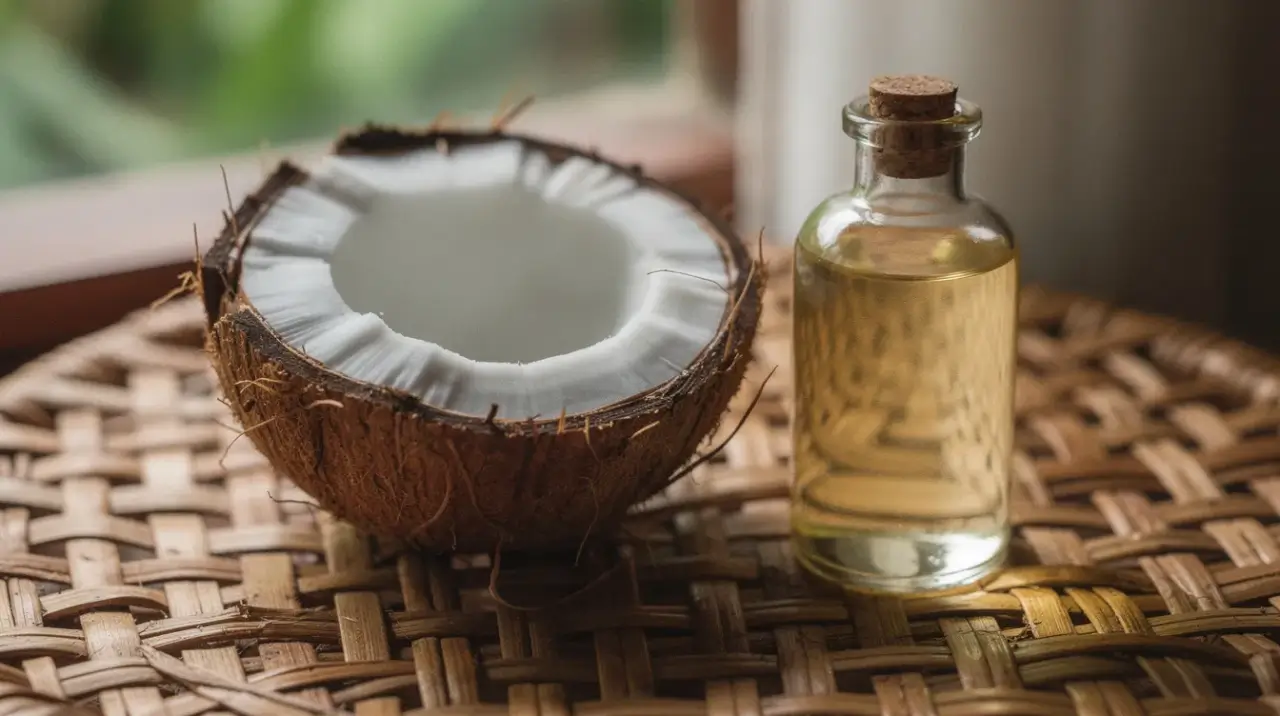
Best coconut oil for skin: how sourcing, extraction, and formulation change everything
The phrase best coconut oil for skin sounds simple, but it hides three questions that almost no skincare guide answers. Where was the coconut grown. How was the oil pressed. And was the oil left raw, or was it formulated into something that actually behaves well on skin. These three answers are why one jar of coconut oil feels like a quiet luxury on the body, and another sits heavy on the face and clogs pores within a week. The label rarely tells you any of this.
We have worked with coconut in Bali since 1989, and our perspective on the best coconut oil for skin starts where the fruit is grown. Cold-pressed, wet-milled, lauric-acid rich, and used the right way, coconut oil is one of the most remarkable botanicals in skincare. Used wrong, or chosen wrong, it can sit on the surface, feel greasy, and break out the same person who hoped it would heal them. The difference is not the coconut. The difference is sourcing, extraction, and formulation. In this guide we walk through all three, and show you what to look for next time you read a label.
For broader background on this ingredient, our pillar on why coconut oil is good for your skin covers benefits and skin compatibility. Here, we go a level deeper into the buying decision.
What makes the best coconut oil for skin different from supermarket grade
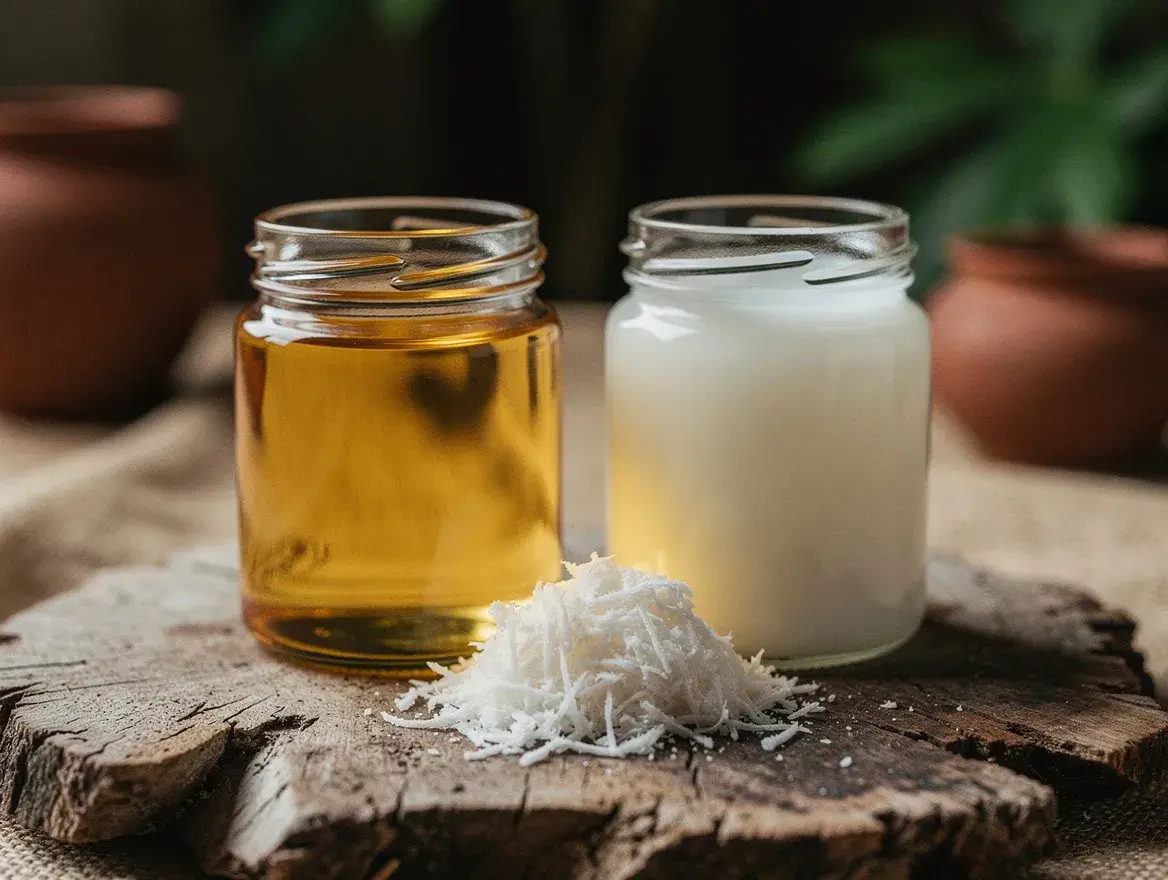
If you have ever stood in front of a shelf comparing two jars of coconut oil that look identical, you have already met the central problem. The bottles are clear, the colour is similar, and the labels share most of the same words: virgin, organic, cold-pressed, pure. Yet one jar will smell like a fresh coconut split in half, and the other will smell faintly chemical, or smell of nothing at all. That difference is real, and it traces back to four decisions made long before the oil reached the bottle.
Virgin versus refined
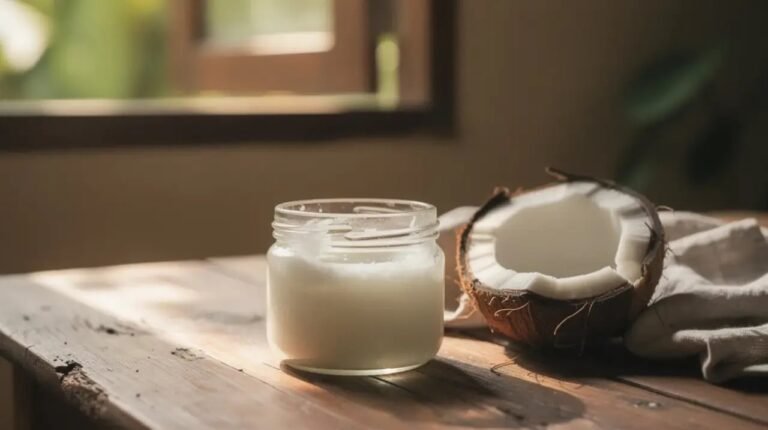
Virgin coconut oil is pressed from fresh coconut meat without chemical solvents, high heat, or bleaching. The oil keeps the natural aroma, the natural antioxidants, and most of its medium-chain fatty acid profile intact. Refined coconut oil, often labelled RBD for refined, bleached, and deodorised, has been processed at high temperature to remove smell, colour, and impurities. Refining produces a neutral oil that is fine for cooking and useful for some industrial purposes, but for skin it is the wrong choice. Heat damages the polyphenols and reduces the antioxidant value that gives virgin oil much of its skin benefit.
Cold-pressed versus expeller-pressed
Cold pressing keeps the oil below roughly forty-nine degrees Celsius during extraction. Expeller pressing uses mechanical force without added heat, but friction inside the press can push temperatures higher. Solvent extraction, the cheapest commercial path, uses hexane or similar chemicals to strip oil from dried coconut meat at industrial scale. For skin, cold-pressed virgin oil is the gold standard. The lower the temperature during pressing, the more lauric acid, caprylic acid, and natural vitamin E survive into the final bottle.
Wet-milled versus dry process
This is the decision most labels never disclose. Wet milling starts with fresh coconut meat, crushes it into a coconut milk, and separates the oil from the milk by centrifuge or natural settling. The dry process, in contrast, starts with copra, which is sun-dried or kiln-dried coconut meat. Copra is cheaper to ship and store, but it spends days exposed to air, dust, and microbial growth before pressing. Wet-milled virgin coconut oil is fresher, cleaner, and significantly higher in the antioxidants that matter for skin. Most premium Balinese coconut oil, including the kind we craft at our workshop, is wet-milled.
Origin and freshness
Coconut oil is a tropical product. Coconuts grown closer to the equator, with daily sunshine and balanced rainfall, develop a richer fatty acid profile than coconuts grown at the margins of the coconut belt. Indonesian, Philippine, and South Asian coconuts have a long tradition behind them, and small-batch pressing close to harvest gives a much fresher final oil than coconuts shipped as copra to refineries in colder regions. When you choose your best coconut oil for skin, ask where the coconuts grew and how soon after harvest they were pressed.
The fatty acid profile that matters: lauric acid, caprylic acid, and what extraction preserves
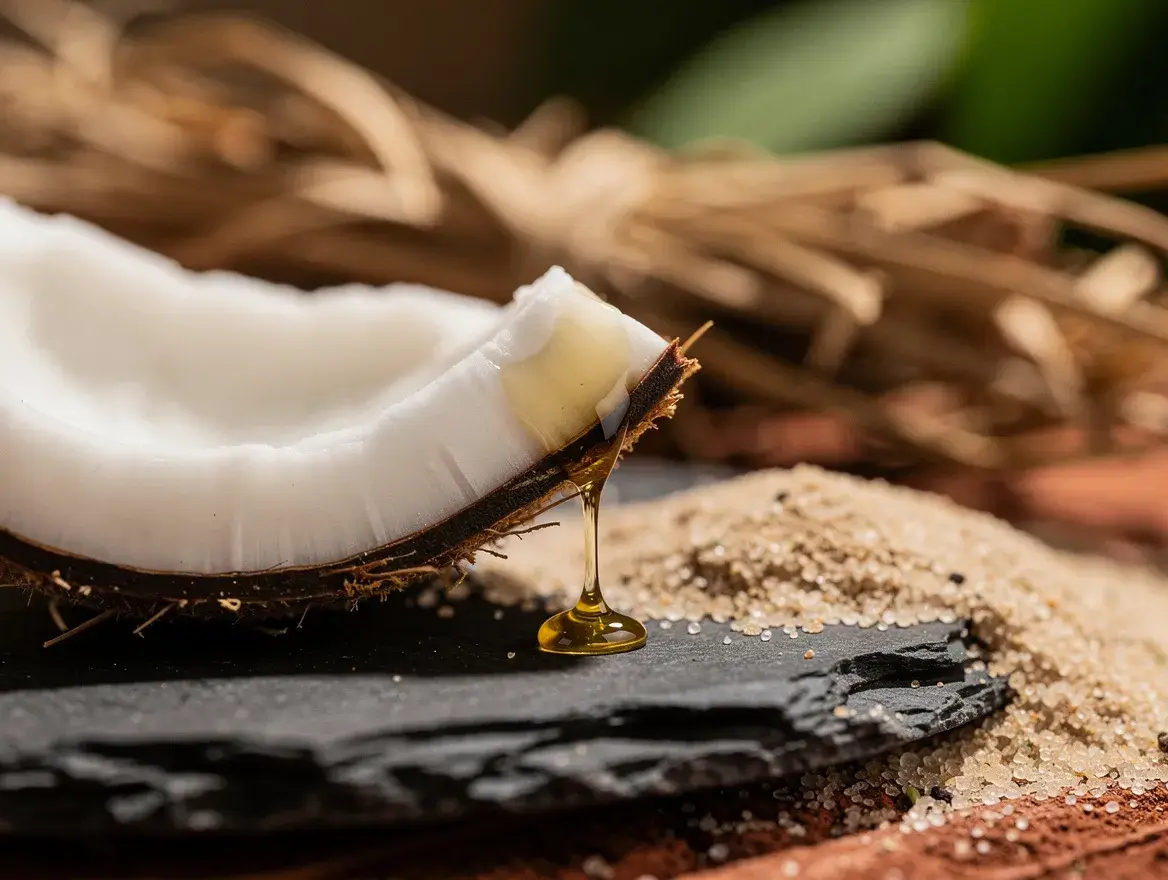
To understand why extraction method matters so much, it helps to look at what is actually inside coconut oil. Coconut oil is unusual among plant oils because it is rich in medium-chain fatty acids, the kind that behave differently from the long-chain fats common in olive, avocado, or almond oil. Three numbers tell most of the story.
- Lauric acid (around forty-five to fifty-three per cent). The largest single component of coconut oil, and the one with the most skincare research behind it. Lauric acid has been studied for its mild antimicrobial behaviour on skin, particularly against the surface bacteria associated with acne. It is also what gives coconut oil its characteristic semi-solid texture at room temperature.
- Caprylic and capric acids (around fifteen per cent combined). These shorter medium-chain fats are lighter, less occlusive, and more skin-friendly than lauric on its own. They are also the fatty acids used in fractionated coconut oil, the clear, liquid form that never solidifies.
- Myristic, palmitic, and oleic acids (smaller percentages). These contribute to texture, melting point, and the gentle moisturising feel of coconut oil on skin.
What extraction does to this profile is straightforward. Heat above sixty degrees Celsius starts to degrade the antioxidants that protect those fatty acids from oxidation. Bleaching and deodorising strip away the polyphenols that make virgin coconut oil mildly anti-inflammatory on the skin. Solvent residues, when not fully removed, leave traces that none of us want on our face. Cold-pressed wet-milled virgin oil preserves the full lauric and caprylic profile, and that is what your skin actually wants to receive.
For everyday skin use, a small jar of virgin coconut oil from a single-origin source gives you the unaltered ingredient. If you want to feel how the fatty acid profile shows up in a finished, layerable product, our guide to coconut body oil walks through how we blend coconut with kukui and other carrier oils.
Why raw coconut oil clogs pores and how formulated products solve it
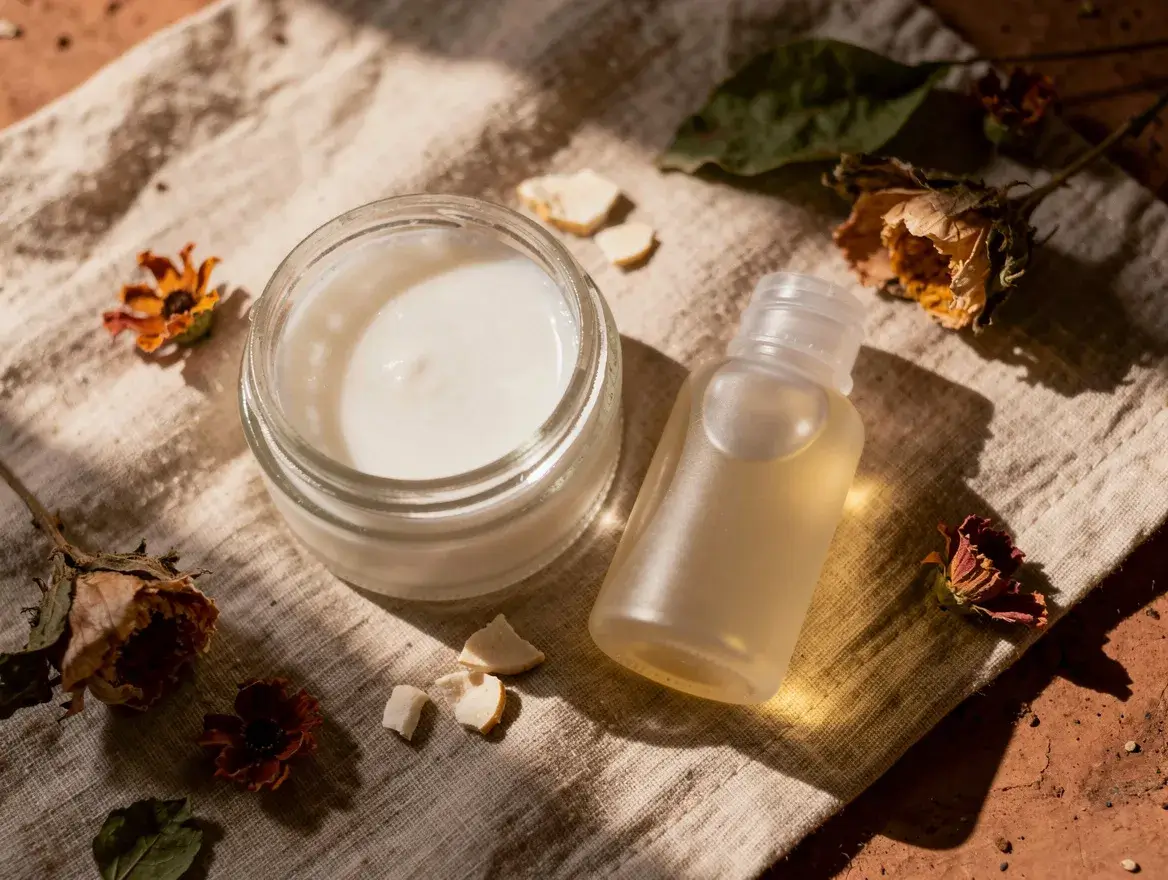
The honest truth, the one that most coconut oil enthusiasts skip over, is that raw coconut oil on its own is not the best coconut oil for skin on every part of the body. On dry elbows, knees, lower legs, and the heels of feet, it is a quiet miracle. On the face, especially on combination, oily, or breakout-prone skin, raw coconut oil can sit at the surface, settle into pores, and aggravate the very congestion you hoped it would soothe. This is the comedogenic problem, and it is real.
The reason is physical, not moral. Lauric acid molecules are relatively large, and when applied as a pure oil they do not absorb fully into the deeper layers of skin. Instead, a layer sits on top, where it can mix with the sebum your own skin produces. For drier skin types this layering effect is what gives coconut oil its rich, satisfying feel. For oilier skin types, the layering becomes a film that traps sweat and sebum against the pore opening. Hence the dermatology textbooks giving coconut oil a high comedogenic rating, even though the same textbooks acknowledge its antimicrobial benefits.
How formulation changes everything
This is where formulation matters. A well-built coconut-based lotion or body butter does not contain only coconut oil. It is built around the oil, with an emulsifier that pulls the oil into water, a humectant such as glycerine that holds moisture in the upper skin layers, and lighter co-oils that improve absorption. The result is something that delivers the coconut benefit, the lauric acid, the antioxidants, the sensory ritual, without the pore-clogging film. A cocoa and coconut lotion built this way feels nothing like raw oil on skin, even though both list coconut at the top of the ingredient list.

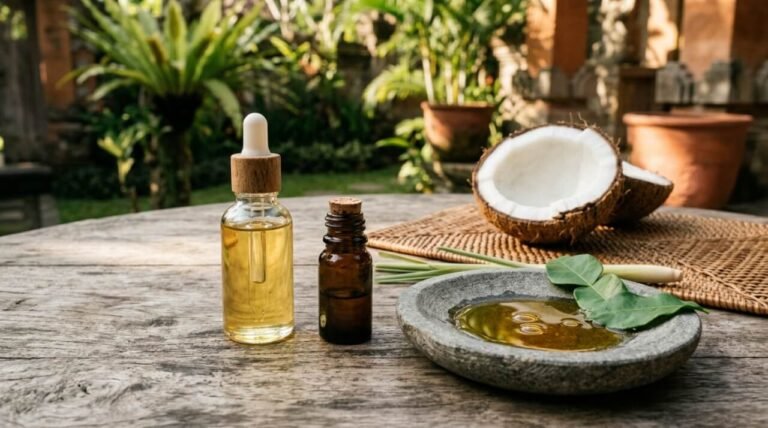
For face care specifically, we tend to point people toward a properly formulated natural face oil rather than raw coconut. For body and limbs, raw virgin oil is a fine choice, especially during dry-season months. For everyday hydration on combination skin, a formulated coconut lotion such as our coconut lotion in lavender or lemongrass ginger is the better tool.
Balinese coconut traditions: how village-level cold pressing produces different oil

If you walk through a village in central Bali at the right time of year, you can still see coconut oil being made the way it has been made for generations. The coconuts are harvested ripe, husked by hand, and the white meat is grated into a fine, fluffy texture. The grated meat is squeezed by hand to release coconut milk, and the milk is left to sit while the oil naturally separates and rises to the top. The oil is then gently warmed, never boiled, to evaporate the last of the water and leave a clean, fragrant oil behind. This is wet milling at its most traditional, and the resulting oil is what we consider the benchmark.
Industrial coconut oil follows a very different path. Copra, which is dried coconut meat, is shipped in bulk to large pressing facilities, often outside the country where the coconuts grew. There, the copra is pressed at high pressure, sometimes with added heat, and the resulting crude oil is bleached, deodorised, and packed for export. The volume is enormous and the price is low, but the oil that reaches the consumer has been separated from its source by thousands of kilometres and several weeks. The smell tells you most of what you need to know. Village-pressed Balinese virgin coconut oil smells like a freshly cracked coconut. Industrial RBD coconut oil smells like nothing.
This matters for skin because the antioxidants that protect the oil during storage are the same antioxidants that benefit the skin when the oil is applied. Polyphenols, tocopherols, and the natural vitamin E in fresh virgin coconut oil all degrade with time, heat, and light. Village-level wet-milled oil reaches the consumer with most of these intact. Industrial oil reaches the consumer with most of them gone. When you read about how to use coconut oil for skin in any depth, this freshness factor is usually what is being measured, even when the article does not say so.
How to read coconut-derived ingredients on skincare labels

Reading a coconut-based skincare label is its own small skill. The same coconut can show up as half a dozen different ingredient names depending on what the formulator did with it. Knowing which name means what is a quiet superpower at the shelf. Here are the most common entries and what each one tells you about the product in your hand.
- Cocos Nucifera Oil. This is straight coconut oil. If it appears near the top of the list and the product is a body butter, balm, or rich lotion, you are looking at a coconut-forward formulation. If it is near the bottom, it is a minor ingredient added more for scent and tradition than for performance.
- Caprylic/Capric Triglyceride. Fractionated coconut oil, the lighter, liquid form. It is colourless, odourless, and stays liquid at room temperature, which makes it useful in face serums and lightweight body oils where solid coconut would feel heavy.
- Coco-Caprylate. A coconut-derived ester that mimics the feel of silicone without using silicone. It gives a dry-touch, fast-absorbing finish, and it is common in modern clean-beauty body oils.
- Sodium Cocoyl Isethionate. A mild cleansing surfactant made from coconut fatty acids. It is one of the gentlest sulphate alternatives, common in good-quality natural shampoos and face washes.
- Cocamidopropyl Betaine. Another coconut-derived surfactant, often paired with sodium cocoyl isethionate to round out the lather. Worth watching if you have sensitive skin, because some people react to its preservative residues rather than the surfactant itself.
- Hydrogenated Coconut Oil. Coconut oil that has been chemically modified to be more stable and shelf-friendly. It is fine for soaps and balms, less ideal for products positioned as virgin or raw.
If you want a deeper map of plant oils on labels, our natural body oil ingredient guide walks through how carrier oils interact with one another and how to read the order of the INCI list. And for an example of a related Balinese ingredient that often appears alongside coconut, our kukui oil guide covers the candlenut oil traditionally paired with coconut in Balinese ritual.
Best ways to use the best coconut oil for skin: body, face, layering, and seasonality
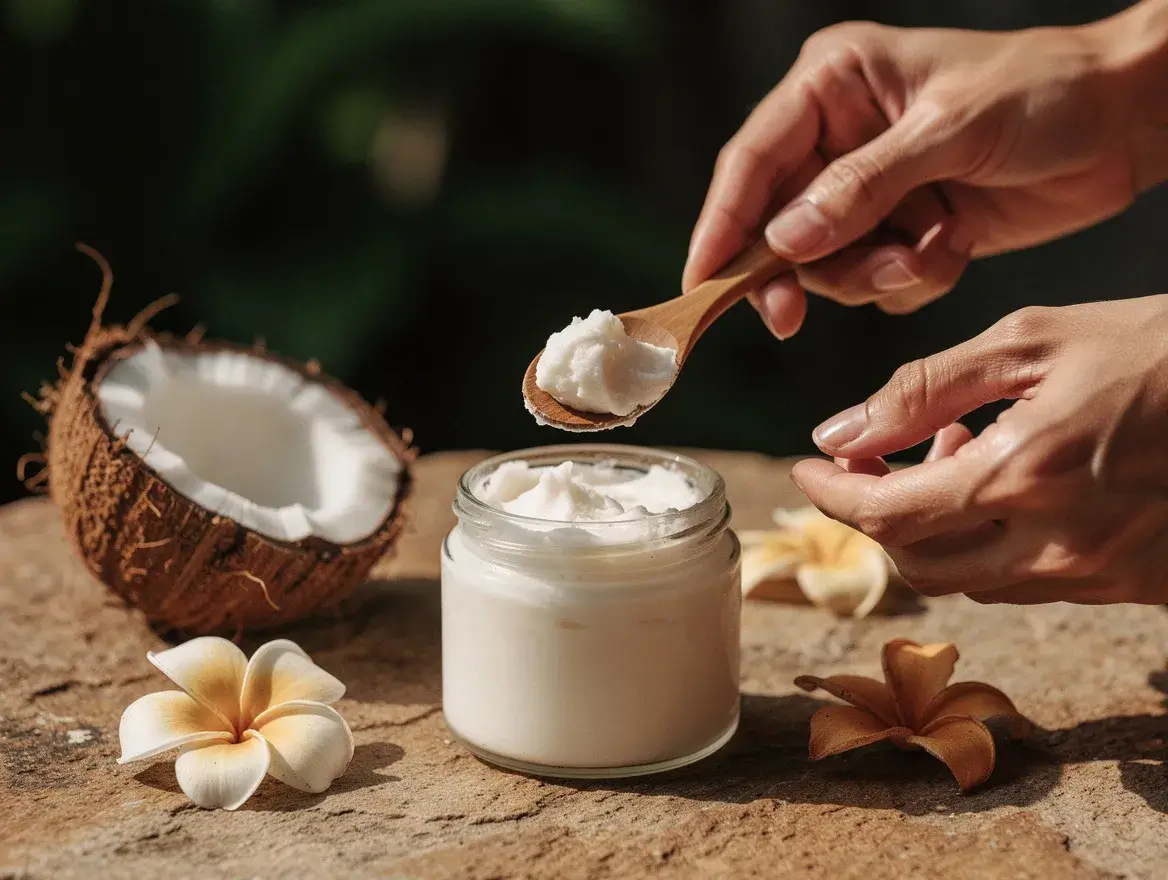
Once you have chosen a coconut oil worth using, the next question is how to use it well. The honest answer is that the same oil behaves differently depending on where on the body it goes, how dry the climate is, and what else you put on first. A few patterns serve most people most of the time.
Body
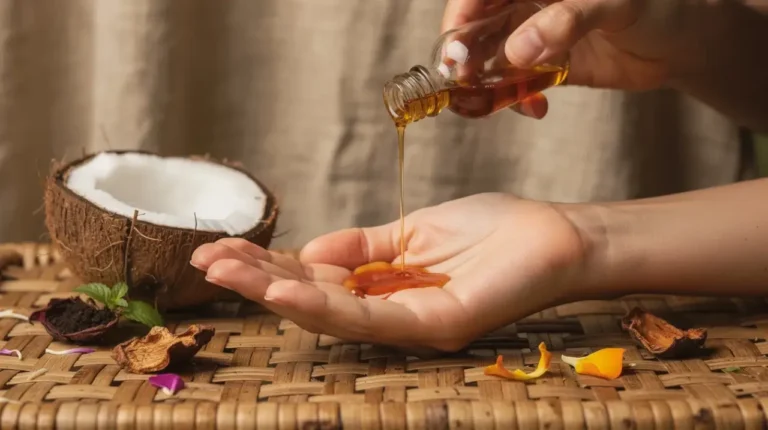
For body care, virgin coconut oil is at its best applied to damp skin straight out of a warm shower. The residual water on the skin lets the oil glide further, and a small amount, about a teaspoon for an entire limb, is enough to feel substantial without leaving a film. We particularly like it on elbows, knees, the backs of arms, and feet, where the skin tends to run drier than on the torso. For the larger surfaces of the back and chest, a formulated coconut lotion absorbs faster and is less likely to mark sheets or clothing.
Face
For most adult skin types, raw coconut oil is not the best coconut oil for skin on the face, despite the popularity of the idea online. Use it sparingly, if at all, and only on the driest patches such as the corners of the mouth, the brow above the eye area, and around the nose during winter. For nightly face care, we prefer a formulated face oil that uses coconut-derived components rather than raw coconut at the top of the list. Walking through a complete natural skincare routine is the easiest way to slot coconut into its right place: as a supporting ingredient in formulated products, not as the main face oil.
Layering
Coconut oil is excellent as a final, sealing layer on body skin. After a serum, a lotion, or a water-based body mist, a thin film of virgin oil locks moisture into the upper skin layers. The order matters. Apply water-based products first, oil-based products last. If you use a richer body lotion such as our coconut body lotion as your main hydrator, you usually do not need to add raw oil on top. Use raw oil layering for the driest months or after long-haul flights, sun exposure, or chlorinated swimming.
Seasonality
Tropical climates and dry-winter climates change the way coconut oil performs. In humid Bali, a thin layer absorbs quickly and feels light because the air itself is full of moisture. In a dry European winter or in air-conditioned offices, the same amount feels heavier, and a humectant-based lotion is often a better choice. Listen to how the skin feels twenty minutes after application. If the oil still feels sitting on top, your environment is too dry for raw oil alone, and you would benefit from a water-based hydrator underneath.
What to look for when choosing the best coconut oil for skin
By now the picture is hopefully complete. The best coconut oil for skin is rarely the cheapest jar on the shelf, and the most expensive jar is not automatically the best either. What you are looking for is a combination of sourcing, processing, freshness, and, when relevant, formulation. Here is the checklist we use in our own workshop when we evaluate coconut oil for skincare use.
- Single-origin from the coconut belt. Indonesia, the Philippines, Sri Lanka, southern India, or coastal Africa. Avoid blends from unspecified origins.
- Cold-pressed and wet-milled. Both terms should appear on the label or the brand’s website. If neither is mentioned, it is almost certainly RBD or copra-pressed.
- Virgin, not refined. Refined coconut oil has its place in cooking, but for skin use, virgin is the only sensible starting point.
- Recently pressed. Smaller-batch producers print or list a press date. Within twelve months of pressing is ideal, twenty-four months is the practical limit before antioxidants start to fade noticeably.
- Clear glass or amber glass, not plastic. Coconut oil keeps better in glass, and the absence of plastic packaging reduces both contamination and waste.
- Honest sourcing language. A label that names the region, the producer, or the cooperative is doing the work of accountability. A label that says only natural or pure is doing the work of marketing.
- For face care, choose formulated over raw. Read the INCI list. If coconut shows up as Cocos Nucifera Oil deep in the list, alongside well-chosen humectants and lighter oils, that is the signal of a thoughtful formulator.
Coconut oil is one of the oldest skincare ingredients in human history. It has been used in Bali, in South India, in the Pacific islands, and across Southeast Asia for generations before any skincare brand existed. The question is not whether coconut oil belongs in your skincare. The question is which coconut oil, from where, processed how, and applied where on the body. Answer those four questions honestly, and you will choose well. Skip them, and you will end up disappointed by an ingredient that has a thousand years of evidence behind it.
The best coconut oil for skin is the one whose story you know all the way back to the tree. We grew up close to that tree, and we still press from it the way our families taught us. If you want to feel the difference, start with a small jar of virgin oil for the body and a formulated coconut lotion for everyday hydration, and let the ritual reveal itself slowly. That is how coconut has always been used in Bali, and it remains, after thirty-seven years of practice, the way we recommend.
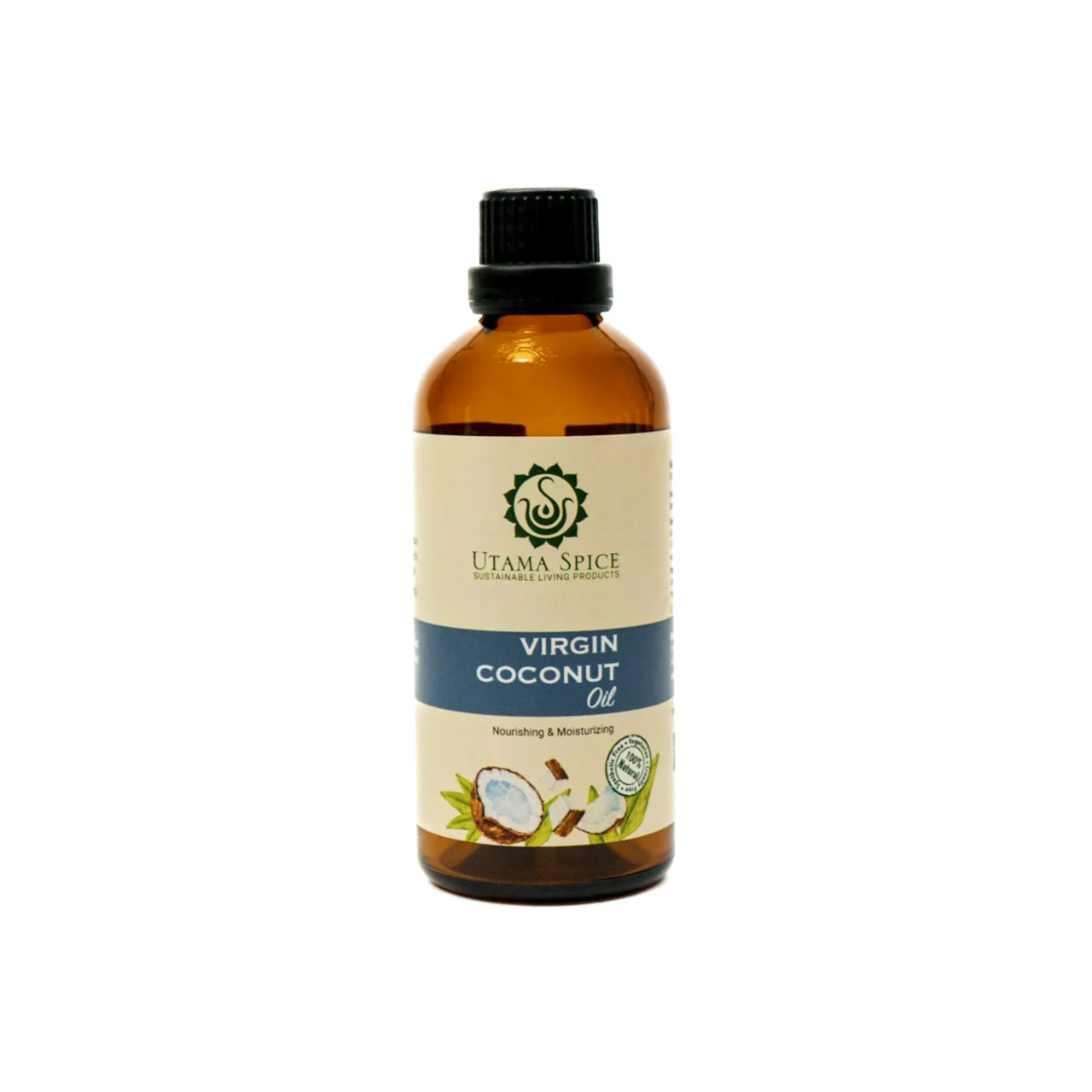
Start with the source: Balinese virgin coconut oil
Cold-pressed and wet-milled from fresh coconuts grown a short drive from our Ubud workshop. Single-origin, glass-bottled, and small-batch, with the lauric and caprylic acid profile fully intact. The honest starting point for anyone trying the best coconut oil for skin.