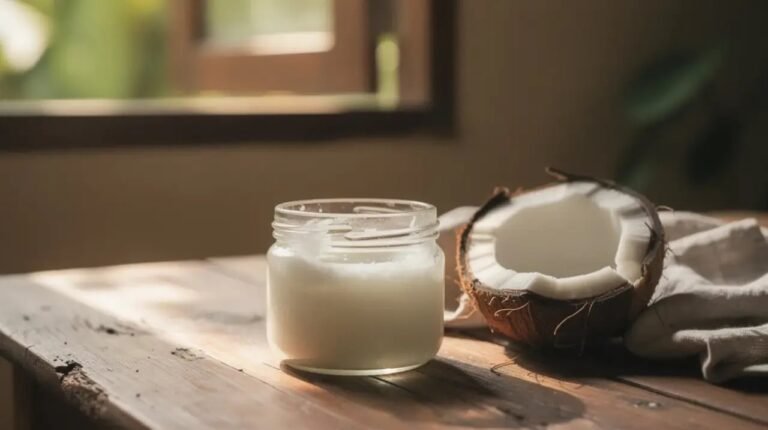
Natural shampoo for men: what your scalp actually needs and how to choose
A good natural shampoo for men is rarely the loudest bottle on the shelf. It is usually the quietest, the one with a short ingredient list, a recognizable scent, and no slogans about thickness or virility. Men’s hair and scalp are physiologically distinct, but they do not need a separate science. They need ingredients that respect the scalp’s natural oil cycle, lather without stripping, and leave hair clean rather than coated.
This guide walks through what natural shampoo for men actually means, why your scalp produces oil the way it does, the botanical ingredients worth paying for, the synthetics to leave behind, and how to build a clean grooming ritual without overcomplicating it. We will keep it grounded, ingredient-led, and free of marketing noise.
What natural shampoo for men actually means

The phrase “natural shampoo” gets used in two very different ways. One is precise, rooted in formulation science. The other is a marketing claim with no fixed definition. For our purposes, natural shampoo for men means a cleanser whose surfactants and active ingredients are derived from plants, minerals, or food-grade fermentation, not petroleum. It avoids sulfates like SLS and SLES, parabens, silicones, synthetic fragrance, and PEG compounds. The lather is usually softer, the rinse cleaner, and the scent unmistakably botanical.
There is no government standard for the word natural on a shampoo label, which is why the ingredient list matters more than the front of the bottle. Reading INCI lines, where ingredients appear in descending order of concentration, is the only way to know what you are buying. A shampoo can call itself natural while listing sodium laureth sulfate as the second ingredient and synthetic fragrance as the fifth.
We have written more broadly about what to look for in our guide to the best natural shampoo. The same logic applies to men, with two small refinements. First, men tend to wash hair more frequently, so the gentleness of the cleanser compounds in importance. Second, masculine scent expectations lean herbaceous, woody, or citrus rather than floral, which shapes which essential oils a formulation reaches for.
Natural is not the same as effective, and effective is not the same as harsh. The best natural shampoo for men cleans thoroughly without disrupting the scalp’s acid mantle, the thin protective layer of sebum and sweat that keeps your scalp slightly acidic at around pH 4.5 to 5.5. A formulation that respects that pH leaves your scalp comfortable, your hair manageable, and your shower drain free of the silicone residue that builds up over years of conventional product use.
Why your scalp needs a different approach
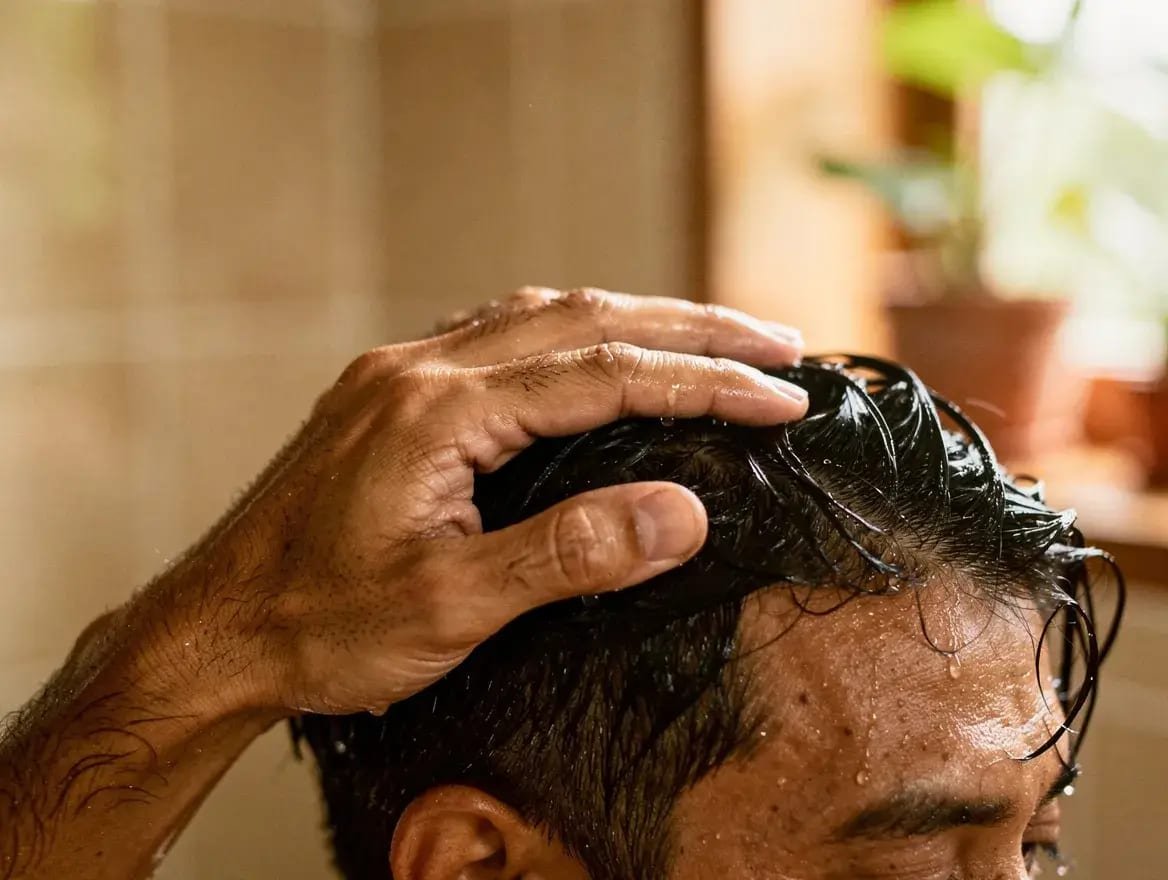
Male physiology shapes scalp behavior in three ways that are worth understanding before you reach for any bottle. The first is sebum. Androgens stimulate the sebaceous glands at the hair follicle, which is why men typically produce more scalp oil than women, and why hair often feels greasy by the end of the day. The second is hair density and shaft thickness, which trend slightly higher in men until age and genetics begin to change that. The third is the cumulative effect of more frequent washing, often with stronger surfactants, often paired with chlorinated tap water and styling products.
Stronger surfactants strip sebum quickly, which feels good in the shower and counterproductive over time. The scalp reads the post-shampoo dryness as a deficit and ramps up oil production to compensate. This is the rebound oiliness cycle that drives many men to wash daily, which strips again, which triggers more oil. A gentler natural shampoo breaks the loop. You may notice your hair feels slightly heavier in the first two or three weeks of switching, but the scalp recalibrates and oil output settles to a calmer baseline.
Scalp care is the upstream lever for everything that happens downstream, from dandruff and itching to early-stage thinning and texture. Our piece on why scalp care is crucial to haircare goes deeper on the follicle anatomy and why a clean scalp grows healthier hair. The short version is that hair is grown, not applied, and the soil it grows in is the scalp. Strip that soil with harsh surfactants and you will see the consequences months later, in the bathroom mirror.
Thinning is the other story men come to a shampoo aisle hoping to solve. No shampoo can reverse genetic pattern hair loss. What a good natural shampoo can do is keep follicles unobstructed, support the scalp microbiome that protects them, and avoid the inflammatory triggers that accelerate shedding. Tea tree, peppermint, rosemary, and saw palmetto extract all show modest supporting evidence in scalp health research, and they are the active botanicals most worth paying for in a man’s bottle.
The botanical ingredients that earn their place
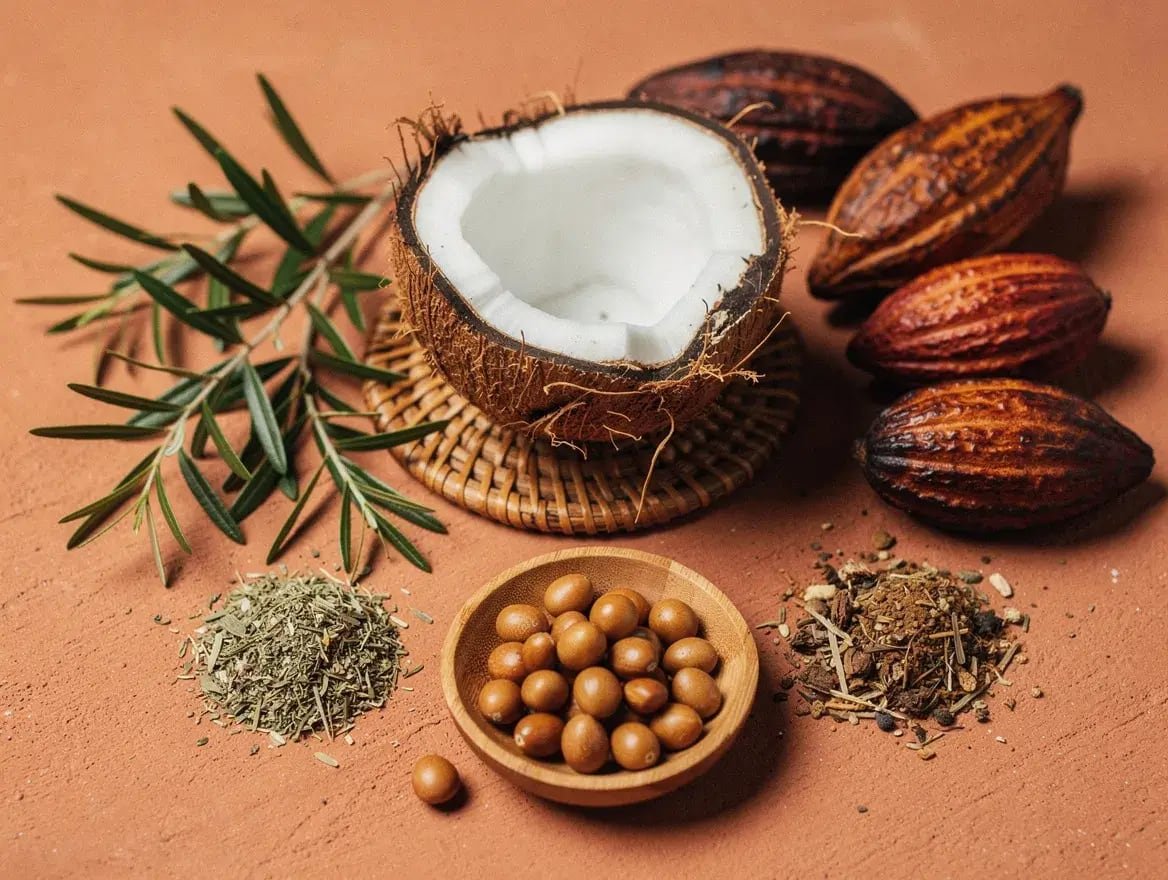
A short ingredient list is a feature, not a limitation. The botanical actives that consistently earn their place in a man’s natural shampoo are the ones with both traditional use and clinical evidence behind them. Here is what to look for, and what each ingredient is doing in the formulation.
Tea tree (Melaleuca alternifolia)
Tea tree leaf oil is the workhorse for scalp clarity. Its principal compound, terpinen-4-ol, has documented antimicrobial and antifungal activity against Malassezia, the yeast implicated in seborrheic dermatitis and most dandruff cases. In a shampoo, tea tree settles itching, reduces flaking, and gives a fresh herbaceous scent that pairs well with mint and eucalyptus. It is the centerpiece of our flagship men-friendly shampoo and a good example of a single botanical doing meaningful work.
Coconut oil and coconut-derived surfactants
Cocos nucifera (coconut) oil saponifies into one of the gentlest natural cleansers available. Sodium cocoyl isethionate and decyl glucoside, both coconut-derived, lather softly without stripping. Coconut also adds light conditioning, which is why a shampoo formulated around coconut surfactants often does not require silicone afterwards. Our writeup on why coconut oil is good for your skin goes into the lauric acid science that makes this ingredient so versatile across face, body, and hair.
Cocoa butter and shea butter
Both butters are humectant-rich and add a soft conditioning film to the hair shaft without coating it the way silicone does. Cocoa butter, in particular, is what gives our All Natural Shampoo #6 its distinctive feel. The lather is creamier than tea tree, with a softer scent profile that works well for men with curly or coarse hair, or for anyone whose scalp leans toward dryness.
Essential oils with active value
Beyond tea tree, the essential oils worth looking for in a men’s shampoo are peppermint (cooling, vasodilatory at the scalp, mildly stimulating to follicles), rosemary (a 2015 study in SKINmed compared 3 percent rosemary oil to 2 percent minoxidil for androgenetic alopecia and found comparable results at six months), eucalyptus (antimicrobial, helps with scalp itch), and clary sage (balances sebum and adds a grounded scent). The aromatic chemistry of these oils is genuinely active, not decorative, which is one of the central themes in our haircare routine guide with essential oils.
Aloe vera and panthenol
Aloe barbadensis leaf juice is the connective tissue in many natural shampoos, replacing the water base with something that already carries vitamins, enzymes, and natural humectants. Panthenol, derived from pantothenic acid, penetrates the hair shaft and improves moisture retention. Together they leave hair softer, easier to comb, and less prone to mid-length breakage.
What to leave out, and why
Knowing what to skip is easier than memorizing every botanical to seek out. The ingredient lists below are the most common reasons a shampoo earns a mixed reputation, and they appear in nearly all conventional men’s drugstore brands. Reading for these is faster than reading for actives.
Sulfates: SLS and SLES
Sodium lauryl sulfate and sodium laureth sulfate are extremely effective foaming agents. They are also strong enough to strip the scalp’s acid mantle in a single wash, which is why drugstore shampoo can leave the scalp tight or itchy. SLES is milder than SLS but is often contaminated with 1,4-dioxane during ethoxylation. Neither belongs in a daily-use shampoo if you wash often.
Parabens and phenoxyethanol
Parabens (methyl, propyl, butyl, ethyl) are preservatives flagged for endocrine activity in several studies, with the strongest evidence in butylparaben. The natural shampoo space largely uses radish root ferment filtrate, sodium benzoate plus potassium sorbate, or low-percentage phenoxyethanol instead. Phenoxyethanol is a gray area: it is not natural, but it is widely tolerated and replaces less benign preservatives in many otherwise clean formulations.

Silicones (dimethicone and its cousins)
Dimethicone, cyclomethicone, and cyclopentasiloxane all create the slick, easy-comb feeling that drugstore conditioner sells you. They also build up on the hair shaft and the scalp over weeks, requiring stronger sulfates to remove, which restarts the cycle. Switching to a silicone-free routine has a real adjustment period, sometimes called the natural transition. Hair feels different for two to four weeks while residue clears and your real texture surfaces.
Synthetic fragrance
The single word “fragrance” or “parfum” on an INCI list can hide up to several hundred undeclared compounds, including phthalates used as fixatives. For scent, you want named essential oils. The label should read like a botanical inventory, not a marketing line. This is the same logic we apply to aluminum free deodorant for men, where named scent ingredients are the difference between a clean product and a green-washed one.
PEG compounds and ethanolamines
PEG-7 olivate, PEG-40 hydrogenated castor oil, and similar polyethylene glycol derivatives are emulsifiers often paired with the same dioxane contamination concern as SLES. Triethanolamine (TEA), monoethanolamine (MEA), and diethanolamine (DEA) are pH adjusters that can form nitrosamines when combined with certain preservatives. None of these are catastrophic in a single use. They are simply more chemistry than a good shampoo needs.
From wash to dry: building a clean grooming ritual

A natural shampoo works best inside a small, deliberate routine. Three to four steps, not eight. The point is consistency, not complexity. Here is a daily and weekly rhythm that works for most men and most hair types.
Wet thoroughly, then a small amount of shampoo
Most men use two to three times more shampoo than they need. A coin-sized pool in the palm is enough for short hair, a small almond shape for medium length. Lather between palms first, then apply to the scalp, not the lengths. The scalp is where the oil and product residue live. The lengths get cleaned by the rinse-off as you work it through.
Massage for sixty seconds at the scalp
The scalp massage matters more than the shampoo. A minute of slow, firm circular pressure with the fingertips increases local circulation, lifts product residue, and gives the active botanicals time to work. This is also where peppermint and tea tree do their best work, in the moment of contact with the scalp.
Rinse cool when you can
Hot water opens the cuticle and dries the scalp. Cool to lukewarm at the final rinse closes the cuticle, locks in the conditioning, and leaves hair visibly shinier. It is a small ritual change with a disproportionate visible outcome. The Balinese tradition of finishing a wash with cool water is older than the science that explains why it works.
Condition the lengths, not the scalp
If your scalp already produces enough sebum, conditioner near the roots will weigh hair down. Apply our Hydrating Conditioner from the ears down to the ends, leave it for one minute, then rinse cool. For coarser or curlier hair, leave it for two to three minutes. For finer hair, sixty seconds is plenty.
Optional: a small amount of hair oil on damp ends
A few drops of Wellkiss Hair Oil or our All Natural Shampoo‘s companion oils, rubbed between palms and applied to damp ends, controls frizz and protects the cuticle as hair dries. The amount is genuinely small. Two to three drops for short hair, four to six for medium length. More than that and you will see it.
Weekly: a scalp reset
Once a week, slow down the routine. Apply shampoo, leave it for two minutes while you continue showering, then massage and rinse. This longer contact time gives tea tree and other actives more room to work. If you are exploring a hair-oil-first routine before washing, our best natural hair oil guide covers oil treatments designed to be applied dry and then shampooed out.

Tea tree shampoo, built for a clear scalp
Our Tea Tree Shampoo pairs cold-pressed coconut oil with steam-distilled tea tree leaf, the same way Balinese formulators have done for generations. Free from SLS, parabens, and synthetic fragrance. Fresh, herbaceous, and quietly grounding from the first lather.
Frequently asked questions about natural shampoo for men
How long does the transition from conventional shampoo take?
Two to four weeks is typical. The first week often feels worse, not better, as silicone residue clears and rebound sebum stabilizes. Hair may feel waxy or weighed down. Stay with the new shampoo, rinse cool, and resist the urge to wash twice a day. By week three or four, the scalp settles into a calmer oil cycle.
Will natural shampoo help with dandruff?
If your dandruff is driven by Malassezia overgrowth (the most common cause), a tea-tree-led natural shampoo can help materially. Tea tree’s antifungal activity is well documented at concentrations around 5 percent. Severe or persistent dandruff that does not respond in four to six weeks deserves a dermatologist visit, where ketoconazole or selenium sulfide may be added on top. Natural shampoo is not a substitute for medical care in resistant cases.
Can natural shampoo slow hair loss?
Not on its own, and not in cases of genetic androgenetic alopecia. What a good natural shampoo can do is remove the inflammatory and obstructive variables, leaving the follicle environment as healthy as possible. Rosemary and peppermint oils have shown modest follicle-stimulating effects in small studies. Pair with a balanced diet, sleep, stress management, and, if appropriate, a dermatologist-prescribed treatment for the strongest results.
Does natural shampoo lather as well as conventional?
The lather is softer and less voluminous. This is by design. Voluminous foam is the signature of strong sulfates, not effective cleansing. A small, creamy lather from coconut or sugar-derived surfactants is plenty to clean the scalp. After the transition period, most men stop noticing the difference, and the rinse-clean feel becomes its own kind of confirmation.
Is bar shampoo better than liquid for men?
Both can be excellent. Bars travel well, last longer, and use less packaging. Liquids are easier to dose and tend to feel more familiar in the shower. The formulation matters more than the format. If you want a deeper read on the full hair-care cluster, our natural shampoo and conditioner guide covers the trade-offs and the pairings.
How often should I wash my hair?
Most men do well at every other day once the scalp has adjusted to a gentler shampoo. Daily is fine if your routine includes heavy styling product, daily exercise, or city air. The goal is to wash when needed rather than to wash on a fixed cadence. Listen to the scalp.
A quieter ritual, a clearer scalp
Switching to a natural shampoo for men is a small change that compounds. You read one ingredient list more carefully, you choose one bottle with intention, you spend one extra minute at the scalp in the shower. None of it is heroic. All of it adds up, in scalp comfort, in the way your hair behaves once silicone is gone, and in the small but real reduction of synthetic compounds passing through your day.
The Balinese view of grooming is that it is a ritual, not a chore. The tools matter, but the relationship with the tools matters more. A good shampoo is not the loudest claim on the shelf. It is the bottle you reach for every morning without thinking about it, because it works, smells right, and does not need to be justified.