Seed oil free skincare: why Balinese botanicals have always been ahead of the trend
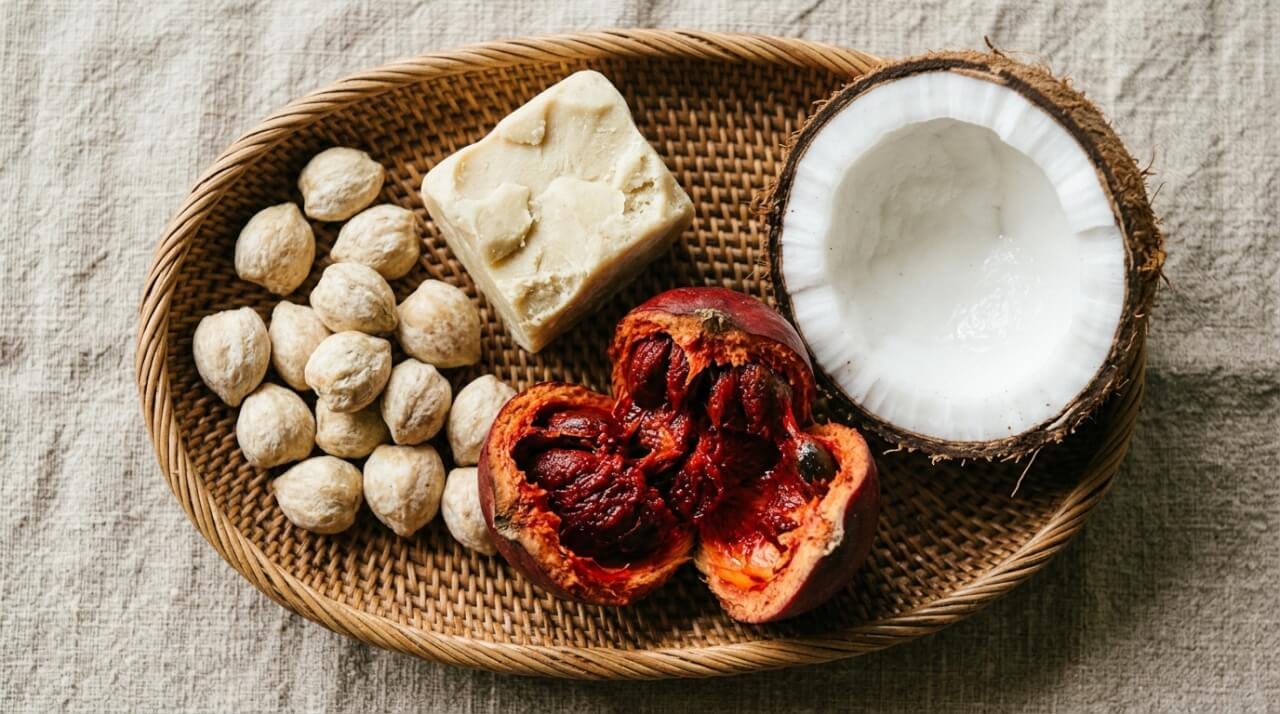
Seed oil free skincare has become a search term almost overnight, riding in on the same wave of scrutiny that turned “seed oils” into a kitchen-table argument. Most of what shows up when you search it is a list of substitutions: swap this bottle for that one, avoid these nine ingredients, buy the version with the cleaner label. What almost nobody explains is that some traditions never had a seed oil problem to solve. Balinese skincare, hand-blended in small batches since 1989, was built on kukui, illipe butter, Buah Merah, and cold-pressed coconut oil, none of which come from a seed. This is not a rebrand chasing a trend. It is heritage formulation that the trend is only now catching up to.
This guide explains what the seed oil debate actually concerns, why the botanical distinction matters more for skin than for a dinner plate, which Balinese oils have always sat outside that category, and how to read a label so you can tell the difference yourself.
What the seed oil debate is actually about
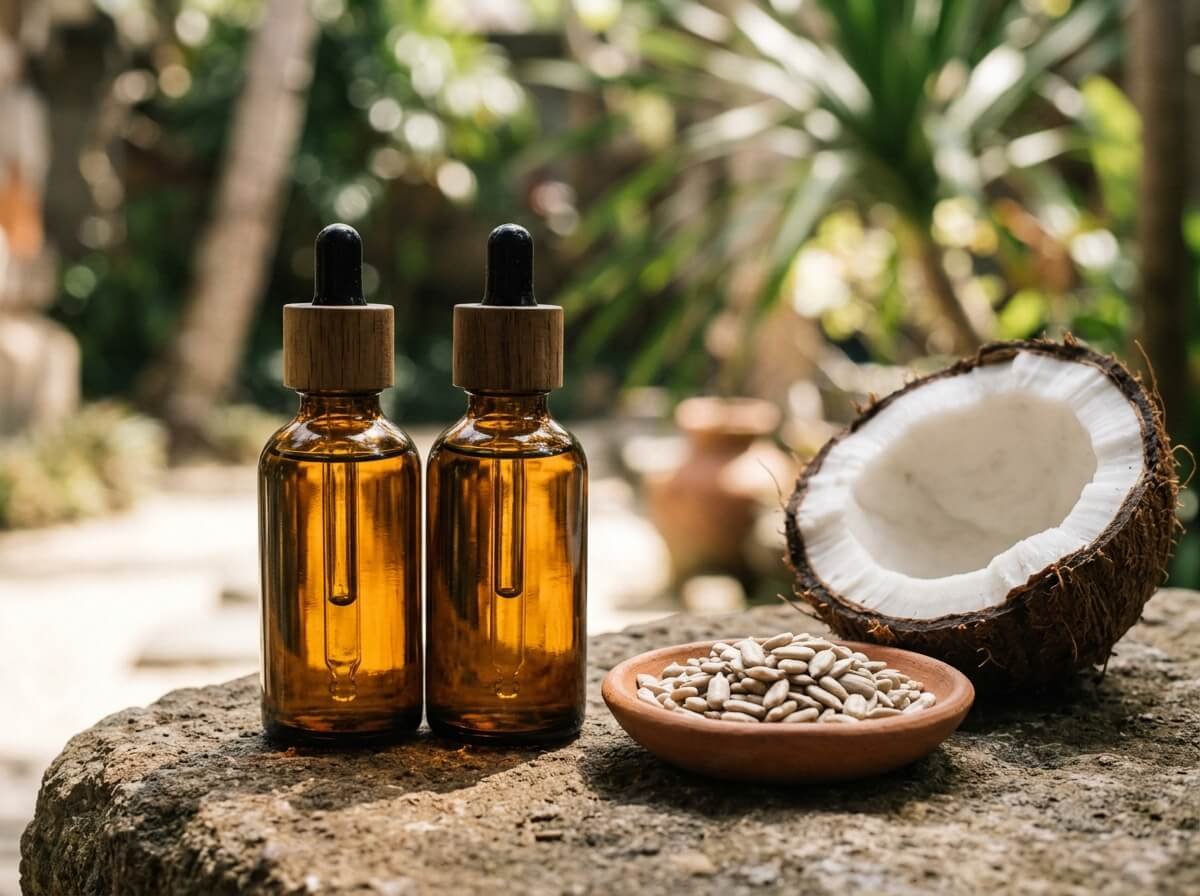
The seed oil conversation started in nutrition circles, focused on industrially refined oils such as soybean, canola, corn, sunflower, and cottonseed. The concern there is mostly about processing: high-heat extraction, chemical solvents, and a fatty acid profile heavy in omega-6 linoleic acid, which some research links to inflammation when it dominates a diet that is otherwise short on omega-3. That is a food conversation, built on how a body metabolizes what it eats.
Skincare borrowed the term, but skin is not a gut. Applied topically, an oil does not get metabolized the same way. What matters on skin is fatty acid composition (how occlusive or how fast-absorbing an oil feels), comedogenicity (whether it tends to clog pores), oxidative stability (how quickly it turns rancid and starts generating free radicals on your skin), and how it was processed. A refined, high-heat-extracted oil loses antioxidants in the process, whether or not it started life as a seed. So the honest version of “seed oil free skincare” is not a blanket rule against a category. It is a preference for oils that are minimally processed, botanically distinct from the industrial seed oils under nutritional scrutiny, and stable enough not to degrade the moment they hit air.
Utama Spice has never needed to solve this problem, because our formulation heritage was never built on seed oils in the first place. We can explain why with botany rather than marketing, which is where most “seed oil free” claims stop short.
This distinction matters most for sensitive and acne-prone skin. Comedogenicity, how likely an oil is to clog pores, varies widely by fatty acid profile, and several common seed oils rate higher on that scale than most nut and fruit oils. Oxidative stability compounds the issue: an oil high in linoleic and linolenic acids oxidizes faster once a bottle is opened and exposed to air and light, and oxidized oil can trigger the exact irritation a reactive skin type is trying to avoid. A slow-oxidizing, low-comedogenic oil is simply easier to formulate with and easier to trust, which is part of why traditional Balinese formulation gravitated toward kernel and fruit oils long before anyone had a name for the category.
Not all plant oils are seed oils: the distinction most labels skip
Here is the gap in almost every seed oil article we researched: none of them explain what a seed actually is, botanically, which means readers are left guessing at ingredient lists instead of understanding them. A seed oil is pressed from the seed of a plant, the embryo and its food store, usually a small, energy-dense structure built for germination. Soybean, sunflower, canola (rapeseed), corn, and cottonseed all fit that definition.
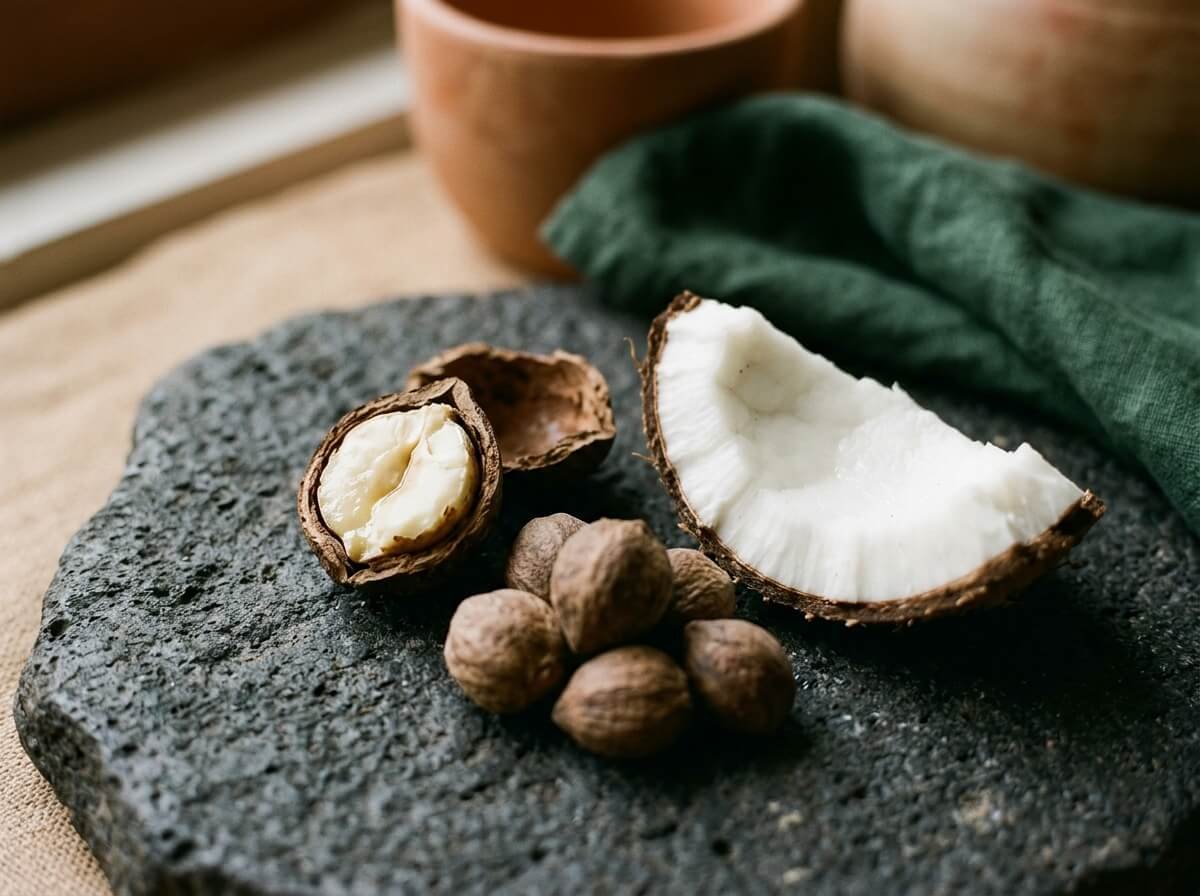
Plenty of oils that get lumped into the same worried conversation are not seeds at all. A nut oil comes from the kernel inside a hard shell, botanically distinct tissue with its own fatty acid signature, often richer in oleic acid and naturally occurring antioxidants than a true seed. A fruit oil is pressed from the flesh or pulp surrounding the seed, not the seed itself, coconut and olive being the two most familiar examples. A kernel butter, like illipe, is extracted from the fatty kernel of a fruit’s seed casing through simple pressing, closer in behavior to a butter than to a refined industrial oil.
The distinction is not academic trivia. It shows up in how an oil behaves on skin, how stable it is on a shelf, and how it was likely processed to get from tree to bottle. A candlenut kernel, cold-pressed by hand, has almost nothing in common with a soybean run through an industrial solvent extraction line, even though both are technically “plant oils.” Understanding which skincare ingredients actually deserve caution starts with this kind of precision, not with a blanket list of scary-sounding names.
One more wrinkle worth knowing: not every “clean beauty” darling is actually seed-oil-free. Grapeseed oil, a staple in many natural skincare lines, is exactly what its name says, a seed oil, pressed from grape seeds left over from winemaking. It is high in linoleic acid and oxidizes relatively quickly once opened, the same properties that make refined seed oils a concern in the first place. A product can carry a clean, botanical-sounding name and still be built on the ingredient the conversation is questioning. Reading past the marketing name to the actual botanical source is the only reliable way to know.
The Balinese oils that were seed-oil-free before it was a trend
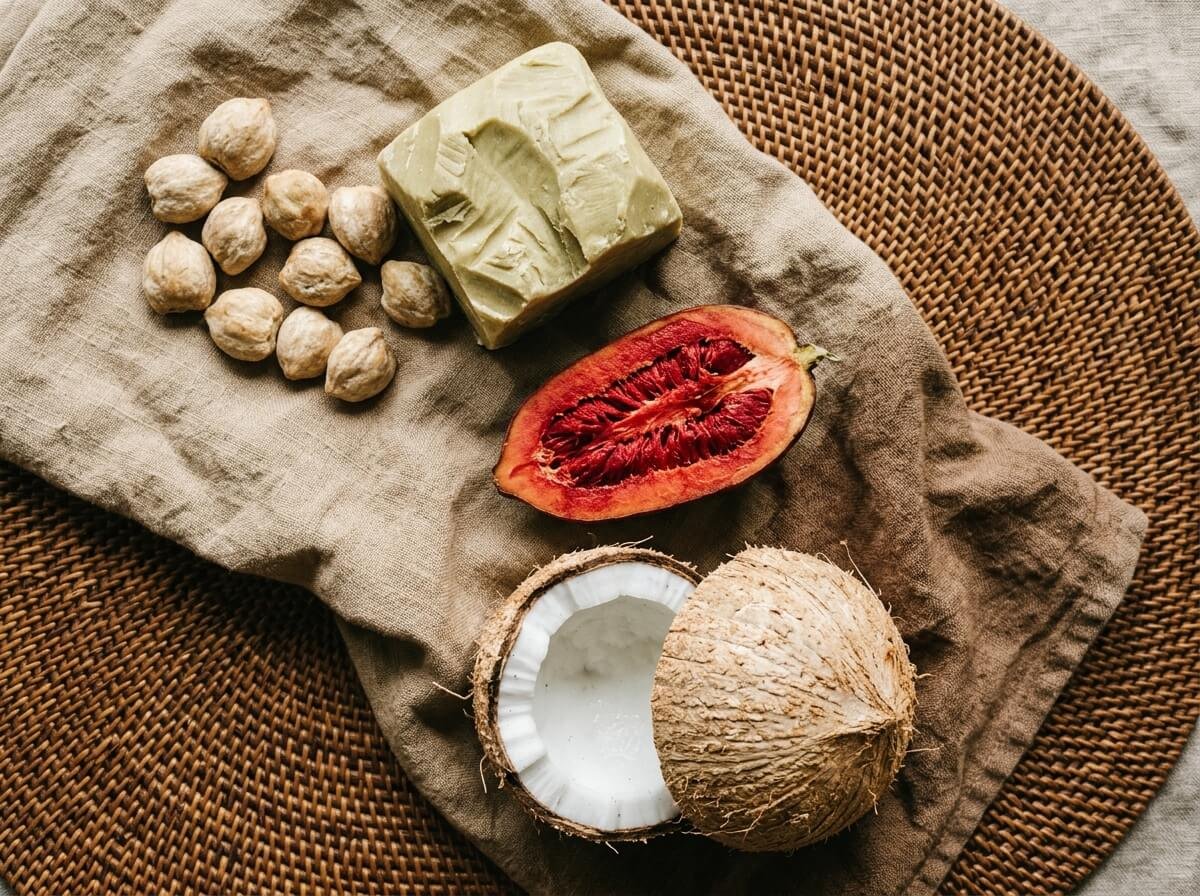
Four ingredients carry most of the Utama Spice line, and all four sit outside the seed oil category by botany, not by marketing choice.
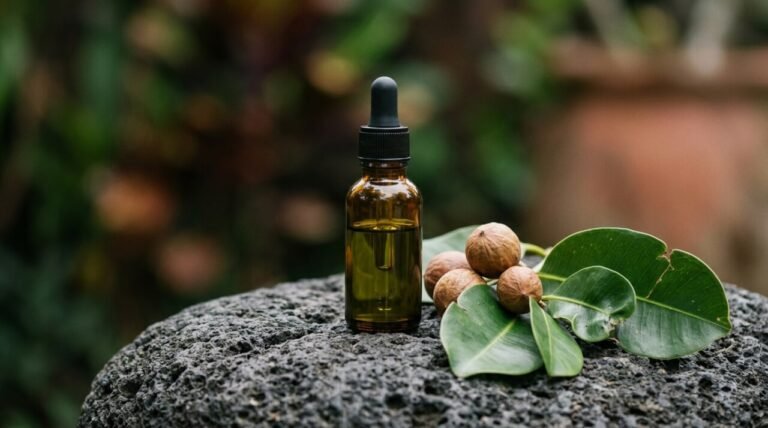
Kukui oil comes from the candlenut, a Pacific-origin nut with a long history in Balinese ritual use, traditionally massaged into skin and hair to restore moisture after sun exposure. It is a kernel oil, rich in linoleic and linolenic fatty acids, and lightweight enough to absorb without the greasy finish some heavier oils leave behind. We cover the full kukui oil benefits for skin in more depth, including who it suits best.
Illipe butter (Shorea stenoptera) is wild-harvested in Kalimantan’s rainforest through our Forestwise partnership, by families who have worked the same groves for generations. It comes from the kernel inside the fruit’s seed casing, pressed rather than refined, and behaves like a firm, stable butter with a melting point close to skin temperature. It is the base of both our Pure Energy and Bliss body butters, which is why those formulas hold their texture without the waxy build-up some synthetic thickeners leave behind.
Buah Merah, or red fruit, comes from Papua and carries a long tradition in Indonesian wellness use. It is a fruit oil, pressed from the pulp rather than a seed, sourced through regenerative agricultural practices that support the farmers who grow it. Read more about Buah Merah oil and the communities behind it.
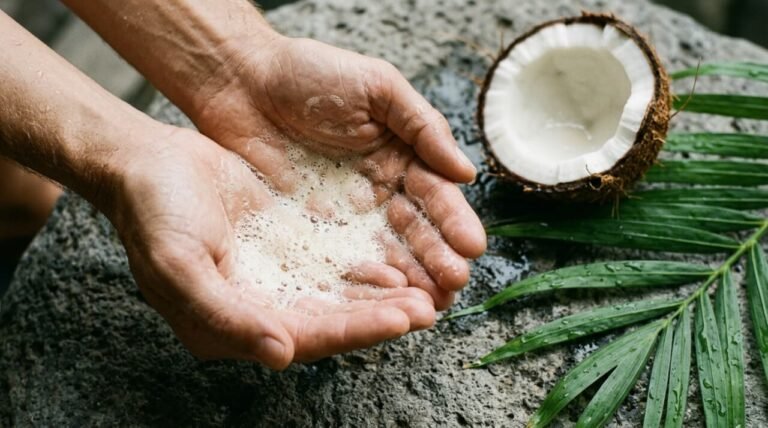
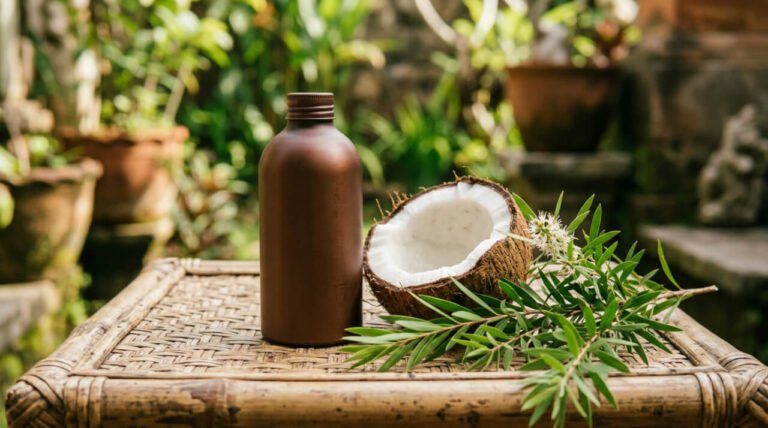
Coconut oil is the most versatile carrier across our entire range, sourced from Bali coconut plantations through our Aluan partnership and cold-pressed rather than heat-refined. Botanically, coconut oil comes from the fruit’s meat, not its seed, and its saturated fatty acid profile makes it naturally shelf-stable in a way that many true seed oils are not. It shows up across our face, body, and hair lines, including our own Virgin Coconut Oil, and you can explore the full range in our Balinese face oil guide.
None of this is a coincidence. It reflects what was available, trusted, and passed down in Bali long before “seed oil free” became a label to chase.
How we source oils that were never seed oils to begin with
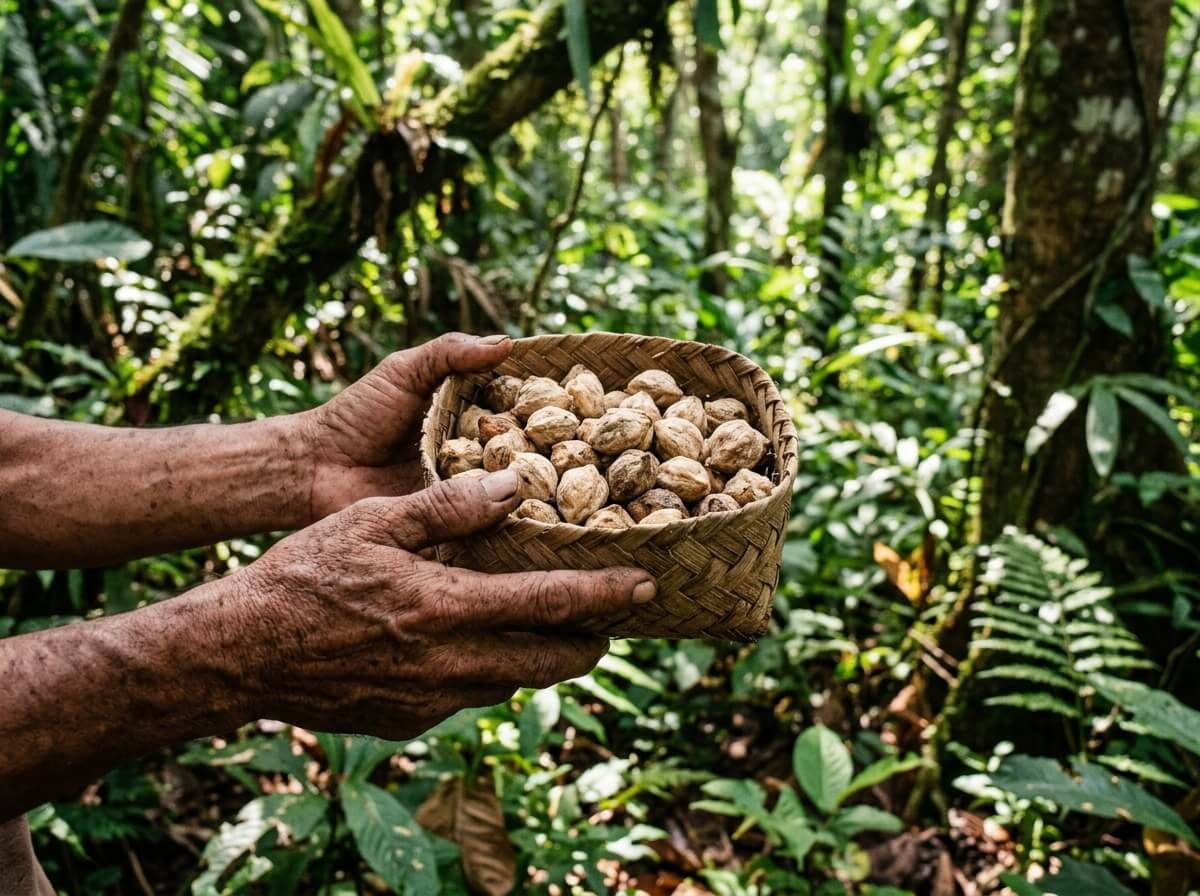
Sourcing shapes an oil as much as botany does. An oil that starts clean can still end up degraded, oxidized, or diluted with cheaper fillers by the time it reaches a bottle, which is why the how matters as much as the what.
Our illipe butter and kukui oil are wild-harvested rather than plantation-grown, through the Forestwise partnership in Kalimantan. Wild harvesting means the trees are not cultivated in monoculture rows; they grow as part of an intact forest system, and the families who collect the fruit and nuts have worked the same groves for generations. Protecting the forest protects the supply, so there is a direct incentive to keep the ecosystem intact rather than clear it for higher-yield plantings. It is a slower, less predictable supply chain than industrial seed oil production, and that is the point.

Our coconut oil comes through the Aluan partnership with Bali coconut farmers, cold-pressed to preserve the fatty acids and natural antioxidants that high-heat refining destroys. Cold-pressing costs more and yields less oil per coconut than solvent extraction, which is exactly why most mass-market coconut oil is not cold-pressed.
None of this is packaged as a certification badge or a marketing claim layered on after the fact. It is simply how these ingredients have moved from grove to bottle since 1989, when Melanie Templer began blending them in her Ubud kitchen. Tradition, in this case, was already doing the work that a seed-oil-free ingredient audit would later ask brands to do.
There is a quieter reason this sourcing model holds up under scrutiny: it is slow by design, and slow is expensive. Wild-harvested illipe and kukui cannot be scaled the way a plantation monocrop can, which is precisely why so few brands build a full product line around them. Choosing ingredients this way is not a shortcut to a trend-friendly label. It is a longer, costlier supply chain that happens to land on the right side of a debate it was never trying to win.
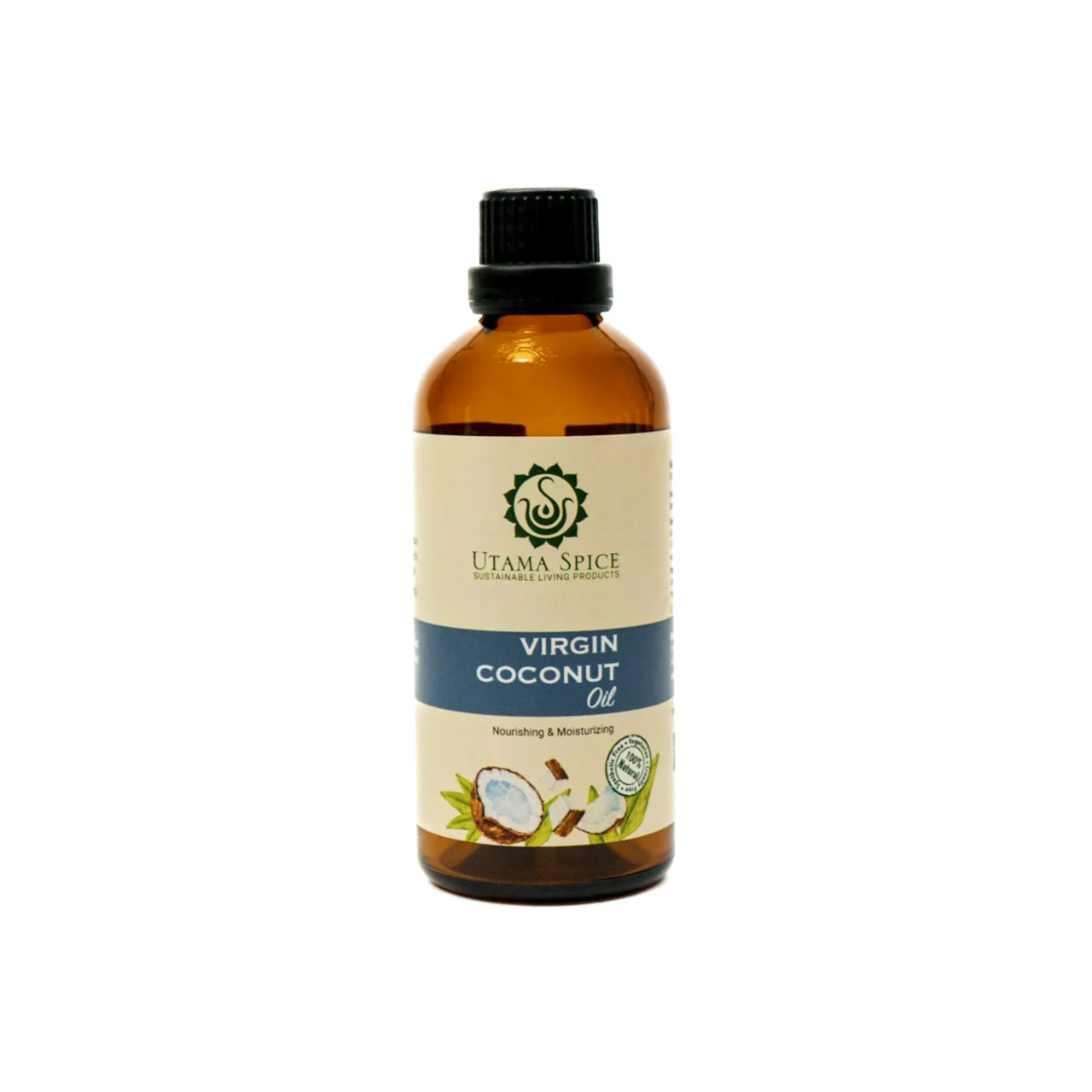
One ingredient, never a seed oil
Our Virgin Coconut Oil is cold-pressed from Bali coconut meat, not refined from a seed. Use it as a face oil, body oil, or hair treatment, whichever your skin asks for that day.
How to read a label and spot a hidden seed oil

Ingredient lists use Latin botanical names (INCI names), which is exactly why seed oils hide in plain sight. Helianthus Annuus is sunflower. Glycine Soja is soybean. Brassica Napus or Brassica Campestris is canola. Zea Mays is corn. Gossypium Herbaceum is cottonseed. Carthamus Tinctorius is safflower. None of these announce themselves as “seed oil” in English on the label, so a product can market itself as clean while still leaning on one of these as a primary carrier.
A few practical habits make this easier. Ingredients are listed in descending order by concentration, so check what sits in the first five entries rather than scanning the whole list. Search the Latin name if you do not recognize it; a quick search will tell you the plant family in seconds. Be wary of “vegetable oil” or “plant oil” as a vague catch-all term, since manufacturers sometimes use it precisely because it avoids naming a specific seed oil. And do not assume “natural” or “plant-based” on front-of-pack copy tells you anything about which plant, since sunflower and coconut are both plants and behave completely differently on skin.
It also helps to know what you are looking for instead, not just what to avoid. Cocos Nucifera is coconut. Shorea Stenoptera is illipe. Aleurites Moluccanus is kukui, or candlenut. Pandanus Conoideus is Buah Merah. None of these are seed oils, and all four are traceable to a specific place, harvest, and community rather than a commodity market.
A quick decoder for the names that show up most often on ingredient lists:
- Helianthus Annuus Seed Oil — sunflower seed oil, a true seed oil.
- Glycine Soja Oil — soybean oil, a true seed oil.
- Vitis Vinifera Seed Oil — grapeseed oil, a true seed oil despite its clean-beauty reputation.
- Prunus Amygdalus Dulcis Oil — sweet almond oil, a nut oil, not a seed oil.
- Cocos Nucifera Oil — coconut oil, a fruit oil, not a seed oil.
- Shorea Stenoptera Butter — illipe butter, a kernel butter, not a seed oil.
Building a seed-oil-free skincare routine with Balinese botanicals

A seed-oil-free routine does not require replacing every product overnight. Start with the products you apply most often and leave on the longest, since those carry the highest exposure.
- Cleanser: oil-based cleansers often lean on cheap seed oil carriers. Look for coconut or olive-based formulas instead, and layer your face serum or face oil afterward while skin is still slightly damp.
- Face oil or moisturizer: this is the highest-exposure step in most routines. Our Balinese face oil range is built on kukui and coconut rather than sunflower or safflower carriers, which are common in mass-market formulas.
- Body butter: our Pure Energy and Bliss body butters are both built on illipe butter and coconut oil, cold-pressed and wild-harvested rather than refined from soy or canola.
- Hair oil: many hair oils use cheap sunflower or safflower as filler. Coconut oil absorbs into the hair shaft rather than just coating it, which is part of why it has been a Balinese staple for generations.
Sequencing matters as much as ingredients. If you are unsure what order to apply a multi-step routine in, our guide to how to layer natural skincare walks through the logic, thinnest to thickest, water-based before oil-based. And if you are transitioning your hair care at the same time, our natural shampoo guide covers what to look for beyond the seed oil question, including sulfates and silicones.
Progress over perfection applies here too. Swapping one product at a time, starting with what you use daily, gets you further than an overnight overhaul that stalls out by week two.
Frequently asked questions about seed oil free skincare
Is seed oil actually bad for skin?
Not inherently. The concern is less about the seed origin itself and more about oxidative stability and processing. A refined, high-linoleic seed oil can oxidize faster once exposed to air and light, which may irritate reactive or acne-prone skin over time. For most skin types, the bigger factor is how minimally an oil was processed, not whether it technically came from a seed.
Is coconut oil a seed oil?
No. Coconut oil is pressed from the meat of the coconut fruit, not from a seed, which is a common point of confusion since a coconut technically contains a seed inside its husk. The oil used in skincare comes from the fruit’s flesh.
What is the difference between a nut oil and a seed oil?
A nut oil is pressed from the kernel inside a hard shell, like kukui or candlenut, while a seed oil comes from the small embryo-and-food-store structure of a plant, like sunflower or soybean. The two have different fatty acid profiles and different oxidative stability, which is why they behave differently on skin.
How do I know if a product is really seed-oil-free?
Check the full ingredient list, not the front-of-pack claim. Look for Latin names you do not recognize and search them individually. A brand that lists Cocos Nucifera, Shorea Stenoptera, or Aleurites Moluccanus by name, rather than hiding behind “plant oil,” is usually one that is comfortable with what is actually in the bottle.
Does switching to seed-oil-free skincare help acne?
It can help for some people, though it is not a guaranteed fix. Acne has several drivers, and comedogenicity is only one of them. Switching a high-linoleic, fast-oxidizing seed oil for a more stable, lower-comedogenic option like coconut or kukui may reduce one contributing factor, but it will not resolve acne caused by hormones, diet, or a mismatched routine. Treat it as one honest lever among several, not a single fix.
Is grapeseed oil a seed oil?
Yes, despite its common presence in natural and clean beauty formulas. Grapeseed oil is pressed from grape seeds and shares the same high-linoleic, fast-oxidizing profile as other seed oils. A product being labeled “clean” or “natural” does not automatically mean it is seed-oil-free.
Seed oil free skincare, done honestly, is not a new formula chasing a new headline. For a brand rooted in Bali since 1989, it has simply been the ingredient list all along, kukui, illipe, Buah Merah, and coconut, sourced the same patient way for thirty-five years. What you give the forest, the farmers, and the families who harvest it, you get back in what goes on your skin.