Kukui oil benefits for skin: the Indonesian healing oil with a linoleic profile that dry and sun-stressed skin rarely gets
If you have ever pressed a drop of kukui oil into your skin and felt it disappear in seconds, you have experienced something the Pacific has understood for a long time. Kukui oil benefits for skin are not marketing copy. They are rooted in a specific fatty acid profile that sets this oil apart from most botanicals in natural skincare, and they explain why dry, sun-stressed, and barrier-compromised skin respond so well to it.
Kukui oil comes from the candlenut tree, Aleurites moluccanus, and it has been part of Hawaiian and wider Pacific wellness practice for generations. In Bali, it is equally known, used in traditional oiling rituals for scalp and skin as a nourishing, protective base. What makes it genuinely different from other botanical oils is not tradition alone. It is chemistry: specifically, a linoleic acid content that few plant oils match, paired with alpha-linolenic acid in proportions that help the skin barrier repair itself from the inside of its outermost layer.
This guide covers what kukui oil is, why its fatty acid profile matters more than most ingredient lists acknowledge, who benefits most from it, how to use it in a real skincare routine, and how to source it with confidence. No inflated claims, no miracle language. Just the ingredient, honestly explained.
What is kukui oil? The candlenut’s Pacific and Balinese roots
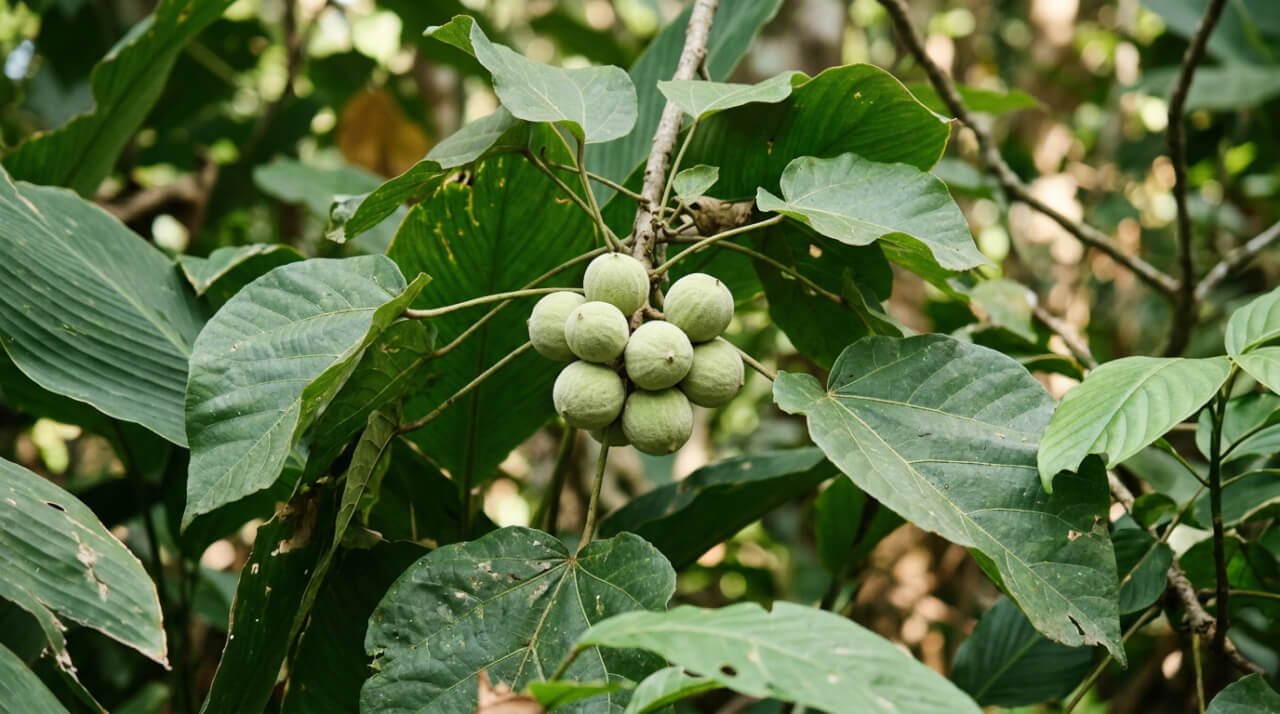
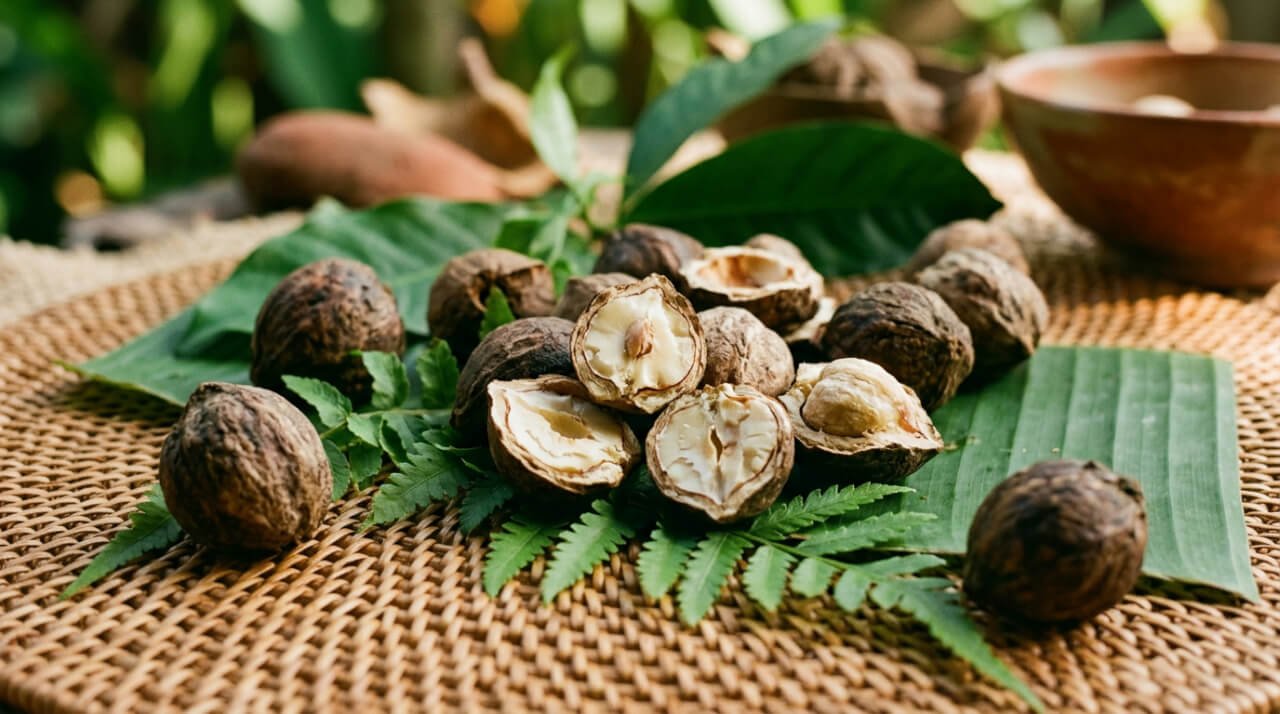
The kukui tree is Hawaii’s official state tree, but its range extends across tropical Asia and the Pacific, including Indonesia and Bali. The tree produces large, round nuts with a hard shell encasing an oil-rich kernel. Cold-pressing those kernels yields kukui oil: a clear to pale golden liquid with an almost water-like consistency that absorbs rapidly into skin without the heaviness associated with many plant oils.
In traditional Hawaiian practice, kukui oil was applied to the skin of newborns and elders alike, used to soften, protect, and soothe sun-exposed or irritated skin. It was worked into the scalp as part of hair and skin care rituals, and its protective properties made it a practical companion for people who spent long hours in the sun, wind, and saltwater of the Pacific. The oil’s record of use is not incidental. It is a cultural acknowledgement of what the ingredient actually does.
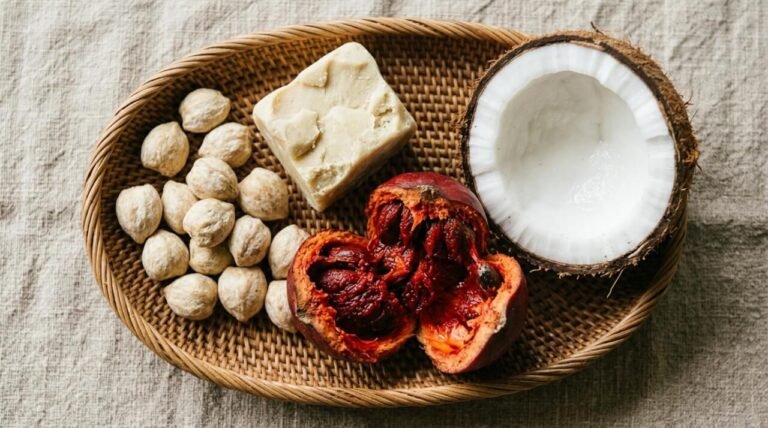
In Bali and across Indonesia, the candlenut, known locally as kemiri, has a parallel history. It appears in traditional Balinese herbal practice as a nourishing agent for hair and scalp. The Forestwise partnership, through which Utama Spice sources wild-harvested botanicals from Kalimantan’s rainforest, reflects how seriously the brand takes provenance. Wild-harvesting from managed rainforest ecosystems protects both the ingredient quality and the communities that depend on that forest.
The name kukui comes from the Hawaiian word for light. The nuts were once used as candles, strung on palm midribs and burned for illumination. That same oil, centuries later, finds its most studied application on the skin barrier. You could argue that what the Pacific found by observation, the science of fatty acids has since explained.
If you want a deeper introduction to the ingredient’s cultural context, we explored kukui oil and its Pacific tradition in an earlier ingredient feature. The science below builds on that foundation.
Kukui oil benefits for skin: the fatty acid science behind the results
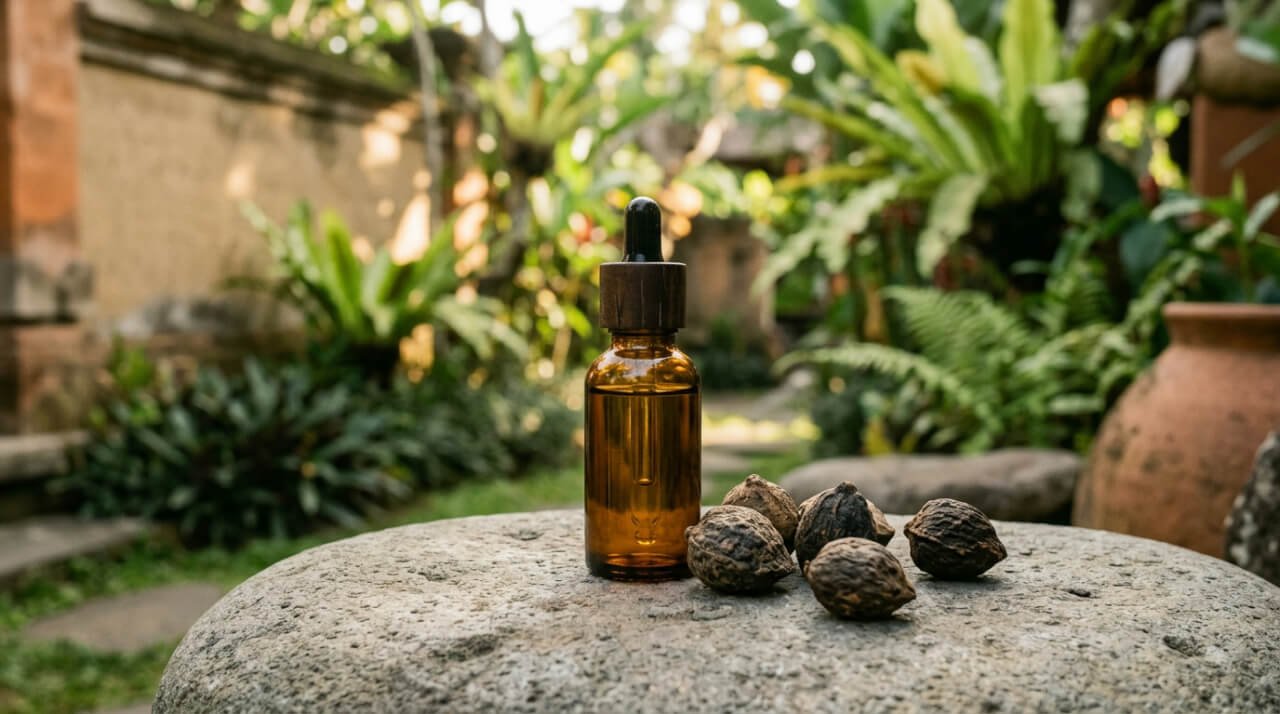
Most ingredient descriptions stop at “rich in fatty acids and vitamins.” Kukui oil deserves a more honest account because its specific fatty acid composition explains almost every benefit attributed to it.
Kukui oil is dominated by two polyunsaturated fatty acids. Linoleic acid (omega-6) makes up roughly 40% of the oil. Alpha-linolenic acid (omega-3) accounts for another 25 to 30%. Together, they comprise more than two thirds of the oil. The remaining fraction is primarily oleic acid (omega-9), with small amounts of saturated fats.
This matters because polyunsaturated fatty acids have kinked carbon chains. Unlike the straight chains of saturated fats, which stack closely together and create heavier textures, the kinked chains of kukui’s lipids cannot pack tightly. The result is an oil that spreads easily, penetrates quickly, and leaves no greasy film. This is not a processing artifact. It is the direct consequence of molecular structure.
At the skin barrier level, linoleic acid plays a structural role that goes beyond simple moisturisation. The stratum corneum, the outermost layer of the skin, is held together by a lipid matrix that includes ceramide-1 linoleate, a ceramide molecule built from linoleic acid. When skin is deficient in linoleic acid (a common state in dry, barrier-compromised, or acne-prone skin), this ceramide pathway is disrupted, and the barrier becomes leaky. Transepidermal water loss increases. Irritants enter more easily. Skin that is reactive, tight, or prone to breakouts is often showing the downstream effects of this deficiency.
Topical application of a linoleic-rich oil like kukui provides the raw material the stratum corneum needs to reinforce its own lipid matrix. This is not the same as occluding the surface with a heavy film. It is a structural contribution to the barrier itself.
Alpha-linolenic acid, the omega-3 component, brings a different benefit. It is an anti-inflammatory precursor. On sun-stressed or chronically reactive skin, it helps moderate the inflammatory signalling that sustains redness and sensitivity. The combination of linoleic acid rebuilding the barrier and alpha-linolenic acid calming inflammatory response is why kukui oil tends to work noticeably well on skin that has been overexposed, irritated, or stripped.
Kukui oil also carries vitamins A, C, and E in its natural form. Vitamin E (tocopherol) acts as a lipid-soluble antioxidant, slowing oxidative damage in the skin’s lipid layer. Vitamin A supports cell turnover. Vitamin C assists collagen synthesis. These are not present in high concentrations, but they contribute to why kukui oil performs better over time than a pure fatty acid supplement would suggest.
For those who study how face oils and face serums compare in delivering active ingredients, kukui oil is a useful reference point. Its benefits are primarily structural and anti-inflammatory rather than treatment-oriented, which makes it a strong supporting ingredient rather than a standalone corrective.
Which skin types benefit most from kukui oil

Kukui oil is genuinely one of the more versatile facial and body oils in terms of skin-type compatibility. Its low comedogenic rating (typically rated one or two on a scale of five, where five is highly pore-clogging) means it suits most skin types without the risk of congestion that accompanies heavier oils.
Dry and dehydrated skin
This is where kukui oil performs most visibly. The linoleic acid deficit is most pronounced in chronically dry skin, and kukui’s rich concentration provides what the barrier needs to retain moisture more effectively. Applied to damp skin after bathing (the same principle behind our post-shower body oil ritual), it helps seal hydration in rather than simply coating the surface. Our Rose Allure Body Oil, formulated with botanical carrier oils for Balinese-climate skin, works on this same principle of layering oil over damp skin for sustained hydration.
Sun-stressed and environmentally damaged skin
UV exposure and environmental pollution generate free radicals that degrade the skin’s lipid matrix. Kukui oil’s tocopherol content provides some antioxidant support, and its alpha-linolenic acid fraction helps manage the post-exposure inflammatory response. For skin that spends time outdoors (particularly in tropical climates), a regular application of kukui oil after sun exposure is a straightforward, evidence-adjacent restorative step.
Sensitive and reactive skin
The same anti-inflammatory mechanism that helps sun-stressed skin benefits skin that is generally reactive. Kukui oil does not contain known allergens in high concentrations (unlike some essential oil-heavy formulations), and its lightweight texture avoids the occlusion that can sometimes worsen sensitivity in humid climates. It is one of the few oils that works well under conditions where heavier options feel suffocating.
Acne-prone and oily skin
This surprises some people, but acne-prone skin is frequently linoleic-acid deficient. Research has shown that comedonal acne is associated with a sebum composition that is low in linoleic acid relative to oleic acid. Applying a linoleic-rich oil like kukui does not worsen this imbalance. It can, over time, help correct it. The oil’s non-comedogenic profile means it is unlikely to physically block pores, which makes it a more careful choice than coconut oil or olive oil for oily skin types.
Mature skin
As skin ages, its natural lipid production slows and barrier function declines. Linoleic acid supplementation through topical application helps maintain the ceramide-1 linoleate structure that diminishes with age. Kukui oil’s antioxidant vitamins provide additional support for an environment where collagen synthesis and cell turnover slow naturally. This is not an anti-aging claim in the exaggerated sense. It is a structural maintenance argument.

How to use kukui oil in your skincare routine
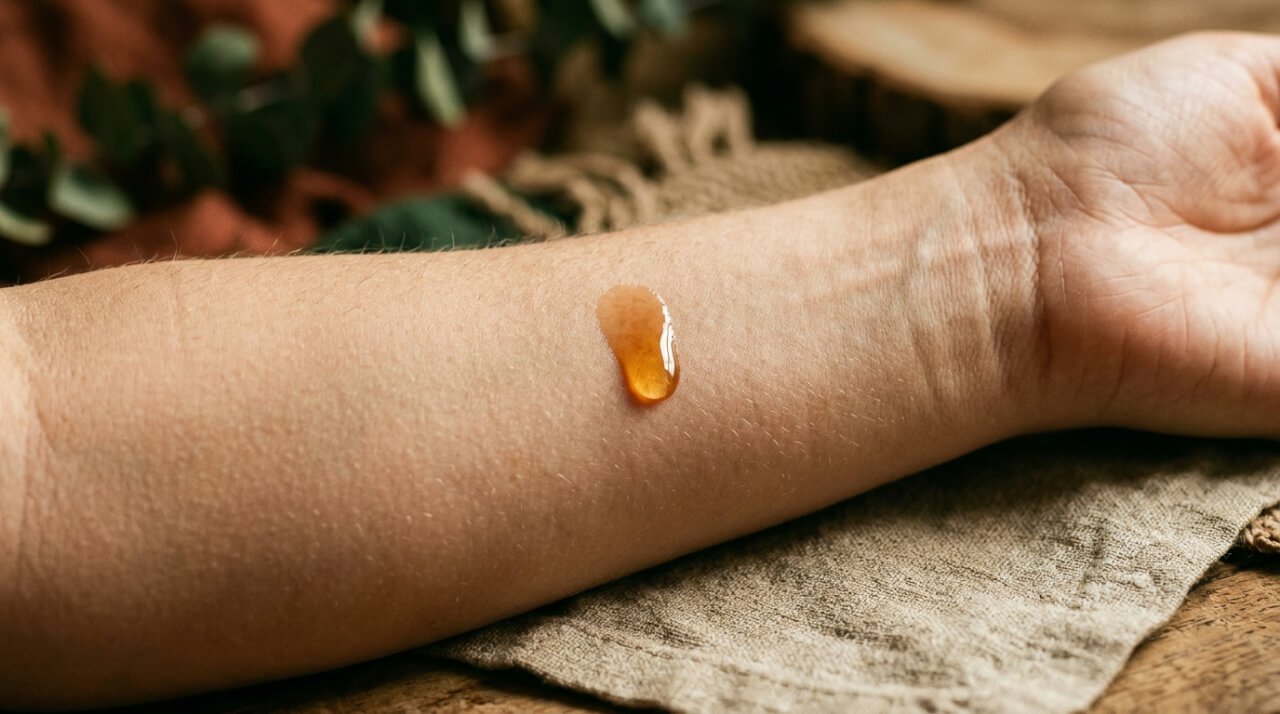
Kukui oil is one of the easier oils to incorporate because its light texture does not compete with other products. Here are the most practical ways to use it.
As a standalone face or body oil
Three to five drops warmed between the palms, then pressed gently into damp skin immediately after cleansing. Damp skin allows the oil to spread more evenly and slows water loss more effectively than applying to dry skin. On the face, use fingertips to press rather than rub. On the body, apply after showering while the skin still holds moisture. This is the same principle behind facial massage with face oil: warmth, pressure, and a little time let the oil integrate rather than just sitting on the surface.
As a carrier in an essential oil blend
Kukui oil’s light texture makes it an excellent carrier for essential oils. Because it absorbs quickly without leaving a film, it does not interfere with the delivery of aromatic actives into the skin. For a calming blend, combine kukui with two drops of lavender and one drop of blue tansy per 10ml. For a warming muscle blend, mix with a few drops of ginger or black pepper essential oil. Our guide on how to dilute essential oils safely has the dilution ratios for face and body use.
In oil cleansing
Kukui oil works well in the oil cleansing method, where an oil is massaged into dry skin and then removed with a warm cloth. Its non-comedogenic rating makes it a safer choice for this technique than saturated oils, and its linoleic content is particularly suited to skin that struggles with congestion. Mix it with a small amount of castor oil (which emulsifies more readily) for a balanced cleansing blend.
Where it fits in a layered routine
In a routine with multiple products, oils generally go last or near-last, after water-based serums and before SPF. Because kukui oil absorbs so readily, it does not create the occlusive layer that some heavier oils produce. This means it can sit comfortably under a light moisturiser in drier climates, or function as the final step on its own in humid conditions. For more on sequencing, our guide to how to layer natural skincare covers the logic behind each step.

Kukui oil in a Balinese small-batch formula
Our Herbal Silk Hair Oil pairs kukui oil with Buah Merah from Papua and castor oil in a formula that works on the scalp, which is skin with all the same barrier and nourishment needs. Wild-harvested actives, hand-blended in Bali since 1989.
Kukui oil vs argan oil vs coconut oil: an honest comparison

Understanding where kukui oil fits relative to other popular botanical oils helps you choose more precisely for your skin type and routine. The differences are real and they matter.
Kukui oil vs argan oil
Both are lightweight and well-tolerated by most skin types. The key difference is in fatty acid composition. Argan oil is rich in oleic acid (around 45%) with roughly 35% linoleic acid. Kukui oil reverses this ratio: it leads with linoleic acid (around 40%) and has more alpha-linolenic acid than argan does. This makes kukui oil the stronger choice for barrier repair and inflammatory calming, while argan oil is slightly better at maintaining the softness and suppleness of skin with a normal-to-dry profile. If you have inflammatory acne, breakout-prone, or sun-stressed skin, kukui oil is the more targeted option. For normal-to-dry skin without specific concerns, either works well.
Kukui oil vs coconut oil
Coconut oil (and a well-sourced option like our cold-pressed Virgin Coconut Oil) is primarily saturated fat (lauric acid makes up around 50% of the profile). Saturated fats have straight carbon chains that pack closely together, which is why coconut oil is solid at room temperature and feels noticeably heavier on the skin. Its comedogenic rating is higher (rated around four out of five), making it a risk for acne-prone skin. Coconut oil is a strong occlusive and works well on the body for very dry skin or as a massage medium, but it is not equivalent to kukui oil at the skin barrier level. Kukui’s polyunsaturated fatty acids integrate into the stratum corneum’s ceramide structure in a way that lauric acid does not. These are different mechanisms, not interchangeable ones.
Kukui oil vs jojoba
Jojoba is technically a liquid wax, not an oil. Its molecular structure closely resembles human sebum, which makes it an excellent regulator for oily skin and a stable, long-lasting carrier. It does not absorb into the skin the same way a fatty acid-rich oil does. Kukui oil provides actual fatty acid nutrition to the barrier; jojoba provides surface regulation. For oily skin that wants an oil without heaviness, jojoba is the safer first choice. For dry or barrier-compromised skin, kukui’s fatty acid delivery is more relevant. Many people use both in combination, with jojoba as the base and kukui adding the linoleic depth.
What to look for when sourcing kukui oil

Kukui oil quality varies significantly between sources. The fatty acid profile that makes it effective is preserved through careful extraction and storage. Here is what to look for.
Cold-pressed extraction
Heat damages polyunsaturated fatty acids. A solvent-extracted or heat-processed kukui oil may have a similar fatty acid label but a degraded therapeutic profile. Cold-pressed means the oil was extracted at temperatures that preserve the natural lipid structure. This is the baseline requirement. If the label does not say cold-pressed, assume it was not.
Dark glass packaging
Polyunsaturated oils oxidise when exposed to light and air. Kukui oil sold in clear plastic or clear glass bottles has a shorter effective life and may arrive already partially degraded. Look for dark glass (amber or cobalt) with a tight-fitting cap. Store your oil away from direct sunlight and heat after opening, and use it within six to nine months of opening for full potency.
Smell and clarity
Fresh, quality kukui oil has a very mild, slightly nutty scent. It should be clear to pale golden in colour. A rancid or strongly fishy smell (which polyunsaturated oils develop as they oxidise) indicates the oil has degraded. Cloudiness can indicate refrigeration (which is fine, it clears at room temperature) but very heavy cloudiness in warm conditions may suggest adulteration.
Sourcing transparency
The brands that can tell you where their kukui oil came from, how it was harvested, and who harvested it are the brands whose oil is likely to be what the label says. Wild-harvesting, like the Forestwise model used for Utama Spice’s illipe butter and kukui oil, connects quality to accountability. The community harvesting the nuts has an interest in maintaining the trees and the ecosystem they depend on. That is not just an ethical argument. It is a quality-control argument.
Frequently asked questions about kukui oil benefits for skin
Can you use kukui oil on your face every day?
Yes, for most skin types. Its low comedogenic rating and anti-inflammatory fatty acid profile make it a reasonable daily face oil, particularly for dry, sensitive, or barrier-compromised skin. If you have very oily, acne-prone skin, patch test first and apply in small amounts, focusing on drier areas rather than the whole face.
Is kukui oil the same as candlenut oil?
Yes. Candlenut oil, kemiri oil (in Indonesian), and kukui oil are names for the same product: oil pressed from the kernels of Aleurites moluccanus. The different names reflect different regional traditions working with the same botanical. Hawaiian practitioners called the tree kukui; Balinese and Indonesian traditions called the nut kemiri. The ingredient is identical.
How does kukui oil help with acne?
Acne-prone skin is frequently low in linoleic acid relative to oleic acid in its sebum. This imbalance leads to thicker, stickier sebum that blocks follicles more readily. Kukui oil’s high linoleic content can help, over time, correct this imbalance when applied topically. It also does not block pores in the way that lauric-heavy oils like coconut oil can. The result is an oil that supports barrier health without adding to congestion risk. It is not an acne treatment in the clinical sense, but it is a sensible choice for acne-prone skin that needs oil-based moisture.
Does kukui oil benefit hair as well as skin?
Yes. The scalp is skin, with the same barrier and nourishment needs as the face or body. Kukui oil penetrates the hair shaft and nourishes the scalp, which is why it appears in quality hair oils alongside other Balinese botanicals. Our natural hair oil guide covers how botanical oils work on both the scalp and the strand, and why a linoleic-rich oil like kukui has a place in both hair and skin care.
Is kukui oil safe for sensitive skin?
Generally yes. Its anti-inflammatory alpha-linolenic acid fraction makes it a well-tolerated option for reactive skin. It does not contain common allergens at significant concentrations, and its lightweight texture avoids the occlusive heaviness that sometimes worsens sensitivity in humid or inflamed conditions. As with any new oil, a patch test on the inner arm for 24 hours before full-face use is a sensible precaution.
Where does Utama Spice source its kukui oil?
Kukui oil used in Utama Spice formulations is sourced through the Forestwise partnership, which works with communities in Kalimantan’s rainforest to wild-harvest botanical ingredients from sustainably managed ecosystems. This sourcing model protects the forest, supports the harvesters with fair income, and ensures ingredient quality through traditional harvesting practice rather than industrial extraction.
Kukui oil benefits for skin are most clearly seen in skin that has been asking for linoleic acid and not getting it: dry, reactive, sun-stressed, or congested skin that has been treated with heavy occlusives or stripped by harsh cleansers. What the Pacific identified through centuries of use, the science of fatty acids has since explained. The two accounts are compatible, and together they make a more complete case for an ingredient that earns its place in a considered skincare routine.
If you are building a more intentional natural skincare practice, you may also find our guides on blue tansy oil for sensitive skin and reading ingredient labels without the fear useful companions to this one. The best skincare decisions come from understanding what you are actually applying and why.