Coconut body wash: how to choose a clean one (and what most labels hide)
Coconut body wash sells itself with one of the most pleasant images in personal care: a halved coconut, a soft tropical scent, a feeling that the bottle in your hand is somehow closer to the earth than the supermarket alternatives. Almost every label uses the same shorthand. Very few of them are honest about what is in the bottle. If you have ever wondered whether a coconut body wash is genuinely made with coconut, or whether the coconut on the front is doing more marketing than washing, this guide is for you. It is the formulator’s view, written in Bali, where coconut has been part of daily ritual for generations.
Below, we walk through what coconut body wash actually is at the chemistry level, what the label rarely tells you, how a real one should feel on the skin, how to use it as part of a wider ritual, and why the bottle it lives in matters as much as the formula inside it. By the end, you should be able to read any coconut body wash label and tell, in under a minute, whether it is craft or theatre.
What a coconut body wash actually means
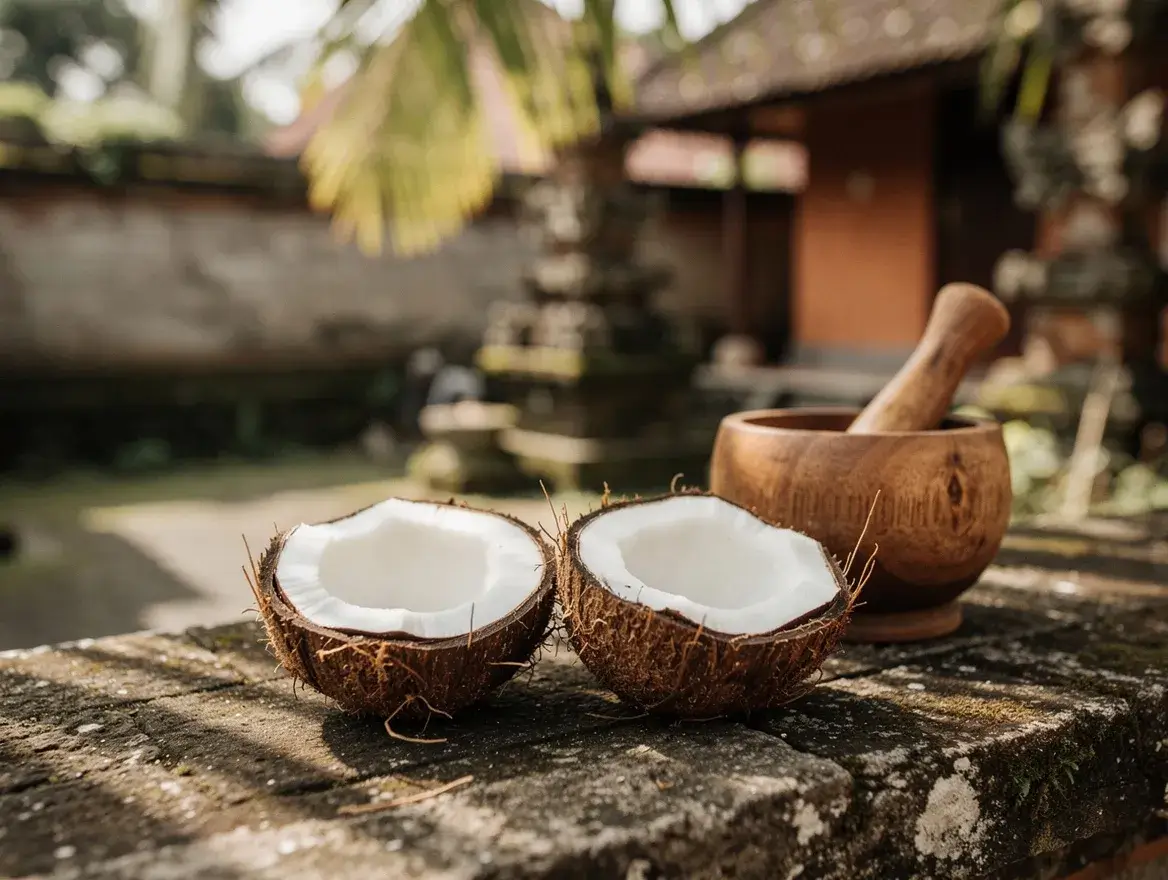
A coconut body wash is a liquid cleanser whose primary cleansing surfactant is derived, in some way, from coconut. That is the honest minimum. In practice, the term is used very loosely. A bottle can read “coconut body wash” if it contains synthetic sulfates made far from any coconut grove, with a drop of coconut-scented fragrance and a coconut illustration on the front. It can also read “coconut body wash” if every cleansing molecule inside comes from saponified coconut oil pressed in Sulawesi. Both bottles sit on the same shelf. They are not the same product.
Real coconut-based cleansers fall into two honest categories. The first is true soap, made by saponifying coconut oil with potassium hydroxide to form potassium cocoate, the gentle liquid soap molecule that has been used in Castile-style washes for centuries. The second is coconut-derived surfactants, plant-based molecules like sodium cocoyl isethionate, decyl glucoside, or cocamidopropyl betaine, all of which begin life as coconut oil and are converted into milder cleansers through clean chemistry. Either of these can earn the name. What does not earn the name is a sulfate-based wash with a coconut sticker on the front.
Coconut as an ingredient has carried Balinese personal care for as long as any of us can remember. It is one of the four hero ingredients we work with most often, alongside kukui oil, illipe butter, and Buah Merah. Coconut is so woven into daily life here that the word for coconut, nyuh, appears in temple offerings, kitchen ritual, and the morning bath. When we talk about coconut body wash on this site, we mean the actual material, sourced through our Aluan partnership on Bali’s coconut plantations, cold pressed, and saponified into liquid soap. The marketing version of coconut is a different conversation, and we will get to it.
How coconut oil becomes soap: the saponification step most labels skip
Saponification is the small chemical miracle that turns oil into soap. When you combine coconut oil with potassium hydroxide and water, under heat and time, the triglycerides in the oil split apart. The fatty acids bond with potassium and become a salt. Glycerin, a natural humectant, is released as a by-product. You end up with a clear, slightly amber liquid that lathers gently in water and rinses cleanly off skin. This is real soap. It has been made this way for centuries, and the recipe has not needed to change.
Modern body washes mostly skip this step. They use detergents that mimic the cleansing action of soap without the saponification process, because detergents are cheaper to make and easier to formulate at scale. Sulfates such as sodium lauryl sulfate and sodium laureth sulfate are the most common. They lather aggressively, strip oil thoroughly, and leave skin feeling tight. That tight feeling, marketed for decades as proof of cleanliness, is actually a sign that the wash has stripped too much of the skin’s natural lipid layer.
Saponified coconut oil cleans differently. It lifts dirt and excess oil without breaking the skin barrier. It rinses clean without residue. It leaves skin soft, not squeaky. The same chemistry sits behind our Lavender Liquid Soap, our Lemongrass Liquid Soap, and the Tea Tree Body Wash, which is a Castile-style liquid soap with peppermint and tea tree layered on top of the coconut base. If you want a deeper read on the soap-versus-detergent question, our guide on natural liquid body soap walks through it at length.
Five red flags hiding on coconut body wash labels
The ingredient list on a body wash is the most honest part of the label. The front of the bottle can say almost anything. The ingredient list, by law, cannot. Reading it carefully is the single best skill a conscious shopper can build, and once you know what to look for, the whole shelf reorganizes itself in your eyes. Here are five flags worth knowing.
- Sulfates at the top of the list. Sodium lauryl sulfate (SLS), sodium laureth sulfate (SLES), and ammonium lauryl sulfate are the workhorse detergents of cheap body washes. They strip skin and trigger irritation in sensitive users. If they appear in the top three ingredients, the coconut on the front of the bottle is doing marketing work, not cleaning work.
- PEGs and “-eth” molecules. Polyethylene glycols and any ingredient ending in “-eth” (laureth-7, ceteth-20) are ethoxylated, a process that can leave traces of 1,4-dioxane, a contaminant flagged by the FDA. Cleaner formulations avoid them.
- Synthetic fragrance. “Fragrance” or “parfum” on a label is an umbrella term that can hide dozens of undisclosed compounds, including phthalates, which disrupt endocrine function. A genuinely natural coconut body wash declares its scent ingredients explicitly: essential oils, named botanicals, or a clean “fragrance-free” label.
- Parabens and formaldehyde donors. Methylparaben, propylparaben, DMDM hydantoin, and quaternium-15 are preservatives that the European Union has restricted for good reason. Cleaner alternatives exist: sodium benzoate, potassium sorbate, leucidal liquid.
- Coconut listed below water and synthetics. Ingredient lists run in descending order of concentration. If coconut oil or sodium cocoate appears in the last quarter of a long ingredient list, the wash contains very little of it. The coconut illustration on the front is essentially a flavor name.
A clean coconut body wash should read short. Eight to twelve ingredients is normal. Water, saponified coconut oil (often listed as potassium cocoate or sodium cocoate), a humectant such as glycerin, one or two essential oils, a gentle preservative, and a thickener like guar gum or xanthan. That is most of it. When the list runs to twenty-five lines of synthetic chemistry, the wash is doing something more like industrial degreasing than personal care. There is room for both, but they are not the same product, and the front of the bottle should not pretend otherwise.
How a real coconut body wash should feel, smell, and lather
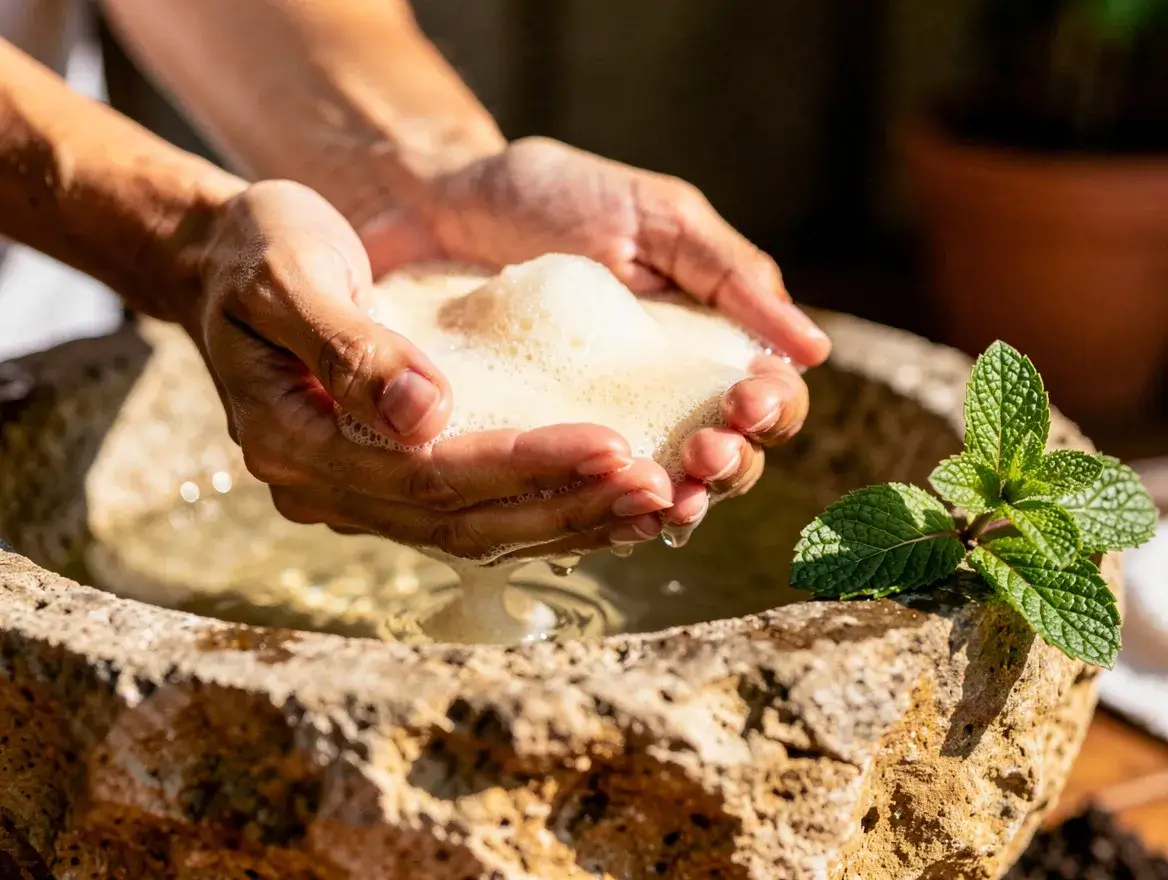
Sensory experience is the second test, after the ingredient list. A real coconut-based body wash behaves differently from a sulfate detergent, and once you have used both, you can tell them apart with your eyes closed. The differences are quiet, but they are consistent.
The lather is smaller and creamier. Saponified coconut oil produces a soft, cloud-like foam rather than the dense pillows of bubbles that sulfates create. Big foam is engineering, not cleansing. If your current body wash erupts into a snowdrift of suds, the suds are doing brand work, not skin work.
The scent is gentler and more dimensional. Essential oils smell like the plant they came from, not the brand idea of the plant. Real lemongrass essential oil is bright and slightly grassy, never sweet candy. Real tea tree is medicinal and crisp, with a faint eucalyptus edge. Real coconut, on its own, has very little scent at all. If a coconut body wash smells like a piña colada from across the room, that is fragrance, not coconut.
The skin afterwards feels soft, not tight. The squeaky-clean feeling so many of us were trained to associate with effective cleansing is actually a stripped skin barrier. A well-formulated coconut body wash rinses clean and leaves the skin smooth and pliable, with no need to apply lotion within thirty seconds to keep it from itching. This is the difference between cleaning skin and damaging it.
It rinses quickly. Real soap rinses cleanly. Detergents linger and need extra water to feel fully gone. If you find yourself rinsing your skin for thirty seconds longer than feels reasonable, the wash is engineered to cling.

If you want to feel the contrast directly, the easiest way is to pick up a Castile-style coconut wash and use it for a week alongside whatever you currently have. Our Tea Tree Body Wash is built on a saponified coconut oil base, layered with peppermint, tea tree, and origanum essential oils. It is the same logic that runs through our Antiseptic Liquid Soap and our Mint Liquid Soap. The base does the cleansing; the botanicals add character and benefit.
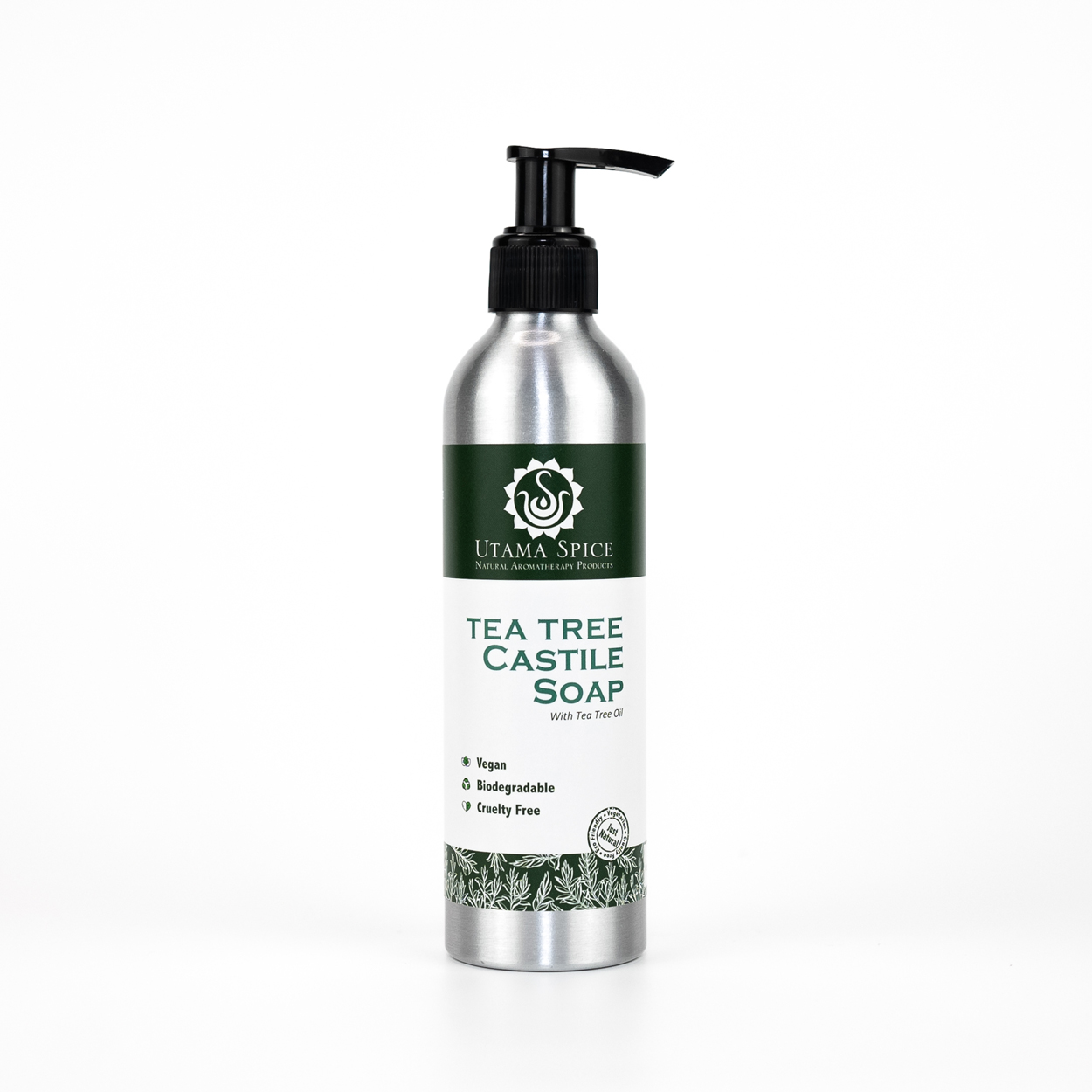
A coconut body wash you can actually read the label on
Our Tea Tree Body Wash is a Castile-style coconut wash, saponified from cold-pressed Balinese coconut oil and finished with tea tree, peppermint, and origanum essential oils. Short ingredient list, refillable bottle, made by hand in Bali since 1989.
How to use coconut body wash: layering, ritual, and skin barrier care
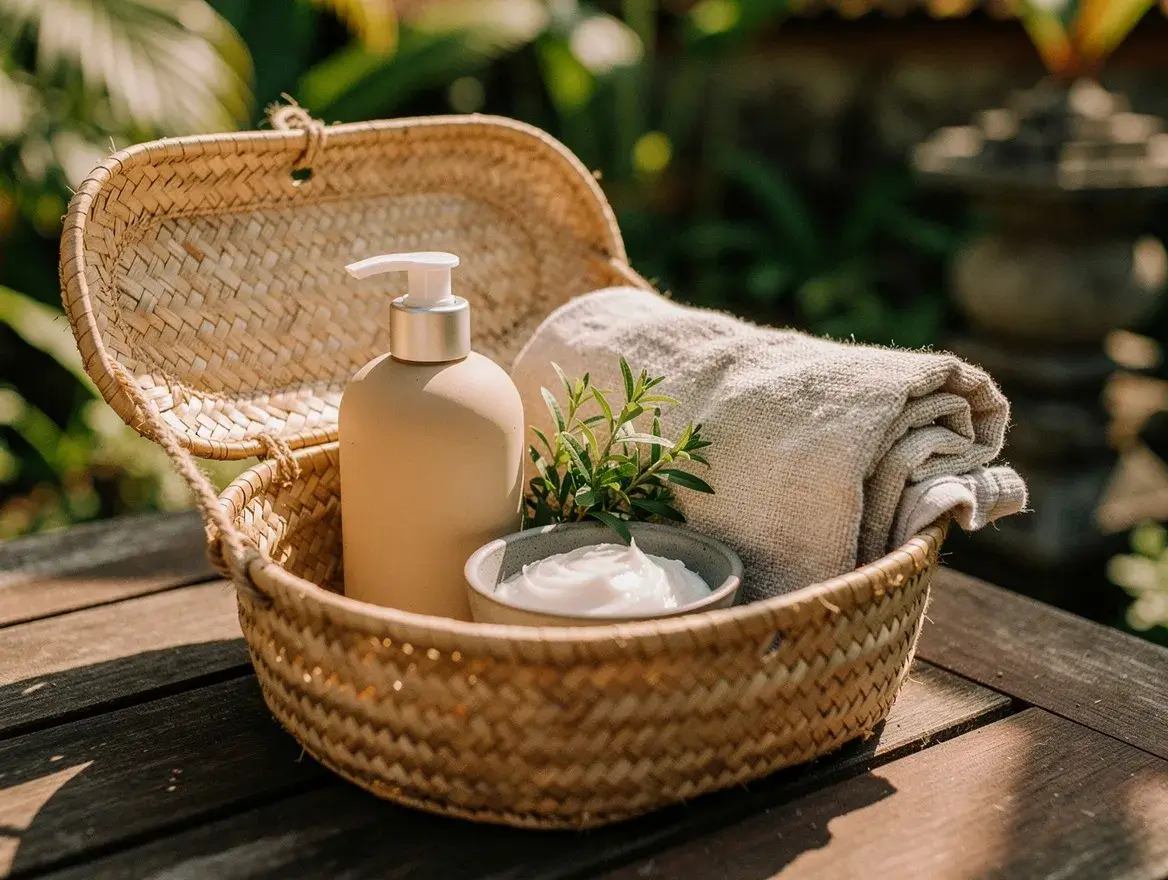
How you use a body wash matters almost as much as what is in it. Most of us were taught to wash quickly, scrub hard, and rinse harder. Balinese ritual takes a different view. The bath is one of the few daily moments where the skin actually has time, water, and warmth all together. Used well, a coconut body wash is the entry point to a small but real wellness ritual that costs nothing extra and takes about an extra minute.
A short, repeatable ritual
- Wet the skin fully before applying. Warm water opens pores and softens the keratin layer, so the wash needs to do less work. A dry body needs more product and harder rubbing to clean.
- Use less than you think. A coin-sized amount of a real coconut body wash will cover a full body. Sulfate washes are formulated to keep frothing as you use more, training us to over-apply. Real soap does not need quantity.
- Lather in your hands first, then onto skin. This activates the surfactant evenly and avoids pooling on sensitive areas. It also feels better.
- Massage rather than scrub. Slow circles wake the skin without abrading it. The whole point of a botanical wash is to support the barrier, not punish it.
- Rinse with cool water at the end. A short cool rinse seals the cuticles on hair, closes pores, and leaves the skin calmer than a hot finish.
Layering for scent and skin barrier
The other quiet pleasure of a coconut wash is how cleanly it layers. Because a real one does not strip the skin barrier, you can follow it with a botanical oil or lotion without that “now I have to recoat my skin” feeling. A small amount of virgin coconut oil rubbed into damp legs after a shower locks in hydration and pairs beautifully with the wash. If you prefer the cushion of a lotion, our Coconut Lotion in Lavender uses the same Aluan-sourced coconut oil as the wash, so the ingredient story holds together across the routine.
Layering by scent works similarly. Lemongrass wash followed by lemongrass lotion stays in one olfactory key. Tea tree wash with mint lotion gives a brighter, more energizing finish. Lavender wash with lavender lotion is the classic wind-down. None of this is rule-bound; the point is to notice what your skin and senses prefer and to build the routine around them. For a broader read on how to think about post-wash care, our guide on natural body oils as carrier oils for every skin type covers the post-shower step in detail.
Refill culture and the case for glass over plastic

A coconut body wash is poured into something. That something is part of the product. A plastic pump bottle, designed to be thrown away after a few months of use, undoes much of the good a clean formulation does. The plastic outlives the wash by centuries. The shipping carbon of moving water-heavy bottles around the world adds another quiet cost. None of this shows up on the label, and most coconut body washes do not invite the conversation.
Refill culture changes the math. We have run an in-store refill program since the beginning, and across 2025 our refill stations alone kept 2,245 bottles out of landfill. The arithmetic is not romantic; it is just real. A glass bottle filled three or four times saves three or four plastic bottles, and the cost difference between buying a refill and buying a new bottled product is significant enough to feel in a monthly budget. The Balinese view of waste, sharpened by living on an island where the consequences are visible, makes refill less of a lifestyle statement and more of a basic act of housekeeping.
If you are thinking about the wider switch, our reflection in Refill Friday: the quiet rebellion of bringing your own bottle covers the practical side, and the broader piece on what clean beauty actually means places coconut body wash in the wider context of the personal care shelf. Together they make the case better than a single product page can.
Frequently asked questions about coconut body wash
Is coconut body wash safe for sensitive skin?
A coconut wash made from saponified coconut oil with a short, fragrance-free or essential-oil-only finish is, for most sensitive skin, one of the gentler options on the market. The combination of mild surfactant chemistry, naturally released glycerin, and no synthetic fragrance keeps reactivity low. If your skin is reactive to a specific essential oil, choose a single-botanical version such as a lavender or tea tree wash and patch test on the inner forearm for forty-eight hours before full use. Our coconut body lotion guide goes deeper into how coconut-based products behave on reactive skin types.
Will coconut body wash leave a coconut scent on the skin?
Most of the time, no. Real coconut oil, once saponified, has very little aroma. The scent in a coconut body wash usually comes from the essential oils blended on top of the coconut base, such as lavender, tea tree, mint, or lemongrass. If you specifically want a coconut-scented finish, that scent will almost always come from a fragrance compound rather than the coconut itself. We prefer to let the essential oils carry the scent and let the coconut do the cleansing.
Can a coconut body wash double as a shampoo or hand soap?
A Castile-style coconut wash can take on more than one role, which is part of its appeal. As a hand soap, it works directly from the bottle. As an occasional gentle shampoo, it cleans the scalp well, though most of us would suggest a dedicated lavender liquid soap or specialty shampoo for daily hair care, particularly if you color-treat your hair. The same product is also a good gentle pet wash for dogs, which is a quiet feature most labels do not advertise.
How long does a bottle of coconut body wash last?
A 230 ml bottle, used once daily by a single person at the recommended coin-sized amount, lasts about six to eight weeks. A larger refill bottle stretches several times that. Real soap has a shelf life of around twelve to eighteen months once opened, longer if kept out of direct sun and away from heat. Our reflection on whether liquid soap expires covers the shelf-life question in more depth.
Is a coconut body wash better than a coconut bar soap?
Neither is categorically better. A coconut bar soap is more packaging-light and lasts longer per unit; a coconut body wash gives a softer, more controllable lather and tends to be easier on dry skin. Both can be Castile in nature if the maker uses saponified coconut oil as the base. The decision is mostly about how you like to bathe, what your hands prefer to handle, and which is easier to refill where you live.
A coconut body wash that earns the name
The shortest version of everything above is this: a coconut body wash should be made from coconut. Not coconut-scented, not coconut-illustrated, not coconut-adjacent. Made from coconut oil that was pressed, saponified, and bottled with care. The label should read short, the lather should feel soft, and the bottle should be refillable somewhere near you. That is the bar, and it is not a high bar; it is just one that the wider personal care industry has spent decades ducking under.
What you give, you get back. The coconut you wash with came from somewhere. Someone harvested it, pressed it, and turned it into soap. The bottle it lives in either becomes waste or becomes part of a cycle. The body it touches either stays soft or learns to be tight. None of these are small choices, even though they look like small ones in the shower. They add up, and they are the kind of choices that real care is built on.