Best aluminum free deodorant: how to choose one that actually serves your skin
The question of the best aluminum free deodorant sounds simple. Walk down any natural-care aisle, scroll any wellness feed, and you will find dozens of brands all claiming the title. The honest answer is that the best aluminum free deodorant is the one whose formula your skin responds to, whose ingredients you can read without a glossary, and whose maker you can trust to keep their word. This guide is the work of more than 35 years crafting personal care in Bali, distilled into the criteria that actually matter when you are ready to leave aluminum behind for good.
We have made probiotic deodorants by hand at our workshop in Ubud since long before the category had a name in the mainstream. The lessons in this article are drawn from that work, from the science of skin microbiome research, and from the simple act of listening to the people who use what we make. By the end, you will know what to look for, what to avoid, and how to switch without the awkward, sweaty middle weeks most guides skip past.
What aluminum free actually means
A conventional antiperspirant works by depositing aluminum salts (most commonly aluminum chlorohydrate or aluminum zirconium tetrachlorohydrex gly) inside the sweat ducts. The compounds dissolve in moisture, form a gel-like plug, and physically block sweat from reaching the surface. That is how “stays dry all day” claims happen. A deodorant, by contrast, does not stop sweat. It addresses odor, which is a separate matter handled by the bacteria that live on the skin.
So an aluminum free deodorant is one that has stepped out of the antiperspirant category entirely. It allows the body to do what bodies do (perspire, cool, regulate, eliminate), and it works on odor through a different route, usually some combination of pH shift, gentle antimicrobial botanicals, absorbent powders, and, in modern formulas, beneficial bacteria. Knowing this distinction is the first checkpoint. If a product promises both no aluminum and all-day dryness, read the label twice. Something else is doing the blocking, and you should know what.
There is also a quieter point worth making. The skin under the arms is among the thinnest and most reactive on the body. It absorbs what you put on it. That is true of aluminum, and it is also true of the alternatives. Choosing aluminum free is not the end of the question; choosing well is. A guide that ends at “no aluminum” has done only half the work.
One more piece of vocabulary worth nailing down: “natural” and “aluminum free” are not the same claim. Many natural deodorants are aluminum free, but the natural label has no legal definition, while aluminum free is a binary, verifiable statement. When we evaluate a formula, we treat aluminum free as the entry-level checkpoint and the natural conversation as a separate, longer one about base oils, fragrance choices, and packaging. A product can meet one bar without meeting the other.
Why people are leaving aluminum behind
The clinical case against aluminum-based antiperspirants is still under active research, and the headlines have outpaced the studies for years. There are working hypotheses about hormone disruption and breast tissue exposure, and there are reasoned counter-arguments from dermatologists. We will not pretend that question is settled. What is clearer, and far less debated, is that aluminum salts irritate sensitive skin, can cause dark patches and ingrown hairs over time, and physically alter how the body sheds heat. None of that makes them dangerous for everyone, and none of it makes them necessary either.
For many of the people we talk to, the move away from aluminum is less about fear and more about reconnection. Sweat is information. It tells you what your body is doing, what you ate, how you slept, what climate you are in. Suppressing it entirely is a strange thing to do every morning for decades. The interest in aluminum free formulas tracks closely with the broader interest in working with the body rather than overriding it, which is the same instinct that has driven refill culture, slow beauty, and a steady return to ingredient lists you can pronounce.
If you are coming at this question with a partner or family in mind, our guides to aluminum free deodorant for women and aluminum free deodorant for men dig into the physiology and the formulation choices that map to each. The differences are real but smaller than the marketing suggests, which is itself useful to know.
There is also a slow climate dimension to this conversation that rarely gets the airtime it deserves. Aluminum chlorohydrate is a mined and refined compound, and the antiperspirant category as a whole runs almost entirely on single-use plastic. A daily product worn by most adults, sold in throwaway containers, made with mined extracts, is a small choice with a large compounded footprint. Stepping out of that loop, even partly, is part of why refillable glass and small-batch craft have moved from niche to expected. We have run a refill program at our Ubud workshop since long before sustainability was a category, and the deodorant line is part of it.
What to look for in the best aluminum free deodorant

Here is the practical part. A buyer’s guide is only as useful as the criteria it gives you. These are the six we use ourselves when evaluating a formula, in roughly the order they matter. Read them once, then keep them in mind the next time you stand in front of a wall of options or scroll past a sponsored review. The right formula will pass most of these checks. The wrong one will fail at the first.
- The base. Look at the first three ingredients. The base is doing most of the work, both for performance and for how the product feels on skin. Coconut oil, shea butter, candelilla wax, and arrowroot powder are common in well-made formulas. Long lists of synthetic emollients early on are a flag.
- The odor strategy. Modern aluminum free formulas use one of three approaches, often in combination: baking soda (pH shift), magnesium hydroxide (a gentler pH shift), or probiotic and prebiotic systems (microbiome support). Baking soda works but can irritate; magnesium hydroxide is gentler; probiotic systems are the most considered approach for daily long-term use.
- The fragrance. Essential oil blends are the right answer here. Synthetic fragrance is one of the most common irritants on the planet, and it is the easiest variable to swap out. A formula that names its essential oils on the label has nothing to hide.
- The packaging. Glass roll-on, refillable formats, and aluminum-free tin stick formats all exist. The best aluminum free deodorant for the planet is the one whose container does not end up in landfill after eight weeks of use.
- The sourcing. If the coconut oil comes from a known supplier, if the essential oils trace to specific harvests, if the brand can tell you where their ingredients live before they reach you, that is worth more than any certification.
- The maker. Small-batch producers can answer questions about their formulas; mass-market brands often cannot. This is true across categories, and it is especially true for products that sit on thin skin every day.
If you want a wider lens on the natural-deodorant category before narrowing your choice, our broader piece on the best natural deodorant walks through the same criteria with more formulas in view, and our take on aluminum free deodorant spray covers the format trade-off if you prefer that application style.
The role of probiotics in modern aluminum free formulas

The microbiome conversation has reached the underarm, and that is a good thing. Body odor is not produced by sweat itself; fresh sweat is essentially odorless. The odor is produced when certain skin bacteria break down the lipids and proteins in sweat. The first generation of aluminum free formulas tried to handle this by killing those bacteria broadly, with strong essential oils, alcohol, or aggressive pH shifts. It worked, but it also disturbed the whole microbial community on the skin, which is part of why so many people reported a tough “transition” period.
A probiotic approach is different. Instead of stripping the underarm community, it supports the beneficial members of it, the ones that do not produce strong odor. The result is a formula that works with skin rather than against it, and that often performs better the longer you use it, the opposite of the diminishing returns most antiperspirants show.
The science here is worth pausing on, because it explains why probiotic formulas often feel different from anything you have tried before. Healthy underarm skin hosts a small constellation of species, with Staphylococcus epidermidis and certain Corynebacterium strains setting the tone. Odor is largely produced when other bacterial groups overpopulate that ecosystem, often because the area has been chemically disrupted by aluminum salts, antibacterial soaps, or harsh fragrance loads. A probiotic deodorant works by re-introducing the friendly populations and giving them the nutrients they need to stay dominant. That is the same logic behind a probiotic in your gut, applied where it has not been applied before.

Our own Probiotic Deodorant in Sage and Cedar is built on this principle. The base is cold-pressed coconut oil and shea, the odor strategy is probiotic-led with magnesium hydroxide as a gentle pH support, and the scent comes from a small blend of essential oils with sage and cedarwood leading. There is a softer floral counterpart in our Probiotic Deodorant in Nayla if a grounded woody profile is not your direction. Both come in a 50ml glass roll-on, refillable at our Ubud workshop and our retail partners, which closes the loop on packaging waste in a way most natural brands still do not.
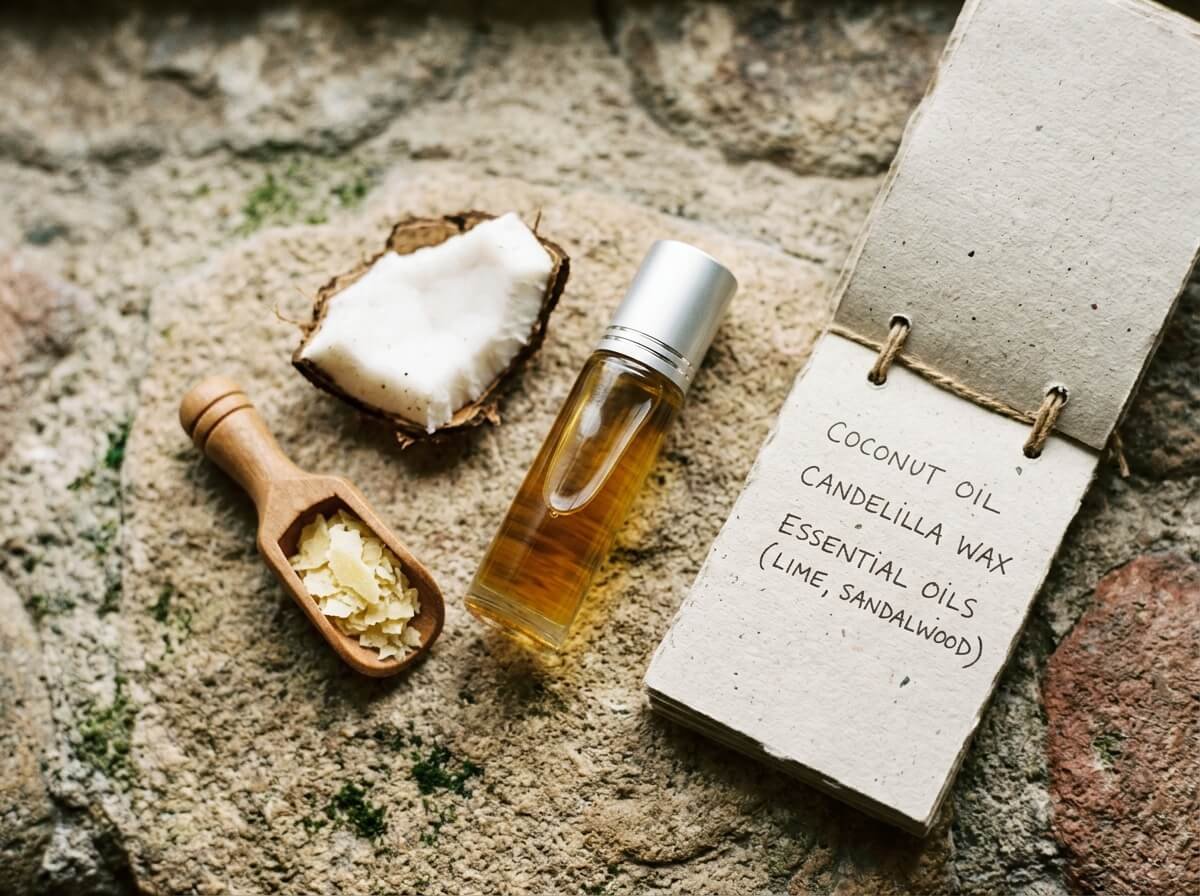
The coconut oil comes from Bali plantations via our Aluan partnership. The wax that gives the roll-on its smooth glide is candelilla, plant-based and vegan. The probiotic is a heat-stable strain that survives shelf life without refrigeration, which matters in a tropical climate and on a global supply chain. None of this is shown on the label of a mass-market natural deodorant, because the supply chain is rarely owned and rarely traceable. We tell you because it is the difference between a product made by a brand and a product made by hands.
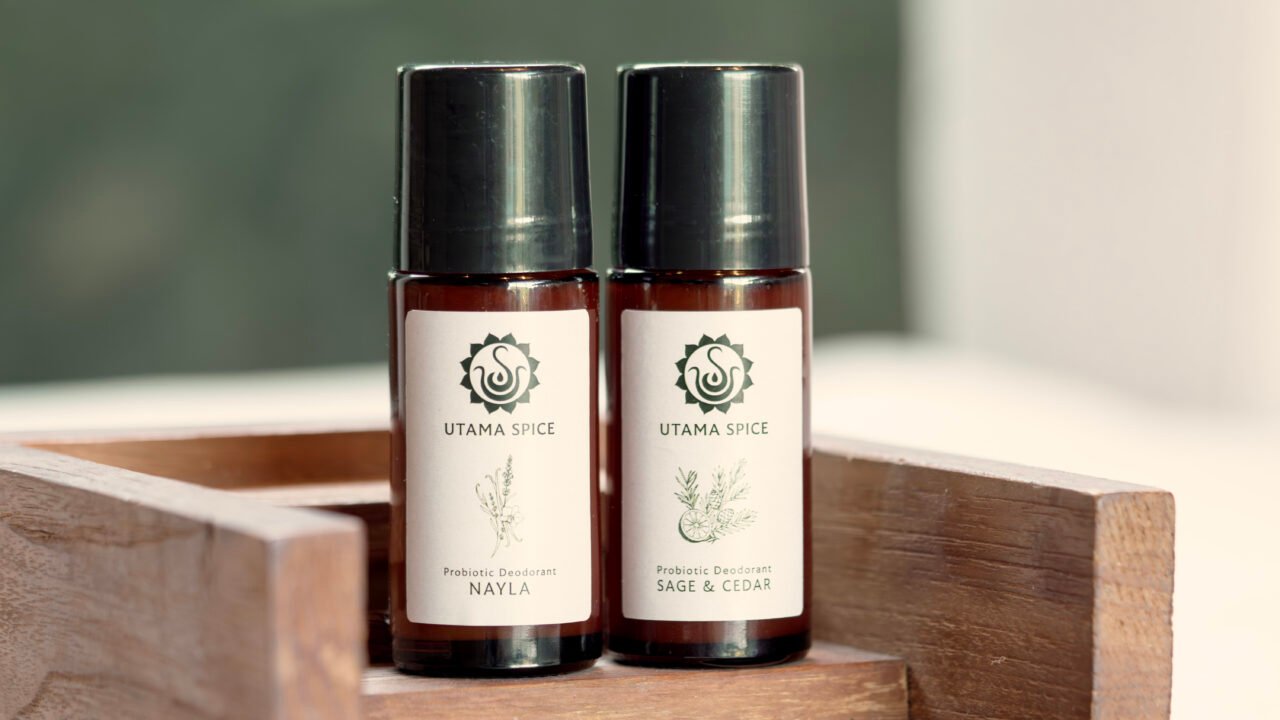
Probiotic Deodorant in Sage and Cedar
A probiotic-based aluminum free deodorant in a 50ml refillable glass roll-on. Cold-pressed Bali coconut oil base, sage and cedarwood essential oils, magnesium hydroxide for gentle pH support. Hand-crafted in Ubud since 1989.
How to switch, and what to expect in the first three weeks
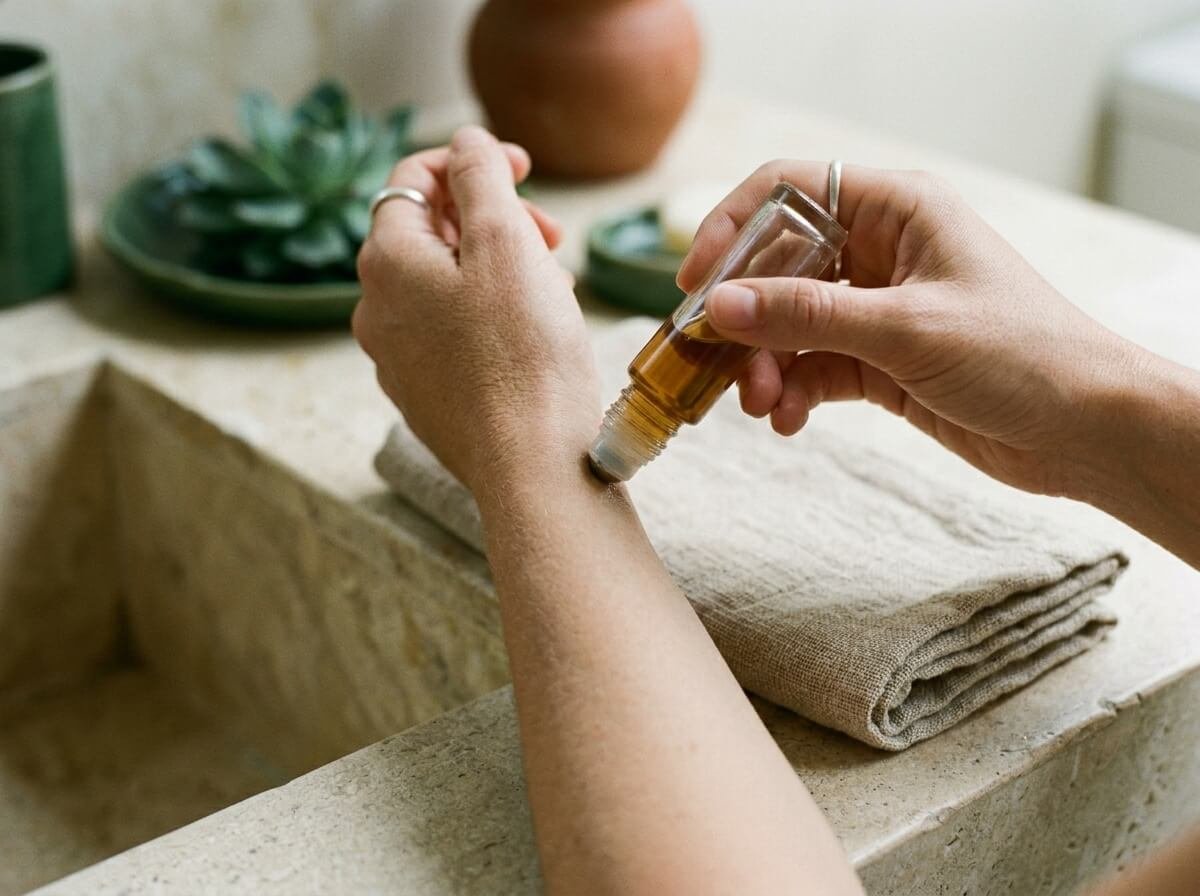
The honest part of any deodorant guide is the transition. If you are switching from a long-time antiperspirant habit, the first 14 to 21 days are usually noisier than the months that follow. Your sweat glands are no longer being blocked, and the bacterial community on the skin is rebalancing. Some people sail through this; others notice more odor, more wetness, or both, for the first couple of weeks. It evens out.
A few practical notes from people who have done this well:
- Wash less aggressively, not more. Harsh soaps in the transition window strip the skin and prolong the rebalancing. A gentle natural cleanser does more good.
- Reapply if you need to. A natural deodorant is not a once-a-day vault. Two light applications, morning and after exercise, are normal and effective.
- Give it real time. Three weeks is the minimum honest test. One week is not enough to tell you anything.
- Layer your body care. A nourishing body care routine speeds the rebalance. We use our Pure Energy Body Butter and Rose Allure Body Oil in this window because both are coconut-led and microbiome-friendly.
For a deeper look at what the right routine looks like by physiology, our guides on natural deodorant for women and natural deodorant for men cover layering, reapplication, and the small habit shifts that make the transition kinder.
Two more notes from the people who write to us most often. First, the transition tends to be smoother when you start during a relatively low-stress period of life, not the week before a wedding or an interview cycle. Second, hydration matters more than you would think. Drinking enough water through the day means cooler, more evaporative sweat and a less aggressive microbial environment under the arm. Neither of these is a deodorant tip in the strict sense; they are the kind of small habits that a real care routine is made of.
A few common questions, answered honestly

Will an aluminum free deodorant keep me dry?
No deodorant will, including ours. Dryness is the job of an antiperspirant, and antiperspirants work by blocking sweat ducts. An aluminum free deodorant addresses odor and lets the body sweat normally. Most people find they sweat less than they expected once their underarm microbiome rebalances.
Is baking soda safe for sensitive skin?
For some people, yes. For others, baking soda’s high pH causes irritation, dark patches, or a stinging sensation, especially right after shaving. If you have reacted to baking soda formulas in the past, look for magnesium hydroxide or probiotic-led options, which are gentler.
How long should I give a new formula before I judge it?
Three full weeks. The first week is rarely representative of how a natural deodorant performs once your skin has adjusted. We recommend the same three-week window when people ask us about any of our personal care products, and it has held up across hundreds of conversations.
Can I use the same formula year round?
You can, though some people prefer a lighter texture in tropical heat and a richer one in dry winter air. Coconut-based formulas in particular respond to ambient temperature; that is the nature of a natural carrier, not a flaw.
What about the scent? Will it clash with my perfume?
Essential oil profiles in well-made deodorants are subtle and fade within the first hour. They are designed to be supportive, not dominant. If scent layering matters to you, our piece on essential oils benefits covers how different profiles interact.
A quiet conclusion
The best aluminum free deodorant is not a product. It is a fit, between a formula and a body, between a maker and a buyer, between what you put on your skin and what you stand for when you choose. The right one is the one you trust enough to use for the long arc, the one whose ingredients you understand, and whose container does not betray its claims.
If we have done our work here, you have the questions to ask, the criteria to use, and a kinder way to think about the switch than the usual “try it for a week and see.” Aluminum free is a small choice on its own. Across a lifetime of mornings, it is not. What you give, you get back, in care, in carbon, in the simple integrity of a routine that respects the body it is meant to serve.
One closing thought. The best aluminum free deodorant for the planet, in the end, is the one made by people who can name the family that pressed the coconut oil, refill the bottle when you bring it back, and stand behind the formula long enough for it to matter. Choosing well is a small daily act. Done over years, it becomes a quiet pattern of care, and that is the work we have given the last three and a half decades to.