Natural liquid body soap: the science of real soap, what to look for, and why refill format matters
Most body washes lining store shelves are not soap at all. They are synthetic detergent blends, formulated to foam fast and fragrance hard, with ingredient lists that read like chemistry exams. Natural liquid body soap is different. It starts with real oils, real saponification, and a respect for what skin actually needs. This guide walks through the science behind true liquid soap, the ingredients worth seeking (and those worth avoiding), and why the liquid format has become a quiet leader in the refill movement.
Whether you are switching from a conventional body wash for the first time or refining a routine you have been building for years, understanding what separates genuine natural liquid body soap from its synthetic counterparts gives you the clarity to choose well. We have spent over 35 years crafting small-batch liquid body soap in Bali, and we have learned that the simplest formulations often do the most.
What makes a body soap truly “natural”
The word “natural” on a label carries no legal standard in most countries. A body wash can contain one botanical extract alongside 20 synthetic compounds and still call itself natural. So the question becomes: what should you actually look for?
A genuinely natural liquid body soap begins with plant-derived oils that have been through saponification, the chemical reaction between fats and an alkali (typically potassium hydroxide for liquid soap). The result is a true soap molecule, not a synthetic surfactant like sodium laureth sulfate (SLS) or cocamidopropyl betaine. True soap cleans by forming micelles, tiny clusters that trap dirt and oil and rinse away with water, without stripping the skin’s acid mantle.
Look for ingredient lists that lead with saponified oils: saponified coconut oil, saponified olive oil, or saponified sunflower oil. These are the backbone of real soap. If the first ingredients are water followed by sodium lauryl sulfate, sodium laureth sulfate, or “surfactant blend,” what you are holding is a detergent, not a soap. There is nothing inherently dangerous about detergents, but they behave differently on skin and are manufactured through different processes than traditional soap-making.
Certifications can help narrow the field. Look for COSMOS, Ecocert, USDA Organic, or Leaping Bunny logos. But certification alone does not guarantee a product aligns with your values. Reading the full ingredient list remains the most reliable filter.
How natural liquid body soap is made: saponification explained
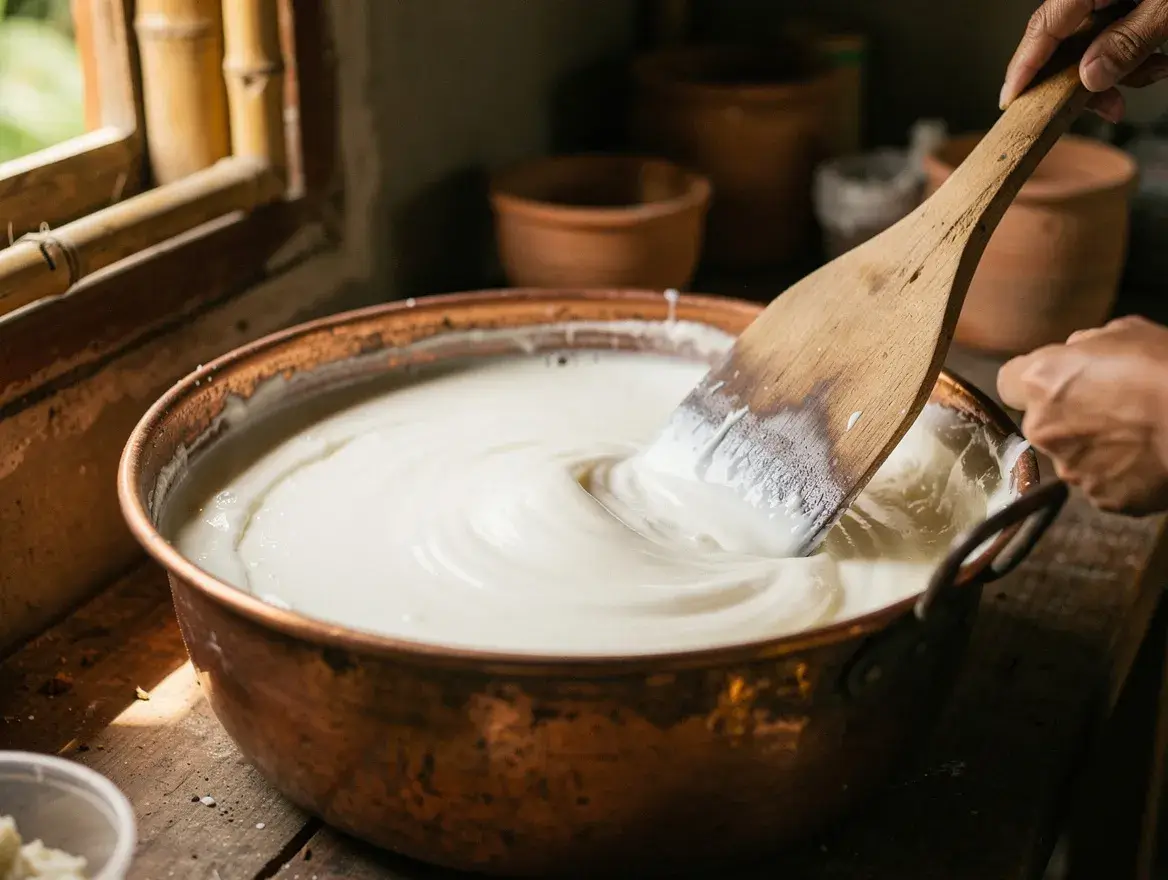
Saponification is the oldest chemical reaction in personal care. Humans have been making soap this way for at least 4,800 years, since ancient Babylon. The process is elegantly simple: a fat or oil reacts with an alkali, and the molecular bonds rearrange to produce soap and glycerine.
For liquid soap, the alkali is potassium hydroxide (KOH) rather than the sodium hydroxide (NaOH) used in bar soap. This is what gives liquid soap its fluid consistency. The choice of base oil determines the soap’s character. Coconut oil, for example, produces a soap with generous lather and strong cleansing power because of its high lauric acid content. Olive oil yields a milder, more moisturizing soap with less foam. Most natural liquid body soaps blend multiple oils to balance cleansing, lather, and skin feel.
At Utama Spice, our liquid soaps begin with cold-pressed coconut oil sourced from Balinese plantations through our partnership with local growers. The saponification happens slowly, in small batches, which allows us to control the reaction precisely and preserve the glycerine that forms naturally during the process. Industrial soap manufacturers often strip out this glycerine to sell separately, which is one reason mass-market body washes can leave skin feeling tight and dry.
The glycerine that remains in small-batch natural liquid soap acts as a humectant, drawing moisture from the air into the skin. This is why a well-made natural liquid body soap can clean effectively without that squeaky, stripped feeling. The soap does its job, and the glycerine does its own quiet work of keeping skin hydrated.
Key ingredients to look for in a natural liquid body soap
Not all natural ingredients serve the same purpose. Understanding what each one does helps you choose a soap that matches your skin’s needs rather than just following marketing claims.
Coconut oil (the cleansing base)
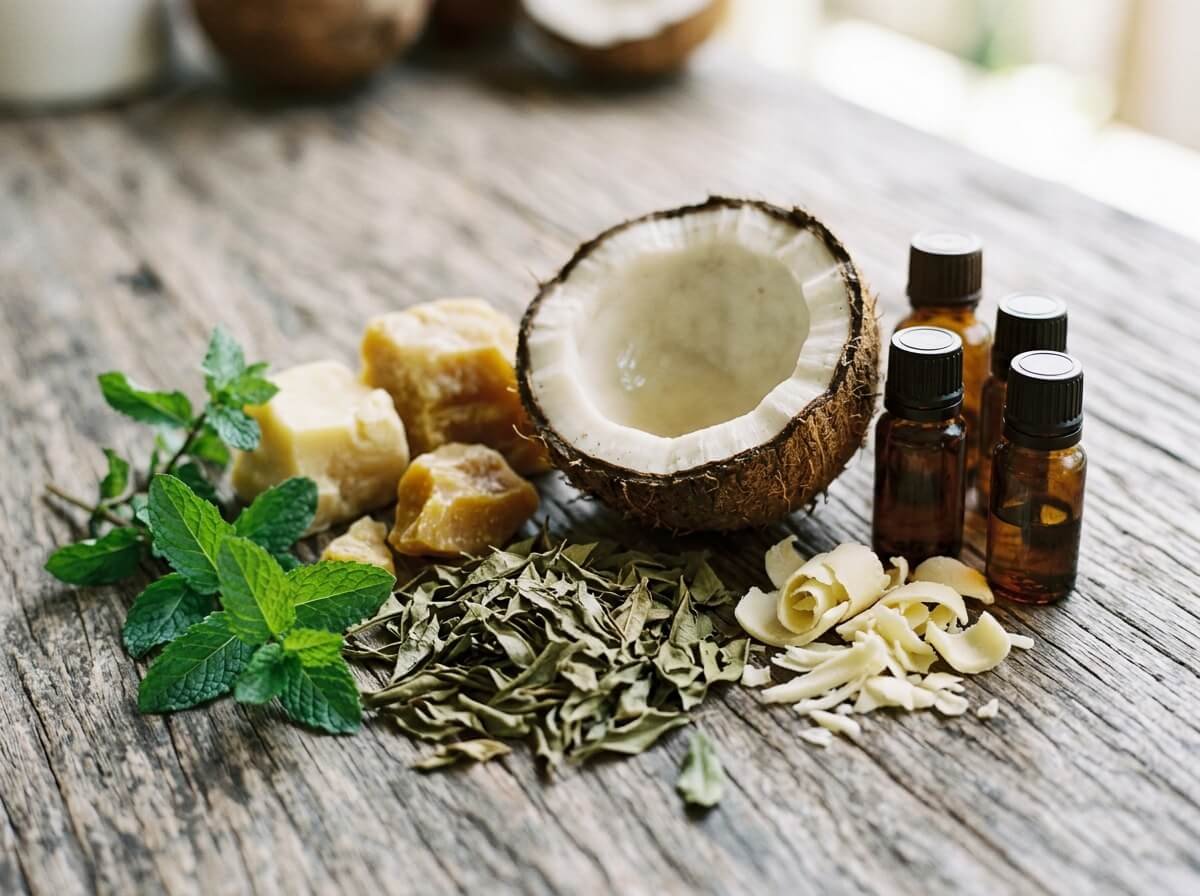
Coconut oil is the workhorse of natural liquid soap formulation. Rich in lauric acid and capric acid, it saponifies into a soap with excellent lather, strong cleansing action, and natural antimicrobial properties. Our Tea Tree Body Wash uses coconut oil as its primary base for exactly these reasons. If you want to understand more about how coconut oil interacts with skin, our guide to coconut oil for skin covers the science in detail.
Cocoa butter (the moisturizer)
Cocoa butter adds richness and skin-conditioning properties to liquid soap. It contains oleic, stearic, and palmitic fatty acids that help maintain the skin barrier after cleansing. In a liquid soap formula, cocoa butter acts as a superfatting agent, meaning a small portion remains unsaponified to provide an extra layer of moisture. Our Cocoa Love Lotion uses the same Balinese-sourced cocoa butter for post-shower hydration.
Tea tree oil (the botanical protector)
Tea tree (Melaleuca alternifolia) essential oil brings well-documented antibacterial and antifungal properties. In a natural liquid body soap, it works synergistically with the soap’s own cleansing action to support clear, healthy skin. Research published in the Clinical Microbiology Reviews journal confirms tea tree oil’s broad-spectrum antimicrobial efficacy, particularly against common skin bacteria like Staphylococcus aureus.
Peppermint oil (the sensory element)
Peppermint essential oil adds a cooling, invigorating sensation to body wash, which many people find energizing in a morning shower. Beyond the sensory experience, menthol (peppermint’s active compound) has mild analgesic and anti-inflammatory properties. It is a reminder that in thoughtful formulation, even the fragrance serves a functional purpose.
What about preservatives?
True liquid soap has a naturally alkaline pH (around 9 to 10), which makes it inhospitable to most bacteria and mould. This means genuinely saponified liquid soaps need fewer preservatives than synthetic body washes, which sit at a lower pH. If you see a long list of preservatives in a “natural” body wash, that is often a sign the formula relies on synthetic surfactants rather than real soap chemistry. For more on how liquid soap shelf life works, we have a dedicated guide.
What to avoid in body wash: surfactants, fragrances, and hidden compounds
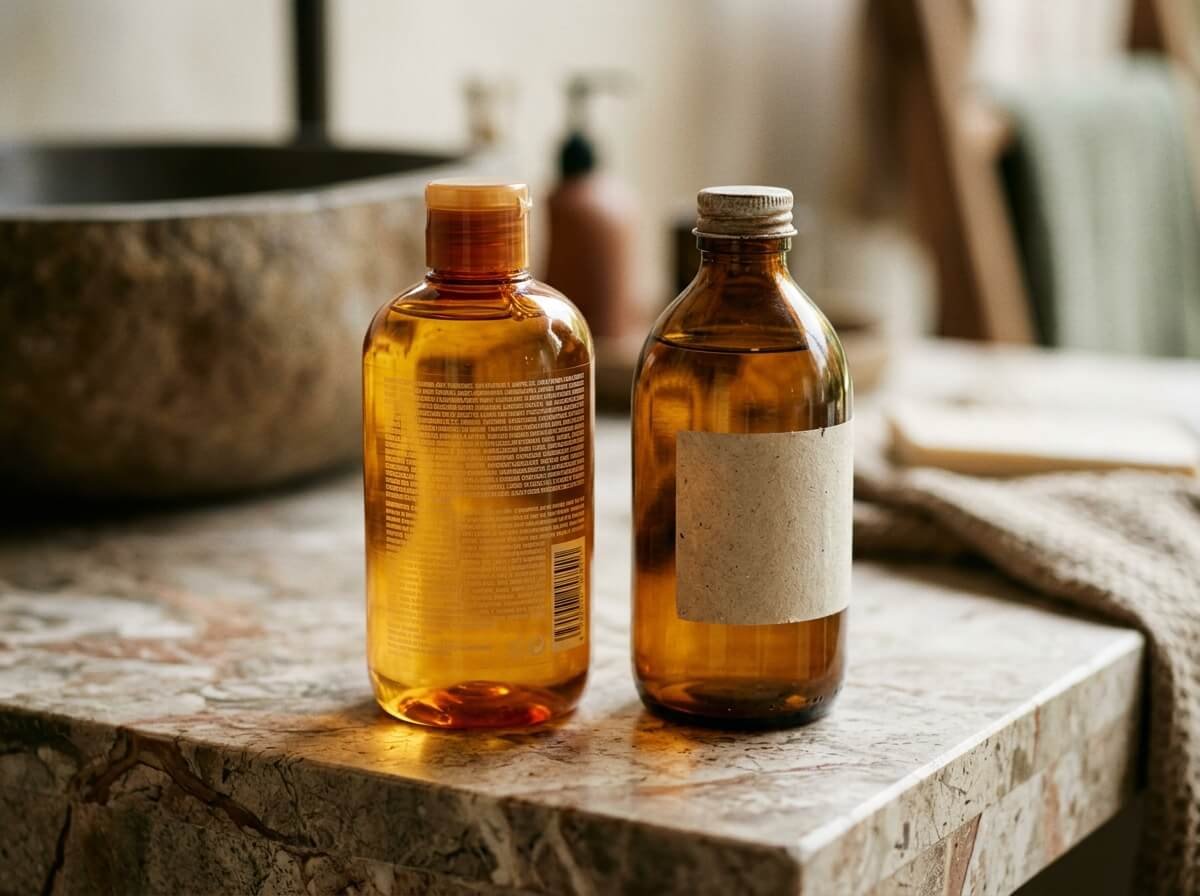
Understanding what to avoid is as important as knowing what to seek. Here are the categories of ingredients that appear most often in conventional body washes and why they deserve scrutiny.
Synthetic surfactants (SLS, SLES, cocamidopropyl betaine)
Sodium lauryl sulfate (SLS) and sodium laureth sulfate (SLES) are the most common foaming agents in mass-market body washes. They produce abundant lather cheaply, but they strip the skin’s natural oils more aggressively than saponified plant oils. For people with sensitive, dry, or eczema-prone skin, this over-stripping can worsen barrier dysfunction. SLS in particular is used as a standard skin irritant in clinical dermatology studies, which says something about its gentleness profile.
Synthetic fragrance
The word “fragrance” or “parfum” on a label can represent any combination of hundreds of undisclosed synthetic chemicals. Fragrance formulas are protected as trade secrets, so manufacturers are not required to list individual components. Many synthetic fragrance compounds are linked to contact dermatitis and endocrine disruption. Natural liquid body soaps scented with essential oils provide aroma through single-source botanicals with known safety profiles.
Parabens and formaldehyde releasers
Parabens (methylparaben, propylparaben, butylparaben) are preservatives that mimic oestrogen in the body. While the debate about their safety at low concentrations continues, many consumers prefer to avoid them on the precautionary principle. Formaldehyde-releasing preservatives (DMDM hydantoin, quaternium-15) are a separate concern: they slowly release formaldehyde, a known carcinogen, to prevent microbial growth. Both categories are unnecessary in a properly formulated natural liquid body soap.

Microplastics and synthetic colorants
Some body washes contain polyethylene microbeads (now banned in several countries but still present in some formulations) or synthetic colorants derived from coal tar. These add visual appeal to the product but serve no cleansing function. They wash down the drain and enter waterways. A natural liquid body soap relies on the natural colour of its oils and botanicals. If your soap is neon blue, it is not natural.
Why liquid format leads the refill movement
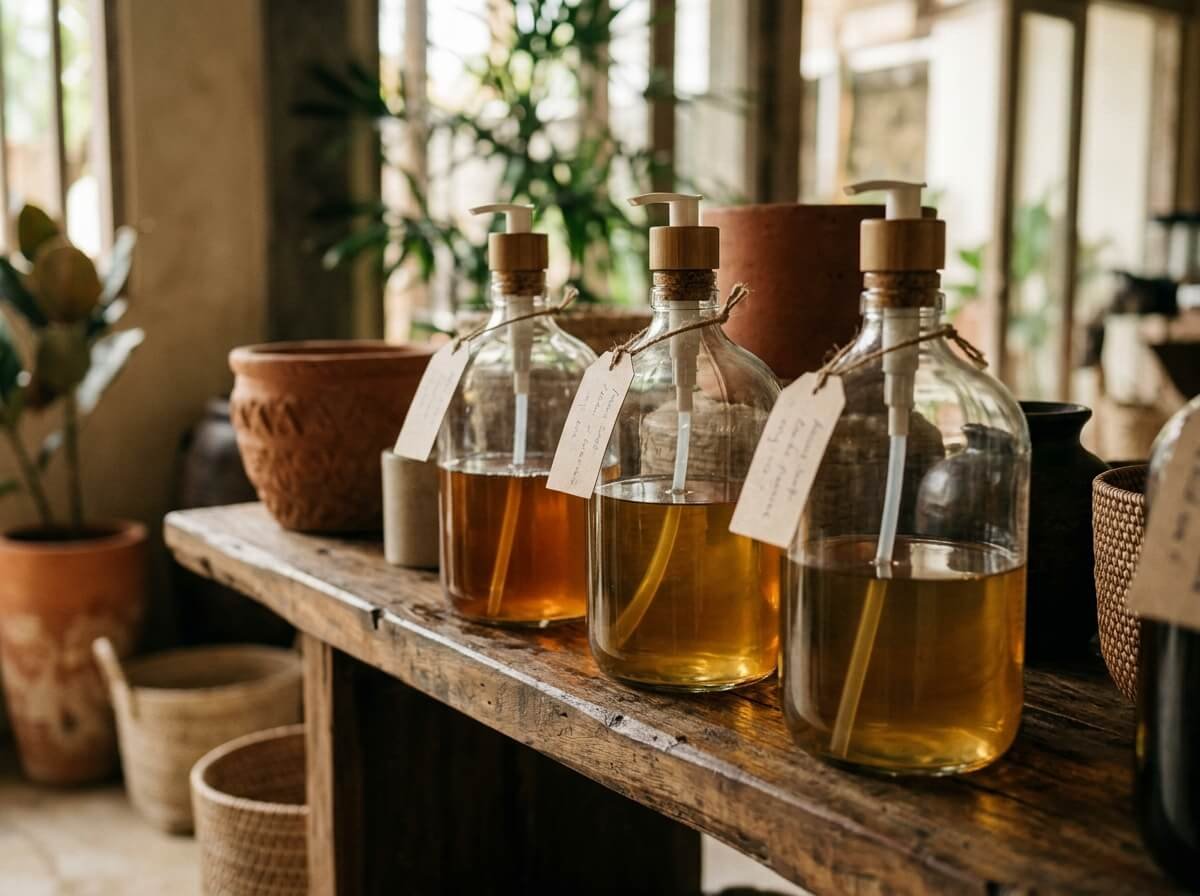
The refill movement is not a trend. It is a structural correction to a broken packaging model. And natural liquid body soap sits at the heart of it, for practical reasons that go beyond ideology.
Bar soap has its place, and we respect the zero-waste argument for solid formats. But liquid soap is what most households actually use for body washing, hand washing, and general hygiene. Asking people to switch entirely to bars is asking them to change a deeply embedded habit. A more effective approach: keep the liquid format, eliminate the single-use bottle.
Refill stations, whether in-store or through returnable container programs, work best with liquid products. The viscosity is predictable, the dispensing is precise, and the shelf stability of saponified liquid soap (naturally alkaline, resistant to microbial contamination) makes it an ideal refill candidate. At Utama Spice, we have operated refill stations in our Bali stores since the beginning. In 2025 alone, our customers saved 2,245 bottles from landfill through refills. Each refill is a small act of change, and the numbers accumulate.
If you are interested in how the refill model extends beyond body care, our guide to refillable dish soap covers the home-care side of the circular economy.
The economics work too. A 500ml refill of natural liquid body soap typically costs 20 to 40% less than buying a new bottle. The customer saves money, the brand saves packaging material, and landfill volumes decrease. It is a rare alignment where financial incentive and environmental benefit point in the same direction.
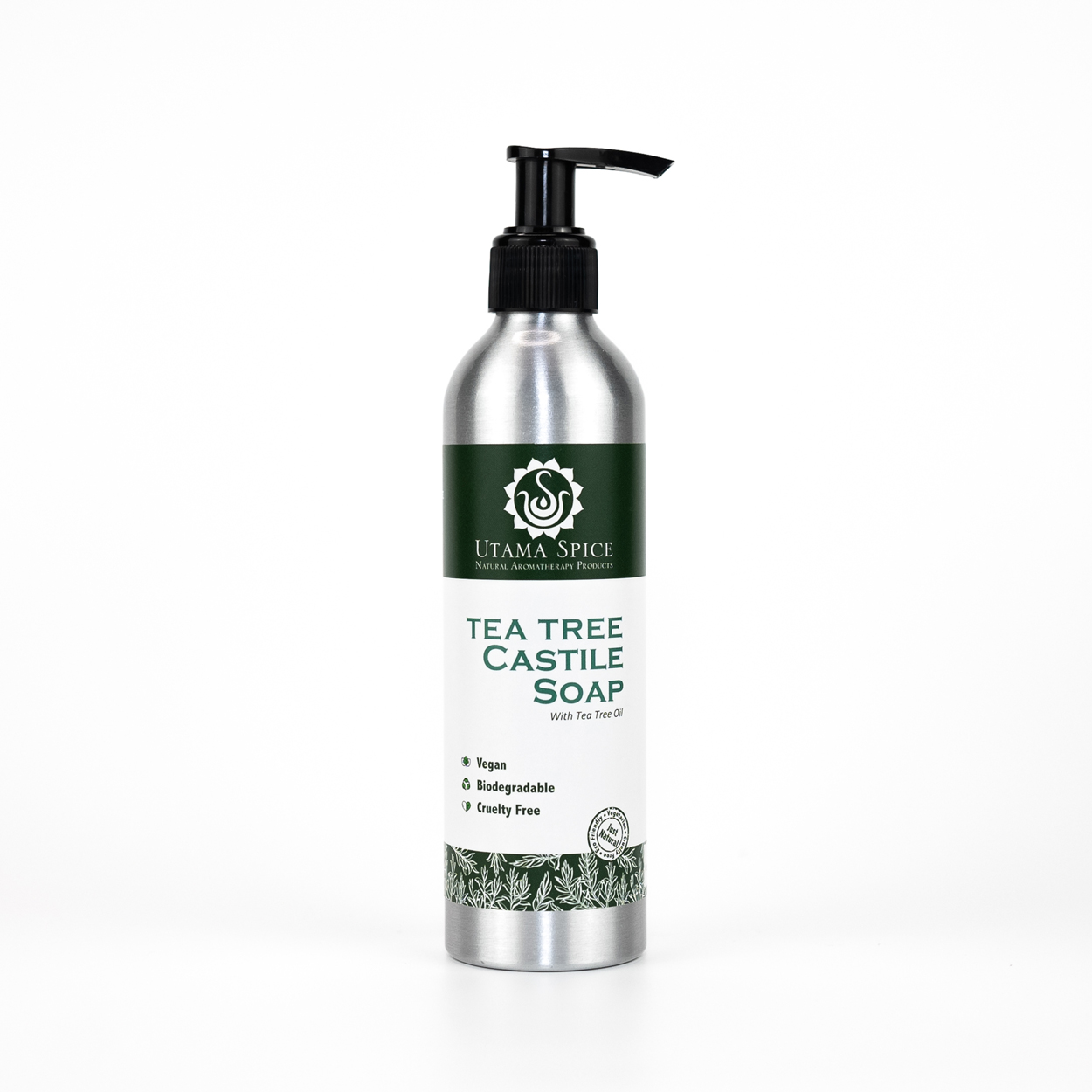
Experience coconut oil saponification in every wash
Our Tea Tree Body Wash blends cold-pressed coconut oil with cocoa butter and tea tree essential oil, crafted in small batches at our Ubud workshop. One bottle, real soap, real ingredients.
How to use natural liquid body soap for best results
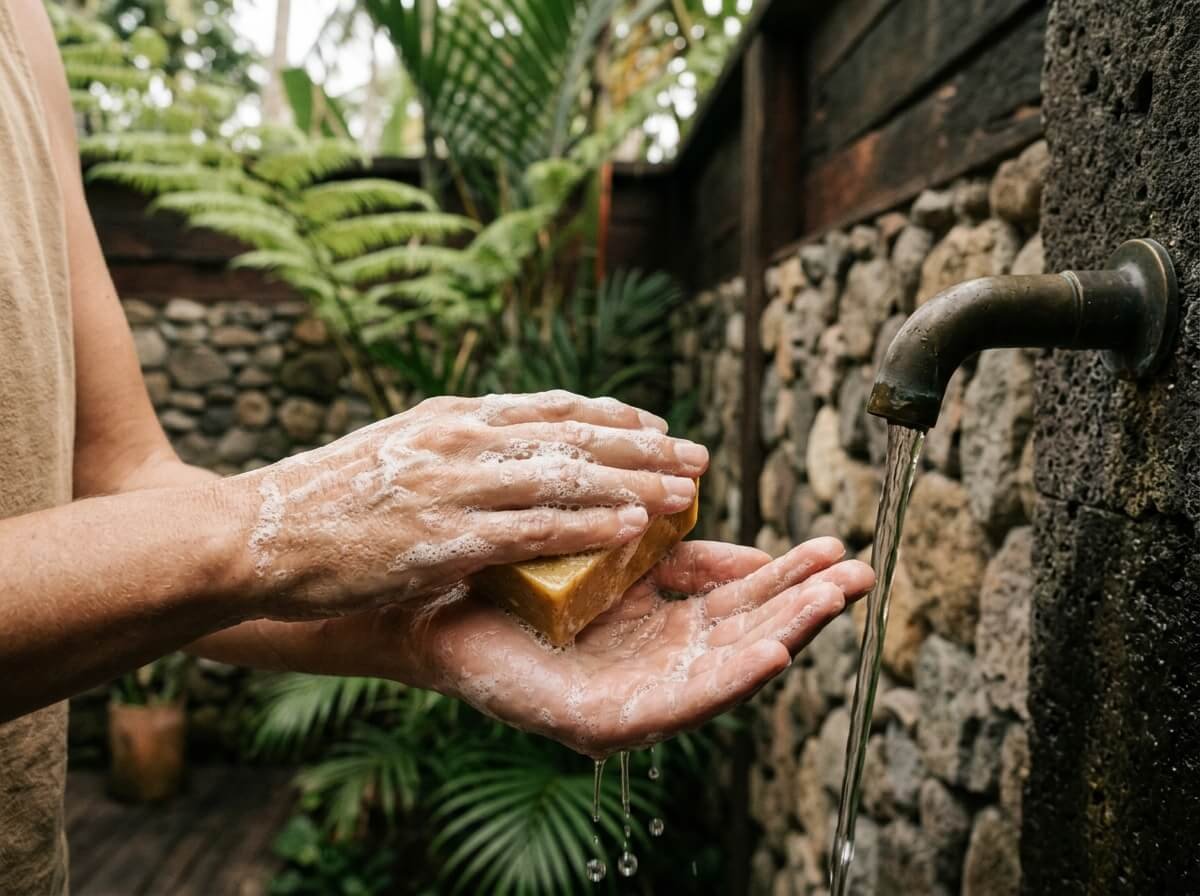
Switching from a synthetic body wash to a natural liquid body soap sometimes comes with a brief adjustment period. Here is how to get the best experience from day one.
Less is more
Natural liquid soap is more concentrated than most commercial body washes, which are often 70 to 80% water. A coin-sized amount on a washcloth or loofah is usually enough for the whole body. Using too much does not clean better; it just wastes product and can leave a film that takes longer to rinse.
Lather expectations
If your natural liquid body soap uses coconut oil as a primary base, you will get generous lather. If it is olive-oil-dominant (a “castile” formula), the lather will be creamier and less bubbly. Neither lather style indicates better or worse cleaning. Lather is not the mechanism that removes dirt; the soap molecules are. But the sensory experience matters, so choose a base oil profile that matches your preferences.
Water temperature
Warm water (not hot) activates the essential oils in natural soap and helps the soap molecules work efficiently. Very hot water strips skin oils regardless of what soap you use, so keep temperatures comfortable rather than scalding. Following up with a brief cool rinse can help close pores and lock in moisture.
Follow with a moisturizer
Even the gentlest soap removes some of your skin’s natural oil layer. Applying a body oil or coconut body lotion within two minutes of stepping out of the shower locks hydration into damp skin. This two-step routine (clean, then seal) is the foundation of effective natural skincare.
Storage
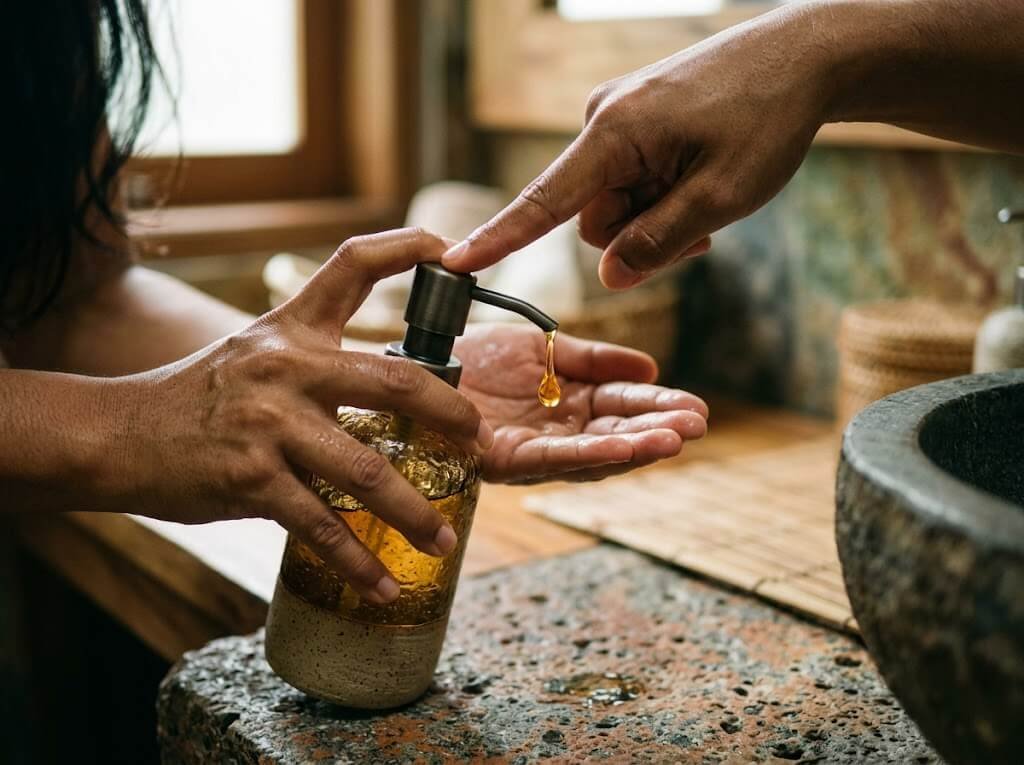
Keep your natural liquid body soap in a cool, dry place away from direct sunlight. A glass pump bottle on a stone shelf works well. Avoid leaving the bottle in standing water, which can degrade the pump mechanism. Well-stored natural liquid soap maintains its properties for 12 to 18 months easily, thanks to its naturally alkaline pH.
Frequently asked questions about natural liquid body soap
Is natural liquid body soap safe for sensitive skin?
Generally, yes. Because true saponified soap retains its natural glycerine and avoids synthetic surfactants, it tends to be gentler on reactive skin. That said, essential oils can trigger sensitivity in some people. If you have very reactive skin, start with an unscented formula or one using gentle oils like lavender or chamomile. Patch-test on the inside of your wrist before full-body use.
Can I use natural liquid body soap on my face?
Body soap is formulated for body skin, which is thicker and less sensitive than facial skin. While a gentle natural liquid soap will not harm most faces in a pinch, we recommend using a dedicated face wash formulated for the thinner, more delicate skin of the face. Facial care benefits from lower pH and lighter formulations.
Does natural liquid body soap expire?
True saponified liquid soap has a long shelf life, typically 12 to 24 months, because its alkaline pH discourages microbial growth. However, the essential oils in scented formulas can oxidize over time, which may change the aroma. Store in a cool, dark place and use within the recommended timeframe. For a deeper look at this topic, read our complete guide to liquid soap shelf life.
Why is natural liquid body soap more expensive than conventional body wash?
The price difference reflects real differences in ingredients and process. Coconut oil, essential oils, and cocoa butter cost more than petroleum-derived surfactants and synthetic fragrance. Small-batch saponification takes longer than industrial surfactant blending. And natural soap brands tend to source more carefully, paying fair prices to growers and harvesters. The per-wash cost difference is usually smaller than the sticker price suggests, because natural soap is more concentrated and a little goes further. Refilling reduces the cost further still.
Is liquid soap better than bar soap for the environment?
It depends on the full lifecycle. Bar soap uses less water in formulation and generates less packaging waste per use. Liquid soap has a higher water content and traditionally comes in a plastic bottle. However, when liquid soap is sold through refill systems, its packaging footprint drops dramatically. The right answer is not liquid versus bar; it is single-use versus refill. Choose whichever format you will actually use consistently, and refill it.
Choosing your natural liquid body soap
The shift from synthetic body wash to natural liquid body soap is not about purity for its own sake. It is about understanding what touches your skin every day, choosing ingredients with real function, and supporting production methods that respect both the maker and the planet. True soap has been made for millennia. The chemistry is proven. The craft is alive.
Start with a soap whose ingredient list you can read and understand. Look for saponified plant oils as the base. Choose essential oils over synthetic fragrance. Ask whether you can refill it. These are small, clear decisions that add up to a different kind of care. Intentional care. The kind that considers your skin, the waterways the soap enters, the communities that grew the coconut, and the planet that holds all of it together.
If you want to experience what 35 years of Balinese soap-making craft feels like on skin, our Tea Tree Body Wash is a good place to start: coconut oil base, cocoa butter conditioning, tea tree and peppermint essential oils, and a formula we have refined over three decades in our Ubud workshop. Pair it with a body butter after the shower, and you have a two-step body care ritual rooted in nature, science, and a tradition of genuine care.