Argan oil benefits for skin: the honest guide to buying and using it
Argan oil benefits for skin have been debated, celebrated, and frankly oversold for a decade. Walk into any pharmacy and you will find dozens of bottles wearing the same promise: liquid gold, miracle oil, age-defying secret. Most of them are not what they claim. And most of the guides written about argan oil repeat the same 10-benefit list without ever telling you how to identify a genuinely pure product, how to use it in a real daily ritual, or when a different botanical oil might serve your skin better.
This guide does not repeat the list. It is written from the perspective of people who have been formulating with botanical oils in Bali since 1989, people who source from the same wild-harvested supply chains, blend oils by hand in small batches, and think carefully about what provenance and purity actually mean. Our goal is to give you the honest version of argan oil: its real benefits, its limits, how to read a label, and how it sits inside a broader natural face-oil practice that includes Bali-native alternatives like kukui and tamanu.
If you have found our complete guide to natural face oils, you already know that choosing a botanical oil is less about a single ingredient and more about understanding your skin, your ritual, and your sourcing. Argan fits into that story, and so does knowing when to look beyond it.
What argan oil actually is (and why cold-pressed, cosmetic-grade matters)
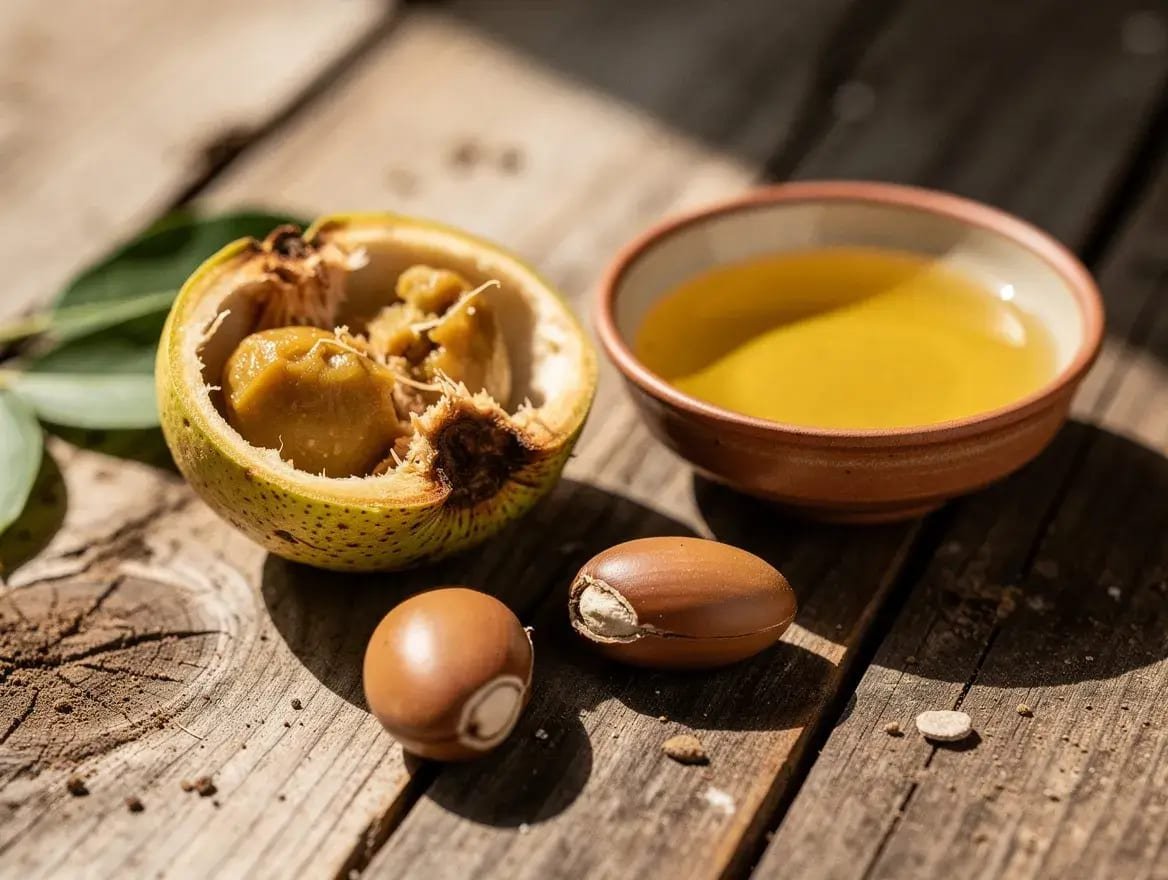
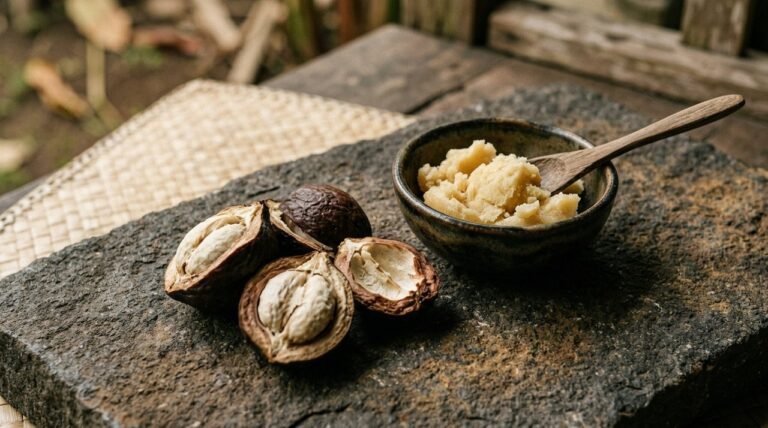
Argan oil comes from the kernels of the Argania spinosa tree, which grows almost exclusively in a narrow region of southwestern Morocco. The tree is so ecologically important that UNESCO designated its habitat a biosphere reserve in 1998. The kernels are small, hard, and oil-rich. Extracting the oil traditionally means cracking the hard outer nut by hand, work that has been done for generations by Berber women in community cooperatives.
There are two types of argan oil: culinary and cosmetic. Culinary argan oil is made from roasted kernels and has a rich, nutty flavour. Cosmetic argan oil (the one that belongs on your skin) is cold-pressed from raw, unroasted kernels. Cold-pressing preserves the heat-sensitive components that make argan genuinely useful for skin: tocopherols (vitamin E), oleic acid (omega-9), linoleic acid (omega-6), and squalene.
Why does the grade matter so much? Because the cosmetic argan oil market is extremely easy to adulterate. The kernels are labour-intensive to source and crack. A bottle of genuine cold-pressed cosmetic-grade argan costs more to produce than most of the supermarket bottles priced at a few dollars. When those low-cost bottles exist, something has been diluted, deodorized, or substituted. More on that in the label-reading section below.
Pure cosmetic argan oil has a faint, earthy, slightly nutty scent. It is a pale golden colour with a light-to-medium viscosity. It absorbs moderately quickly on most skin types. If the bottle you pick up is completely odourless and water-clear, that is a sign of heavy processing: deodorization strips both scent and some of the beneficial components alongside it.
The benefits that hold up: barrier support, moisture, and essential fatty acids
The skin’s outermost layer, the stratum corneum, functions as a lipid barrier. It keeps moisture in and irritants out. When that barrier is compromised, you feel it as dryness, tightness, sensitivity, and in chronic cases, conditions like eczema or contact dermatitis flare more easily. Replenishing the barrier with the right lipids is one of the most evidence-backed things you can do for skin health.
Argan oil contributes to barrier repair primarily through two routes: its fatty acid profile and its tocopherol content.
The fatty acids in argan oil are roughly 80% monounsaturated oleic acid (omega-9) and polyunsaturated linoleic acid (omega-6), with oleic dominating. Oleic acid integrates into the skin’s lipid bilayer, softening and conditioning. Linoleic acid is particularly important for people with compromised or blemish-prone skin: low linoleic acid in sebum is one of the markers of acne-prone skin, and topical linoleic acid has been shown in clinical studies to support barrier repair and reduce microcomedone formation.
Tocopherols (the vitamin E family) are antioxidants. In the context of a face oil, they neutralise free radicals from UV exposure and pollution before those radicals can trigger inflammatory cascades that contribute to premature skin ageing. Argan is one of the richer botanical oil sources of tocopherols. This is a real, documented benefit, not a marketing claim, but it is most relevant when the oil is cold-pressed and stored properly (dark glass, away from heat and light).
Squalene, present in small amounts in argan oil, is a lipid naturally produced by human sebaceous glands. Its topical application is thought to support barrier function by mimicking one of the skin’s own lipid components. This is also why our own Balinese Argan Oil 30ml is a genuinely useful daily-ritual oil: the formulation uses cold-pressed cosmetic-grade oil, and because it is a single ingredient, there is no diluting carrier, no fragrance added over the top, and no processing loss of the components that matter.
Argan for oily, dry, and blemish-prone skin: matching the oil to the need

One of the most persistent myths in skincare is that oily skin should avoid oils. The skin’s sebum is itself a complex lipid mixture, and using the right botanical oil can actually help regulate sebum overproduction rather than worsen it. The key is choosing oils with a fatty acid profile that supports rather than overwhelms.
Dry skin: Argan is a strong choice. Its high oleic acid content provides deep, lasting moisture and softens the feel of the skin. Apply one to three drops on damp skin after cleansing, morning or evening. Its moderate absorption speed means it leaves a light glow without sitting heavily on the surface.
Oily or combination skin: Argan’s linoleic acid content makes it more suitable than many heavier oils (like pure coconut, which is nearly all saturated fat and absorbs slowly). That said, if your skin is very oily and you struggle with breakouts, a higher-linoleic oil like tamanu or rosehip may work better as a primary oil. Argan can be used sparingly at night or blended with a higher-linoleic oil.
Blemish-prone skin: The linoleic acid in argan has a role to play here. Pure argan, used lightly at night on clean skin, is not inherently comedogenic: its rating is typically one to two on the zero-to-five comedogenicity scale. However, the quality of the oil matters enormously. An adulterated argan blended with heavier, higher-comedogenic oils can absolutely cause breakouts in susceptible skin. This is another reason why reading the label, and trusting the source, is not optional.
Sensitive or reactive skin: Argan is generally well tolerated. It is free of the more common botanical allergens (no phthalides, no significant fragrance components naturally). That said, if your skin is highly reactive, patch-test any new oil on the inside of your forearm for 24 hours before using it on your face. If you are exploring a broader natural face moisturizer practice, building slowly and one ingredient at a time is the most honest approach.
How to read an argan label: real vs diluted, deodorized, or filler-blended
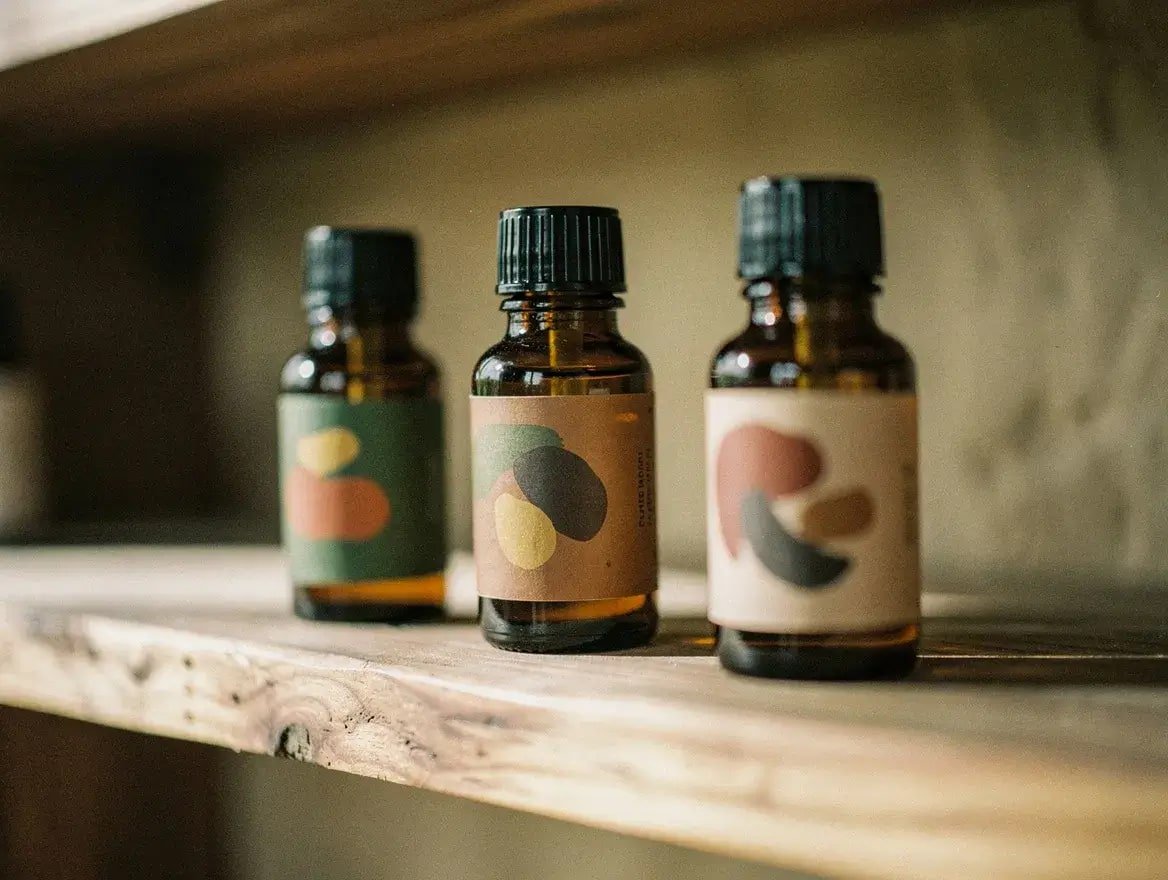
The argan oil market is plagued by adulteration. This is not an exaggeration: independent testing of commercial argan products has found mineral oil, refined sunflower oil, and synthetic tocopherol used to pad or replace genuine argan. Knowing how to read a label is the most practical skill this guide can give you.
The INCI name tells you what is actually in the bottle. Pure argan oil will list Argania Spinosa Kernel Oil as the first (and ideally only) ingredient. If that name appears mid-list, below carrier oils like Helianthus Annuus (sunflower) or Caprylic/Capric Triglyceride (fractionated coconut), the argan content is minor. You are paying for the label, not the oil.
Scent is a signal, not a flaw. Genuine cold-pressed argan has a faint, warm, slightly nutty scent, similar to very mild walnut. If the bottle is completely odourless, deodorization has occurred. This process involves heating the oil under vacuum, which strips scent but also degrades some tocopherols and squalene. The oil is technically still argan, but it is a processed version of argan. For true barrier and antioxidant benefit, you want the cold-pressed, undeodorized version.
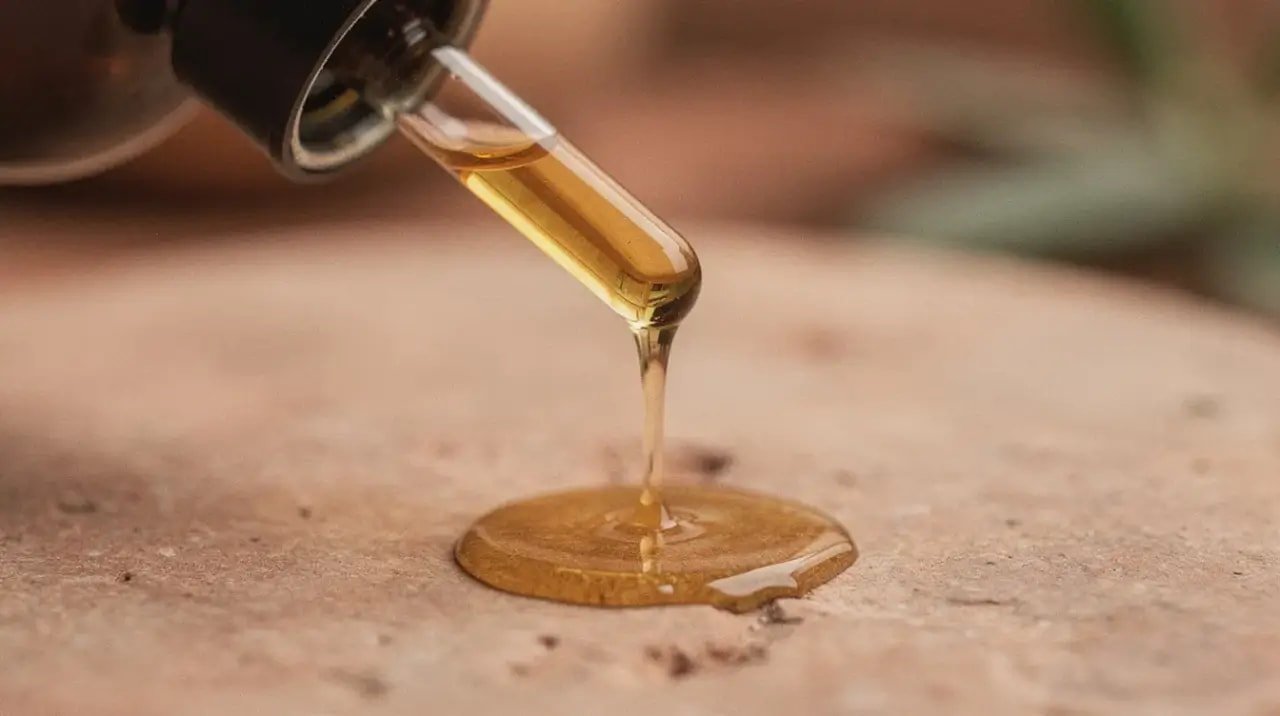
Colour matters too. Genuine cosmetic-grade cold-pressed argan is a clear pale gold. If the oil is water-clear or very pale yellow with no golden tint, it has likely been heavily refined or diluted. Deep brown or orange tones suggest a roasted (culinary) product that has been marketed incorrectly as cosmetic-grade.
Price is a floor, not a ceiling. Cold-pressed, cosmetic-grade argan cannot be produced below a certain cost. The labour of sourcing and cracking the kernels in Morocco, the cost of dark-glass packaging, and responsible cold-pressing make genuine argan a moderately expensive ingredient. Bottles priced at a few dollars for 100 ml are not genuine argan, or if they contain any, it is at a trace level in a carrier base.
This is the Outlaw truth about the argan oil market: the claim is everywhere, but the real product is rare on mass-market shelves. When you find a source you trust: one that is transparent about origin, processing, and INCI: that relationship is worth maintaining. Our Argan Oil 30ml lists Argania Spinosa Kernel Oil as its single ingredient, because that is what is in the bottle. No carrier, no fragrance, no filler.

Pure argan oil, nothing added
Cold-pressed cosmetic-grade argan oil in a single-ingredient 30ml bottle. One thing, done honestly. Pair it with a drop of kukui or tamanu for a personalised face-oil ritual.

Argan vs kukui vs tamanu vs coconut: choosing your face oil by skin goal
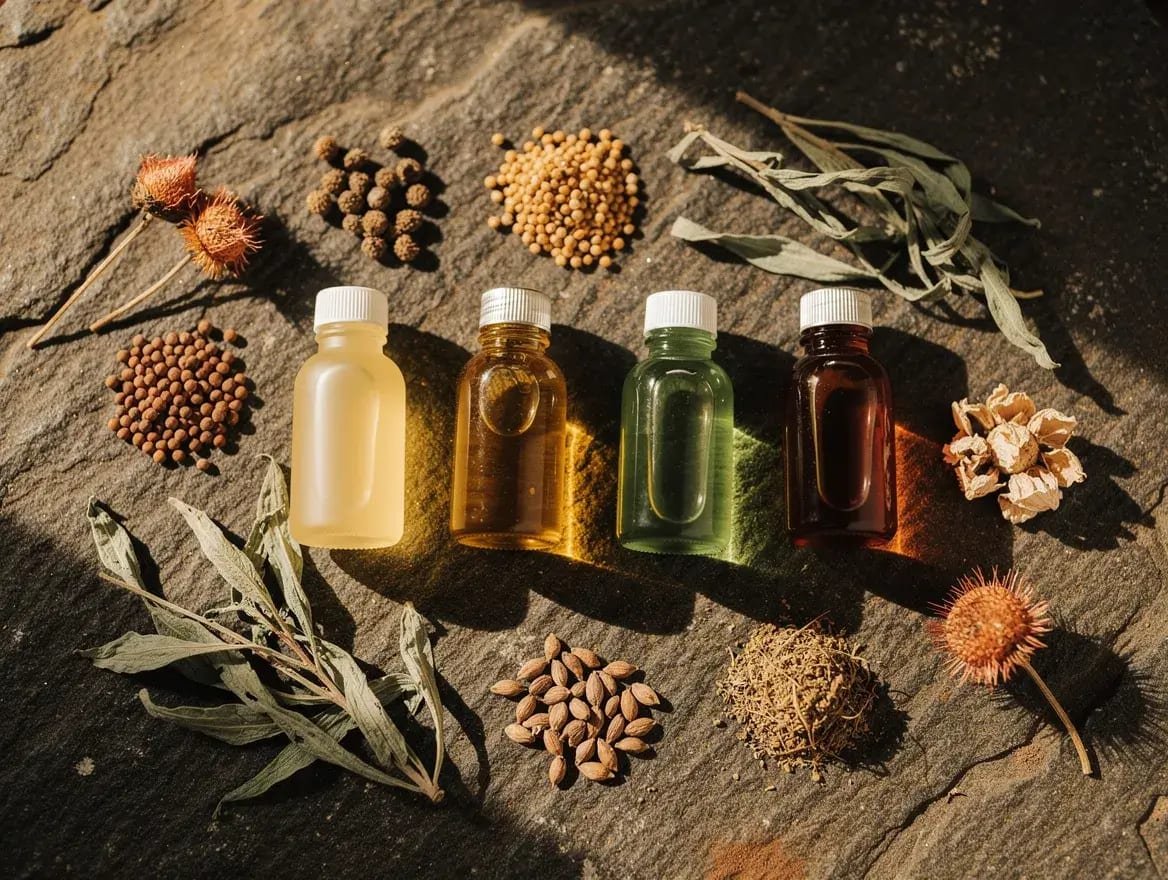
The most useful thing this guide can offer is a clear, honest comparison of argan with the other major botanical face oils, because most people do not use just one oil, and understanding the differences lets you build a more intentional ritual. From our perspective in Bali, this comparison inevitably includes two oils that are deeply native to our part of the world: kukui (candlenut oil) and coconut.
Argan (Argania spinosa, Morocco): Oleic-dominant, moderate linoleic content. Good all-rounder for dry to normal skin. Strong antioxidant profile from tocopherols. Moderately fast absorption. The benchmark oil for many natural skincare rituals, but not native to Bali and requires careful sourcing to get genuinely pure product.
Kukui oil (Aleurites moluccanus, Pacific and Bali): Wild-harvested candlenut, one of the most linoleic-rich botanical face oils available. Its fatty acid profile makes it particularly suited to oily, combination, and blemish-prone skin. Fast absorption, non-greasy finish, high compatibility with all skin types. It is our preferred primary face oil for Bali’s humid climate, and it has been used in traditional Balinese and Pacific healing for centuries. If you want to understand kukui more deeply, our kukui oil guide goes into the botany and ritual in detail.
Tamanu oil (Calophyllum inophyllum, Polynesia and Southeast Asia): Very high linoleic, with unique calophyllic acid and calophyllolide, compounds studied for their regenerative and anti-inflammatory properties. Tamanu is the strongest oil in this comparison for blemish-prone, acne-scarred, and post-inflammatory skin. It has a distinctive, strong green-earthy scent and a thicker viscosity. Most people use it blended (a drop of tamanu in argan or kukui) rather than alone. It is not a substitute for argan; it is a specialist tool.
Coconut oil (Cocos nucifera, Bali via Aluan Partnership): Saturated fat-dominant, which means high stability and very slow oxidation. The slowest-absorbing oil in this group. Great for body, hair, and dry hand care, but can be comedogenic for face use in some skin types (high oleic, low linoleic). Our coconut oil for skin guide goes deep on where it fits and where it does not.
A practical framework for choosing:
- Dry, mature, or dull skin: argan (or argan blended with a drop of tamanu at night)
- Oily or blemish-prone skin: kukui as primary, argan as secondary
- Sensitive or reactive skin: argan (patch-tested) or kukui, both are lower-allergen than some other botanicals
- Post-breakout scarring or pigmentation: tamanu blended into argan or kukui
- Body and hair ritual: coconut as primary, argan or kukui as finishing oil
This comparison framework is something the top SERP results for argan oil simply do not offer. Their guides assume argan is the only oil in the conversation. At Utama Spice, we think in whole-plant systems, not single-ingredient marketing. You can also explore how botanical oils compare with water-based skincare in our face serum vs face oil guide.
A simple daily argan ritual: cleanse, dampen, layer, seal
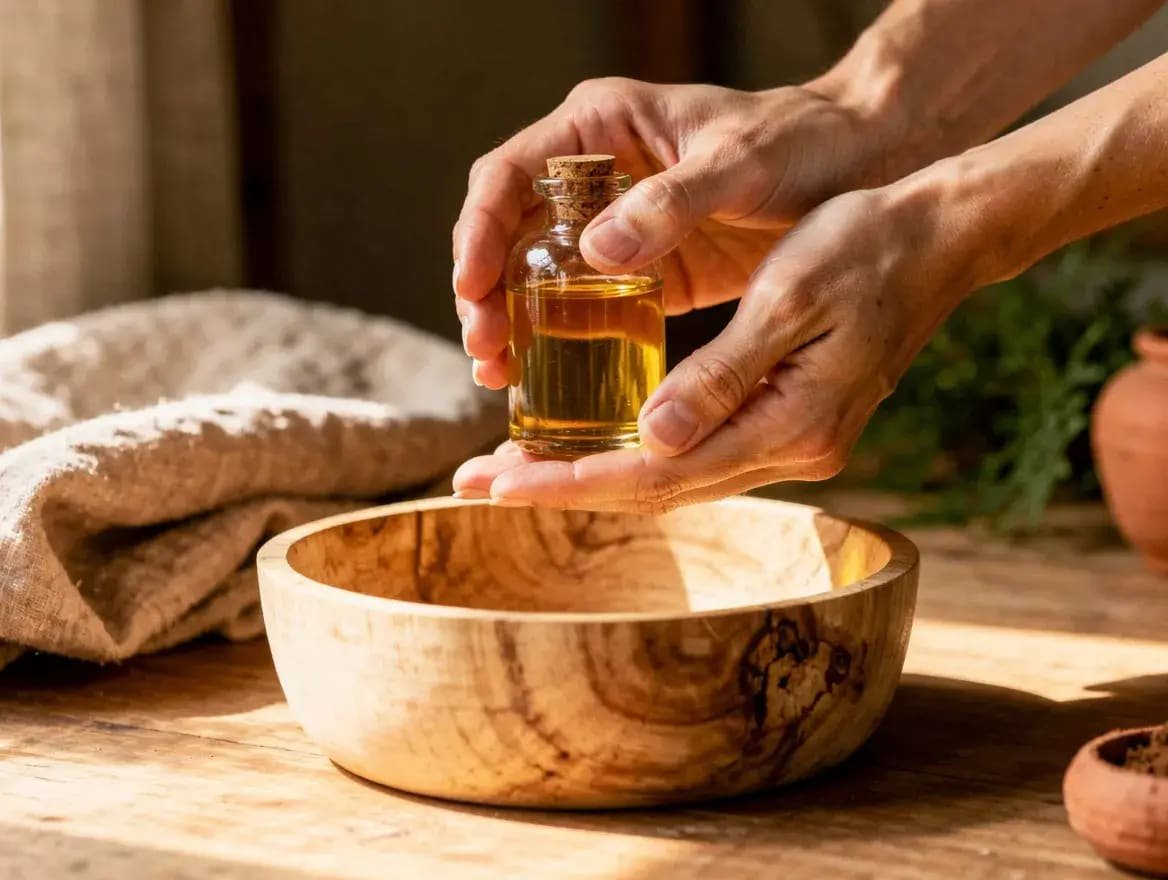
Most argan guides list benefits and stop there. They do not tell you how to actually use the oil in a daily practice that respects your skin’s biology. The ritual matters as much as the ingredient.
The core rule: oil goes on damp skin. Water and oil do not mix, which is exactly why applying oil to slightly damp skin is so effective. The oil seals the water molecules sitting on the skin’s surface, trapping hydration. Apply argan to dry skin alone and it will sit on top of the skin as an emollient (still beneficial), but it will not actively hydrate. The damp-skin application is the step most people miss, and it transforms how the oil feels and functions.
Morning ritual:
- Cleanse gently, no foam stripping, no hot water.
- While skin is still damp (or after a light mist of water or floral toner), warm one to two drops of argan oil between your palms.
- Press your palms gently onto your face and neck. Do not rub aggressively.
- Follow with SPF if you are going outdoors. Argan’s tocopherols are antioxidant, not sun-protective: they are a complement to SPF, not a substitute.
Evening ritual:
- Double cleanse if you wore SPF or makeup: an oil cleanse first, then a water-based cleanse.
- Tone or use a light essence if that is part of your practice.
- Apply two to three drops of argan oil on damp skin. At night you can be slightly more generous than in the morning.
- If you are targeting specific concerns (a blemish, a dry patch, post-sun tightness), add a targeted drop of tamanu directly on that area before the argan layer.
If you have been drawn to facial massage with a face oil, argan is a well-suited oil for this practice. Its absorption speed is moderate enough that you have time to work through a short gua sha or massage sequence before it settles into the skin.
Dosage note: The one-to-three-drops guideline matters. More is not better with facial oils. Too much oil, left unabsorbed on skin, can dilute the skin’s own lipid barrier signals, trap heat, and for some people, lead to clogging. A small amount, applied correctly on damp skin, will outperform a generous smear on dry skin every time.
Sourcing and ethics: why provenance is part of the efficacy story
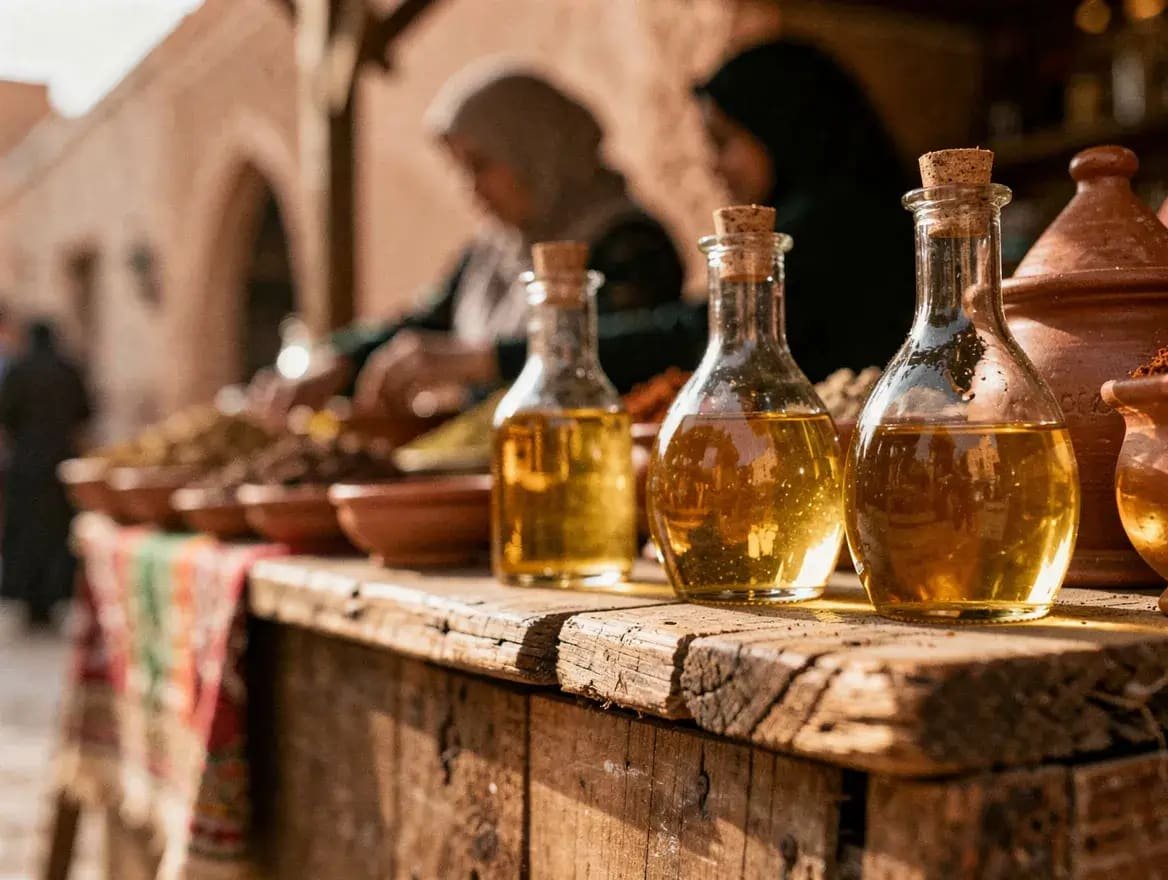
Argan oil’s sourcing story is inseparable from its quality story. The Argania spinosa biosphere covers roughly 800,000 hectares of southwestern Morocco. The kernels are traditionally harvested by Berber women, many of whom work in fair-trade cooperatives that provide stable income and preserve traditional knowledge. When you buy argan oil from a brand that traces its supply chain back to these cooperatives, paying fairly for it, you are also supporting the economic model that keeps the tree and its communities viable.
When you buy a diluted bottle from a brand that does not disclose its source, you are not. The race-to-the-bottom pricing that drives adulteration in the argan market is harmful not just to you as a consumer, but to the Moroccan communities and ecosystem that make genuine argan possible.
This is the sourcing ethic that drives how Utama Spice approaches every ingredient. Our own supply chains (kukui and illipe butter from Kalimantan through the Forestwise partnership, coconut from Bali through the Aluan partnership) are built on the same principle: provenance is part of the product. The women of Munti Gunung in East Bali, who have been part of the Utama Spice community since the beginning, are part of this same commitment. What you give, you get back.
For argan specifically: seek brands that name the cooperative or region of origin, that publish their INCI with Argania Spinosa Kernel Oil first and only, and that are transparent about cold-pressing. These are not luxury asks: they are baseline accountability. Our plant-based anti-aging skincare guide goes deeper into what ingredient accountability means across the broader category of natural botanical skincare.
Frequently asked questions about argan oil for skin
Can I use argan oil every day?
Yes. Argan oil is gentle enough for daily use on most skin types. Start with one to two drops daily, observe how your skin responds over two to three weeks before increasing frequency or amount. Consistency matters more than quantity.
Does argan oil clog pores?
Pure, cold-pressed argan has a comedogenicity rating of one to two, considered low. However, adulterated argan that contains heavier oils in the carrier base can be comedogenic. If you break out after starting an argan oil, the question to ask first is: what else is in the bottle?
Can I use argan oil under SPF?
Yes, as a base layer. Apply argan to damp skin, allow one to two minutes for absorption, then apply your mineral or chemical SPF over the top. Argan’s tocopherols add antioxidant protection but do not provide sun protection independently. SPF is non-negotiable on top.
How long does a 30ml bottle last?
At one to two drops per application, twice daily, a 30ml bottle lasts approximately 90 to 120 days. This is another reason genuine argan can be worth a higher price: it lasts far longer than it appears it should.
Is argan oil safe during pregnancy?
Topical argan oil is generally considered safe during pregnancy. It is a simple, unrefined lipid without the volatile aromatic components that raise concerns for some essential oils. However, always consult your midwife or healthcare provider about any skincare changes during pregnancy.
What is the difference between argan oil and Balinese face oils?
Argan is a Moroccan-origin oil with specific benefits (tocopherols, moderate linoleic acid). Bali-native oils like kukui and tamanu share some overlapping benefits (linoleic acid, barrier support) but have distinct fatty acid profiles and traditional uses. They are complementary, not competing. Our Balinese face oil guide explores this in full.
Can argan oil replace moisturizer?
For some skin types, yes, particularly if your natural skin function is intact and you use it correctly on damp skin. For others, especially very dry or dehydrated skin, combining a hydrating water-based layer with a sealing oil layer works better. Our Natural Face Serum is formulated with argan oil as a base and pairs cleanly with a finishing drop of pure argan or kukui oil. The natural retinol alternative guide covers how botanical oils integrate into a more complete night-time ritual for those interested in addressing skin ageing with plants.