Skincare ingredients to avoid: how to read the label without the fear (or the greenwashing)
Somewhere along the way, reading a skincare label started to feel like defusing a bomb. Every unpronounceable word looks like a threat, every list of skincare ingredients to avoid seems longer than the last, and the fear does a strange thing: it makes us worse at choosing, not better. We grab whatever says “clean” on the front and never turn the bottle over. So let us slow down and do the calm, grounded thing instead. This is a guide to reading an ingredient label with clear eyes, understanding which ingredients genuinely deserve a second look, and telling real caution apart from marketing theatre.
We have hand-blended small-batch skincare in Bali since 1989, which means we read INCI lists for a living. What follows is honest, not alarmist. Some ingredients are worth questioning. Others were turned into villains by clever campaigns, not by evidence. Knowing the difference is the whole skill.
Start with the label, not the fear list
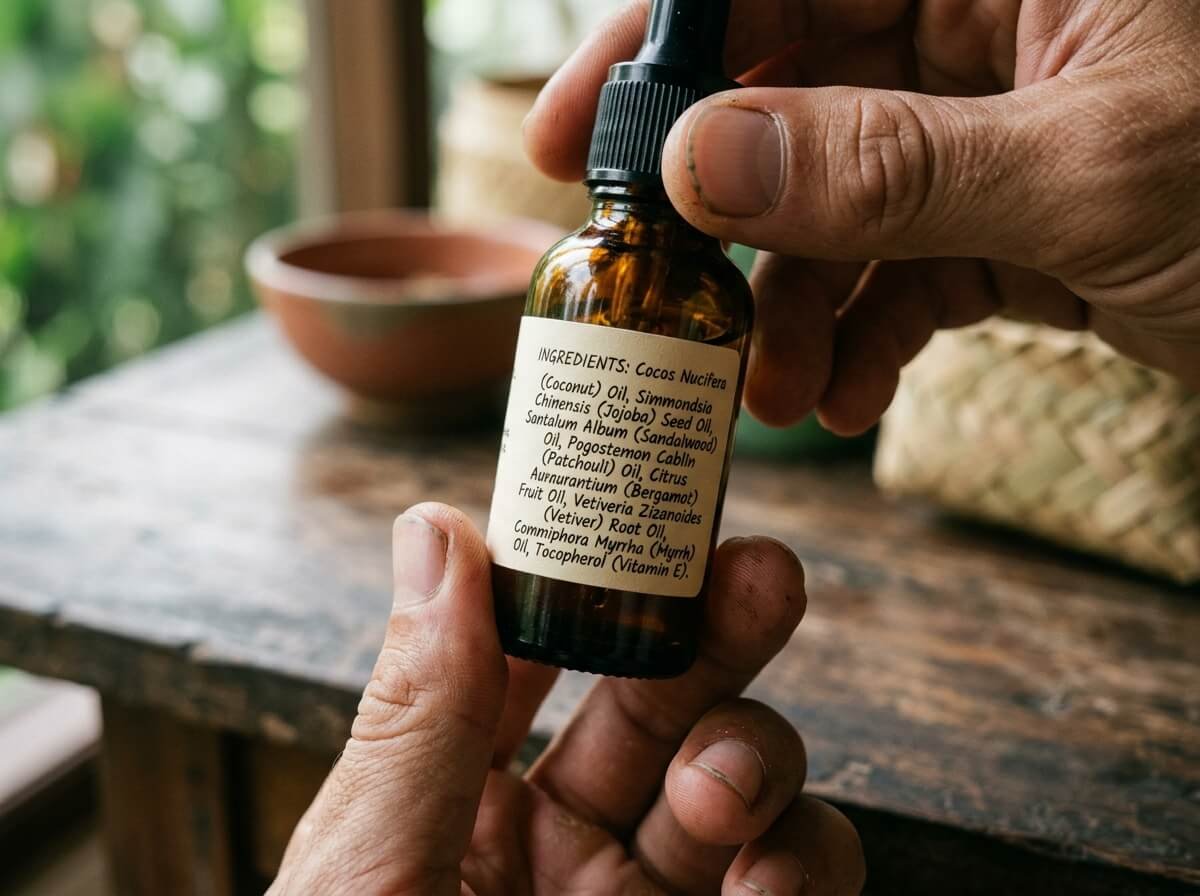
Before we name a single skincare ingredient to avoid, it helps to understand how the list itself works. Every product sold in most of the world uses INCI, the International Nomenclature of Cosmetic Ingredients. It is a shared language, which is why the same botanical can look frightening and familiar at once. Water is aqua. Shea butter is Butyrospermum parkii. Coconut oil is Cocos nucifera. The Latin is not hiding anything, it is simply the standard.
Two rules unlock most labels. First, ingredients are listed by weight, from most to least, down to around one percent. So the first five names tell you what the product mostly is, and the tail is where preservatives, fragrance, and actives sit. Second, a long list is not automatically a bad list. A thoughtful serum can carry a dozen plant oils and still be gentler than a three-ingredient product built around a harsh surfactant. Length is not the signal. Composition is.
This is also where greenwashing lives. The front of a bottle is marketing. The back is the truth. When a brand shouts “natural” on the front but the first several INCI names are synthetic fillers, the label has already answered your question. We wrote a companion piece on exactly this habit in our guide to reading a natural body mist label, and the muscle you build there works on any product in your bathroom. Turn the bottle over first, always.
The one percent line is worth a closer look, because it explains a lot of disappointment. Below roughly one percent of the formula, ingredients can be listed in any order, so a brand can float a much-loved botanical up near a list of fillers to catch your eye, even though it is present in a trace. A hero ingredient in the headline that appears second-to-last on the label is doing more work for the marketing than for your skin. Reading in this order, top names first and claims last, quietly protects you from that trick.
It also helps to know your own skin before you know your ingredients. The most reliable tool is not a blacklist, it is a patch test: a little product on the inner forearm for a few days before it goes near your face. Skin is personal, and an ingredient that suits most people can still be the one that bothers you. The point of learning to read a label is not to fear every name, it is to narrow the field, so that when something does react you can look back at the list and actually find the likely cause.
One more grounding thought before the specifics. “Avoid” rarely means “toxic.” More often it means “unnecessary for your skin,” or “a common irritant that many people do better without.” Care is not fear. It is paying attention, then choosing what serves you.
Synthetic fragrance: the one worth questioning first
If you only learn to spot one thing, make it this. On a label, synthetic fragrance appears as fragrance, parfum, or aroma, and that single word can legally stand in for dozens of undisclosed compounds. It is the one place on a cosmetic label where a brand is allowed to keep a secret. For skin that flares, itches, or reacts without an obvious cause, added fragrance is one of the most common culprits documented by dermatology patch testing.
Here is the honest nuance, because greenwashing works both ways. “Fragrance-free” and “unscented” are not the same thing. Unscented can mean a masking fragrance was added to cover a raw smell. Fragrance-free usually means no scent compounds were added at all. And essential oils, which we use and love, are not automatically gentler just because they are natural. They are potent aromatic molecules, and a few (citrus oils, certain spice oils) can sensitise skin over time if a formula leans on them too heavily. Natural does not mean weak, and it does not mean risk-free. It means we owe you the same transparency.
What we do instead is disclose. When a product carries a scent, it should come from named botanicals at sensible levels, not a mystery word. If your skin is reactive, start with a truly minimal formula and add scent back slowly. Our Sensitive Face Serum was built around this exact idea: a short, calm list of carrier oils chosen for barrier support rather than perfume. If you want to understand how a serum differs from a plain oil and how to match one to your skin, our guide to the natural face serum walks through it without the jargon.
There is a useful detail hiding in plain sight, too. In many regions, a set of common fragrance allergens must be named individually once they pass a threshold, so you will sometimes see words like limonene, linalool, citronellol, or geraniol at the tail of a list. These are naturally present in citrus and floral oils, and for most people they are perfectly fine. But if your skin has reacted before, they are a helpful breadcrumb: they tell you a fragrance load is present even when the front of the pack whispers “gentle.” Reading them is not about fear, it is about knowing what your own skin has already told you.
Fragrance is also the ingredient where the “clean” beauty aisle most often trips itself. A product can be free of every scary-sounding chemical on a viral list and still be loaded with an undisclosed fragrance blend. Read for what is named, not for what is missing.
Sulfates: what “sulfate-free” gets right, and what it misses
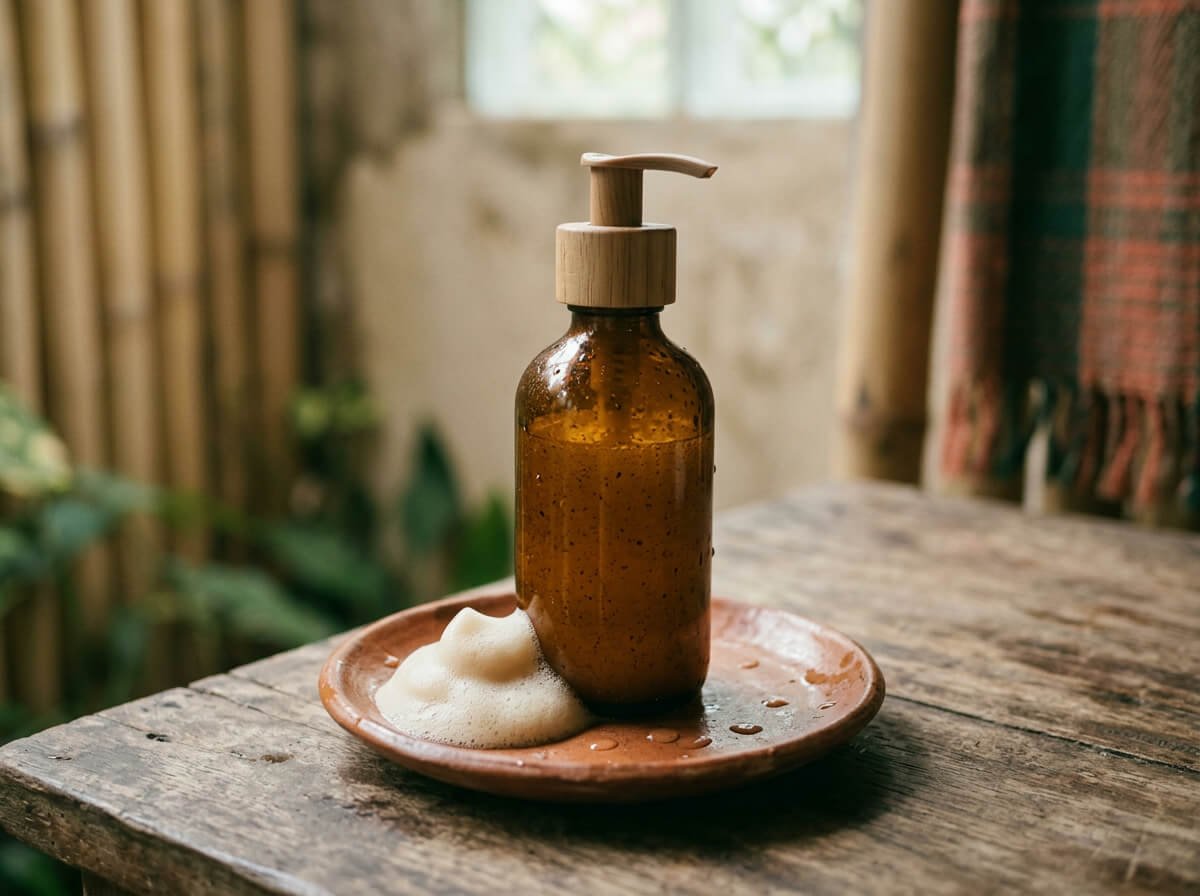
Sulfates are the deep-cleaning surfactants that make a cleanser or shampoo foam hard. On a label they read as sodium lauryl sulfate (SLS) or sodium laureth sulfate (SLES). They are not poison, and they rinse away. The real issue is that they clean indiscriminately, stripping the skin’s own protective oils along with the dirt. For many people that leaves a face wash feeling tight and squeaky, which we were taught to read as “clean” but is closer to “over-cleansed.”
So sulfates earn a spot on a thoughtful list of skincare ingredients to avoid, especially in anything that stays on dry, mature, or reactive skin, or in a daily facial cleanser. A barrier that is stripped every morning struggles to hold water, and dehydrated skin then overproduces oil to compensate. The tight-then-greasy cycle so many people fight is often a cleanser problem wearing a moisturiser disguise.
Here is what “sulfate-free” misses, though. Removing SLS is not a guarantee of gentleness, because a formula can swap in other harsh surfactants and still strip. And a good cleanser is not about zero cleaning power, it is about balanced cleaning that respects the barrier. We built our Bliss Botanical Face Wash around gentle plant-based cleansing for this reason, so skin feels soft and comfortable after rinsing rather than stripped. If you prefer the simplest possible route, a single ingredient like our Virgin Coconut Oil doubles as a slow, kind cleansing oil that melts away sunscreen and grime without foam at all. Judge a cleanser by how your skin feels twenty minutes later, not by how much it foams in the moment.

Parabens and preservatives: the fear that outran the evidence

Now for the part where honesty matters most, because this is where the clean-beauty story is at its shakiest. Parabens (listed as methylparaben, propylparaben, and similar) became the poster villain of the movement. The truth is more measured. The studies that sparked the panic were limited, and decades of review by cosmetic safety bodies have kept common parabens permitted at the low levels used in skincare. They are among the most-studied preservatives we have. The science does not support the fear the marketing built.
Why do we still avoid them in our own formulas, then? Two grounded reasons, and neither is “they are toxic.” First, a small share of people do react to them, and gentler options exist. Second, we prefer preservation systems that fit an anhydrous, oil-based approach. That is a formulation choice, not a health warning, and we would rather tell you that plainly than sell you a scare.
Here is the part the fear list never mentions: preservatives are not the enemy, they are protection. Any product that contains water can grow mould and bacteria, and an unpreserved water-based cream is a genuine risk to your skin, far more real than the preservative ever was. This is why “preservative-free” is often a red flag, not a badge, unless the product is fully anhydrous (all oils and butters, no water) like a balm or a face oil. If a brand brags about no preservatives in a water-based lotion, ask how they are keeping it safe. The more useful watch-outs are specific ones some people react to, such as methylisothiazolinone (MIT), and formaldehyde-releasing preservatives like DMDM hydantoin. Those are worth knowing by name. “All preservatives” is not a real category to fear.
This is also why format quietly decides so much. An anhydrous product, a balm, a body butter, a pure face oil, needs little or no preservative because there is no water for microbes to grow in, which is one of the honest advantages of an oil-first approach. A water-based cream, by contrast, has to be protected, and a well-chosen modern preservative doing that job is care, not compromise. The useful question is never “does this contain a preservative,” it is “is this product preserved appropriately for what it is.” That single reframe dissolves most of the panic.
The same measured thinking applies across your routine. Our breakdown of natural deodorant ingredients to avoid untangles a nearly identical panic around aluminium, where the fear again ran ahead of the evidence while a few genuinely useful swaps got buried underneath it. If you like to keep things simple, an aluminium-free option like our Probiotic Deodorant in Sage and Cedar shows the same short-label thinking applied beyond the face.
Drying alcohols, PEGs, and the fillers that quietly undo a formula
This last group is quieter than fragrance and less demonised than parabens, which is exactly why it slips past most people. Start with drying alcohols. Not all alcohol in skincare is bad, and here the label knowledge from earlier pays off. Fatty alcohols like cetyl, stearyl, and cetearyl alcohol are soothing emollients that soften a cream. The ones worth watching are the volatile, defatting kinds high on an ingredient list: alcohol denat., SD alcohol, and isopropyl alcohol. Used as a main solvent, they give that instant matte, quick-dry feel while pulling moisture out of the barrier over time. A toner built on them can leave skin tight and, over months, more reactive.
Then the fillers. PEGs (polyethylene glycol compounds) and long chains of silicones such as dimethicone are not dangerous in themselves. Silicones give that instant silky slip, and for some skins they are genuinely useful. The honest critique is different: they are often used to fake the feel of a good formula. A cheap product can slather on silicone so it glides like a luxury cream, while the actual nourishing ingredients sit near the bottom of the list at a fraction of a percent. You are buying a texture, not a treatment. This is the subtle greenwashing that a label reader catches and a front-of-bottle shopper does not.
It is worth naming the fatigue here, because “free-from” labelling has become its own kind of noise. A bottle plastered with a dozen “no this, no that” badges is often distracting you from what it actually contains. Absence is easy to advertise, presence is what does the work. A short, legible list of ingredients you can trace back to a plant, a place, and a person tells you more than any wall of red-circled promises. The best label is not the one shouting about what it left out, it is the one calm enough to show you what it put in.
The kinder path is a formula where the good stuff is the actual body of the product, not a garnish. When plant oils and butters lead the INCI list, the slip you feel is the treatment. If you want to see how texture and format change what a formula can do, our guide to the natural face cream and our honest comparison of coconut oil versus shea butter both show how much the base ingredients matter long before any active is added.
A short list you can actually read
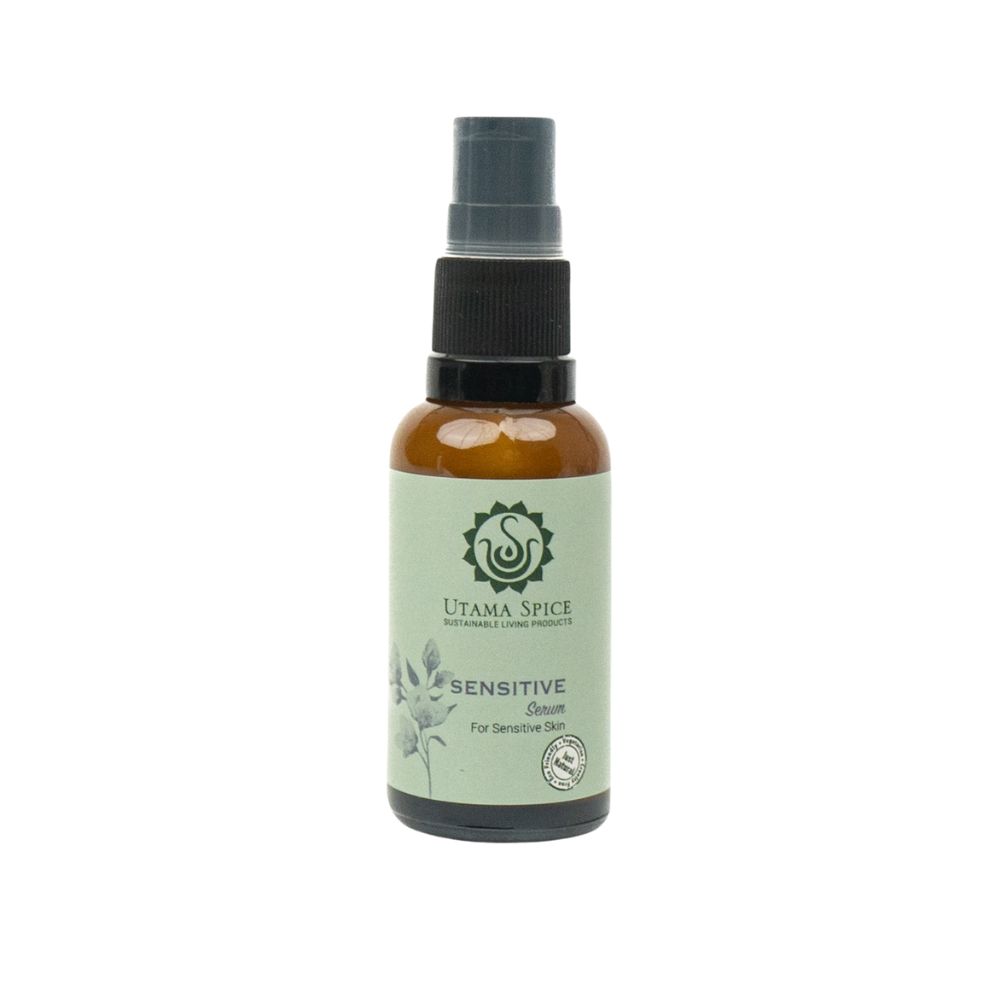
Our Sensitive Face Serum is built on a calm blend of wild-harvested carrier oils, no synthetic fragrance, no drying alcohol, nothing to decode. Barrier support for reactive skin, hand-blended in Bali, refillable when you run low.
A calm checklist, and answers to the questions people ask most

You do not need to memorise a fear list. You need a short, repeatable way to read a label with a steady hand. Here is the checklist we use ourselves.
- Turn the bottle over and read the INCI list before the front-of-pack claims.
- Scan the first five names, they tell you what the product mostly is.
- Look for a named scent, or “fragrance-free,” rather than the mystery word parfum.
- In leave-on products, watch for alcohol denat. high on the list.
- Make sure any water-based product is properly preserved, and treat “preservative-free” lotions with caution.
- Prefer formulas where plant oils and butters lead, not where silicones and PEGs do the heavy lifting.
- Choose brands that disclose sourcing and let you refill, so less packaging is the default.
That last point matters more than any single ingredient. Radical transparency and a real refill system tell you a brand has nothing to hide, in the bottle or in the supply chain. If you want to see what that looks like in practice, our guide to refillable body care shows how to spot a genuine refill program and skip the ones that are just a green sticker.
Are all synthetic ingredients bad for my skin?
No, and this is the most important myth to let go of. Plenty of lab-made ingredients are safe, stable, and useful, and plenty of natural ones can irritate. The goal is not synthetic versus natural, it is honest versus deceptive. We choose botanicals because of where they come from, who harvests them, and the traditions they carry, not because “chemical” is a dirty word. Everything is a chemical, water included.
Is a longer ingredient list always worse?
Not at all. A well-built serum can hold many plant oils and still be gentle, while a short list built around a harsh surfactant can be far more stripping. Length is not the signal. What sits at the top of the list, and whether anything is hidden behind the word fragrance, tells you far more.
What is the single fastest way to spot a skincare ingredient to avoid?
Look for the undisclosed scent. If fragrance or parfum sits high on the list and your skin tends to react, that is the first thing to change. After that, watch for drying alcohols near the top of leave-on products. Those two habits catch most of the trouble for most people, without a wall of memorised names.
Do natural and clean brands ever greenwash too?
Yes, and label reading is your defence. “Natural,” “clean,” and “non-toxic” are marketing words with no fixed legal meaning. A product can carry all three on the front and still hide an undisclosed fragrance blend or lead with cheap fillers. The back of the bottle does not market to you. Read it, trust it, and let the front of the pack be the last thing you look at.
Reading a label is a small ritual, and like every small act of care it adds up. You do not need fear, and you do not need a memorised blacklist. You need a steady hand, a bottle turned over, and a brand willing to tell you the truth. That is what real care looks like, and it is within reach on your very next purchase.