Face serum vs face oil: which one your skin actually needs (and when one replaces the other)
The comparison between face serum vs face oil seems simple on the surface. Every buying guide delivers the same verdict: serums are water-based and penetrate deep; face oils sit on top and seal everything in. Use both, serum first, oil second, and your skin is covered. The advice is not wrong, exactly. It is just incomplete, and in ways that matter if you have a budget, a simplified routine, or skin that does not respond well to layers of product. The real picture involves three categories of products, not two, and a more honest answer to the question most guides quietly avoid: do you need both, or will one do the job? What follows is a formulation-honest, no-upsell look at how these products actually work, who benefits from each, and how to read a label so you know what you are actually holding.
We have been formulating botanical skincare in Bali since 1989, and across 35 years of working with carriers, actives, and tropical skin conditions, one thing has become clear: the most confident skin choices come from understanding your products rather than accumulating them.
The real difference: water-based serum, oil-based serum, and face oil
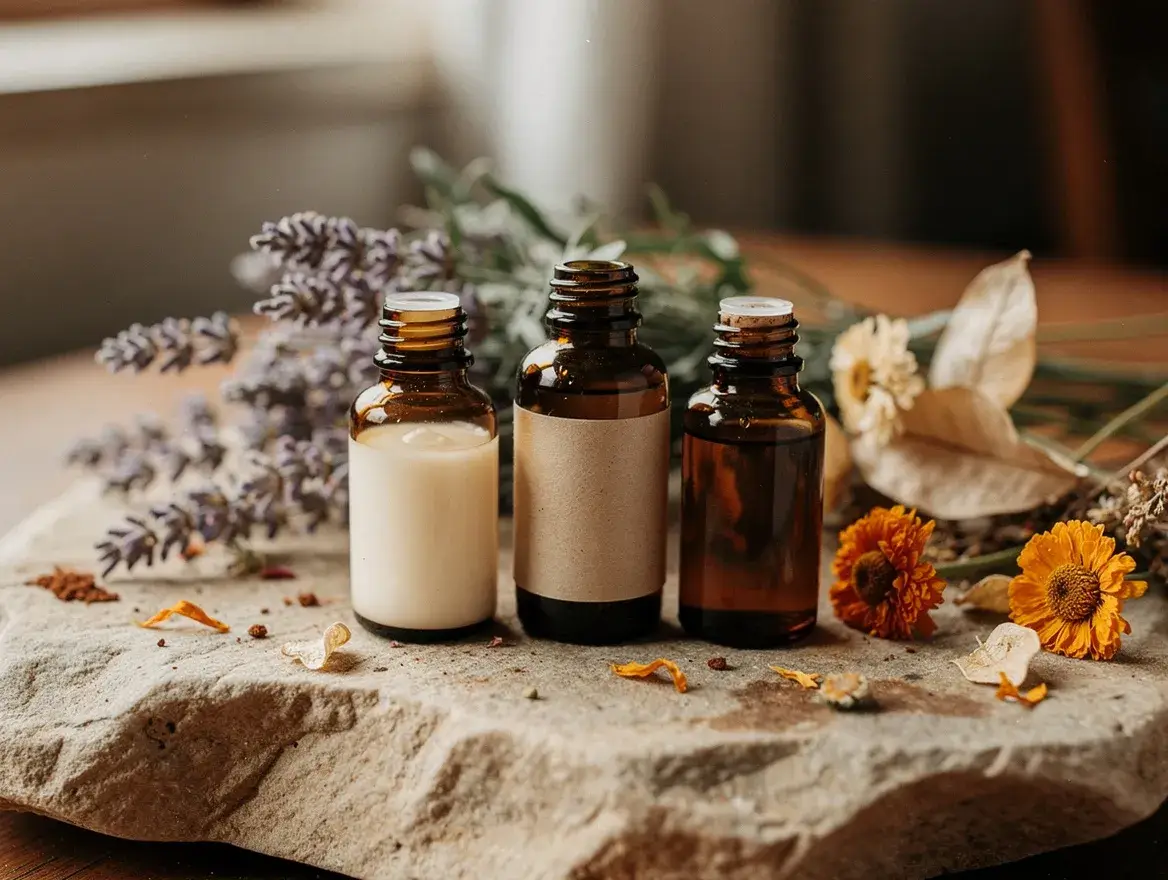
Most serum vs oil guides draw a single line: serums are water-based and face oils are oil-based. It is neater than the truth. In practice, there are three distinct product types, and understanding all three changes how you shop.
Water-based serums use water (listed as aqua on the INCI) as their carrier. Active ingredients such as hyaluronic acid, niacinamide, vitamin C, and peptides dissolve or disperse in that aqueous base. Because the carrier is water, a preservative system is required, which we will return to in section five. Water-based serums tend to feel light, absorb quickly, and are where you find most concentrated treatment actives.
Oil-based (anhydrous) serums contain no water at all. Their carrier is one or more botanical oils, and actives are selected for oil solubility: fat-soluble vitamin C (ascorbyl tetraisopalmitate), retinoids, coenzyme Q10, plant-derived vitamin E. Because there is no water, no preservative is needed. The result is often gentler for reactive skin. These products look and feel like a face oil and are often marketed next to face oils, but they carry targeted active ingredients the way a water-based serum does.
Face oils are a single botanical oil or a blend of them, with no concentrated actives beyond what the oils themselves naturally contain. Rosehip oil carries natural beta-carotene and some vitamin A precursors. Tamanu oil, revered in Balinese and broader Pacific healing traditions, has well-documented wound-healing and anti-inflammatory properties. Read more in our guide to tamanu oil benefits. A natural face oil at its honest best is a beautifully formulated carrier that works with your skin’s existing oil chemistry, not a treatment layer.
The confusion matters because oil-based serums and face oils are often shelved side by side, described in nearly identical language, and priced similarly. Knowing which you own changes how you use it and whether you need anything else in your routine.
Why “serums penetrate, oils just sit on top” is only half true
The penetration claim is the one repeated across almost every buying guide, and it carries a strong implicit judgment: sitting on top is inferior; penetrating is better. Neither half of that is fully accurate.
Water-based serums penetrate because their molecules dissolve in water, and skin is more permeable to water-soluble compounds than to oil-soluble ones. This is true. Hyaluronic acid pulls water into the upper layers of the epidermis; niacinamide reaches the cells where it regulates sebum and melanin; ascorbic acid, when it reaches its target in stable concentrations, inhibits tyrosinase and supports collagen synthesis.
Oils behave differently by design. Skin’s surface layer, the stratum corneum, is itself a lipid structure. It is oil-native. When you apply a face oil, you are working with the skin’s own chemistry rather than pushing something foreign through it. Lighter molecular-weight oils, squalane (derived from sugarcane or olives), jojoba (technically a liquid wax), and tamanu, penetrate well because their molecular size allows passage through the intercellular lipid spaces. Heavier oils, such as shea in its solid form or coconut in thick application, sit closer to the surface. That surface action is not a failure mode. It creates a gentle occlusive layer that slows transepidermal water loss (TEWL), the process by which skin loses moisture to the surrounding air. Sealing in moisture is a valid job.
An oil-based serum with fat-soluble actives penetrates via the lipid pathway, which is how many dermatological actives are actually delivered. The perception that “oil equals surface only” is partly a marketing shortcut and partly a misunderstanding of skin physiology.
What is genuinely true: water-based serums are better at delivering water-soluble actives into the skin. Face oils are better at supporting the lipid barrier and sealing in hydration. Neither description is a ranking. They are descriptions of different, complementary mechanisms, and your skin benefits from understanding which mechanism it actually needs.
The question buying guides skip: do you need both, or will one do
Here is the question every commercial guide avoids, because the answer sometimes is: no, you do not need both. Most guides have a financial interest in the answer being yes.
If your skin concern is dehydration (skin that feels tight and dull even when it is not clinically dry), you need water. A water-based serum with hyaluronic acid or glycerin will address this in a way a face oil alone cannot. Oil sits on top of water, so applying it to dehydrated skin seals in an absence rather than a presence. Hydrate first, then seal.
If your skin concern is dryness (lacking lipids, feeling rough, prone to flakiness and tightness that does not improve after drinking water), a good face oil can be enough, particularly in a humid climate. Your skin needs its lipid barrier rebuilt, and a well-matched botanical face oil does exactly that. A water-based serum may help further, but it is not the primary fix.
If you want specific actives at therapeutic concentrations, retinol, vitamin C, niacinamide, alpha hydroxy acids, you need a serum formulated to carry them. Face oils do not deliver these at meaningful concentrations unless they are, technically, oil-based serums with those actives deliberately added.
If you want a simple daily maintenance routine and your skin is generally balanced, a single botanical face oil used morning and evening can function as your entire moisturising step. A natural skincare routine built on one good product used consistently often outperforms a complicated layered system used inconsistently. The guide that tells you to use both is not necessarily wrong. But it is also never going to tell you that one might be enough. We will.
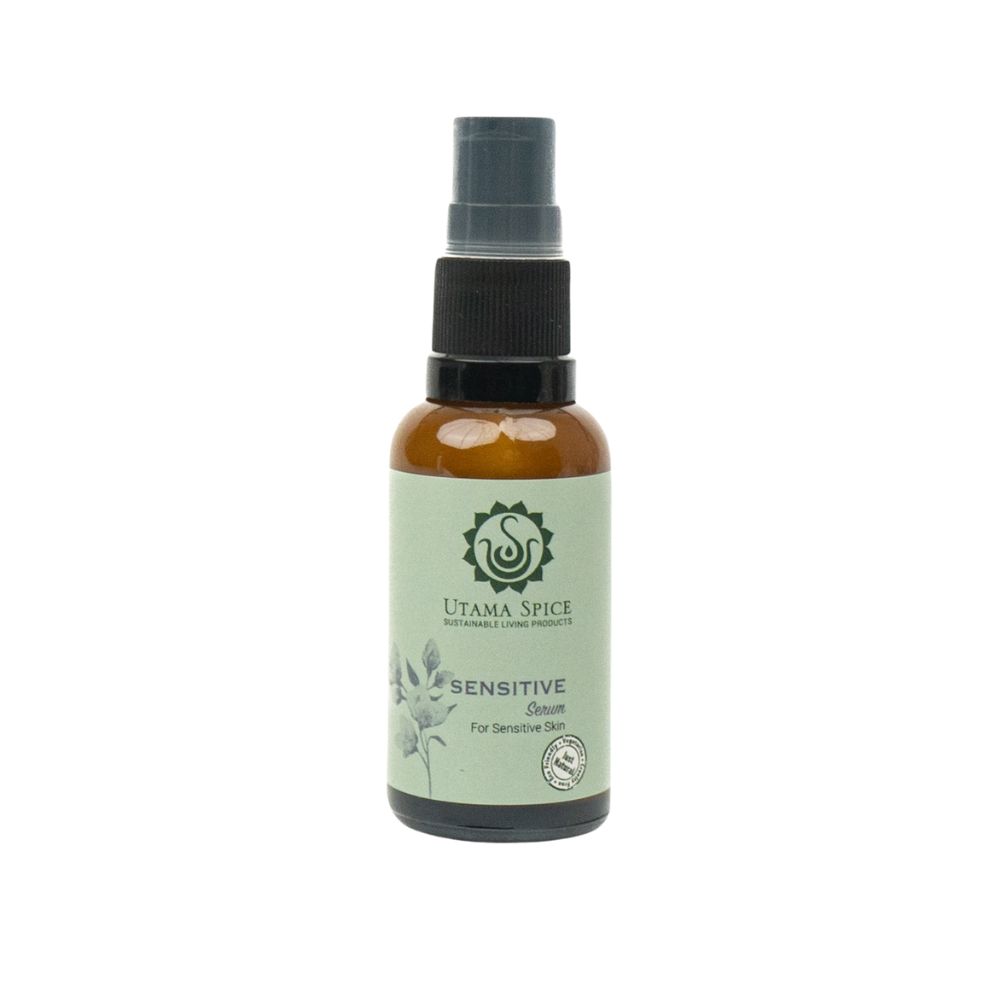
A botanical serum crafted for calm skin
Our Sensitive Face Serum uses jojoba seed oil, evening primrose, and grapeseed oil in a carefully minimal anhydrous base. No water, no preservatives, no unnecessary complexity. Gentle enough for reactive skin, and effective enough to use daily.
Match it to your skin type and climate
The same formula that works beautifully on dry skin in a cold, dry climate can feel heavy and congesting in Bali’s tropical humidity. Skin type and geography matter as much as the product itself.
Oily or acne-prone skin tends to benefit from a water-based serum with niacinamide (which regulates sebum production) or low-concentration salicylic acid (which clears pores from inside). Face oils are not automatically off-limits, but the choice of oil matters significantly. Jojoba rates zero on the comedogenicity scale; coconut oil rates four for many skin types. If you do use a face oil with oily skin, choose a dry oil that absorbs quickly, use it lightly, and consider evening application only.
Combination skin often does best with a targeted water-based serum applied all over and a face oil applied only to the drier zones (typically cheeks, jaw, and around the eyes). This way you are not blocking pores in the T-zone while still nourishing areas that genuinely need lipid support.

Dry or mature skin is where face oils truly shine. The lipid profile of oils such as rosehip, sea buckthorn, and our Tamanu Oil mirrors the skin’s own fatty acid structure, which helps barrier function to recover. Mature skin loses oil-producing activity over time; restoring a lipid layer from the outside is a straightforward, effective response.
Sensitive or reactive skin often responds better to anhydrous oil formulas than to water-based serums. The reason is chemistry: water-based serums require a preservative system. Even well-chosen, gentle preservatives (phenoxyethanol, ethylhexylglycerin, benzyl alcohol) can be an irritation source for sensitized skin. An oil-based serum or a simple face oil has no water, no preservative, and far fewer potential irritants. Our Sensitive Face Serum is formulated with this in mind: jojoba, evening primrose, and grapeseed oil in a minimal anhydrous base that nourishes without provoking.
Climate context: in warm, humid environments like Bali, southern Thailand, or coastal tropical regions, a light face oil can replace both serum and moisturizer in a single step. The ambient humidity provides an external water source; the oil seals it against the skin. In cold, dry winters or air-conditioned environments, layering a water-based serum underneath a face oil gives the skin more to work with.
The honest formulation note: preservatives, oxidation, and shelf life
This is the section that clean-beauty marketing tends to skip, because it requires acknowledging that formulation chemistry matters and that “natural” is not an automatic guarantee of safety or stability.
Water-based serums must be preserved. A water-based formula is an environment in which bacteria, yeast, and mold can grow. Without an effective preservative system, a water-based serum will go off within days to weeks, even if it still smells fine. Reputable natural brands use established preservatives such as phenoxyethanol, sodium benzoate, potassium sorbate, or newer plant-derived alternatives including fermented radish root extract and certain essential oil fractions with demonstrated antimicrobial activity. A serum that claims to be preservative-free with a water base is either using a preservative under a less-recognized name, relying on alcohol as the antimicrobial agent, or is genuinely inadequately preserved and therefore a microbial risk.
This is not an argument against water-based serums. It is an argument for reading labels and choosing brands that are transparent about their preservation strategy. The natural face serum category has matured; effective and well-tolerated preservation is achievable with thoughtful formulation. Transparency is the mark of a trustworthy brand.
Face oils oxidize rather than grow microbes. Without water, microbial growth is not a concern. But oils degrade when exposed to light, heat, and oxygen. The lipid chains break down into shorter-chain compounds that can irritate skin and smell rancid. Polyunsaturated oils, rosehip and sea buckthorn in particular, oxidize faster than more saturated or monounsaturated ones such as jojoba or squalane. Proper storage in a dark bottle, away from direct sunlight and heat sources, and a six to twelve month after-opening timeline are real practical considerations, not fine print.
The practical implication: if you buy slowly and store your products casually, a well-preserved water-based serum may actually maintain stability better day-to-day than a delicate polyunsaturated face oil left on a bathroom shelf in direct light. If you use your products quickly and store them with care, face oils present no stability disadvantage. The honest answer depends on how you live with your products.
How to layer face serum and face oil correctly, and how to read the label
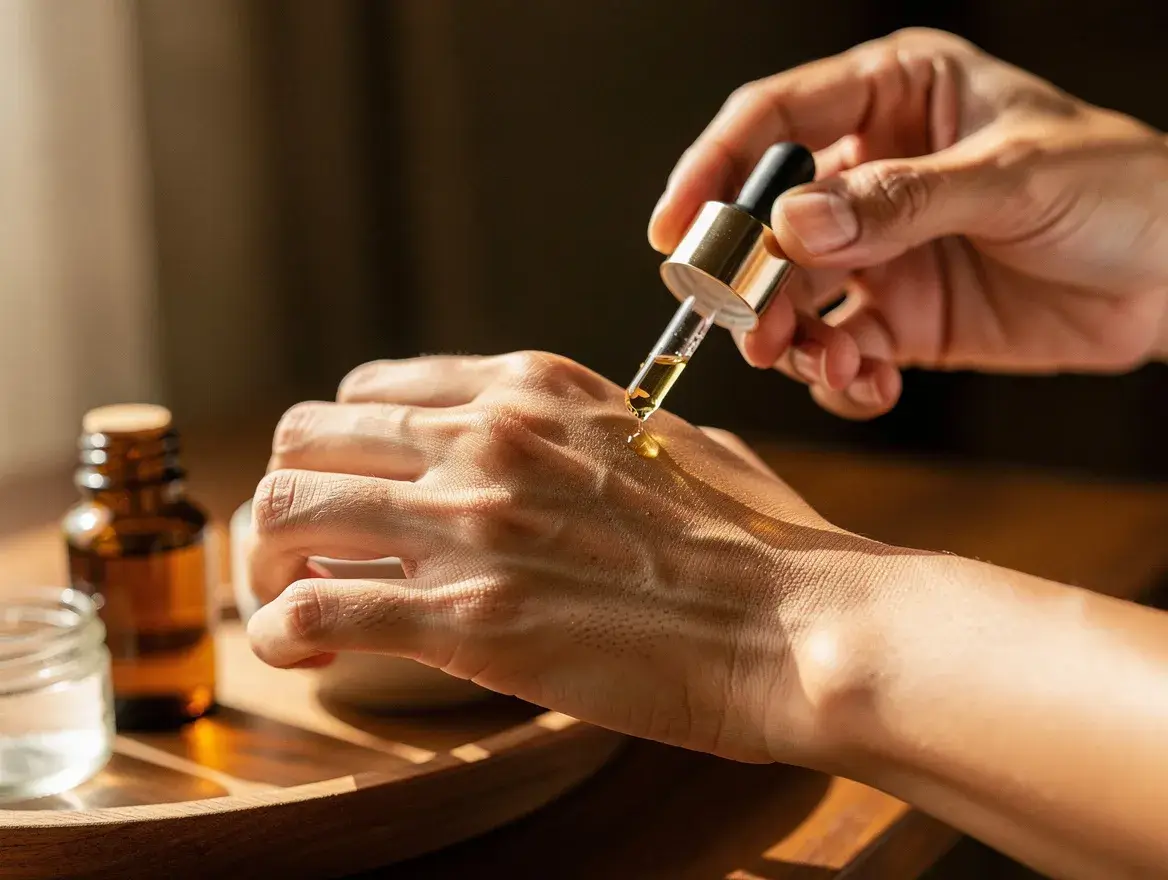
The layering rule is consistently stated and consistently misapplied. The principle is sound: apply thinnest consistency first, thickest last. A heavier product creates a film over the skin that can slow or prevent subsequent products from reaching beneath it. In practice, this means:
- Cleanse
- Tone or mist (if using one)
- Water-based serum (thinnest, absorbs fastest)
- Face cream or moisturizer (thicker, cream-based, goes before oil)
- Face oil or oil-based serum (last, locks everything in)
- SPF in the morning, applied over everything else
If you use only a serum and a face oil (no separate moisturizer), the serum goes first. If you use only a face oil with nothing else, apply it to slightly damp skin to seal in some ambient moisture.
How to read the INCI label
The INCI (International Nomenclature of Cosmetic Ingredients) lists ingredients in descending order of concentration. The first two or three ingredients make up the majority of the formula by weight. Here is what to look for:
If the first ingredient is Aqua (water), you have a water-based product. It will need a preservative. Look for actives such as sodium hyaluronate, niacinamide, ascorbic acid, or retinyl palmitate. These appear lower in the list but can be present at active concentrations.
If the first ingredient is an oil (Simmondsia chinensis for jojoba, Prunus amygdalus dulcis for sweet almond, Rosa canina for rosehip, Calophyllum inophyllum for tamanu), you have either an anhydrous serum or a face oil. Check whether fat-soluble actives appear further down: ascorbyl tetraisopalmitate for oil-soluble vitamin C, tocopherol for vitamin E, ubiquinone for coenzyme Q10. If there are dedicated actives at meaningful concentrations, it is an oil-based serum. If the ingredients are exclusively carrier oils and botanicals, it is a face oil.
A natural face moisturizer typically sits between the two: an emulsion of water and oil phases, which is why it requires emulsifiers and a preservative, but delivers both hydration and lipid support in one step.
FAQ: face serum vs face oil, the honest answers
Can I skip moisturizer if I use a face oil?
Often, yes, particularly in a warm or humid climate. A face oil applied to slightly damp skin acts as an occlusive and lipid-replenishment step simultaneously, which is what a moisturizer does. In drier or colder climates you may find you want a water-based layer first, with the oil sealing over it. The honest answer: try it for two to three weeks and watch how your skin responds. Skin tells you more than a formula can.
Will a face oil cause breakouts?
It depends on the oil and your skin. The comedogenicity scale runs from zero (non-comedogenic) to five (highly comedogenic). Jojoba rates zero; argan rates zero; rosehip rates one; coconut oil rates four for many skin types. This scale is a guide based on older testing methods, so individual responses vary, but it is a useful starting point. If you have acne-prone skin, choose oils with a rating of one or below and introduce them slowly. Tamanu oil has an unusually good track record with acne-prone skin, with traditional use in Southeast Asian wound healing and evidence for anti-inflammatory activity.
Can I use both morning and night?
Yes. Morning routines tend to favor lighter products, especially if you apply SPF, and a water-based serum with antioxidants (vitamin C, niacinamide) before sun exposure is a logical choice. The evening is where the skin’s repair cycle is most active, making it a good time for richer actives and heavier face oils. That said, there is no rule against a face oil in the morning if your skin feels dry and is not congested by it. Follow what your skin needs on a given day.
Does a face serum expire?
Yes. A water-based serum typically has a shelf life of 12 to 24 months unopened and six to 12 months after opening. Look for the open-jar symbol on the packaging with a number such as 12M. Discard earlier if the smell, color, or texture changes. A face oil has a similar or slightly shorter open shelf life depending on its lipid composition. Polyunsaturated oils oxidize faster than monounsaturated or saturated ones. When in doubt, trust your nose: rancid oil has a distinct off smell.
Is a face oil or serum better for mature skin?
Neither is categorically better; they address different aspects of what changes in skin over time. Maturing skin loses moisture-retention capacity (which water-based serums with hyaluronic acid or peptides address) and lipid production (which face oils restore by rebuilding barrier function). Both serve maturing skin well. If you can only choose one, a well-chosen face oil often provides more immediate visible improvement because barrier restoration shows up quickly as plumper, less dull skin. Add a serum when you want to target specific concerns such as uneven tone or loss of firmness.
The honest summary: face serum vs face oil is a question that skincare marketing has made more complicated than skin biology requires. Water-based serums carry specific actives that oils cannot replicate at the same concentration. Face oils nourish and protect the lipid barrier in ways that water-based formulas do not address. Both have a role. Neither is mandatory if the other one already does what your skin needs right now.
The most useful thing this comparison can do is give you the formulation literacy to read a label, match a product to your skin’s actual state, and stop buying things out of anxiety rather than knowledge. Start with one product. Observe your skin consistently over three weeks. That is a more reliable route to a routine that works than any guide recommending you use everything at once.