Natural skincare for rosacea: what calms redness, and the essential oil truth
Natural skincare for rosacea starts with an honest sentence that most product pages skip: natural is not the same as gentle. Rosacea-prone skin flushes, burns, and stings in response to things that leave other skin untouched, and some of the most loved botanicals in any natural range sit high on that list. We have been hand-blending plant oils in Bali since 1989, and we still say it plainly. Some of what we make is wonderful for this skin, and some of it is not.
This guide is our attempt to sort the two. We look at what rosacea actually is, which botanicals have real calming evidence behind them, which essential oils deserve caution, and how to build a short, fragrance-conscious routine. We also look past the bathroom shelf, because heat, sun, and daily habits often matter more than any jar. And we are clear about where skincare ends and a dermatologist’s work begins.
What rosacea is, and why natural skincare for rosacea needs care
Rosacea is a long-term inflammatory skin condition that mostly affects the centre of the face: the cheeks, nose, chin, and forehead. It tends to appear after 30, and it often arrives quietly, as a blush that lingers a little longer each time. Over months or years, that flush can settle into persistent redness, fine visible blood vessels, and for some people small bumps that look like acne but are not.
Dermatologists now describe rosacea by its features rather than by rigid types. Someone might live mainly with flushing and redness. Someone else might see bumps and pustules. A smaller group develops thickened skin on the nose, and many people notice gritty, irritated eyes, known as ocular rosacea. These features can overlap, come and go, and shift with the seasons.
What is happening beneath the redness
The causes are still being studied, but a few threads are well established. Blood vessels in rosacea skin dilate easily and stay dilated longer. The skin’s innate immune system is more reactive, releasing inflammatory signals in response to heat, UV, and microbes. Nerves in the skin can be more sensitive, which is why many people describe burning or stinging rather than itch. Tiny Demodex mites, which live on almost everyone’s face, are often found in higher numbers on rosacea skin and may add to the inflammation.
There is also a barrier story. Rosacea skin often loses water faster than calm skin, and a weaker barrier lets irritants in more easily. That single fact explains a great deal. A product that feels pleasantly tingly on resilient skin can feel like a burn on a barrier that is already stressed.
Why “just go natural” is not automatically the fix
This is where natural skincare for rosacea needs a careful hand. Plants are chemically rich. That richness is what makes them useful, and it is also what makes them reactive. Many plant extracts and essential oils contain fragrance compounds, warming molecules, and known allergens. A synthetic, fragrance-free moisturiser can be far kinder to rosacea than a beautifully scented natural balm.
So we do not ask whether something is natural. We ask three better questions: how much fragrance does it carry, what does the evidence say, and how does this particular skin respond to it. If you are still working out whether your skin is reactive or truly rosacea-prone, our guide to a sensitive skin routine is a useful companion to this one.
The tension nobody names: fragrance and essential oils can trigger rosacea
Patient surveys from the US National Rosacea Society list certain skincare products among the common triggers, alongside sun, heat, stress, and alcohol. When people trace which products set off a flare, fragrance comes up again and again. Dermatology bodies, including the American Academy of Dermatology, advise people with rosacea to choose fragrance-free products for this reason.
Here is the part a natural brand rarely says out loud: essential oils are fragrance. They are concentrated plant aromatics, and the molecules that give lavender, rose, or orange their scent are the same molecules that can irritate or sensitise skin. Linalool, limonene, geraniol, citral, and eugenol are all common in essential oils, and all appear on European lists of fragrance allergens that must be declared on labels above certain levels. “Naturally derived” does not change how a nerve ending responds to them.
Why a natural label can hide a fragrance load
A product can be free of synthetic perfume and still carry several percent of essential oils. On the label, these might appear by their Latin botanical names, which is honest, but easy to miss. Others hide behind the single word “parfum” or “fragrance.” We wrote about the difference in our piece on essential oil vs fragrance oil, and our guide to skincare ingredients to avoid covers how to read an INCI list line by line.
For rosacea, the practical rule is simple. Read past the front of the bottle. Count the botanical oils near the end of the ingredient list, and look for the declared allergens that often follow them. The more of those you see, the more cautious it makes sense to be.
What this means for our own range
We would rather be truthful than sell a bottle that brings on a flare. Many of our face products carry essential oils by design. Our face washes, our Natural Face Serum, and our HydroBotanic face cream all include them. Even our Sensitive Face Serum contains lavender, blue chamomile, and jasmine. Some people with rosacea tolerate it well, and others will not, so it belongs in the “patch test first” category, not the “safe for everyone” one.
The products we reach for first on rosacea skin are the plainest ones we make: single-ingredient oils with no added scent, and a zinc-based sunscreen. We will come back to both.
What has real calming evidence for rosacea-prone skin
Not every botanical is a risk, and some have genuinely encouraging evidence. The research is uneven, so we have tried to grade it honestly rather than list every plant ever suggested for redness.
Stronger support
- Colloidal oatmeal. Finely ground oats are one of the few botanicals recognised as a skin protectant by the US FDA. Oat contains avenanthramides, which calm itch and inflammation, and beta-glucans, which hold water in the skin. A cool oat compress or a fragrance-free oat cream is a quiet, well-supported choice.
- Liquorice root extract. Licochalcone A from liquorice has been studied in creams for facial redness, with improvements in several clinical trials. It appears in many dermatologist-recommended redness formulas.
- Niacinamide. Not a botanical in the strict sense, but worth naming. It supports the barrier by encouraging the skin to make more of its own ceramides, and it is generally well tolerated at modest strengths of around 2% to 5%.
Promising, with smaller studies
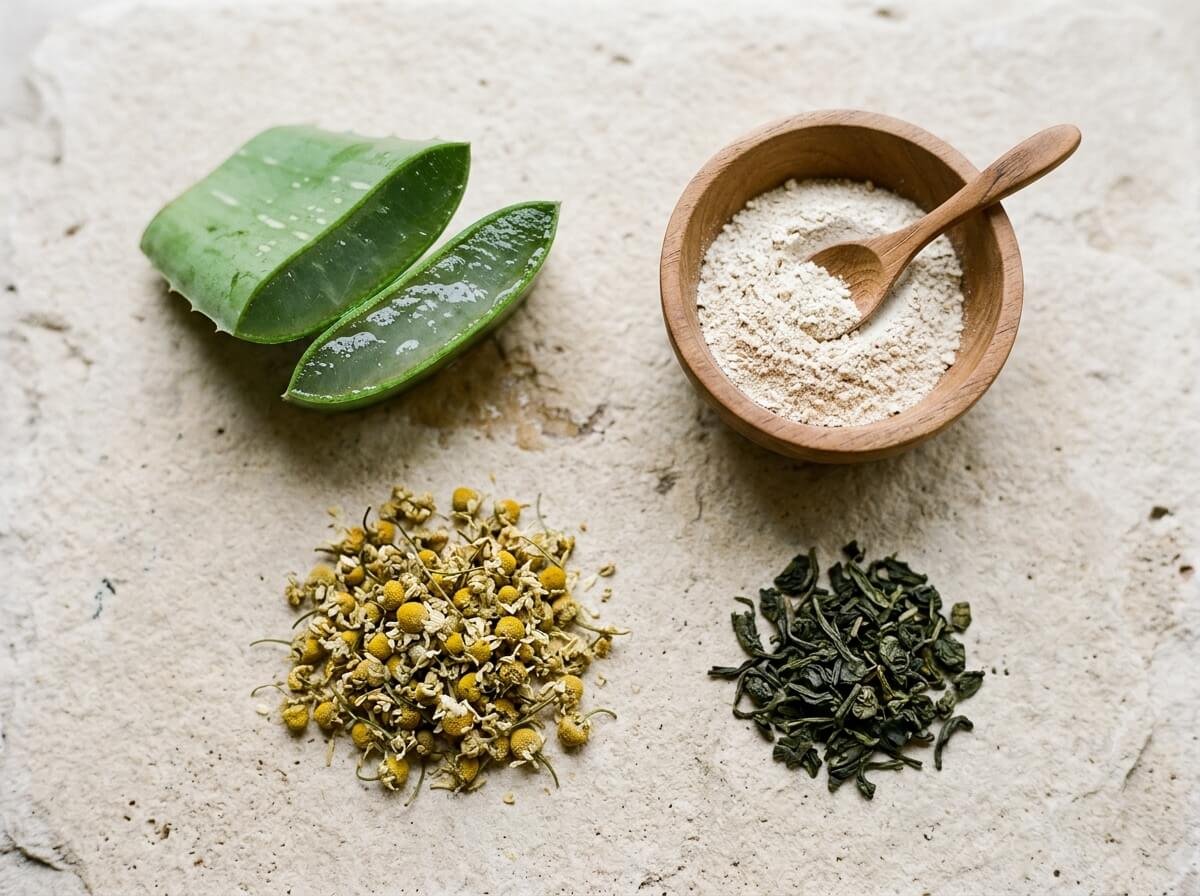
- Green tea. Topical green tea extracts rich in EGCG have reduced redness and bumps in small rosacea studies. The research is encouraging but early.
- Aloe vera. Fresh aloe gel cools and hydrates, and it has a long history of use on hot, irritated skin. Evidence specific to rosacea is limited, and many commercial aloe gels add alcohol or essential oils, so it pays to read the label. Our guide to aloe vera gel for the face goes deeper.
- Chamomile. Chamomile has anti-inflammatory compounds, including bisabolol and chamazulene. It belongs to the daisy family, though, and people with allergies to ragweed or related plants can react to it. Lovely for some, not neutral for all.
Interesting, but not proven for rosacea
Tamanu oil, known in Indonesia as nyamplung, has anti-inflammatory compounds that look promising in laboratory work, and many people with reactive skin find it soothing. We use it ourselves. But there are no good clinical trials of tamanu on rosacea yet, so we place it here, with honesty, rather than higher up. You can read more in our tamanu oil benefits guide.
The same goes for many plant oils and extracts recommended online. “Traditionally used” and “shown to help rosacea” are different claims. Both have value, and both deserve to be named for what they are.
Essential oils to use with real caution, or skip, on rosacea skin
Popular advice often suggests a few drops of lavender or tea tree for rosacea. Some well-known health sites repeat it without a word about dilution or flare risk. We think that advice is incomplete, so here is the fuller picture.
The warming and stinging oils
Some essential oils are known for warmth or cooling tingle, and both sensations can mean trouble on rosacea skin. On this list we would place:
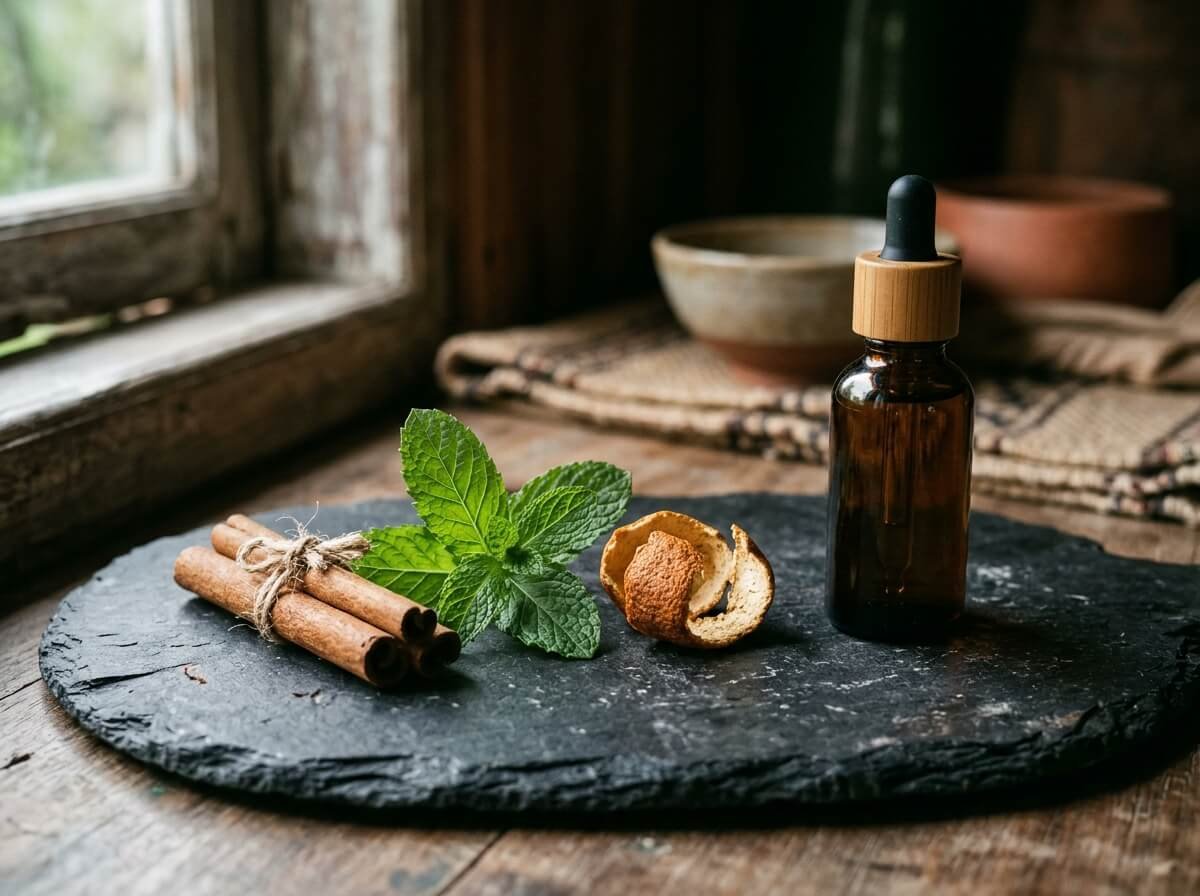
- Cinnamon bark and clove. Strong skin sensitisers, warming, and best kept away from facial skin entirely.
- Peppermint and other mints. Menthol creates a cooling sensation through the same nerve pathways that drive burning and stinging in rosacea. Many people find it brings on a flush rather than calming one.
- Citrus oils. Cold-pressed bergamot, lemon, lime, and grapefruit can cause phototoxic reactions in sunlight, and oxidised citrus oils are common irritants. Hard to justify on red, sun-sensitive skin.
- Eucalyptus, camphor, and rosemary. Brisk and stimulating, and often too much for reactive skin.
Warming traditional preparations belong here too. Our guide to Balinese boreh describes a beautiful heritage practice built on ginger, clove, and other warming spices. On rosacea-prone skin, that warmth is exactly what we would avoid on the face.
Lavender and tea tree, honestly
Lavender is gentle for many people, but it is also one of the most common causes of essential oil allergy, partly because it is used so widely. Its main components, linalool and linalyl acetate, become more irritating as they oxidise in an opened bottle.
Tea tree is more nuanced. Its active compound, terpinen-4-ol, has been studied against Demodex mites, especially around the eyelids in ocular rosacea. That work happens under medical supervision, at controlled strengths, often with prescribed products. It is not the same as dabbing tea tree on red cheeks at home, which can cause irritation. If you are curious about tea tree’s strengths elsewhere on the body, our tea tree essential oil benefits guide covers them.
If you still want to use an essential oil
Some people with rosacea enjoy aromatherapy without problems, especially through a diffuser rather than on the face. If you do want a facial blend, keep it very dilute, at 0.5% or less, choose a single, well-tolerated oil, and patch test for several days first. Our guide on how to dilute essential oils walks through the arithmetic. And if the skin flushes or stings, stop. The skin is giving you a clear answer.
Building a fragrance-conscious natural skincare for rosacea routine
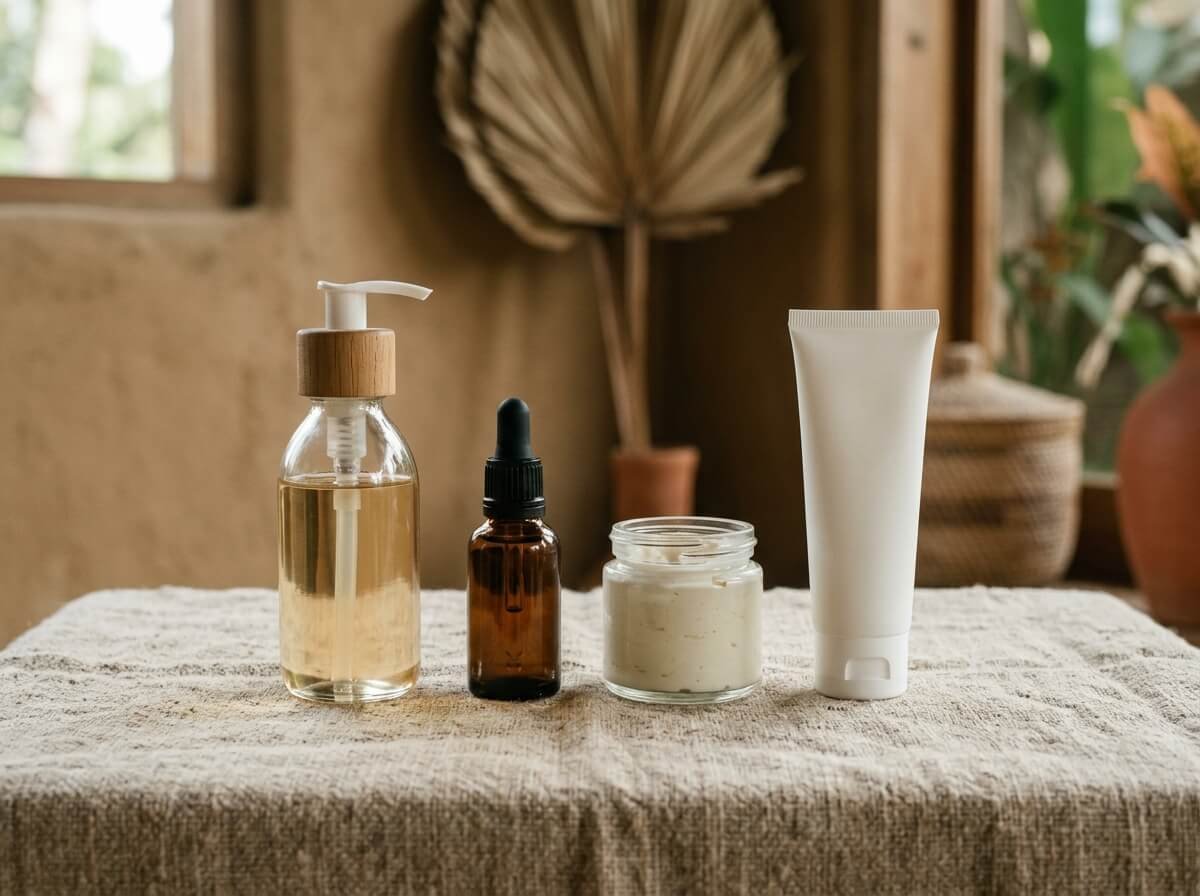
Good rosacea care tends to be short. Each product added is another chance for irritation, so we keep the routine to four simple steps and change one thing at a time.
Step one: cleanse gently, with cool water
Use lukewarm or cool water, never hot. Heat dilates blood vessels, and hot water strips the lipids the barrier depends on, as we explored in our note on hot water and the skin barrier. Choose the mildest cleanser you trust, ideally fragrance-free, and use fingertips rather than cloths or brushes. On calm mornings, a cool water rinse alone may be enough. Our natural face wash guide explains how cleansers work and what to look for on the label.
Step two: calm
This is where an evidence-backed soothing layer fits: a fragrance-free oat or niacinamide product, a green tea serum, or a cool aloe gel. If you use our Aloe Vera Gel, know that it contains a small amount of lavender essential oil and grain alcohol, so patch test before using it on the face. Many people find it most useful on the body, or chilled, on a hot neck and shoulders.
Step three: protect the barrier
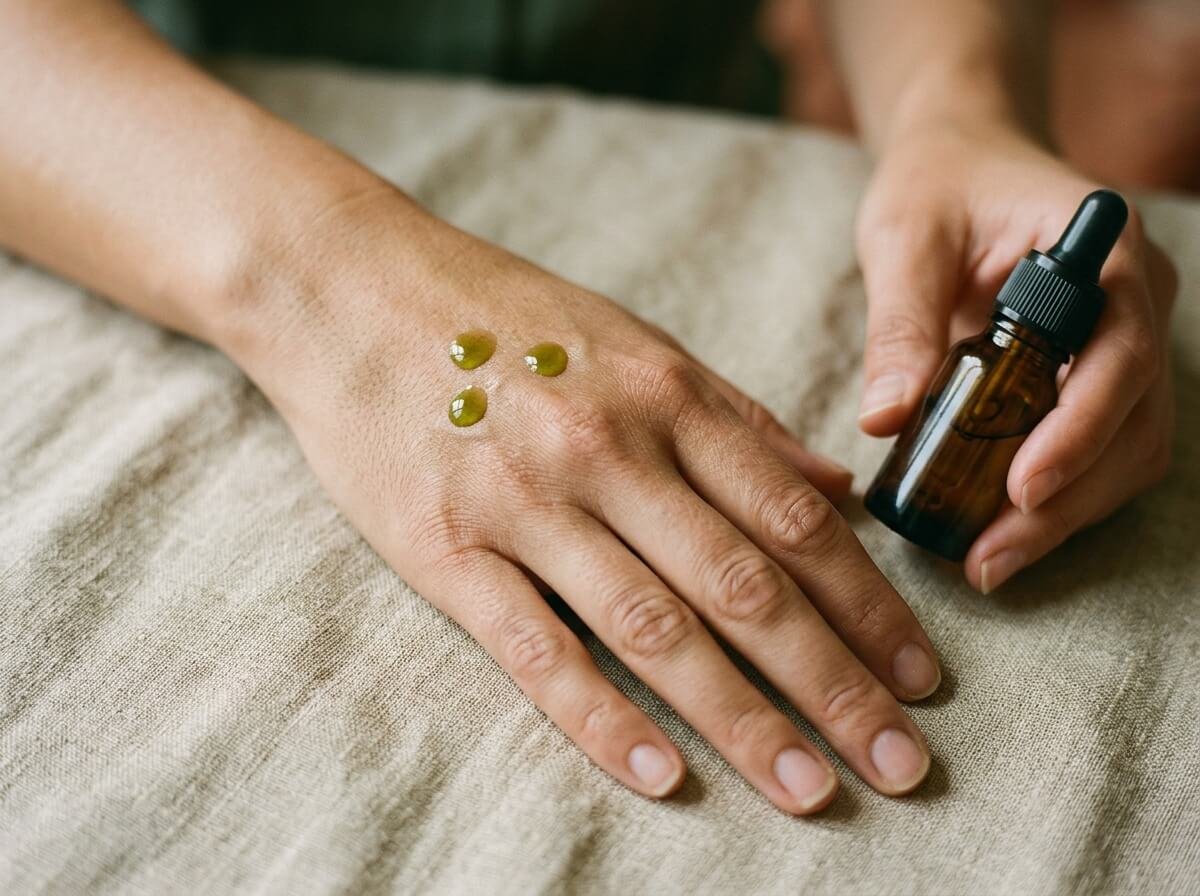
A barrier-supporting moisturiser or a few drops of a plain, single-ingredient plant oil help slow water loss. Single-ingredient oils are useful here precisely because there is nothing else in the bottle. Our Tamanu Oil is pure Calophyllum inophyllum seed oil with nothing added, and our Argan Oil is a lighter, cold-pressed option that many people find easy to wear. If you are choosing between them, our comparison of argan oil vs tamanu oil helps. For the bigger picture on rebuilding a stressed barrier, read our guide on how to repair your skin barrier.
One honest caution: plant oils suit dry, flushing skin better than skin with many bumps. If papules and pustules are your main feature, a light, oil-free moisturiser may sit better, and a dermatologist’s input matters more.
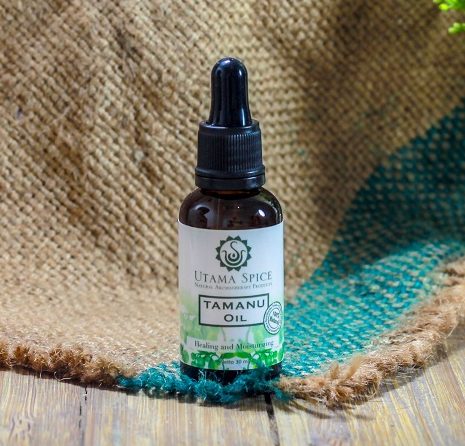
One ingredient, nothing added
Our Tamanu Oil is pure cold-pressed Calophyllum inophyllum seed oil, known in Indonesia as nyamplung, with no added fragrance or essential oils. A few drops pressed into damp skin help seal in moisture on a tired, reactive barrier. Patch test first, as with anything new on rosacea-prone skin.
Step four: protect from the sun, every day
Sun is the single most commonly reported rosacea trigger, so daily sunscreen is not optional. Mineral filters, zinc oxide and titanium dioxide, are usually better tolerated than chemical filters on rosacea skin, and zinc oxide has a gentle, calming reputation of its own. Our Zinc Natural Sunscreen SPF50 is a zinc oxide formula that fits this step well. Our guide to natural sunscreen for the face explains how to apply mineral filters evenly.
How to introduce something new
Add one product at a time and wait two weeks before adding another. Patch test first: apply a small amount on the side of the neck or just below the jaw once or twice a day for several days. If there is no burning, stinging, or extra redness, try a small area of the face. This slow pace can feel frustrating, but it is the only way to know what your skin is responding to.
Trigger mapping beyond skincare: heat, sun, and life in a hot, humid climate
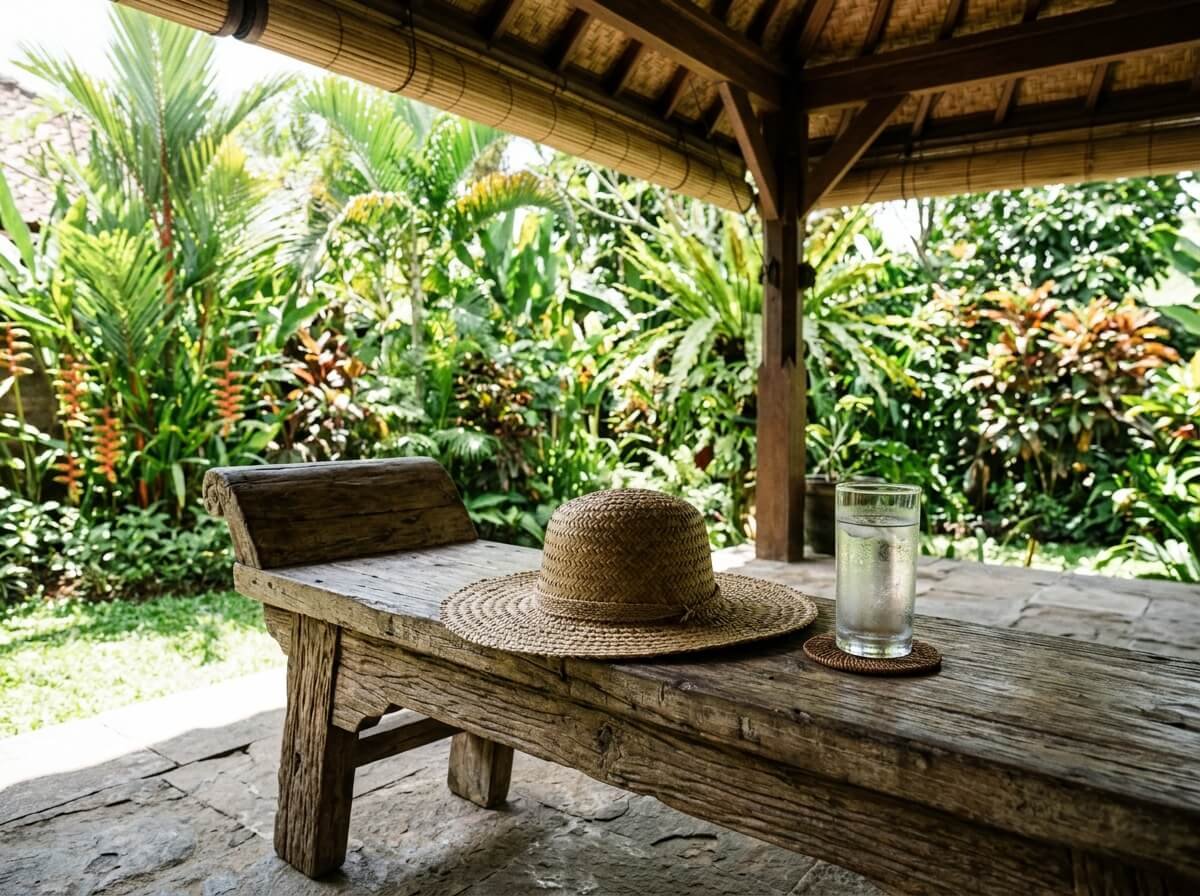
Skincare matters, but for many people the bigger levers sit outside the bathroom. The triggers most often reported in National Rosacea Society surveys include sun, emotional stress, hot weather, wind, heavy exercise, alcohol, hot baths, spicy foods, and hot drinks. Triggers are personal, so the most useful tool is a simple diary. For two to four weeks, note flares alongside the weather, food, drinks, activity, and products of each day. Patterns usually appear faster than people expect.
What the tropics teach us about rosacea
We make everything in Bali, eight degrees south of the equator, and we live with heat and humidity every day. In this climate, the UV index regularly reaches the extreme range around midday, the air stays warm into the night, and humidity keeps skin damp with sweat. For rosacea-prone skin, that combination can mean more frequent flushing, even for people who rarely flared at home.
Visitors often feel this most in the first days of a trip, when the body is still adjusting. A few habits help:
- Keep the hottest hours, roughly 11 am to 3 pm, for shade and rest where possible. Much of daily life here naturally slows down through the middle of the day.
- Wear a wide-brimmed hat and reapply mineral sunscreen after swimming or heavy sweating.
- Carry cool water, and drink it. Cool drinks help bring core temperature down, while very hot drinks can bring on a flush.
- Mist or press a cool damp cloth against the cheeks after time in the heat. Avoid ice directly on the skin, since sudden cold can also trigger flushing.
- Notice how chilli-rich food and alcohol affect you. Many people with rosacea find spicy sambal or a drink in hot weather brings on a flush. That knowledge helps you choose, not forgo.
Stress, the quiet trigger
Emotional stress sits near the top of most trigger lists, and it is the easiest to overlook. Flushing can create its own stress loop. Slow breathing, a cool shower, and time away from screens are small acts of care that help. We wrote more about this in our note on how stress shows up in skin.
Frequently asked questions about natural skincare for rosacea
Is rosacea the same as sensitive skin?
No. Many people with rosacea have sensitive skin, but sensitive skin alone is not rosacea. Rosacea is a specific chronic condition with persistent central facial redness, flushing, and often visible vessels or bumps. Sensitive skin describes reactivity, which can come from many causes, including a damaged barrier, eczema, or simply over-exfoliation.
Can essential oils ever help rosacea?
Very occasionally, under the right conditions. Tea tree has been studied for Demodex around the eyes under medical care. For most people, though, essential oils on the face carry more flare risk than benefit. Diffusing a calming scent in a well-ventilated room is a gentler way to enjoy aromatherapy.
Does “natural” mean rosacea-safe?
No. Natural describes origin, not tolerance. Some natural ingredients, like colloidal oatmeal and zinc oxide, are among the most rosacea-friendly options available. Others, like cinnamon or peppermint oil, are among the most likely to cause a flare. Read the ingredient list, not the front label.
Which plant oils are gentlest for rosacea?
Single-ingredient, unscented oils with no added essential oils are the safest place to start. Tamanu, argan, jojoba, and squalane are commonly well tolerated, though every skin is different. Patch test each one for several days before using it on the face.
Is coconut oil good for rosacea?
Coconut oil can feel soothing on dry body skin, but it is fairly occlusive and can clog pores on the face for some people. If bumps are part of your rosacea, a lighter oil or a gel moisturiser is usually a better fit.
Can diet changes help?
For some people, yes. Common dietary triggers include spicy food, alcohol, hot drinks, and foods rich in cinnamaldehyde, such as cinnamon, tomatoes, and chocolate. A trigger diary is the most reliable way to find your own.
When should I see a dermatologist?
See a doctor or dermatologist if redness is persistent, if bumps and pustules appear, if skin on the nose begins to thicken, or if your eyes feel gritty, dry, or irritated. Ocular rosacea can affect eye health and needs medical care. Prescription treatments such as azelaic acid, metronidazole, ivermectin cream, or oral options can make a real difference, and a gentle natural routine works well alongside them.
Final thoughts: care that listens to the skin
Rosacea asks for a different kind of care. Fewer products, cooler water, more shade, and a habit of reading labels with patience. Natural skincare for rosacea works best when it is honest: when it chooses plain oils over perfumed ones, evidence over folklore, and a dermatologist’s help when the skin needs more than a routine can give.
We make many things that smell wonderful. For this skin, we often recommend the quietest ones on our shelf. What you give, you get back, and on rosacea skin, what you leave out can matter as much as what you put on. Start small, change one thing at a time, and let the skin tell you what it trusts.