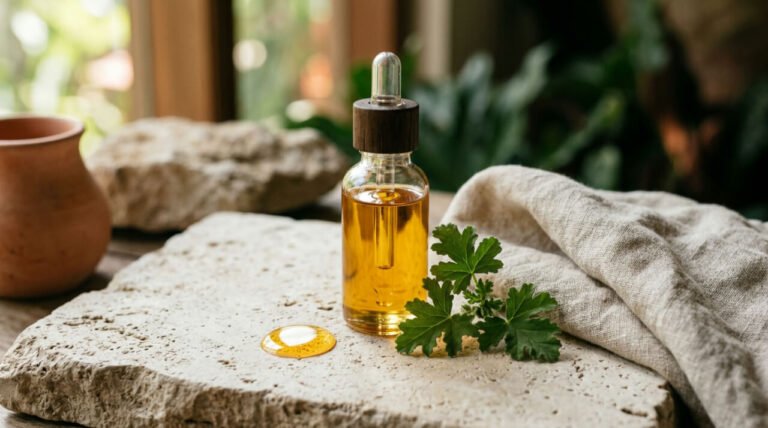
How to dilute essential oils: the carrier oil you choose matters as much as the drop count
Learning how to dilute essential oils is the single skill that separates safe, satisfying aromatherapy from a rash, a headache, or a bottle of something you never reach for again. It sounds like a small technical detail. It is actually the whole game. An essential oil is a plant concentrated hundreds of times over, and dilution is how we bring that intensity back down to something skin can welcome. Get it right and the same oil that would sting neat becomes a daily ritual you look forward to. This guide walks through how to dilute essential oils honestly: the ratios that matter, the carrier oil you pour them into, the real math, and the safety cases most lists skip.
We craft aromatherapy in Bali, where the air is already thick with frangipani and the tradition of blending oils by hand goes back generations. That heritage taught us something the marketing rarely admits: potency is not the point, balance is. So we will keep this grounded, sensory, and honest. No miracle claims, no drops-in-a-diffuser shortcuts dressed up as skincare. Just the craft of dilution, explained the way a friend who actually makes this would explain it.
What it means to dilute essential oils, and why it is non-negotiable
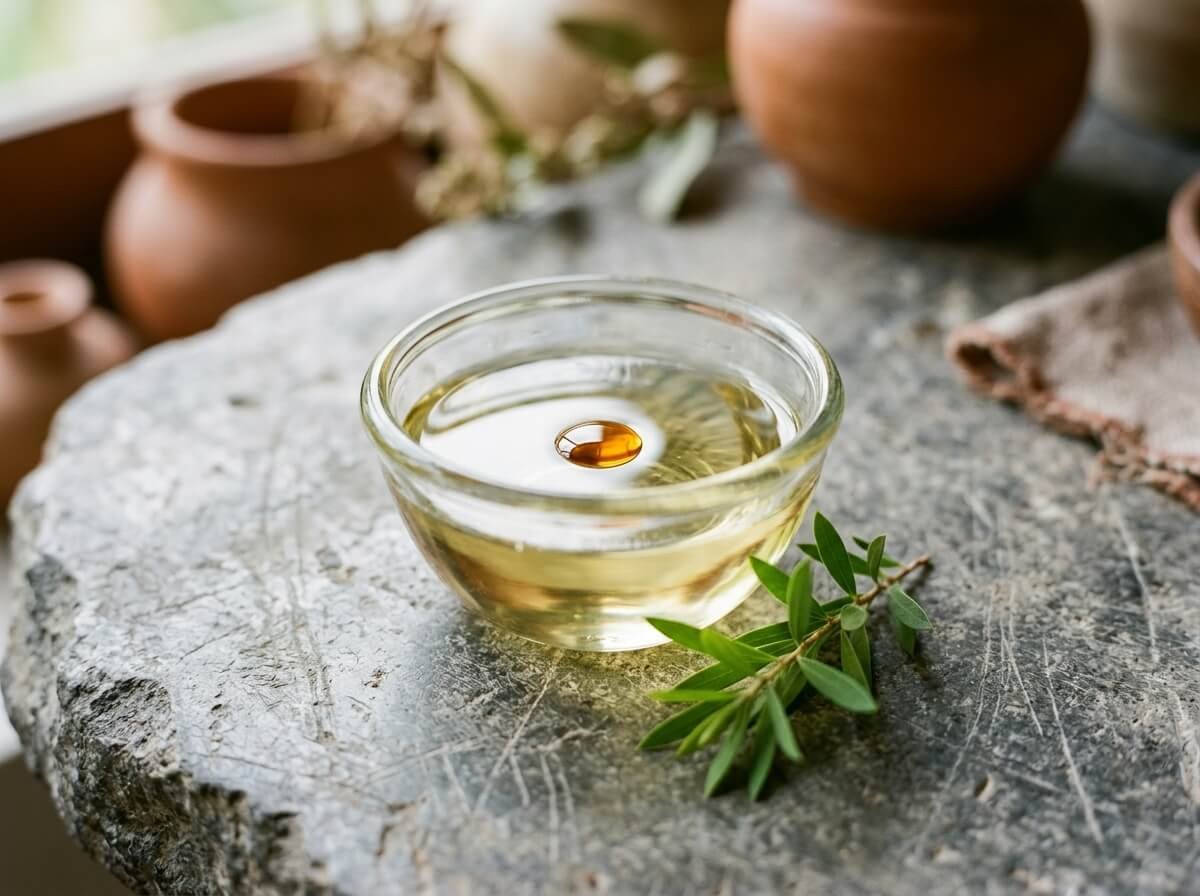
To dilute essential oils is to blend a small amount of concentrated aromatic oil into a larger amount of a neutral base, called a carrier oil. That base carries the essential oil across your skin, slows how fast it evaporates, and spreads the active compounds over a wider area so no single patch of skin takes the full hit. Undiluted, most essential oils are simply too strong for direct contact. They can cause irritation, redness, or sensitization, a kind of delayed allergic response that can turn an oil you once loved into one your skin now rejects for good.
Here is the part that surprises people. Sensitization is cumulative and often silent. You can apply an oil neat for weeks with no reaction, then one day your skin decides it has had enough, and the reaction that follows can be permanent. Dilution is not fussiness. It is the quiet insurance that keeps a plant you enjoy in your life for years rather than months. The same logic applies whether you are blending for calm, for sore muscles, or for the skin on your face, and it is why every reputable aromatherapist treats the drop count as a starting point, not a badge of strength.
There is also a myth worth clearing early. Diluting an essential oil does not weaken its benefit. The aromatic molecules are so small and so active that a properly diluted blend still does everything a responsible use of that oil can do. More oil does not mean more result. Past a certain point it only means more risk, which is the opposite of care. If you take one idea from this whole guide, take that one.
The carrier oil you choose matters as much as the drop count
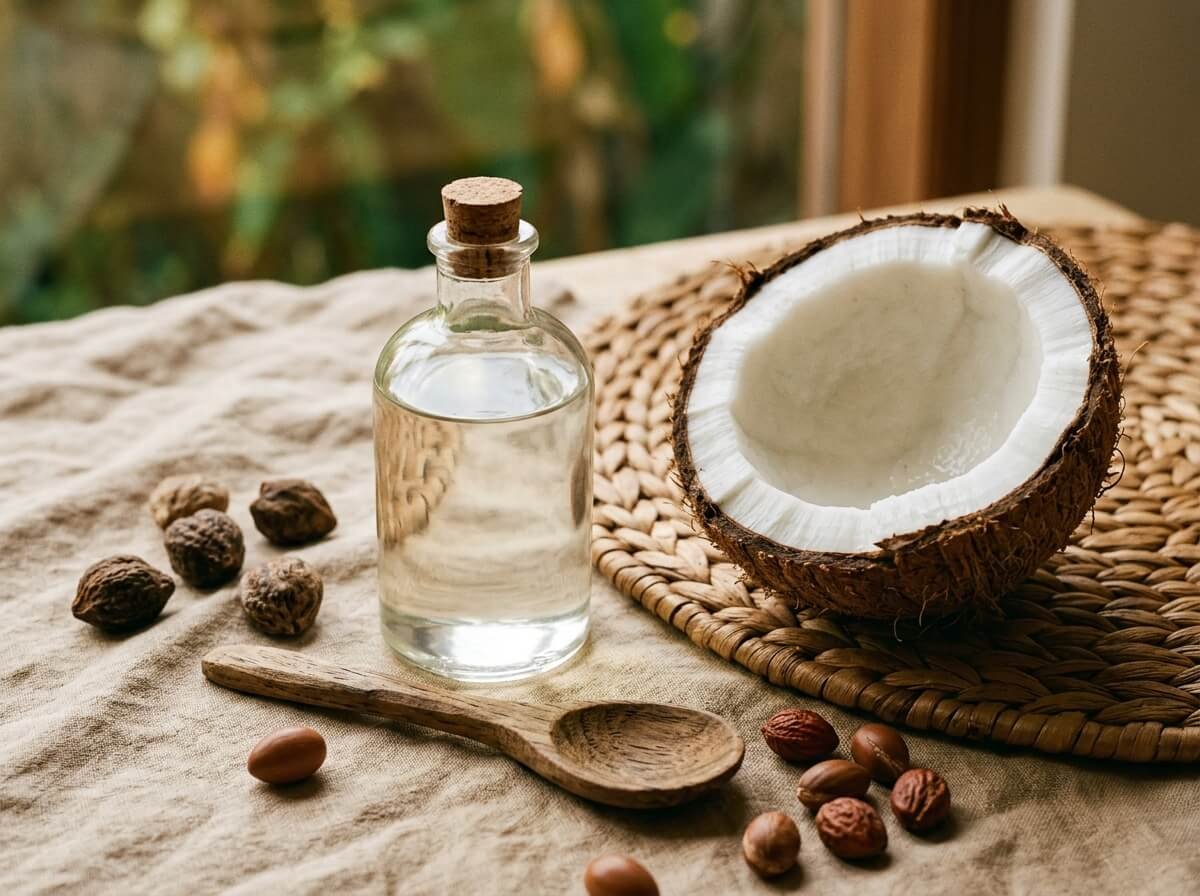
Most dilution guides obsess over drops and ignore the far larger ingredient in the bottle. That is backwards. A blend is mostly carrier oil, so the carrier shapes how it feels, how long it lasts, how it absorbs, and how well it suits your skin. Choosing a good one is not a footnote to dilution. It is half the recipe.
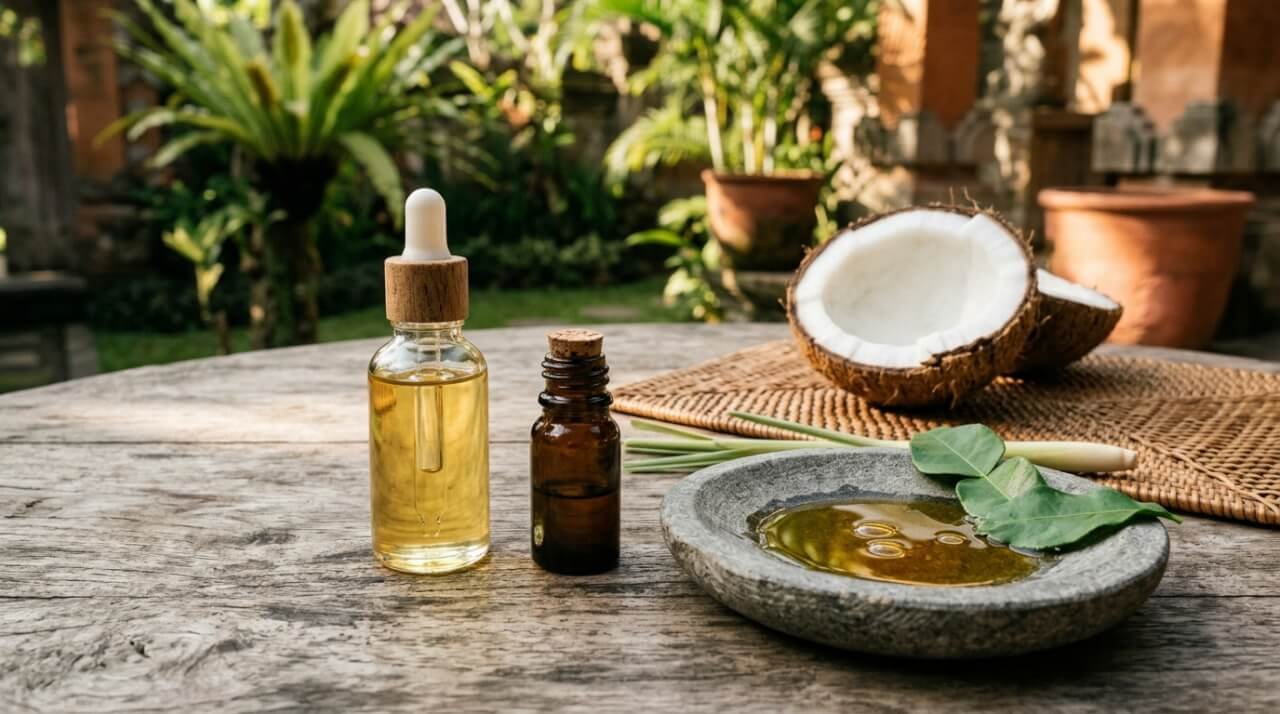
Carrier oils are fixed plant oils pressed from nuts, seeds, and fruits. Unlike essential oils, they are not volatile and they do not evaporate, which is exactly why they can hold an essential oil against the skin long enough to be useful. Our workhorse is virgin coconut oil, cold-pressed from Bali coconuts through our Aluan partnership. It absorbs cleanly, carries scent beautifully, and is the most versatile base in our line. Fractionated coconut oil stays liquid and is wonderful for rollers, while unrefined virgin coconut oil is richer and more nourishing for the body.
Coconut is not the only good answer, and matching the carrier to the job is part of the craft. For facial blends, lighter, less pore-clogging oils are often kinder. Argan oil is a graceful, fast-absorbing choice for the face and hair, rich in vitamin E and slow to feel greasy. Tamanu oil is heavier and more specialized, prized in traditional Pacific and Southeast Asian practice for soothing troubled or scarred skin, which is why we reach for it alongside our guide to essential oils for scars. The point is simple: the carrier is not filler. It is the body of the blend, and it deserves the same attention you give the aromatic drops.
Carriers also differ in how long they keep, and that shapes how much you should blend at once. Coconut oil is unusually stable and slow to turn, which is part of why it earns its place as our everyday base. Lighter, more delicate oils like argan reward smaller, fresher batches. Store every carrier and every blend somewhere cool and dark, away from the windowsill, and buy sizes you will actually finish while they are fresh. A good oil kept badly becomes a mediocre one, and the essential oils you added cannot rescue a base that has already gone off.
One honest caution. Skip mineral oil and generic kitchen oils that have gone rancid or been heavily refined. Rancid carrier oil smells sharp and stale, and it will drag the whole blend down no matter how lovely the essential oil is. Fresh, well-sourced, plant-based carriers are the foundation. Everything else is built on top of them.
Dilution ratios from 0.5% to 5%, in plain numbers
Dilution is described as a percentage: the proportion of the finished blend that is essential oil. The rest is carrier. A 2% dilution means two parts essential oil for every 98 parts carrier, which for most people is the sensible everyday strength for the body. You do not need a laboratory to hit it. A reliable rule of thumb is that a 1% dilution is roughly six drops of essential oil per 30 millilitres (one ounce) of carrier oil, and every percentage point above that adds another six drops.
Here is the working scale, per 30 millilitres of carrier oil:
- 0.5% (about three drops): facial skin, children over two, elderly skin, and anyone with sensitive or reactive skin.
- 1% (about six drops): the face, daily full-body use, pregnancy (with oils confirmed safe for that stage), and long-term everyday blends.
- 2% (about 12 drops): the standard for general body care, massage, and most adult skincare. When in doubt, this is home.
- 3% (about 18 drops): targeted, short-term relief on a specific area, such as a tense shoulder or an achy back.
- 5% (about 30 drops): acute, spot-only use for a short period, never over large areas and never for delicate skin.
Notice the pattern. The more delicate the skin and the longer you plan to use a blend, the lower the percentage. The more acute and short-lived the need, the higher you can safely go, and only on a small area. This is the same instinct behind our approach to essential oils for muscle pain, where a stronger blend on a small, stubborn spot makes sense, and to essential oils for congestion, where gentle and frequent beats strong and rare. Ratios are not rules handed down from nowhere. They map directly onto how skin and situation actually differ.
Smaller containers change the drop count, not the logic. A standard roller bottle holds about 10 millilitres, so a 2% blend there is around four drops of essential oil topped with carrier, and a gentle 1% pulse-point blend for winding down at night, the kind you might reach for alongside essential oils for sleep, is closer to two drops. The rule holds at every size: work out your millilitres first, then apply six drops per 30 millilitres for each 1% you want. Once that arithmetic becomes second nature you can scale a blend up to a body-oil batch or down to a single roller without ever second-guessing yourself.
How to dilute essential oils step by step
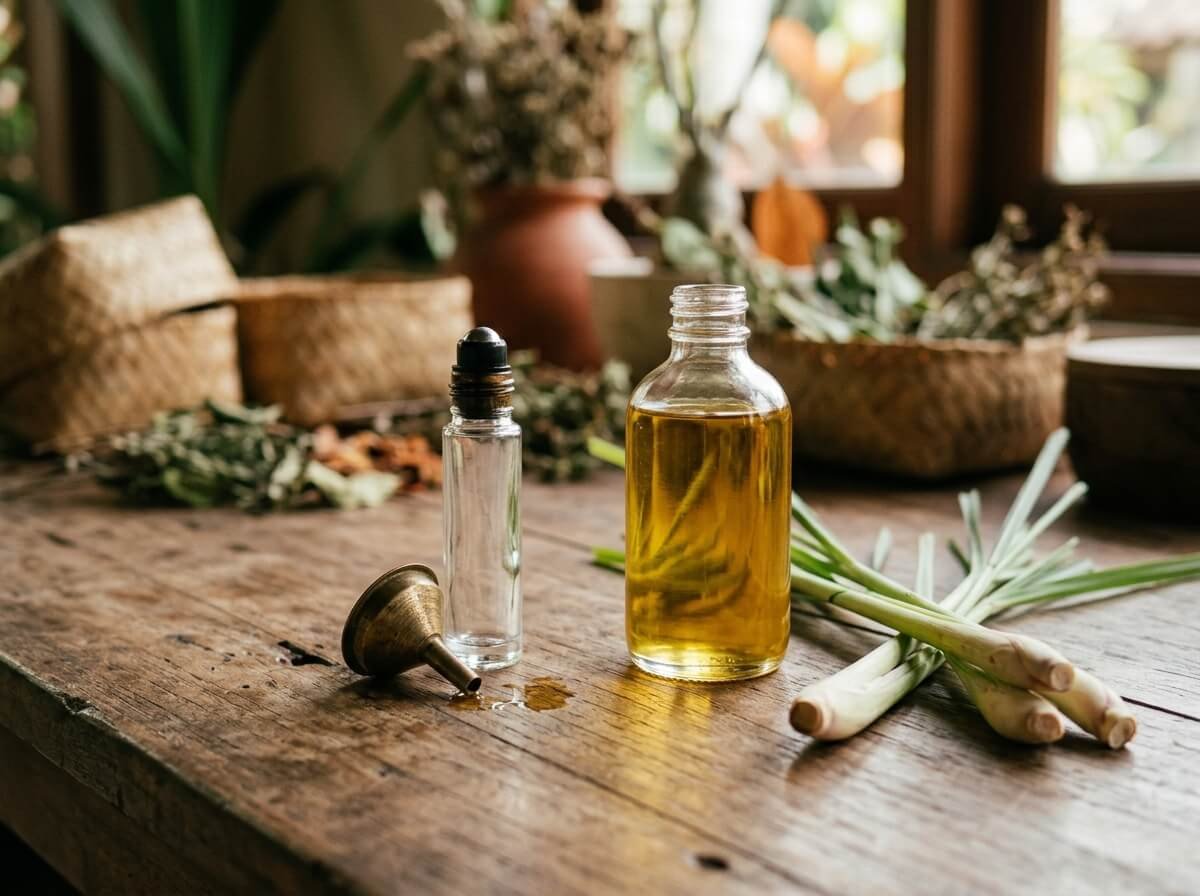
The theory is easy. The practice is where confidence is built. Here is the method we use, whether we are filling a single roller or blending a body oil by the batch.

- Decide your strength first. Choose the percentage from the scale above based on where the blend will go and how often you will use it. This one decision drives everything after it.
- Measure your carrier. Pour a known amount of carrier oil into a clean glass bottle or bowl. Thirty millilitres is a friendly amount to start with because the drop math is simple.
- Count your drops. Add the essential oil drop by drop, using the scale: six drops per 30 millilitres for each 1%. For a 2% body blend in 30 millilitres, that is 12 drops total.
- Blend, do not shake hard. Cap the bottle and roll it gently between your palms, or stir a bowl slowly. You want the oils married, not whipped.
- Patch test before you commit. Dab a little on your inner forearm and wait 24 hours. No redness or itch means you are clear to use it more widely. This step is not optional for a new oil or a new skin.
- Label and date it. A blended oil is freshest in its first few months. A small piece of tape with the blend and the date saves you guessing later.
If measuring drops feels fiddly, a pre-diluted format takes the math off your plate entirely. Our Santi essential oil roller and the rest of our roller range arrive already blended into a skin-safe carrier at a sensible strength, so you can carry aromatherapy in a pocket without a calculator. Rollers are a genuinely good on-ramp: they teach you what a correct dilution feels like on skin, which makes your own blending sharper later.
Start with a carrier worth diluting into
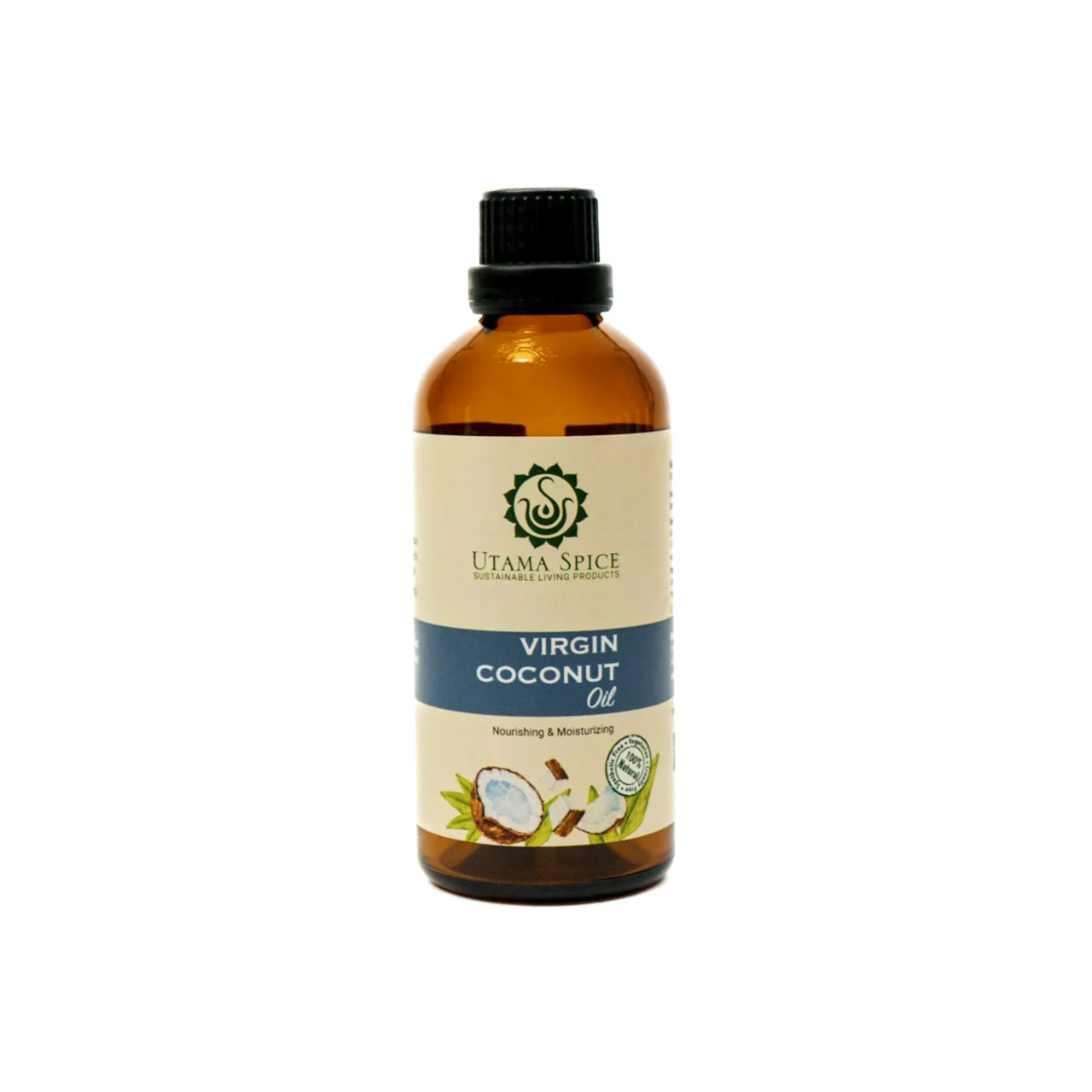
Every good blend begins with a good base. Our virgin coconut oil is cold-pressed from Bali coconuts through our Aluan partnership: clean, versatile, and made to carry your essential oils with care.
Special cases: children, sensitive skin, phototoxic citrus, and the face
The standard scale works for most healthy adult skin on most of the body. The cases below need a gentler hand, and knowing them is what makes you genuinely good at this.
Children. A child’s skin is thinner and more permeable, so it absorbs more of a given blend. For children over two, keep dilutions low, around 0.5% to 1%, and choose mild oils. Under two, most authorities advise against topical essential oils altogether without professional guidance. Gentle and cautious is always the right posture with small people.
Sensitive and reactive skin. If your skin flushes easily or you live with eczema or rosacea, start at 0.5% and build slowly, one variable at a time. A soothing carrier such as tamanu or coconut does part of the work before the essential oil even arrives. Patience here prevents the flare that sends people swearing off aromatherapy entirely.
Phototoxic citrus oils. Cold-pressed citrus oils, including bergamot, lemon, lime, and to a lesser degree grapefruit, can react with sunlight and cause burns or dark patches on skin. If a blend contains them, keep the citrus portion low and avoid sun on that skin for at least 12 hours, or reserve those oils for a wash-off or diffuser use instead.
The face. Facial skin is delicate and visible, so it earns the most restraint. Stay at 0.5% to 1%, favour light carriers like argan, and fold essential oils into your routine slowly. If you would rather not blend your own, a purpose-made formula removes the guesswork, which is one reason we build our natural face products at pre-tested strengths.
Common dilution mistakes, and the myths to unlearn
Most dilution trouble comes from a handful of repeated errors and a few stubborn myths the wellness internet keeps recycling. Naming them plainly is the fastest way to skip past them.
- Using water as a carrier. Oil and water do not mix, so drops floating on water land on skin undiluted. Water is not a carrier. A fixed plant oil is.
- Eyeballing drops from a worn dropper. Orifice reducers vary and old bottles drip unevenly. Count carefully, and when precision matters, measure by volume rather than trusting your eye.
- Believing more drops means more benefit. Past the right dilution, extra oil adds risk, not reward. This is the myth that causes the most sensitization, and it is simply false.
- Trusting neat oil because a label or influencer said so. A handful of oils are gentler than most, but blanket advice to apply oils undiluted ignores individual skin and cumulative risk. We do not chase that trend. We challenge it.
- Skipping the patch test. Twenty-four hours of patience protects months of enjoyment. There is no version of this step that is not worth doing.
None of this is about fear. It is about respect, for the plant and for your own skin. A well-diluted oil is a small, repeatable act of care, the same principle that guides how we make everything, from a single roller to a body oil poured by hand in Ubud. Real care means understanding the system, not just the scent.
Frequently asked questions about diluting essential oils
Can I ever use essential oils undiluted? For nearly everyone, the honest answer is no, not on skin. A very small number of oils are sometimes used neat on a tiny spot by experienced users, but the safe default, and the one we recommend, is to always dilute. The risk of sensitization is real and not worth the shortcut.
What is the best dilution for everyday body use? A 2% dilution, roughly 12 drops of essential oil per 30 millilitres of carrier oil, suits most adults for general body care. Drop to 1% for daily full-body use or delicate skin, and reserve 3% and above for short-term, targeted spots.
Does diluting reduce how well the oil works? No. Aromatic molecules are active in tiny amounts, so a proper dilution delivers the benefit while protecting your skin. More oil does not mean more result. It only means more risk.
Which carrier oil is best for beginners? Coconut oil is a forgiving, versatile place to start because it absorbs cleanly and carries scent well. For the face, a lighter oil such as argan is often kinder. Match the carrier to where the blend will go.
How long does a blended oil last? Diluted blends are freshest within a few months, since the carrier oil, not the essential oil, is what eventually turns. Store your blend somewhere cool and dark, label it with the date, and trust your nose: if the carrier smells sharp or stale, it is time for a fresh batch.
Diluting well is not a chore standing between you and aromatherapy. It is aromatherapy done properly, the point where potent nature becomes daily care. Choose a good carrier, respect the ratios, patch test, and let the ritual settle in. That is how you keep the plants you love in your life for the long run, which is the whole idea behind every blend we make: care that lasts, because you gave it the attention it deserved.