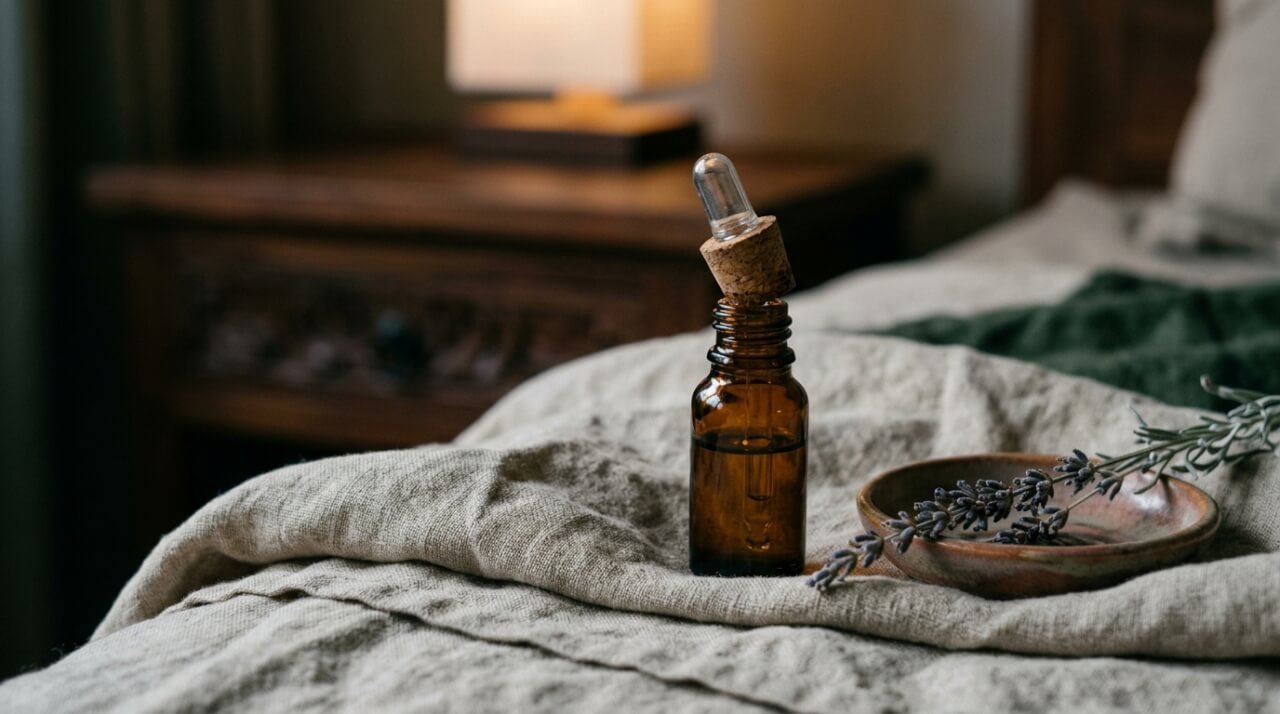
Essential oils for sleep: a calm, evidence-honest guide to scenting your nights
If you have ever reached for lavender at the end of a long day, you already understand the quiet promise of essential oils for sleep. Scent is the fastest, most direct route we have into the parts of the brain that handle mood, memory, and calm, which is why a considered aroma can help signal to your body that the day is done. This guide is honest about what essential oils for sleep can and cannot do. They are not a cure for insomnia, and they will not override caffeine, a bright screen, or a racing mind on their own. What they can do, used with care, is become part of a bedtime ritual that helps you wind down, settle, and reconnect with rest.
We have been blending botanicals in Bali since 1989, and aromatherapy has always been at the heart of that craft. Below, we walk through how these oils actually work, which ones are worth reaching for at night, how to use them safely, and what is genuinely safe to diffuse in a bedroom. Think of it as a calm, method-first place to start, grounded in tradition and honest about the evidence.
How essential oils for sleep actually work
Smell is unusual among the senses. When you breathe in an aroma, scent molecules reach receptors high in the nose and pass signals almost directly to the limbic system, the part of the brain that governs emotion and memory. Most sensory information takes a longer route through the brain’s relay stations, but scent gets there quickly. This is why a single breath of a familiar aroma can shift how you feel before you have consciously named it. Essential oils for sleep work with this pathway, using aroma as a gentle cue that helps the nervous system move from alert to at ease.
The most studied example is lavender. Research on linalool and linalyl acetate, two of the main compounds in lavender oil, suggests they can support a calmer state and a sense of relaxation, and several small studies have looked at lavender aromatherapy around sleep quality with modest, encouraging results. We want to be clear and grounded here: the evidence is promising rather than definitive, the studies are often small, and effects vary from person to person. Honesty matters more than hype. If you want to read deeper into one hero oil, our guide to lavender essential oil benefits covers what the calm evidence actually says.
There is also a second, quieter mechanism at play: association. When you use the same aroma each night as you dim the lights and put your phone away, your brain begins to link that scent with rest. Over time the ritual itself does much of the work. This is where aromatherapy stops being a quick fix and becomes a practice. It is worth understanding what you are actually breathing in, too, because a true essential oil behaves very differently from a synthetic fragrance. We break that down in our piece on essential oil vs fragrance oil, and it is the single most useful thing to get right before you build a bedtime routine.
Timing matters as much as the oil itself. Your body runs on a daily rhythm, and the hour or two before bed is when it is naturally winding toward rest. Introducing a calming scent during that window works with your biology rather than against it. Reaching for aroma at the right moment, as the light drops and activity slows, is part of why the practice feels effective. It is a cue laid over a shift your body is already trying to make. Set against a bright screen or a late coffee, no oil stands much of a chance, which is exactly why we treat scent as a support for good habits, never a substitute for them.
The essential oils worth reaching for at night
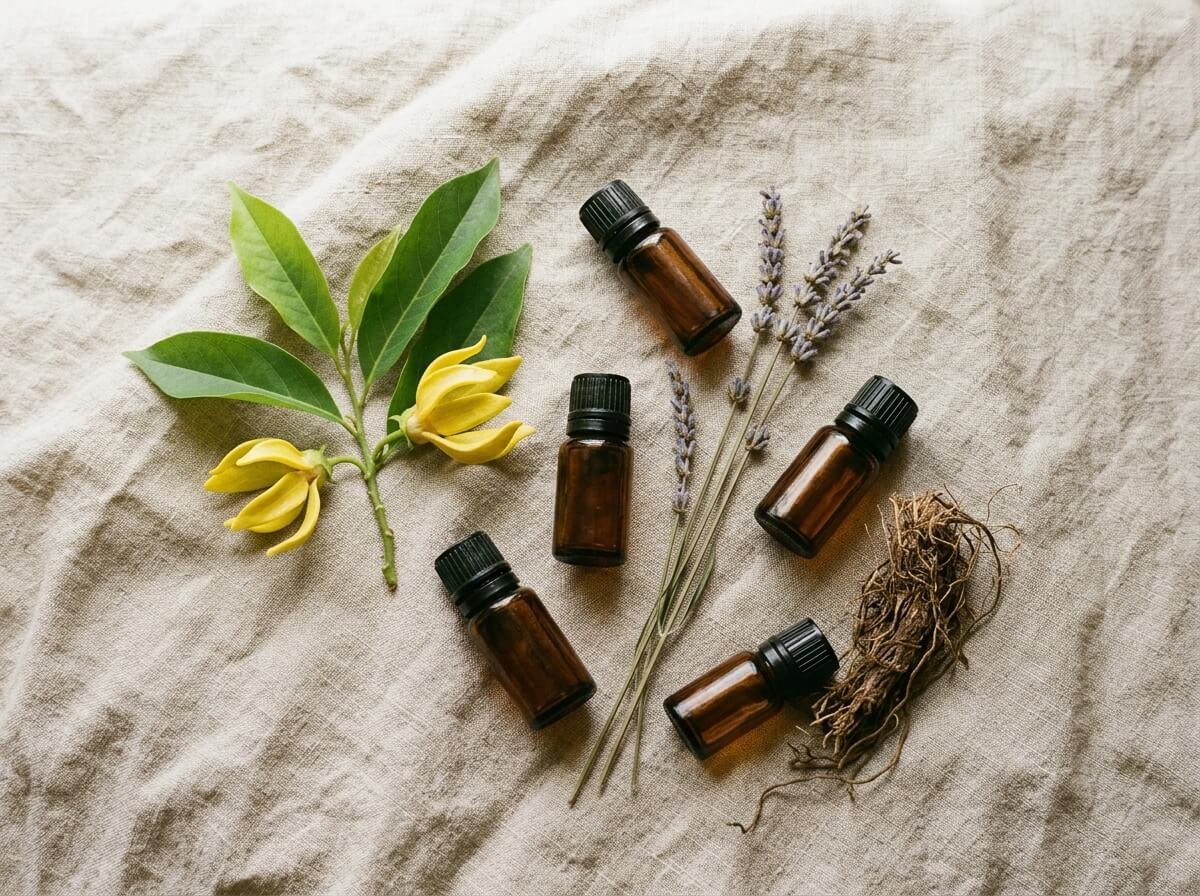
No single oil suits everyone, and the best choice is the one whose scent you genuinely find calming. Still, a handful of botanicals have earned their place in the evening rotation. Here is where we would start.
- Lavender is the classic for good reason: soft, herbaceous, and widely tolerated. It is the most researched of the sleep-associated oils and a sensible first bottle. Our Lavender Essential Oil is a straightforward place to begin.
- Ylang-ylang is rich, floral, and slightly sweet, traditionally used across Southeast Asia to ease tension. It pairs beautifully with citrus and helps take the sharp edge off a wound-up evening. You can read more in our notes on ylang-ylang essential oil benefits, or reach for the single Ylang Ylang Essential Oil.
- Vetiver is earthy, grounding, and deep, distilled from a fragrant root. A little goes a long way, and it brings a settled, rooted quality that many people find anchoring at night.
- Cananga and rose geranium add warmth and softness, rounding a blend so it feels enveloping rather than sharp.
- Roman chamomile is soft, apple-sweet, and gently soothing, a traditional choice for restlessness and one of the calmer florals to keep near the bed.
- Sandalwood is warm, creamy, and woody, prized across Indonesia for its meditative, settling quality. It anchors a blend much as vetiver does, with a smoother finish.
- Sweet marjoram is herbaceous and comforting, often folded into evening blends to round out sharper notes and add a sense of ease.
- Bright citrus, in small amounts, such as tangerine or sweet orange, lifts a heavy blend and keeps it from feeling sedative or cloying.
Notice that these divide loosely into three families: soft florals that soothe, warm woods and roots that ground, and a whisper of citrus that lifts. A satisfying sleep blend usually borrows from all three, which is why single oils sometimes feel one-dimensional while a well-built blend feels complete. If you are new to aromatherapy, begin with one bottle you love rather than a shelf of them. Learn how a single scent makes you feel, use it consistently, and add complexity only once the habit is established. Restraint is its own kind of expertise here.
This is exactly the logic behind our Bali Night Essential Oil Blend, which brings together cananga, ylang-ylang, vetiver, rose geranium, and a touch of citrus into one warm, evening-ready aroma. Blending is its own craft: the citrus brightens, the florals soften, and the vetiver grounds, so the whole feels calmer than any single note alone. If you prefer to explore beyond florals, some people find woody and resinous scents just as settling, and our guide to patchouli essential oil benefits is a good next read. A quick word on what to skip before bed: bright, stimulating oils such as peppermint are wonderful in the morning but can be a little too awakening at night, as we cover in peppermint essential oil benefits.
How to use essential oils for sleep safely
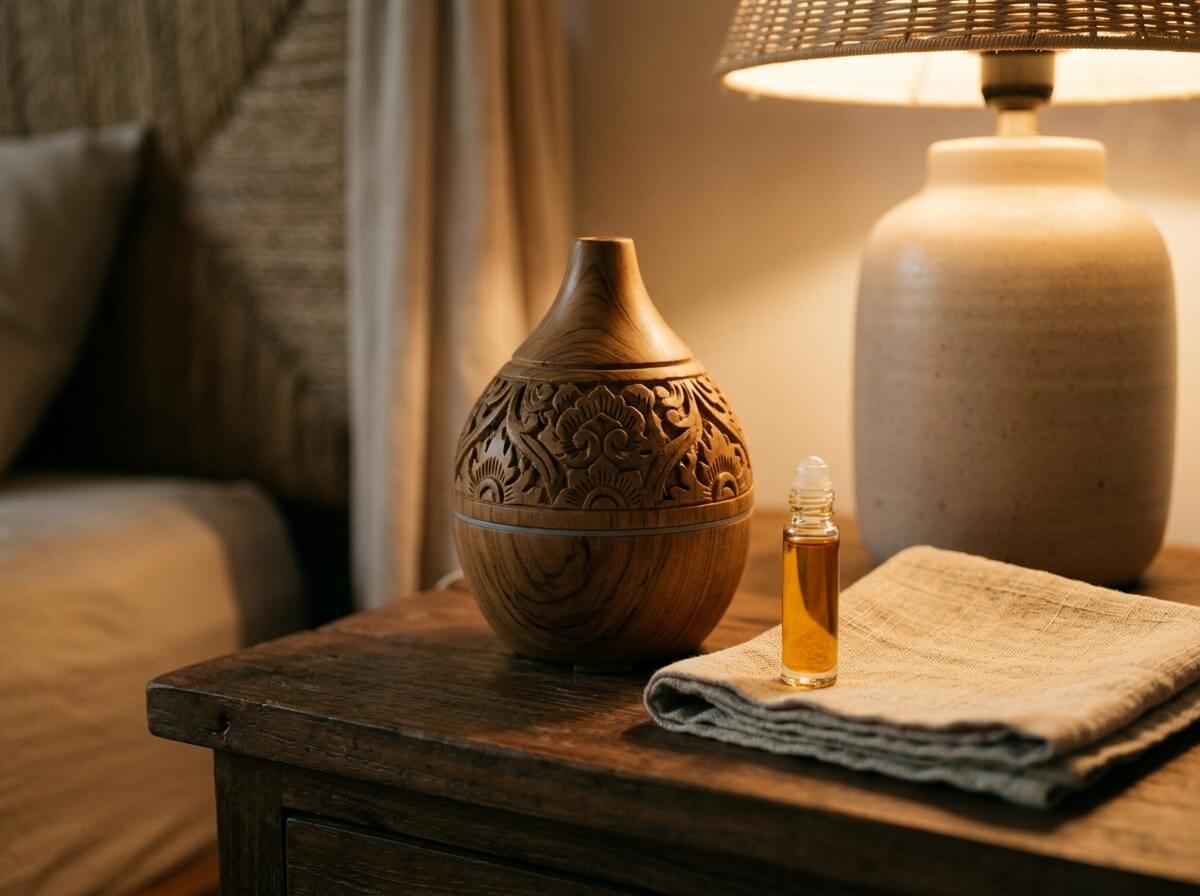
There are several honest ways to bring essential oils for sleep into your evening, and the right method depends on your space, your household, and your skin. Here are the four we recommend, along with the care each one needs.
Before you choose, think about who shares your space. If you sleep alone in a well-ventilated room, gentle diffusion is easy and pleasant. If you share a bed, a close, personal method like a wrist roller or a single drop on a tissue keeps the scent yours without imposing it on someone else. In a small room, or one with children or pets nearby, lean toward the least invasive option and the smallest amount. There is no single correct method, only the one that fits your life, and the quiet truth of aromatherapy is that the gentlest approach is usually the most sustainable one.
Diffusion
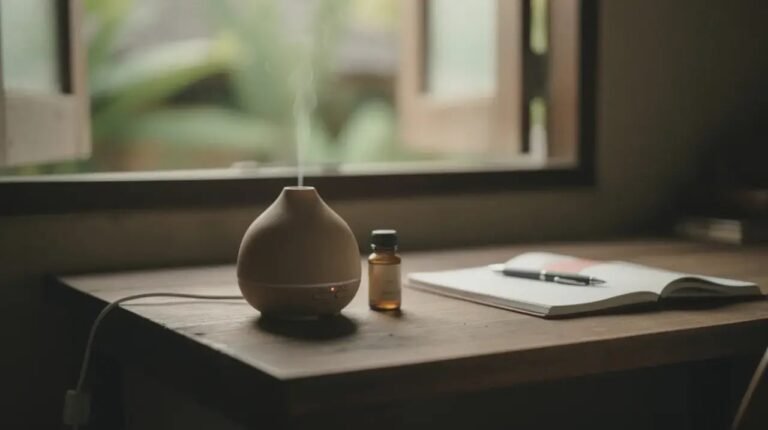
Diffusing disperses aroma through the air and is the gentlest way to scent a room. A nebulizing diffuser atomizes neat oil without water or heat, giving a clean, true scent, while an ultrasonic diffuser uses water and a fine vibration. Both work; the difference is intensity and upkeep. If you want a deeper comparison, our guide to the reed diffuser covers the passive, flame-free option that suits a bedroom well. For an active diffuser, our Danau Dua nebulizing diffuser is designed for exactly this kind of considered, intermittent use.
Rollers and dilution on skin
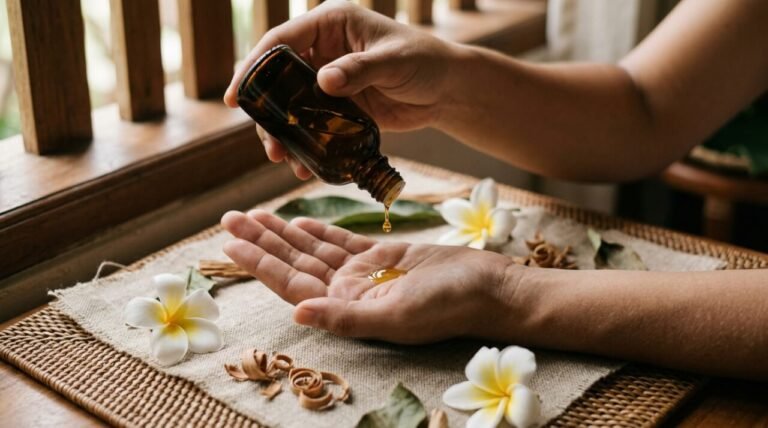
Applied to skin, essential oils must always be diluted in a carrier oil, never used neat. A safe general guide for adults is roughly 2 to 3 drops of essential oil per teaspoon of carrier, which lands around a 1 to 2% dilution for everyday use. A pre-diluted roller takes the guesswork out entirely: our Bliss Essential Oil Roller is ready to glide across pulse points at the wrists or behind the ears. Always patch test a new oil on a small area first, and remember that some citrus oils can make skin more sensitive to sunlight, so keep those for evening use.
Pillow mist and steam
A light mist on your pillowcase, or a single drop on a tissue tucked beside the pillow, offers a soft, close scent without filling the whole room. Keep it minimal, and keep neat oil off surfaces that touch your face directly. A warm bath with a few drops blended into a carrier or a little unscented base is another slow, sensory option that turns winding down into a ritual rather than a task.

Candles
A softly scented candle lit an hour before bed can mark the shift into evening, then be extinguished well before you sleep. Never leave a candle burning unattended or overnight. Our Utama Spice Calming Candle is made for this earlier, wind-down window rather than the moment you close your eyes.
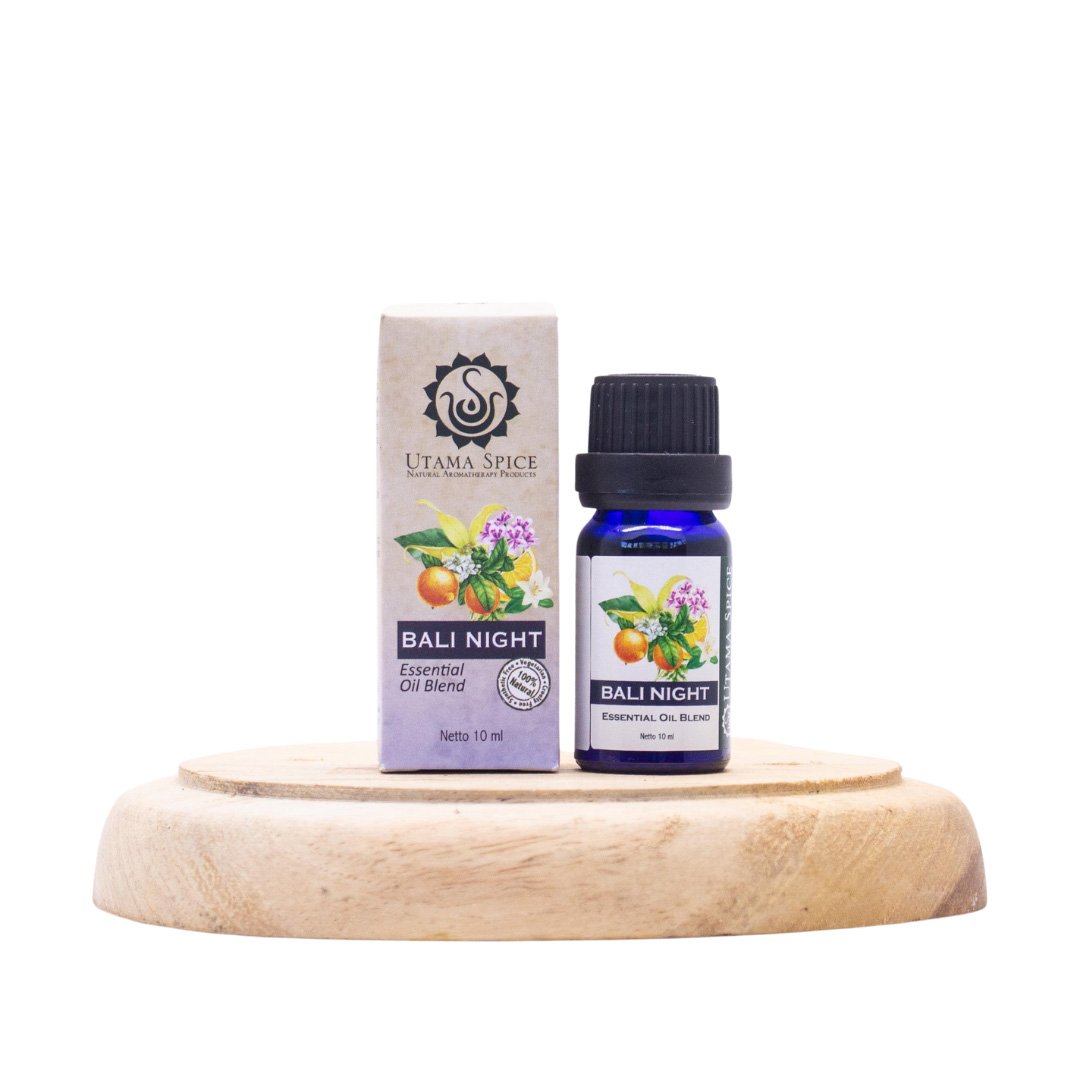
Meet Bali Night, our evening blend
Cananga, ylang-ylang, vetiver, rose geranium, and a lift of citrus, hand-blended in Bali into one warm, grounding aroma made for winding down. Diffuse it as you settle, or dilute it for a slow evening massage, and let the day close gently.
What is safe to diffuse in a bedroom overnight
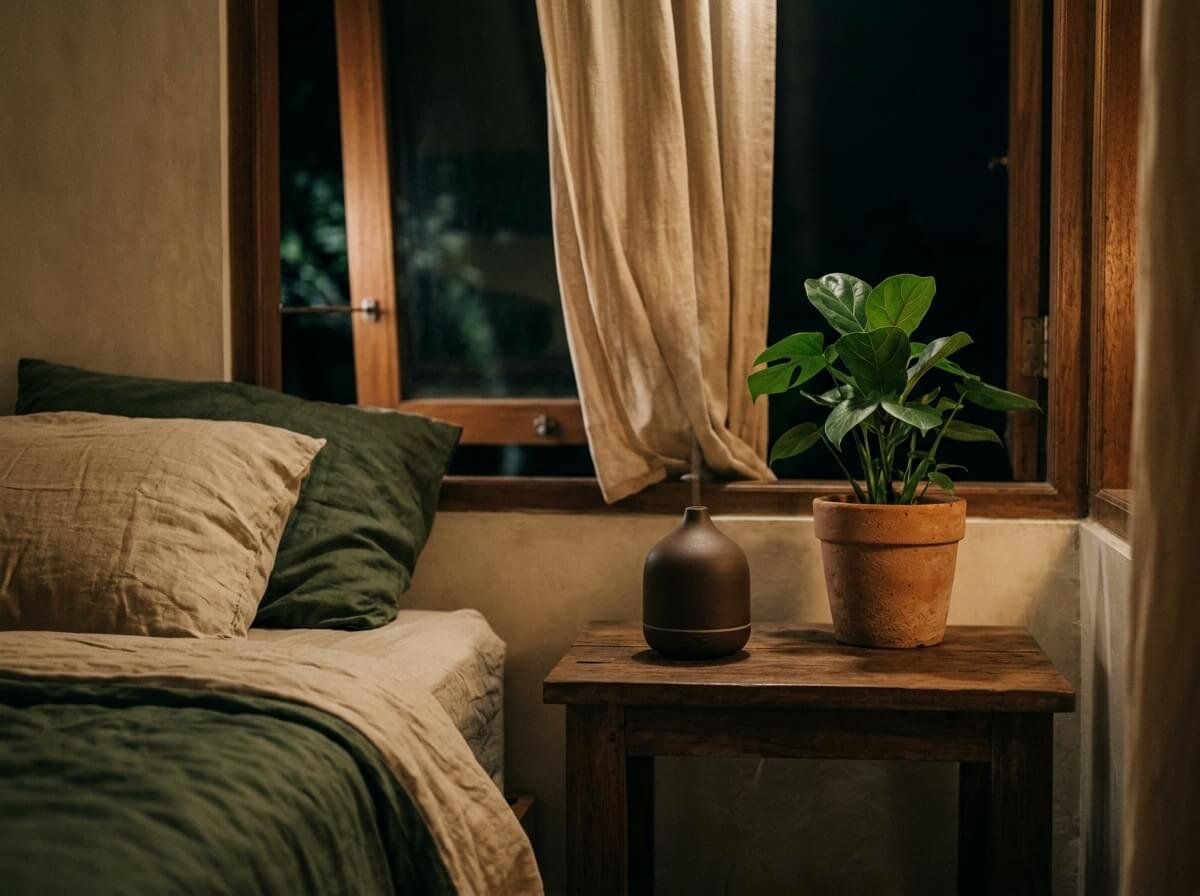
This is the question we are asked most, and it deserves a clear, honest answer. More aroma is not better, and continuous, all-night diffusing is not something we recommend. A well-scented bedroom is a lightly scented one.
- Diffuse intermittently, not all night. Run a diffuser for 30 to 60 minutes as you settle, then let it switch off. Many diffusers have an interval timer for exactly this. Your nose adapts to a scent within minutes anyway, so a constant stream adds little beyond needless exposure.
- Keep the room ventilated. A slightly open window or door lets air move. Aromatherapy is meant to be a subtle presence, not a saturated one.
- Use less than you think. A few drops in a diffuser is plenty for a bedroom. If the scent is strong enough to notice from the doorway, it is likely too much.
- Take care around children, pregnancy, and pets. Infants, young children, and anyone pregnant should use essential oils more conservatively, and ideally with professional guidance. Several oils that are fine for people can be genuinely harmful to cats and dogs, so keep pets out of a closed diffusing room and speak to your vet first.
- Respiratory sensitivity matters. If anyone in the room has asthma or is prone to airway irritation, go gentler still, or skip diffusion in favour of a scented item kept at a distance.
Used this way, diffusing is a calm, low-risk pleasure. The goal is a quiet cue for rest, not a fragrance-filled room. When in doubt, less oil and more ventilation is always the grounded choice. Fresh, green scents like lemongrass can also clear and lift the air earlier in the evening, before you move into softer, sleep-leaning notes closer to bed.
Building a bedtime ritual with scent
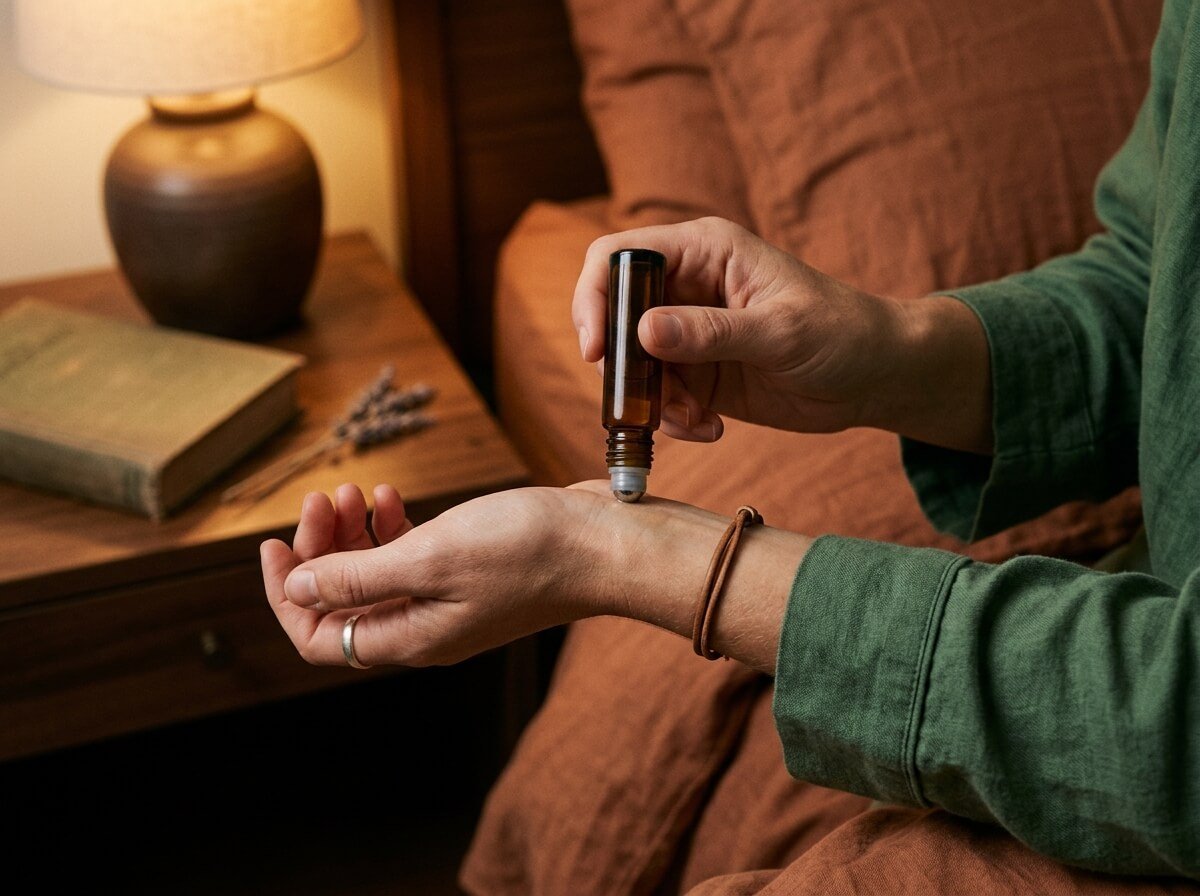
The real power of essential oils for sleep is not any single molecule; it is repetition. When you attach an aroma to the same small sequence each night, your body learns to read it as the beginning of rest. Ritual is where tradition and modern wellbeing meet, and it costs nothing but a little intention.
A simple sequence might look like this. About an hour before bed, dim the lights and start a diffuser with a calming blend for half an hour. Put screens away. Run a warm shower or bath, and afterwards roll a diluted oil across your wrists and breathe slowly for a few rounds. Then let the room settle into quiet. None of these steps is dramatic on its own, and that is the point. Small acts of care, repeated with intention, become the practice that carries you toward rest. This is how we think about wellness in general: progress over perfection, care over performance.
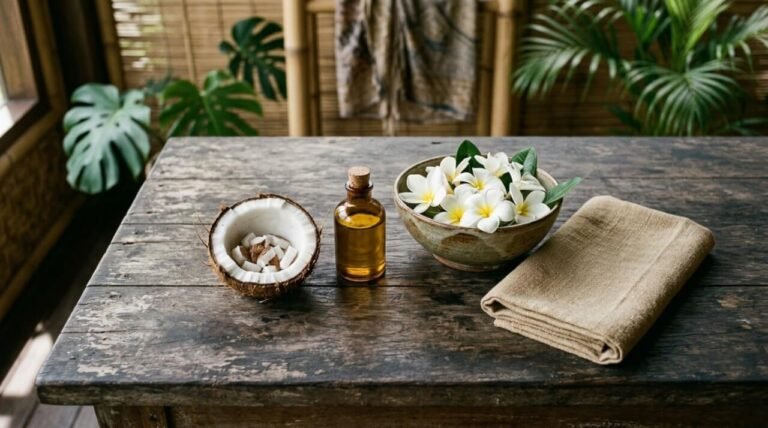
In Bali, scent has always been woven into daily life, from the frangipani set out at a doorway to the incense that marks the close of a day. That heritage sits behind everything we blend. Ritual is not a modern wellness trend to us; it is a way of paying attention, of marking time with intention, of treating the body as something worth caring for slowly. When you build your own evening practice around aroma, you are joining a very old idea: that how we end the day shapes how we rest, and how we rest shapes who we are the next morning.
Choose a scent you associate only with evening, so it stays meaningful. Keep the routine short enough that you will actually repeat it. And let the aroma be a gentle signal rather than the whole solution, alongside the fundamentals that carry the most weight: a consistent schedule, a cool dark room, and time away from screens. Scent supports those foundations; it does not replace them.
Frequently asked questions about essential oils for sleep
Do essential oils for sleep really work?
They can help set the stage for rest, and there is modest research, particularly on lavender, to support a calming effect. They work best as one part of good sleep habits rather than a stand-alone remedy. If sleep problems are persistent, it is worth speaking with a healthcare professional, because ongoing insomnia has causes that aroma alone cannot address.
Which essential oil is best for sleep?
Lavender is the most studied and the safest first choice for most people. Ylang-ylang, vetiver, and warm blends such as our Bali Night are excellent alternatives, especially if you find lavender too familiar. The best oil is ultimately the calming scent you will reach for night after night.
Is it safe to diffuse essential oils all night?
We do not recommend it. Diffuse for 30 to 60 minutes as you settle, then let the diffuser switch off. Keep the room ventilated, use only a few drops, and take extra care if children, pets, or anyone with respiratory sensitivity share the space.
Can I put essential oils directly on my skin before bed?
Not undiluted. Always blend essential oils into a carrier oil at roughly a 1 to 2% dilution, or use a ready-made roller. Patch test any new oil first, and keep photosensitising citrus oils to evening use, away from direct sun.
Can I mix different essential oils for sleep?
Yes, and it is part of the pleasure. Start with two or three oils, keep the total number of drops modest, and let one scent lead while the others support it. If blending feels fiddly, a ready-made blend takes the guesswork out and is balanced for you. Trust your nose above any recipe: if a combination smells calming to you, it is working as intended.
Final thoughts
Essential oils for sleep are a small, sensory act of care, not a miracle and not a shortcut. Used with a little knowledge and a lot of intention, they can turn the end of your day into a ritual that helps you soften, settle, and rest. Start simple: one calming oil or blend, one gentle method, one repeated routine. Keep the room lightly scented and well aired, dilute anything that touches skin, and let scent support your sleep foundations rather than carry them alone. That is what real care looks like, quiet, honest, and rooted in craft.