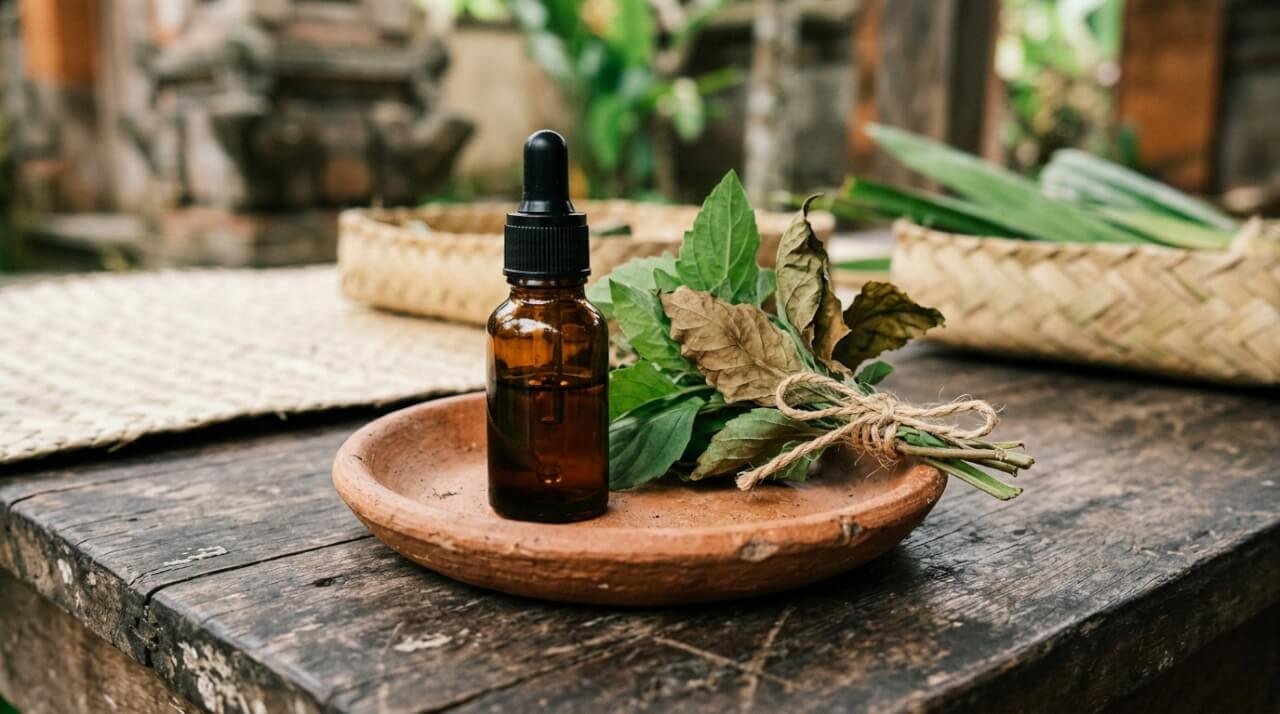
Patchouli essential oil benefits: the grounded Indonesian oil
Few scents divide a room like patchouli. It is the deep, earthy note at the base of countless perfumes, the smell many people associate with incense and slow evenings, and one of the oldest oils traded across Asia. Yet the real story of patchouli essential oil benefits is quieter and more grounded than the reputation suggests. This is an oil rooted in Indonesian soil, refined by time, and valued for what it does for skin, mood, and rest. Here we look at where it truly comes from, what it can and cannot do, and how to tell a real oil from a diluted one.
Patchouli is one of the ingredients we know intimately, because much of the world’s supply is distilled a short journey from where we craft in Bali. That closeness gives us a clear view of both the tradition and the trade, including the parts most guides leave out. If you are building a wider practice, our guide to essential oil blends for a diffuser and our notes on vetiver, another grounding root oil sit naturally alongside this one.
What patchouli essential oil is, and where it really comes from
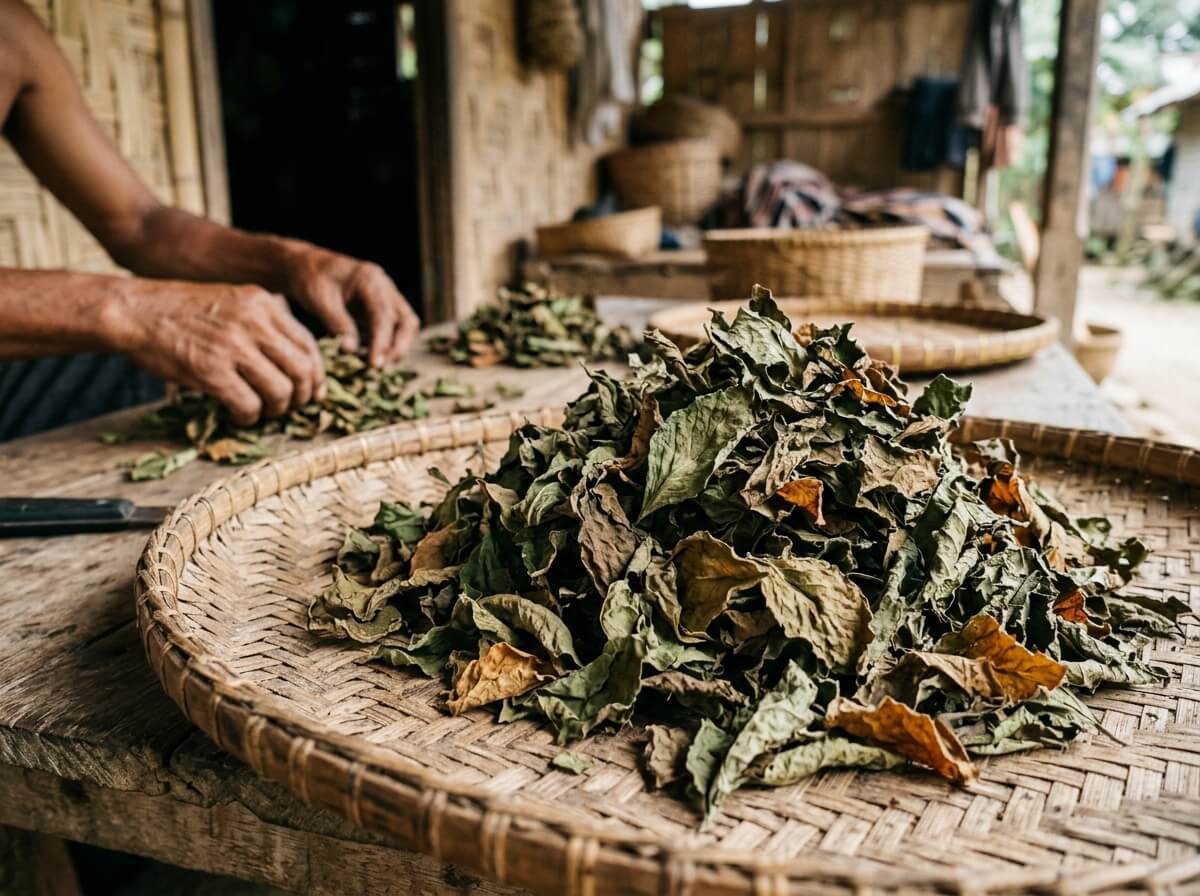
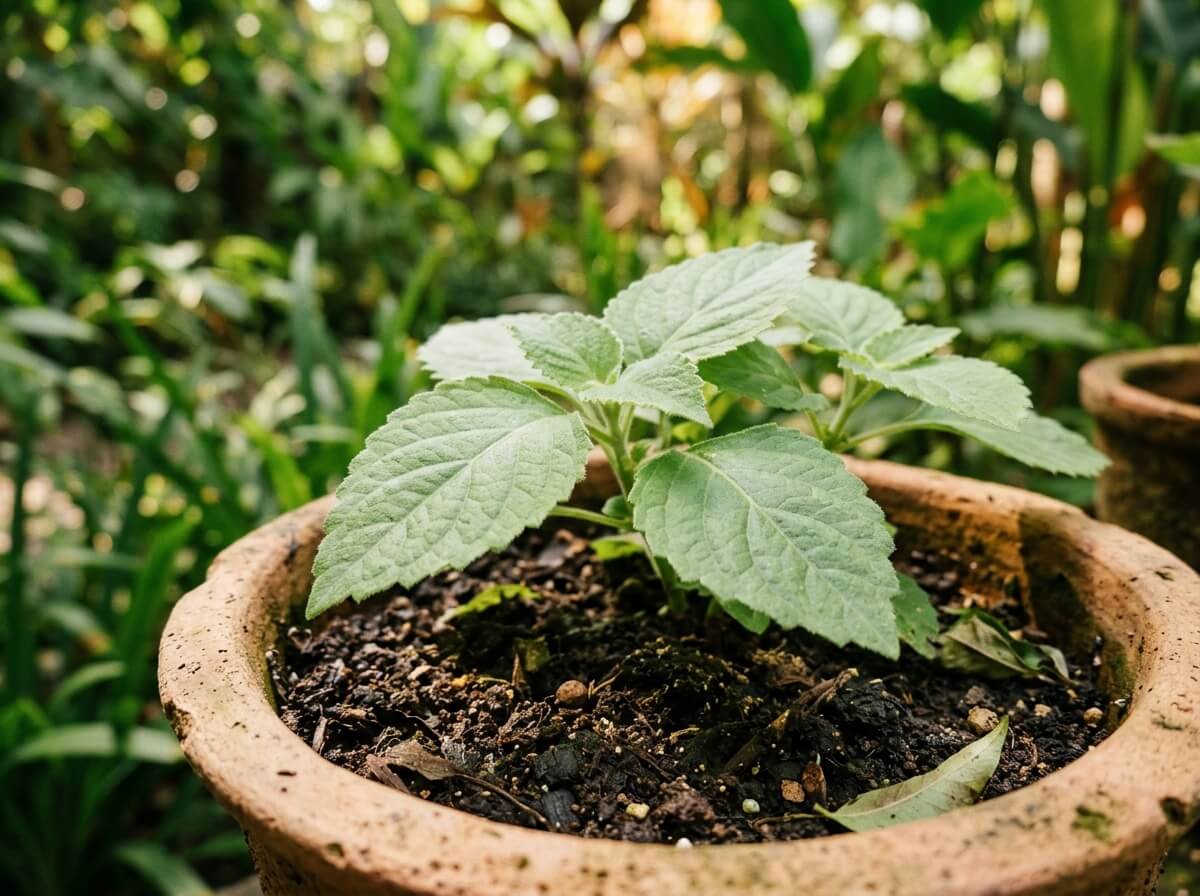
Patchouli (Pogostemon cablin) is a leafy member of the mint family, though its aroma is nothing like mint. The oil is steam-distilled from the leaves, which are usually harvested, then dried and lightly fermented before distillation. That drying and fermenting step is part of why patchouli smells the way it does, and it is a craft in itself.
The provenance matters more here than with almost any other oil. Indonesia grows the vast majority of the world’s patchouli, much of it on Sulawesi, along with Sumatra and other islands. In the local language the plant is nilam, and for generations it has been a smallholder crop, tended and distilled by families in village stills. When you read a label that simply says patchouli, there is a strong chance the leaves grew in Indonesian soil and passed through Indonesian hands, whatever brand name sits on the bottle.
We say this plainly because the mainstream guides rarely do. Patchouli is often marketed as a mood or a vibe, detached from the people and place that produce it. Our view is the opposite. Every ingredient tells a story of connection between people, plants, and place, and patchouli’s story is Indonesian. When we bottle our own patchouli essential oil, that provenance is the point, not a footnote.
A scent with a long trade history
Patchouli has traveled the world for centuries. In the 19th century, Indian and Asian shawls were packed with dried patchouli leaves to protect the cloth from moths on the long sea voyage to Europe. The scent clung to the fabric, and European buyers came to expect it, so much so that the aroma became a mark of authenticity for imported textiles. Manufacturers who tried to copy the shawls closer to home found their versions would not sell without the patchouli note. In a small way, the smell itself helped carry a craft across oceans.
That history is worth holding onto, because it reminds us patchouli was never a novelty. It has been a working ingredient of trade, protection, and ritual for a very long time, and the plant that scented those shawls is the same nilam grown across Indonesia today. Tradition, for us, is not nostalgia. It is a blueprint, the idea that ancestral knowledge still has something practical to teach modern wellbeing.
Patchouli essential oil benefits for skin
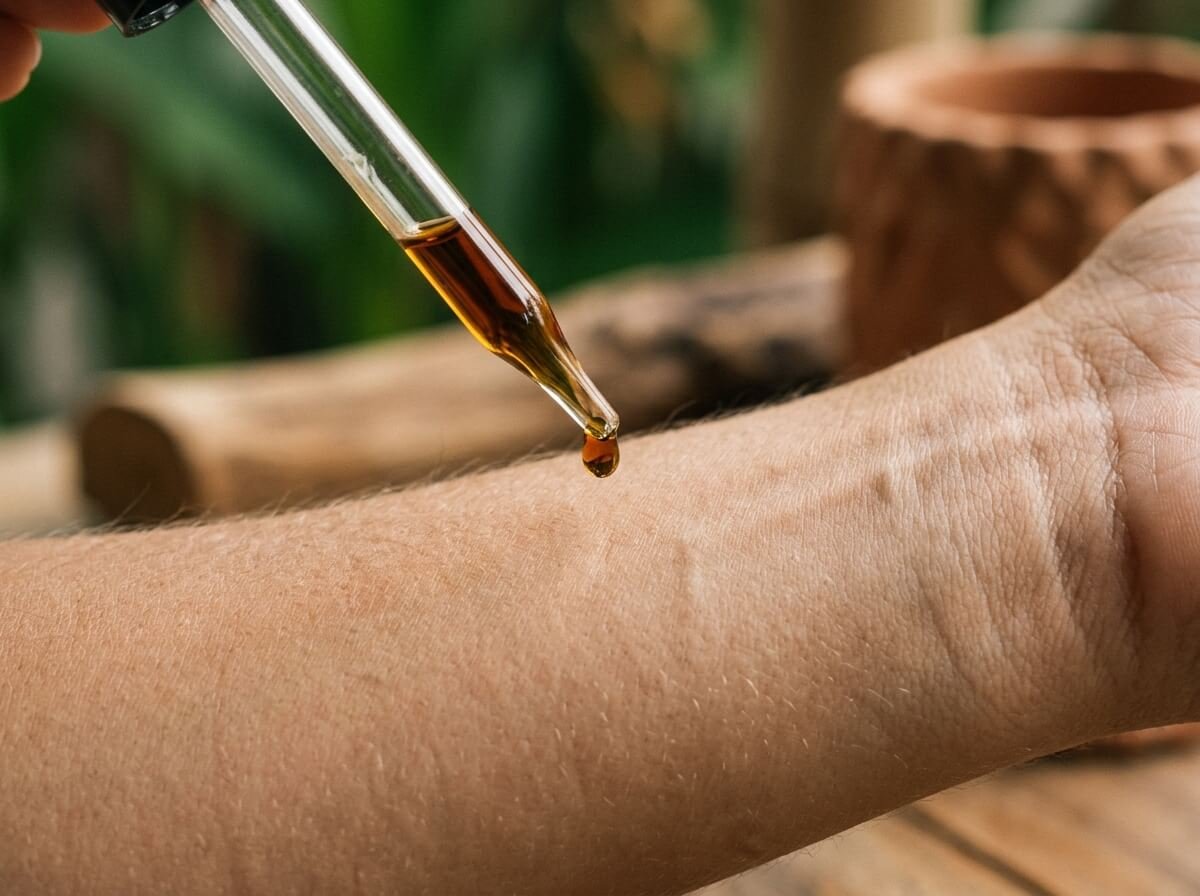
Patchouli has a long traditional use in skincare, and modern interest tends to focus on a few honest, grounded properties rather than dramatic claims. It is worth being clear about what the research actually supports, and where the evidence is still early.
Support for oily and combination skin
Patchouli is astringent, which means it can help skin that runs oily feel more balanced. Many people find it useful in the warmer, more humid months, or on areas prone to congestion. It blends well with lighter oils and is a common note in facial blends aimed at combination skin. If your skin leans oily, patchouli pairs thoughtfully with rose geranium essential oil, which is often used to help balance sebum.
A reputation for helping skin look restored
Traditionally, patchouli has been used on tired, dry, or mature-looking skin, and it appears in blends meant to support the look of scars and uneven texture over time. Small laboratory studies suggest patchouli alcohol, one of its main compounds, has antioxidant and anti-inflammatory activity. That is promising, and it is also a reason for honesty: laboratory activity is not the same as a proven result on your face. We would rather you approach patchouli as a supportive, well-tolerated ritual ingredient than as a fix.
Calming for the skin barrier
Because it is soothing and mild when properly diluted, patchouli sits comfortably in barrier-friendly routines. Always dilute it into a carrier such as cold-pressed virgin coconut oil before applying, and treat it as one gentle element among many. For a deeper look at how plant oils actually support the skin barrier, our piece on tamanu oil covers the same terrain from another angle.
A traditional deterrent for insects
The same quality that once protected shawls has a modern echo. Patchouli has long been used to keep insects at bay, and it still appears in natural formulas aimed at deterring moths and other pests. This is folk practice backed by centuries of use rather than a clinical promise, so we frame it honestly. If you enjoy the scent, a patchouli blend in a cupboard or a diffuser is a pleasant, low-effort way to borrow that tradition, no aerosol required.
Across all of these uses, one rule holds: patchouli is a supporting player, not a hero product. It earns its place through consistency and gentleness, the kind of quiet ingredient that makes a whole ritual feel more grounded. Progress in skincare is rarely about a single dramatic step. It is about small, honest choices repeated with care.
The grounding effect: patchouli for calm, sleep, and the nervous system
If patchouli is famous for anything beyond scent, it is for feeling grounding. The aroma is heavy, warm, and low, the opposite of a bright citrus lift. Many people reach for it in the evening, when the goal is to slow down rather than wake up.
Aromatherapy research on patchouli is still modest, but what exists points toward relaxation. Inhaled patchouli has been studied for its calming effect on the nervous system, and it is a frequent base note in blends made for rest, meditation, and winding down. It anchors a blend, holding lighter oils in place and giving them somewhere to settle.
This is where patchouli earns its place in ritual. A few drops in a diffuser an hour before sleep, or worked into an evening massage, can mark the shift from a busy day into rest. Our aromatherapy diffuser blend recipes include grounding combinations, and if you prefer a ready blend, our Deep Calming essential oil blend leans into the same quiet register. Patchouli also partners beautifully with frankincense for a meditative, resinous depth.
There is a reason patchouli anchors so many meditative blends. Scent reaches the brain by a direct route, through the olfactory system that sits close to the areas tied to memory and emotion. A heavy, familiar base note like patchouli can act as a cue, a signal to the body that it is time to settle. Used consistently, the same evening blend becomes shorthand for rest, so the effect grows less about the chemistry of the oil and more about the ritual you build around it.
None of this asks patchouli to do the work of medicine. If you are struggling with sleep or stress, the foundations matter most: light, routine, movement, and rest. What a grounding oil offers is a small, sensory anchor within those foundations, a way to make the wind-down feel deliberate. Care is an action, and sometimes the action is simply pausing long enough to breathe in something warm and earthy before the day lets go.

Why patchouli is the rare oil that improves with age
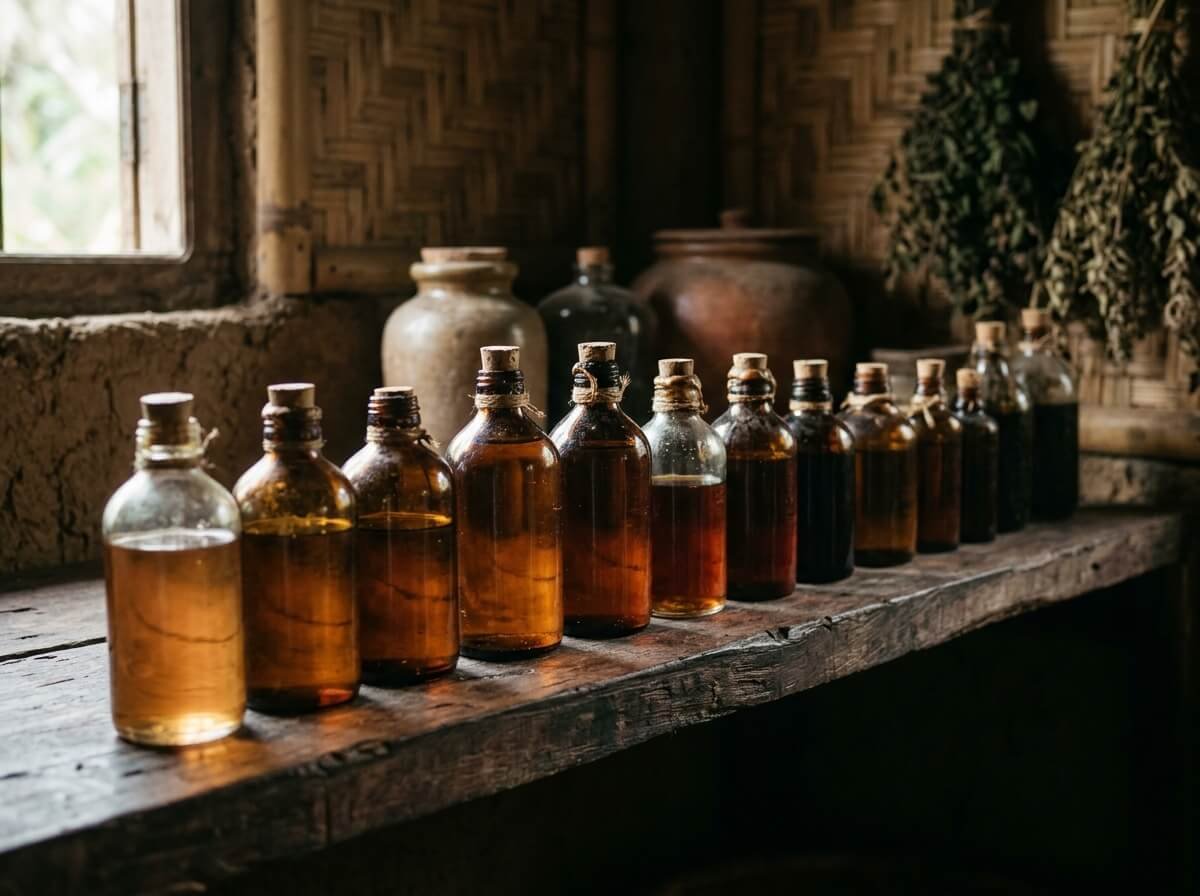
Here is the detail almost no guide mentions, and it is the most interesting thing about patchouli. Most essential oils are best used fresh, because oxidation slowly degrades them. Patchouli is different. It is one of the few oils that genuinely matures with age, growing smoother, rounder, and richer over years rather than fading.
Freshly distilled patchouli can smell sharp, green, and even a little raw. Given time, that edge softens into the deep, sweet, balsamic character that perfumers prize. In the fragrance trade, well-aged patchouli is treated as more valuable than young oil, which is why some distillers deliberately rest their stock. It is a rare case where patience is part of the craft, not a compromise.
This is also a quiet argument for buying from makers who understand the material. If you want to experience patchouli as it is meant to be, our patchouli essential oil is distilled from Indonesian-grown leaves, close to the source, by a team that has worked with these botanicals for more than 35 years. That closeness is not a marketing line. It is the difference between an oil handled as a commodity and one handled as a craft.

Patchouli, distilled close to the source
Earthy, grounding, and rooted in Indonesian soil. Our patchouli essential oil is crafted in Bali from nilam leaves, the way this oil has been made for generations. One ingredient, one honest story.
How to spot real patchouli oil, and the truth about dilution
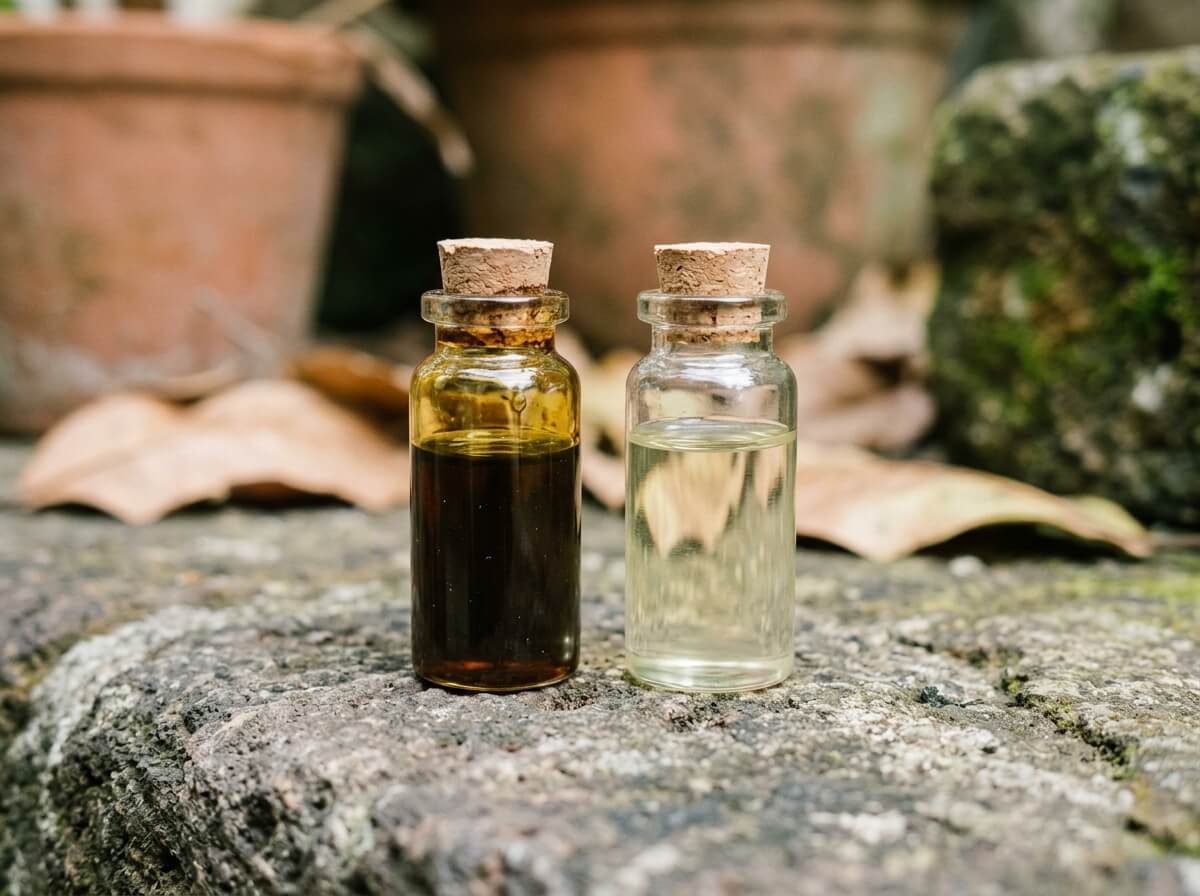
Patchouli is one of the most adulterated oils on the market. Because demand is high and the raw material is cheap relative to rarer oils, it is often stretched with vegetable oil, mixed with synthetic patchouli compounds, or sold in a diluted form without saying so. If you have ever bought a patchouli oil that smelled thin and disappeared quickly, this is likely why.
You do not need a laboratory to shop more carefully. A few honest signals help:
- Look at the oil itself. Real patchouli is viscous and deeply coloured, from amber to dark brown. A thin, pale, watery liquid is a warning sign.
- Trust the aroma’s staying power. Genuine patchouli holds on your skin for hours and deepens as it dries. A scent that vanishes in minutes has usually been cut.
- Read for provenance. Sellers who name the country of origin, and ideally the island or region, tend to be closer to the material. Vagueness often hides a long, anonymous supply chain.
- Be wary of a price that seems too easy. Fair patchouli is not the cheapest oil on the shelf, because the drying, fermenting, and distilling take real work.
None of this is about fear. It is about the same principle that runs through everything we make: no greenwashing, no pretending, just real material handled with care. An honest oil will always tell you where it is from and let its own weight and scent do the talking.
How to use patchouli essential oil at home
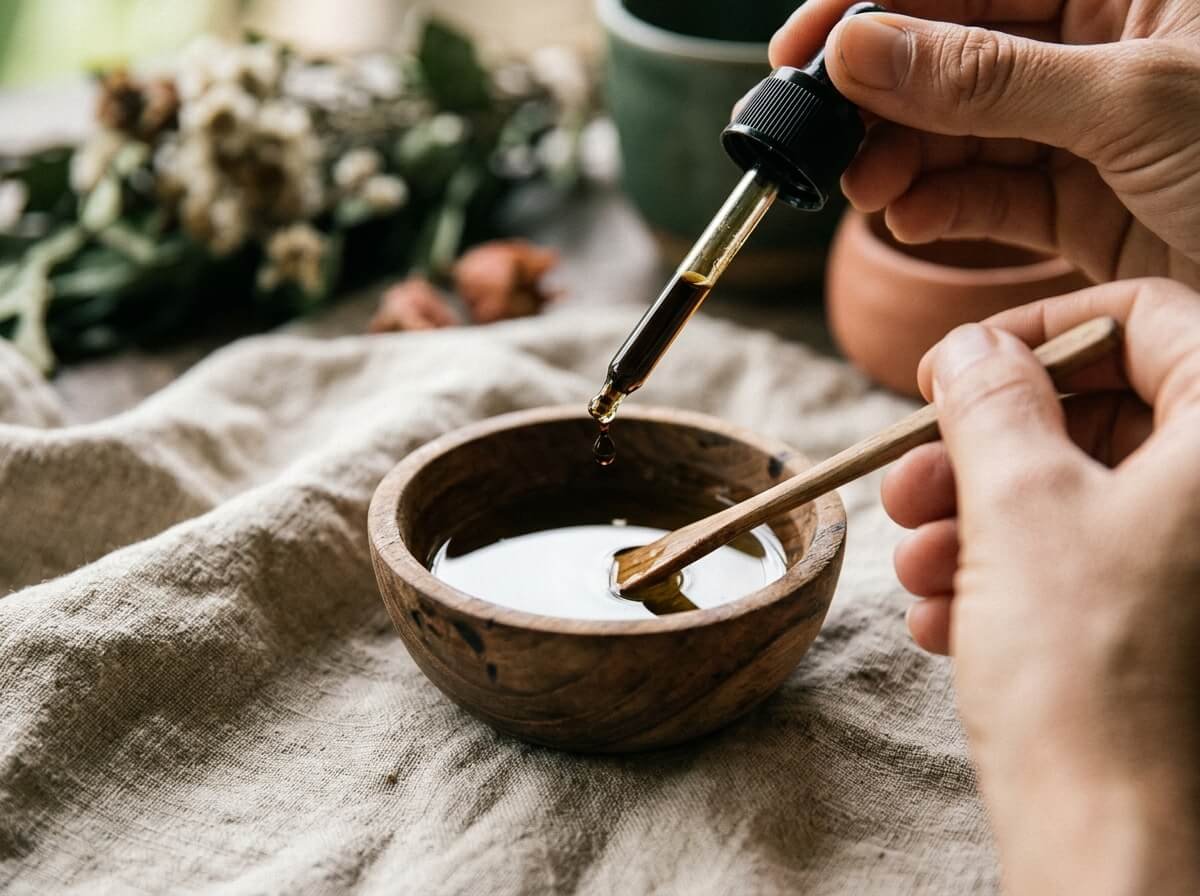
Patchouli is potent, and a little carries a long way. As with any essential oil, dilute it before it touches skin, and give its heavy base note room by pairing it with lighter oils.
Dilute it properly
For most adults, a safe general guide for the body is around two to three drops of essential oil per teaspoon of carrier oil, which sits near a 1% to 2% dilution. Use less on the face. Our virgin coconut oil makes a clean, stable carrier, and you can read more about carriers and ritual in our guide to Balinese massage oil.
Blend it thoughtfully
Patchouli is a base note, so it anchors and lingers. It works beautifully under brighter oils. A few pairings we return to:
- Patchouli and rose geranium for a balancing, slightly floral facial blend.
- Patchouli and vetiver for a deep, earthy, grounding base, ideal for evening.
- Patchouli and citrus, such as sweet orange or bergamot, to lift its heaviness into something warmer and more wearable.
- Patchouli and frankincense for meditation and quiet, resinous focus.
Bring it into a ritual
A drop worked into an evening moisturiser, a grounding blend in a diffuser, or a few drops in a warm bath can all mark a moment of pause. If you diffuse, our notes on reed diffusers and cananga, the Balinese temple flower offer more ways to build a scent practice at home. Care is an action, and even a small ritual counts.
Frequently asked questions about patchouli essential oil
Is patchouli essential oil safe for skin?
For most people, yes, when it is properly diluted in a carrier oil. Patchouli is generally considered gentle and well tolerated. As with any new oil, patch test on your inner forearm first, avoid broken skin, and speak with a healthcare professional if you are pregnant, nursing, or managing a health condition.
What does patchouli smell like?
Deep, earthy, and warm, with sweet, balsamic, and slightly woody undertones. Young oil can smell sharper and greener, while aged oil becomes rounder and smoother. It is a base note, which is why it lingers and anchors a blend.
Why is my patchouli oil so dark and thick?
That is usually a good sign. Genuine patchouli is naturally viscous and ranges from amber to dark brown. Thin, pale, watery oils are more likely to have been diluted.
Does patchouli really get better with age?
Yes, and it is one of the few essential oils that does. Where most oils are best used fresh, patchouli matures over years, its aroma deepening and softening. Perfumers often prize well-aged patchouli above young oil.
Where does most patchouli come from?
Indonesia, where it is known as nilam and grown largely by smallholder families on Sulawesi and other islands. Much of the world’s supply passes through Indonesian stills, which is why provenance is worth asking about.
A grounded oil, honestly made
Patchouli rewards a closer look. Beneath the reputation is an Indonesian smallholder crop, a distilling craft that values patience, and a set of genuine, grounded benefits for skin and rest, held honestly without overreach. The patchouli essential oil benefits worth remembering are the real ones: balance for oily skin, calm for the nervous system, and an aroma that deepens with time rather than fading.
What you give, you get back. Choosing an oil made close to its source, by hands that know it, is a small act of care that reaches back to the people and the soil that grew it. That is the kind of connection we craft for, and patchouli is one of its clearest expressions.