Cananga essential oil benefits: the Balinese temple flower in a bottle
Before Bali wakes, the day is already scented. On doorsteps, shrine ledges, and temple stone, small woven trays of flowers appear with the first light, and among the petals sits the kenanga: a soft, yellow-green bloom with a heady, sweet perfume. That flower is Cananga odorata, and the cananga essential oil benefits people reach for today, from a calmer evening to a more sensory skincare ritual, all trace back to this same tropical tree. This is an origin-first guide to cananga: where it comes from, who tends it, how it differs from ylang-ylang, and how to use it with care and honesty.
We make no miracle claims here. What we offer is grounded aromatherapy science paired with respect for the Balinese tradition this flower belongs to. If you want the short version: cananga is a warm, floral, deeply relaxing oil with real sensory and mood value, best used diluted and well sourced. The longer version, below, is the part worth reading.
Cananga: the flower Bali offers each morning
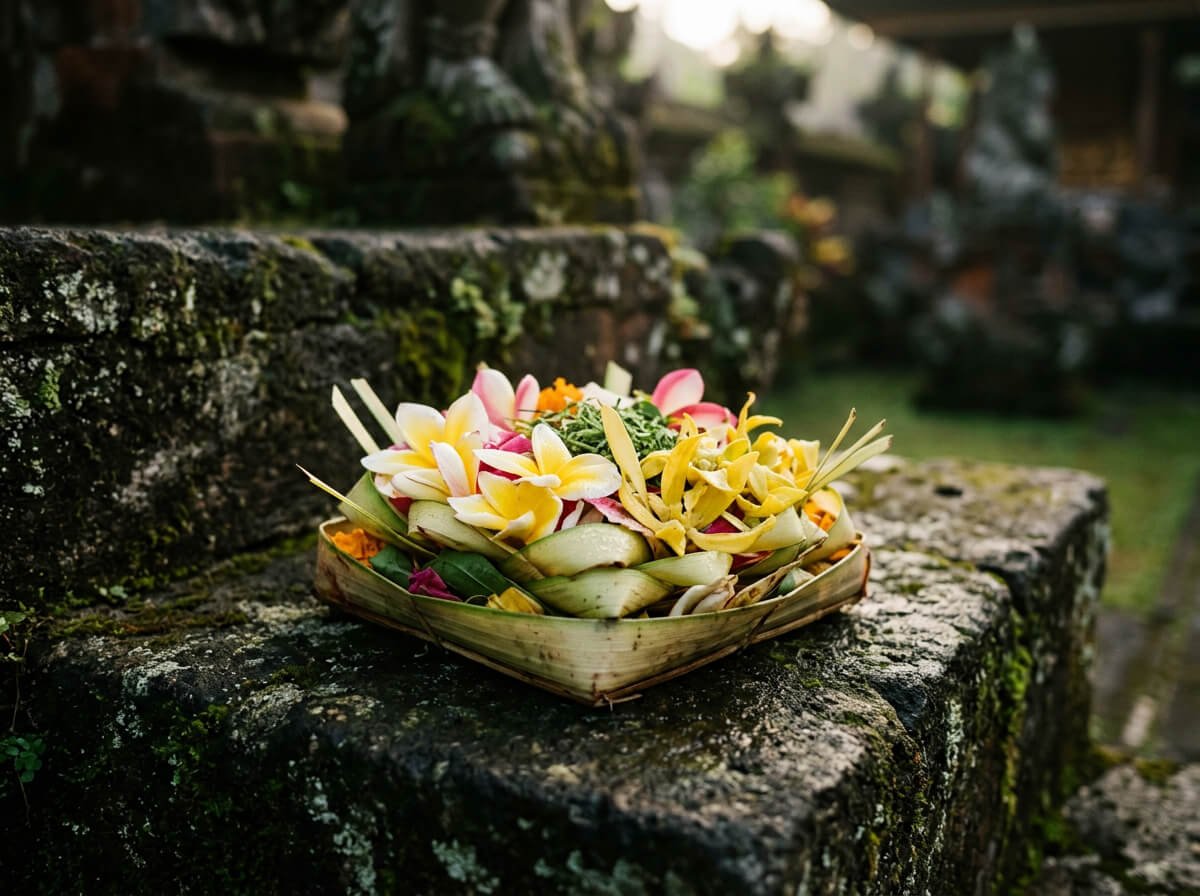
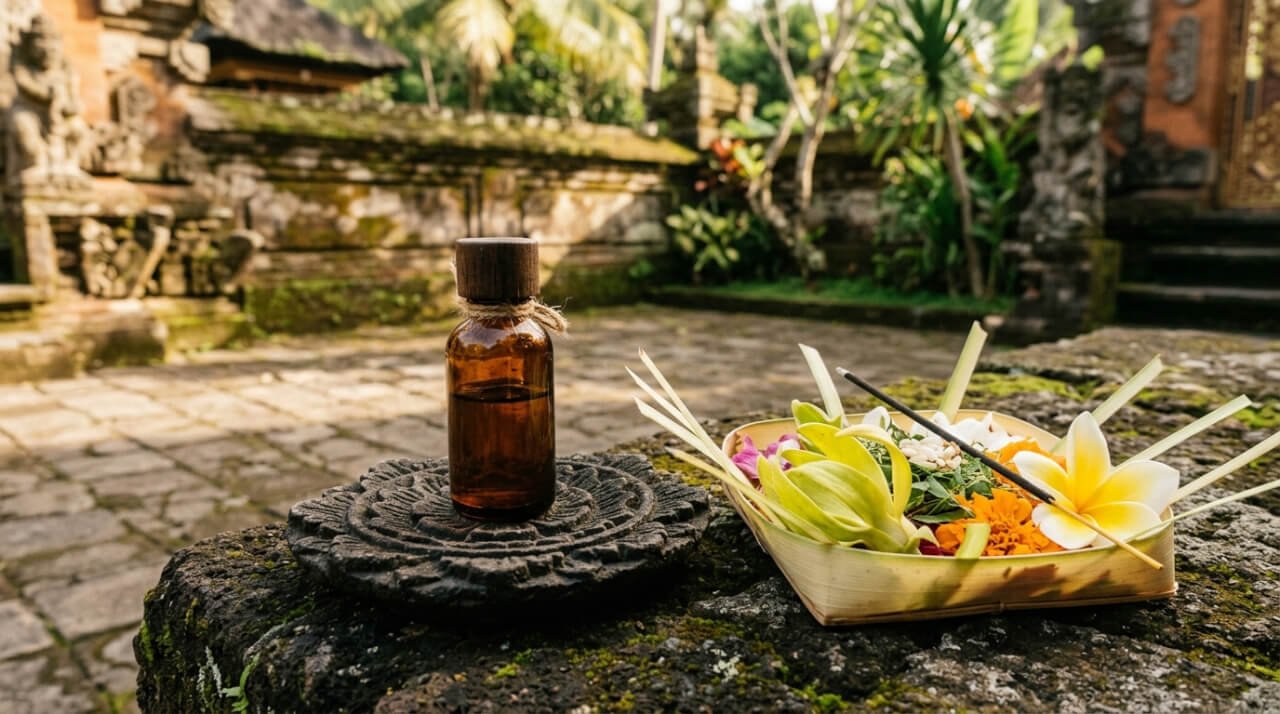
To understand cananga, it helps to meet it where it lives. In Bali, the kenanga flower is woven into canang sari, the small daily offering that is central to Balinese Hindu life. A canang sari is a little square tray, hand-folded from young palm or coconut leaf, filled with flowers and finished with a few grains of rice, a sprinkle of holy water, and the smoke of incense. It is placed with intention at temples, family shrines, and thresholds as a gesture of gratitude and balance, a daily practice of giving thanks rather than asking for more.
The flowers in a canang sari are chosen with meaning. Colors are arranged to honor different directions and deities: white toward the east, red to the south, yellow to the west, and green or blue to the north. The kenanga, with its yellow petals and rich scent, sits comfortably in this language of flowers. It is a temple bloom, familiar to anyone who has walked a Balinese street at dawn and caught its perfume drifting from a shrine.
There is a philosophy underneath all of this. Balinese life is shaped by the idea of living in balance with the divine, with other people, and with the natural world. The canang sari is a small, daily expression of that balance, an act of giving that expects nothing in return. It is easy to walk past a tray of flowers on a doorstep and see only decoration. What you are really seeing is a worldview: that care is something you practice every single morning, quietly, whether anyone notices or not. We find that idea deeply familiar, because it mirrors our own belief that what you give, you get back.
We want to be clear and respectful here: the offering uses the whole flower, freshly picked, as part of a living spiritual practice. Cananga essential oil is a modern distillation of that same flower, not a religious object. Holding both truths at once, the sacred bloom and the bottled oil, is exactly the kind of honesty this ingredient deserves. When a plant carries this much cultural weight, the least we can do is tell its story accurately. That same care for provenance runs through our approach to Balinese skincare more broadly: the place and the people matter as much as the plant.
Cananga vs ylang-ylang: one tree, a different grade
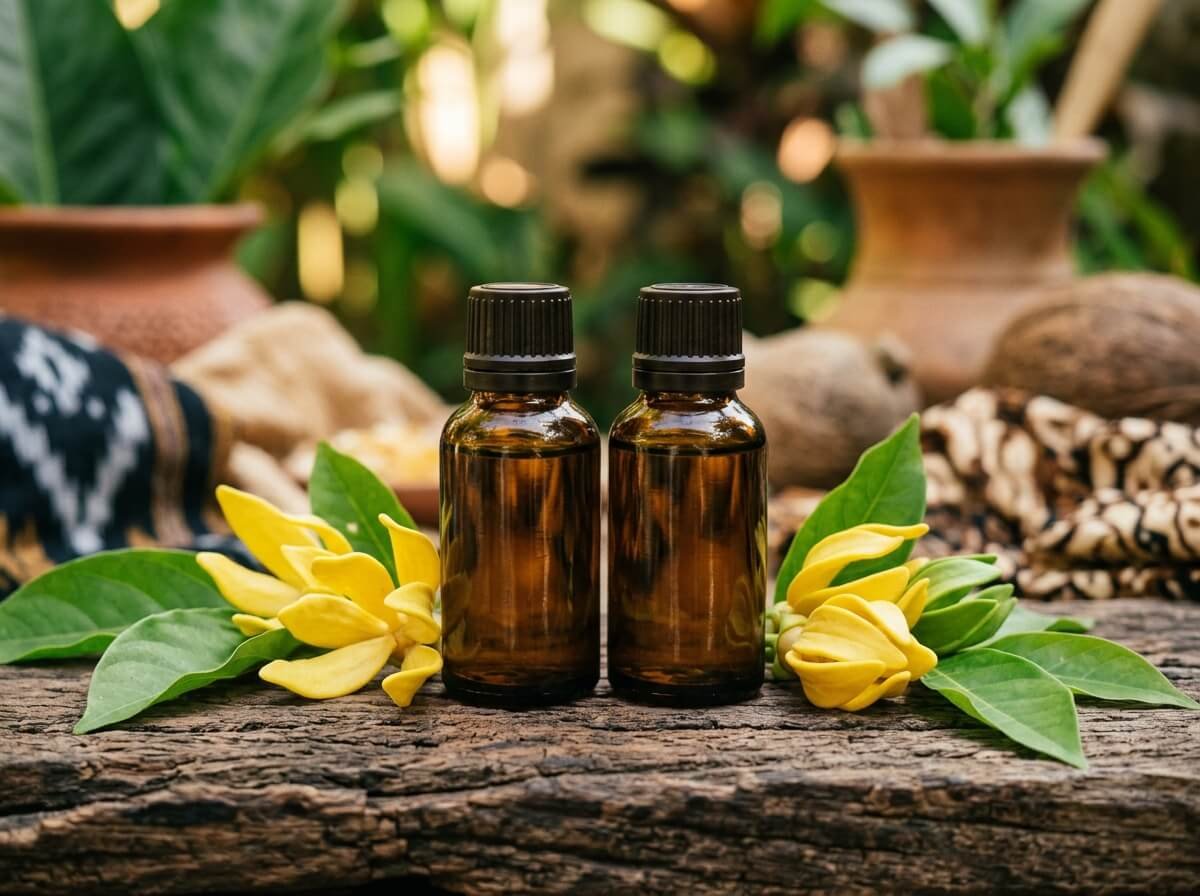
This is the question that trips up most people, so let us settle it plainly. Cananga and ylang-ylang come from the same botanical species, Cananga odorata. They are not rivals or lookalikes. They are the same tree, separated by variety and by how the flowers are distilled.
Ylang-ylang is usually produced from the variety Cananga odorata var. genuina, and it is fractionally distilled. As the steam runs, the distiller draws off the oil in stages, or fractions, over many hours. The earliest fraction, called ylang-ylang extra, is the lightest, sweetest, and most prized by perfumers. Later fractions, graded one through three, are progressively heavier and less refined. So ylang-ylang is really a family of grades pulled from one long distillation.
Cananga oil is typically distilled from the variety Cananga odorata var. macrophylla, and here the flowers are completely distilled in one continuous run rather than separated into fractions. The result is a single, whole oil: warmer, woodier, a little less sweet, and often more tenacious on the skin and in a room. Much of the world’s cananga oil has long been grown and distilled in Java, Indonesia, which makes it a genuinely Indonesian botanical.
- Same species: both are Cananga odorata.
- Ylang-ylang: fractional distillation, graded extra through three, lighter and sweeter at the top grade.
- Cananga: complete distillation, one whole oil, warmer and woodier, longer lasting.
- Practical takeaway: if you want a bright, refined floral for perfumery, reach for ylang-ylang extra; if you want a grounded, full-bodied floral for diffusing and everyday ritual, cananga is beautiful.
Why does the confusion persist? Partly because the two names are used loosely in the marketplace, and partly because both smell unmistakably of the same flower. A shopper comparing labels can be forgiven for assuming they are different plants entirely. They are not. Once you know that grade and distillation are the real difference, you can shop with clarity, matching the oil to the mood you want rather than chasing a name.
In our own line, we bottle a true Ylang Ylang Essential Oil distilled from this same flower, so you can meet the tree from the sweeter end of the spectrum. Whichever grade you choose, you are smelling one plant, expressed two ways.
How cananga essential oil is grown and distilled in Indonesia
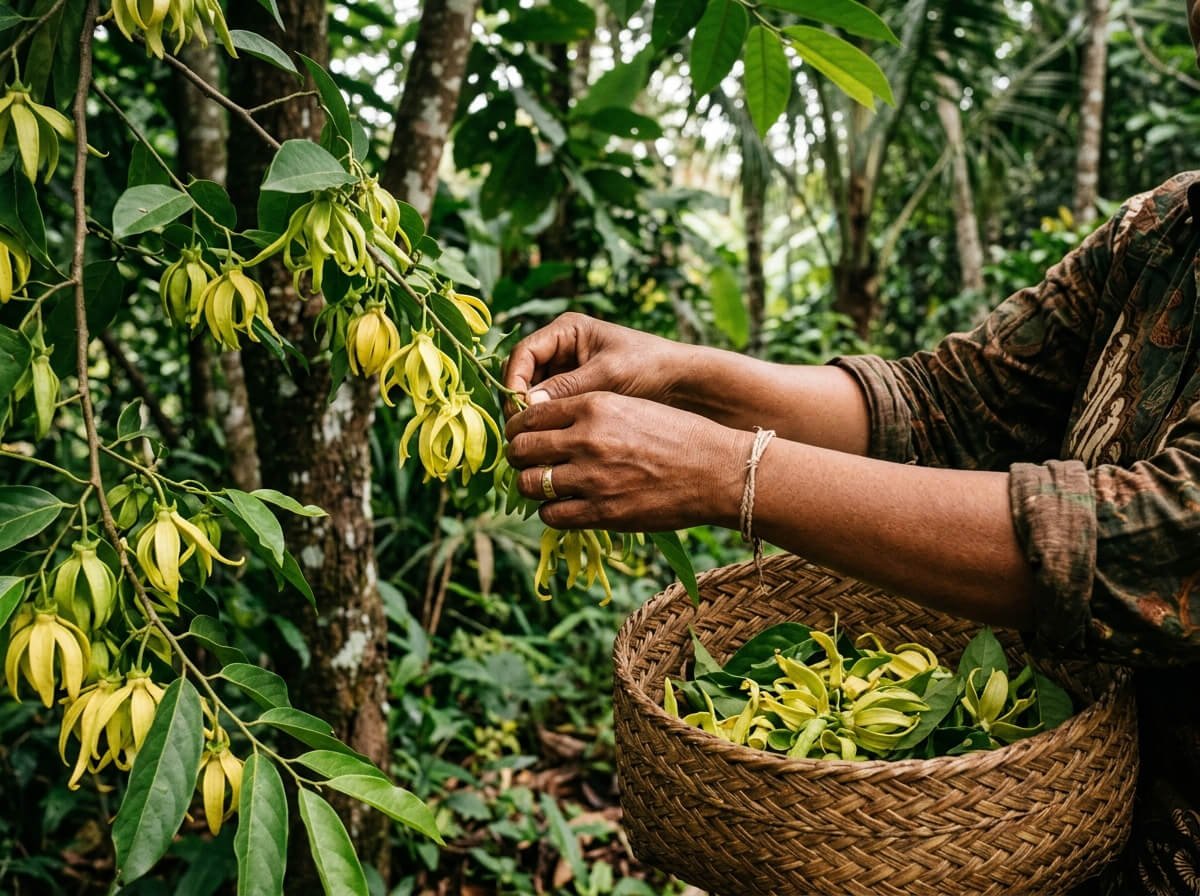
The cananga tree grows readily across the Indonesian archipelago, from Java to Sumatra and beyond. It is a generous plant. A mature tree can flower for much of the year, its branches drooping under clusters of long, curling petals that shift from green to a soft butter-yellow as they ripen. That ripeness matters. Flowers picked too early smell green and thin; picked at their peak, usually in the cool of early morning, they carry the full, honeyed depth that makes the oil worth having.
Harvest is hand work. Pickers move through the groves at dawn, gathering the ripe blooms before the day’s heat lifts too much of the aroma away. Because the scent is most concentrated when the flowers are fresh, they are carried quickly to the still. Speed between grove and distillation is one of the quiet markers of a well-made oil.
The flowers are then steam distilled. Gentle steam passes through the petals, lifting their aromatic compounds, which are cooled back into a fragrant oil and separated from the water. For cananga, this run is carried through completely, giving that whole, rounded oil we described earlier. It takes a great many flowers to fill a small bottle, which is worth remembering the next time an essential oil seems suspiciously cheap. Real distillation of real flowers has a real cost, in labor and in blooms.
Yield is the part that surprises people. A single small bottle of cananga oil represents a startling number of hand-picked flowers, distilled slowly to coax out a trace of aromatic oil. This is why the good stuff is never a bargain-bin purchase, and why a bottle deserves to be used a drop at a time rather than poured. Understanding the effort held inside the glass changes how you treat it. You stop reaching for more and start respecting the little you already have, which is, quietly, the more sustainable way to use any precious botanical.
This is where sourcing becomes an ethical question, not just a quality one. Who picked the flowers, and were they paid fairly? Was the grove tended in a way that keeps the land healthy for the next generation? These are the same questions we ask of every botanical we work with, from wild-harvested illipe butter to cold-pressed coconut oil. An oil can be technically pure and still be sourced carelessly. Provenance is part of efficacy, because a plant grown and gathered with respect simply tends to be better.
Cananga essential oil benefits: aroma, calm, and skin
So what are the real cananga essential oil benefits, once we set the hype aside? They fall into three honest categories: aroma and mood, sensory ritual, and skin. Let us take each in turn, grounded in what the evidence and long tradition actually support.
A calming, mood-steadying aroma
The most consistent benefit is emotional. Cananga’s aroma is warm, floral, and enveloping, and it is widely used to encourage relaxation and ease tension. Small human studies on the closely related ylang-ylang aroma have observed calmer responses, including modest drops in blood pressure and a more relaxed, settled mood in participants who inhaled it. These are gentle effects, not sedation, and the research is early rather than definitive. What is not in doubt is the long, cross-cultural use of this scent to slow the nervous system and mark a moment of rest. If stress is what you are carrying, cananga belongs in the same toolkit as the oils we discuss in our guide to essential oils for stress and anxiety.
The compounds behind the aroma include linalool, benzyl acetate, benzyl benzoate, geranyl acetate, and caryophyllene, a familiar cast in relaxing florals. You do not need to memorize the chemistry to feel it work. You only need to breathe slowly and let the scent do what it has always done.
If you want the simplest way to feel this, try a moment of direct inhalation. Place a single drop of a diluted blend on a tissue, hold it a hand’s width from your face, and take three slow breaths in through the nose and out through the mouth. That is the whole practice. No device, no fuss, just a pause and a scent. It is the kind of small ritual you can carry anywhere, a portable moment of calm on a difficult afternoon.
A sensory anchor for ritual
Beyond measurable effects, cananga earns its place as a sensory anchor. Scent is memory’s shortest path. A single, consistent aroma at the end of the day tells the body that the day is closing, that it is safe to soften. This is the heart of ritual: a repeated, sensory cue that turns an ordinary evening into a practice of care. Cananga’s richness makes it especially good at this, because it lingers, holding the mood in place rather than fading in minutes. Many people find it pairs naturally with the wind-down practices we explore in our aromatherapy oils for anxiety guide.
A traditional skin-care botanical
Cananga and ylang-ylang have a long history in skin and hair care, traditionally valued for balancing oily or combination skin and for adding a luxurious scent to carrier oils and lotions. Used correctly, meaning well diluted, it can feel soothing and conditioning. We are deliberately cautious here: this is a strong aromatic oil, and more is not better. The skin benefits are real in the sense that generations have used it this way, but they arrive through gentle, diluted, consistent use, not through a heavy hand. Treat it as a finishing note in a considered routine, layered into a carrier oil, never applied neat.
Hair care is where this tradition shows up most vividly. Across Indonesia and the wider tropics, floral oils have long been massaged through the hair and scalp, as much for their scent and the ritual of the massage as for conditioning. A single drop of cananga stirred into a carrier oil turns an ordinary scalp massage into something that feels indulgent and grounding at once. It is a small, sensory pleasure with roots that run generations deep, and it costs almost nothing to bring into your own week.
The aromatic profile: how cananga behaves in a blend
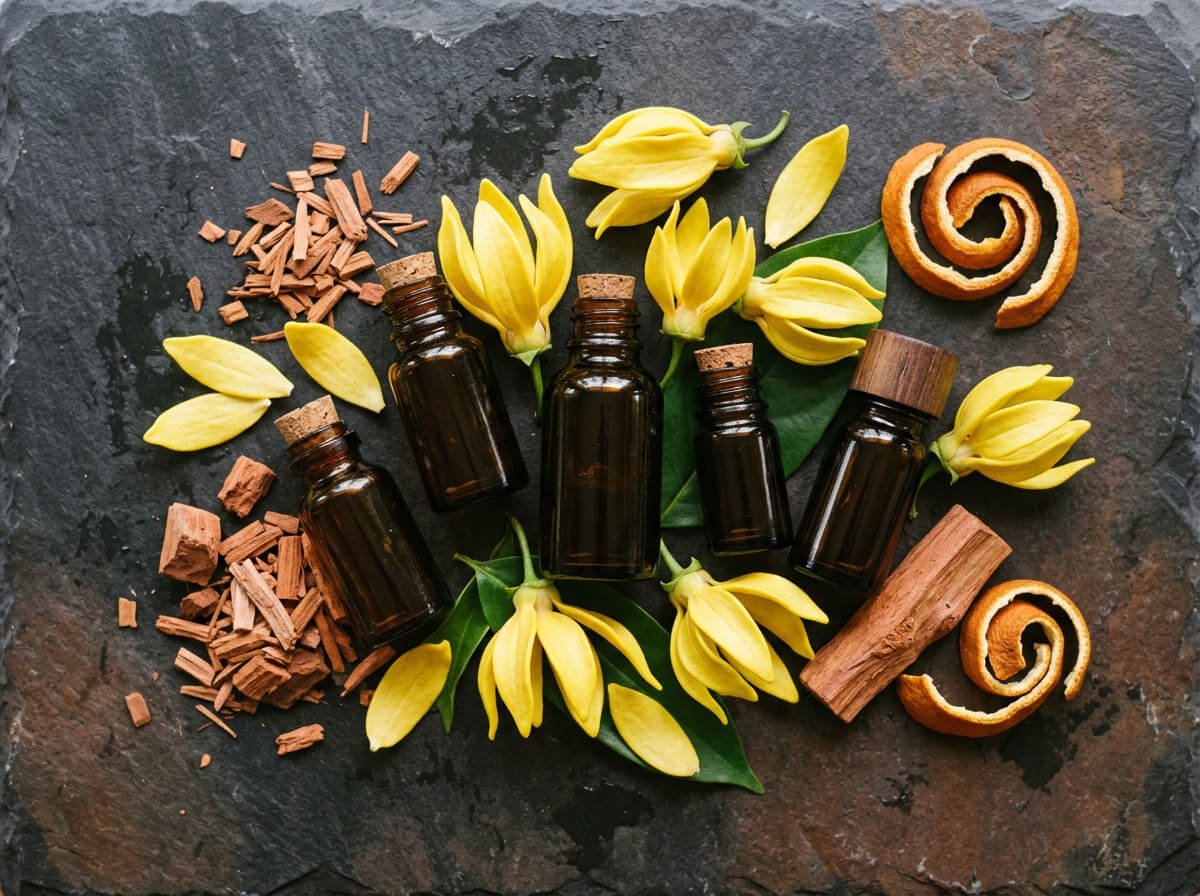
Cananga sits as a middle-to-base note. It is heady and sweet, with a banana-and-jasmine lushness over a soft, slightly woody, almost creamy base. Because it lasts, it gives a blend backbone and staying power. It also asserts itself, so a light hand keeps a blend balanced rather than overwhelmed.
Here is how it partners with other families:
- Citrus (bergamot, sweet orange, mandarin): lifts cananga’s sweetness and adds brightness, ideal for daytime.
- Woods (sandalwood, vetiver, patchouli): deepen and ground it, drawing out its calm, grounding side.
- Other florals (jasmine, rose, geranium): build a richer bouquet, best kept restrained.
- Herbs and spice (clary sage, a touch of clove): add complexity and warmth for evening blends.
If you enjoy building your own combinations, our library of essential oil blends for the diffuser is a good place to experiment, and our list of essential oils and their uses can help you find complementary notes. The rule of thumb: let cananga be the harmony, not the whole song. One or two drops in a blend usually says plenty.

Meet the same flower, distilled for you
Our Ylang Ylang Essential Oil is distilled from Cananga odorata, the very tree behind Bali’s temple flower. Warm, floral, and calming, it is a gentle way to bring this heritage into your own evening ritual.
Three simple home diffuser rituals with cananga
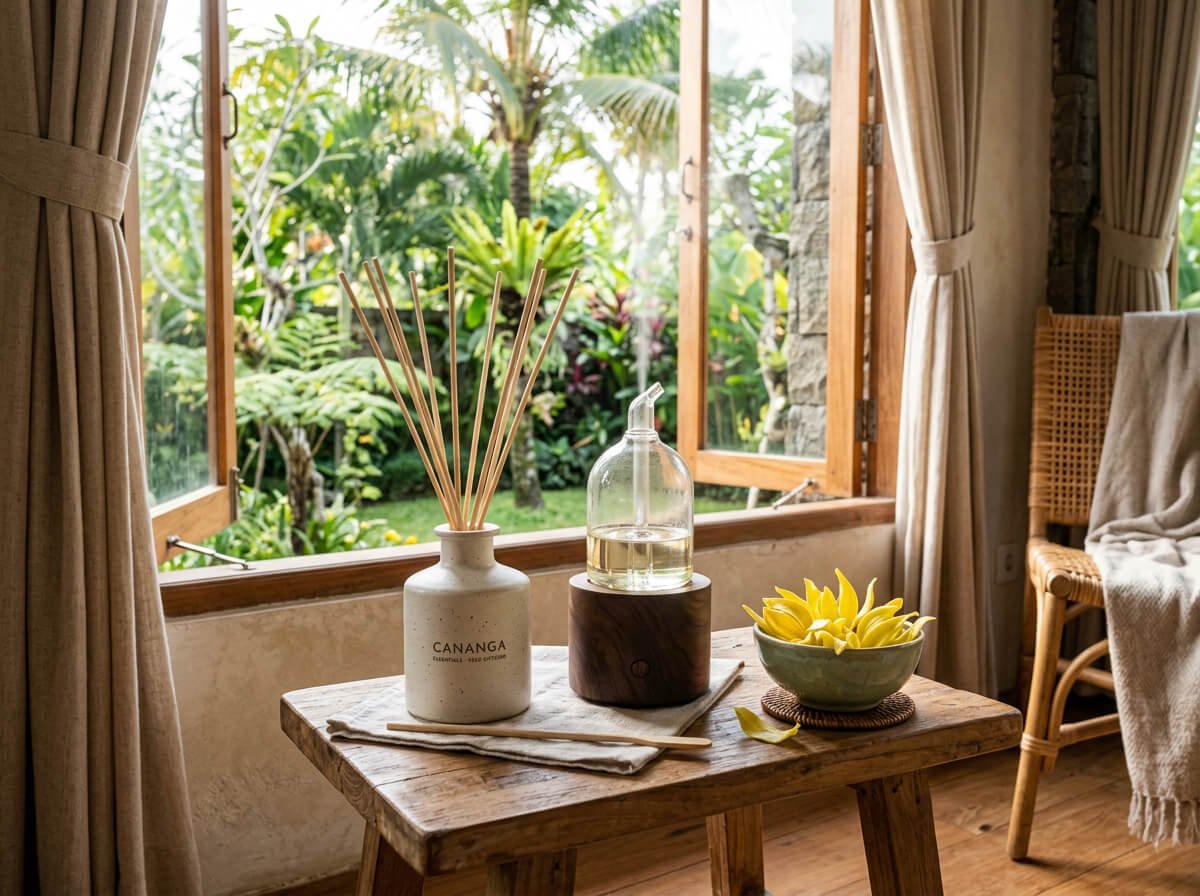
The easiest way to enjoy cananga is to diffuse it, letting the aroma fill a room without ever touching the skin. A cold-air nebulizing diffuser, like our Danau Dua nebulizing diffuser, disperses the oil without heat or water, which preserves its full character. Here are three small rituals to try, each built around a moment of the day. For more combinations, our aromatherapy diffuser blend recipes go further.
Morning: a grounded start
Two drops of cananga with three drops of sweet orange and one of bergamot. The citrus keeps the blend bright and awake while cananga adds a soft, steadying floral underneath. Diffuse for 20 to 30 minutes while you move slowly through the first tasks of the day, a cup of tea, a few quiet breaths, no rush.
Afternoon: a wind-down pause
Two drops of cananga with two of clary sage and one of sandalwood. This is the blend for the low point of the afternoon, when tension gathers in the shoulders. Let it run for 15 minutes as you step away from the screen. It is a small act of care, a way to reset before the evening begins.
Evening: a scented close to the day
Two drops of cananga with three of lavender. Warm, floral, and quiet, this is a wind-down blend for the last hour before sleep. If you prefer a ready-made option, our Bali Night Essential Oil Blend carries the same evening mood, and a calming candle can hold the same intention with a softer, flickering light. However you close the day, let the scent be the signal that the day is done.
Safety, dilution, and choosing a well-sourced cananga essential oil
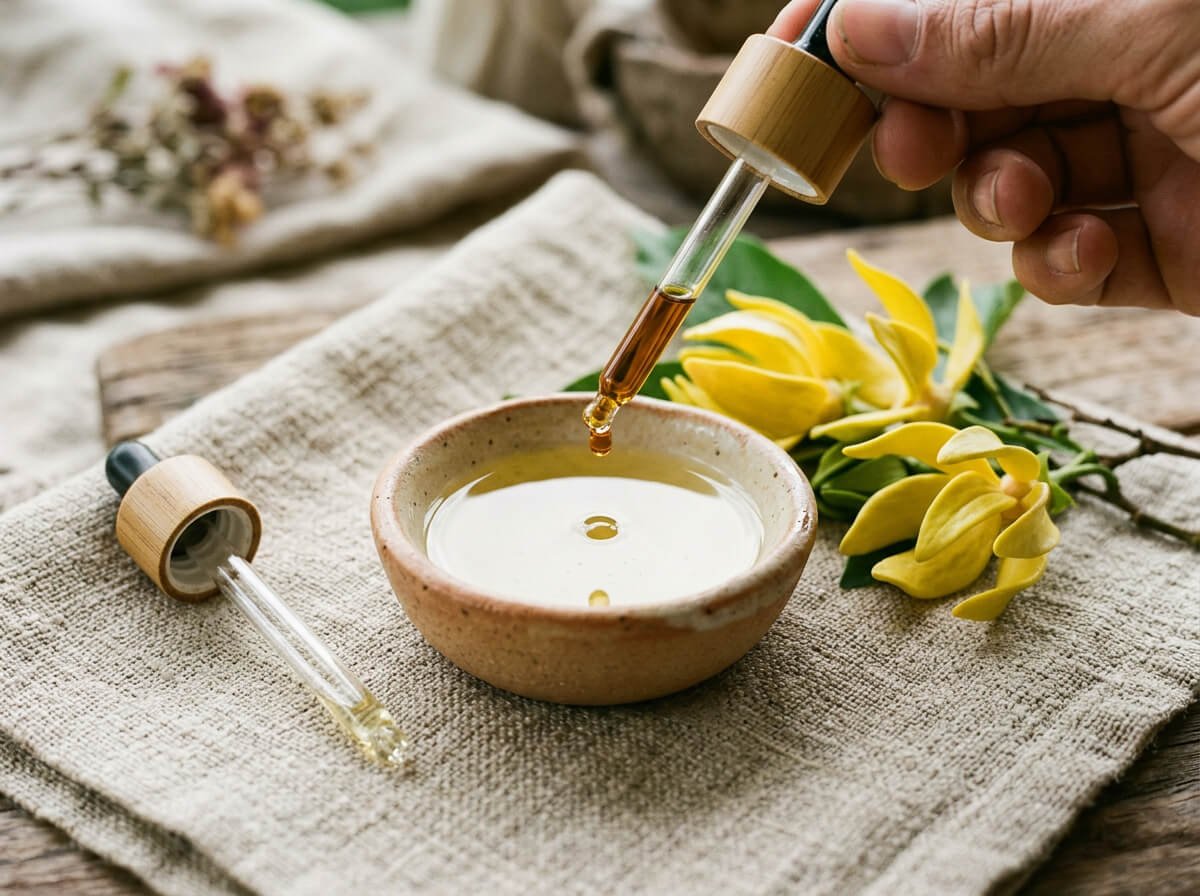
Cananga is powerful, and honesty about its limits is part of using it well. Here is how to enjoy it safely.
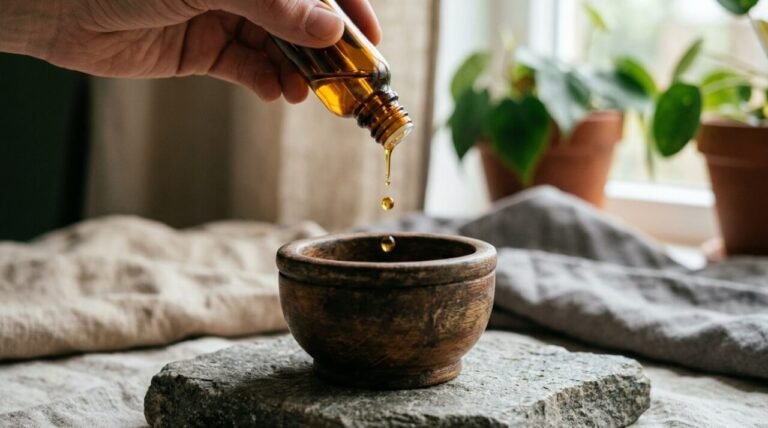
- Always dilute for skin. Keep it to roughly one to two percent in a carrier oil, about six to 12 drops per 30 ml. Never apply cananga neat to the skin.
- Patch test first. Apply a small diluted amount to your inner forearm and wait 24 hours before wider use, especially if your skin is reactive.
- Go easy on the aroma. Its heady scent can trigger a headache or a touch of nausea if overused in a small or closed room. Diffuse in a ventilated space and stop if it feels like too much.
- Take care with sensitive groups. If you are pregnant, nursing, or using it around young children or pets, seek guidance from a qualified professional first.
- Store it kindly. Keep the bottle closed, cool, and out of direct sun to protect the aroma over time.
Choosing a good oil is the other half of safe use. A well-sourced cananga essential oil tells you where it came from and what it is. Look for the botanical name Cananga odorata on the label, a stated country of origin, and clarity about whether you are buying cananga or a ylang-ylang grade. Steam distillation and a sensible price that reflects the labor of real flowers are good signs. If a brand cannot tell you the plant’s origin, that silence is an answer in itself. When it comes to blending into serums or oils, our note on the best carrier oils to mix with essential oils will help you build something gentle.
Cananga is more than a pretty scent. It is a Balinese temple flower, an Indonesian botanical, and a genuinely relaxing oil, all at once. The cananga essential oil benefits worth chasing are the honest ones: a calmer evening, a richer ritual, a small daily act of care that connects you to a place and a tradition far older than any trend. Used with respect, diluted with sense, and sourced with conscience, it gives back exactly what you bring to it. That, after all, is what care looks like.