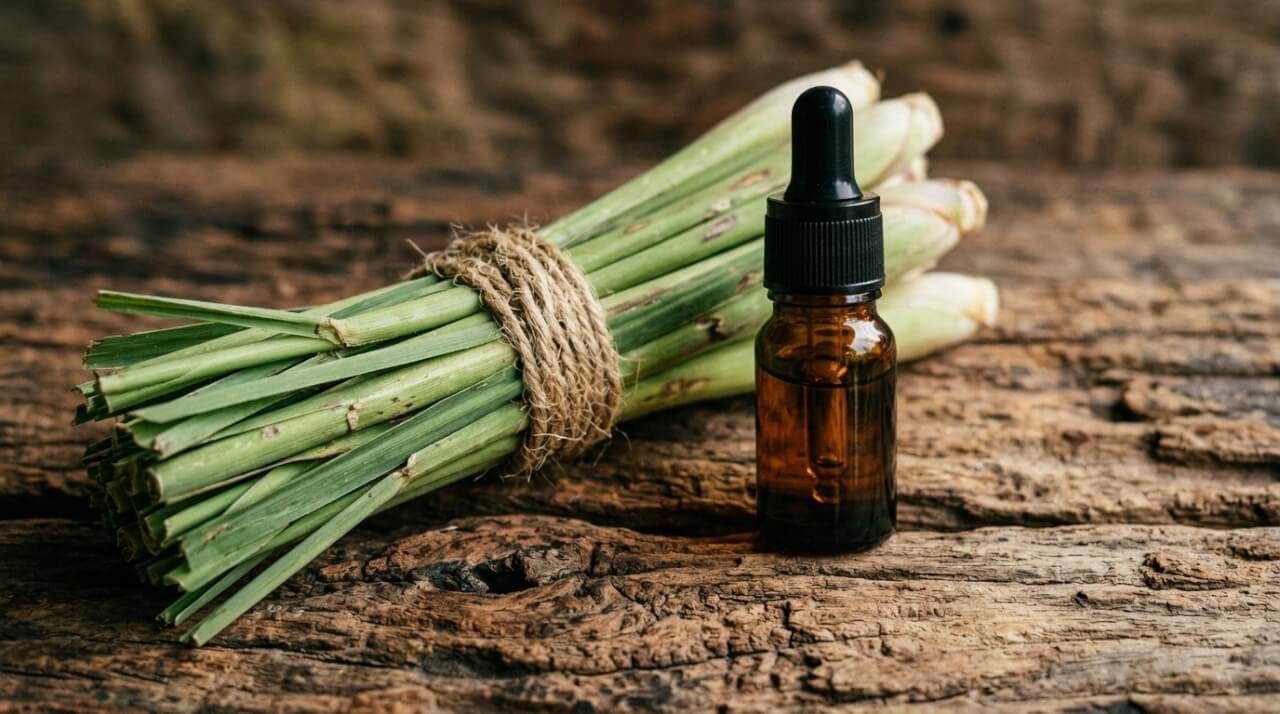
Lemongrass essential oil benefits: the Indonesian oil that calms, cools, and clears the air
The lemongrass essential oil benefits people reach for most, calmer nerves, cooler-looking skin, and a room that smells clean without a can of spray, all trace back to a single tall grass that grows almost everywhere in Bali. Here it is called serai, and it sits in kitchens, in jamu, and in the borders of family gardens where it quietly keeps the mosquitoes at bay. Before it becomes a bright, lemony oil in an amber bottle, it is an everyday plant, rooted in place and put to work by generations who never needed a label to tell them it worked.
This guide is the honest version. We will walk through where lemongrass oil comes from, what actually gives it its effect, and the real, grounded ways to use it on skin, in the air, and against insects. We will also be clear about what it cannot do, because that is where most of the internet gets loud and we would rather stay useful. If you are still deciding whether an essential oil is even the right thing to buy, our guide to essential oil versus fragrance oil is a good place to start.
What lemongrass essential oil is, and where ours comes from

Lemongrass essential oil is the concentrated aromatic oil steam-distilled from the leaves and stalks of Cymbopogon, a tall tropical grass. Two species do most of the work in the trade. Cymbopogon citratus, often called West Indian lemongrass, is the one most of us cook with and the one grown widely across Indonesia. Cymbopogon flexuosus, East Indian lemongrass, tends to carry a slightly higher citral content and is common in commercial distillation. Both smell of lemon with a green, grassy edge, and both are worlds apart from the synthetic lemon note you find in cleaning aisles.
Ours is distilled from serai grown in the Indonesian climate it is built for, cut fresh, and processed in small batches. That matters more than it sounds. Lemongrass is generous when it is grown in the right heat and harvested at the right moment, and thin when it is rushed. Distilling close to where it grows means the oil goes from field to bottle without a long, quality-eroding journey, and it means the people who tend the grass are part of the same community that has always used it.
There is a longer story under the bottle, too. In Indonesia, lemongrass has always been a jamu plant, part of the herbal tonics and warm compresses that families have passed down for centuries. It seasons the food, steeps in the tea, and steams in the traditional spa treatments that visitors now travel across the world to try. The oil is simply the most concentrated form of a plant that has never left daily life here. That continuity is worth more than any trend, because it means the plant has been observed, adjusted, and trusted across generations rather than launched in a marketing cycle.
This is the part the big retailer pages skip. Lemongrass is not an exotic novelty here. It is heritage, the same tradition that gives us ginger essential oil and the warming Balinese kitchen remedies alongside it. When you understand where an oil comes from, you buy less on hype and more on sense.
What gives lemongrass oil its power: the chemistry, plainly
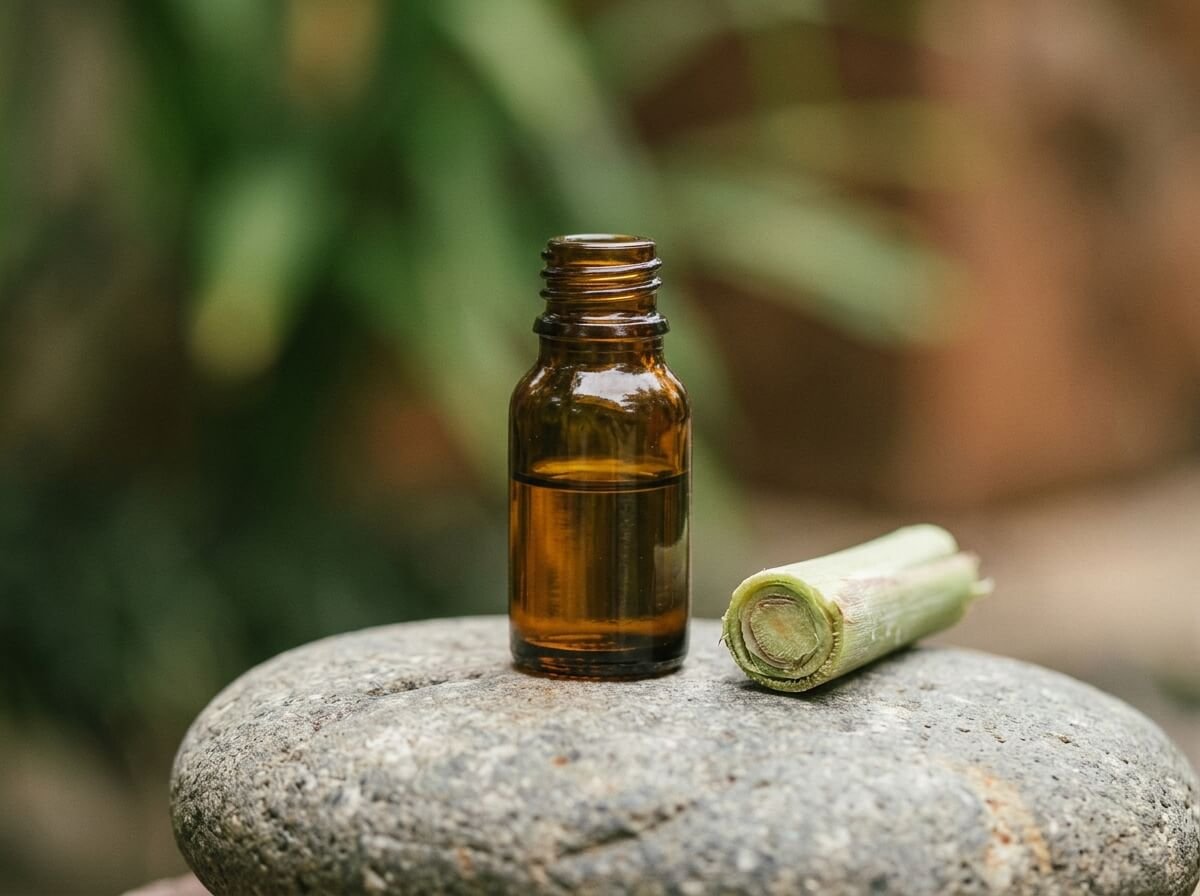
You do not need a chemistry degree to use lemongrass well, but a little understanding keeps you safe and stops you overpaying for marketing. The dominant compound in lemongrass oil is citral, a mix of two closely related molecules, geranial and neral. Citral is what gives the oil its sharp, lemony brightness, and it is also behind most of its studied effects. Good lemongrass oil is often 65% to 85% citral, which is why it is potent and why a little goes a long way.
Citral has been studied for antimicrobial and antifungal activity in laboratory settings, which is why lemongrass shows up in natural cleaning and skin research. It is important to be precise here. A compound performing in a petri dish is not the same as a cure, and we will never tell you an oil treats a medical condition. What the science does support is that lemongrass is a genuinely active botanical, not a pretty scent pretending to be useful.
- Citral (geranial and neral), the lemony heart of the oil, studied for antimicrobial and antifungal activity.
- Geraniol and limonene, softer floral and citrus notes that round out the aroma.
- Citronellal, in smaller amounts, part of why the Cymbopogon family reads as insect-unfriendly.
That same citral brightness is why lemongrass is a useful anchor in a wider oil kit. If you are building one, our list of essential oils and their uses maps how these compounds overlap across the botanicals we distil.
How to spot a good lemongrass oil
Lemongrass is one of the more affordable essential oils, which is a blessing and a warning. Cheap oils are easy to adulterate, and a low price sometimes hides a diluted or synthetic product wearing a natural label. A few honest checks tell you most of what you need to know before you buy.
- Read the Latin name. A real oil will list Cymbopogon citratus or Cymbopogon flexuosus, not just the word lemongrass. No botanical name is a quiet red flag.
- Look for the method. Steam-distilled from leaves and stalks is what you want. Vague language like fragrance or aroma oil usually means it is not a true essential oil at all.
- Trust your nose. Genuine lemongrass is lemony but green and slightly earthy, never a flat, candy-sweet lemon. That synthetic sweetness is the tell of a fragrance blend.
- Check the packaging. Citral degrades in light, so real oil comes in dark amber or cobalt glass, never clear plastic.
The difference between a true oil and a scented imitation is exactly what we cover in our guide to essential oil versus fragrance oil. Once you can tell them apart, you stop wasting money and start trusting what you put on your skin.
Lemongrass essential oil benefits for skin
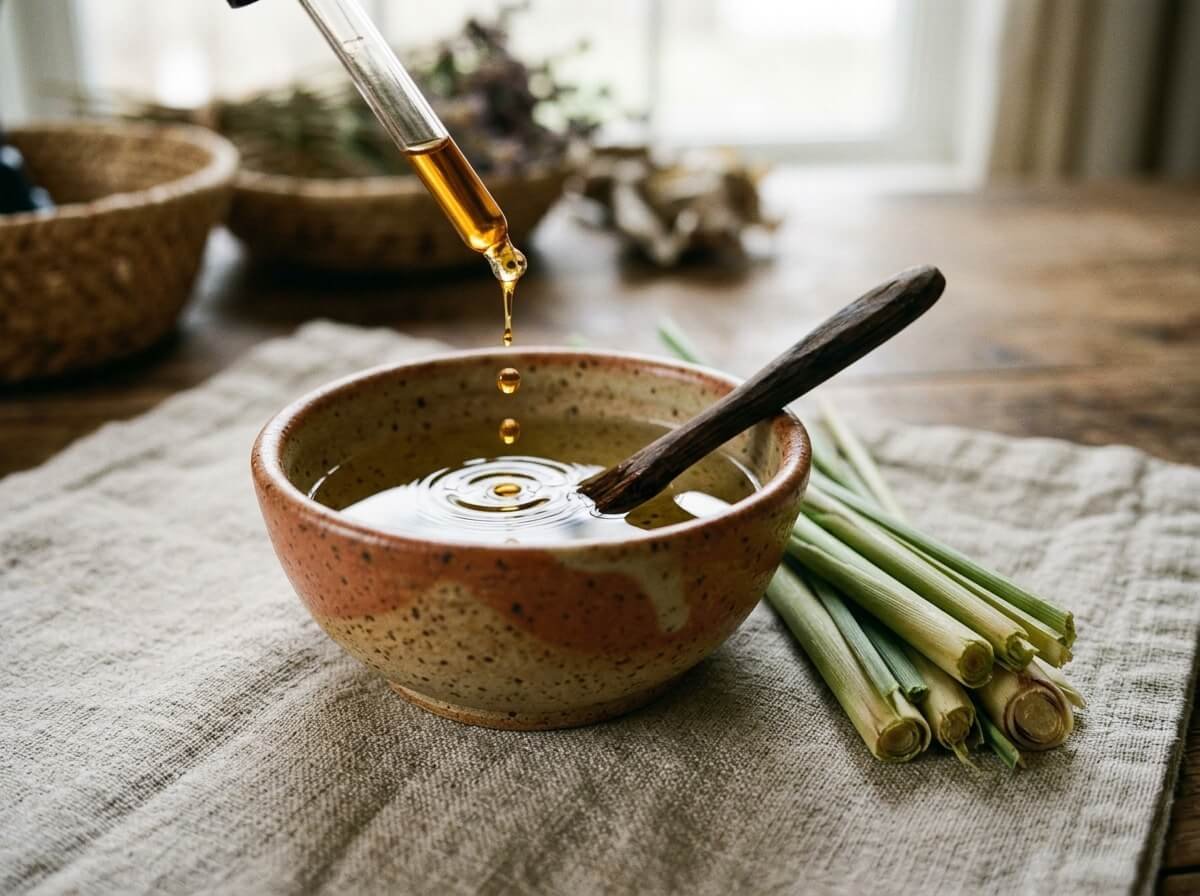
This is where most searches land, so let us be careful and clear. Diluted properly, lemongrass oil is prized in skincare for a few grounded reasons. Its astringent, toning quality can leave skin feeling clarified, which is why it appears in blends aimed at oilier or congestion-prone skin. Its clean, uplifting scent turns a plain body oil into something that feels like a ritual. And its studied antimicrobial character is the reason it sits comfortably in natural formulations rather than needing a lab-made preservative to feel modern.
What lemongrass oil is not is a spot treatment, a brightening miracle, or something to dab on neat. Undiluted citral is a known skin irritant, and the fastest way to turn a helpful oil into a rash is to skip the carrier. Always dilute, always patch test, and treat it as one considered ingredient in a routine rather than a fix on its own.
Think of lemongrass as a finishing note rather than the whole song. It pairs well with a rich carrier like coconut or illipe, both of which nourish the skin barrier while the lemongrass brings its clarifying lift and scent. A body oil massaged into damp skin after a shower, a few minutes of slow attention, is the kind of small ritual that does more for how you feel than any single active. That is the honest reason we blend lemongrass into daily-use products rather than selling it as a cure: the value is in the practice as much as the plant.
In our own line, lemongrass rarely works alone, and that is by design. Our Lemongrass Ginger Body Oil pairs it with warming ginger in a light coconut base, so the citral is already diluted and balanced for daily use. If you prefer a lotion texture, the Coconut Lotion Lemongrass Ginger carries the same bright, grounding scent in a form that sinks in fast. Both are gentler entry points than a neat oil if your skin runs sensitive.
If your skin leans reactive, it is worth reading how a truly gentle active behaves before you experiment, our notes on rose geranium oil cover the balancing, low-drama end of the spectrum.
Bring the lemongrass field home
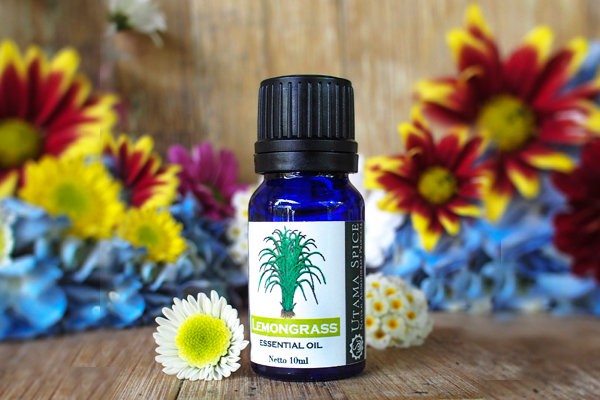
Our Lemongrass Essential Oil is steam-distilled from serai grown in the Indonesian sun, small-batch and single-note, so you can dilute it your own way. Crisp, green, and grounding, it is one oil that earns its place in a diffuser, a carrier blend, and an evening ritual.

Lemongrass essential oil benefits for mind and mood

Scent reaches the brain faster than almost any other sense, and lemongrass is one of the more reliably lifting aromas in the aromatherapy tradition. People describe it as clearing, the mental equivalent of opening a window. Small studies on lemongrass aroma have looked at anxiety and tension, with gentle, encouraging results, and it has long been used in Southeast Asian practice to settle a restless mind and sharpen a foggy one.
The simplest way in is a diffuser. A few drops in water fills a room with a bright, green citrus that pairs beautifully with the warmth of ginger or the coolness of mint. In the morning it reads as energising; in the evening, diluted and slow, it reads as a signal to wind down. If you want that clearing quality without a diffuser, our notes on peppermint essential oil show how a sharper oil behaves in the same role.
- Diffuse it, three to five drops in an ultrasonic diffuser to lift or reset a room.
- Roll it on, a pre-diluted roller at the pulse points is the tidiest ritual for a desk or a bag.
- Breathe it slow, one drop on a tissue, held a hand’s width away, for a quick reset.
If a roller sounds like your pace, our Pure Energy Essential Oil Roller blends lemongrass with other bright botanicals in a ready-to-carry format, no measuring, no mess. It is the version of aromatherapy that survives a real, busy day.
Lemongrass as a natural insect repellent
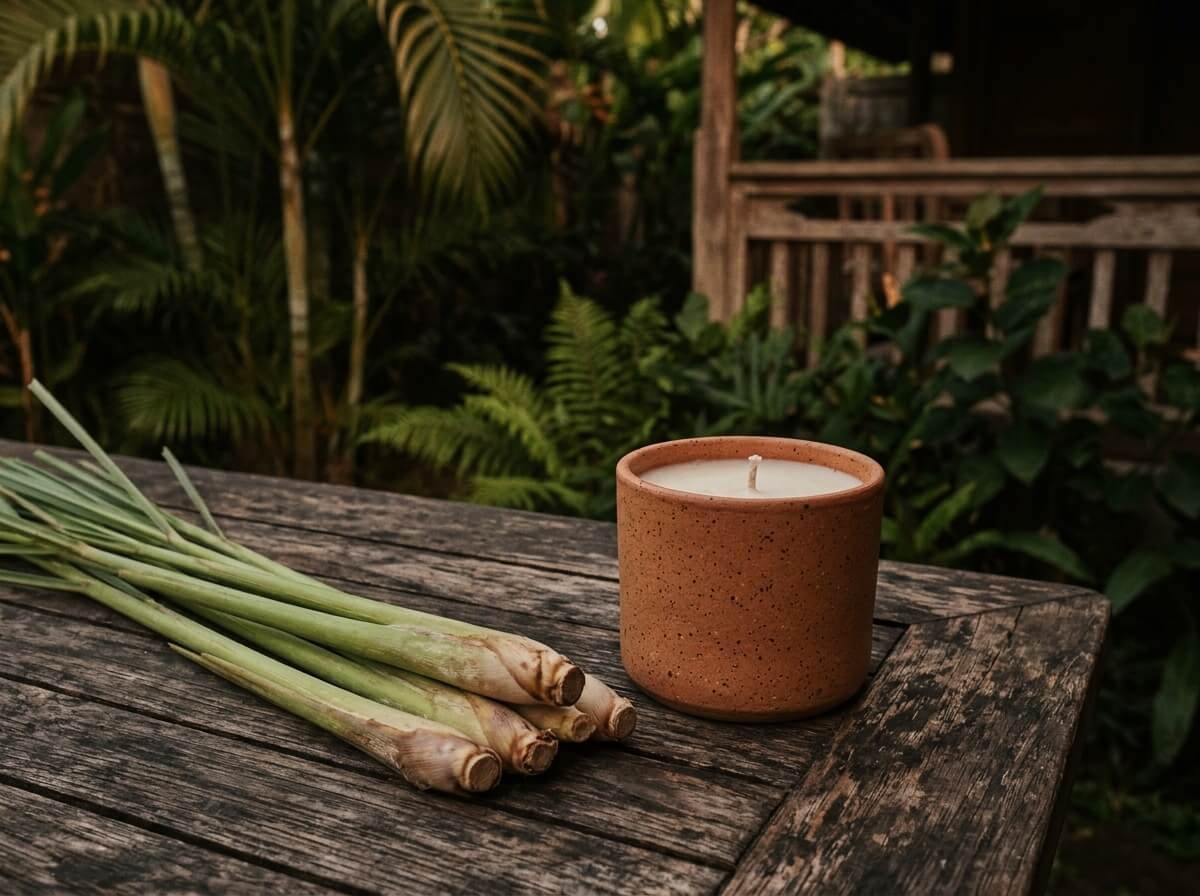
Of all the lemongrass claims online, this one has the deepest roots and the most everyday truth behind it. Lemongrass belongs to the Cymbopogon family, the same botanical group as citronella, and the compounds that make it smell sharp are the ones mosquitoes tend to avoid. In Bali, a pot of serai by the door is old, ordinary wisdom, not a wellness trend.
Here is the honest limit. Botanical repellents like lemongrass are real but short-lived. The aromatic compounds evaporate faster than synthetic actives, so a diluted lemongrass blend protects for a shorter window and needs reapplying more often, especially outdoors at dusk. That is a fair trade for many people who would rather reapply a plant oil than coat their skin in something harsher, but it is a trade, and we will not pretend otherwise.
There is more than one way to put lemongrass to work against insects. A diluted blend on exposed skin gives close, personal cover. A diffuser or a lemongrass candle on the veranda shifts the whole atmosphere of a space, which is how it has always been used here: not sprayed in a panic, but kept burning quietly through the evening. Refreshing the scent as it fades is part of the ritual, not a flaw in it, and it is a gentler rhythm than reaching for an aerosol every time the light drops.
If keeping insects off naturally is your main goal, do not lean on a single oil. Our full guide to the best natural bug repellent covers how to blend lemongrass with complementary botanicals for longer, steadier cover, and it is the more complete answer than any one bottle.
How to use lemongrass essential oil safely
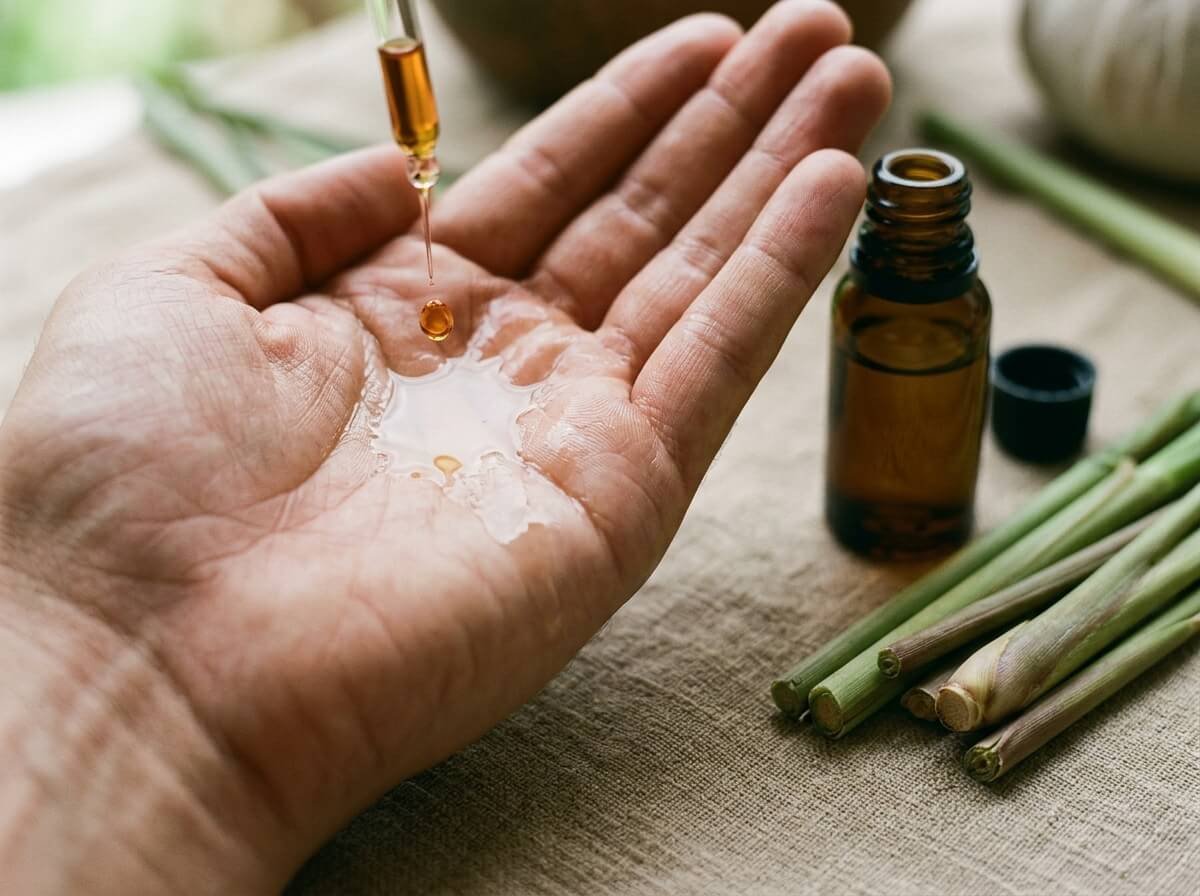
Lemongrass is potent, and that is exactly why it deserves respect rather than fear. Follow a few grounded rules and it is a rewarding oil to live with.
Dilute, every time
For most adult skin, a safe range is 1% to 2% dilution, which is roughly six to twelve drops of lemongrass oil per 30 ml of carrier such as coconut or jojoba. For the face or sensitive skin, stay at the lower end. Never apply lemongrass neat, and never assume that more oil means more benefit. With citral, restraint is the skill.
Patch test and observe
Before a new blend goes anywhere important, put a small amount on the inner forearm and wait 24 hours. Redness, itching, or heat means dilute further or step away. Skin honesty beats optimism.
Know when to skip it
- If you are pregnant or nursing, check with a qualified practitioner before use.
- Keep concentrated oils away from young children and let a professional guide any use around them.
- Citral can increase skin sensitivity, so go easy before sun exposure and keep blends off broken skin.
- Store the bottle sealed, cool, and out of direct light so the citral stays true.
Used this way, lemongrass keeps its place as a daily pleasure rather than a risk. And if you would rather let us do the diluting, our Lemongrass Ginger Delight Body Butter folds the same bright oil into a rich, illipe-based butter that is ready to use straight from the jar.
Frequently asked questions about lemongrass oil
Can I put lemongrass oil directly on my skin?
No. Lemongrass oil should always be diluted in a carrier oil before it touches skin. Neat citral is a common irritant, and dilution is what turns a strong oil into a safe, pleasant one.
Is lemongrass oil good for oily or acne-prone skin?
Its astringent, clarifying quality makes it a popular choice in blends for oilier skin, and its studied antimicrobial character is part of the appeal. It is a supportive ingredient in a considered routine, not a medical acne treatment, so pair it with gentle habits rather than expecting it to work alone.
Does lemongrass really repel mosquitoes?
Yes, within limits. Lemongrass sits in the same botanical family as citronella and genuinely deters insects, but the effect is shorter-lived than synthetic repellents and needs regular reapplication, especially outdoors.
What does lemongrass oil blend well with?
Ginger, peppermint, and other citrus and herbaceous oils. It is a natural companion to the warming and cooling oils in our range, and it anchors a bright, uplifting diffuser blend beautifully. Our notes on tea tree oil cover another clean, active oil that pairs well with lemongrass in home and skin blends.
Final thoughts
The real lemongrass essential oil benefits are not miracles, they are quiet and dependable. A clearer-feeling complexion when it is diluted with care. A room that lifts when you diffuse it. A softer, more natural defence against the mosquitoes that arrive at dusk. Behind all of it is a plant that has grown in Balinese gardens for as long as anyone can remember, put to work by people who valued what was true over what was loud.
That is the version of natural wellness we believe in. Not perfection, reconnection. One honest oil, used with intention, doing exactly what it says and nothing it does not. Crafted in Bali with care, the way serai has always been.