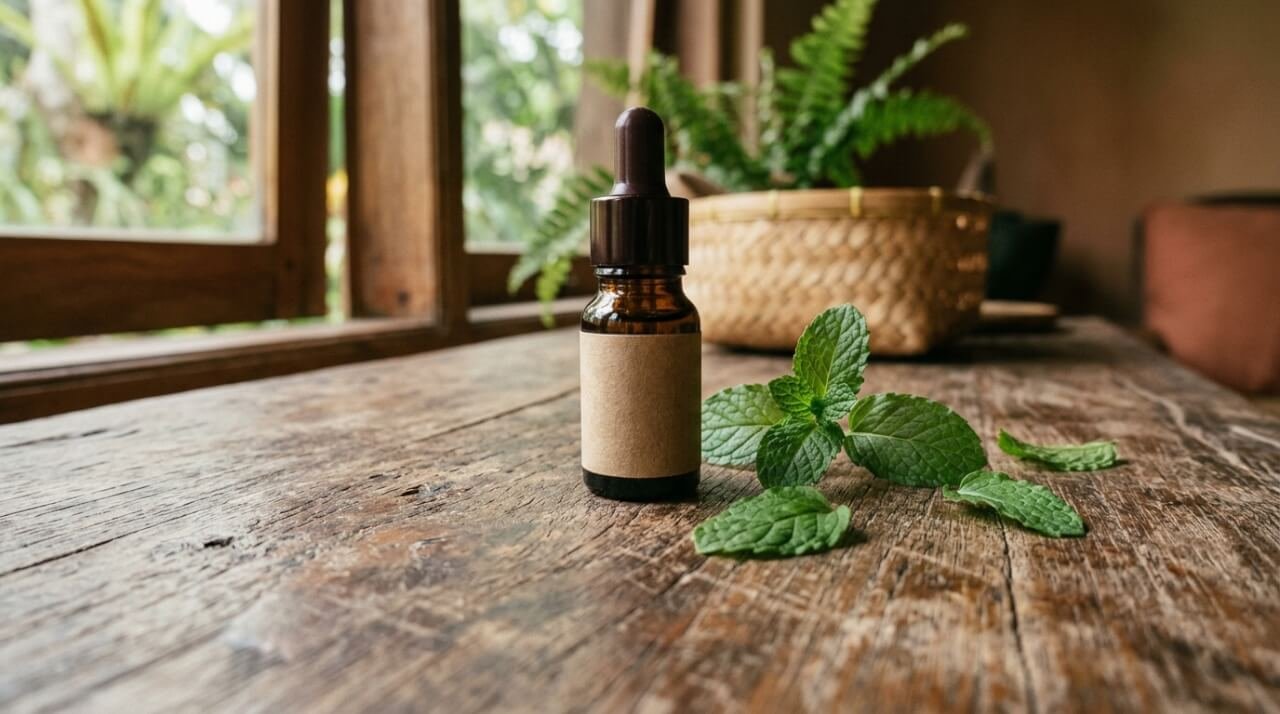
Peppermint essential oil benefits: which mint is actually in your bottle
Search for peppermint essential oil benefits and you will find hundreds of near-identical lists: clears the head, eases tension, settles the stomach, wakes you up. Most of them are true in outline. Almost none of them answer the first honest question a careful buyer should ask, which is simple. Which mint is actually in the bottle you are about to open? That question sits at the heart of every real peppermint essential oil benefit, because the plant, its menthol strength, and how it was distilled decide what the oil can and cannot do. We have crafted essential oils in Bali since 1989, and we would rather teach the species story than bury it.
This is a grounded, no-greenwashing guide. We will name the three mints, separate what the research actually tested from what a diffuser or roller can deliver, and spell out the safety cautions that most articles leave to a footnote, especially for young children and for anyone using these oils in tropical heat. Along the way we will be transparent about our own oil, because honesty about a label is the whole point.
Which mint is actually in your bottle

The word mint on a label can mean three different plants, and the difference is not cosmetic. It changes the aroma, the menthol content, and the safety profile.
- True peppermint (Mentha piperita) is a natural hybrid of watermint and spearmint. Its menthol usually sits around 30 to 45%. It carries the classic bright, cool, slightly sweet aroma most people picture.
- Spearmint (Mentha spicata) is much lower in menthol, often under 1%, and higher in carvone. It smells softer and rounder, the scent of chewing gum rather than a candy cane. It is the gentlest of the three.
- Cornmint (Mentha arvensis), also sold as field mint or simply mint oil, is the workhorse of the global menthol trade. It can run 70 to 90% menthol, is grown at scale, and is frequently redistilled to pull menthol crystals out for other industries. It is also the mint most often relabelled and sold as peppermint.
That last point is where honesty matters. Cornmint is cheaper and far more menthol-dense than true peppermint, so a great deal of what reaches shelves as generic peppermint is really cornmint, sometimes cut further with synthetic menthol or fractions from other batches. It is, quietly, one of the most adulterated oils on the market. This is exactly the kind of skincare and wellness theatre we prefer to name rather than play along with, the same instinct behind our guide to natural deodorant ingredients to avoid.
So we will say it plainly. Our own Mint Essential Oil is Mentha arvensis, a high-menthol mint. We call it mint, not peppermint, because that is what it is. A dense, cooling, invigorating oil that behaves like the cornmint it is. Knowing the species tells you what to expect from the scent and, more importantly, how carefully to dilute it, which we come to below. If you want a wider view of how different oils are named and used, our list of essential oils and their uses lays out the family side by side.
What peppermint essential oil actually does

Most of what people love about peppermint essential oil comes down to one molecule, menthol, and the way it speaks to the nervous system. Menthol activates the same cold-sensing receptors in the skin and airways that respond to a mountain breeze. The body reads that signal as fresh, open, and alert. Here is where the benefits are genuinely felt in daily use.
- Focus and a wake-up lift. Diffused in the morning or dabbed on a tissue at a desk, the sharp scent helps many people feel more alert and clear-headed. It is a favourite for that midafternoon slump.
- Tension in the head and shoulders. Diluted and massaged into the temples, the back of the neck, or the shoulders, the cooling sensation can ease the tight, gripping feeling of a tension headache. It does not treat migraine, but it can soften everyday tension.
- Queasiness and travel unease. A light inhalation of peppermint is a long-standing steadier for a restless stomach and motion unease. Keeping a rollerball to hand on a winding Bali road is a small, sensible ritual.
- Open, easier breathing. The menthol cool gives a subjective sense of clearer airways, which is why it turns up in balms and steam bowls during a stuffy cold.
- Tired, aching muscles. In a carrier oil, the cooling effect is a welcome after-movement rub for legs and feet.
There is a rhythm to it across a day. A few drops diffused with the morning light to shake off sleep, a rollerball at the desk when concentration dips, a cooling breath on a hot, crowded journey, and a diluted rub for tired legs at dusk. Mint has kept this kind of everyday, practical company in warm-climate homes for a very long time, valued less as a cure than as a small, reliable reset. That is the honest place peppermint holds, a working plant rather than a cure-all.
Notice the pattern. These are sensory, in-the-moment benefits, the reasons peppermint has earned a place in ritual for generations. That same brightness pairs beautifully with grounding oils in a blend, the way we balance temple florals in our ylang ylang and cananga stories. If you love the cool clean note but want it in a grab-and-go form, our Peppermint Lip Balm carries it at a gentle, everyday strength.
The evidence, separated honestly

Here is the quiet bait-and-switch that runs through most benefit lists. The strongest human research on peppermint oil is about swallowing it, not smelling it. The best-studied use by far is enteric-coated peppermint oil capsules for irritable bowel syndrome, where the coating carries the oil past the stomach so it can relax the muscle of the gut wall. National health bodies, including the United States National Center for Complementary and Integrative Health, treat that as the area with real evidence.
That matters because a person buying an essential oil for a diffuser or a rollerball is never going to do the thing the studies tested. Inhaling a scent and taking a coated oral capsule are different acts with different evidence behind them. It is honest to keep them apart. The aromatherapy and topical benefits above are real as lived experience and traditional practice, and they are worth having. They are simply not the same as the clinical IBS data, and anyone who blurs the two is selling you something.
The household and cleaning claims deserve the same fair treatment. Menthol and the other compounds in mint do have some antimicrobial activity in a laboratory dish, which is why peppermint turns up in natural cleaners and why a lingering scent feels fresh. That is a real, modest property, not a promise that a few drops will sanitise a kitchen. Enjoy it as a naturally pleasant, mildly cleansing note, and keep genuine hygiene to the methods built for it. Overclaiming here is exactly the kind of empty eco language we would rather leave to others.
The same caution applies to the popular claim that peppermint oil regrows hair. That idea rests largely on a single mouse study. It is interesting, and menthol may briefly boost scalp circulation, but it is not proof of hair growth in people. We would rather you enjoy peppermint for what it reliably gives, clarity, cooling, and calm, than chase a headline. Truth in nature means saying where the science stops. Ancient knowledge and modern research both deserve to be quoted accurately.
How to use peppermint essential oil at home
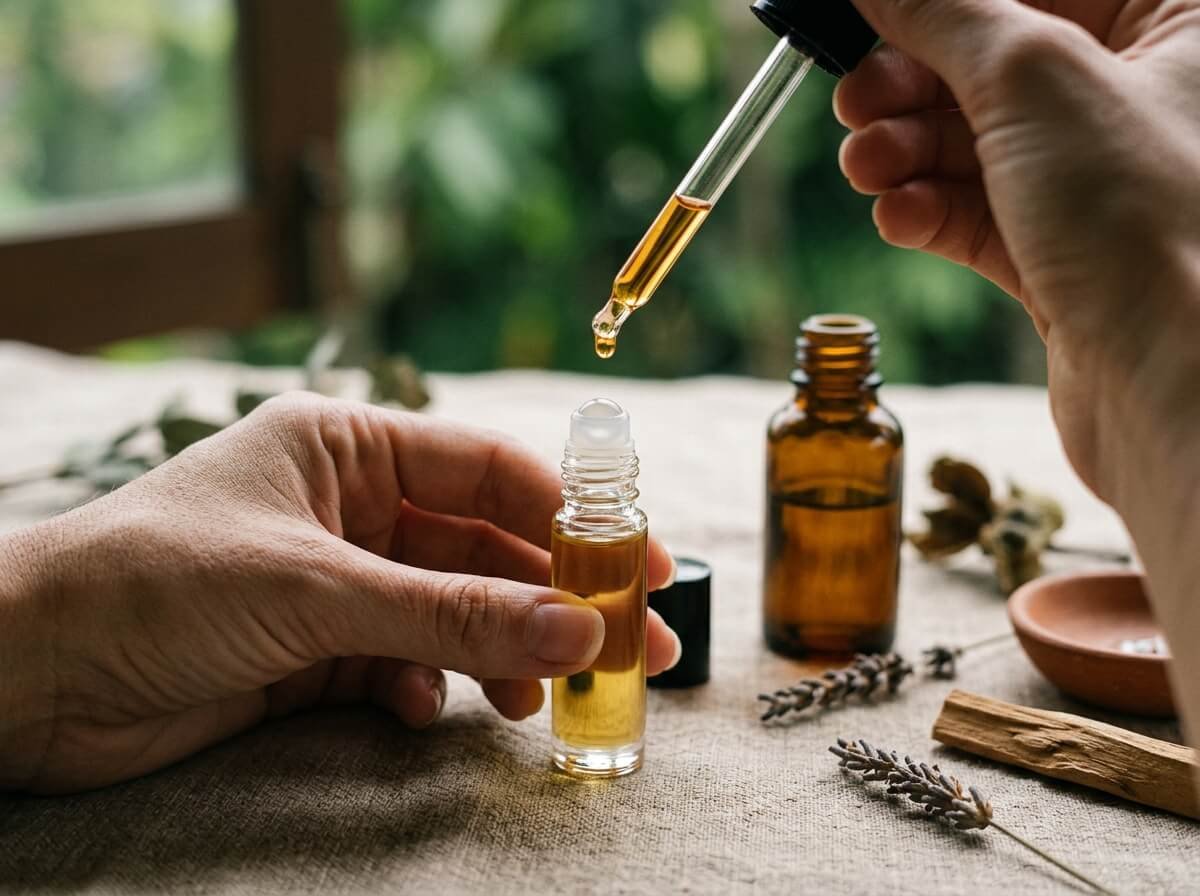
Because a high-menthol mint is potent, a little goes a long way. The guiding principle is dilution, always, and patience. Undiluted menthol on skin can sting, redden, and sensitise over time.

- Diffusion. Three to five drops in a water diffuser is plenty for a room. Run it for 20 to 30 minutes, then rest. More is not better, and a constant strong scent dulls quickly. For pairings that soften peppermint’s edge, our aromatherapy diffuser blend recipes are a good starting point.
- Topical roller. Keep the dilution low, around 1 to 2% for adults, which is roughly one to two drops of oil per teaspoon of a carrier such as our cold-pressed Balinese coconut oil. Massage into temples, neck, or tired legs.
- Steam inhalation. One drop in a bowl of hot, not boiling, water, eyes closed, for a stuffy head. One drop is genuinely enough.
- Patch test first. Dab a diluted amount on the inner forearm and wait a full day before wider use, especially with a menthol-rich oil.
If you want the ritual without measuring drops, a pre-blended roller does the work for you. Our Pure Energy Essential Oil Roller keeps a bright, uplifting note at a skin-safe dilution, and our Bali Night Essential Oil Blend shows how a cooling note can be softened for the evening. For the purists who like to blend their own, the single-note Mint Essential Oil is the honest raw material, clearly labelled for what it is.
The caution most guides bury: children, heat, and the cooling illusion

This is the section the benefit lists tend to shorten to a single line, and it is the one that matters most for the conscious parent. High-menthol oils are not suitable for babies and young children in the way many people assume.
Menthol should never be applied to or near the face, nose, or chest of infants and young children. In very young airways it can trigger a reflex slowing or catching of the breath. This is not a reason for fear, it is a reason for care: keep menthol-rich oils well away from little ones, diffuse only in shared, well-ventilated spaces rather than a closed nursery, and store bottles out of reach. When in doubt with a child, choose gentler options or none at all, and speak to a health professional.
There is a second truth worth naming, one that matters especially in a warm climate. Menthol does not actually cool you. It tricks the cold receptors in your skin into reporting a chill that is not there, while your real temperature stays the same. On a hot Bali afternoon that sensation is pleasant and refreshing, but it is a signal, not a thermostat. Do not rely on a menthol rub to protect a child, or yourself, from genuine heat. Understanding that difference is part of using the oil wisely rather than expecting it to do the impossible.
How to read a peppermint oil label and buy honestly
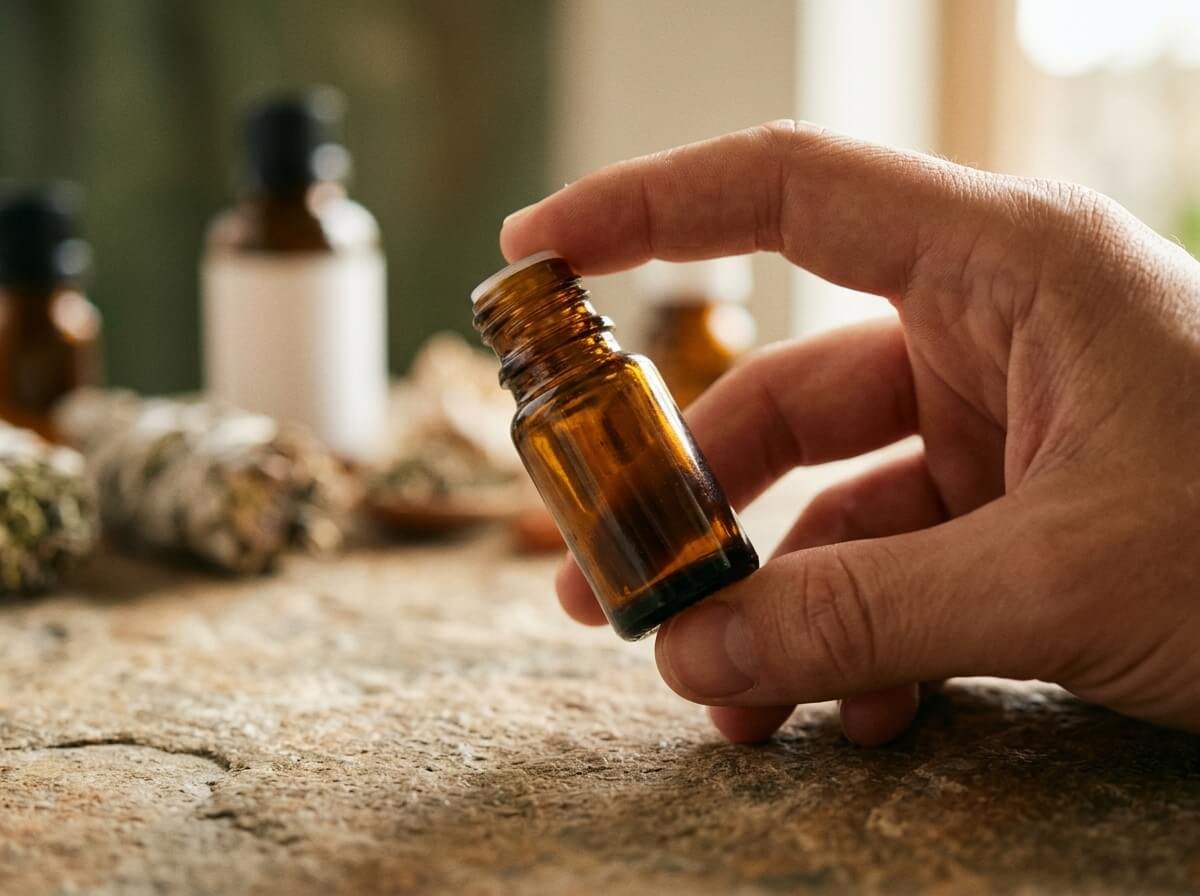
Once you know the three mints, a label becomes far easier to read. A trustworthy oil tells you what it is and hides nothing.
- Look for the botanical name. Mentha piperita, Mentha spicata, or Mentha arvensis should appear somewhere. A bottle that only says peppermint, with no species, is telling you less than it should.
- Match the price to the plant. True Mentha piperita costs more than cornmint. A very cheap peppermint is often cornmint wearing a better name.
- Mind the menthol. A high-menthol mint is not worse, it is simply stronger, which means dilute harder and keep it away from children. Honest sellers say so.
- Watch for empty absolutes. Words like pure and natural mean little on their own. Sourcing, species, and dilution guidance mean everything. This is the same label-honesty we apply across the range, from our single oils to our clove essential oil and rose geranium stories.
Reading a label this way turns a purchase into a small act of care, for your skin and for the people who made the oil. It is the quiet difference between buying a promise and buying a plant.
Peppermint essential oil benefits: common questions
Are peppermint oil and mint oil the same thing?
Not always. True peppermint is Mentha piperita. A bottle simply labelled mint oil is very often cornmint (Mentha arvensis), a higher-menthol relative that is cheaper and widely used across the industry. Both are useful, but they are different plants with different strengths, so the honest move is to check the botanical name rather than the marketing word.
Can I put peppermint essential oil directly on my skin?
No. Undiluted menthol can sting, redden the skin, and sensitise it over time. Always dilute in a carrier oil to about 1 to 2% for adults, which is roughly one to two drops per teaspoon, and patch test on the inner forearm first. Higher-menthol mints call for the lower end of that range.
Is peppermint essential oil safe around children?
Treat it with real caution. Menthol-rich oils should not be applied to or near the face, nose, or chest of babies and young children, and are best diffused only in shared, well-ventilated rooms rather than a closed nursery. Keep bottles out of reach, and when unsure, choose a gentler oil or speak to a health professional.
Does peppermint oil really help headaches?
For everyday tension headaches, many people find that a diluted oil massaged into the temples and neck eases the tight, gripping feeling, thanks to menthol’s cooling signal. It is a supportive ritual rather than a cure, and it is not a treatment for migraine. As with all of peppermint’s benefits, the value lies in honest, in-the-moment relief.
How many drops of peppermint oil should I use in a diffuser?
Three to five drops in a water diffuser is enough for most rooms. Run it for 20 to 30 minutes, then give the air a rest. A constant strong scent tires the nose and offers no extra benefit, so restraint is the more sensory choice.

The honest bottle, clearly named
Our Mint Essential Oil is Mentha arvensis, a bright, high-menthol mint, hand-blended in Bali and labelled for exactly what it is. Cooling, clarifying, and made to be diluted with care.
A calmer way to keep peppermint
Peppermint essential oil earns its place through honesty, not hype. Know which mint you are holding, use the cooling clarity it truly offers, keep it diluted and far from small children, and read the science for exactly what it says. Do that, and a single small bottle becomes a dependable part of daily ritual, bright in the morning, steadying on the road, and open-breathed through a cold. That is what we mean when we say what you give, you get back. Care that starts with telling the truth about what is inside.