Natural body wash: how to read the label, and what Balinese mandi teaches
Most of us reach for a natural body wash hoping for something simple: a clean rinse, a good scent, skin that feels cared for rather than stripped. What arrives in the bottle is often more complicated than the label suggests. The word natural sits on the front, and a list of surfactants, fragrances, and preservatives sits on the back, and the two do not always agree. This guide is a formulator’s literacy lesson, written in plain language, so you can read any natural body wash for what it truly is. Along the way we will borrow something older than any ingredient list, the Balinese mandi, the daily bathing ritual that treats cleansing as care rather than a transaction.
We have been hand-blending body and bath products in Bali since 1989, which means we have spent more than 35 years learning what a wash can and cannot do. The goal here is not to sell you a feeling. It is to hand you the tools to judge a formula yourself, to understand why so many honest-looking bottles still leave skin tight and dry, and to see how a gentler idea of cleansing has existed on this island the whole time.
Why most natural body wash isn’t actually natural
Here is the quiet truth of the category. A product can be labelled natural, plant-based, or botanical and still be built around the same harsh cleansing agents used in industrial degreasers. There is no binding legal definition of natural in body care across most markets, so the word carries whatever meaning a brand wants to give it. A splash of aloe and a drop of essential oil can earn a front-label claim while the actual workhorse of the formula, the surfactant that creates the lather and lifts the grime, remains a synthetic detergent chosen for cost and foam rather than kindness to skin.
This matters because your skin is not a dirty dish. It is a living barrier, a layer of lipids and proteins that holds water in and keeps irritation out. A cleanser strong enough to cut engine oil will also strip that barrier, and the tight, squeaky feeling many people mistake for clean is actually the sensation of a compromised barrier losing moisture. Over time, aggressive washing can leave skin reactive, flaky, and strangely dependent on the very lotions sold to rescue it. A genuinely natural body wash should clean without that cost, and reading the label is the only way to know whether it does.
The first habit to build is simple. Ignore the front of the bottle. The marketing lives there, and marketing is not a formula. Turn the bottle over, find the ingredient list, and learn to read the first five lines. That is where the honesty is kept, and the next few sections will teach you exactly what you are looking at. If you want a sense of how a transparent label reads before we go deeper, our Tea Tree Body Wash lists its castile soap base openly, which is the kind of plain disclosure worth expecting from any brand.
The four families of body wash surfactants, in plain English
Every body wash is built on surfactants, the molecules that let water and oil mix so dirt can rinse away. They are not villains. Skin needs cleansing, and surfactants do the work. The difference between a wash that tends your skin and one that strips it comes down to which family of surfactant the formula leans on. There are four worth knowing, and once you can name them, most ingredient lists stop being mysterious.
True soap (saponified oils)
True soap is what you get when a natural oil, coconut or olive for example, is combined with an alkali in a process called saponification. On a label it appears as sodium cocoate, potassium cocoate, saponified coconut oil, or the traditional term castile. This is the oldest cleanser humans have, and a well-made version cleans gently while rinsing clean. Its one honest limitation is that true soap is naturally alkaline, which can feel drying in very hard water or on already-sensitive skin, so good formulas balance it with softening plant oils and glycerin.
Harsh syndets (SLS, SLES, and their relatives)
Syndet is short for synthetic detergent. The two names to recognise are sodium lauryl sulfate (SLS) and sodium laureth sulfate (SLES). They foam abundantly, cost very little, and clean aggressively, which is exactly why they dominate mass-market washes. They are also the most common cause of that stripped, tight feeling and of stinging in people with reactive or eczema-prone skin. A body wash can carry a lush botanical front label and still list SLES as its second or third ingredient. When it does, the natural claim is doing decorative work, not describing the formula.
Mild non-ionics (the sugar-derived surfactants)
These are the gentle modern middle ground, made from plant sugars and fatty alcohols. Look for decyl glucoside, coco glucoside, and lauryl glucoside. They clean at a skin-friendly pH, foam softly rather than explosively, and are well tolerated by most sensitive and young skin. Many of the better natural washes build their base here, sometimes blended with a little true soap for slip and cleansing power. If you see glucoside within the first few ingredients, that is usually a good sign.
Amphoteric blends (the secondary softeners)
The most common name here is cocamidopropyl betaine, derived from coconut. It rarely leads a formula. Instead it plays a supporting role, boosting foam, thickening the liquid, and softening the harshness of a stronger primary surfactant. It is generally mild, though a small number of people are sensitive to it. Seeing it low on a list is normal and usually fine. The concern is only when it is propping up a sulfate that should not have been there in the first place. For a longer look at how honest cleansing agents are made, our guide to the benefits of natural liquid soap walks through the same chemistry from the soap-making side.
What Balinese mandi teaches about cleansing

Step away from the ingredient list for a moment, because the deeper lesson about washing is not chemical at all. In Bali, the daily bath has a name and a rhythm. Mandi is the practice of bathing that happens at least twice a day, often drawn from a stone basin with a small dipper, water poured slowly over the body in the cool of morning and the ease of evening. It is ordinary and it is sacred at once, a pause built into the shape of the day.

What mandi understands, and what most modern showering has forgotten, is that cleansing is a form of tending, not a task to rush through. The water is felt. The plants used carry meaning, frangipani, turmeric, lemongrass, drawn from the garden and the surrounding land. The point is not to scour the body into submission. It is to reconnect with it, to close one part of the day and open another through touch, scent, and warmth. Cleansing here is care, not correction.
That reframing changes what you want from a body wash. If cleansing is tending, then a wash that leaves skin tight and defended has failed its purpose, however clean it claims to make you. A wash worth using should feel like the mandi feels, gentle, aromatic, unhurried, leaving skin soft and calm rather than scrubbed raw. The whole island tradition of daily bathing is a reminder that the gentlest option is usually the wisest one. You can read more about how this heritage shapes our formulas in our overview of Balinese skincare, and about the ritual specifically in our thoughts on the Balinese boreh tradition.
The five plant ingredients that actually do the work
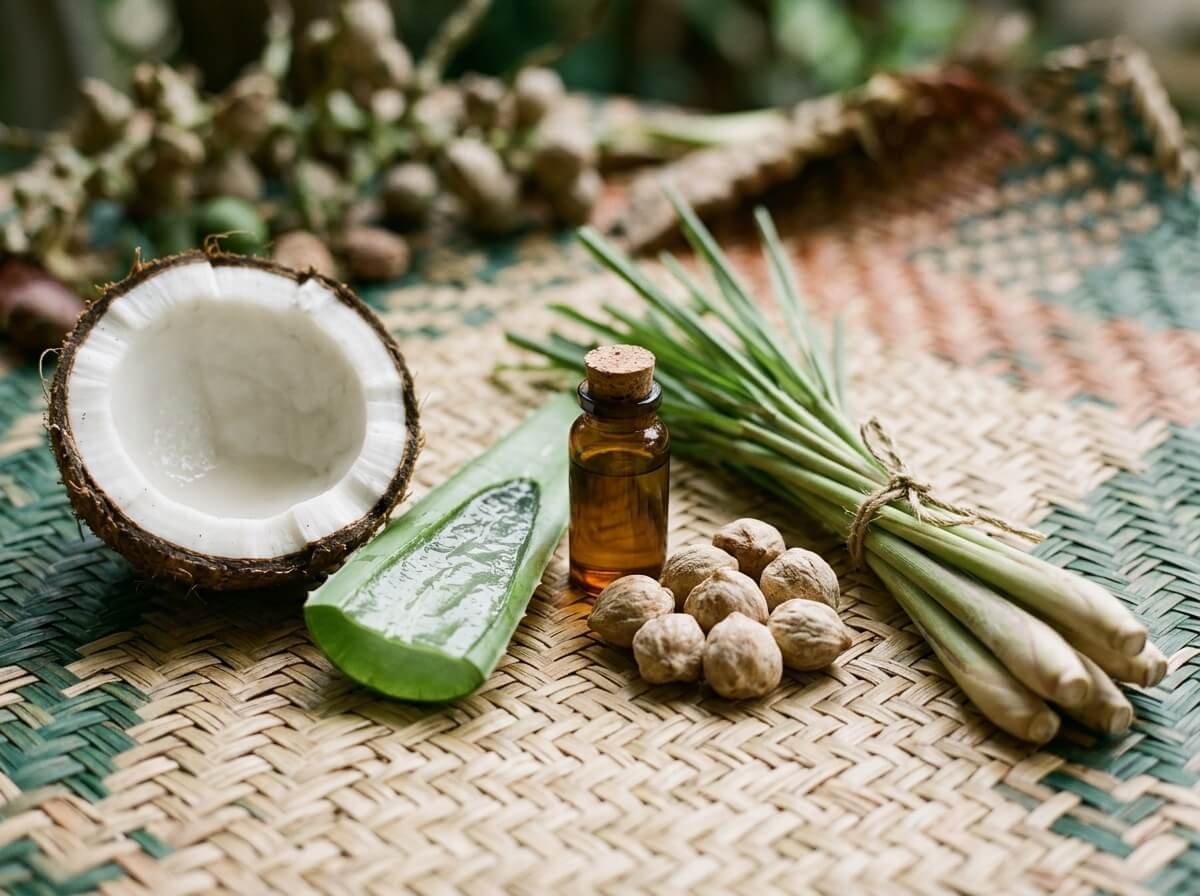
Once the base surfactant is chosen well, the character of a natural body wash comes from its plant ingredients. These are not decoration if they are present in meaningful amounts. Five, in particular, earn their place, and knowing what each contributes helps you tell a working formula from a scented one.
- Coconut. The most versatile plant in our whole line, cold-pressed from coconuts grown on Bali plantations through our Aluan partnership. Coconut is where the gentlest true-soap and glucoside surfactants come from, and its fatty acids leave a soft, conditioned finish. If you want to understand its range beyond washing, our piece on why coconut oil is good for skin covers it in depth.
- Aloe vera. A humectant and soother that draws water into the skin and calms the mild irritation that any cleansing causes. In a wash it offsets the tightness a surfactant can leave behind. Our Aloe Vera Gel is the same botanical in its purest form, and its role is explored in our guide to aloe vera gel for skin.
- Kukui. The oil of the candlenut, Pacific in origin and long used in Balinese ritual, wild-harvested alongside our illipe butter through the Forestwise partnership in Kalimantan. Kukui is light, quickly absorbed, and rich in the fatty acids that support the skin barrier. We write about its qualities in our note on kukui oil.
- Candlenut and other carrier oils. Small amounts of nourishing oils re-fat the skin during the wash, replacing some of what cleansing removes so the barrier stays intact. This is the quiet difference between a wash that strips and one that tends.
- Essential oil aromatherapy. The scent layer, but also more than scent. Tea tree brings a clarifying, traditionally antiseptic quality, lemongrass lifts and refreshes, sandalwood grounds. Real essential oils do sensory and functional work that synthetic fragrance cannot, and they are disclosed by name rather than hidden under the single word fragrance.
A wash that carries these in honest amounts feels different on the skin, and it reads honestly on the label too. That is the bridge between the ritual and the ingredient list, and it leads directly to the skill of reading a label quickly.
How to read a natural body wash label in 60 seconds
You do not need a chemistry degree to judge a body wash on a shop shelf. You need four quick checks, and each takes a few seconds. Together they will tell you more than any front-label claim.
- Read the top three ingredients. Ingredients are listed by weight, so the first three are most of the formula. After water, you want to see a true soap or a glucoside, not a sulfate. If sodium lauryl sulfate or sodium laureth sulfate appears in the top three, the wash is built on a harsh syndet no matter what the front says.
- Do a certification reality check. Words like natural, botanical, and derived from coconut are unregulated. Third-party certifications and, more usefully, a full and legible ingredient list carry the real weight. A brand confident in its formula shows you all of it.
- Check fragrance versus essential oil. The single word fragrance or parfum can legally hide dozens of undisclosed compounds. Named essential oils, tea tree oil, lemongrass oil, are disclosed and traceable. Named is almost always the more honest choice.
- Practise a little preservative literacy. Any water-based wash needs a preservative or it will grow bacteria, so their presence is responsible, not alarming. Gentle options such as sodium benzoate and potassium sorbate are common in natural formulas. The goal is a preserved, safe product, not a preservative-free myth.
Run those four checks and you will spot a greenwashed wash in under a minute. The same literacy applies across your whole bathroom, from your natural face wash to your natural shampoo, and it is the single most useful habit a conscious shopper can build. If you would rather start from a formula that already passes these checks, our Antiseptic Liquid Soap and Tea Tree Body Wash are both built on a plainly listed castile base.
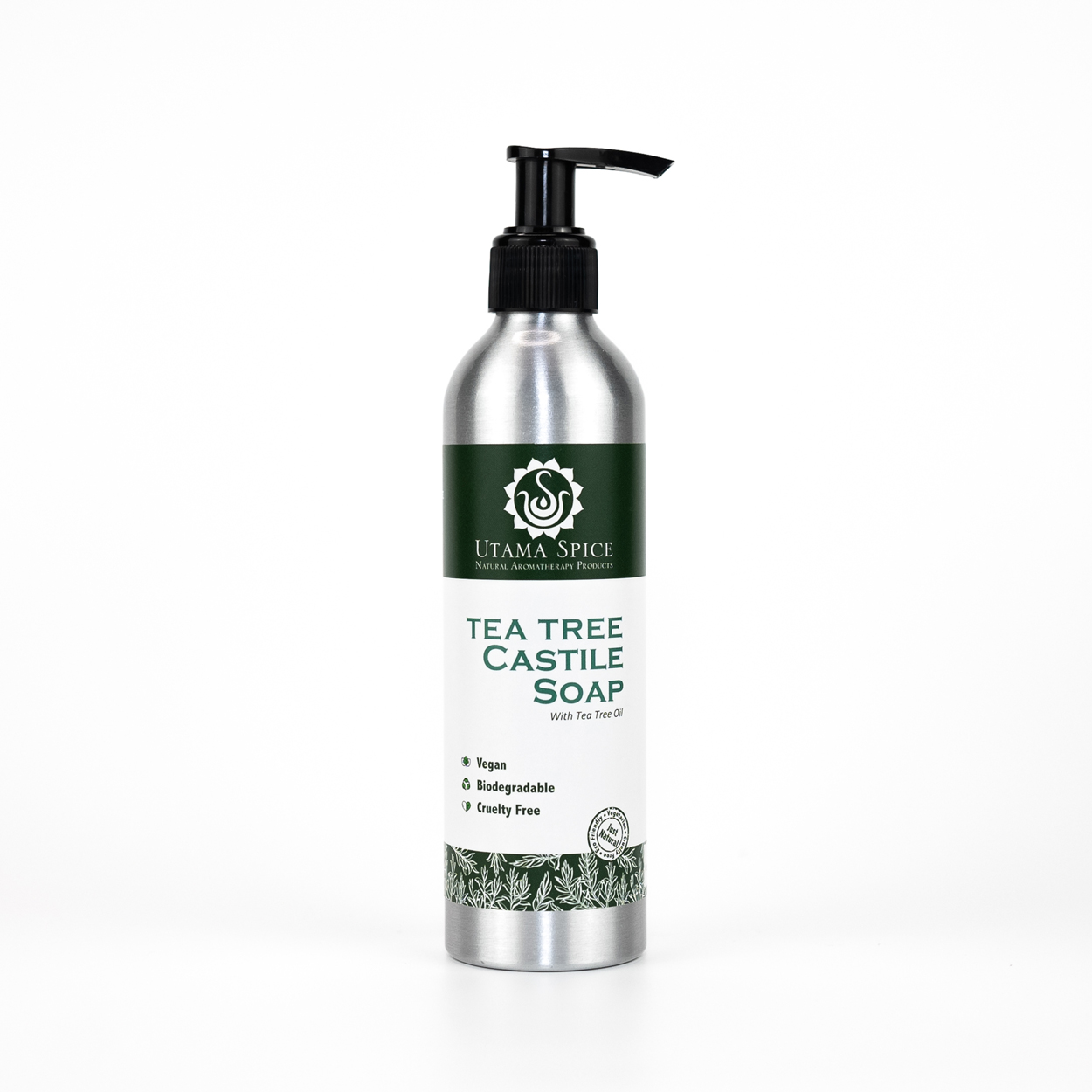
A body wash that cleans without stripping
Our Tea Tree Body Wash is built on a plainly listed castile base, with real tea tree essential oil for a clarifying finish. Hand-blended in Bali, gentle on the skin barrier, and refillable so the bottle keeps coming back around.
The refill conversation, and the math of one bathroom
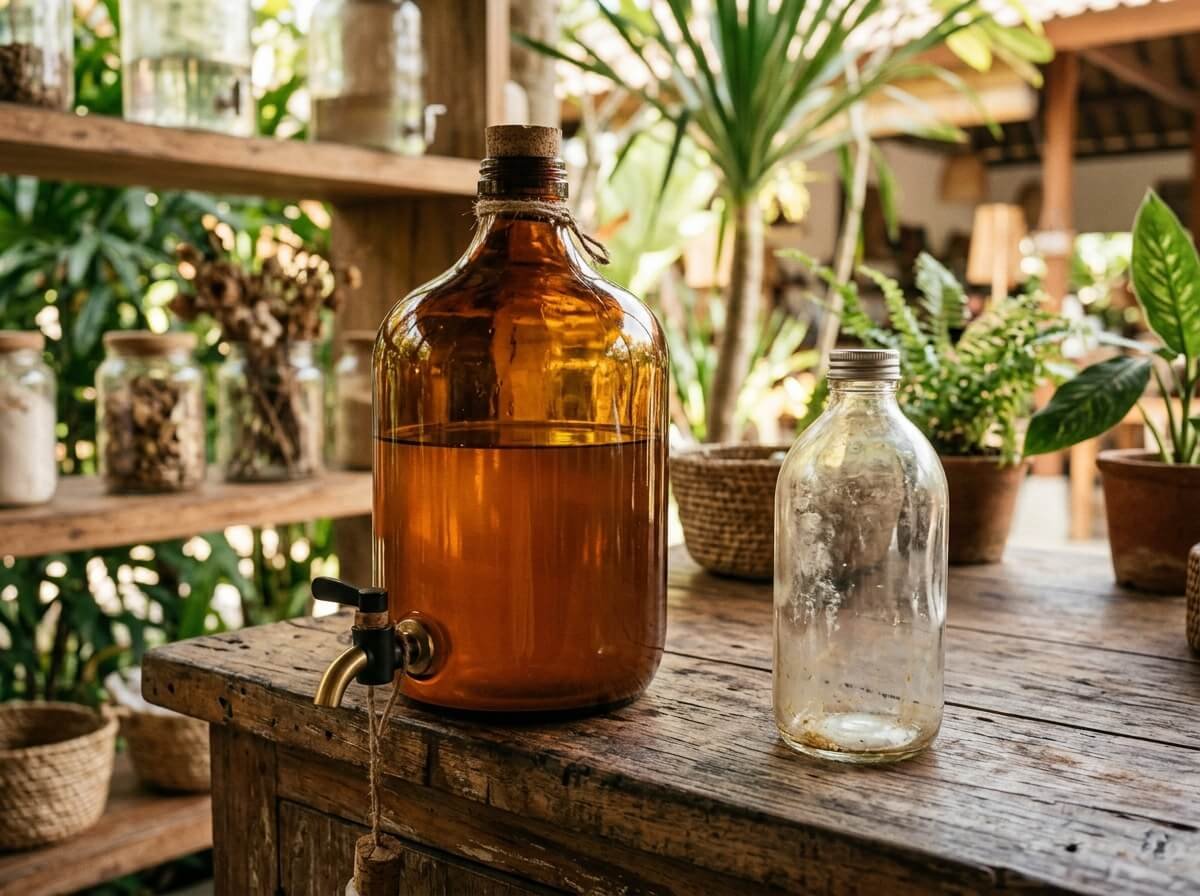
There is one more thing a good natural body wash should be, and it is the part most guides skip entirely: refillable. The gentlest formula in the world still arrives in a bottle, and if that bottle is thrown away after a single use, the care in the formula is undone by the waste around it. This is where honesty about cleansing has to extend past the skin and toward the planet the skin lives on.
The math is quieter than the marketing but far more convincing. A household that showers daily can move through a bottle of body wash every few weeks. Refilling the same bottle rather than buying a new one each time removes a steady stream of plastic from a single bathroom over a year. Across the community of people who refill with us, that added up to 2,245 bottles saved from landfill in 2025 alone. We have run in-store refill stations since our earliest days, and for every gram we produce we remove an equivalent weight of plastic from the ocean through our Seven Clean Seas partnership. None of this is a grand gesture. It is small accounting, repeated.
Refilling also changes your relationship with the product. You keep a bottle you like, you learn its weight in your hand, and cleansing becomes a returning practice rather than a chain of disposables. If this idea is new to you, our guide to refillable body care lays out how to start, and our look at coconut body wash shows how a single gentle base can carry a whole refillable range. Refill, reuse, and let care be something that comes back around.
A simple Balinese-inspired daily cleansing ritual
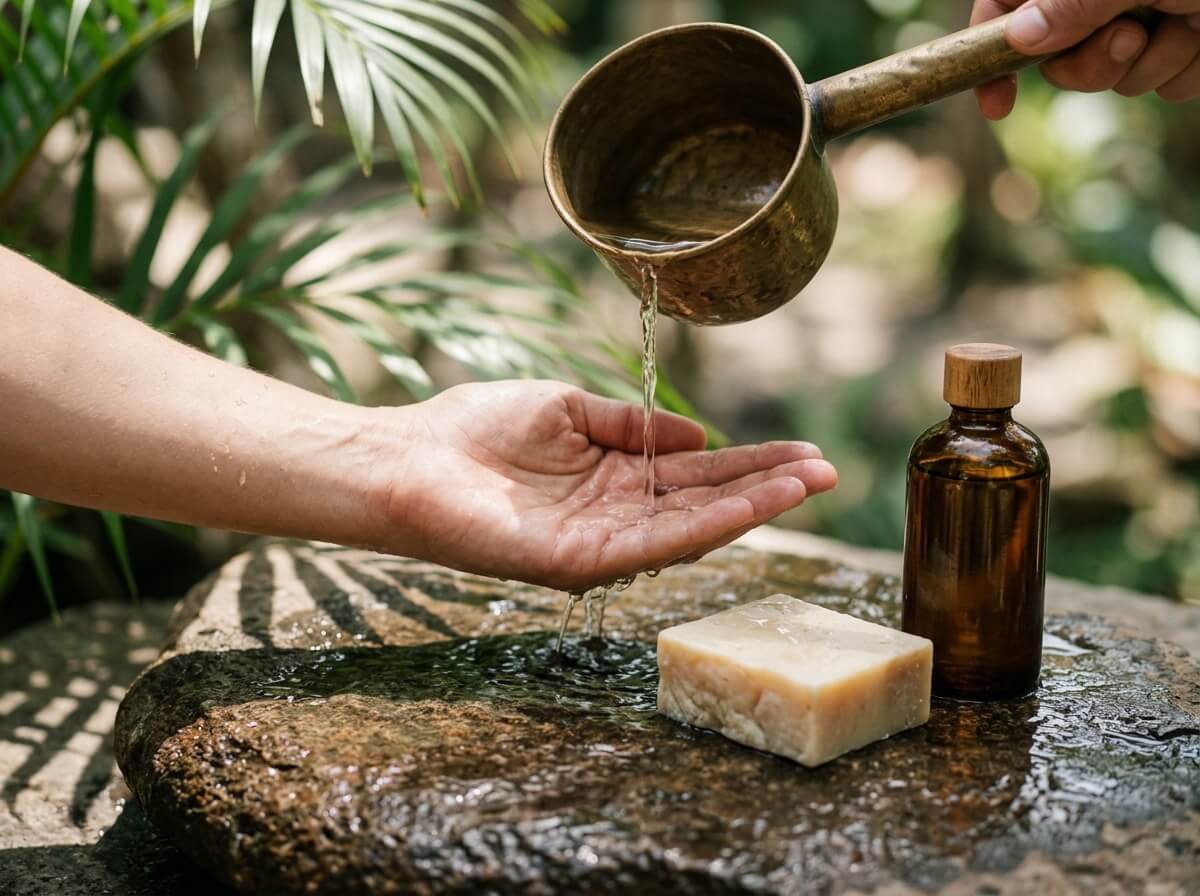
To close, here is a way to bring the mandi spirit into an ordinary shower, using a natural body wash you have chosen with your new label literacy. It asks for nothing you do not already have, only a little attention.
- Start with the water, not the wash. Warm rather than hot. Hot water strips the skin barrier as surely as a harsh surfactant does, so keep it comfortable, closer to the temperature of a Balinese morning than a scald.
- Wet the skin fully, then apply a little wash. A gentle, plant-based wash does not need a mountain of foam to clean. A small amount, worked between the hands first, is enough. Big lather is a marketing signal, not a cleaning one.
- Move with your hands, in order. Wash from the shoulders down, unhurried, letting your hands do the work rather than a rough cloth. This is the mandi idea in miniature, touch as tending.
- Rinse, then seal while damp. The most important step comes after the wash. On still-damp skin, smooth in a light oil or butter to lock in moisture and finish the barrier the wash opened. A body oil such as our Rose Allure Body Oil or a richer natural body butter both work well here.
- Take the extra breath. Before you step out, pause for one slow breath in the scent of the essential oils. This is the smallest possible ritual, and it is the whole point of it.
Chosen well and used with a little care, a natural body wash stops being a purchase and becomes a practice. Read the label, favour the gentle surfactants, refill the bottle, and let cleansing be what the mandi has always known it to be, a daily act of care rather than correction. That is what we mean when we say what you give, you get back.