Ingredient Tuesday: illipe butter, the rainforest nut that guards the skin barrier
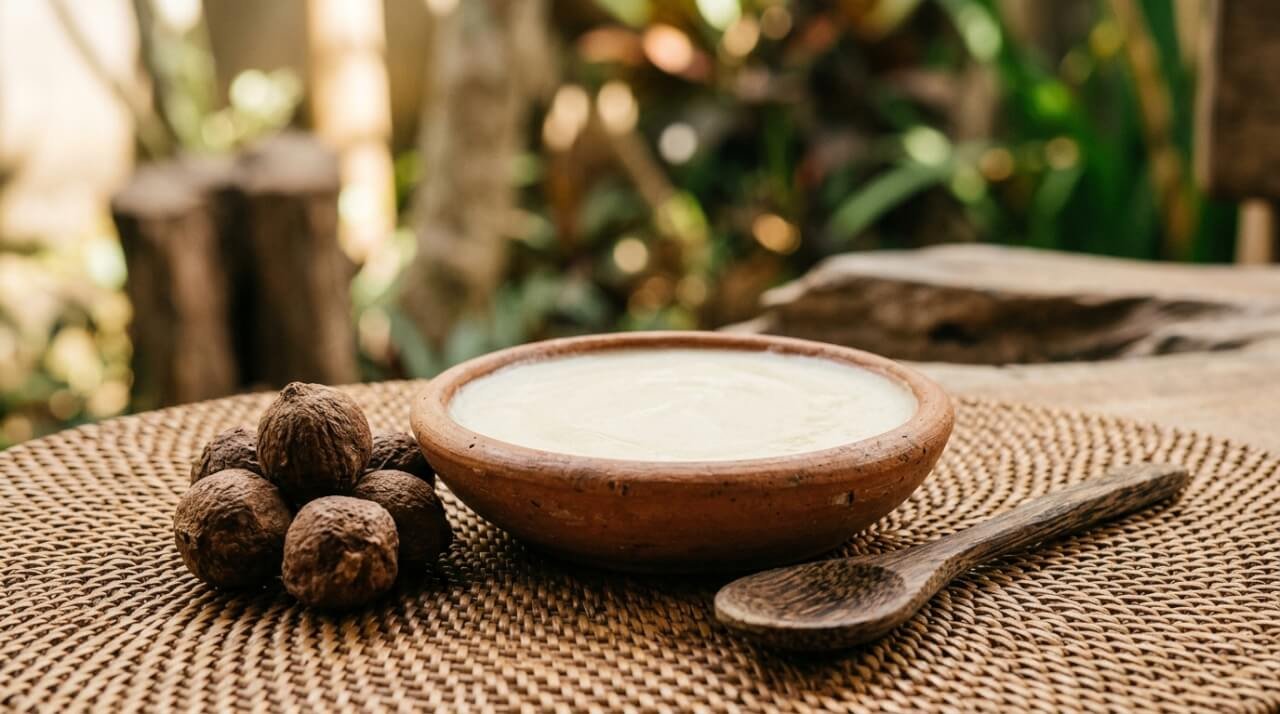
Illipe butter comes from the nut of the Shorea tree, which grows wild in the rainforests of Kalimantan on the island of Borneo. Harvesters gather the fallen nuts from the forest floor, a practice that only works when the forest stays standing. That single detail holds the whole story: the nut has value only if the trees do.
A cousin of cocoa butter, with a softer melt
Illipe butter looks and behaves a lot like cocoa butter, but it melts closer to body temperature and carries more of the fatty acids that help skin hold water. It is rich, stable, and slow to turn, which is why it softened skin across the region for generations before anyone thought to call it a barrier cream. Warmed between the palms, it turns from solid to silk in a few seconds.
Where it comes from matters most
Wild-harvested illipe rewards families for protecting old-growth forest rather than clearing it. Through partners like Forestwise, the same nut that nourishes skin keeps a livelihood tied to a living rainforest. One ingredient, two acts of care. This is the logic behind most of what we make: sourcing that gives back to the place it came from.
What it does on the skin
On the skin, illipe butter does quiet, useful work. It rests on top as a gentle occlusive layer, slowing the water your skin loses through the day, while its fatty acids feed the barrier underneath. It suits dry patches, weather-worn hands, and skin that has been through sun or salt. A little goes a long way, pressed into damp skin so it seals in the moisture already there. Like tamanu oil, it rewards patience more than quantity.
If you want to feel illipe in daily ritual, it is one of the botanical butters we blend into our body butter line. Same wild-harvested source, same slow craft, carried from the forest floor to your evening.