Rosemary oil for hair growth: water, infused oil, or essential oil, and how to use it right
Rosemary oil for hair growth has become one of the most searched natural remedies in beauty, and one of the most misunderstood. Somewhere between a viral spray bottle and a serious clinical trial, the plain truth got blurred. So let us slow down and read it honestly. Rosemary can genuinely support a healthier scalp and fuller-looking hair, but only when you know which form you are holding, how to dilute it, and what a real result looks like over time.
This is a guide written the way we like to write about any botanical: rooted in tradition, checked against research, and free of the theatrics. We will separate rosemary water from infused oil from true essential oil, read the well-known 2015 study without hype, explain why the chemotype on the bottle matters for your scalp, and share a simple ritual using natural carrier oils. No promises of overnight change, because that is not how hair, or care, actually works.
The rosemary-for-hair boom: what people actually mean
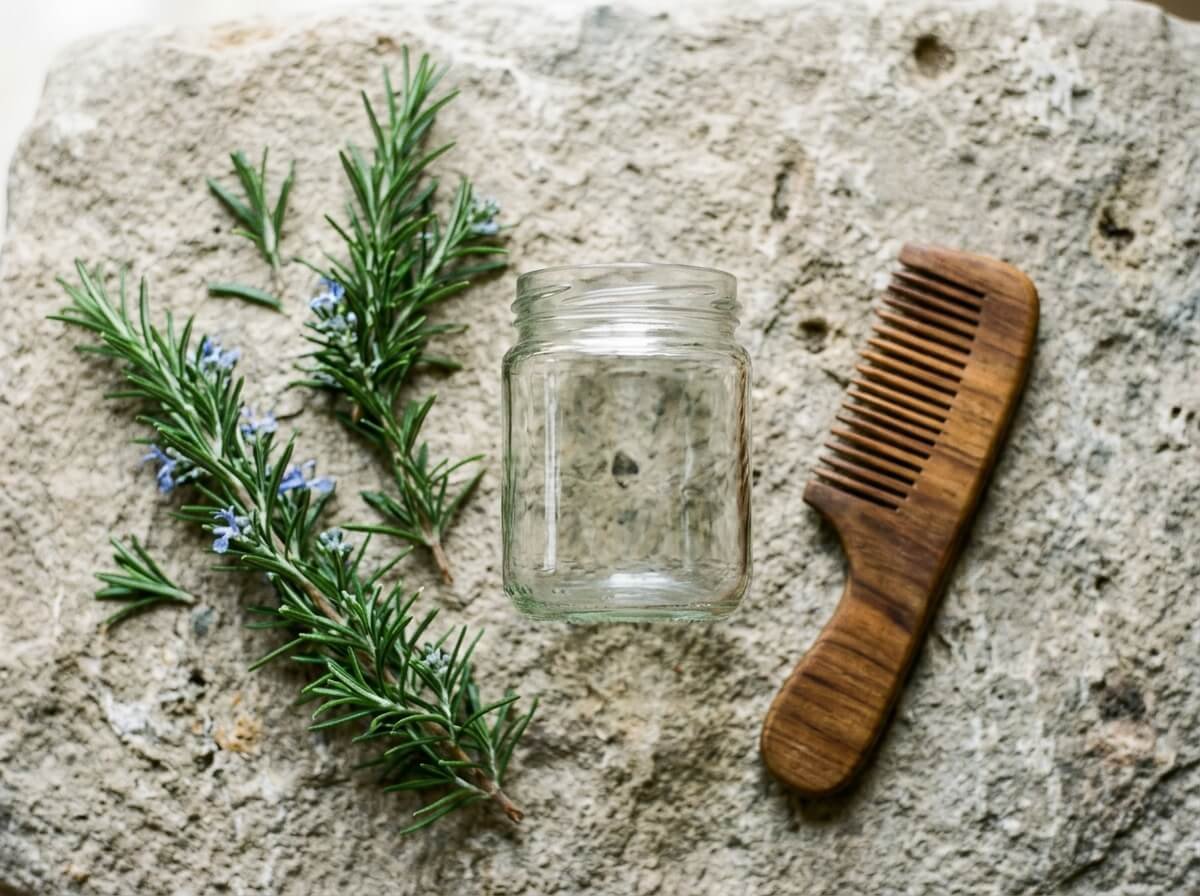
For a herb that has grown in kitchen gardens for centuries, rosemary is having a remarkably modern moment. Videos of people spritzing cloudy liquid onto their roots, before-and-after grids, and the phrase “nature’s answer to thinning hair” have pushed rosemary into millions of bathroom cabinets. The interest is real, and much of the instinct behind it is sound. Plants have supported scalp health for a very long time, and rosemary is one of the more studied among them.
The problem is that the word “rosemary oil” is doing a lot of quiet work. When one person says it, they mean a homemade brew of leaves steeped in water. When another says it, they mean leaves left to sit in a jar of coconut oil on a sunny windowsill. When a third says it, they mean a small, potent, steam-distilled essential oil that should never touch the scalp undiluted. These are three different materials with three different strengths and three different safety rules, and treating them as one is where most people go wrong.
There is also the harder truth underneath the trend. Hair thinning has many causes, from genetics and hormones to stress, diet, and how gently or roughly we treat our hair. A single botanical is a supporting practice, not a cure. If you want the fuller picture of how plant oils behave in the hair shaft and on the scalp, our guide to hair oil for growth and thickness sits alongside this one, and our overview of how to choose a natural hair oil covers the carriers we return to again and again.
Rosemary water, infused oil, and essential oil: three different things
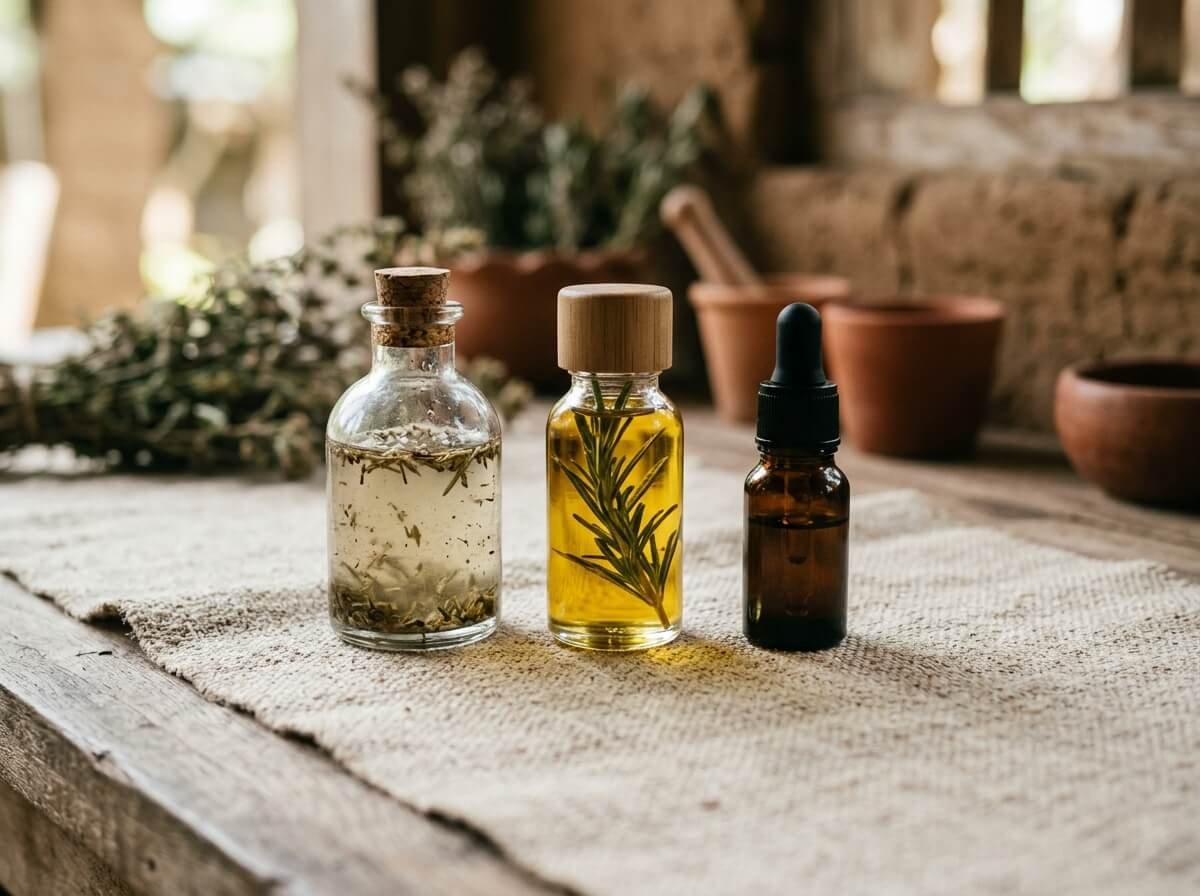
Before you use anything on your scalp, it helps to know exactly what is in your hand. These three forms of rosemary sit at very different points on the strength scale, and each asks for a different approach.
Rosemary water
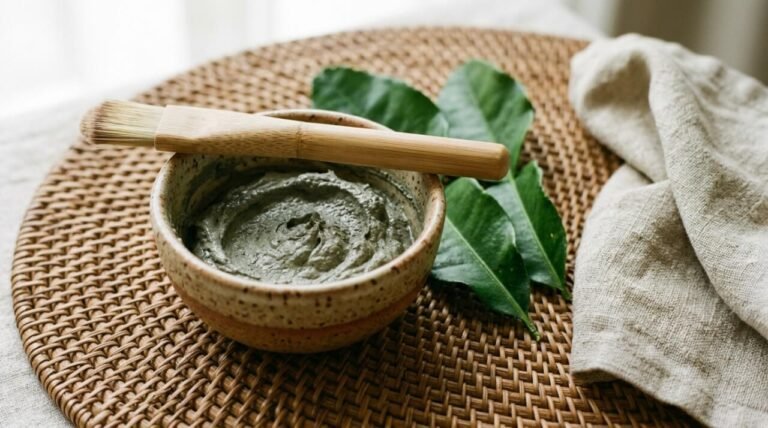
Rosemary water is what you get when you simmer or steep fresh or dried rosemary in water, then strain and cool it. It is gentle, water-based, and carries only a small fraction of the plant’s aromatic compounds. People use it as a light scalp rinse or a between-wash mist. Because it is mostly water, it is the mildest of the three, but it also spoils quickly. Made at home without preservation, it can grow bacteria within days, so keep it refrigerated and make small batches. Think of rosemary water as a pleasant scalp refresher, not a concentrated treatment.
Infused (macerated) rosemary oil
Infused oil is made by steeping rosemary leaves in a carrier oil so the fat slowly draws out some of the plant’s soluble compounds. This is the traditional, slow method, and it is genuinely lovely: the carrier itself nourishes the hair while it carries a whisper of rosemary. The strength depends entirely on the herb, the time, and the oil, so it is milder and less predictable than a distilled essential oil. A well-made infused oil in a base like virgin coconut oil or argan oil is a beautiful weekly scalp oil, and it doubles as a comforting massage medium.
Rosemary essential oil
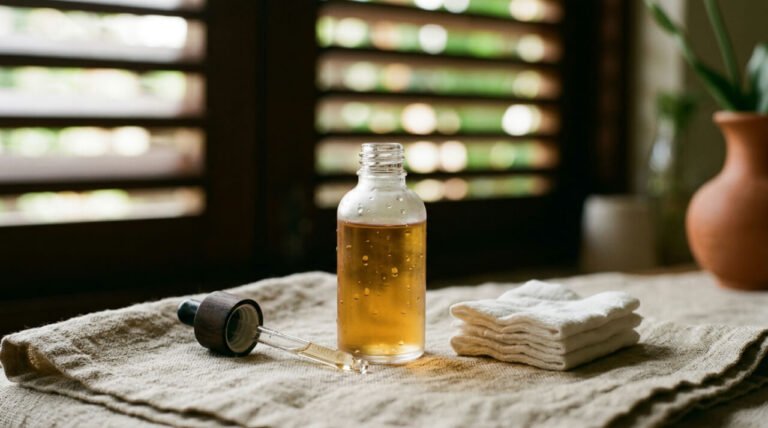
This is the concentrated one. Rosemary essential oil is steam-distilled from the leaves, which means the aromatic and active compounds are gathered into a small, powerful volume. It is the form used in most clinical research, and it is also the form that most needs respect. Undiluted essential oil on the scalp can sting, redden, and sensitize the skin. It should always be diluted into a carrier before it goes anywhere near you. If you are new to essential oils in general, our list of essential oils and their uses is a calm place to start.
One name, three materials. Rosemary water is the mildest, infused oil is the traditional middle, and essential oil is the concentrate that must be diluted. Knowing which you hold is the whole game.
What the research actually says about rosemary oil for hair growth

Most of the excitement traces back to a single, often-cited study published in 2015. In it, people with a common pattern of hair loss used rosemary essential oil on the scalp over several months, and their results were compared with a well-known conventional treatment. By the end of the trial, the rosemary group showed a comparable increase in hair count, and reported less scalp itching. That is a genuinely encouraging finding, and it is why rosemary earned its reputation.
It is worth reading that result the way a careful friend would, rather than the way a headline does. The study was relatively small. It used essential oil at a defined dilution, applied consistently, over a sustained period. The meaningful changes appeared around the six-month mark, not in the first few weeks. And it looked at one particular type of hair loss, so it does not automatically speak to every cause of thinning. None of this makes the research less interesting. It simply means the honest takeaway is measured: rosemary is a promising, well-tolerated scalp botanical with real supporting evidence, used correctly and given time.
A few other threads run through the wider science. Rosemary appears to support healthy circulation at the scalp and carries antioxidant and soothing properties, which may help create a calmer environment for hair to grow. It is not rewriting your genetics, and it is not the only lever that matters. Gentle cleansing, a nourished scalp, and less mechanical stress on the hair all pull in the same direction. If breakage and a stressed scalp are part of your picture, pair this with a gentler wash routine, which we cover in our guide to natural shampoo for hair loss.
You may also see rosemary compared, sometimes breathlessly, to conventional hair-loss treatments. The honest version is narrower and more useful. In that trial, the results were broadly comparable for one type of hair loss over six months, and the rosemary group reported less itching. That is not the same as saying rosemary is stronger, or that it works for everyone, or that it replaces medical treatment where medical treatment is genuinely needed. It is a reason to take rosemary seriously as a natural option, held to the same standard of evidence we would hold anything else. We would rather share the smaller true thing than the bigger false one.
It also helps to know what the study did not measure. It did not test rosemary water, and it did not test a jar of leaves steeped in oil. It tested a defined essential oil at a defined dilution, applied with discipline. So when someone shares a dramatic before-and-after, the fair first questions are simple: which form, what dilution, how often, and for how long. Those four questions cut through most of the noise on their own, and they are the same questions we ask ourselves before we make any claim about a botanical.
Chemotype and scalp safety: cineole, camphor, and verbenone
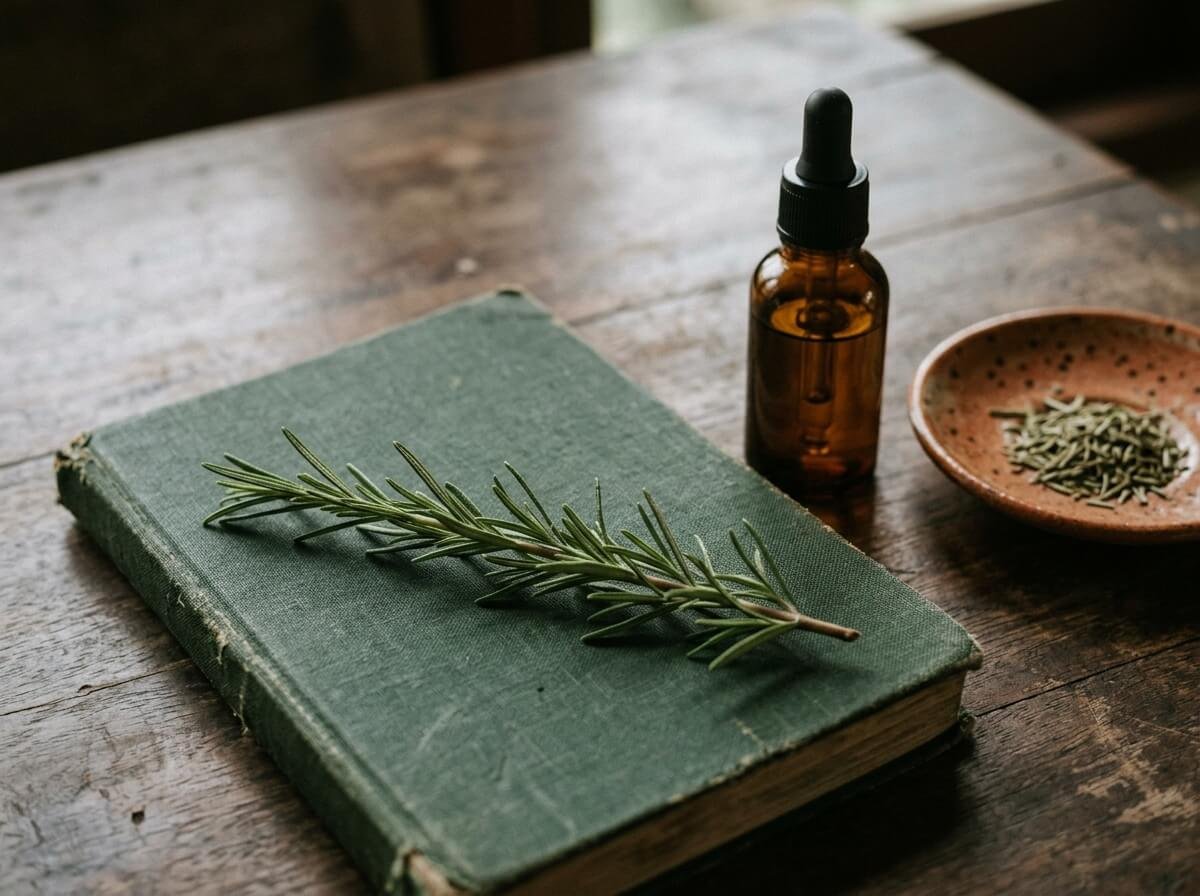
Here is the detail that almost no one mentions, and it matters more than any trend. Rosemary essential oil is not a single fixed substance. Depending on where the plant grows and how it is grown, the oil is dominated by different natural compounds. These variations are called chemotypes, and reputable suppliers label them.

- ct. cineole is the bright, camphoraceous, fresh type. It is stimulating and commonly chosen for scalp and hair use, valued for that clean, awakening quality.
- ct. camphor is higher in camphor and is the type most often flagged for caution, particularly during pregnancy or for anyone managing epilepsy or seizure conditions.
- ct. verbenone is the gentler, more skin-friendly type, often favored in careful facial and mature-skin blends, though usually pricier and less common.
For scalp use, many people reach for the cineole type, but the more important point is simply to buy from a source that tells you the chemotype and the botanical name, Rosmarinus officinalis (also written Salvia rosmarinus). If a bottle will not tell you what is inside, that is your answer. This is the same transparency we ask of any ingredient we work with, and it is a fair thing to ask of anyone.
A word on the honest limits. Essential oils are potent plant chemistry, and potent means both effective and worth respecting. Camphor-rich rosemary in particular is not for everyone, and we will come back to who should be cautious near the end. Reading the label is not fussiness. It is care.
How to use rosemary oil for hair growth: dilution, carriers, and a simple ritual
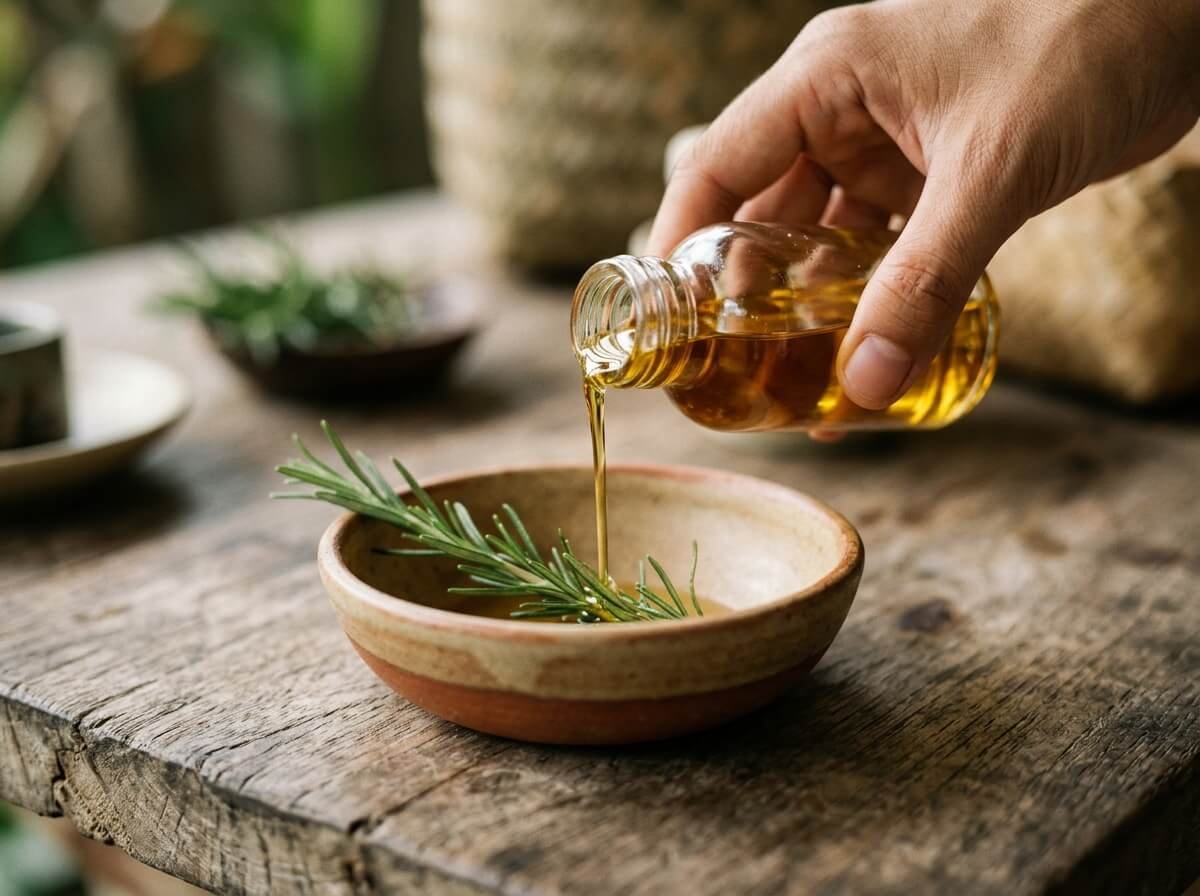
This is where good intentions meet good technique. Using rosemary oil for hair growth well is mostly about two things: diluting properly, and showing up consistently. Neither is complicated.
Get the dilution right
Rosemary essential oil belongs in a carrier, never neat on the skin. A sensible scalp dilution for most adults sits at roughly one to three percent, which is about six to 18 drops of essential oil per 30 ml of carrier oil. Start at the lower end, especially if your scalp is sensitive, and only build up if all is well. More is not better here. A gentle, consistent dose over months does far more than a strong one that leaves your scalp irritated and unwilling to continue.
Choose a carrier that earns its place
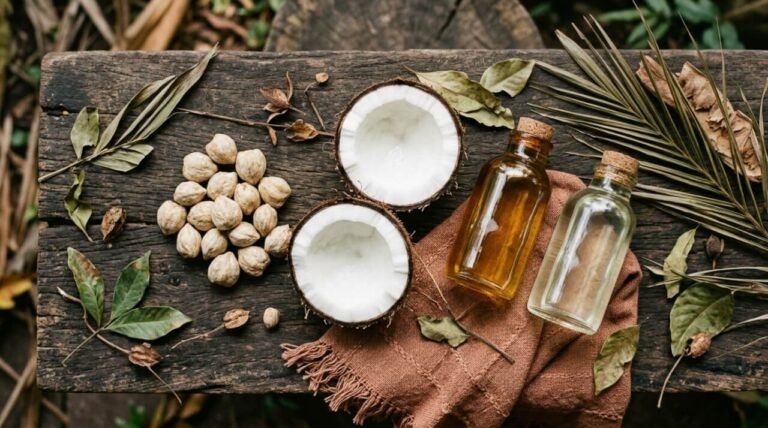
The carrier is not just a diluter. It is doing real work of its own. Virgin coconut oil is the classic, deeply penetrating carrier we return to across the Utama Spice line, and it has generations of Balinese hair-care tradition behind it, explored in our piece on coconut oil for hair. Argan oil is lighter and drapes well over the lengths without heaviness. Kukui and other tropical oils each bring their own feel. There is no single right answer, only the one your hair and scalp respond to.
A simple weekly ritual
- Warm a tablespoon of your carrier oil gently in your hands or a small bowl.
- Add your measured rosemary essential oil and stir, keeping to a one to three percent dilution.
- Part your hair in sections and apply to the scalp, not just the lengths.
- Massage with your fingertips for three to five minutes. The massage matters as much as the oil, encouraging circulation and turning the moment into genuine rest.
- Leave it on for 30 minutes, or overnight on a towel-covered pillow, then wash out with a gentle shampoo.
- Repeat once or twice a week, and let time do the rest.
If measuring drops each week feels like friction, that is exactly the friction that ends most routines. A ready-blended option removes it. Our Herbal Silk Hair Oil pairs kukui, buah merah, and castor oil with essential oils into a single scalp-and-length treatment, made for people who want the ritual without the mixing. It is not a rosemary monoproduct, and we will not pretend it is. It is a nourishing hair oil designed to support thicker, calmer hair as a weekly practice, and it sits happily alongside a few added drops of rosemary essential oil if you like to blend your own.

Steam-distilled rosemary, from our hands to your scalp
Our Rosemary Essential Oil is pure, single-botanical, and honestly labelled, the concentrate to dilute into your carrier of choice for a weekly scalp ritual. Small-batch, transparent, and made to be used with care.
Realistic timelines, who should be cautious, and building a lasting ritual
If there is one gift this guide can give, it is honest expectations. In the research, meaningful change showed up around six months of consistent use, not in a fortnight. Hair grows slowly, roughly a centimetre or so a month, and the scalp responds to steady care, not to intensity. So the real question is not “how fast” but “can I keep this up.” A gentle ritual you actually repeat will always beat a strong one you abandon.
What rosemary can reasonably do is support a healthier scalp environment, help with the itch and flaking that can accompany thinning, and, for some people and some causes, contribute to fuller-looking growth over months. What it will not do is override genetics, replace medical care for significant hair loss, or work as a one-time fix. If your hair loss is sudden, patchy, or distressing, that is a conversation for a doctor or trichologist, not a bottle.
Who should be cautious
- People who are pregnant or breastfeeding should avoid rosemary essential oil, particularly the camphor-rich chemotype, unless a qualified practitioner advises otherwise.
- Anyone managing epilepsy or a seizure condition should be cautious with camphor-rich rosemary and speak to a professional first.
- Sensitive or reactive scalps should patch test on the inner arm and wait 24 hours before scalp use, and start at the lowest dilution.
- Keep essential oils away from young children and out of reach, and away from the eyes.
Building the habit is the last piece, and the most human one. Tie the ritual to something you already do, a Sunday evening, the night before a wash day, a quiet moment that is yours. Keep the oil where you will see it. Let the scalp massage be a pause rather than a task. Care that feels good is care you repeat, and repetition is what actually moves the needle. If you enjoy this kind of slow, sensory practice, our reflection on Balinese face oil carries the same spirit into skincare.
Frequently asked questions about rosemary oil for hair growth
How long before I see results? Give it patience. In the research, changes became measurable around six months of consistent use. Some people notice a calmer, less itchy scalp sooner, but visible fullness is a slow build, not a quick switch.
Can I use rosemary water every day? Yes, rosemary water is gentle enough for regular use as a light scalp rinse or mist, as long as it is fresh and kept refrigerated. It is the mildest form, so treat it as a pleasant refresher rather than the concentrated treatment that essential oil provides.
Can I apply rosemary essential oil directly to my scalp? No. Undiluted essential oil can irritate and sensitize the skin. Always dilute it into a carrier oil at roughly one to three percent first, and patch test if your scalp is sensitive.
Can I leave rosemary oil in overnight? You can, on a towel-covered pillow, then wash it out gently in the morning. Overnight is optional. A 30-minute soak once or twice a week works well and fits more easily into real life.
Rosemary oil or a ready-made hair oil? Both have a place. Blending your own rosemary essential oil into a carrier gives you full control. A ready-blended nourishing hair oil removes the friction of measuring and makes the ritual easier to keep. The best choice is the one you will actually repeat.
Rosemary is not a shortcut, and we would not sell it to you as one. It is a well-studied, well-loved botanical that rewards patience, respect, and a little ritual. Hold the right form, dilute it with care, choose a carrier that nourishes, and give it the months it asks for. That is the honest path to getting the most from rosemary oil for hair growth, and it is the same path we believe in for everything we make: real care, real time, and real results.