Lulur scrub: the Balinese ritual of glow, not whitening
A lulur scrub is one of Bali’s oldest rituals of care, a slow, sensory practice of exfoliating and nourishing the skin with ground botanicals. For generations it was reserved for brides in the days before their wedding, a way to soften the skin and settle the mind. Today the lulur scrub has travelled far beyond the royal courts of Java and the family compounds of Bali, and somewhere along the way its meaning has been bent out of shape. This guide returns the ritual to its roots: what a lulur scrub really is, what belongs in one, how it works on the skin, and how to bring the practice home with honesty and care.
We make personal care in Bali, and we have watched the lulur be marketed as a shortcut to lighter skin. That is not the tradition, and it is not what we stand for. So we will speak plainly here, the way a wise friend would: the glow of a good lulur comes from circulation, exfoliation, and moisture, not from bleaching. Let us walk through it together.
What is a lulur scrub
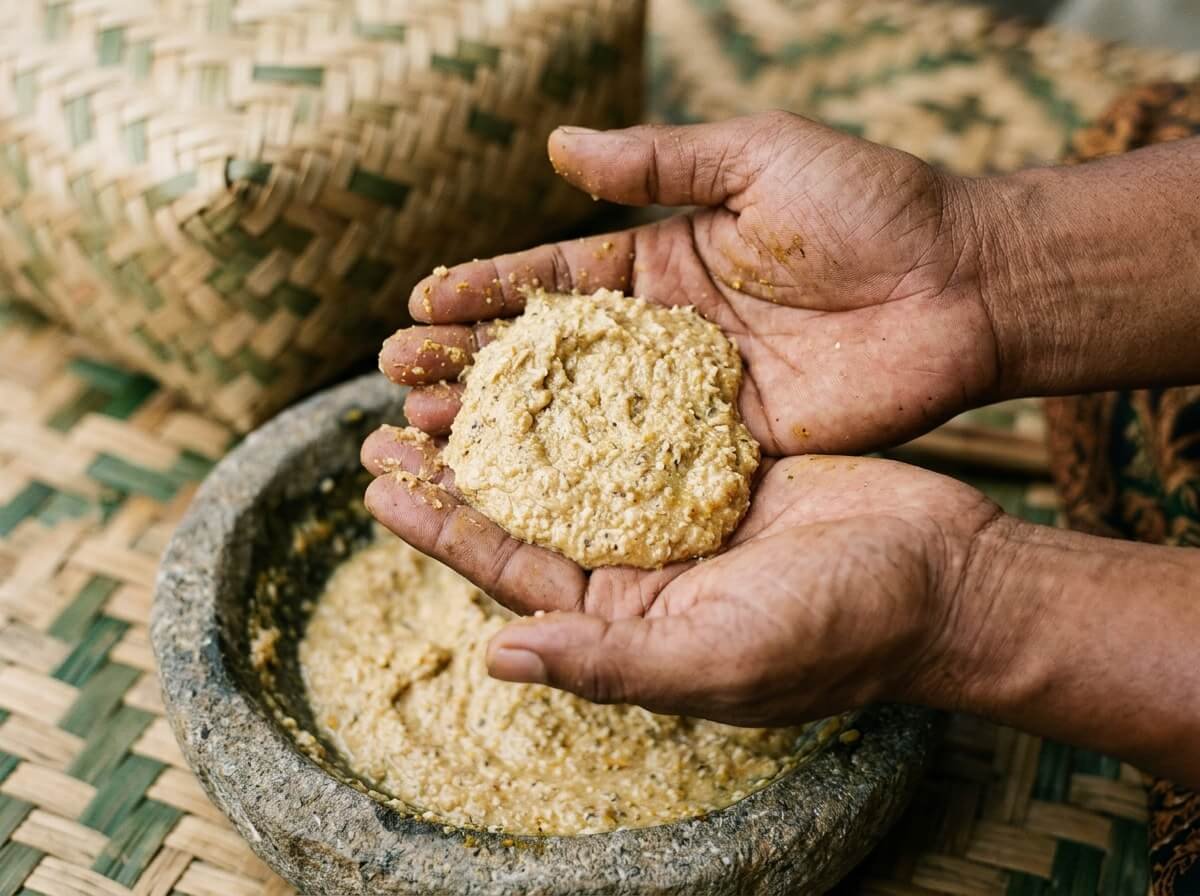
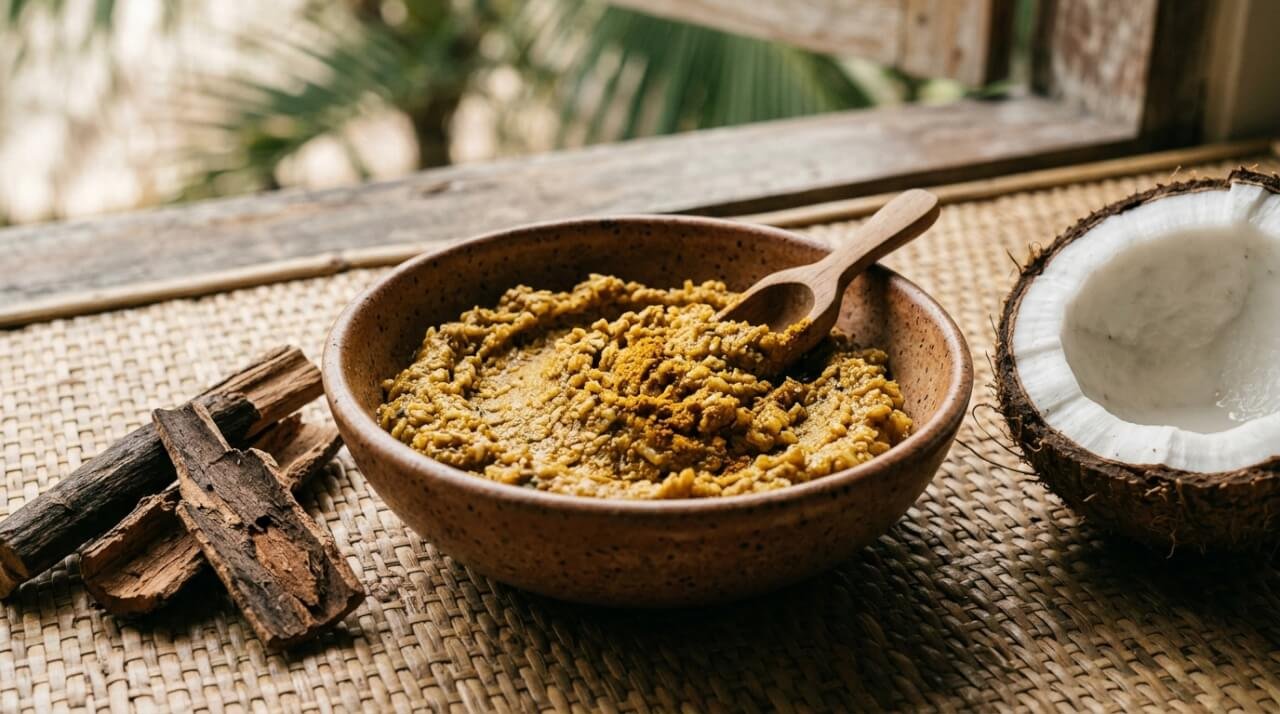
A lulur scrub is a paste of finely ground natural ingredients, traditionally rice, turmeric, sandalwood, and warming spices, blended with a little water or oil into a soft, spreadable texture. The word lulur comes from Javanese court culture, where the ritual was part of the mangir tradition that prepared a bride’s body over the days leading to her wedding. From the palaces it moved into everyday Balinese life, carried by the women who kept these recipes in their kitchens and passed them down like heirlooms.
In practice, the paste is massaged into the skin, left to dry a little, then rubbed away. As it lifts, it carries dead skin cells and grime with it, leaving the surface smoother and more even. A full lulur ends with a soak, a rinse, and a layer of oil or lotion to seal in moisture. It is unhurried by design. This is care as ritual, not care as errand, and it belongs to the same lineage as the practices we describe in our guide to Balinese skincare heritage and rituals.
The bridal roots matter, because they tell you what the ritual was really for. In the days before a wedding, a bride would receive a lulur each morning, sometimes for a week or more. The daily massage was as much about calm as about skin, a stretch of quiet in a busy household, a way to arrive at a big day feeling settled and cared for. That double purpose, tending the body and steadying the mind, is the part most modern versions leave out. We think it is the part worth keeping.
Bali has always treated the body and the land as one system. The botanicals in a lulur grow in the same gardens that feed the household, and the ritual itself is a moment of reconnection, with the skin, with tradition, and with the hands that prepared the blend. That is the spirit we want to protect as the lulur finds new admirers around the world.
The ritual of glow, not whitening
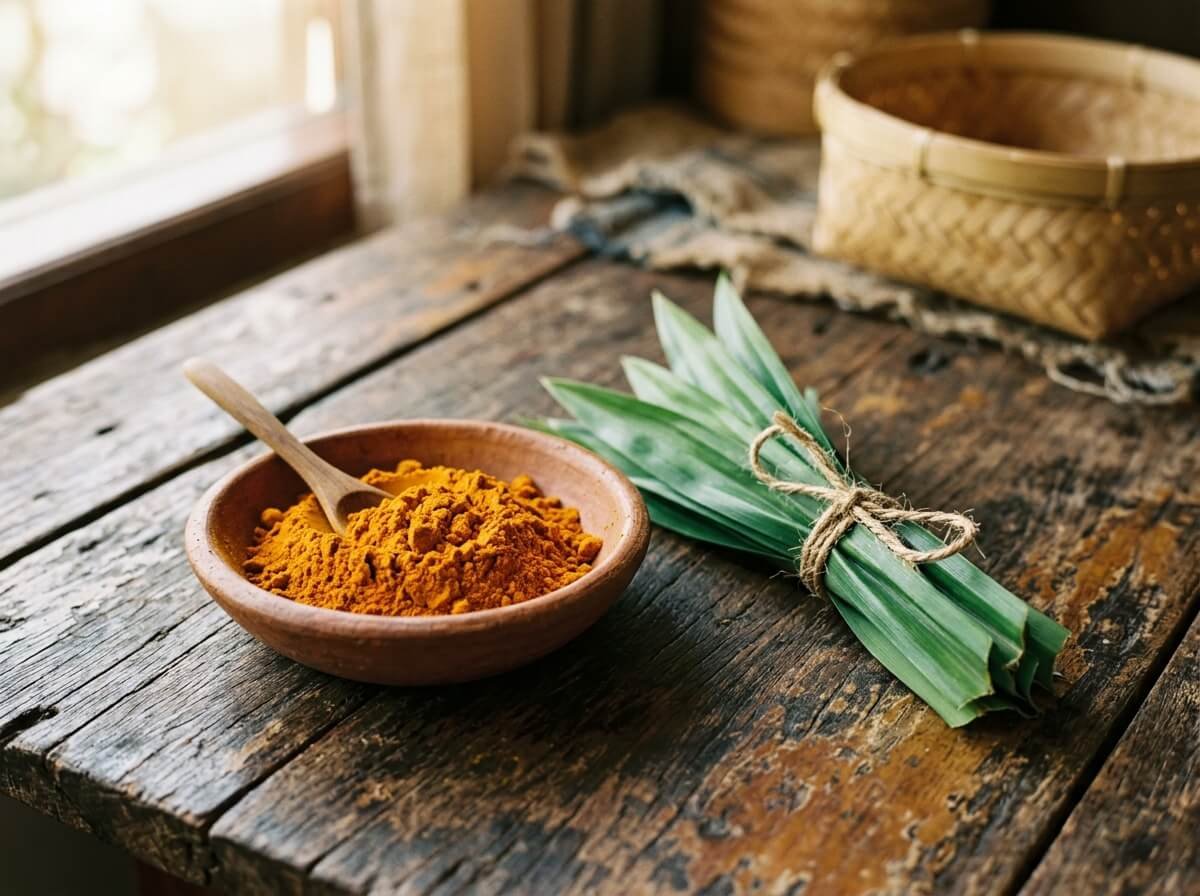
Here is where we plant our flag. Much of the global beauty market sells the lulur as a whitening treatment, wrapped in language about brightening and fairness. That framing does a disservice to the tradition and to the people who use it. The point of a lulur was never to change the colour of the skin. It was to reveal healthy skin: exfoliated, circulated, hydrated, and calm.
The glow people notice after a lulur is real, and it has honest explanations. Massage brings blood to the surface, which lends the skin a warm, living flush. Exfoliation removes the dull, flaking top layer so light reflects more evenly. Moisture plumps the surface and softens texture. None of this lightens your natural tone, and it should not claim to. Turmeric can look as if it brightens because it lifts dullness and calms redness, but that is clarity, not bleaching.
We say this because greenwashing and skin-tone marketing come from the same place: selling insecurity instead of care. A lulur, done right, is the opposite of that. It is a practice of respect for the skin you already have. If you want the deeper reasoning behind gentle, barrier-first care, our overview of a natural skincare routine sits comfortably alongside this ritual.
What goes into a traditional lulur
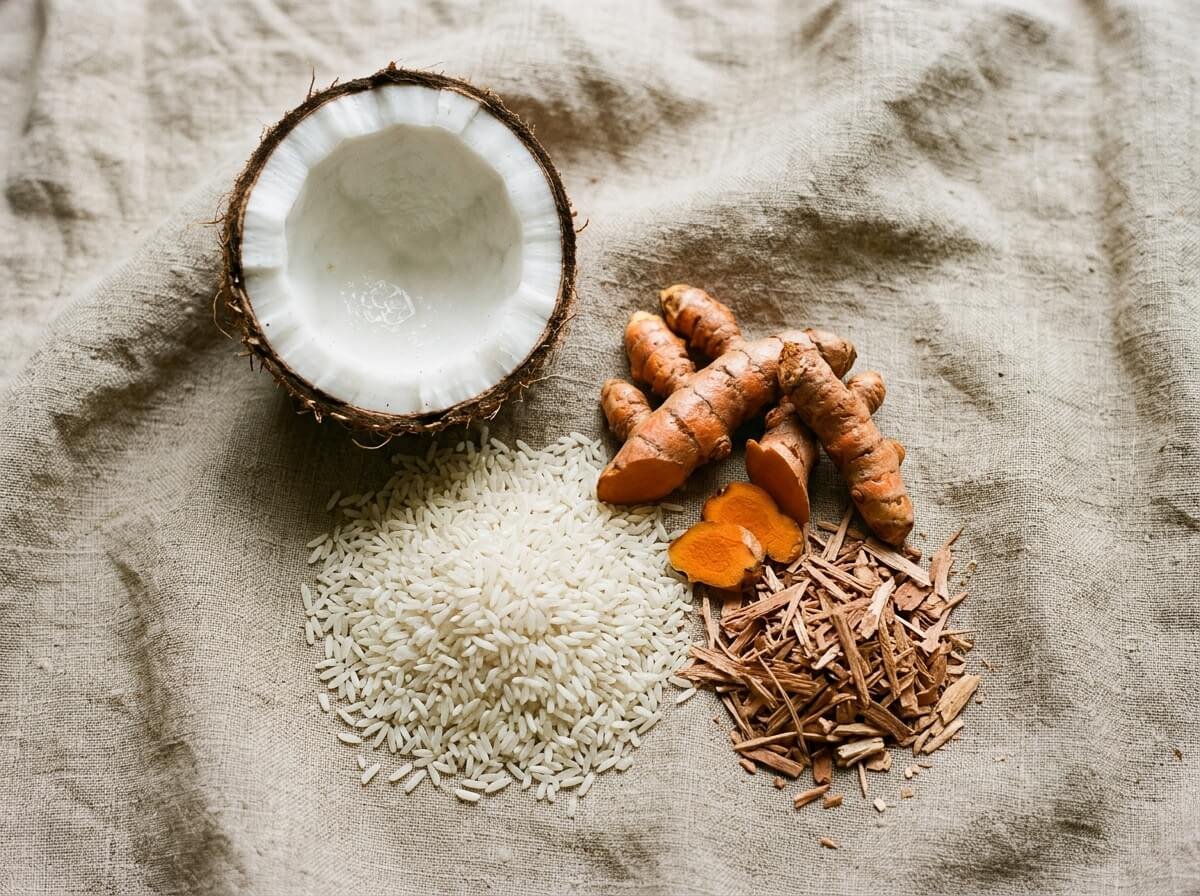
Every family in Bali has its own lulur recipe, but a handful of botanicals appear again and again. Each one earns its place, and each one tells a story of where it came from and who grew it.
- Rice. Finely ground rice is the gentle body of most lulur pastes. It provides soft mechanical exfoliation and a smooth, slippery glide that keeps the scrub from feeling harsh.
- Turmeric. The golden heart of the blend. Traditionally valued for calming and clarifying the skin, turmeric gives lulur its warm colour and its association with radiance.
- Sandalwood. Ground sandalwood adds a grounding, woody aroma and a cooling feel. It is the scent most people remember from a Balinese spa.
- Coconut. Often the carrier, whether as milk, grated flesh, or oil. Coconut softens the paste and leaves a layer of nourishment behind.
- Warming spices and roots. Ginger, galangal, and pandan appear in many family recipes, each adding aroma and a sense of place.
Coconut deserves a closer look, because it is the ingredient that carries the ritual from scrub to nourishment. In Bali, coconut is everywhere, cold-pressed from palms grown along the coast and used across body, hair, and face. We source ours through a partnership built on fair, sustainable harvesting, and it anchors much of our range. If you want to understand this botanical more deeply, we wrote a full guide on how to use coconut oil for skin, and another on the way sourcing and extraction change everything about the oil you end up with.
These botanicals also carry a lesson about sourcing. In Bali, the plants in a lulur were never anonymous. The turmeric came from a neighbour’s garden, the rice from the family field, the coconut from the palm at the edge of the compound. You knew where your care came from, and who had grown it. We try to hold on to that thread in the way we work today, sourcing coconut through fair, sustainable partnerships and supporting the women and families who keep these traditions alive. Care for the skin and care for the community were never separate ideas here.
What you will not find in an honest lulur is a long list of synthetic brighteners or harsh acids. The tradition is botanical, and its power is in the balance of gentle exfoliation and real moisture, not in aggressive actives. When a scrub leans on strong chemical exfoliants to force a result, it has left the lulur behind and become something else entirely.
How a lulur scrub actually works on skin
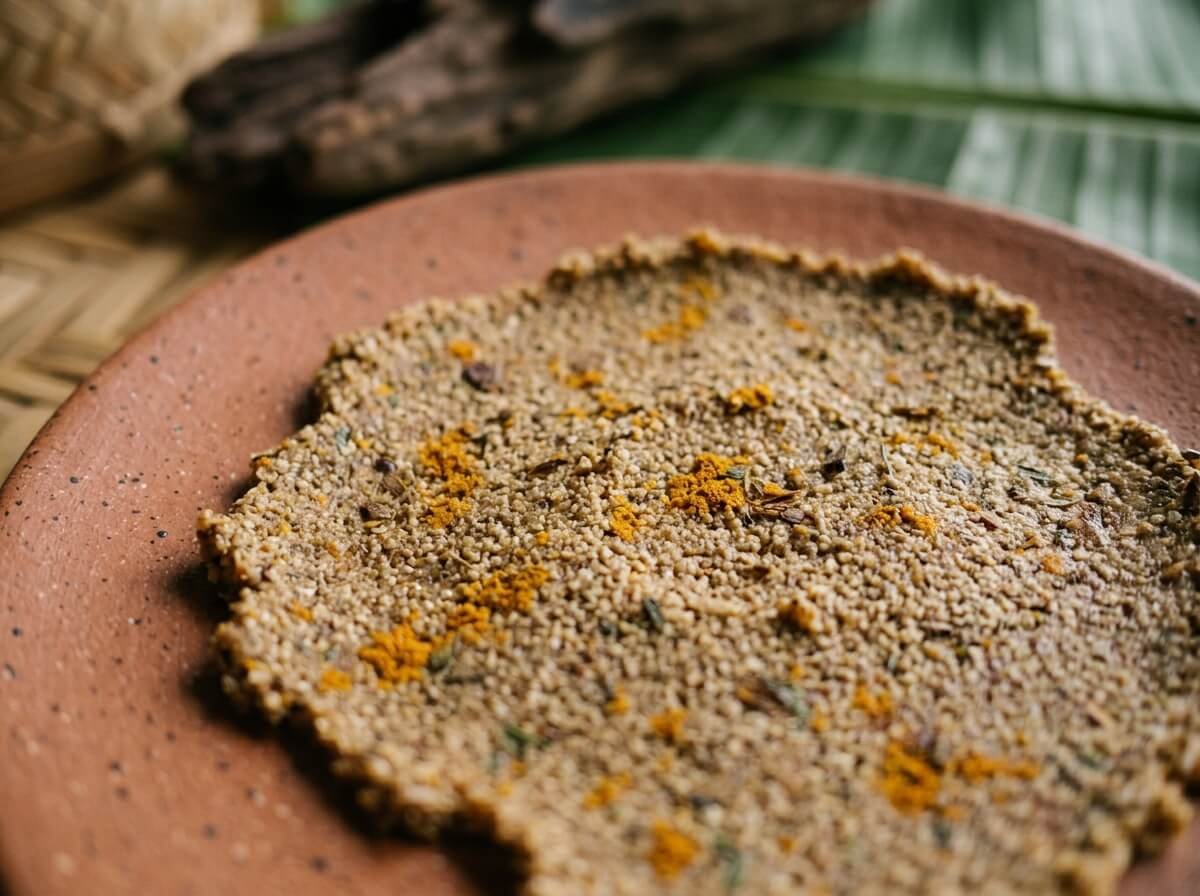
Strip away the romance for a moment and a lulur is a well-designed physical exfoliant. Understanding the mechanics helps you use it well, and helps you tell a thoughtful scrub from a scratchy one.
The first job is exfoliation. Your skin sheds cells constantly, but they do not always let go cleanly, which is what makes skin look dull and feel rough. The fine particles in a lulur, ground rice and soft botanical powders, gently loosen that top layer through mild friction. The key word is gentle. Particles that are too large or too jagged can create micro-tears, so a good lulur uses finely milled ingredients with rounded edges rather than sharp fragments.
The second job is circulation. The massage that works the paste into the skin brings blood to the surface, which is where that healthy flush comes from. The third job is moisture. Because a traditional lulur is bound with coconut, the ritual deposits a thin film of oil as you go, so you exfoliate and condition in the same motion. This is why skin feels soft rather than tight afterwards, an approach we also explore in our piece on the benefits of a natural face scrub.
It helps to understand the skin barrier here, because it explains why gentleness wins. The outermost layer of your skin is a wall of cells held together by natural lipids, and its job is to keep moisture in and irritants out. Healthy exfoliation clears the loose, spent cells sitting on top of that wall. Aggressive exfoliation damages the wall itself, which leaves the skin dry, reactive, and paradoxically duller over time. A well-made lulur works with the barrier rather than against it: it lifts what is ready to go, then immediately replaces lost surface oils with coconut. That balance is the whole point, and it is why frequency and particle size matter more than force.
Because true lulur is a body ritual and we do not make a dedicated body scrub, we reach for our Face and Body Clay when we want that same clarifying, resurfacing effect on face and body at home. It is a mineral-rich clay that draws out impurities and leaves the skin smooth, a modern, honest companion to the lulur spirit. For the face specifically, our Green Leaf Face Scrub offers the same gentle mechanical polish in a lighter, everyday form.

Bring the resurfacing ritual home
Our Face and Body Clay carries the clarifying heart of the lulur into a form made for modern life. Mineral-rich, gently exfoliating, and hand-blended in Bali, it draws out impurities and leaves skin smooth and calm. Refill when you run low, care infinitely.
How to do a lulur ritual at home
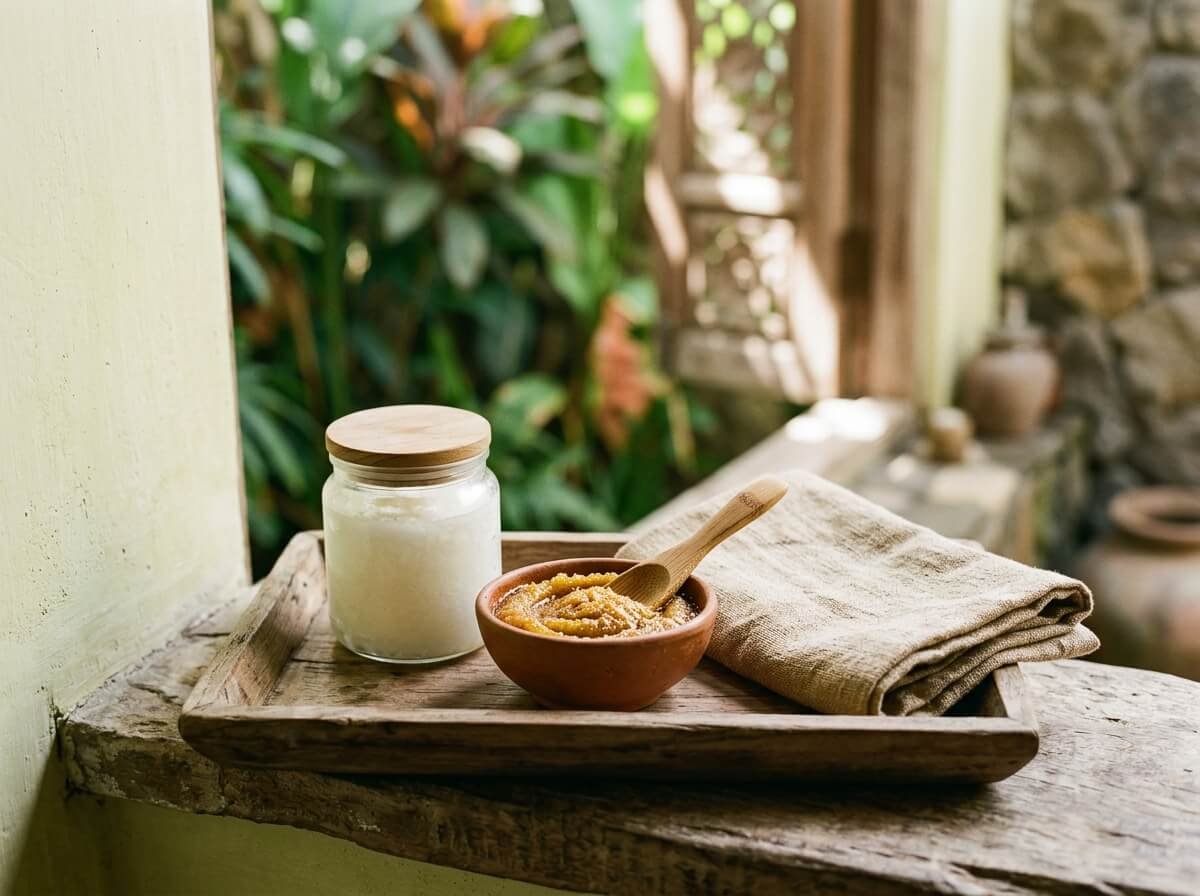
You do not need a spa to practice a lulur. You need an unhurried hour, a warm room, and a willingness to slow down. Here is a simple, honest version of the ritual you can follow at home.
- Warm the skin. Begin with a warm shower or a few minutes in a warm bath. Warm skin is more supple and responds better to exfoliation.
- Apply the paste. Work your scrub over the body in slow, circular motions, moving toward the heart. Spend time on rougher areas like elbows, knees, and heels.
- Let it settle. Rest for five to 10 minutes and let the paste dry a little. This is the pause the ritual is built around, so breathe and let the aroma do its quiet work.
- Rub and rinse. Gently rub the paste away with your palms, then rinse in warm water. The friction as it lifts is part of the exfoliation.
- Nourish. While the skin is still slightly damp, seal in moisture. This last step is what makes the glow last.
That final step matters more than any other. A scrub without a nourishing finish leaves the skin exposed and can feel tight. For this we reach for Virgin Coconut Oil, pressed from Bali coconuts and light enough to sink in without heaviness, or a richer Bliss Body Butter when the skin needs deeper comfort. The same closing principle guides the way we choose a Balinese massage oil: exfoliate, then feed the skin.
Let the senses lead, too. Warm the room, dim the lights, and let the aroma of turmeric and sandalwood settle you before you begin. The scent is part of the medicine here, a cue that tells the body it is time to slow down. Many people find the ritual as calming as it is exfoliating, which is exactly how the brides who first received it were meant to feel.
Practice this once a week and no more. Over-exfoliation is a common mistake, and the skin needs time to rebuild its barrier between rituals. Progress, not perfection, is the point.
Choosing or building your own lulur scrub
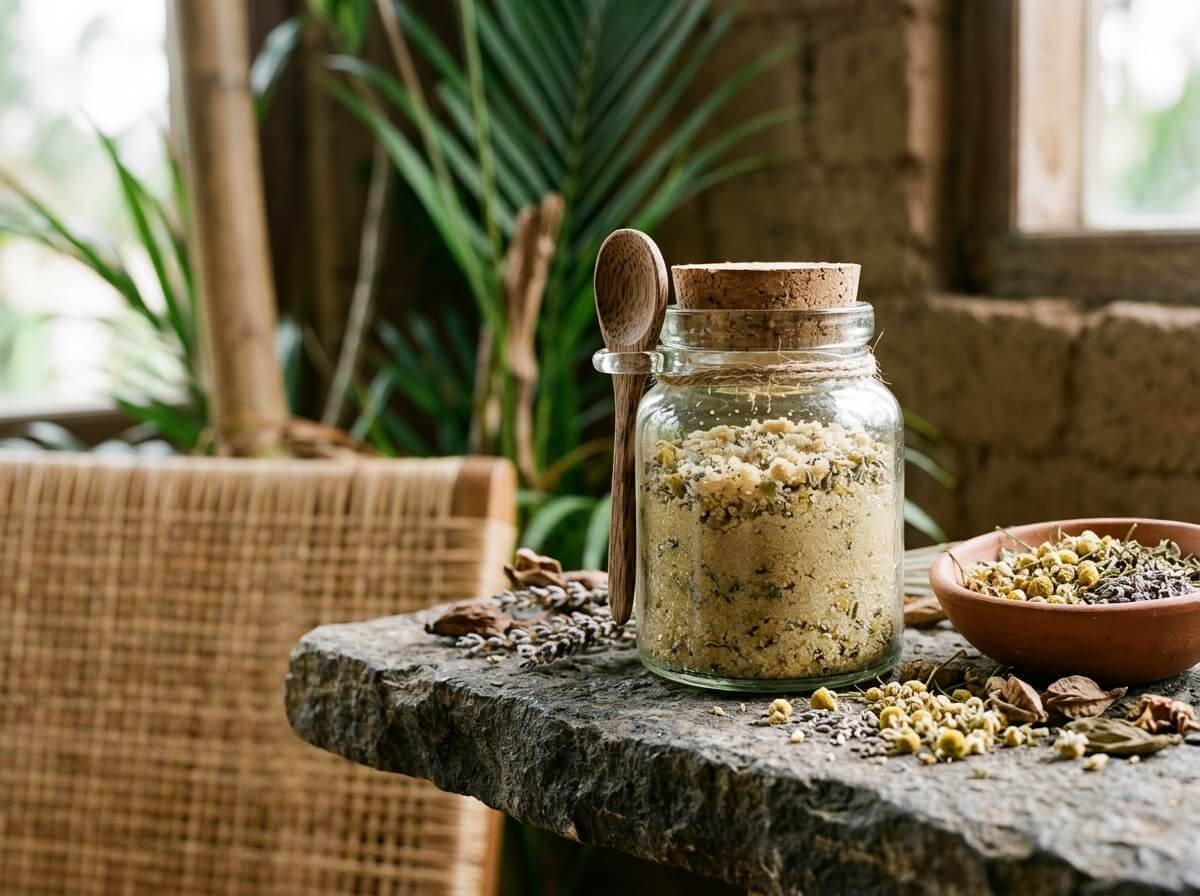
Whether you buy a ready-made scrub or blend your own, the same principles apply. A good lulur scrub is finely milled, honestly formulated, and built around real botanicals rather than marketing claims.
When you read a label, look for recognisable ingredients near the top: ground rice, botanical powders, a natural oil. Be wary of anything that promises to lighten, whiten, or brighten your natural tone, because that language signals a product sold on insecurity rather than care. Watch for particle size too. If a scrub feels sharp or scratchy, it is likely too coarse for regular use.
If you would rather make your own, a simple home lulur can be as honest as a spoonful of finely ground rice, a pinch of turmeric, and enough coconut oil or milk to bring it to a paste. Blend it fresh, use it once, and keep the ritual small. This is the same philosophy of transparency and refill that runs through everything we craft, from our scrubs to our coconut body lotion. Small batch, honest ingredients, nothing to hide.
Frequently asked questions about lulur scrub
How often should I use a lulur scrub?
Once a week is enough for most people. Exfoliating more often can wear down the skin barrier and leave the skin sensitive, so give it time to recover between rituals.
Does a lulur scrub lighten the skin?
No, and an honest one should not claim to. A lulur reveals healthier skin through exfoliation, circulation, and moisture. The glow is clarity and softness, not a change in your natural tone.
Can I use a lulur scrub on my face?
Traditional lulur is a body ritual, and facial skin is thinner and more delicate. For the face, choose a gentler, finer scrub made for it, and always follow with a nourishing oil or a light botanical layer.
What is the difference between a lulur and a regular body scrub?
A lulur is a ritual as much as a product. It pairs finely ground botanicals with a nourishing carrier, and it is meant to be practised slowly, with massage, rest, and a moisturising finish. A generic body scrub is often just abrasion. The tradition is in the whole practice, not only the paste.
What should I put on my skin after a lulur scrub?
Reach for a nourishing oil or butter while the skin is still slightly damp. Cold-pressed coconut oil is the traditional choice and sinks in cleanly, while a body butter suits drier skin or cooler weather. The goal is to replace the surface moisture the exfoliation cleared away, so the softness lasts.
Final thoughts on the lulur ritual
The lulur scrub has survived for centuries because it works, and because it means something. It is exfoliation and moisture, yes, but it is also a moment of reconnection, a way of tending to the body with patience and respect. When we bring it home, the least we can do is keep it honest: no whitening claims, no harsh shortcuts, just ground botanicals, warm hands, and a nourishing finish.
What you give, you get back. Give your skin a slow, careful ritual, and it gives you softness, comfort, and a glow that is entirely your own. That is the wisdom Bali has carried since 1989, and it is the same care we fold into everything we make.