Fall essential oil blends: a Balinese ritual for the seasonal shift
In Bali, there is no autumn. Around October, the long dry season loosens its grip, the first heavy rains arrive in the afternoons, and the air turns thick, green, and earthy. Across much of the world, the same months bring something quieter: cooler mornings, earlier dusk, and a pull toward home. Wherever we live, the turn of the season changes how we want to feel. Fall essential oil blends are one of the simplest ways to meet that shift with care, if we choose them with a little more intention than a pumpkin spice candle allows.
This guide is our answer to the usual list of cozy recipes. We look at why the season changes our mood, why so many “fall” scents are not what they claim, and how a Balinese botanical palette (kaffir lime, vetiver, cananga, ginger, and warm resins) can ground the transition. You will find six diffuser recipes with drop counts, a guide to matching each blend to your diffuser or candle, a simple day-to-night ritual, and honest safety notes for homes with children and pets.
Why autumn changes how we feel, and where fall essential oil blends fit
The shift into autumn is, at its root, a shift in light. Days shorten, and the hours we spend under bright daylight shrink. Our internal clock takes much of its timing from light, so a darker morning and an earlier evening can leave us feeling slower, foggier, or a little flat. For some people, this seasonal dip becomes a recognized condition called seasonal affective disorder, which deserves real support from a doctor and, often, daylight or light therapy. For most of us, it shows up more gently: a craving for warmth, slower mornings, and a restlessness in the late afternoon.
Scent cannot replace light, sleep, or professional care, and we will never pretend it can. What scent can do is act as a cue. Smell is the one sense with a direct line to the brain’s emotional centers, and a familiar aroma can signal “this is the morning,” “this is time to focus,” or “this is the end of the day” more quickly than almost anything else. Small studies have found that diffusing sweet orange or lavender in a waiting room lowered reported anxiety, and that citrus aromas can lift self-reported mood. The evidence is modest, but the ritual is real, and it is the ritual that does most of the work.
That is why we think of fall essential oil blends as a transition tool rather than a decoration. A bright, green citrus in the morning helps us wake into a darker day. A woody, resinous blend in the afternoon steadies a wandering mind. A soft floral with an earthy base in the evening tells the body it is safe to slow down. If you are new to working with scent this way, our guide to essential oils for stress and anxiety covers the calming oils in more depth.
In Bali, the change from dry season to wet season carries its own rhythm. Windows stay open, rain cools the stone floors, and the scent of wet earth, lemongrass, and kaffir lime leaf drifts through every kitchen. It is a different kind of autumn, but the instinct is the same: to make home feel warm, clear, and rooted as the year turns.
The problem with most “fall” scents
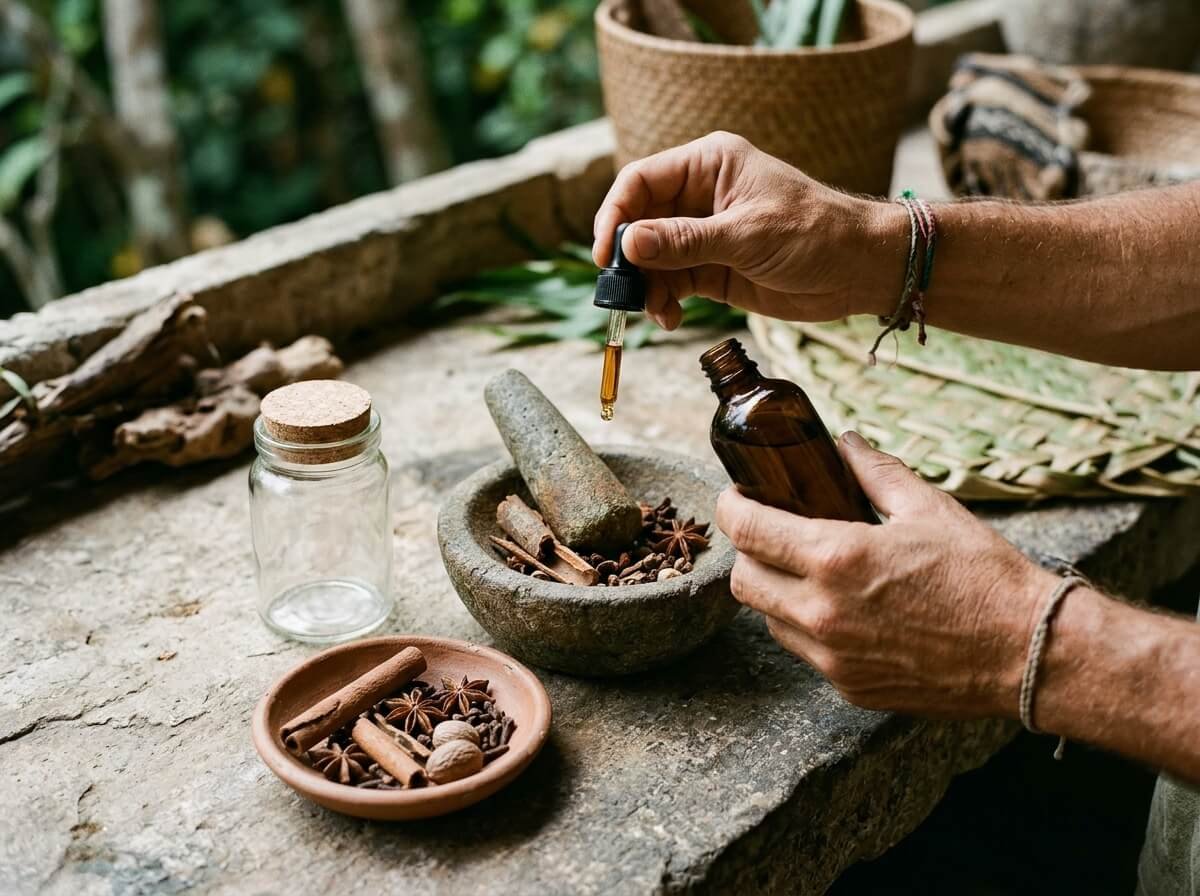
Walk into any store in October and the shelves fill with pumpkin, apple pie, and “sweater weather.” Most of these scents have very little to do with plants. Here is a truth worth knowing: there is no such thing as pumpkin essential oil. Pumpkin flesh does not yield an aromatic oil through distillation. Every “pumpkin spice” scent is either a blend of real spice oils (cinnamon, clove, nutmeg, and ginger) or, far more often, a synthetic fragrance built in a lab to smell like a dessert.
Synthetic fragrance is not automatically dangerous, but it is rarely transparent. A single word on a label, “fragrance” or “parfum,” can stand in for dozens of undisclosed ingredients. Many seasonal candles also burn paraffin, a petroleum by-product, and many plug-ins run continuously, which means a constant low dose of scent with no break for the nose or the lungs. When a product is marketed as “natural autumn” but lists only “fragrance,” that is greenwashing, and it is worth naming.
We wrote a full comparison of essential oil vs fragrance oil if you want the chemistry. The short version for a fall shelf:
- Look for botanical names on the label (Cananga odorata, Vetiveria zizanioides, Citrus hystrix), not just “fall harvest scent.”
- Choose soy, coconut, or other plant waxes over paraffin for candles, and check that the scent comes from essential oils. Our piece on natural candles explains what to look for.
- Be wary of “pumpkin,” “apple pie,” or “marshmallow” as an ingredient. None of these exist as a true essential oil.
- Prefer intermittent diffusion over plug-ins that never switch off.
Choosing real botanicals is not about purity for its own sake. It is about knowing what we breathe in our homes, especially in the months when windows close and we spend more time indoors.
A Balinese fall palette: grounding oils beyond pumpkin spice
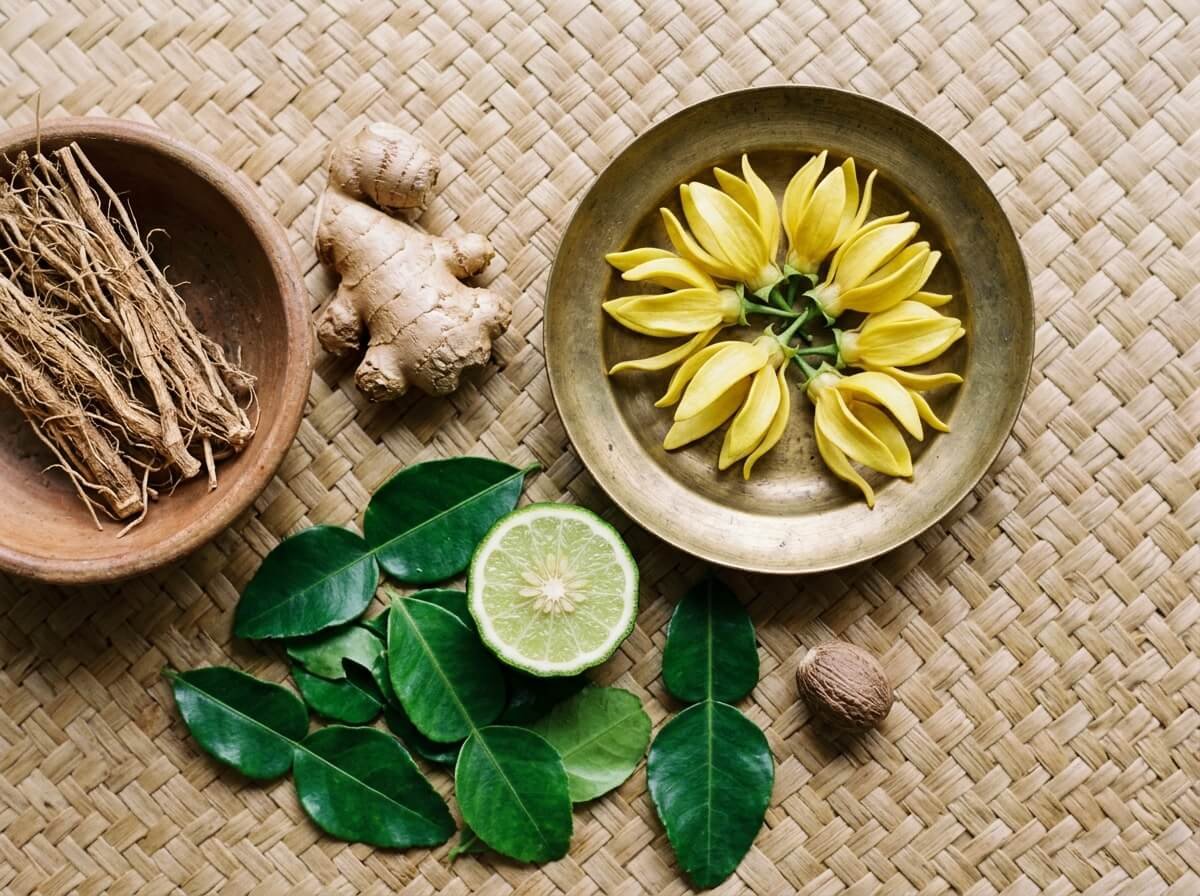
The classic autumn palette leans on warm baking spices. Those have their place, and we use them too. But the Indonesian archipelago offers a deeper, more layered set of aromatics that suits the season beautifully: bright green citrus for clarity, earthy roots for grounding, and rich florals for comfort. These are the plants that have scented Balinese homes and kitchens for generations.
Kaffir lime leaf (Citrus hystrix)
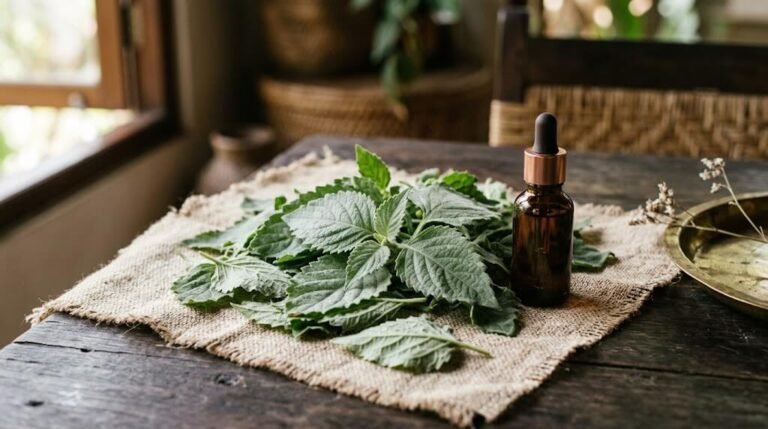
Known locally as jeruk purut, kaffir lime leaf is sharper and greener than sweet citrus, with a herbal edge that cuts through a damp, heavy day. Our Kaffir Lime Essential Oil is distilled from the leaf, and it is our first choice for a morning blend. Read more in our kaffir lime essential oil benefits guide.
Vetiver (Vetiveria zizanioides)
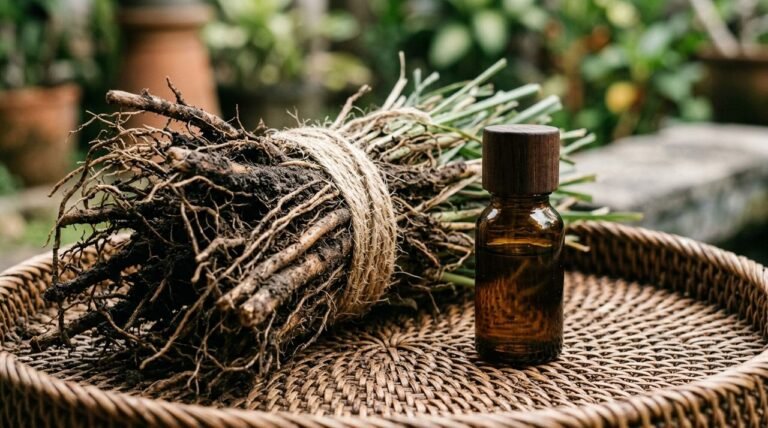
Vetiver is a grass whose deep roots hold soil in place on terraced hillsides. Its oil is thick, smoky, and earthy, like wet ground after rain. A single drop anchors a whole blend. Perfumers prize it as a base note, and it is the most grounding oil we know for the restless hours of an autumn afternoon. Our vetiver essential oil benefits article covers its story in full, and our Vetivert Essential Oil is steam distilled.
Cananga (Cananga odorata)
Cananga, or kenanga in Bahasa Indonesia, is the close cousin of ylang ylang. Its yellow flowers are part of daily life in Bali, and its oil is softer, greener, and a little woodier than ylang ylang. In a fall blend, cananga brings warmth without sweetness. We explore its heritage with care in our cananga essential oil benefits guide, and you can find our Cananga Essential Oil in the aromatherapy line.
Ginger, clove, and nutmeg, done right
The spice islands of Maluku gave the world clove and nutmeg, so these are not borrowed autumn clichés for us. They are home. Used well, they add warmth in tiny amounts. Used heavily, they overwhelm a room and irritate skin. Our ginger essential oil benefits and clove essential oil benefits guides explain how to keep them in balance. In a diffuser, one drop of clove is plenty.
Patchouli, frankincense, and sweet orange
Patchouli grows across Sumatra and Sulawesi and gives blends a damp, forest-floor depth. Frankincense adds a clean, resinous calm. Sweet orange softens everything and makes a blend feel welcoming. If you are exploring patchouli, start with our patchouli essential oil benefits guide and our note on sweet orange essential oil benefits.
Together these form a palette that feels like the turn of the season in the tropics: green, earthy, warm, and alive.
Six fall essential oil blends for the seasonal transition
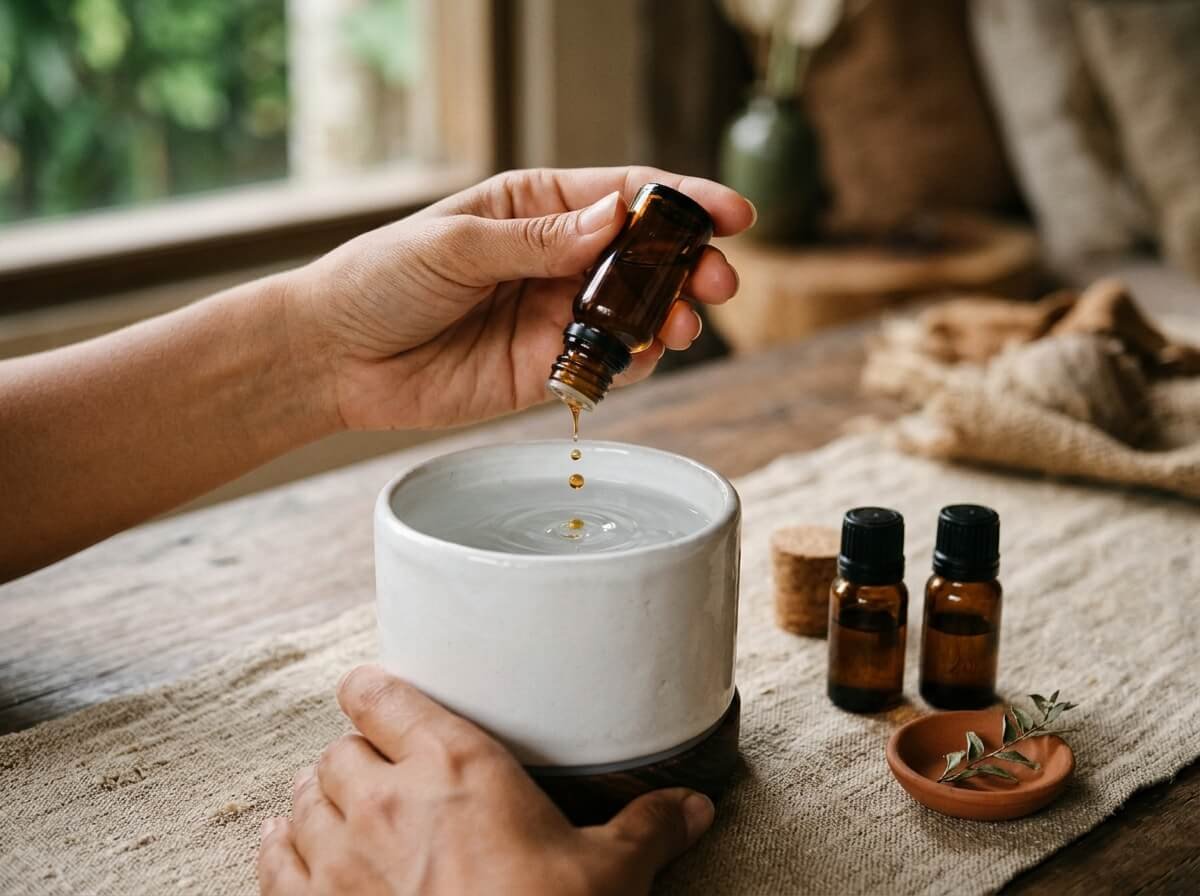
These recipes are written for an ultrasonic diffuser with roughly 100 to 200 ml of water. Start with the lower drop count and add one drop at a time if you want more. For a nebulizing diffuser, which uses undiluted oil, treat the numbers as ratios and mix a small batch in a clean glass bottle. For more everyday combinations, our collection of essential oil blends for diffuser and our aromatherapy diffuser blend recipes are good companions to this list.
1. First light (morning clarity)
- 2 drops kaffir lime leaf
- 2 drops sweet orange
- 1 drop ginger
Bright, green, and gently warming. This is the blend for a dark morning when getting started feels harder than it should. Diffuse it for 30 minutes while you make breakfast or open the curtains.
2. Rooted afternoon (focus and grounding)
- 2 drops frankincense
- 1 drop vetiver
- 2 drops sweet orange
The mid-afternoon slump hits harder when the light starts to fade at four o’clock. Frankincense and vetiver settle a scattered mind, while orange keeps the blend from feeling heavy. A good companion for desk work or reading.

3. First rain (clearing a damp house)
- 2 drops lemongrass
- 2 drops kaffir lime leaf
- 1 drop frankincense
Inspired by the start of Bali’s wet season, when the house needs freshening after days of humid air. Lemongrass and kaffir lime clear stale, musty notes, and frankincense rounds the edges. Our lemongrass essential oil benefits guide covers this oil’s household uses.
4. Spice island (cozy, not cloying)
- 3 drops sweet orange
- 1 drop ginger
- 1 drop clove
Our honest answer to pumpkin spice. Orange carries the blend, ginger brings warmth, and a single drop of clove adds depth. Resist the urge to add more clove; it quickly turns medicinal. If you prefer candlelight, our Island Spice Candle captures the same mood with soy wax, cinnamon, clove, and lemon oils.
5. Long evening (wind-down)
- 3 drops Bali Night blend
- 1 drop frankincense
Bali Night Essential Oil Blend layers cananga, ylang ylang, vetiver, rose geranium, and three citrus oils into a warm, softly floral evening scent. A drop of frankincense deepens it into something quieter. Diffuse it after dinner, as the house settles.
6. Deep night (before sleep)
- 1 drop cananga
- 1 drop vetiver
- 3 drops sweet orange
Cananga and vetiver are both powerful, so this blend uses them sparingly. Orange keeps it light. Run it for 20 to 30 minutes before bed, then switch the diffuser off before you sleep. For more on scent and rest, see our guide to essential oils for sleep.
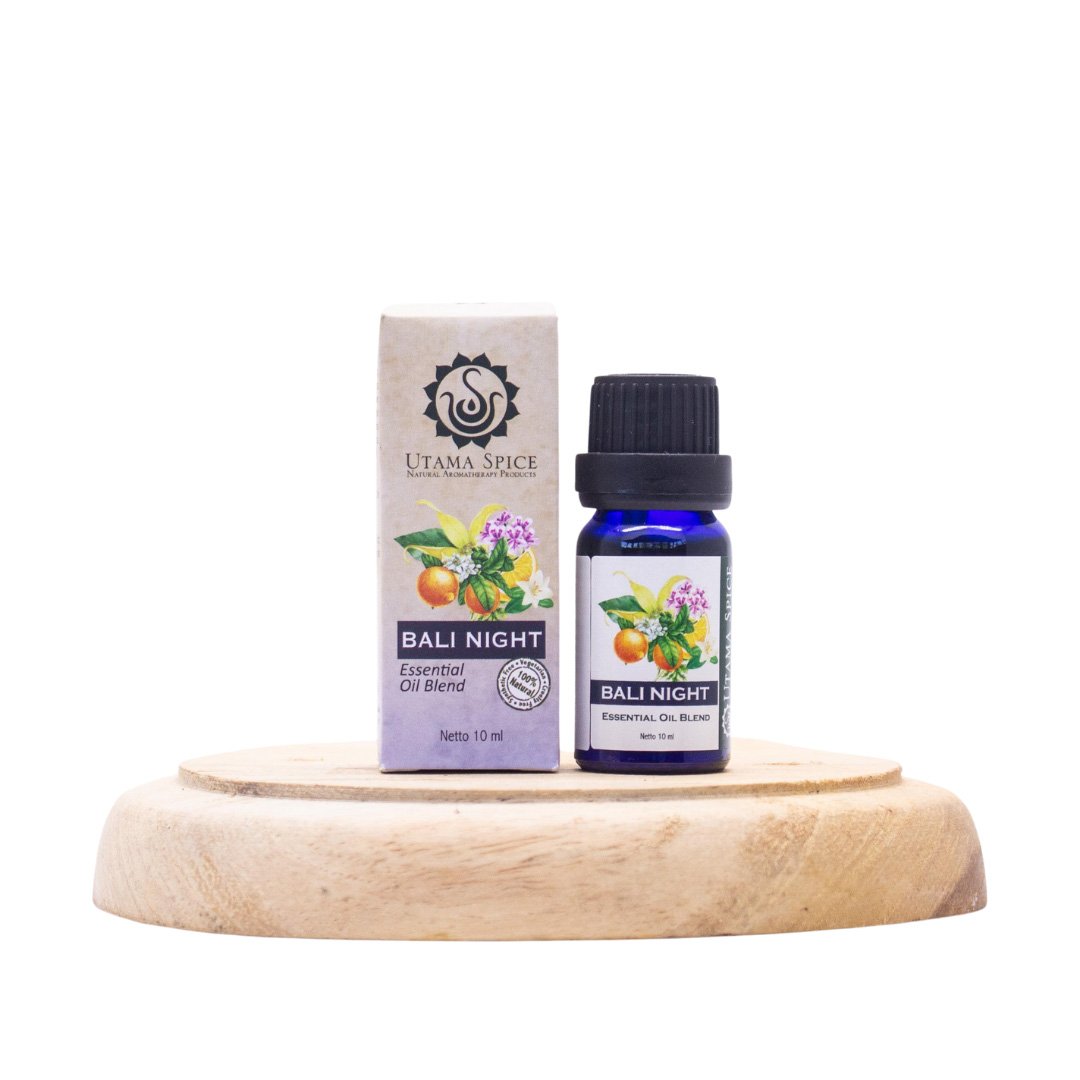
An evening blend for the turning season
Bali Night Essential Oil Blend layers cananga, ylang ylang, vetiver, rose geranium, and bright citrus into one warm, grounded evening scent. Hand-blended in Bali, ready for your diffuser.
Matching your blend to your method
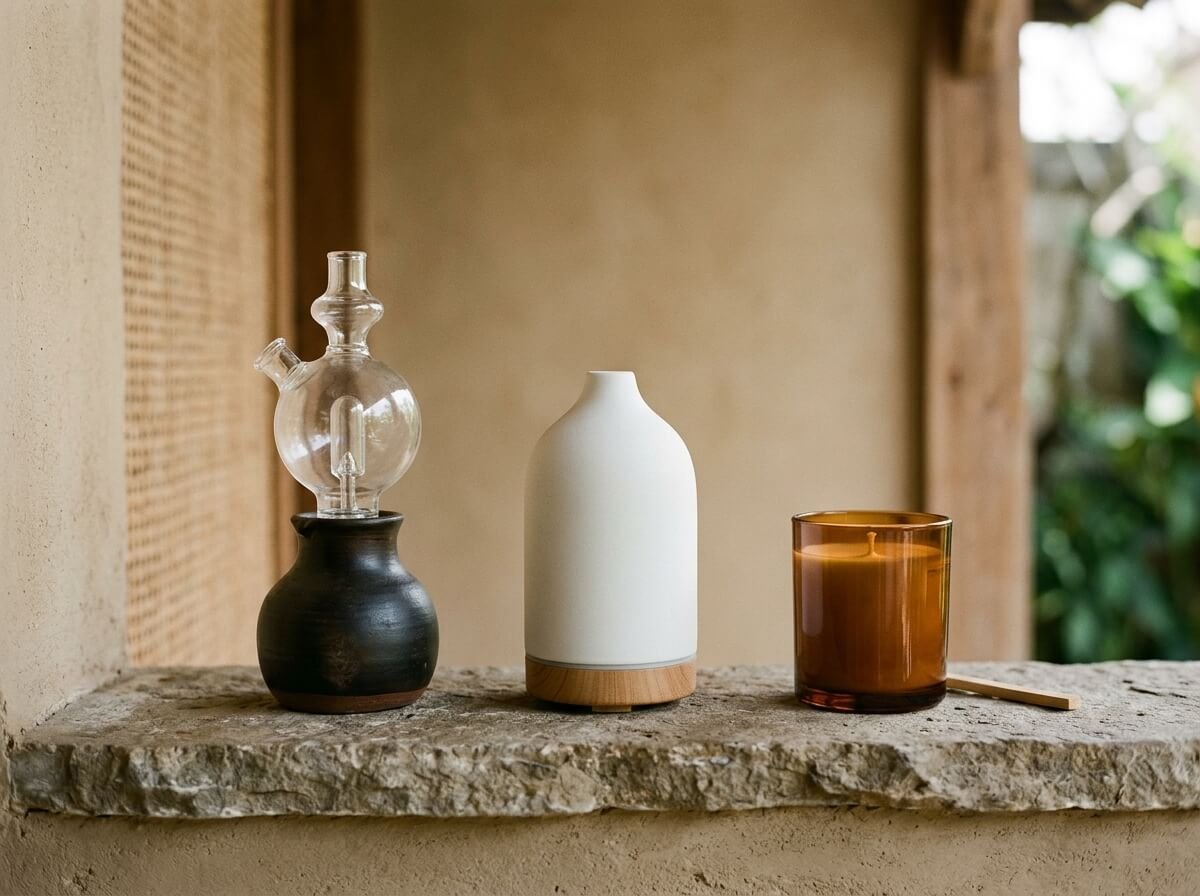
The same blend can smell completely different depending on how we diffuse it. Heavier base notes like vetiver and patchouli behave differently from bright citrus top notes, and each method favors different oils.
Ultrasonic diffusers
An ultrasonic diffuser vibrates water into a fine, cool mist that carries the oil with it. It is gentle, adds a little humidity to dry autumn air, and suits citrus-led blends like First light and First rain. Our Sonoma Yi ultrasonic diffuser has an intermittent setting, which we recommend for every blend in this guide. If you want to understand the humidity side, our piece on the essential oil diffuser humidifier question explains it.
Nebulizing diffusers
A nebulizer uses air pressure to atomize undiluted oil, with no water and no heat. The scent is stronger and truer to the oil, so it suits resinous and woody blends like Rooted afternoon and Long evening. Very thick oils, such as vetiver, can slow a nebulizer down, so keep them to a small share of any mix. Our Danau Dua nebulizer runs in short cycles with an automatic shut-off. For a deeper comparison, see ceramic diffuser vs nebulizing diffuser.
Candles
A natural candle releases scent slowly as the wax pool forms, and the flame itself is part of the ritual. Candles suit warm, spiced blends and long evenings. Burn them for 30 minutes to two hours at a time, trim the wick, and never leave a flame unattended. Our reed diffuser vs candle guide weighs the two side by side.
Roller bottles and room mists
For scent on the go, a diluted roller blend applied to the wrists or the back of the neck carries the ritual into the day. Use a low dilution (around 1%) and avoid cold-pressed citrus on skin that will see the sun. Our Santi Essential Oil Roller comes pre-diluted in jojoba if you would rather not mix your own.
Building a day-to-night autumn ritual
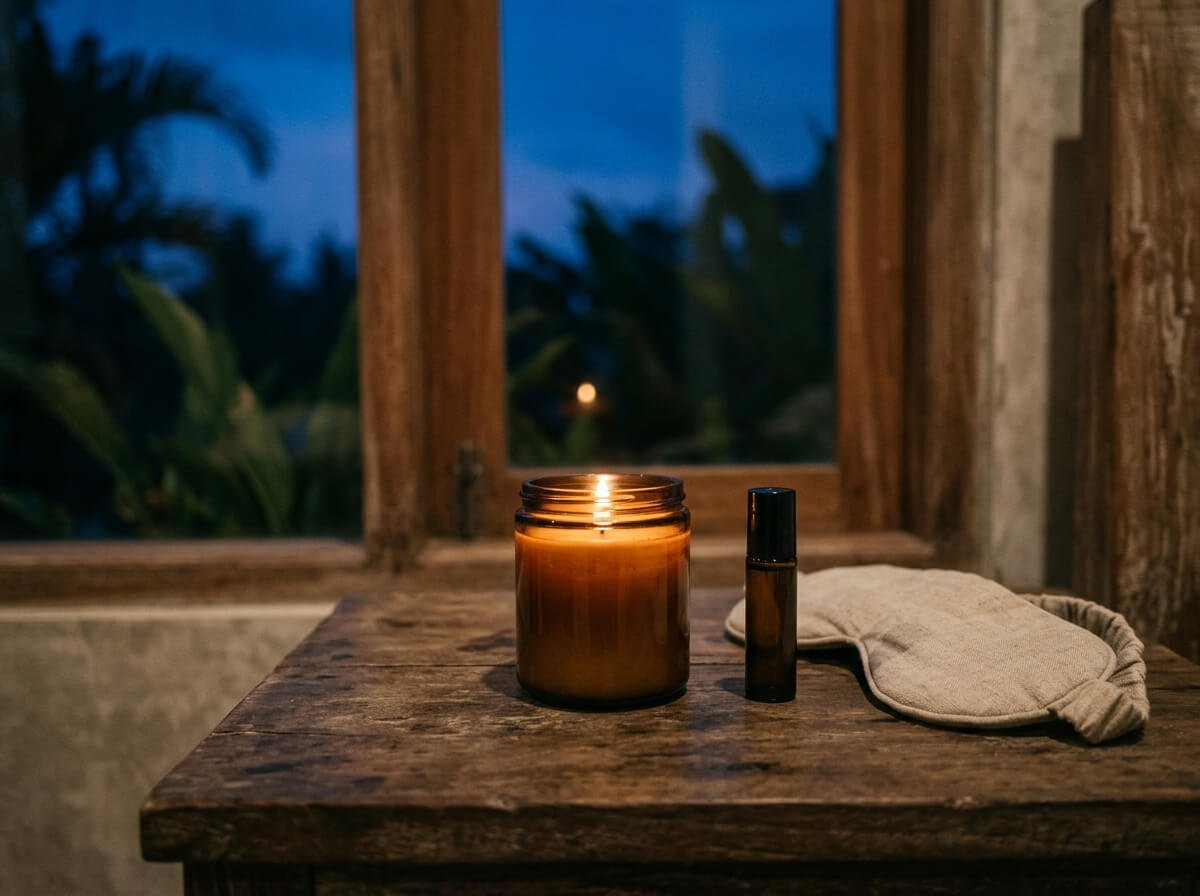
A ritual does not need to be elaborate. It needs to be repeated. When we pair the same scent with the same moment each day, the scent starts to carry the meaning on its own. Here is a simple rhythm for the darker months.
- Morning, as you open the curtains: diffuse First light for 30 minutes. Step outside or sit by a window for a few minutes of daylight while it runs. Light and scent work better together than either does alone.
- Midday: no diffusion. Give your nose, and the room, a rest. Open a window if the weather allows.
- Mid-afternoon, when focus fades: diffuse Rooted afternoon for 30 to 45 minutes while you work or read.
- Early evening, as you cook: light a natural candle or diffuse Spice island. This is the hour that most needs warmth.
- After dinner: switch to Long evening. Dim the lights, put screens aside if you can, and let the house settle.
- Before bed: 20 minutes of Deep night, then turn the diffuser off before sleep.
You do not need all six blends. Many of us keep just two: one bright oil for the morning and one grounding blend for the evening. The point is the rhythm, not the collection. If you are building a small autumn kit, a bright citrus, a woody base, and one evening blend will cover most days.
In our Ubud workshop, the end of the day has always had its own scent. The smell of warm oils, wet stone, and the evening air coming through open shutters signals that the work is done. That is the feeling we want a fall ritual to create at home: not a performance of coziness, but a quiet, honest marker of time.
Fall essential oil blends safety and FAQ
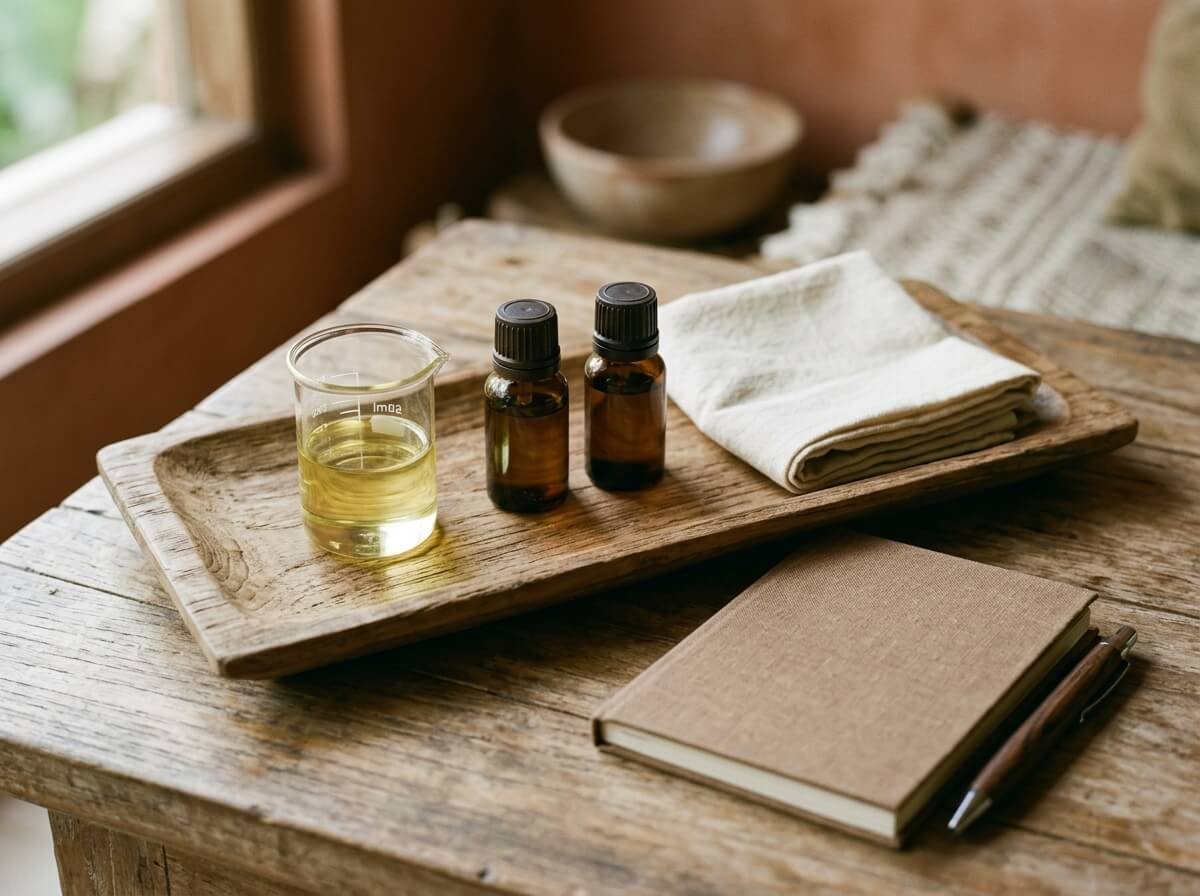
Autumn blends lean on some of the strongest oils in the aromatherapy cabinet. Clove, cinnamon, and ginger are warming because they are potent, and potency asks for respect. A few principles keep the ritual safe for everyone in the house.
- Diffuse intermittently. 30 to 60 minutes on, then at least as long off. Constant diffusion offers no extra benefit and increases the chance of headaches or irritation.
- Keep a door open. Everyone in the room, including pets, should be able to leave if the scent becomes too much.
- Never apply clove or cinnamon bark undiluted. Both are strong skin irritants. Cinnamon bark in particular is best kept to diffusion only.
- Mind citrus and sunlight. Some cold-pressed citrus oils, such as lemon, lime, and bergamot, can cause skin reactions in the sun. Diffusing them is fine. Kaffir lime leaf oil, distilled from the leaf, does not carry the same concern.
- Store oils well. Keep bottles capped, cool, and away from light. Citrus oils oxidize within one to two years, and oxidized oil is more likely to irritate skin.
How many drops of essential oil should I put in a diffuser?
For a standard ultrasonic diffuser holding 100 to 200 ml of water, three to six drops in total is plenty. Smaller rooms and stronger oils (clove, vetiver, cananga) call for fewer. If you can smell the blend clearly from across the room after 10 minutes, it is strong enough.
Are fall essential oil blends safe around pets?
Some oils need extra care. Cats are especially sensitive because their livers process certain compounds slowly, and dogs and birds can react too. Avoid diffusing clove, cinnamon, and strong citrus blends in small, closed rooms with animals, and always leave them a way out. Our full guide to essential oils safe for pets goes oil by oil.
Can I use these blends on my skin?
Yes, if you dilute them. For body use, a 1% to 2% dilution is a sensible range, which works out to roughly six to 12 drops of essential oil in 30 ml of carrier oil. Keep clove to a single drop in that amount and leave cinnamon bark out entirely. Our guide on how to dilute essential oils has a full chart.
Is there a natural pumpkin spice essential oil?
No true pumpkin essential oil exists. A natural “pumpkin spice” blend is made from spice oils such as cinnamon, clove, ginger, and nutmeg, often softened with sweet orange. Our Spice island recipe above is a gentle version.
Can I diffuse during pregnancy or around young children?
Be cautious. Many aromatherapists avoid clove, cinnamon, and other strong spice oils during pregnancy and around children under six, and keep sessions short with gentle oils like sweet orange. Speak with your doctor or midwife first, and when in doubt, choose a candle with a mild scent over a strong diffuser blend.
How long will a 10 ml bottle last?
A 10 ml bottle holds roughly 200 drops. At five drops a day, that is around six weeks of daily diffusion, which carries us comfortably through the heart of the season.
The turning of the year asks us to slow down and pay attention. Real botanicals, used with a light hand and a steady rhythm, help us do exactly that. Choose one or two oils that speak to you, give them a moment in your day, and let the season come in gently. What you give, you get back.