Ceramic diffuser vs nebulizing diffuser: how to pick passive calm or powered potency
Standing in front of a shelf of diffusers, most people ask the wrong question. They ask which one is best. The honest answer to a ceramic diffuser vs nebulizing diffuser comparison is not about which device wins. It is about which one fits the room you are actually scenting, tonight.
Sellers of cold-air atomizing tech will tell you nebulizing is the only serious method. Lists of “types of diffusers” will name a dozen options without ever putting a passive ceramic diffuser and a nebulizing diffuser side by side and telling you honestly which one to choose for your actual room. We sell both, so we have no reason to push you toward either. What follows is the plain mechanism behind each, a head-to-head on the things that actually matter day to day, guidance on which oils suit which device, and a simple way to match the method to the moment rather than the marketing.
The two ways to move scent through a room
Neither of the devices in this comparison uses water or heat. That surprises people who assume every diffuser works like the ultrasonic mist machines sold everywhere, the ones that hiss a visible cloud of water vapor into the air. There are two distinct, much older mechanisms at work in a ceramic-versus-nebulizing comparison, and understanding them is the whole key to choosing well.
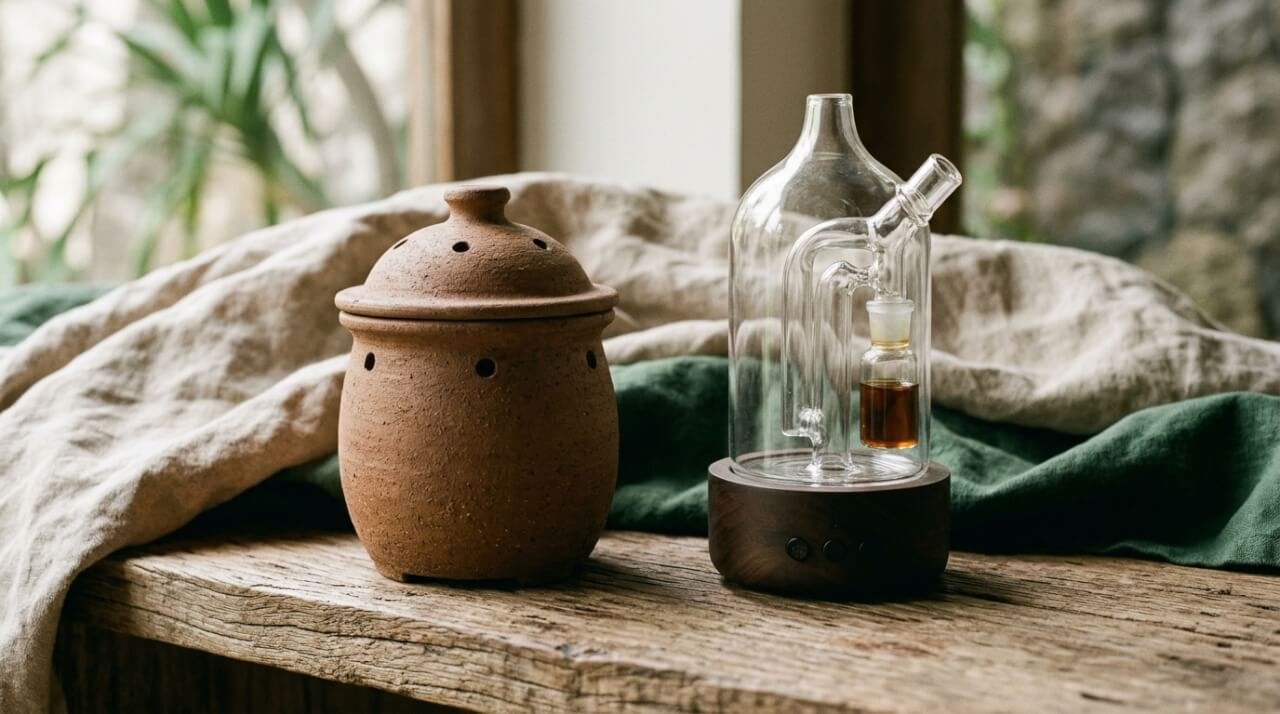
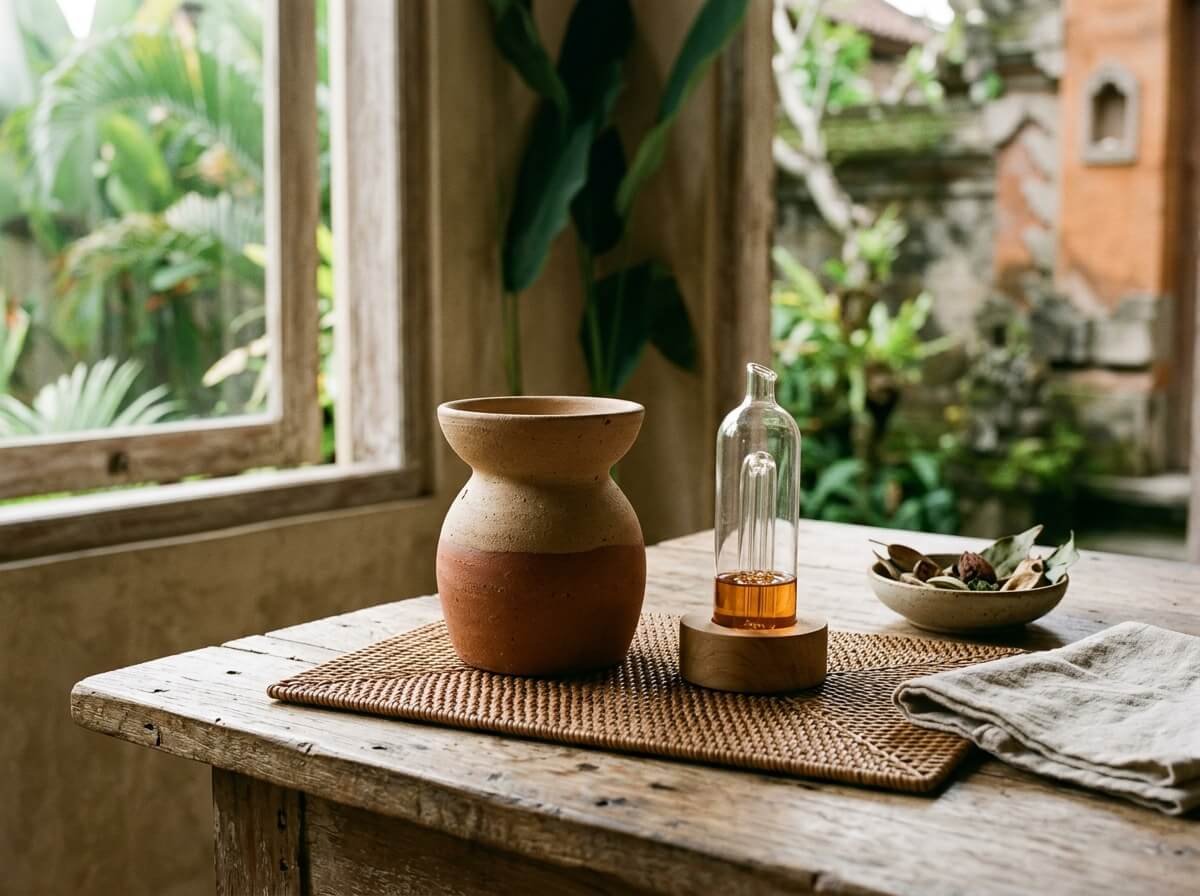
A passive ceramic diffuser relies on capillary evaporation, the same physics that dries a damp stone left in the sun, from the outside in, slowly and without any input of energy. Unglazed terracotta or ceramic is porous at a microscopic level. Oil applied to the surface, or absorbed into a refill pad set into the ceramic body, wicks outward through that porous structure and evaporates into the surrounding air at room temperature. No power cord, no fan, no water reservoir, no moving parts to wear out. The material itself does the work.
A nebulizing diffuser, sometimes called an atomizing or cold-air diffuser, uses a small electric pump to push air across a thin glass tube. That airflow draws neat essential oil up through the tube by way of a venturi effect, the same principle that lets a perfume atomizer turn liquid into a fine spray, and breaks it into a dry, ultra-fine mist. There is no water added to dilute the oil, and critically, no heat involved that could degrade the volatile top notes that give an oil its character. The result is a concentrated, room-filling throw of pure, unaltered oil.
Both mechanisms are legitimate, time-tested approaches, and both are represented across the Utama Spice aromatherapy line. The difference between them is not quality, it is intensity, footprint, and how much oil each one asks of you per session. Keeping that distinction in mind will save you from buying the wrong tool for your space.
Ceramic diffuser: the quiet, passive option
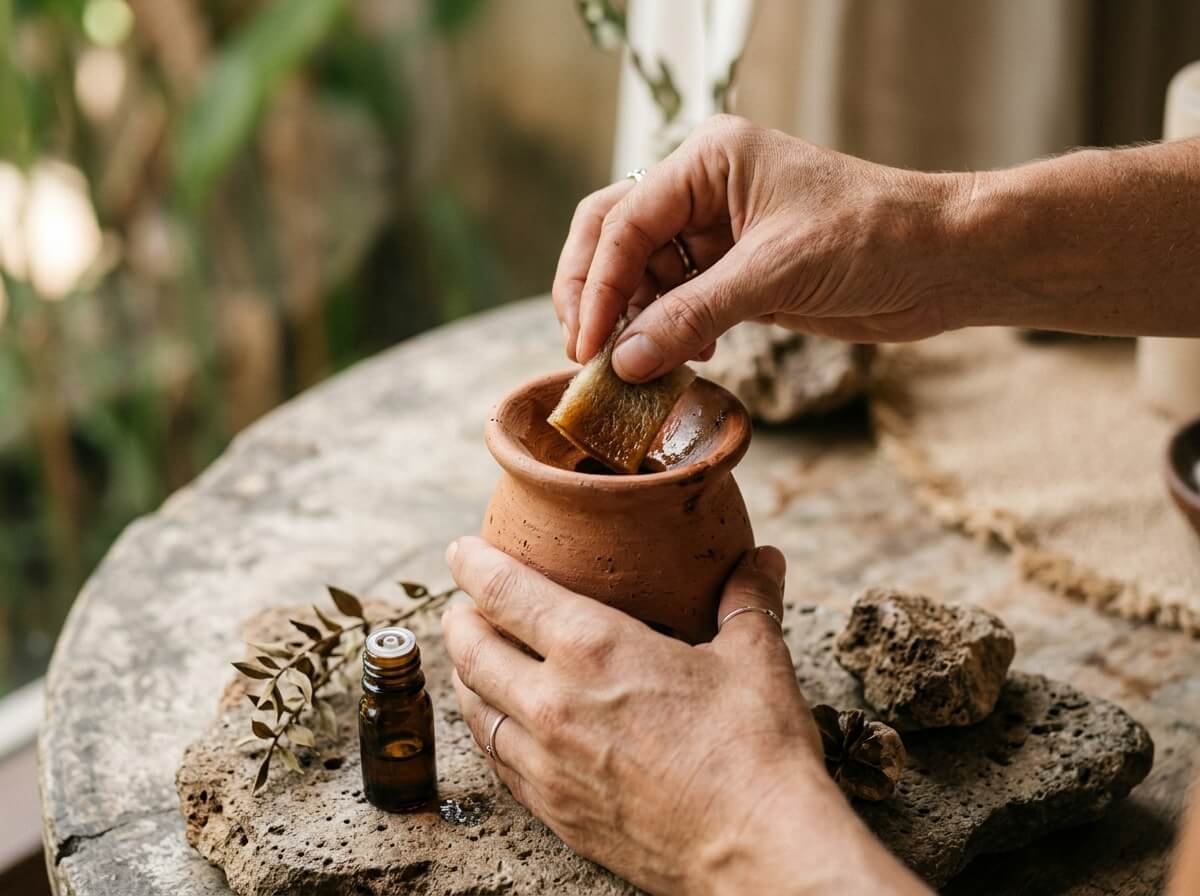
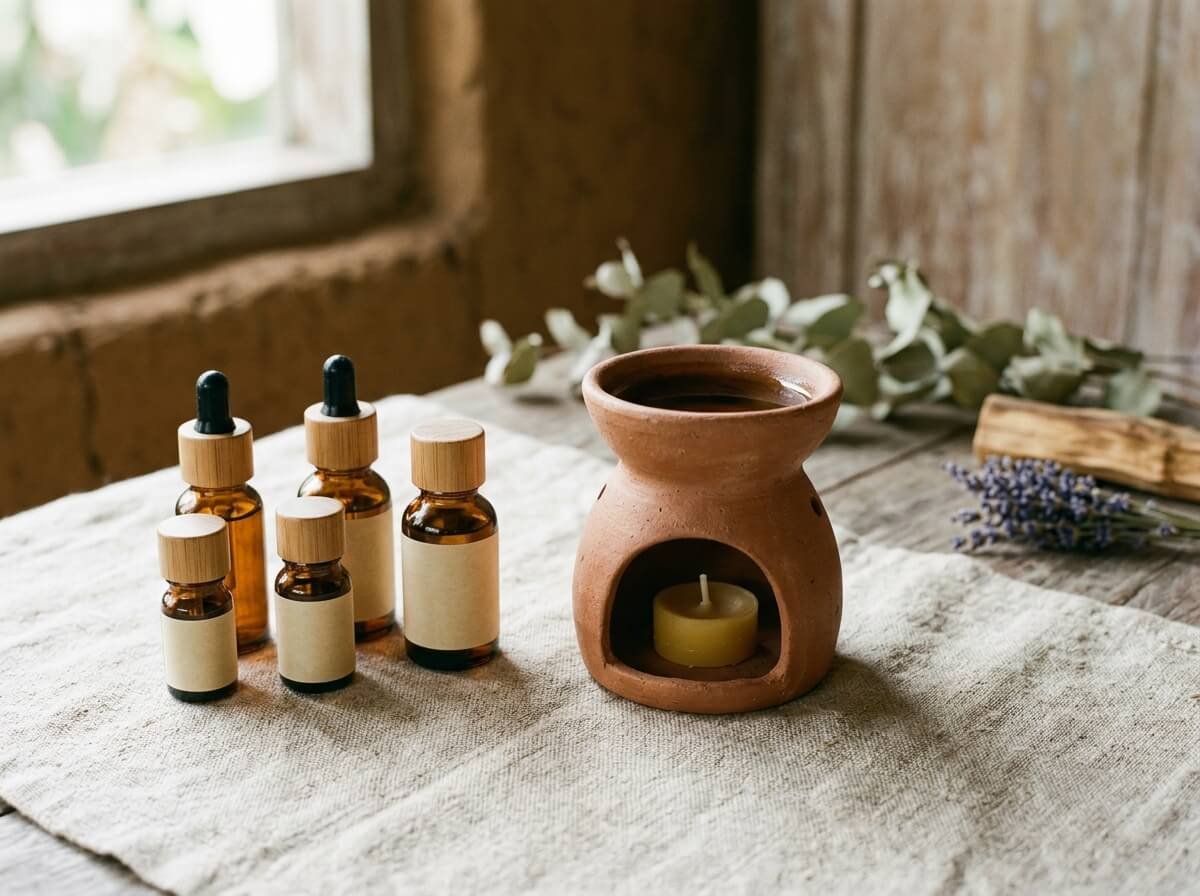
Our Ceramic Diffuser with Temple Spice Oil is built on the oldest principle in aromatherapy: let the material carry the scent, and let time do the rest. A few drops go onto the ceramic itself, or onto a refill pad such as Citrus Fresh, Clarity, or Temple Spice, and the room fills gradually over hours rather than minutes. There is no burst of fragrance the moment you switch it on, because there is nothing to switch on.
There is no motor, so there is no sound at all. That single fact decides the device for a lot of households: a nursery where a sleeping baby cannot be disturbed, a meditation corner where silence is the whole point, a bedside table shared with a light sleeper. A ceramic diffuser also uses far less oil per session than a nebulizing unit, since gentle evaporation draws on the oil slowly rather than pulling it through under pump pressure. For a desk, a small bathroom, or a reading nook, that restraint is a feature, not a limitation, and it is part of why refill culture pairs so naturally with this format: a little oil goes a long way.
The trade-off is reach. A passive ceramic diffuser scents the immediate space around it well, filling a small room or a corner of a larger one with a soft, ambient presence, but it will not carry across an open-plan living room the way a powered device can. Ask it to do that job and it will simply underperform, no matter how much oil you add to compensate. It is a diffuser built for a nook, a desk, or a bedside table, not for a whole floor of a house. Knowing that upfront is what keeps a ceramic diffuser from feeling like a disappointment rather than exactly what it was designed to be.
Nebulizing diffuser: waterless, concentrated, powered
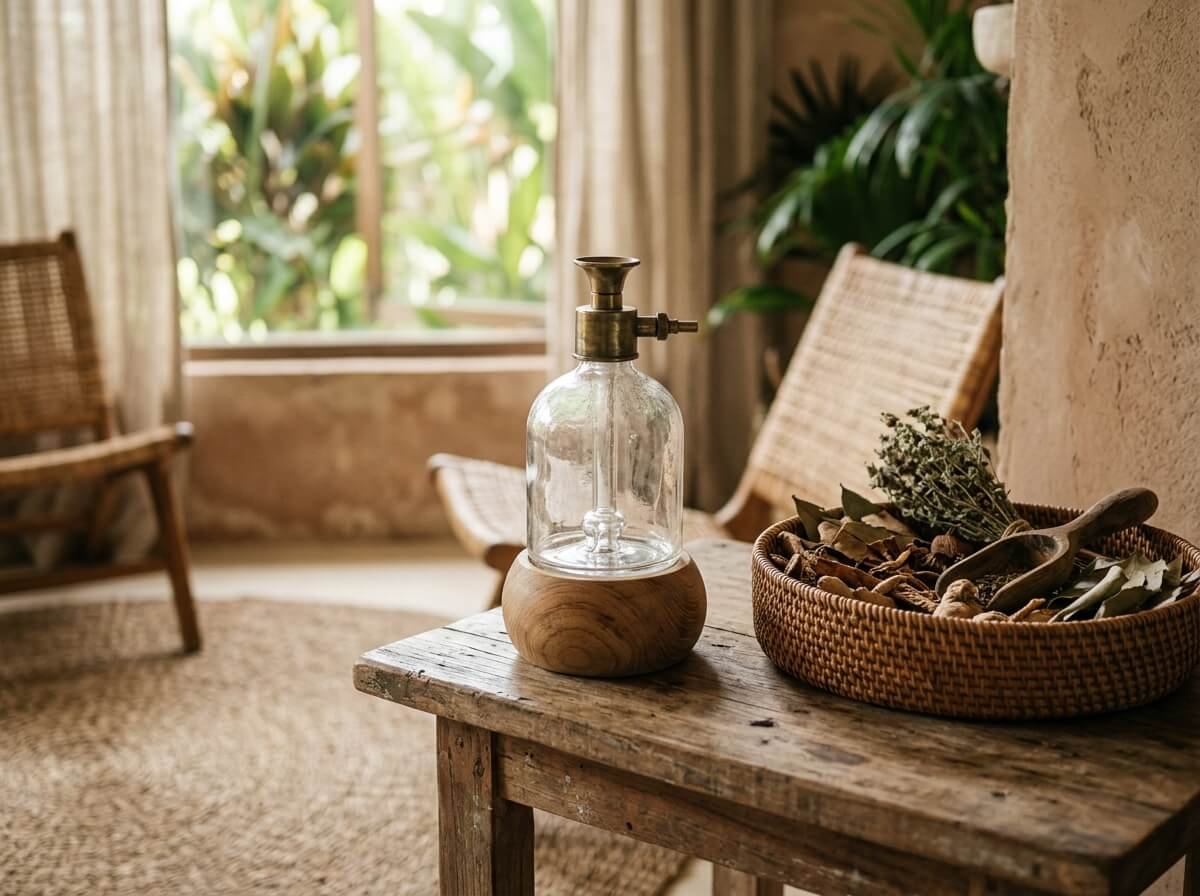
The Danau Satu Atomizing Essential Oil Diffuser and its larger sibling, the Danau Dua, work on the opposite principle from a ceramic diffuser: force, not patience. A small pump draws neat oil through fine glass and disperses it as a dry, ultra-fine mist with no water added at any point in the process. Because the oil reaching the air is undiluted, the scent that reaches your nose is markedly more concentrated, and it travels further through a room than passive evaporation ever will. This is why nebulizing units are the standard choice for larger living rooms, open floor plans, or all-day scenting of an entire home rather than a single nook.
That potency comes with real trade-offs, and being upfront about them is part of an honest comparison. Nebulizing diffusers use oil noticeably faster than ceramic ones, since every session draws from a reservoir of neat oil under pump pressure rather than a slow, unforced film of evaporation. They also carry a soft, steady hum from the internal pump, which most people find unobtrusive during the day but which matters if total silence is the priority, particularly overnight. Glass components need occasional cleaning too, since neat oil residue can build up inside the tube over repeated use, gradually reducing output if it is never addressed. None of this makes a nebulizing diffuser high-maintenance in any serious sense, it simply means the upkeep looks different from a ceramic diffuser’s, and buyers should know that before they choose based on power alone.
If you already run a reed diffuser for ambient, low-intensity scenting and find yourself wanting more, a nebulizing unit is the natural next step for when you want a room to smell noticeably, intentionally fragrant, rather than just faintly pleasant in passing.
Head-to-head: intensity, room size, oil use, noise, and safety
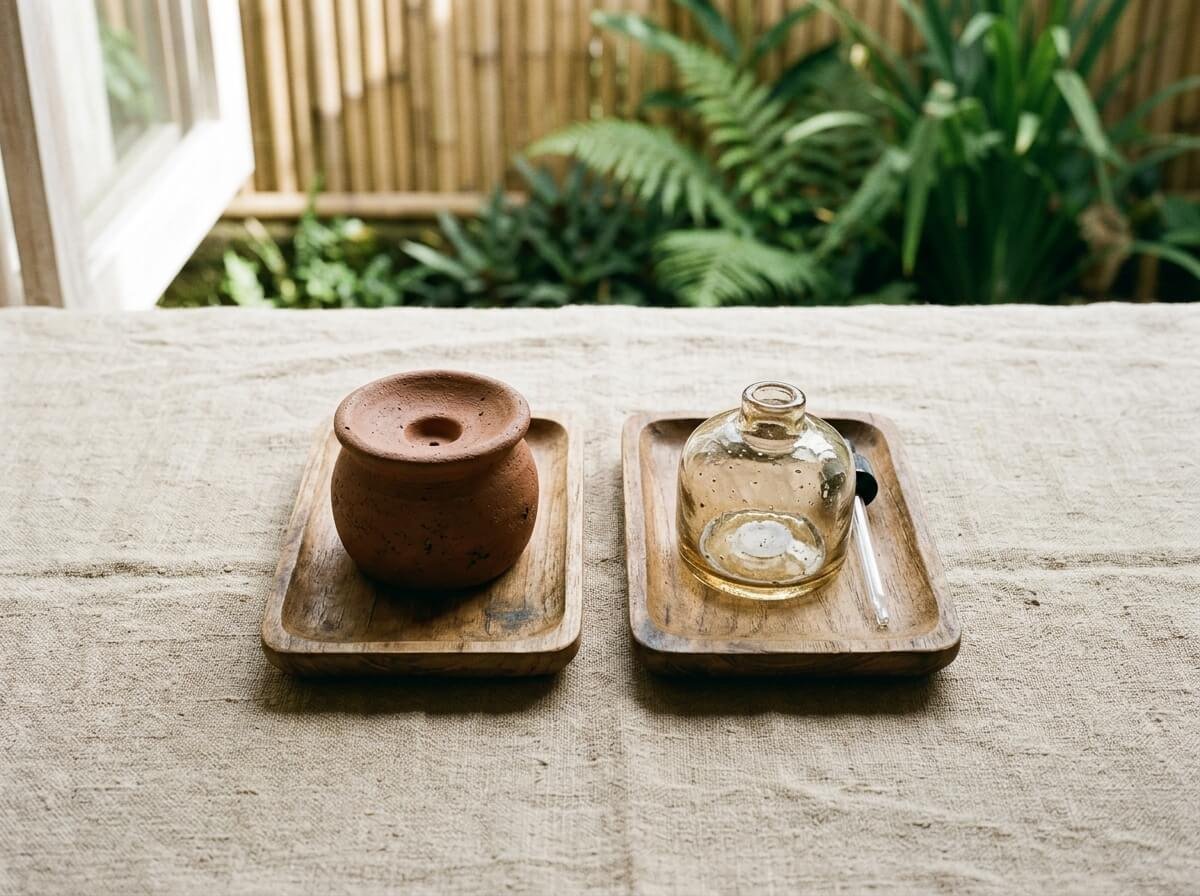
Set side by side, stripped of any sales pitch, the honest differences are these:
- Intensity: ceramic is gentle and ambient, nebulizing is strong and genuinely room-filling.
- Room size: ceramic suits a nook, desk, or small room, nebulizing suits a living room or open-plan space.
- Oil use: ceramic sips oil gradually over hours, nebulizing draws from neat oil more quickly per session.
- Noise: ceramic is completely silent, nebulizing has a soft, steady pump hum.
- Power: ceramic needs none at all, nebulizing needs an outlet nearby.
- Maintenance: ceramic refill pads are simply swapped when spent, nebulizing glass wants a periodic clean.
- Cost over time: ceramic is the lower ongoing oil cost, nebulizing costs more per hour of use but does far more work per hour.
- Safety around kids, pets, and asthma: ceramic’s low, steady output is generally the gentler choice in shared spaces with sensitive noses or airways, while nebulizing’s stronger throw calls for shorter sessions and good ventilation in the same settings, especially with very young children, elderly household members, or pets with a much more sensitive sense of smell than our own.
Cost, over the course of a season, tends to favor whichever device actually matches the room it is asked to work in. A nebulizing diffuser left running all day in a small bedroom burns through neat oil for no real gain in comfort, since the room was small enough for gentler evaporation to do the job just as well. A ceramic diffuser asked to scent an entire ground floor will simply underperform however much oil is added to it, because passive evaporation has a physical ceiling that no amount of oil can push past. The mismatch, in either direction, is where people end up disappointed with a device that was never wrong for them, just wrong for the space.
Picture two households making the same purchase for different reasons. One buys a diffuser for a home office, wanting a light, non-distracting scent that never competes with a video call. The other wants an entryway and living area to smell intentional the moment guests walk in. The first household should reach for ceramic every time, the second for nebulizing, and no amount of marketing copy changes which physics actually applies to which room.
Which oils suit which device
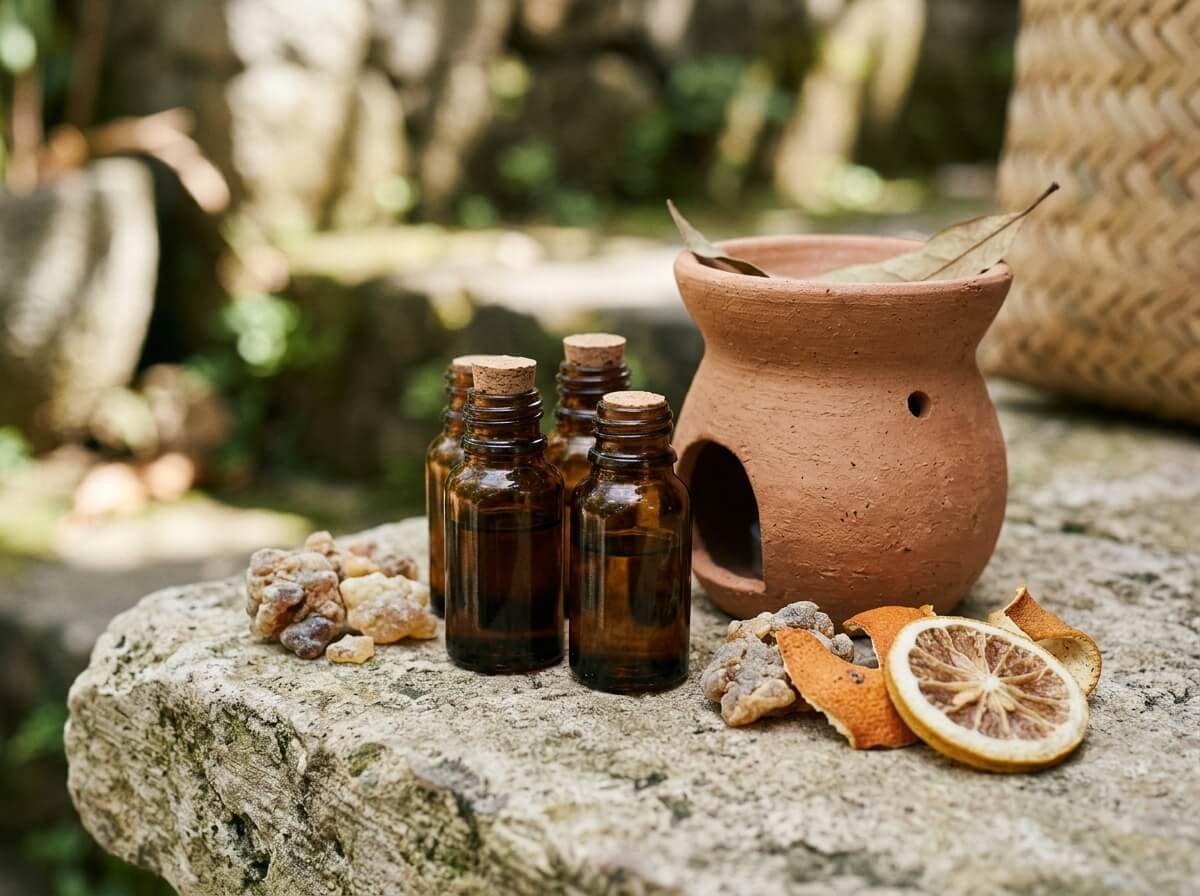
Oil choice is not neutral to the device you are using, and this is one of the most overlooked parts of the decision. Thin, bright oils such as lemon, sweet orange, and grapefruit evaporate readily at room temperature and work beautifully in a passive ceramic diffuser, where a slow, steady release suits their light, top-note character. Pushed hard through a nebulizing diffuser, those same citrus notes can feel almost too sharp, arriving all at once rather than unfolding gradually.
Thicker, resinous, or woody oils, spice-forward blends, and deeper base notes often need a bit more encouragement to fully express themselves, and can perform especially well through the stronger draw of a nebulizing diffuser, which pulls even a heavier oil through the glass tube with enough force to atomize it fully. A ceramic diffuser, left to passive evaporation alone, may only ever release the lightest fraction of a dense oil’s character, leaving the deeper notes largely unexpressed.

One caution applies specifically to nebulizing units: because the oil dispersed is neat and completely undiluted, phototoxic citrus oils, notably bergamot and cold-pressed lemon, should be used with extra care and good ventilation, since the concentration reaching the air is meaningfully higher than with a passive method. This is not a reason to avoid citrus oils in a nebulizing diffuser altogether, it is a reason to run shorter sessions and keep the space aired, particularly if the room gets direct sunlight.
For blend inspiration that works across both devices, our guide to essential oil blends for diffusers and our diffuser blend recipes collection both note which combinations lean toward ceramic pacing versus nebulizing strength, so you are not left guessing which of your favorite oils belongs in which device.
Match the method to the moment, not the marketing
The seller’s pitch is always some version of “one diffuser is best for everyone.” The honest answer, after sitting with both mechanisms, is that the moment decides the method, not the marketing behind either device.
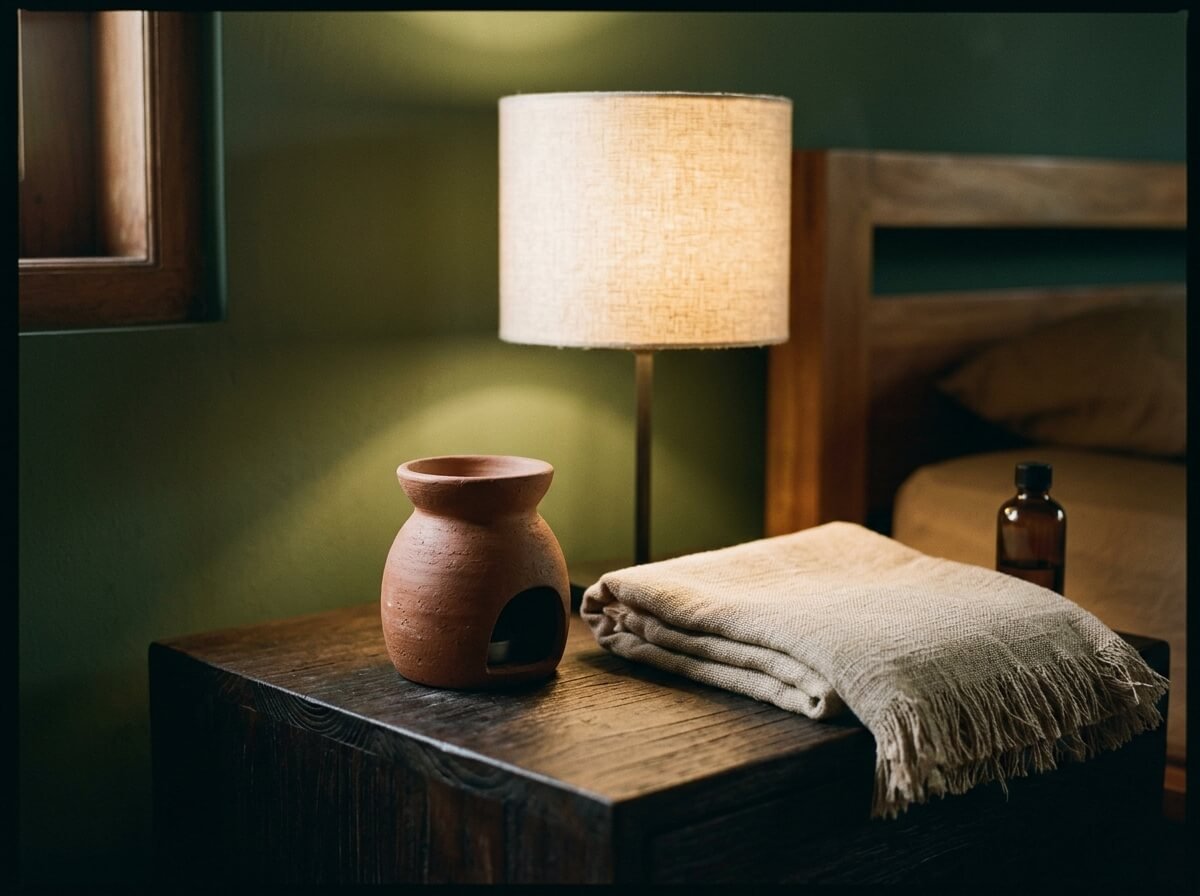
Choose ceramic for: a bedside table where silence matters more than reach, a desk where a subtle, non-distracting scent supports focus rather than announcing itself, a small ritual corner set aside for a few quiet minutes, a room with a sleeping baby, or anywhere restraint is the whole appeal rather than a compromise.
Choose nebulizing for: a living room that needs to feel genuinely, noticeably fragrant, an open-plan kitchen and dining space where scent has real distance to travel, all-day scenting of a whole home rather than one room, or moments that call for a fuller, more assertive presence than passive evaporation can ever deliver.
And where do reed diffusers or candles fit alongside these two. Reed diffusers sit in the same passive, ambient category as ceramic, just without any oil-refill flexibility, since the reeds and vessel are typically fixed once poured and cannot be topped up with a different blend the way a ceramic refill pad can. Candles bring warmth and light rather than pure scent throw, and rely on heat rather than evaporation or atomization, making them a different tool altogether, better suited to setting a mood than to consistent, repeatable aromatherapy dosing. If you are choosing between a diffuser and a candle for the same room, that heat-versus-evaporation distinction is usually what should decide it, not which one looks nicer on the shelf.
Care, cleaning, and refills
A ceramic diffuser asks very little of you, which is part of its appeal for anyone who wants ritual without maintenance. Refill pads are swapped when the scent fades, and the ceramic body itself can be left as it is, or lightly wiped down if a different oil is being introduced so the new scent is not muddied by residue from the last one. There is no water involved anywhere in the process, so there is no reservoir to sanitize and no risk of the stagnant-water smell that plagues neglected ultrasonic units.
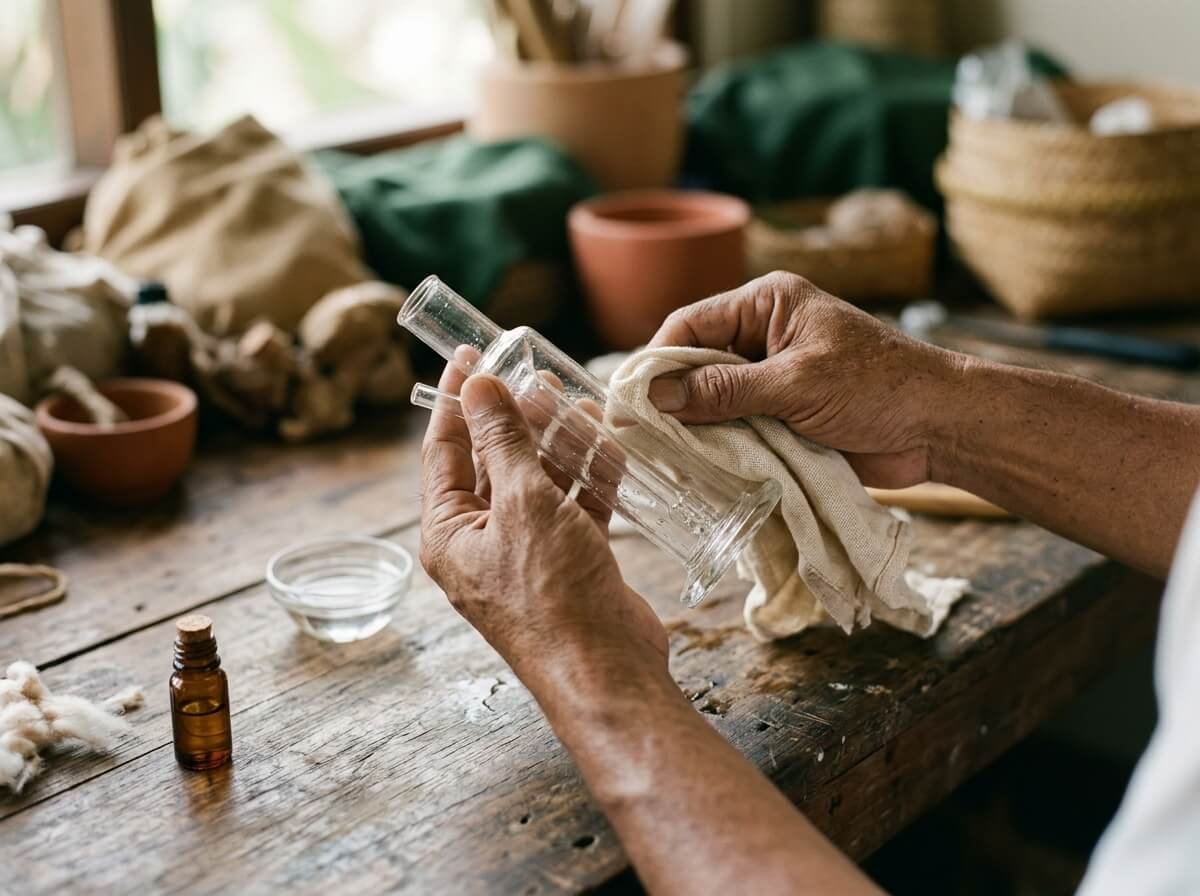
A nebulizing diffuser rewards a little more attention, and this is worth knowing before you buy rather than after. Because neat oil passes through fine glass tubing under pressure, residue can accumulate inside over repeated use, especially with thicker or more resinous oils that leave more behind than a light citrus would. A periodic rinse, using a small amount of rubbing alcohol run through the tube followed by full drying before the next use, keeps the atomizer working at full strength for years. Skipping this simple step is the most common reason a nebulizing diffuser seems to weaken or grow inconsistent over time, and it is rarely the oil or the unit itself that is at fault, it is an overdue clean.
Whichever device you own, storing spare refill oils and pads away from direct sunlight and heat preserves their character for far longer, since the same volatile compounds that make an oil fragrant are also the ones most easily degraded by warmth and light.
Frequently asked questions
Does a ceramic diffuser use less oil than a nebulizing diffuser?
Yes. Passive evaporation draws oil slowly and gently, while a nebulizing diffuser pulls neat oil through under pump pressure more quickly to generate its stronger, more concentrated mist.
Is a nebulizing diffuser safe for a small bedroom?
It can be, but shorter sessions and good ventilation matter more in a small space, given how concentrated the output is compared with passive evaporation. A ceramic diffuser is often the gentler, more restful choice for a bedroom specifically.
Can I use any essential oil in a nebulizing diffuser?
Most oils work well, though thick or resinous oils occasionally need thinning per the manufacturer’s guidance, and phototoxic citrus oils call for shorter sessions and good airflow rather than continuous all-day use.
Do I need water for either device?
No. Neither a ceramic diffuser nor a nebulizing diffuser uses water at any stage. That is precisely what separates both of them from ultrasonic mist diffusers, which rely on water to carry the scent.
Which is better for a whole open-plan living space?
A nebulizing diffuser, since its concentrated, waterless mist carries considerably further through open air than passive evaporation from a ceramic diffuser ever will.
How often should I clean a nebulizing diffuser?
A light clean every few weeks of regular use, or sooner if you notice the mist output weakening, keeps the glass tube free of oil residue and the device performing at full strength.

Start with the quiet option
If your room calls for a gentle, silent scent rather than a whole-home throw, the Ceramic Diffuser with Temple Spice Oil is the passive pick built for a bedside table, desk, or ritual corner. Prefer more presence for a living room or open-plan space, the Danau Satu Atomizing Diffuser is the powered counterpart.
Final thought: the room decides, not the label
Nobody actually needs to win the ceramic-versus-nebulizing debate, because it was never really a contest between two competing technologies. It is a decision about the room, the moment, and who is breathing the air alongside you. A quiet corner deserves quiet scent, gently released over hours. A living room, full of movement and conversation, asks for more presence than a passive diffuser was ever built to give. Choosing with that in mind, rather than chasing whichever device a seller insists is objectively superior, is what turns a diffuser from a gadget bought on impulse into a genuine, lasting ritual.
Many households, once they understand the difference, end up owning one of each rather than picking a single winner: a ceramic diffuser for the bedside table and a nebulizing unit for the living room, each doing the job it was actually built for. That is not indecision, it is simply matching the tool to the task, room by room, the same way you would not use one knife for every job in a kitchen. Real care, in the end, looks less like finding one ideal device and more like paying attention to what each room and each moment actually needs.