Frankincense essential oil benefits: skin, ritual, and the sourcing truth
There is a particular quiet that arrives when frankincense is in the room. The scent is resinous and a little citrus-bright at first, then it settles into something warm, dry, and faintly woody, like old timber in late sun. People have burned, traded, and treasured this resin for thousands of years. Today most of us meet it in a small amber bottle, and the question we hear most often is a fair one: what are the real frankincense essential oil benefits, and which of the claims floating around online actually hold up?
This guide answers that honestly. We cover what frankincense is, why the species on the label matters, what the research does and does not support for skin and calm, how to use it safely in a face or body oil, and a few grounding evening blends. We also talk about something most benefit lists skip entirely: the trees that make frankincense are under real pressure, and how we buy it matters. If you want the wider picture first, our guide to essential oils benefits is a good starting point, and our original frankincense overview from 2019 covers the traditional uses.
What frankincense actually is
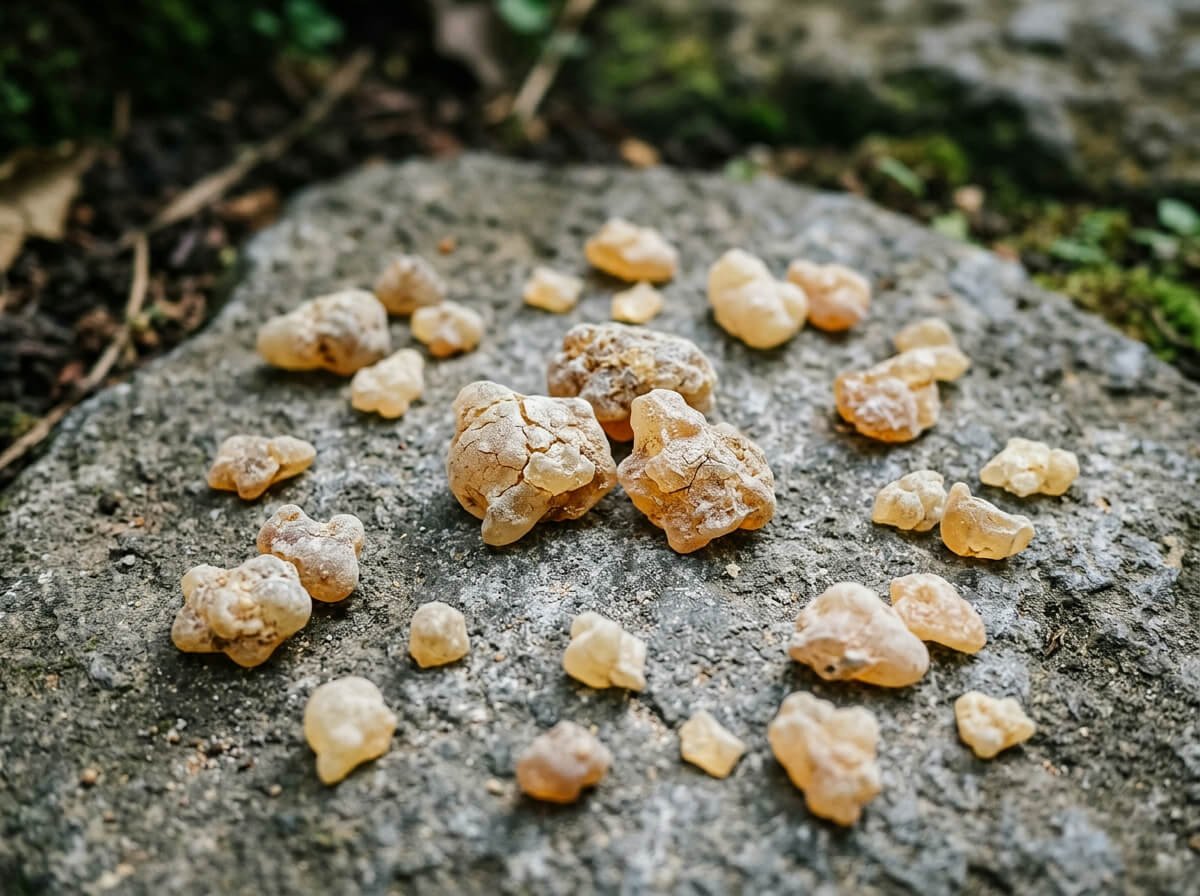
Frankincense is the dried resin of trees in the genus Boswellia. These are hardy, often gnarled trees that grow in dry, rocky country across the Horn of Africa, the southern Arabian Peninsula, and India. When a harvester makes a shallow cut in the bark, the tree seals the wound with a milky oleo-gum-resin. Over several weeks that liquid hardens in the air into the pale, translucent pieces called tears. Harvesters collect the tears by hand, then return to tap the same tree again through the season.
That resin is the raw material for three quite different things, and it helps to keep them separate:
- Resin tears, burned on charcoal or warmed for scent. This is frankincense in its oldest ritual form.
- Essential oil, made by steam-distilling the resin. It captures the light, volatile aromatic molecules: mostly monoterpenes such as alpha-pinene, alpha-thujene, and limonene.
- Boswellia extracts, made with solvents and usually sold as supplements or added to creams. These are standardised for boswellic acids, the large, heavy molecules behind most of the clinical research on joints and inflammation.
That last distinction matters more than almost anything else in this article. Boswellic acids are too heavy to travel with steam, so they stay behind in the spent resin. Distilled frankincense essential oil contains little to none of them. When you read that frankincense oil soothes arthritis or fights serious disease, the study behind the claim almost always used an extract, not the oil in your dropper bottle.
None of this makes the essential oil less worthwhile. It simply means its gifts are aromatic and topical, and we should describe them truthfully. Frankincense also sits in a wider family of sacred resins. Here in Indonesia, the resin that perfumes ceremony is usually kemenyan, benzoin from Sumatran Styrax trees, and its sweet vanilla smoke is a cousin to frankincense rather than the same thing. If you love resin scents in stick form, our guide on how to use incense sticks goes deeper into that ritual.
Carterii, serrata, frereana: which frankincense you are actually buying
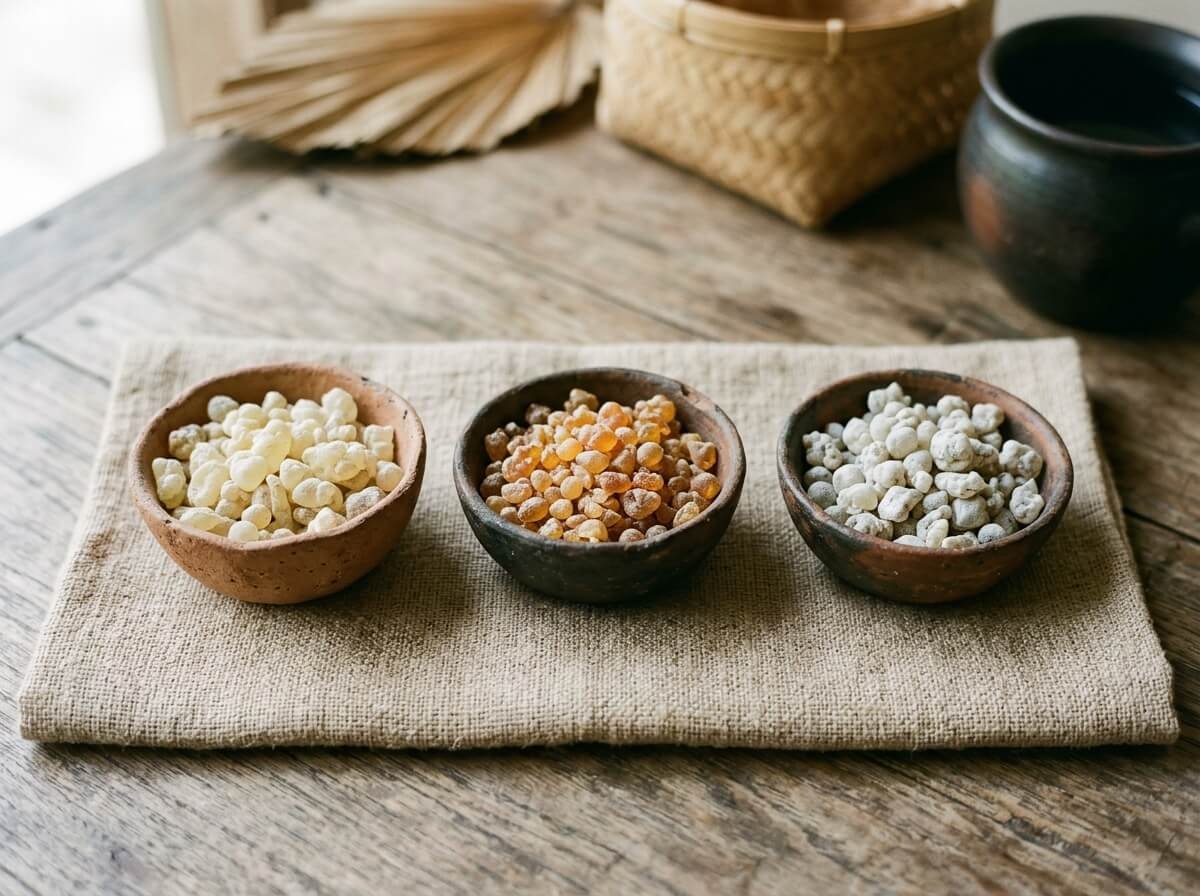
Most bottles simply say frankincense. Turn them over, though, and a good supplier will name the species, because each tree gives a noticeably different oil. Here are the four you are most likely to meet.
Boswellia sacra and Boswellia carterii
Boswellia sacra grows in Oman, Yemen, and northern Somalia. Many botanists treat Boswellia carterii, the name you will see on a lot of Somali oils, as the same species or a very close relative. These oils are rich in alpha-pinene and limonene, which gives them that bright, lemony, pine-fresh opening. This is the scent most people picture when they think of frankincense.
Boswellia papyrifera
Boswellia papyrifera grows across Ethiopia, Eritrea, and Sudan, and by volume it is now the main source of traded frankincense. Its oil is distinctive for octyl acetate, which lends a softer, slightly fruity, waxy sweetness. It is also the species at the centre of the most worrying conservation research, which we come back to below.
Boswellia serrata
Boswellia serrata is Indian frankincense, sometimes called salai. Its oil is usually led by alpha-thujene rather than alpha-pinene, so it smells greener, drier, and more herbaceous, with a peppery edge. Serrata is also the species used in most boswellic acid supplements. Our own Frankincense Essential Oil is distilled from Indian Boswellia serrata resin, so this is the frankincense we know best.
Boswellia frereana
Boswellia frereana, known in Somalia as maydi, grows on rocky slopes in the north of the country. Its oil is high in alpha-pinene and has a clean, sweet, almost pine-like character. It is often more expensive, partly because the trees grow in hard, remote terrain.
What does this mean for a skincare buyer? There is no single best species for skin. The research base is small for all of them, and the aromatic profile is the main practical difference. Choose by scent and by supplier honesty. A label that gives the Latin name, the country of origin, and ideally a batch or distillation date is telling you that someone along the chain is paying attention.
Frankincense essential oil benefits with real support
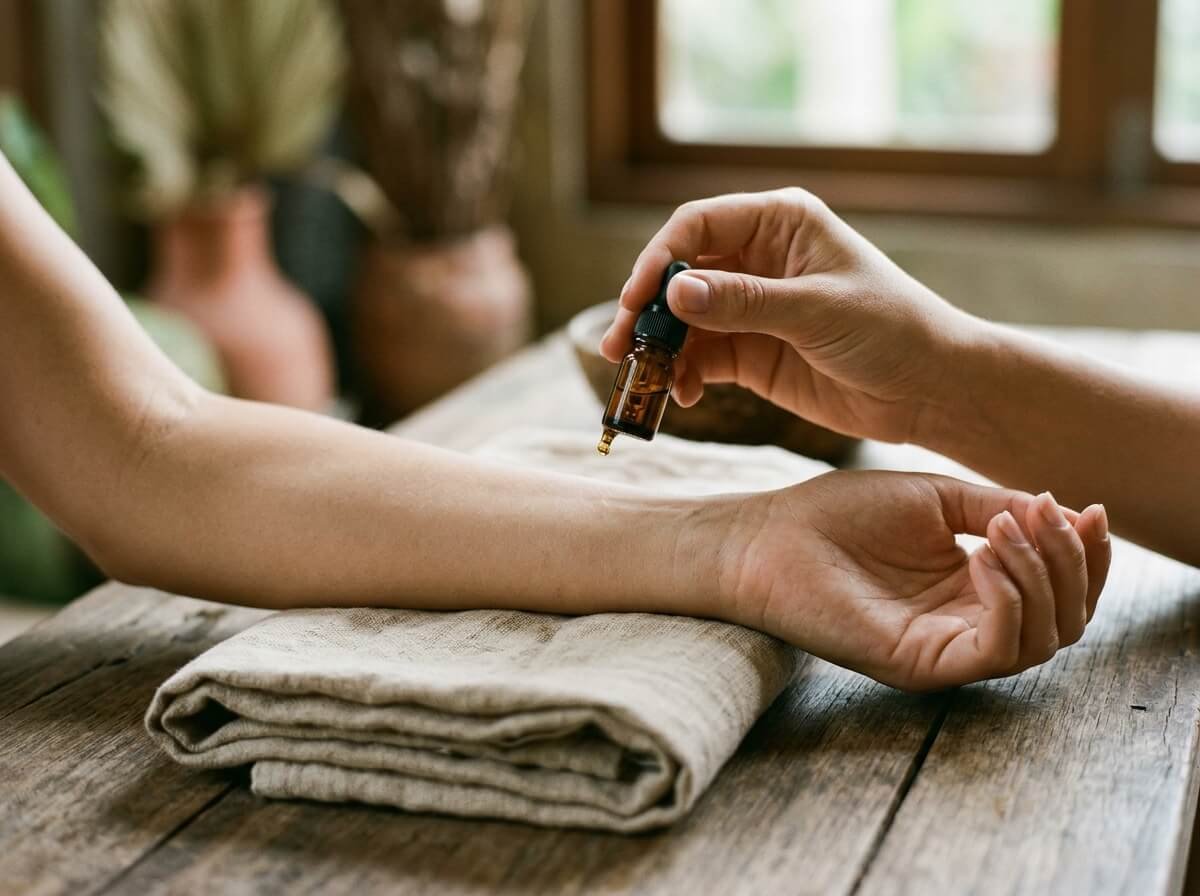
Lists of frankincense essential oil benefits tend to run to 15 or 20 items, from memory to immunity. Most of those claims lean on studies of boswellic acid extracts, cell cultures, or animals. Here is what we feel comfortable saying, and how strong the evidence behind each point really is.
A calming, grounding scent
This is the oldest and most lived benefit. Frankincense has been used in contemplative practice across many cultures for a reason: its scent is steady and unhurried, and it pairs naturally with slow breathing. Laboratory research on a resin compound called incensole acetate has explored effects on mood pathways in animals, but that compound comes mostly from burning resin rather than from the distilled oil, and human trials are thin. So we frame it plainly. Frankincense is a scent many people find calming, and using it as a cue for an evening pause is a ritual with real value, even without a clinical trial behind it. Our guide to essential oils for sleep covers how scent fits into a wind-down routine without overpromising.
Support for skin tone and texture
For skin, the most cited work is laboratory research. A 2017 study on human dermal cells found that frankincense essential oil reduced several markers linked to inflammation and tissue remodelling. That is genuinely interesting, but cells in a dish are not a face, and the result has not been confirmed in clinical trials of the oil itself. Separate small human studies found that a cream containing boswellic acids improved some visible signs of sun-related ageing, yet that cream used extract, not distilled oil.
So the honest summary is this. Frankincense is a traditional skin botanical with promising early science and a long record of gentle use. In a well-diluted face oil it can make a lovely addition to an evening routine for skin that feels dull, dry, or tired. It is not a substitute for sunscreen, and it is not a retinoid. If firmness and fine lines are your focus, our guides to plant based skincare for ageing skin and natural retinol alternatives compare the botanicals with stronger evidence.
Scars, marks, and dry patches
Frankincense often appears in blends for scars and stretch marks. The evidence here is mostly traditional. What we can say is that the massage itself, the carrier oil, and consistent daily care do a lot of the work, and frankincense makes that ritual more pleasant. Our guides to essential oils for scars and natural stretch mark oil go into the carriers that matter most.
Frankincense for skin: dilution, carrier oils, patch testing, and a safe routine
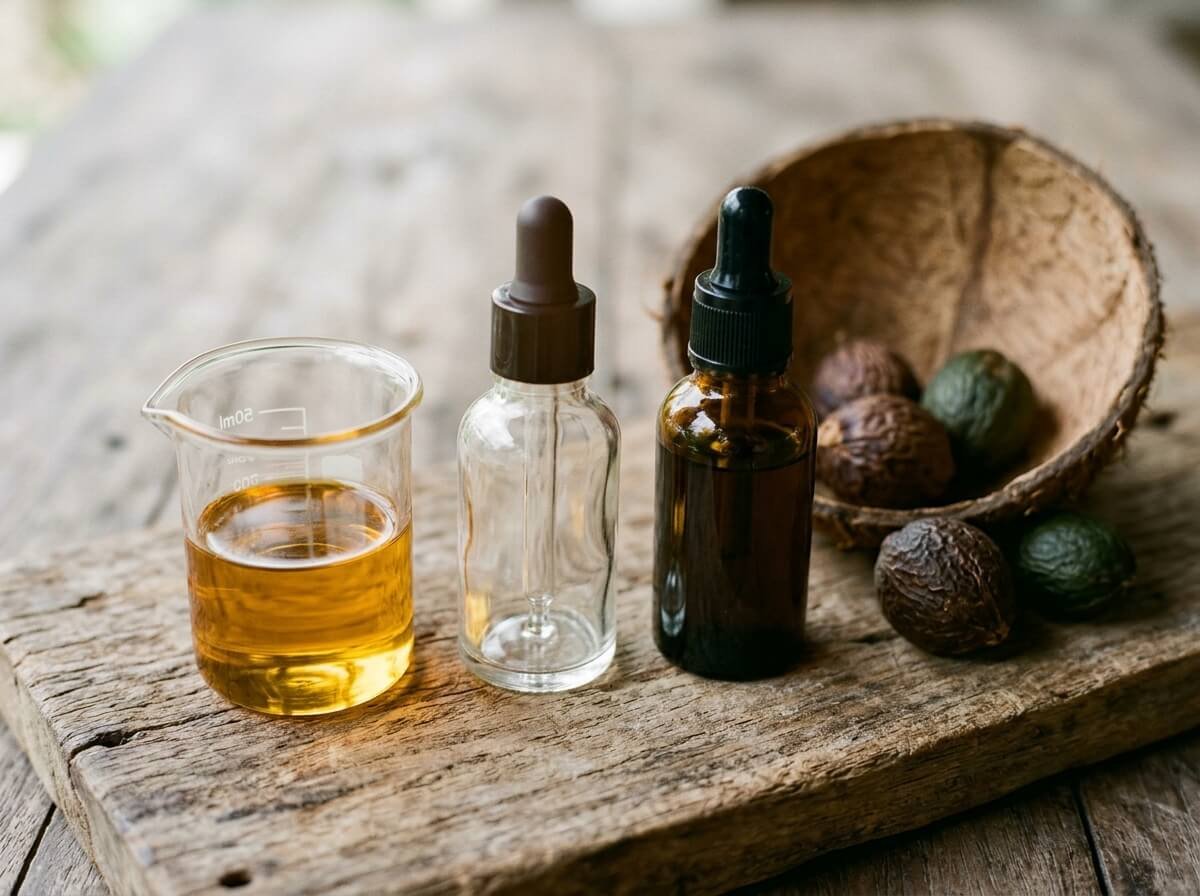
Essential oils are concentrated. A single drop of frankincense oil holds the aromatic compounds from a large amount of resin, so it always belongs in a carrier, never straight on the skin. Here is the routine we suggest.
Step one: choose your dilution
- Face: 0.5% to 1%. In a 30ml bottle of carrier oil, that is three to six drops of frankincense.
- Body: up to 2%. In a 30ml bottle, that is about 12 drops.
- Sensitive or reactive skin: start at 0.5% and stay there for a few weeks before deciding whether to go higher.
Drop sizes vary between bottles, so treat these as a guide rather than lab measurements. For a fuller walkthrough with a ratio table, see our guide on how to dilute essential oils.
Step two: choose your carrier
The carrier does most of the nourishing work, so choose it as carefully as the essential oil. A few we reach for:
- Tamanu Oil, rich and green-scented, traditionally used across Indonesia and the Pacific for skin that needs comfort. Our guide to tamanu oil benefits explains why it pairs so well with resin scents.
- Argan Oil, lighter and quick to absorb, a calm everyday choice for most skin types. See our argan oil benefits for skin guide.
- Virgin Coconut Oil, best kept for body and very dry areas such as elbows and heels, since some faces find it too heavy.
Our older guide to choosing a carrier oil for essential oils compares more options if you want to experiment.
Step three: patch test
Apply a little of your finished blend to the inner forearm and leave it for 24 to 48 hours before using it on your face. Redness, itching, or bumps mean the blend is not right for you. Our short note on patch test timing explains why a quick five-minute check is not enough.
Step four: a simple evening ritual
After cleansing, while your skin is still slightly damp, warm three or four drops of your diluted oil between your palms. Press it gently into the cheeks, forehead, and jaw, then use slow upward strokes along the neck. Breathe in the scent as you go. The whole ritual takes under two minutes, and that slowness is part of the care. If your skin feels tight or stings easily, focus on the barrier first; our guide on how to repair your skin barrier is a gentle place to begin.
Step five: keep the oil fresh
This step is often missed. Frankincense oil is rich in monoterpenes, which oxidise with air, heat, and light. Oxidised oil is more likely to irritate or sensitise skin. Keep the cap tight, store the bottle somewhere cool and dark, and aim to use an opened bottle within a year or two. If an old bottle smells sharp, flat, or turpentine-like, retire it to the diffuser or let it go.

A warm, resinous drop for your evening ritual
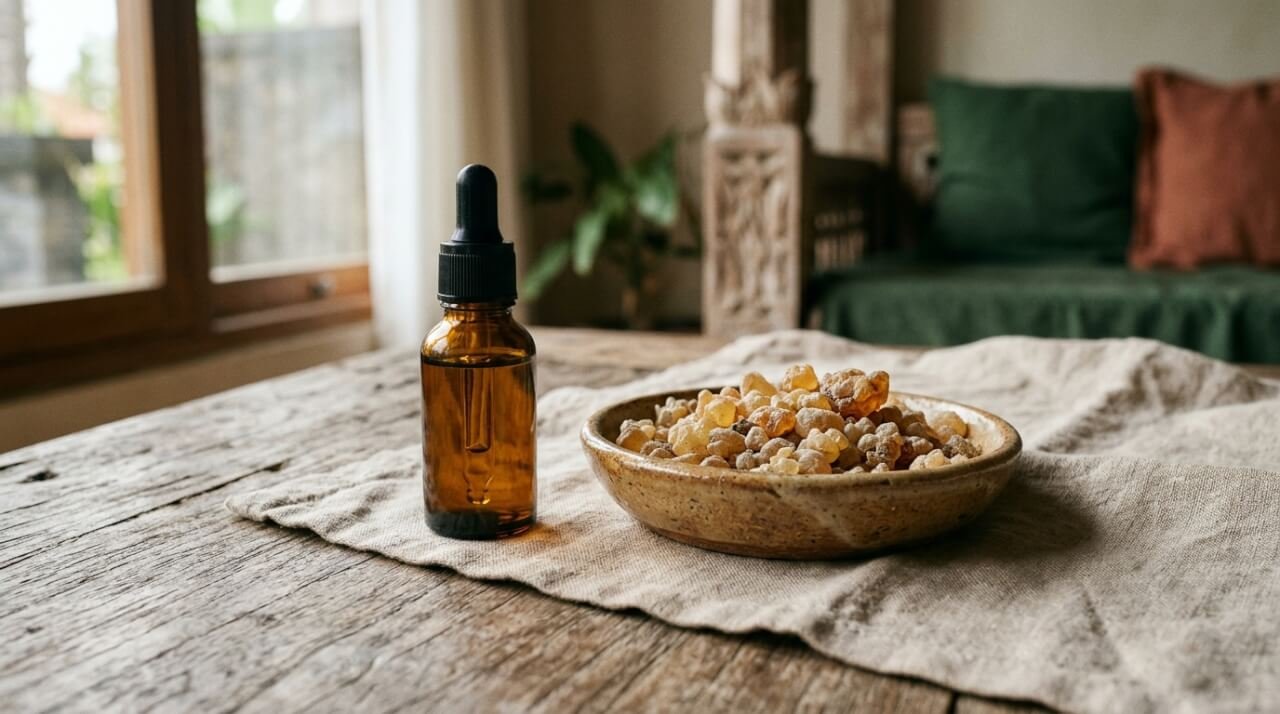
Our Frankincense Essential Oil is distilled from Indian Boswellia serrata resin: dry, green, and gently woody. Add a few drops to your favourite carrier for a calming face or body oil, or let it settle the room at dusk.
Grounding evening diffuser blends featuring frankincense
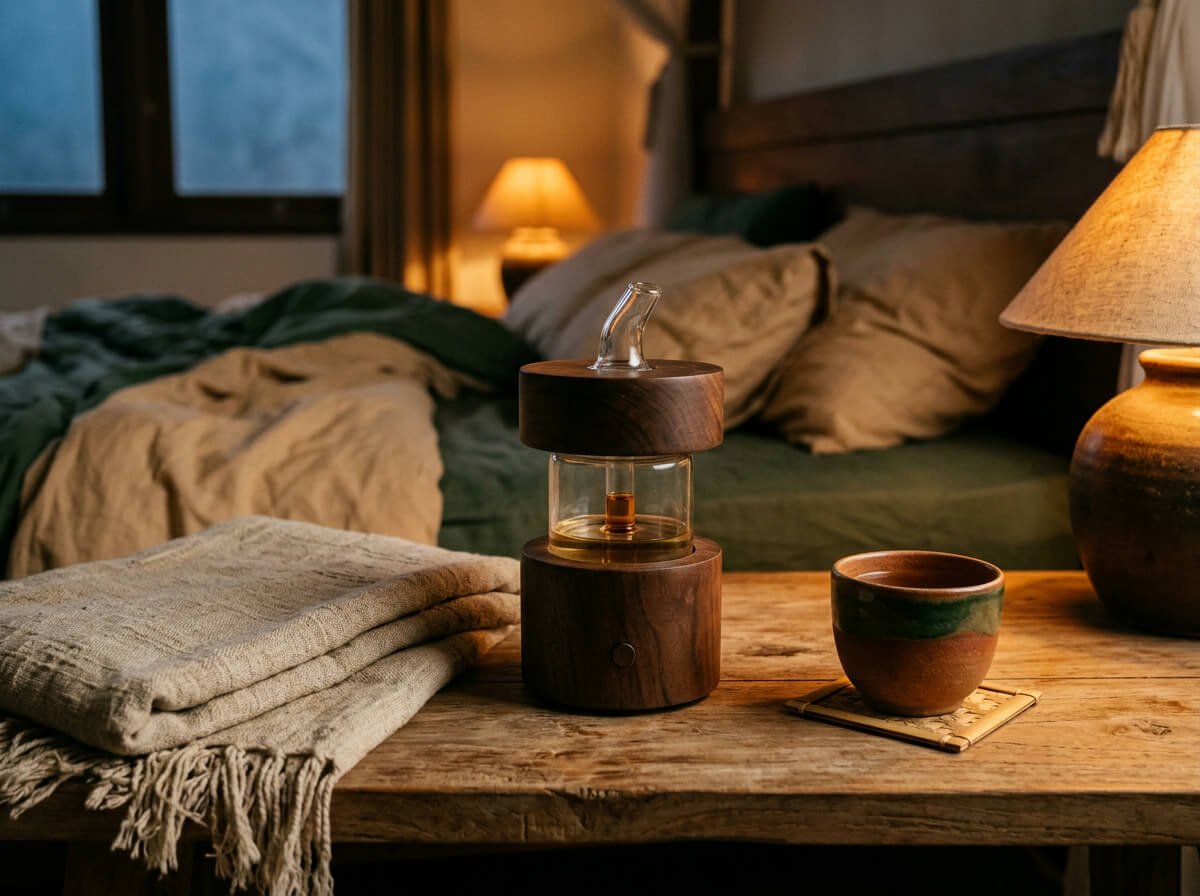
Frankincense is a natural base note. It slows down brighter oils and gives softer florals somewhere to rest. These blends are written for a nebulizing or water diffuser. Start with the drop counts below, run the diffuser for 20 to 30 minutes, then switch it off and let the scent linger. Always leave a door or window slightly open.
Quiet hour
- Three drops frankincense
- Two drops Vetivert Essential Oil
- One drop lavender
Deep, earthy, and still. Vetiver is the root note of the tropics, dug by hand in Java; our guide to vetiver essential oil benefits tells that story.
Temple garden
- Three drops frankincense
- Two drops cananga
- One drop sweet orange
Soft, floral, and warm. Cananga is the Balinese flower behind so much of the island’s scent memory; learn more in our guide to cananga essential oil benefits.
Settle the day
- Three drops frankincense
- Three drops Deep Calming Essential Oil Blend
Our Deep Calming blend brings lavender, rose geranium, bergamot, cananga, and orange together, and frankincense gives it a resinous floor. It is a simple two-bottle ritual for the hour after dinner.
For a pure, water-free scent, our Danau Dua nebulizing diffuser disperses undiluted oil in fine bursts, so a little goes a long way. Our guide to the nebulizing diffuser explains how it differs from ultrasonic models, and our aromatherapy diffuser blend recipes collection has more ideas for every part of the day. If you would like to explore frankincense alongside other resinous and spice oils, the Revival Essential Oil Set includes a 5ml frankincense with four companions.
The sourcing truth: overharvested Boswellia and how to buy responsibly
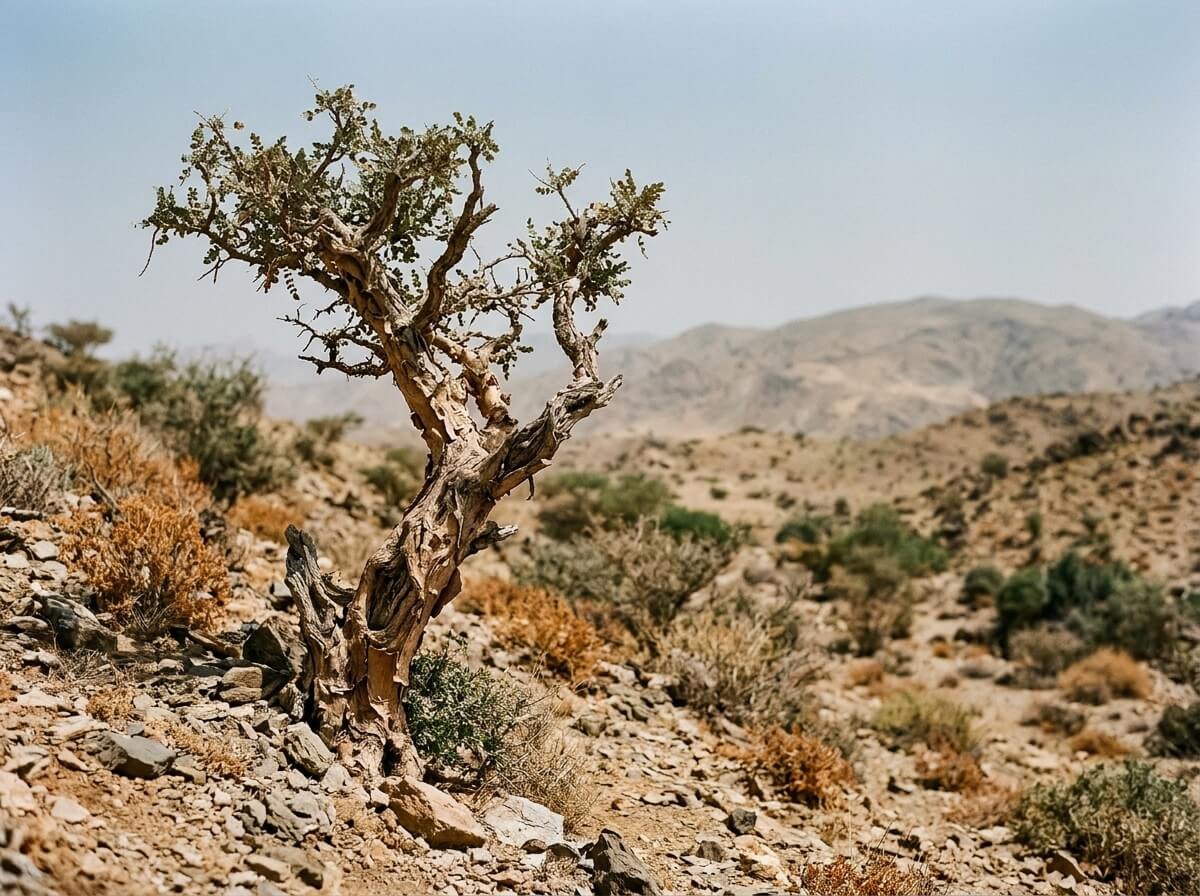
Here is the part most frankincense articles leave out. The trees are struggling.
In 2019, a team of Ethiopian and Dutch researchers published a study in Nature Sustainability on Boswellia papyrifera, the species behind most traded frankincense. Across the populations they studied, more than three quarters had few or no young trees, and natural regeneration had been missing for decades. They projected that frankincense production from these woodlands could halve within 20 years. The causes are layered: cattle and goats grazing seedlings, frequent fires, insect outbreaks, and tapping that is too frequent or too deep, which weakens trees and leaves them vulnerable. Boswellia sacra, the classic Arabian frankincense, is listed as Near Threatened on the IUCN Red List.
Demand from wellness and fragrance markets is part of this pressure. That is an uncomfortable sentence for a brand that sells frankincense oil to write, and we think it should be written anyway. Calling a product natural does not make it sustainable. The people who tap these trees, often in remote and economically fragile regions, carry the cost when the woodlands decline.
So what can a conscious buyer actually do?
- Look for the Latin name and origin on the label. If a seller cannot tell you which Boswellia species or which country, they likely do not know where it came from.
- Be wary of prices that look too low. Careful tapping, fair pay, and resting trees between seasons all cost money.
- Ask about harvest practice. Good suppliers can speak to tapping intervals, community cooperatives, or restoration work.
- Use less, and use it well. Three drops in a diffuser or a 1% face oil is enough. Store it properly so none goes to waste.
- Treat frankincense as a ritual oil, not a daily commodity. Its scarcity is a reason for respect.
These are the same questions we try to ask about every ingredient we work with. Our guide to wild-harvested skincare ingredients explains how we think about harvesting from wild plants more broadly, including the illipe butter we source with forest communities in Kalimantan.
Who should be cautious with frankincense
Frankincense essential oil is considered one of the gentler oils, and it is not phototoxic, so you can wear a diluted blend in daylight. Still, gentle is not the same as risk-free. Please take care in these situations.
- Pregnancy and breastfeeding. Aromatherapy references generally do not list frankincense oil as a concern at normal dilutions, but every pregnancy is different. Talk with your midwife or doctor before using any essential oil on your skin, and keep diffusing light and well ventilated.
- Babies and young children. Skip topical use on babies, and diffuse only briefly in a well-aired room, away from the child. Our guide to essential oils safe for babies covers ages and amounts in detail.
- Medication and supplements. Oral Boswellia extracts can interact with some medicines. If you take Boswellia supplements or prescription medication, ask your doctor before layering frankincense into your routine. Never swallow essential oil.
- Sensitive or broken skin. Patch test first, keep dilution at 0.5%, and avoid broken skin, eczema flares, and the eye area.
- Old or oxidised oil. As noted above, oxidised frankincense is more likely to sensitise skin. Fresh oil, tight caps, and cool storage protect you.
- Pets. Cats in particular process essential oils poorly. Diffuse in rooms they can leave, and never apply oils to animals.
Frequently asked questions about frankincense essential oil benefits
Can I put frankincense oil directly on my face?
No. Always dilute it in a carrier oil first, at 0.5% to 1% for the face. Undiluted essential oil increases the risk of irritation and long-term sensitisation, even with a gentle oil like frankincense.
Does frankincense essential oil contain boswellic acids?
Very little, if any. Boswellic acids are too heavy to come through steam distillation, so they stay in the resin. Products that highlight boswellic acids are usually extracts or supplements, which are a different thing.
Which frankincense species is best for skin?
There is no clear winner in the research. Boswellia sacra and carterii smell brighter and more citrus, serrata greener and drier, frereana clean and sweet. Choose the one whose scent you love from a supplier who names the species and origin.
Is frankincense good for wrinkles?
Early laboratory research is promising, but there are no strong clinical trials of the essential oil on wrinkles. A diluted frankincense face oil can be a calming, pleasant step in an evening routine. Daily sunscreen and consistent moisture will do more for fine lines than any single essential oil.
Can I use frankincense during the day?
Yes. Frankincense is not phototoxic, unlike some citrus oils such as cold-pressed bergamot. You can wear a diluted blend in sunlight.
How long does frankincense oil last?
Stored well, an opened bottle usually stays fresh for one to two years. Keep it tightly capped, away from heat and light. If the scent turns sharp or flat, it has likely oxidised.
Is frankincense the same as the resin used in Balinese ceremony?
Usually not. Indonesian ceremony more often uses kemenyan, the benzoin resin from Styrax trees in Sumatra, along with incense sticks made from local woods and spices. Frankincense comes from Boswellia trees that grow far from Indonesia.
Can I mix frankincense into a body mist or lotion?
Yes, at low dilution. Our Lavender Fields Body Mist already pairs frankincense with lavender, bergamot, and patchouli, if you would like to try it in a ready-made blend first.
A closing note
Frankincense essential oil benefits are real, but they are quieter than the long lists suggest. It is a calming scent, a gentle partner in a well-diluted face or body oil, and a beautiful base for evening blends. It also comes from trees that need us to buy with care. Use a little, store it well, ask where it came from, and let it mark the end of the day. What you give, you get back.