Wild-harvested skincare ingredients: what traceable really means
Turn over almost any natural body butter today and you will find a familiar phrase near the ingredient list. Wild-harvested. Traceable. Ethically sourced. The words sound like care, and sometimes they are. But wild-harvested skincare ingredients are only as honest as the supply chain behind them, and most of the time the label cannot show you that chain. This guide is our attempt to open it up: what the terms mean, what a certification logo can and cannot prove, and the other kind of proof that a small, family-run workshop can offer instead.
We have been crafting in Bali since 1989, and some of the ingredients we love most do not come from a farm at all. They come from forests, gathered by people who know those forests far better than we do. So this is not a neutral explainer. It is a Sage-and-Outlaw piece, written by a brand with a stake in getting the answer right.
Why wild-harvested skincare ingredients are suddenly everywhere
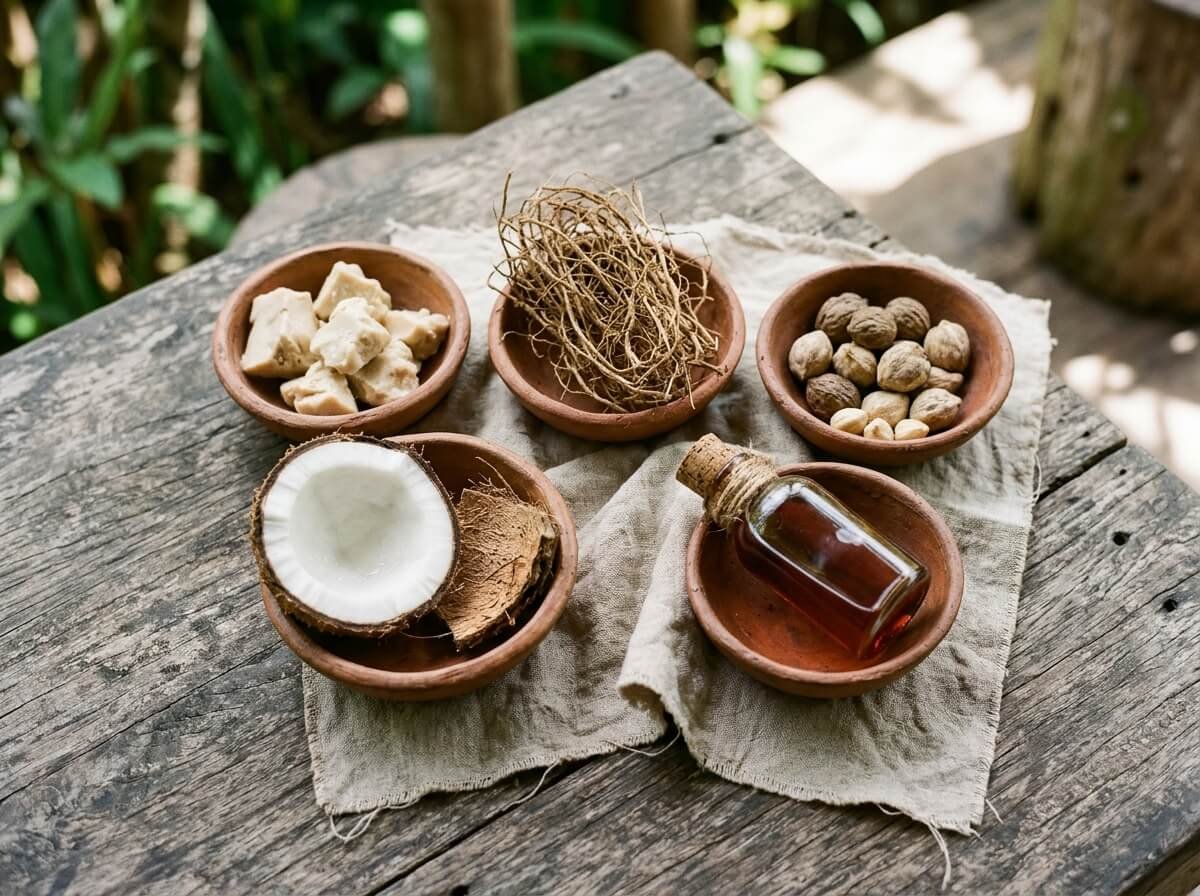
Five years ago, “wild-harvested” was a quiet phrase on herbalist price lists. Today it sits on serums, balms, and shampoos across the clean-beauty shelf. Three forces pushed it there.
The first is a shift in what conscious shoppers ask. A decade of clean beauty taught people to read the front of the ingredient list. The next question was always going to be: where did this come from? Shoppers who already avoid certain preservatives now want to know whether the plant at the top of the list was grown, gathered, or synthesized.
The second is regulation and scrutiny of green claims. Across Europe and beyond, regulators and consumer groups are pushing back on vague environmental language. “Eco” and “natural” now invite questions. “Wild-harvested” feels more specific, so brands reach for it. Specific-sounding is not the same as specific, though.
The third is romance. Wild sounds untouched, ancient, and pure. It carries a picture of forest light and careful hands. That picture is often true. But a word that carries that much feeling is also a word that is easy to borrow.
Here is the part most guides skip. In most markets, “wild-harvested” has no legal definition on a cosmetic label. There is no inspector who checks that the illipe in a jar fell from a forest tree rather than came from a broker who mixed sources. The word is a claim, not a standard. That does not make it meaningless. It means the meaning has to come from somewhere else: a certification, a named relationship, or both.
We have seen the same pattern with other words. “Palm-free” became a selling point long before most people knew how many palm derivatives hide behind chemical names, which is why we wrote a full guide to palm oil free skincare. “Seed-oil free” followed the same arc, and our piece on seed oil free skincare tries to separate the useful part of that trend from the noise. Wild-harvested deserves the same care.
What a certification label can tell you, and what it cannot
Certification exists for good reasons, and we want to be fair to it. The most relevant scheme for wild plants is the FairWild Standard, which sets out how wild collection should work: harvest at rates the plant population can sustain, respect for customary rights, and fair terms for the people doing the gathering. Organic standards such as COSMOS can also cover wild-collected plants when the collection area itself is inspected and certified.
A good certification tells you three useful things:
- An outside party looked. Someone other than the brand inspected the collection area, the records, or both.
- There is a written rule. The standard defines what counts, so the word is no longer free-floating.
- There is a paper trail. Certified material usually moves with documents that let auditors follow it from collector to buyer.
That is real value. If you see a credible wild-collection or organic seal on a product, it is a reasonable signal that someone took the claim seriously.
Now the limits. A logo cannot tell you who gathered the plant, which village they live in, or whether the price they received changed anything for their family. It cannot tell you what the forest looked like the year after the harvest. It is a snapshot of compliance on the day of the audit, not a living relationship. And because audits cost money every year, certification tends to favour large buyers and large suppliers. A cooperative of forest families, or a small workshop buying a few hundred kilos of butter, may follow every principle in the standard and still never pay for the stamp.
There is also a quieter problem. A certified ingredient can still be one line in a product that is otherwise built on careless sourcing. The seal belongs to the ingredient, not to the whole jar, and certainly not to the brand’s behaviour. So a logo is one kind of proof. It is not the only kind, and on its own it is not the most human kind.
The other kind of proof: naming the place and the people
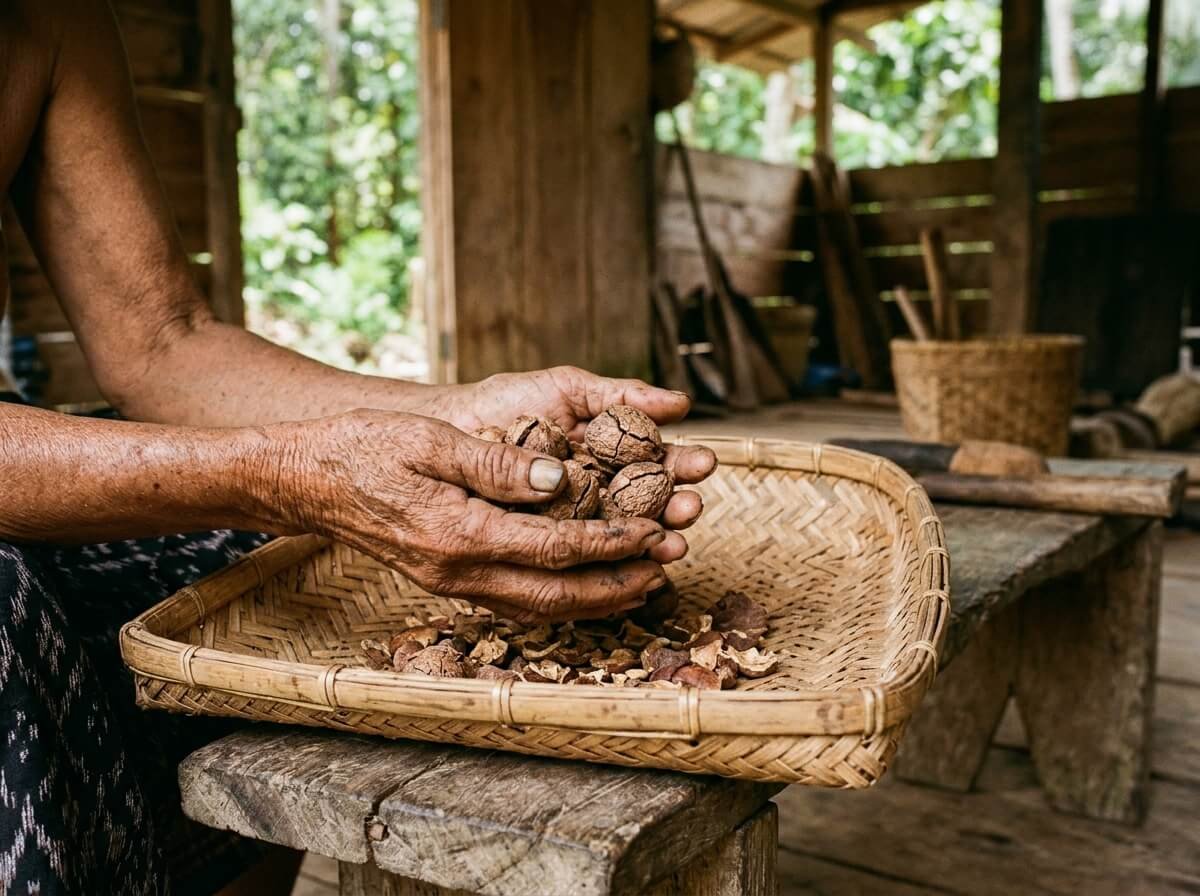
The oldest form of traceability is not a document. It is a name. When a maker can tell you the region, the partner, the harvest practice, and the reason they buy from that source rather than a cheaper one, they are offering a kind of proof that is easy to check and hard to fake over time.
Here is what that looks like for us. Our illipe butter and our kukui oil come through our partnership with Forestwise, a social enterprise working with forest communities in Kalimantan, on the island of Borneo. The idea behind that partnership is simple, and we repeat it often because it is the whole point: a standing rainforest has to be worth more to a family than a cleared one. When wild nuts earn a fair income, the trees that drop them become something to protect. We wrote about this in our Connection Thursday piece on Forestwise and illipe butter, and the same logic runs through every ingredient story we tell.
Naming the place does a few things a logo cannot. It makes the claim public and specific, so anyone can ask a follow-up question. It ties the brand’s reputation to a real partner who could contradict the story. And it keeps the people in the picture. Our partnership with the Munti Gunung social enterprise in East Bali is not an ingredient supply chain, but it follows the same instinct. We wrote about the women of Munti Gunung because the people who make natural care possible are not a backdrop. They are the reason it means anything at all.
This kind of proof has limits too, and we will not pretend otherwise. A named relationship relies on trust and on the brand telling the truth. It does not come with an outside auditor. That is why we think the honest position is not “logos bad, stories good.” It is this: ask for both, value whichever one a brand can genuinely offer, and be wary of any brand that offers neither.
Two ingredients, two supply chains: illipe in Kalimantan and buah merah in Papua
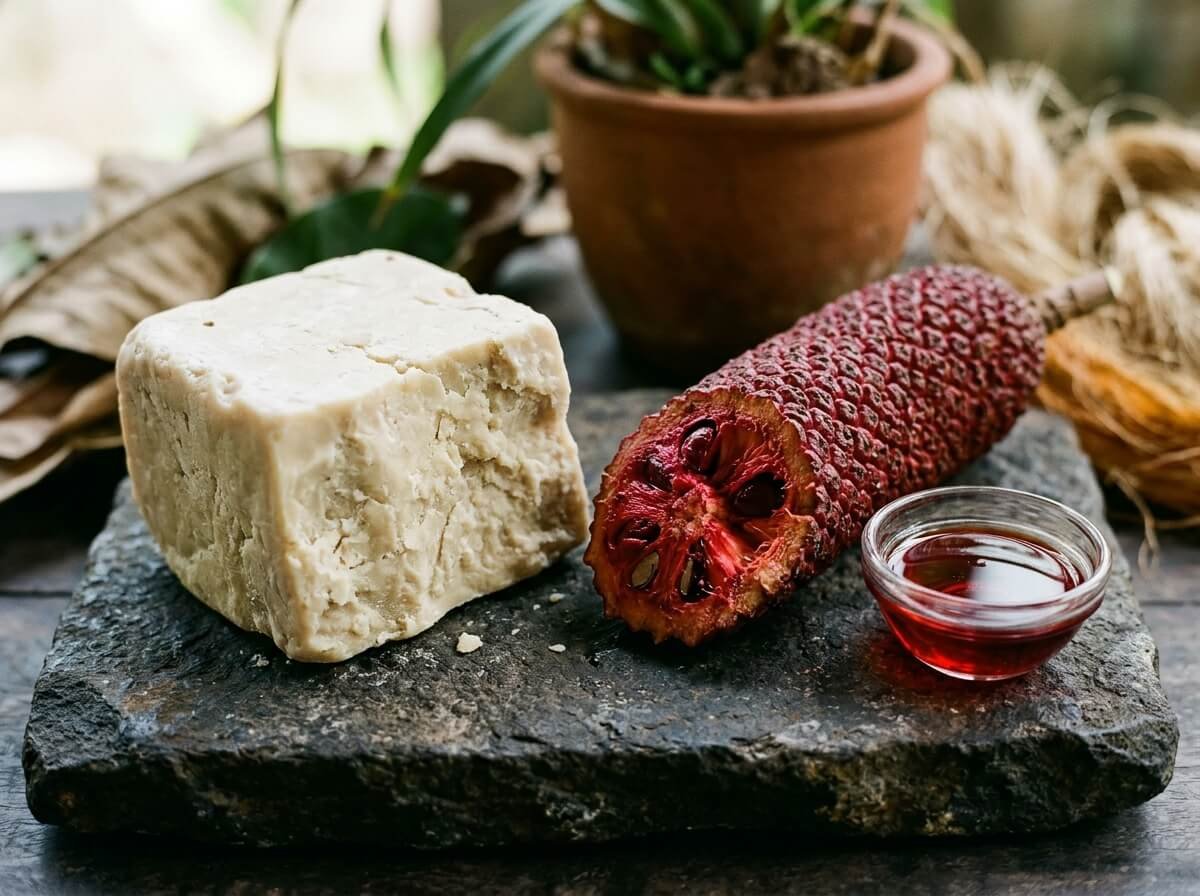
Abstract principles are easy. So let us walk through two real ingredients, because they show how differently “wild” can play out.
Illipe butter: a harvest that follows the tree
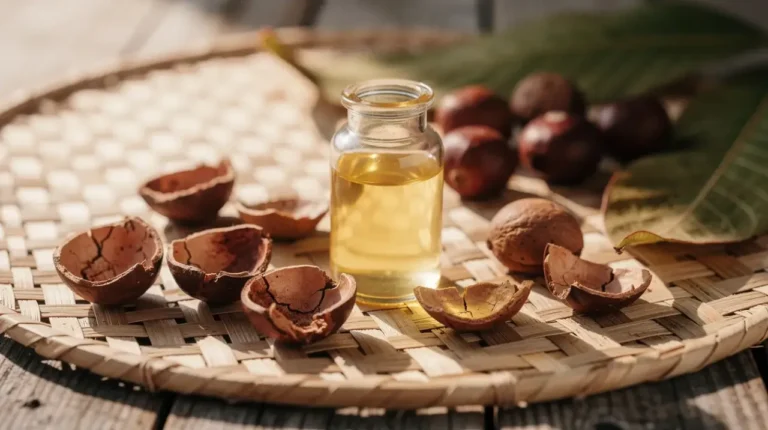
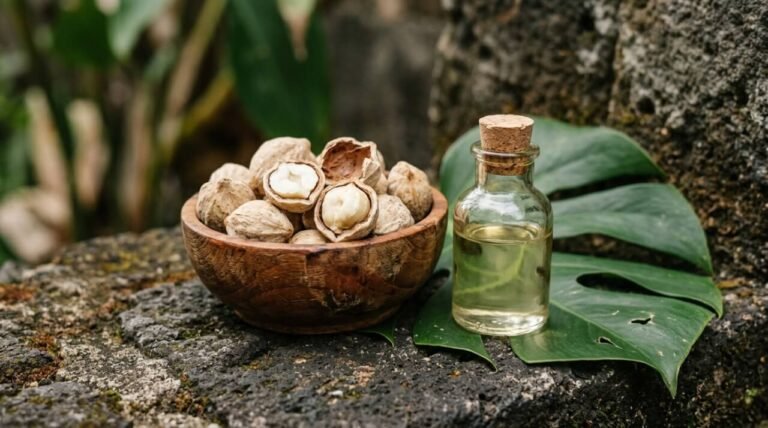
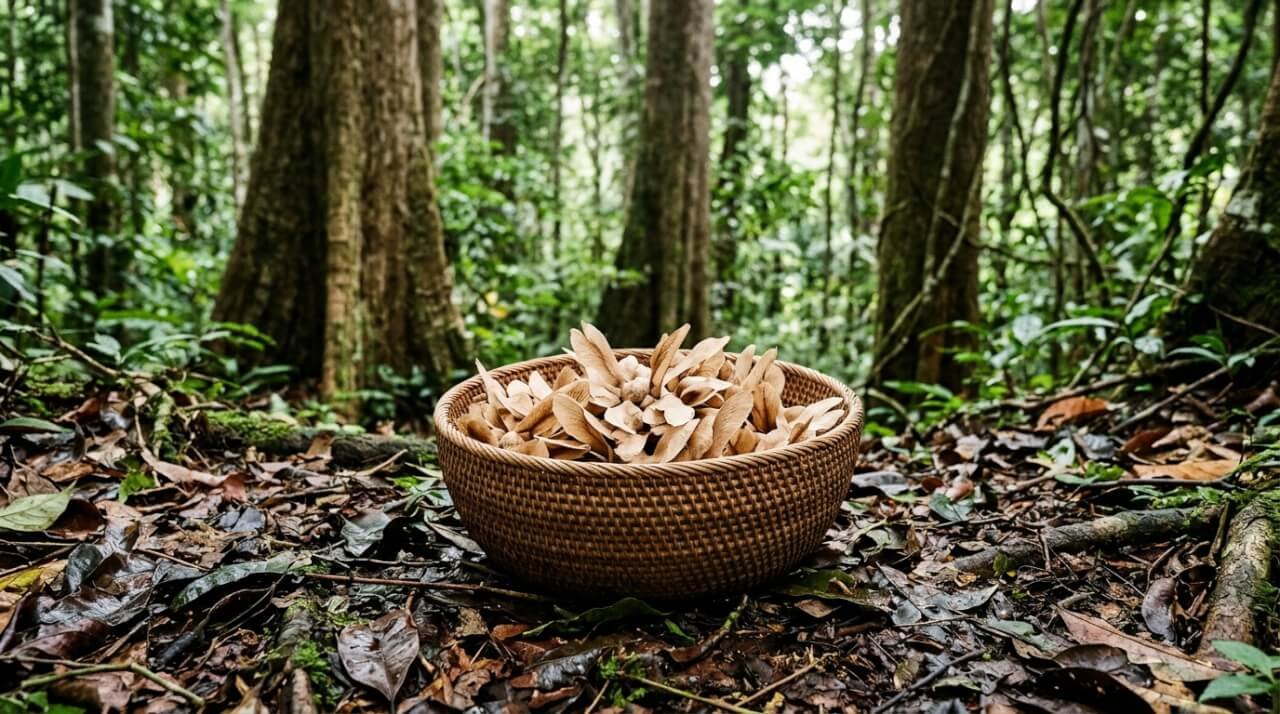
Illipe butter is pressed from the kernels of Shorea stenoptera, a tall dipterocarp tree of Borneo’s lowland rainforest. These trees are not planted in rows. They take three to four decades to begin fruiting, and they fruit together in a masting event that comes only every two to seven years. When it does, the winged nuts fall to the forest floor. Families gather what falls, dry it, crack it by hand, and press the kernels into a pale, solid butter that melts at skin temperature.
Nothing in that chain can be rushed or scaled into a plantation. The supply is tied directly to the health of the forest. That is what makes illipe a genuinely wild-harvested ingredient, and it is also why it is rarer than shea. If you want the skin science, our guide to illipe butter benefits explains why its stearic and oleic balance behaves so much like the skin’s own barrier lipids, and our comparison of illipe butter vs shea butter shows where each one shines.
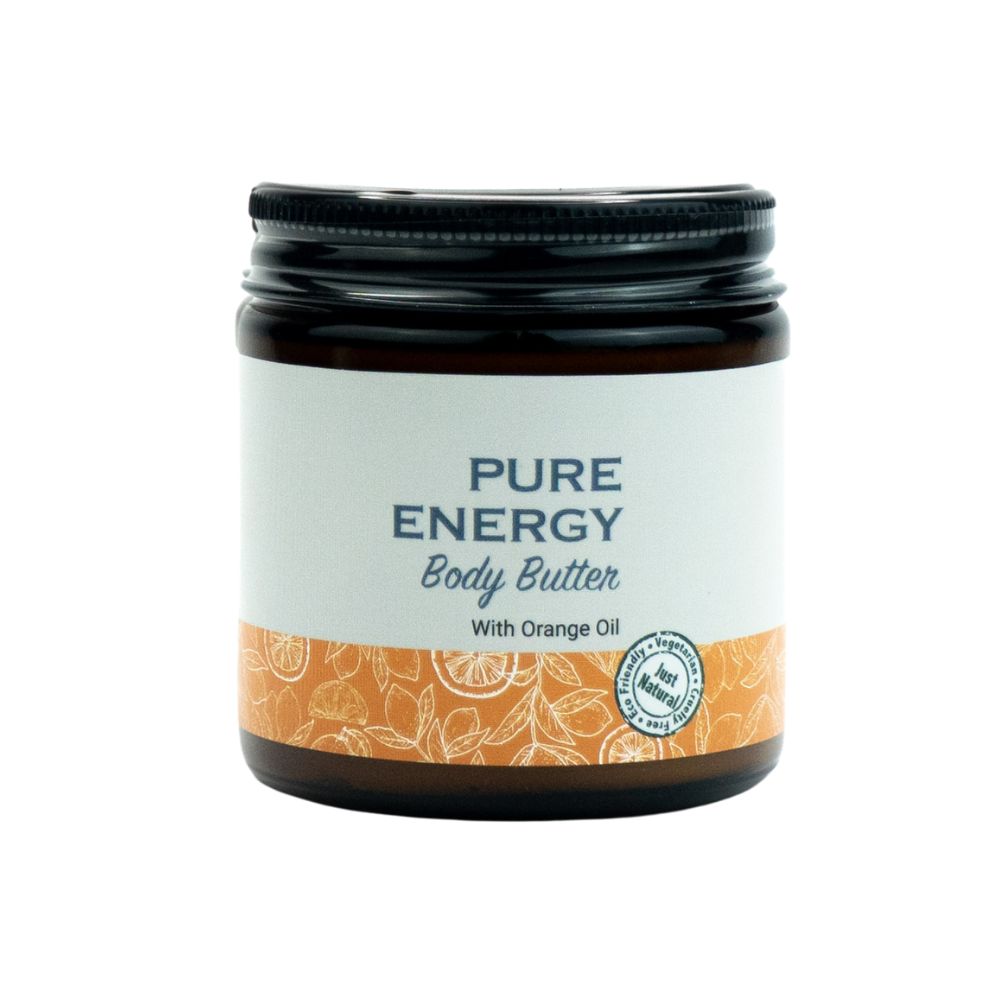
You can feel this butter in our Pure Energy Body Butter, which pairs illipe with coconut oil and a bright citrus blend, and in the softer, lavender-led Bliss Body Butter. Both carry expressed bergamot peel oil, so we suggest using them in the evening on skin that will see strong sun. For hands, our Radiant Hand Cream brings illipe together with marula and carrot seed oils in a small tube that lives happily in a bag.
Buah merah: wild, tended, and honest about both
Buah merah, the long crimson fruit of Pandanus conoideus, grows in the lowlands and highlands of Papua. Papuan communities have used it as food, remedy, and ritual ingredient for generations, and the oil is traditionally made by cooking the pulp slowly and pressing it by hand. We told part of that story in our piece on the people behind buah merah, and our deeper guide to buah merah oil covers the carotenoid science.
Here is the honest nuance. Buah merah grows wild, but it is also tended in smallholder gardens. Some of the fruit that reaches a press was gathered from forest edges. Some was grown in a family plot. Calling every drop of buah merah oil “wild-harvested” would be tidy, and it would not be fully true. The better description is the real one: hand-harvested by Papuan growers, from wild and garden-tended plants, processed slowly by people who hold the knowledge that made the oil useful in the first place.
That contrast matters. Illipe is wild because the tree refuses to be anything else. Buah merah sits between wild and cultivated, and the respectful thing is to say so. A brand that uses “wild” for both without explanation is choosing the romantic word over the accurate one.
Feel wild-harvested illipe in a daily ritual
Our Pure Energy Body Butter pairs Kalimantan illipe, gathered through our Forestwise partnership, with coconut oil and a bright citrus blend. It melts at skin temperature and leaves a soft, breathable finish. Hand-blended in small batches in Bali.
What we ask before we call anything wild-harvested
We are a small workshop, not a certification body. But we hold ourselves to a short set of questions before we use the word, and we think they are worth sharing because anyone can use them.
- Does the plant actually grow wild where it is gathered? If it is planted, irrigated, and harvested in rows, it is cultivated, however beautiful the farm. Cultivated is not a lesser word. It is simply a different one.
- Who gathers it, and are they paid directly? A cooperative or social enterprise that pays collectors directly keeps more value in the village than a chain of brokers.
- Does the harvest leave the plant standing? Gathering fallen nuts, picking fruit, or cutting leaves is very different from felling a tree or pulling up a whole root system.
- Does the harvest follow the plant’s own rhythm? Illipe follows the masting cycle. A supply that never runs short of a slow, seasonal ingredient is worth a second look.
- Can we name the region and the partner in public? If we would be uncomfortable printing the source, we should not be using the claim.
Not every ingredient we use passes the first question, and that is fine. Our coconut oil comes from Bali coconut groves through our partnership with Aluan. It is cultivated, and we describe it that way. You can feel that cold-pressed oil on its own in our Virgin Coconut Oil, and we compared the two textures in coconut oil vs illipe butter. Many of our essential oils come from grasses and flowers grown on Indonesian hillsides and harvested by hand, like the vetiver and cananga in our Bali Night Essential Oil Blend. Our Connection Thursday piece on the hands behind essential oil harvests tells that story. Hand-harvested, yes. Wild, no.
The point is not to make every ingredient sound wild. The point is to make every word true.
Overharvesting is a real risk, not a marketing footnote
Most articles about wild-harvested skincare ingredients mention overharvesting in a single sentence near the end. We think it belongs near the start, because it is the entire reason wild sourcing has to be done carefully. “Wild” is not automatically gentler than “farmed.” A wild plant that becomes fashionable can be stripped from its habitat faster than it can recover.
The aromatics world has painful examples. Indian sandalwood is now listed as Vulnerable on the IUCN Red List after decades of heavy demand. Brazilian rosewood oil came from a tree that was cut down to be distilled, and the species is now listed as Endangered. Spikenard, a Himalayan root prized in perfumery, is assessed as Critically Endangered. Our guide to what palo santo is unpacks a related confusion: two different trees share that name, and only one of them is under serious threat, which is exactly why a clear sourcing claim matters.
Overharvesting rarely looks dramatic at first. It looks like collectors walking further each season to find the same amount. It looks like younger plants being taken because the mature ones are gone. It looks like prices rising quietly while quality falls. By the time a species reaches a Red List category, the damage has usually been underway for years.
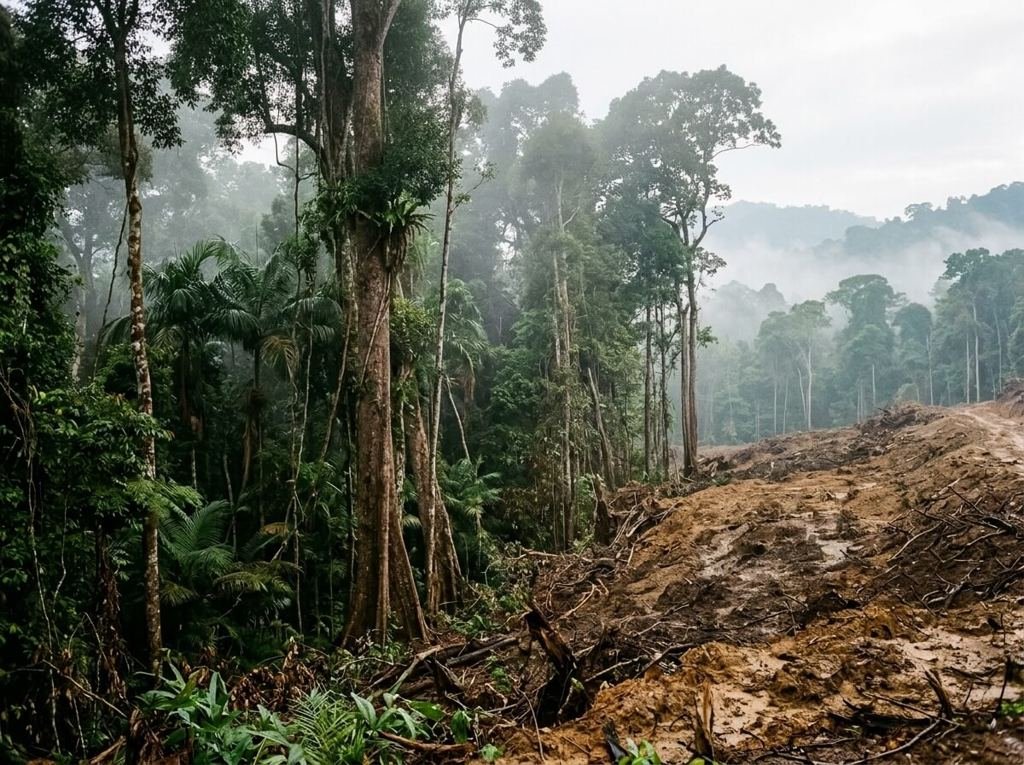
There is also a second risk that gets even less attention: clearing. For illipe, the bigger threat is not people gathering too many nuts. It is the forest being cleared for timber or plantation crops, so that there are no nuts left to gather at all. This is why the economics matter so much. When wild illipe earns a fair price, the trees are worth more standing. When it does not, they are worth more as timber. A conscious purchase is a small vote in that calculation, and it only works if the money actually reaches the forest.
So when a brand says “wild-harvested,” the follow-up question is not only “is it wild?” It is also “is the harvest helping the wild stay wild?”
Questions to ask any brand selling wild-harvested skincare ingredients
You do not need a lab or an auditor to tell a careful brand from a careless one. You need a few calm questions, and the patience to notice how they are answered. Send these to any brand, including us.
- Where exactly is it gathered? A country is a start. A region, an island, or a named partner is better.
- Is it wild, cultivated, or a mix? A careful brand will be comfortable saying “a mix” when that is the truth.
- Who does the harvesting, and how are they paid? Listen for cooperatives, social enterprises, or direct relationships rather than “our suppliers.”
- What part of the plant is used, and does the harvest kill the plant? Fruit, nuts, and leaves are very different from bark, heartwood, and whole roots.
- Is the ingredient certified, and if not, why not? “We are small and buy from a cooperative that cannot afford annual audits” is a reasonable answer. Silence is not.
- How much of the product is the wild ingredient? A wild ingredient at the bottom of a long list is a flavour of the story, not the substance of it.
Pay attention to tone as much as content. A brand that answers with specifics, admits limits, and invites follow-up is usually telling the truth. A brand that answers with adjectives (pristine, ancient, untouched) and no nouns is usually telling a story it has not checked.
These questions fit into a wider habit of conscious buying. If you are rethinking your shelf more broadly, our guides to zero waste skincare and refillable body care cover the packaging side of the same question. Sourcing and packaging are two halves of one promise: what goes into the jar, and what happens to the jar after.
Frequently asked questions about wild-harvested skincare ingredients
What does wild-harvested mean in skincare?
It means the plant material was gathered from plants growing in their natural habitat rather than planted and farmed. Illipe nuts collected from the Borneo rainforest floor are a clear example. On a cosmetic label, though, the term usually has no legal definition, so it relies on the brand’s honesty or on a certification such as FairWild.
Are wild-harvested ingredients better for skin than cultivated ones?
Not automatically. Wild plants can be rich and complex because they grow under natural stress, but quality depends on handling, freshness, and processing as much as origin. A well-made cultivated cold-pressed oil can outperform a poorly stored wild one. Choose wild ingredients for the ecological and community story when it is real, and judge efficacy on its own terms.
Is wild-harvesting always sustainable?
No. Wild harvesting is sustainable only when the harvest rate stays within what the plant population can regenerate, and when it does not destroy the plant. Sandalwood, rosewood, and spikenard all show what happens when demand outruns that limit.
How can I verify a wild-harvested claim without a certification logo?
Ask the brand for the region, the harvesting partner, and the part of the plant used. Look for whether they distinguish wild from cultivated ingredients. Brands with real relationships tend to name them publicly and repeatedly, across years of content, not just on one product page.
Which Utama Spice ingredients are wild-harvested?
Our illipe butter and kukui oil are wild-harvested in Kalimantan through our partnership with Forestwise. You can read more about kukui in our guide to kukui oil benefits for skin. Our coconut oil is cultivated in Bali through Aluan, and many of our essential oils come from hand-harvested, cultivated plants. We name each one for what it is.
Does traceable mean the same thing as wild-harvested?
No. Traceable means you can follow an ingredient back to its source. Wild-harvested describes where and how it grew. A cultivated ingredient can be fully traceable, and a wild one can be completely untraceable if it passes through enough brokers. The strongest claims combine both.
Why do wild-harvested ingredients cost more?
Because the harvest follows the plant, not the market. Illipe trees fruit only every few years, gathering and cracking nuts is hand work, and fair prices for collectors are part of what keeps the forest standing. A wild ingredient that is suspiciously cheap is worth questioning.
A last word. Labels will keep getting busier, and the words on them will keep getting softer. We would rather offer something plainer: the name of the place, the name of the partner, and an honest line between what is wild and what is not. That is the kind of proof we can stand behind. It is also, quietly, the oldest kind. What you give, you get back, and that is as true of a forest as it is of skin.