Buah merah oil: the Papuan red-fruit oil rewriting natural skincare
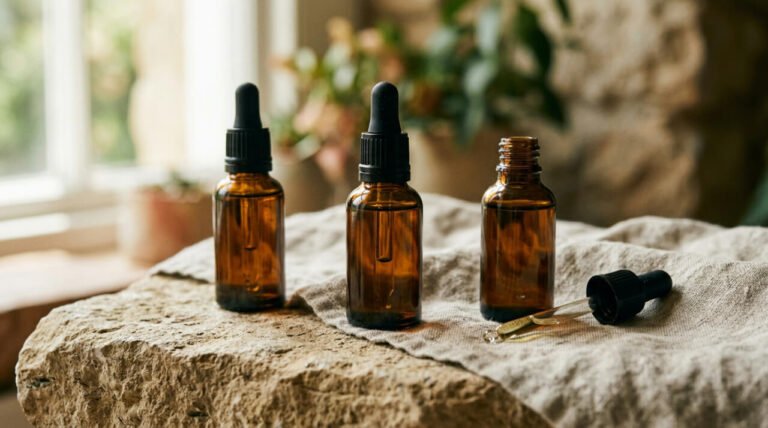
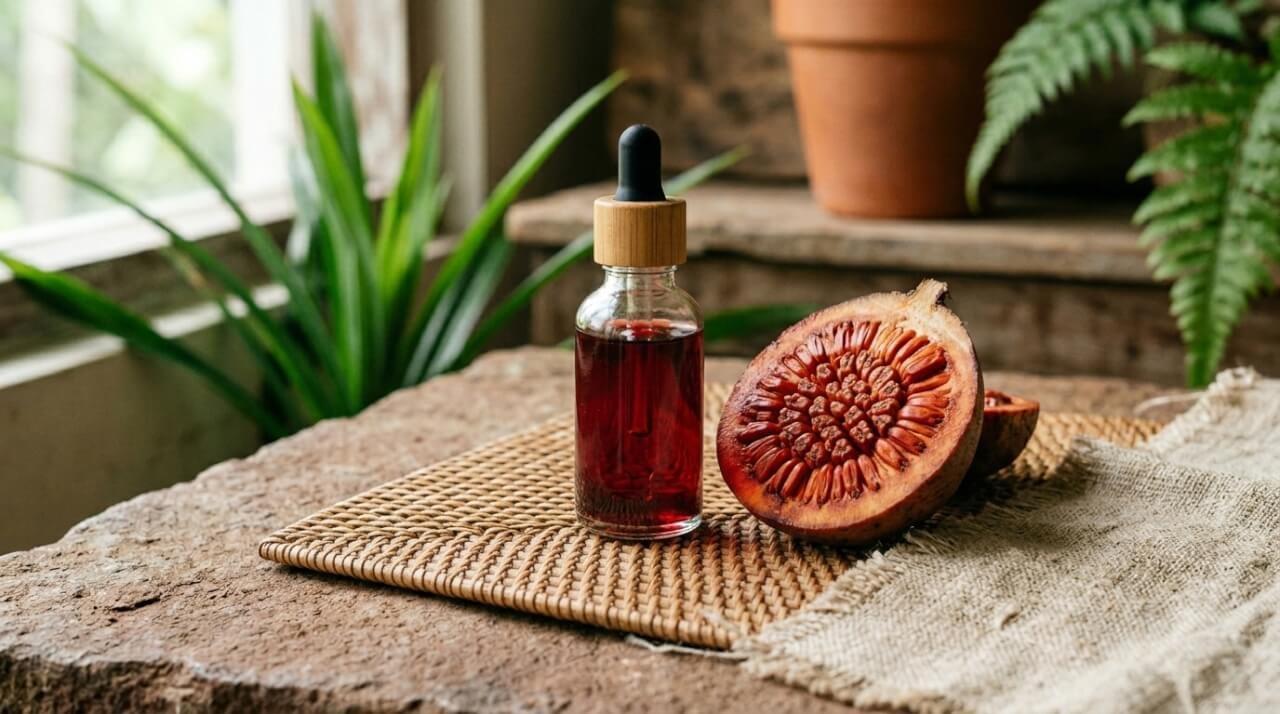
Open a bottle of buah merah oil and the first thing you notice is the colour, a deep, saturated crimson that no other plant oil quite matches. The shade is not a marketing accent. It is the molecules. Buah merah oil, cold-pressed from the red fruit of Pandanus conoideus in the highlands of Papua, is one of the most carotenoid-dense oils in the world, and that pigment is doing real work on the skin. In this guide we walk through what the oil is, where it comes from, why clean-beauty conversations are starting to call it a natural retinol alternative, and how to think about it next to the other red and orange oils you have probably already met.
Buah merah is Indonesian for red fruit. The plant is Papuan and Papua New Guinean. In our work at Utama Spice it sits alongside our other heritage oils, the Bali coconut, the Kalimantan illipe, the Pacific kukui, as part of a wider Indonesian botanical lineage that we have been crafting with since 1989. If you are exploring Balinese skincare or building a natural face oil shortlist, buah merah is one of the most interesting newcomers to know.
What buah merah oil is, and where it comes from
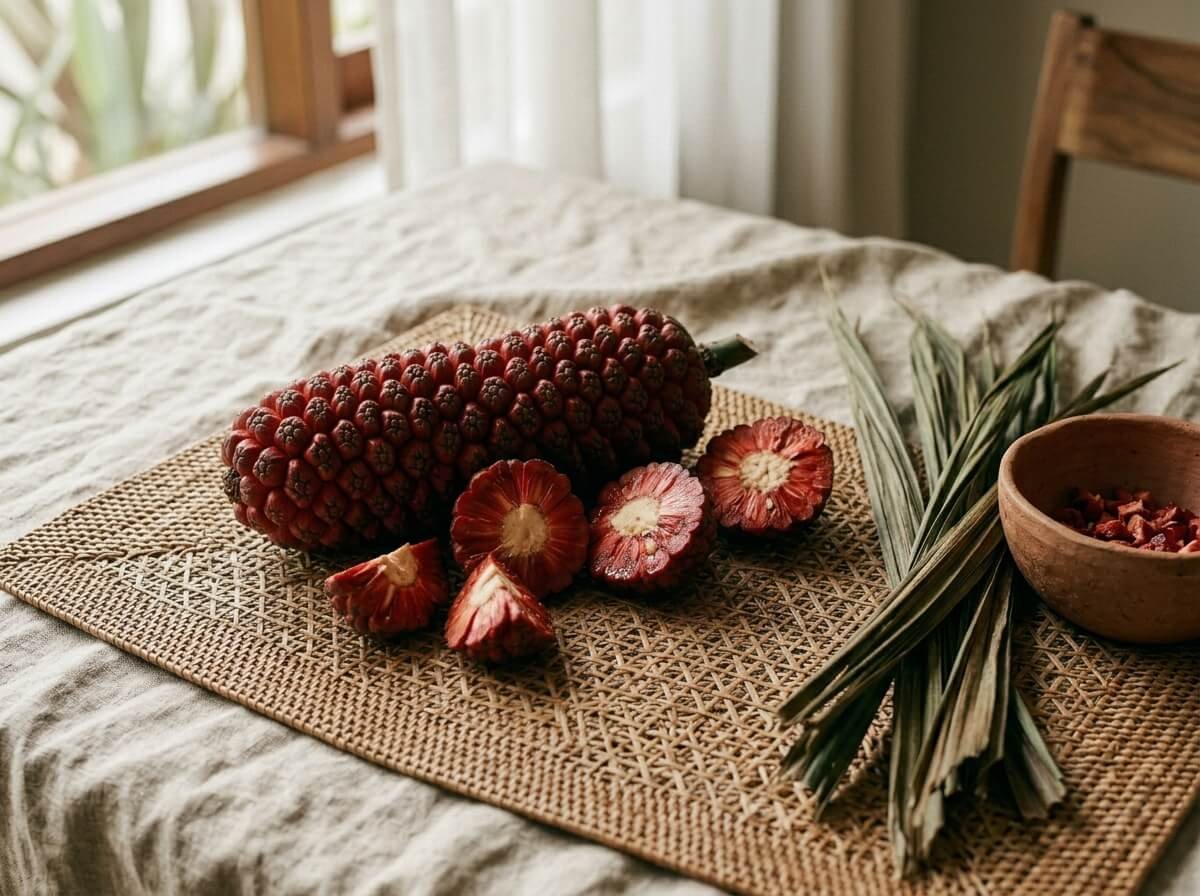
Buah merah oil is pressed from the fleshy red drupes of Pandanus conoideus, a screwpine endemic to the lowland and highland forests of Papua and Papua New Guinea. The fruit itself is striking, a long cylindrical cluster, sometimes thirty to one hundred centimetres in length, deep crimson on the outside, packed with tightly stacked seeds inside. To make oil, the cooked or steamed fruit pulp is pressed, and the result is a viscous, ruby-red liquid that smells faintly earthy, faintly sweet, faintly like the forest it came from.
Indigenous Papuan communities, including Marind, Dani, and other highland and lowland groups, have used buah merah for generations as a food, a traditional remedy, and a ritual ingredient. We mention this because it matters. Buah merah is not a forgotten ingredient that the wellness industry rediscovered. It is a Papuan staple that has been documented in regional research for decades, and any honest conversation about the oil starts there.
The fruit grows wild and is also tended in smallholder gardens. Harvest is seasonal, and the work of getting fruit from forest to press is largely done by hand. The oil itself only enters wider use when it is cold-pressed, because heat or solvent extraction degrades exactly the molecules that make the oil interesting in the first place. That cold-press step is part of why good buah merah oil is not cheap, and we will come back to the economics of that later.
The pigment is the proof: carotenoids, vitamins, and a rare omega-6 profile
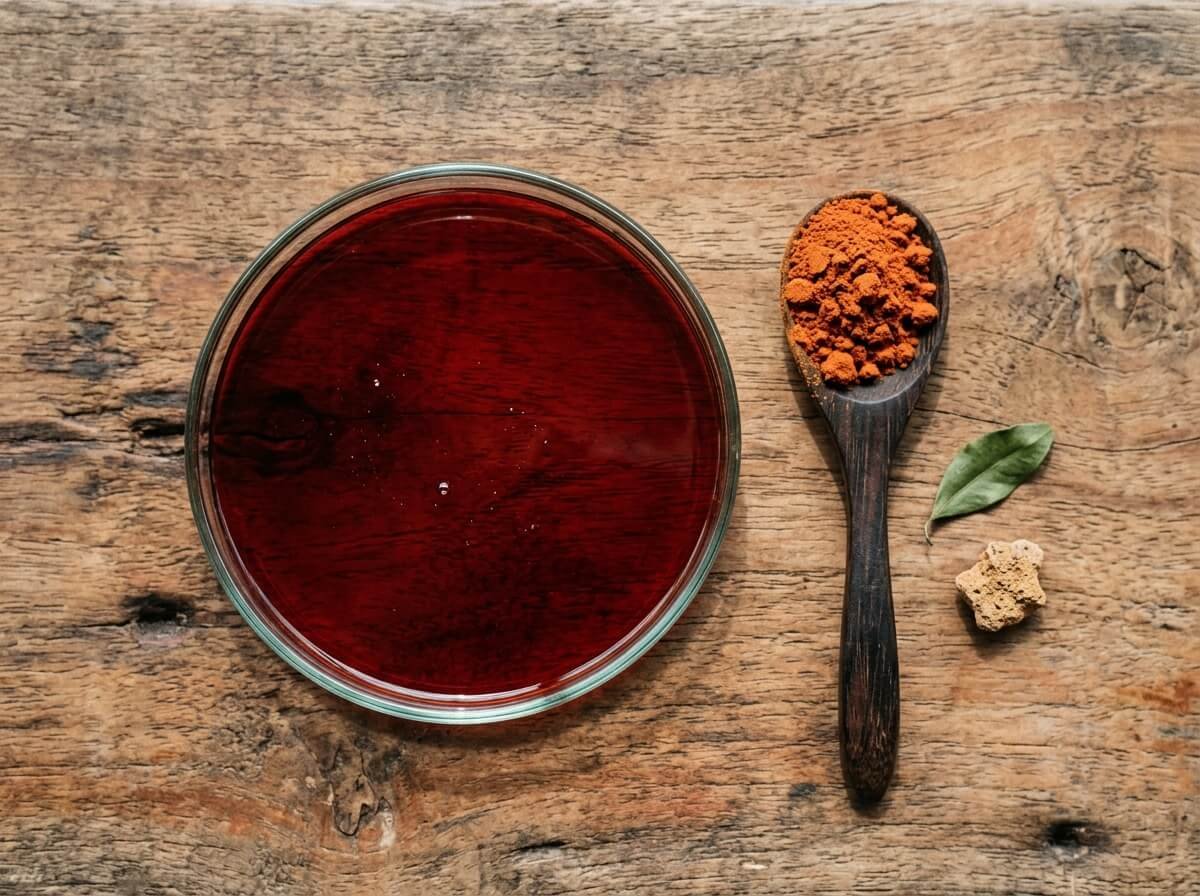
When a plant oil is this red, it is telling you something. The dominant pigments in buah merah oil are carotenoids, a family of fat-soluble antioxidant molecules. Two of them stand out: beta-carotene and alpha-carotene. Both are provitamin A carotenoids, which means the body can convert them into vitamin A as needed. Buah merah is also unusually rich in beta-cryptoxanthin, another provitamin A carotenoid, and in tocopherols and tocotrienols, the two forms of vitamin E.
The fatty acid profile is just as interesting. Independent analyses from cosmetic ingredient suppliers put buah merah oil at roughly sixty-five to seventy percent oleic acid, an omega-9 monounsaturated fatty acid that helps oils sit comfortably on the skin without feeling greasy. Linoleic acid, an omega-6 essential fatty acid that supports a healthy skin barrier, sits in the high teens, around seventeen to eighteen percent. Palmitic, stearic, and palmitoleic acids make up most of the remainder. That blend is close enough to the human sebum profile that the oil tends to absorb well rather than sit on the surface.
For readers who like comparing oils, the carotenoid concentration here is genuinely unusual. Rosehip oil contains beta-carotene, but at a much lower level. Sea buckthorn is closer in pigment intensity, though it brings a different fatty-acid story. If you are interested in how plant oils actually function on the skin in general, our guide to choosing a natural face oil walks through the science of fatty acid profiles in more depth.
Why buah merah is being called a natural retinol alternative
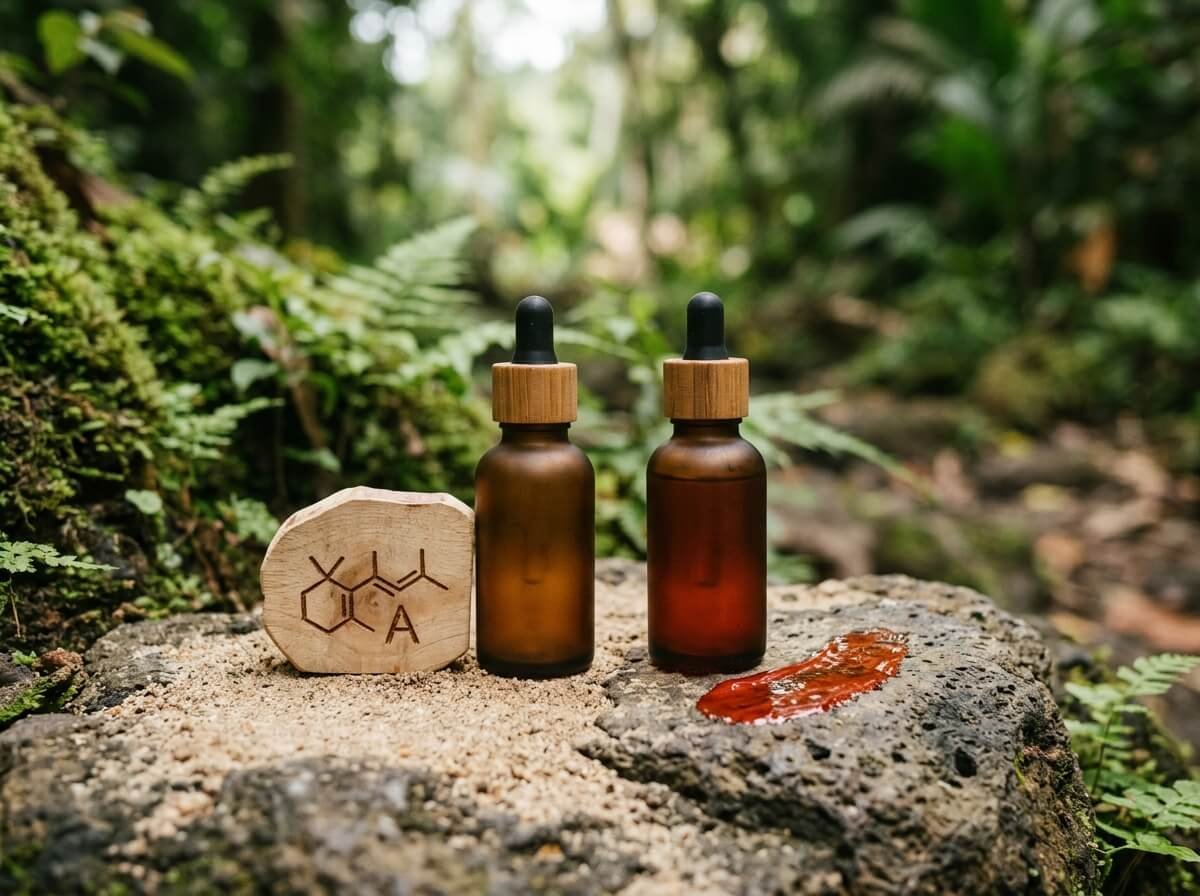
The retinol conversation in clean beauty has, for the last few years, been dominated by bakuchiol, a phytochemical from the babchi plant that activates some of the same skin-renewal pathways as retinol without the irritation profile. Buah merah is a quieter, older, and very different answer to the same question. Where bakuchiol works by mimicking retinol’s receptor activity, buah merah works through carotenoid chemistry, by supplying the precursors that the skin converts into vitamin A itself.
Vitamin A is the skin renewal vitamin. It regulates how skin cells turn over, how collagen is built, how pigment is distributed, and how the skin responds to ultraviolet damage. Topical retinol, retinal, and prescription tretinoin all work upstream of this same vitamin A activity, which is why they get results, and also why they tend to irritate skin that is not used to them. Carotenoid-rich oils take a slower, gentler path. The skin draws on the beta-carotene and beta-cryptoxanthin it is given and converts what it needs.
In practical terms, this means a buah merah oil routine looks nothing like a retinol routine. There is no purge, no peeling, no sensitivity window. The trade-off is that the change is also slower and more cumulative. If you are early in the conversation, our wider guide to natural retinol alternatives compares buah merah to bakuchiol, sea buckthorn, and rosehip in more depth, and our plant-based anti-aging skincare guide traces how these ingredients fit a full routine.
Where buah merah quietly outperforms: redness, hyperpigmentation, and skin barrier
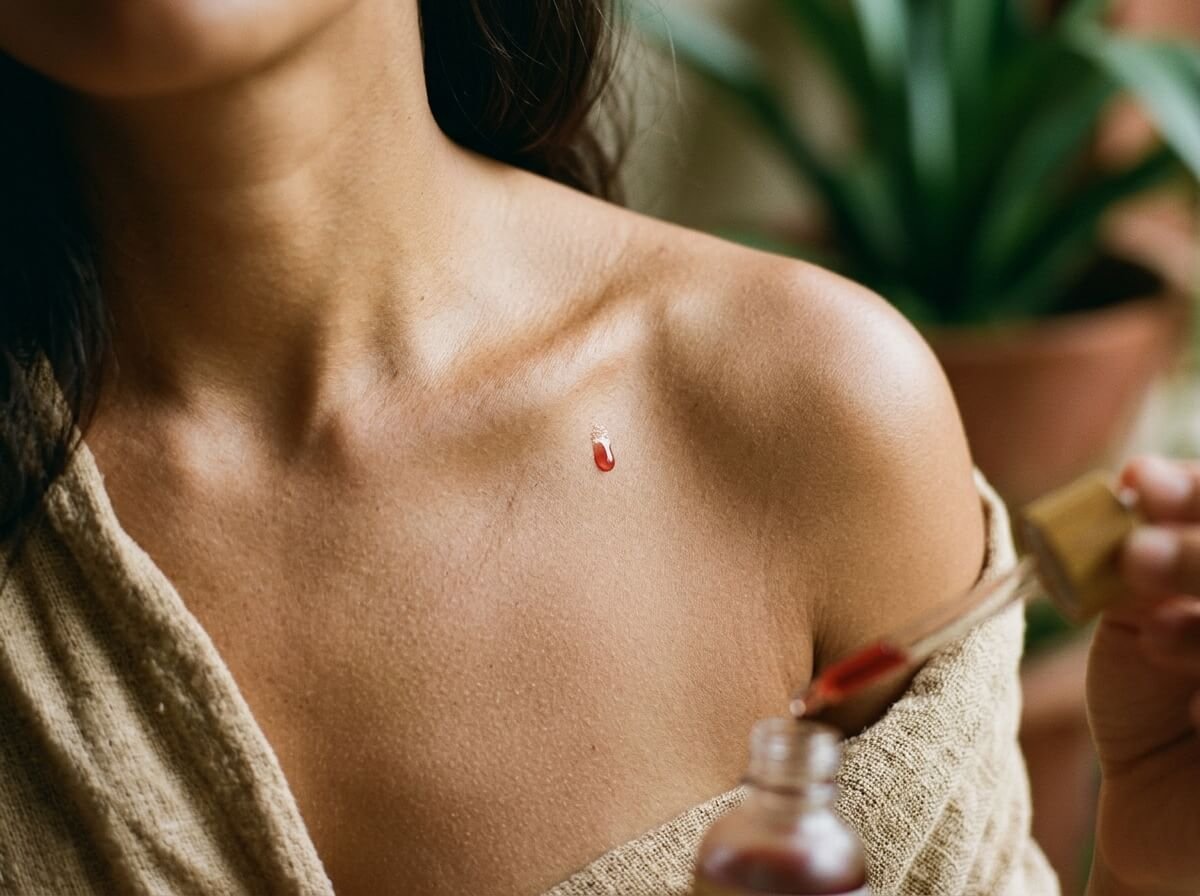
The three use cases where buah merah oil has the clearest case to make are anti-aging support, tone evenness, and skin barrier care. Each of these maps to a different part of the carotenoid and fatty acid profile.
For early anti-aging concerns, the combination of carotenoids and tocopherols offers daily antioxidant cover. Ultraviolet exposure and pollution produce free radicals that degrade collagen and elastin over time, and the same molecules that give buah merah its colour are the ones quenching those free radicals on contact. This is not a replacement for sunscreen, and we will say that clearly, but it is a real and well-documented mechanism.
For tone and hyperpigmentation, the picture is gentler. Provitamin A carotenoids support the same skin renewal pathway that helps post-inflammatory pigmentation fade over time. Buah merah will not fade a sunspot overnight. It supports the slow, even turnover that, used consistently, helps tone settle.

For redness and a compromised barrier, the linoleic-rich fatty acid profile matters most. Skin that has been over-exfoliated, or that runs reactive by default, often responds well to oils that look chemically similar to its own sebum. If you tend toward sensitivity, our Sensitive Face Serum uses a related logic, calming actives in a gentle base, and it is the formulation we usually point reactive skin toward first while they explore single-oil options like buah merah.
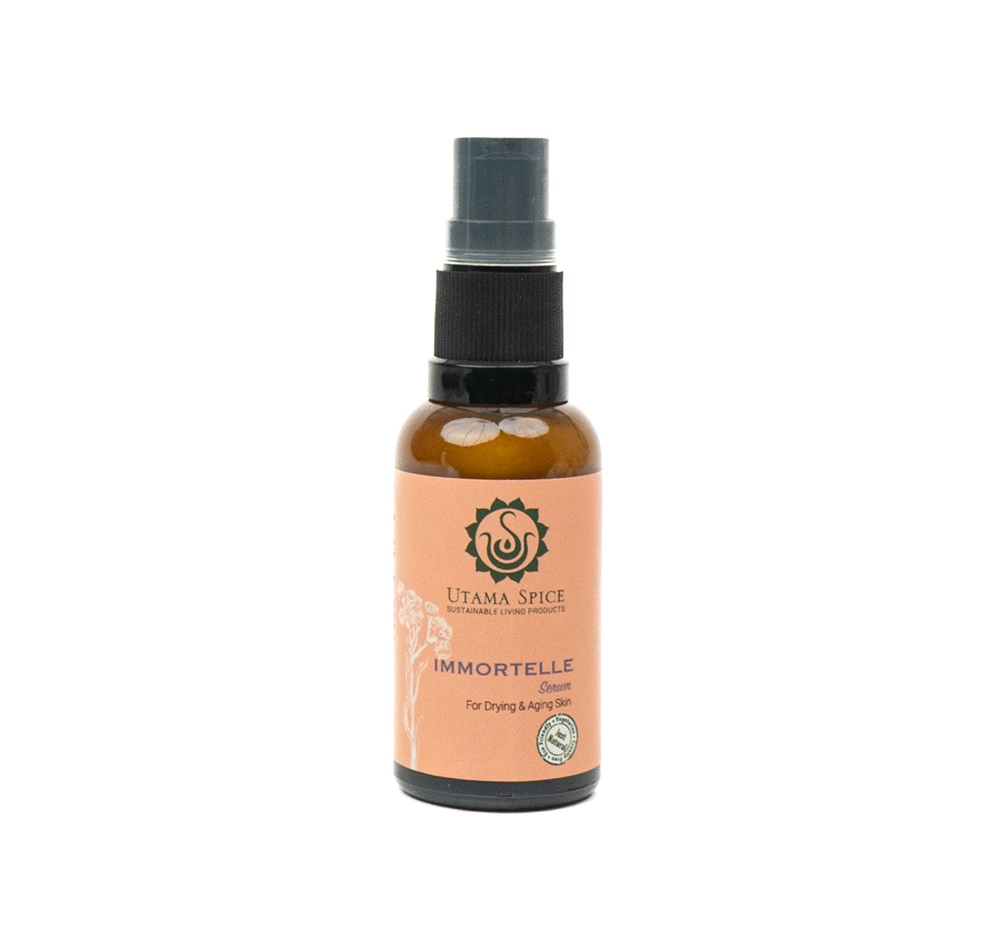
A botanical face serum in the same family
Our Immortelle Helichrysum Face Serum is built around the same logic that makes buah merah quietly powerful, plant-led, antioxidant-rich, and gentle enough for daily use. Crafted in Bali, hand-blended, refillable.
Buah merah vs sea buckthorn vs rosehip vs sacha inchi: choosing the right red or orange oil
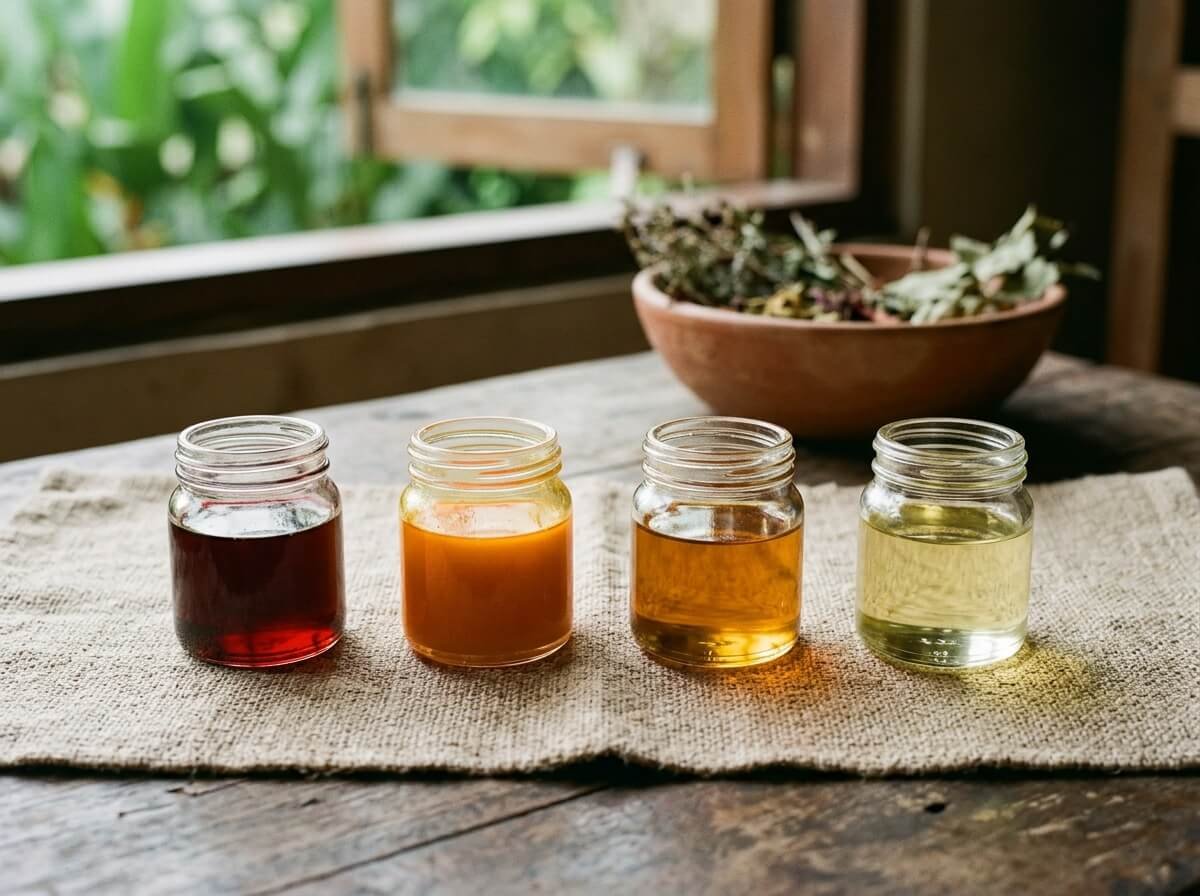
A small confession: the red and orange oils get talked about as if they are interchangeable, and they are not. Each one earns its place in a routine for a different reason. Here is how we think about the four most common ones.
Buah merah oil leads on provitamin A carotenoids and on a balanced, sebum-similar fatty acid profile. Best for: slow anti-aging support, tone evenness, dry to normal skin that wants gentle vitamin A activity without retinol.
Sea buckthorn oil is the other carotenoid heavyweight. The fruit oil is dense in beta-carotene and palmitoleic acid, an omega-7 that is uncommon in plant oils and useful for skin barrier work. Best for: mature skin, very dry skin, post-procedure recovery. Trade-off: the colour is intense enough that even a small amount can briefly tint the skin orange.
Rosehip oil sits in a different lane. It is lower in carotenoids than buah merah or sea buckthorn but high in linoleic acid and in a small amount of natural trans-retinoic acid. Best for: oilier skin, acne-prone skin, tone evenness with a lighter feel. Trade-off: it oxidises quickly, so freshness matters.
Sacha inchi oil is the outlier in this group, not red but pale gold, very high in omega-3 alpha-linolenic acid and linoleic acid. Best for: skin that needs essential fatty acid support more than it needs colour-pigment antioxidants. If you want a single-oil omega story, this is the one. For broader oil choice, our natural face oil guide compares ten options including kukui and coconut.
Ethical sourcing in Papua: cold-press economics and why this oil is rare for good reasons
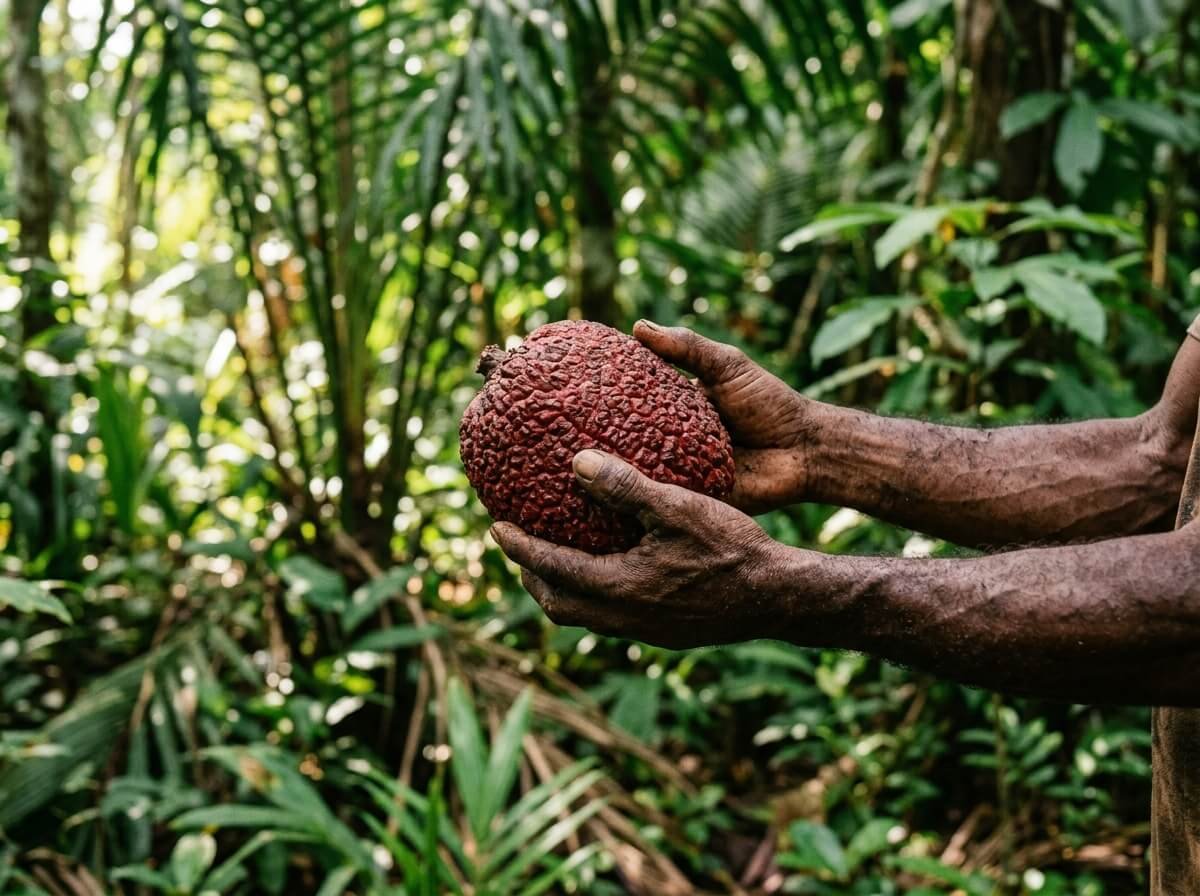
Buah merah oil is not cheap, and we would rather explain why than pretend it is a problem we can solve with marketing. Three things stack up. The fruit grows in remote highland and lowland forests. The harvest is seasonal and largely done by smallholder families. And good oil requires cold-press extraction, which is slower, lower-yield, and equipment-intensive compared to heat or solvent extraction.
For ethical sourcing, the questions we ask are familiar. Where is the fruit coming from. Who is being paid for the harvest. Is the cold-press happening in Papua, where it keeps more of the value chain in the region, or has the fruit been shipped abroad before any of the real processing happens. Are the smallholder families part of a cooperative or a documented supply chain, or are they invisible at the supplier level. These are the same questions we ask about our Kalimantan illipe butter and our coconut oil from the Aluan partnership.
The Outlaw stance here is short. Buah merah is the kind of ingredient that mass-market clean beauty will rush to source the cheapest version of, label as a Papuan wellness ingredient, and quietly send the value somewhere other than Papua. We think that is the wrong shape of the future. Our own approach with rainforest oils, through partners like Forestwise for kukui oil and illipe, is to keep value as close to the harvest as possible. Buah merah deserves the same logic.
How to use buah merah oil in a daily routine
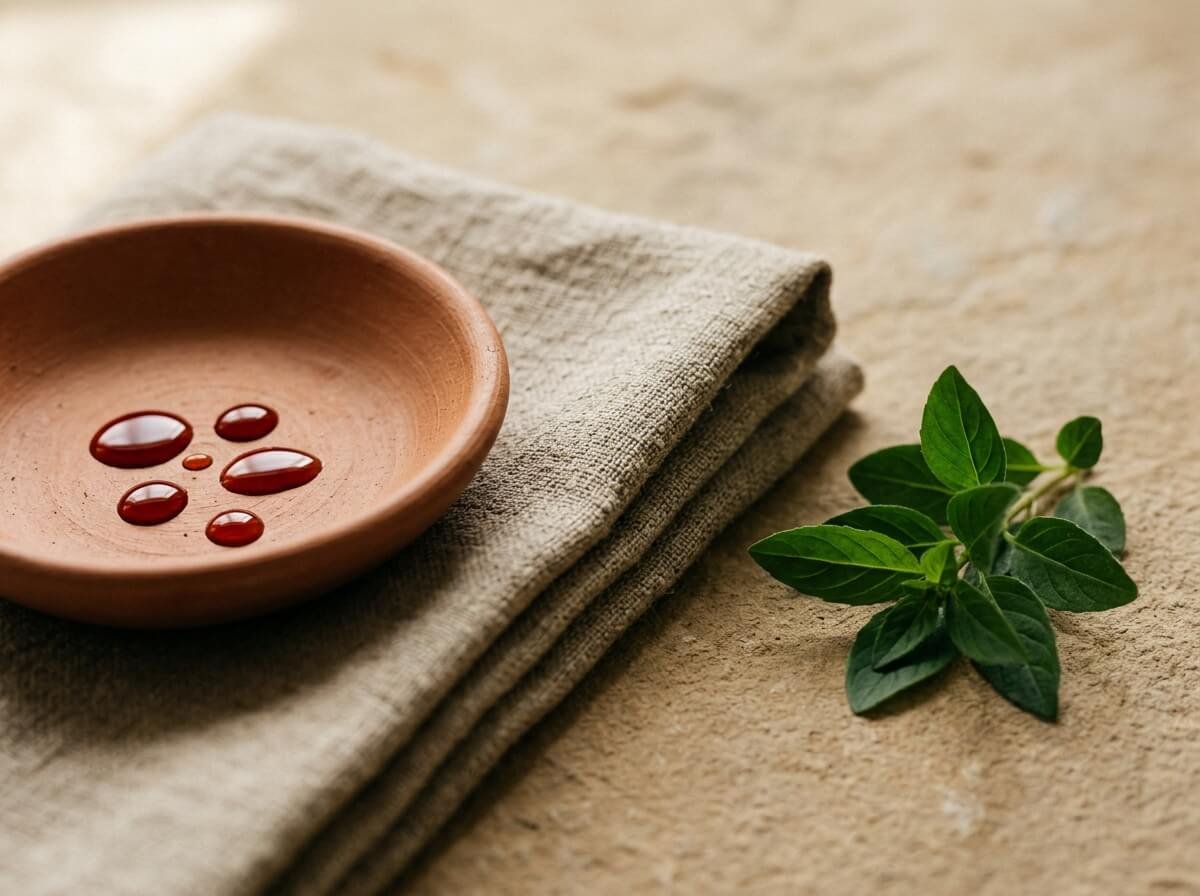
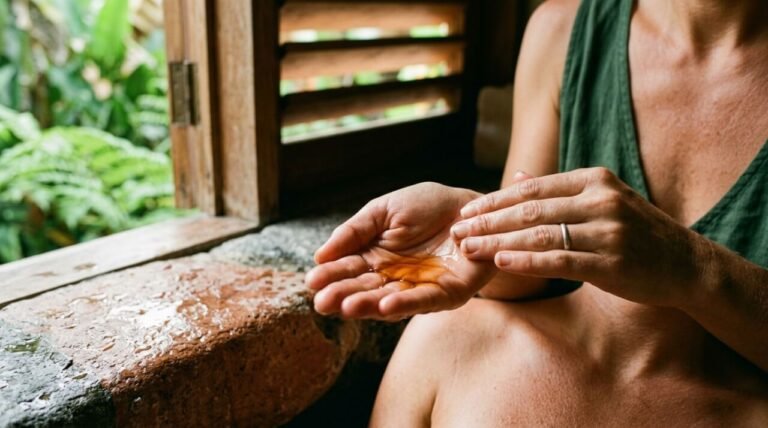
Buah merah oil is a finishing oil. That is the simplest way to think about it. After cleansing and any water-based serum or hydration step, two or three drops, warmed between the fingers, pressed into damp skin. The colour disperses almost immediately, and what is left is a soft, slightly luminous finish. Used in the evening, it has space to work overnight. Used in the morning, it pairs well with a daily mineral sunscreen and disappears under makeup.
For a full plant-led routine, we tend to suggest layering rather than swapping. Cleanse. Tone or hydrate with something water-based, our aloe vera gel for face is a common pick. Apply the buah merah oil. Seal with a moisturiser if your skin is dry, our HydroBotanic 3-in-1 Hydrating Face Cream is built for this last step. For combination or oilier skin, the oil alone is often enough, and our Oily Face Serum is the blend we usually pair with it for acne-prone skin.
At Utama Spice we frame all of this inside what we call ritual care. The point is not to add seventeen steps. It is to pay attention. A small bottle of crimson oil pressed from a Papuan red fruit, used slowly and consistently, is more useful than a shelf of half-empty products. If you are mapping out where buah merah fits in a wider plant-led day, our plant-based anti-aging skincare guide and tremella mushroom skincare benefits piece give you the rest of the routine. And if you want the philosophy behind the way we build all of this, the Bali heritage skincare story is the place to start.
What you give, you get back. That is the line we keep coming back to. Buah merah oil is a long, slow ingredient. It does not promise a miracle. It does not need to. The colour tells you what it is. The carotenoids do the work. The rest, the consistency, the patience, the choice of where your oil came from, is yours.