Palm oil free skincare: the label trick almost everyone misses
Palm oil free skincare sounds like a straightforward promise. A brand prints the claim on the front of the bottle, and the assumption is that the problem is solved. It rarely is. Palm oil derivatives hide behind more than two hundred different ingredient names, which means scanning a label for the word “palm” catches almost nothing. Worse, the usual next step, swapping in coconut oil as the automatic “ethical” replacement, skips a harder truth: coconut is a tropical palm too, and what actually matters is how any tropical ingredient is grown and harvested, not which plant it came from.
We source illipe butter from the exact Kalimantan region where industrial palm monoculture is actively expanding, through a wild-harvest partnership that proves the alternative to extraction is not a slogan. This piece is the honest version of the palm oil free skincare conversation: what the label trick actually hides, why coconut oil is not automatically the answer, and what regenerative sourcing looks like when you follow it all the way to the source.
We are writing this as a brand that sells body butter, not as a neutral party, and we think that is worth saying plainly up front. The reason we can afford to complicate the easy “palm oil free” story is that our own sourcing holds up under the same scrutiny we are asking you to apply to everyone else. What follows is not a takedown of other brands. It is a walk through the questions a palm oil free skincare claim should answer but usually does not, using our own supply chain as the example because we can trace every part of it.
Why “palm oil free” on a label often means less than you think
A “palm oil free” badge is a narrow claim doing the work of a broad one. It usually means the finished formula does not contain palm oil or palm kernel oil in their whole, unrefined forms. It says nothing about the dozens of palm-derived ingredients still allowed to sit in the same bottle under their own chemical names, and it says nothing about the palm that went into packaging, processing aids, or supply-chain inputs further up the line. The badge answers a question most shoppers were not actually asking.
This is not a conspiracy. Most brands printing the claim believe it is accurate, because by the narrowest technical definition, it is. But a label is a piece of marketing before it is a piece of chemistry, and marketing tends to simplify in the direction that sells. “Palm oil free” is easier to print, easier to understand, and easier to feel good about than “we checked every derivative and sourcing line, and here is what we found.” The second version is the one that is actually true to the claim.
We would rather make the harder claim than the easier one. That is the Sage part of this: the honest answer is rarely the short one, and a brand that respects its customers says so plainly instead of reaching for the cleaner-sounding badge.
There is also a supply-chain layer the badge cannot reach. A finished formula might genuinely exclude palm oil, yet still rely on packaging additives, processing agents, or even the fuel used to refine other ingredients, all of which can trace back to palm somewhere upstream. Certification bodies that track palm oil at the derivative level exist, but very few consumer brands pay for that depth of audit, and almost none advertise the limits of what their own claim actually covers. A shopper reading “palm oil free” in good faith has no way to know which version of the claim they are getting.
None of this means the claim is worthless. A brand that has gone to the trouble of removing palm oil and palm kernel oil from its formula has done real work, and that work deserves credit. The point is narrower: the badge tells you about one ingredient, not about the sourcing philosophy behind the whole product. Those are different questions, and conflating them is how a shopper ends up feeling reassured by a claim that was never designed to carry that much weight.
The 200-name problem: how palm oil hides on an ingredient list
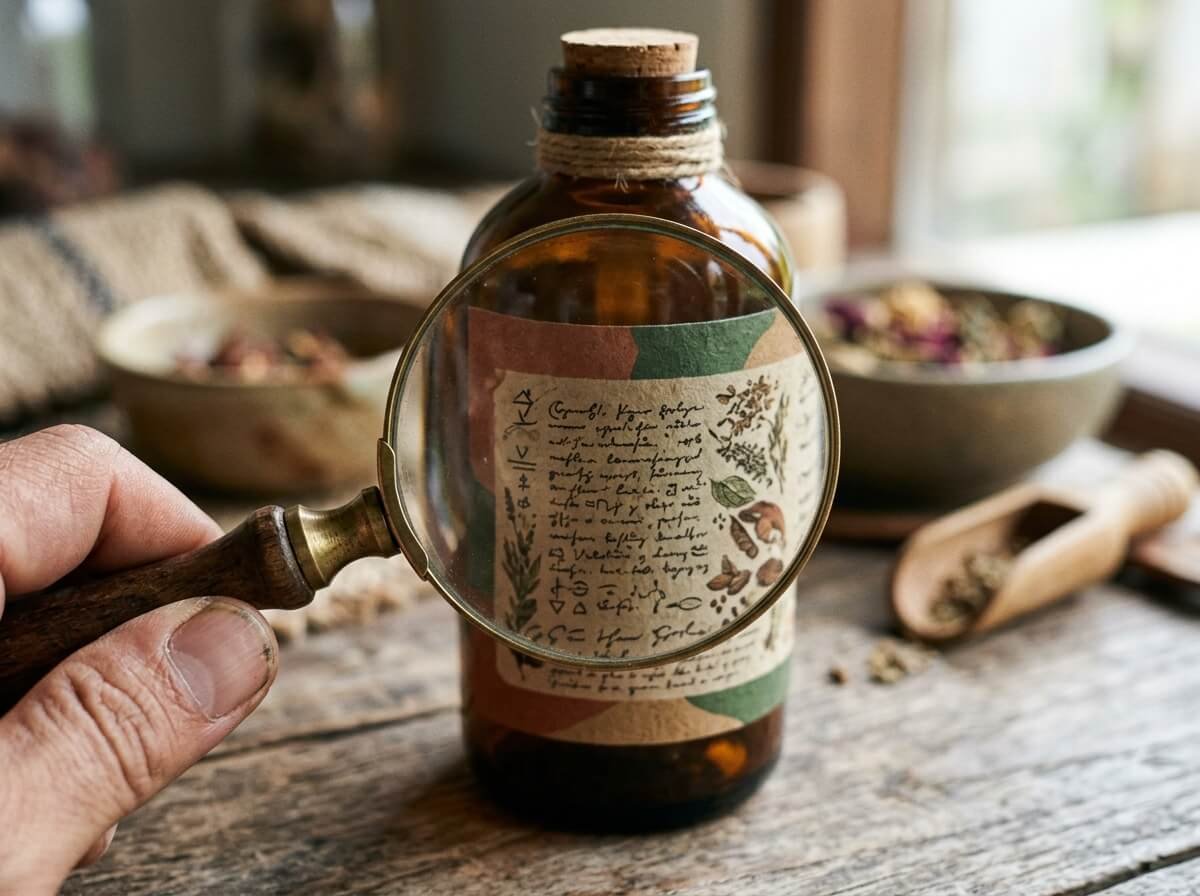
Here is the part almost no palm oil free skincare guide actually walks through. Palm oil and palm kernel oil are refined and split into dozens of derivative ingredients, and those derivatives appear on ingredient lists under their own INCI names, with no mention of “palm” anywhere in the word. Sodium lauryl sulfate, cetearyl alcohol, glyceryl stearate, and sodium palmate are four common examples, and the real count of possible palm-derived names runs into the hundreds.
- Emulsifiers that blend oil and water phases, often named for their chemical function rather than their plant origin.
- Surfactants and foaming agents, common in cleansers, frequently palm-derived even in “gentle” formulas.
- Fatty alcohols and stearates, used to thicken creams and lotions, almost never flagged on front-of-pack claims.
This is not a reason to panic over every ingredient list. It is a reason to be clear-eyed about what a front-of-pack claim can and cannot tell you. If reading an INCI list line by line sounds exhausting, that reaction is reasonable, and it is also exactly why so many shoppers lean on the badge instead and never learn to look past it. We write more about how to read a label without the fear or the greenwashing in our guide to skincare ingredients worth watching for, which covers the same label-literacy problem from a wider angle.
Part of why these names stay hidden is structural, not malicious. Cosmetic regulation requires ingredients to be listed by their International Nomenclature of Cosmetic Ingredients name, a naming system built for chemical consistency across borders, not for sourcing transparency. The system was never designed to answer “where did this come from,” only “what is this, chemically.” That gap between what a label is required to say and what a conscious shopper actually wants to know is the real root of the 200-name problem, and no amount of reading more carefully closes it on its own.
A practical habit helps more than memorizing a list of two hundred names ever could. When an ingredient’s function sounds generic, an emulsifier, a surfactant, a fatty alcohol, treat it as a prompt to ask the brand directly rather than assume either the best or the worst. Brands with nothing to hide about their derivative sourcing will usually answer plainly. Brands that go quiet, or redirect to the same front-of-pack badge, are telling you something too.
Is coconut oil really the ethical alternative?
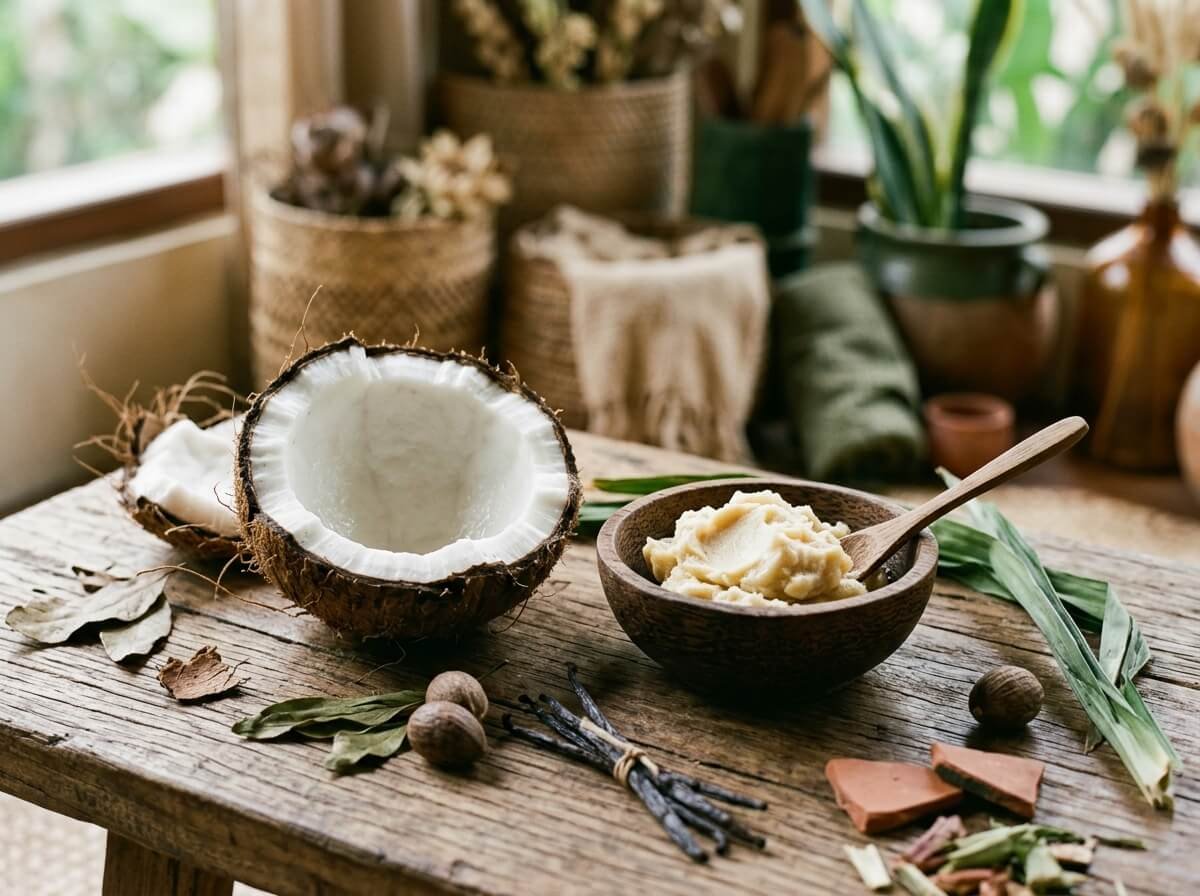
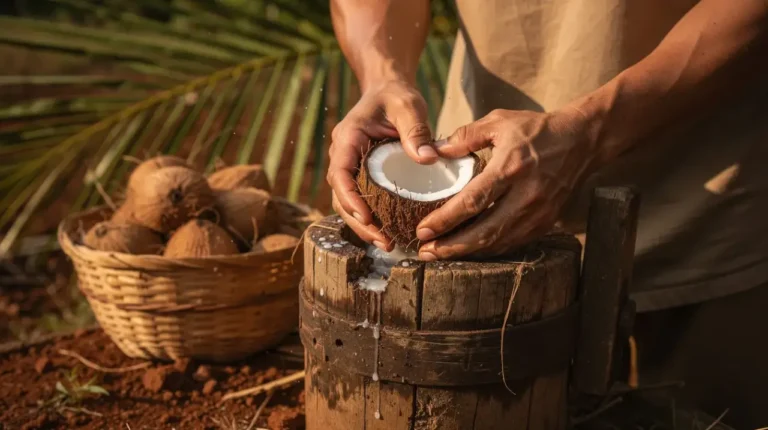
Once a shopper learns to distrust palm oil, the next instinct is to reach for coconut oil as the safe tropical substitute. We understand the instinct. Coconut is central to our own line, including our Virgin Coconut Oil, cold-pressed from Bali plantations. But coconut and palm are both tropical palms, and the plant family is not the variable that decides whether a tropical ingredient is a regenerative choice or an extractive one. The harvest method is.
Industrial monoculture coconut plantations can carry the same deforestation, soil depletion, and smallholder displacement pressures that make industrial palm oil a problem in the first place. Wild-harvested or smallholder-grown coconut, grown alongside other crops rather than clearing land for a single one, is a different story entirely. The honest answer to “is coconut oil the ethical alternative” is: it depends, in exactly the same way palm oil’s impact depends, on how it was grown and who it paid along the way.
We go deeper into this comparison, oil by oil, in coconut oil versus illipe butter, which lays out which Balinese base actually suits different skin needs rather than assuming one tropical oil universally beats another.
Palm oil earned its reputation through decades of visible, large-scale rainforest clearing, documented and reported widely enough that the word itself now triggers an immediate reaction. Coconut has largely escaped that same scrutiny, not because its supply chains are automatically cleaner, but because coconut plantations are older, more dispersed, and less visually dramatic in satellite imagery than a single contiguous palm estate. Public attention follows visibility, and visibility is not the same thing as impact. A quieter supply chain can still be an extractive one.
This is exactly why we treat “cold-pressed” and “smallholder-sourced” as claims we can trace, not phrases we repeat. Our Bali coconut moves through the Aluan partnership, which works directly with growers who intercrop coconut alongside other plants rather than clearing ground for a single monoculture crop. That distinction, intercropped versus cleared, is the same distinction that decides whether any tropical ingredient, coconut or palm, is doing harm or doing good.
Kalimantan: where this story is actually happening right now
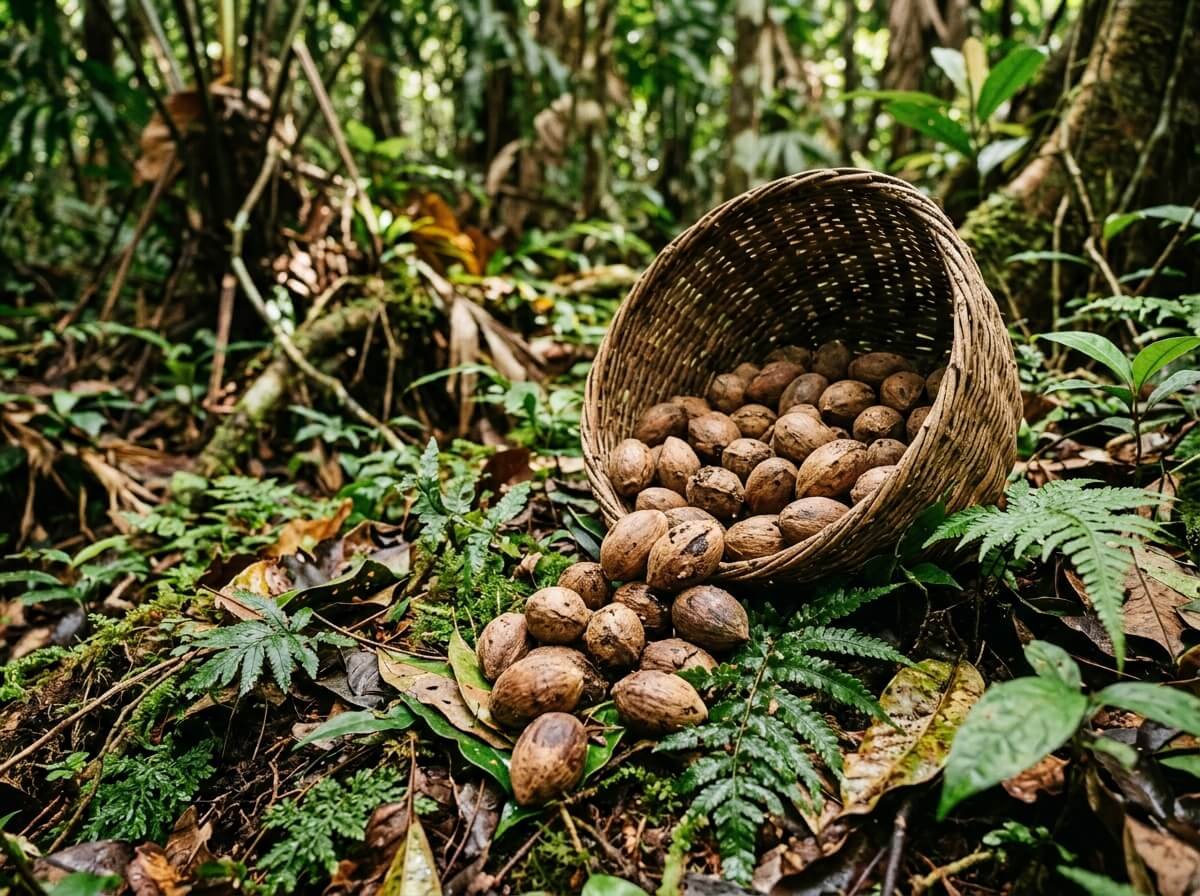
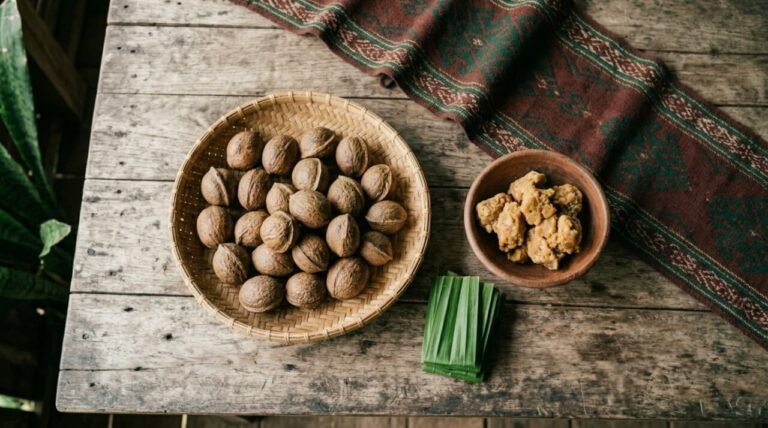
Kalimantan, the Indonesian portion of Borneo, is ground zero for both problems and solutions in this conversation. Industrial palm oil expansion is an active, ongoing pressure on its rainforest, and that same rainforest is where wild illipe trees (Shorea stenoptera) grow, producing the butter we use across our body line. Families in these forest communities have wild-harvested illipe nuts for generations, work that depends on the forest staying standing rather than being cleared for a plantation.
We source our illipe butter through the Forestwise partnership, which pays wild-harvesters directly and ties their income to the forest’s survival rather than its removal. The fuller version of that story, including why this particular ingredient matters so much to the region’s ecology, lives in illipe butter benefits: the Kalimantan rainforest secret behind your body butter. It is proof that a tropical ingredient does not have to choose between serving people and serving the forest it came from.
This is the connection most palm oil free skincare content never makes. The same region under pressure from one extraction model is actively demonstrating the regenerative alternative, on the ground, right now.
It would be easy to tell this as a simple story: forest good, plantation bad. The truth on the ground in Kalimantan is more layered than that. Wild illipe harvesting exists alongside, and sometimes adjacent to, land already cleared for palm estates, which means the choice families make about which work to pursue has real economic weight behind it. Wild harvesting only remains a viable livelihood when there is steady demand on the other end of the supply chain, buyers willing to pay fairly and consistently for a forest-based ingredient rather than treating it as a novelty.
That is the quiet mechanism behind every jar: consistent demand for wild-harvested illipe butter gives forest communities a reason to keep the forest standing instead of selling the land. It is a slower, less dramatic form of conservation than a campaign or a certification logo, but it is the kind that holds up over years rather than one news cycle.
What regenerative sourcing looks like in practice
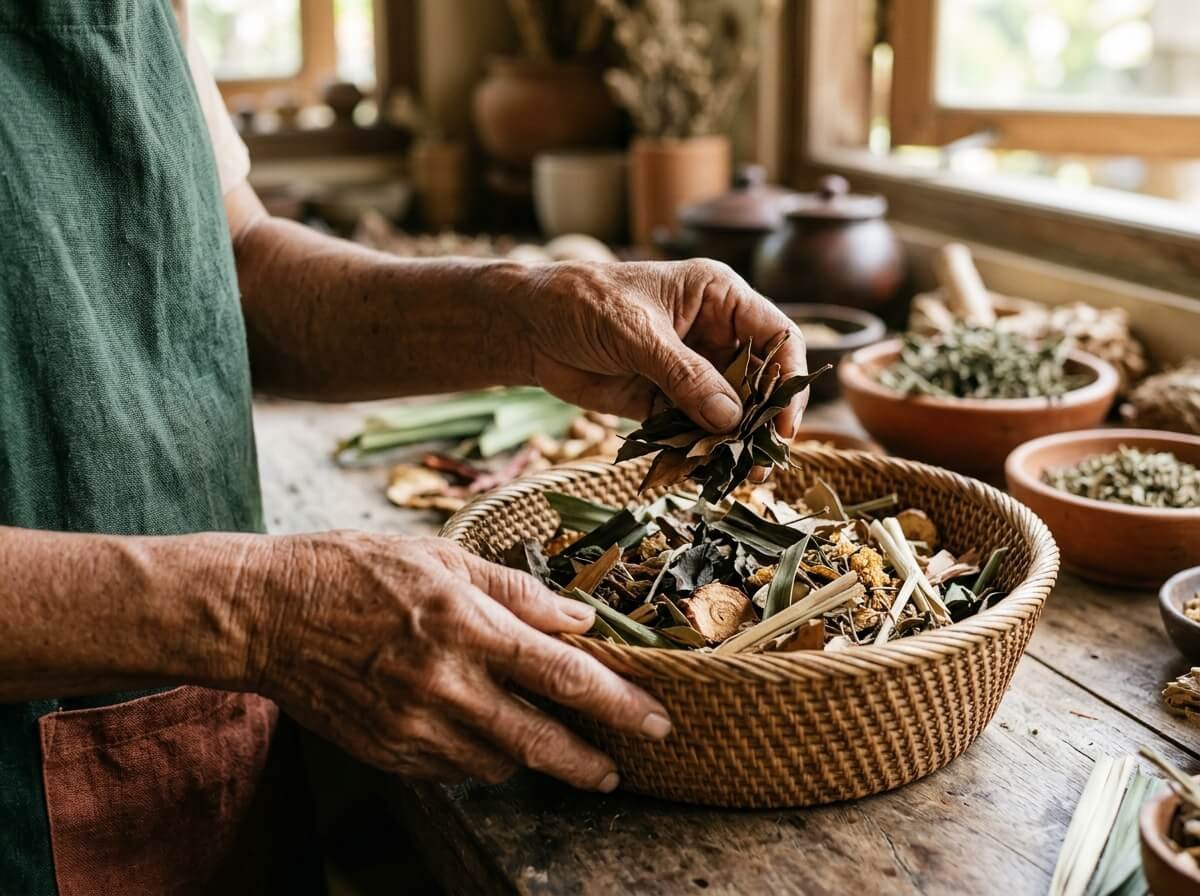
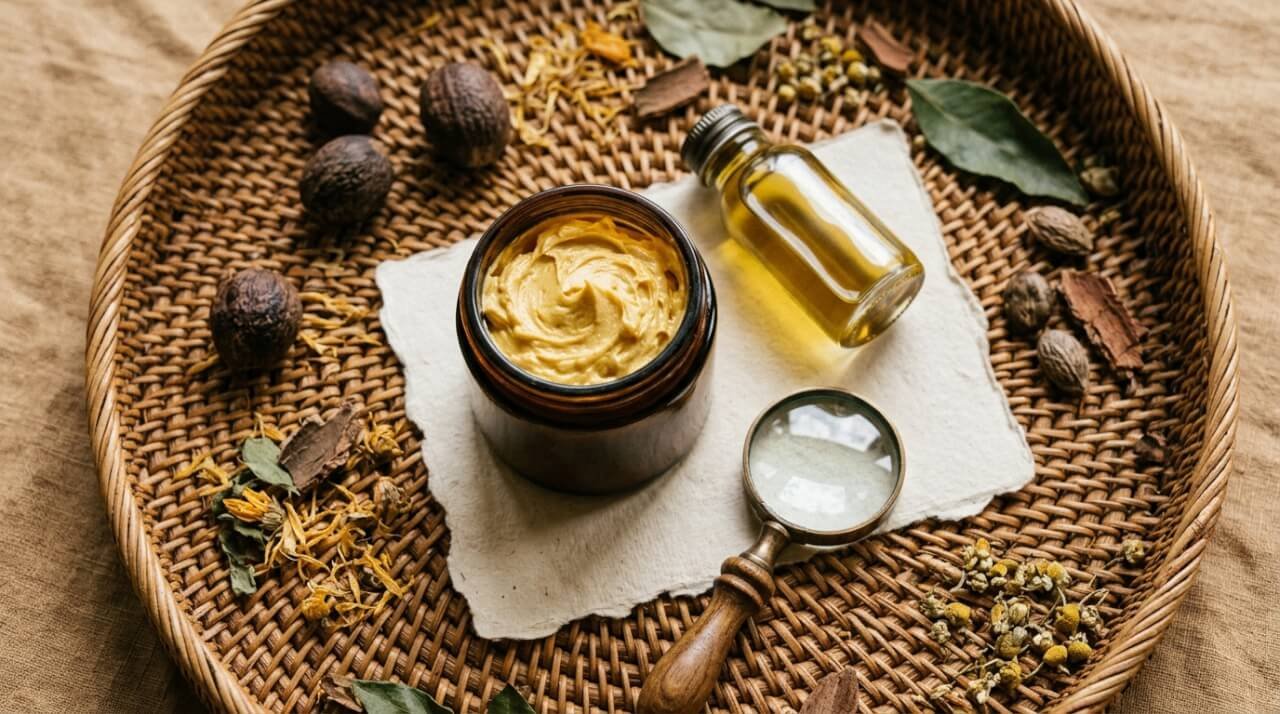
Regenerative sourcing is a phrase that gets used loosely, so we would rather show it than define it. Our illipe butter, the same ingredient behind our Bliss Body Butter, moves from Kalimantan’s forest floor to our small-batch workshops in Bali through a chain that pays the harvester fairly, keeps the forest intact, and supports the families who have done this work across generations.
Closer to home, the Munti Gunung Social Enterprise supports women and families in East Bali through fair work and skill-building, a different link in the same chain of care. We wrote about the women behind that program directly in the women of Munti Gunung and the hands behind your bottle, and the pattern there is the same pattern we are describing in Kalimantan: care for people and care for place are not competing priorities, they are the same job done properly.
This is also the deeper context behind a trend we have written about before. The ingredient did not arrive with a marketing cycle. As we noted in butter skin: the trend just got a name, Bali gave us the ingredient decades ago, illipe butter has been part of this region’s skincare tradition long before it had a hashtag, and that long relationship is exactly what makes the sourcing durable instead of opportunistic.
Regenerative sourcing also has to survive contact with ordinary business pressure, not just a founder’s good intentions in a single season. Fair pricing for wild-harvested ingredients has to stay fair when demand dips, when currency shifts, when a cheaper industrial alternative becomes available. That consistency, paying the same fair rate in a slow year as a good one, is a harder commitment than any single sourcing announcement, and it is the part that rarely makes it into a brand’s marketing copy because it is unglamorous and ongoing rather than a one-time story.
How to vet a brand’s tropical-ingredient sourcing claims

A palm oil free badge is not nothing, but it is the easiest claim a brand can make and the least useful one for actually judging sourcing ethics. If you want to look past it, a few direct questions get further than any front-of-pack label:
- Can the brand name the actual region or grower, not just the country, for its key tropical ingredients?
- Is the harvest wild or smallholder, or is it industrial monoculture, regardless of which plant it is?
- Does the brand explain how workers and harvesters are paid, or only how the planet benefits?
- Does the sourcing story hold up the same way a year later, or did it only appear once, in a single campaign?
These questions apply well beyond palm oil. We asked the same of ourselves when we looked at another trending ingredient family in seed oil free skincare: why Balinese botanicals have always been ahead of the trend, and the honest answer, consistently, is that naming the grower and the harvest method tells you more than naming the plant ever will.
One more question worth asking, though it rarely appears on anyone’s checklist: does the brand’s sourcing story change depending on who is reading it? A sourcing page built for customers and an actual supplier contract built for accountants should describe the same relationship. When they do not line up, usually because the customer-facing version is softer and vaguer than the operational reality, that gap is the tell. Transparency that only exists in marketing copy is not transparency, it is a second layer of packaging.
None of these questions require a chemistry degree or a supply-chain audit of your own. They require a brand willing to answer them in plain language, the same way we are trying to here, rather than retreating to a badge the moment the conversation gets specific.
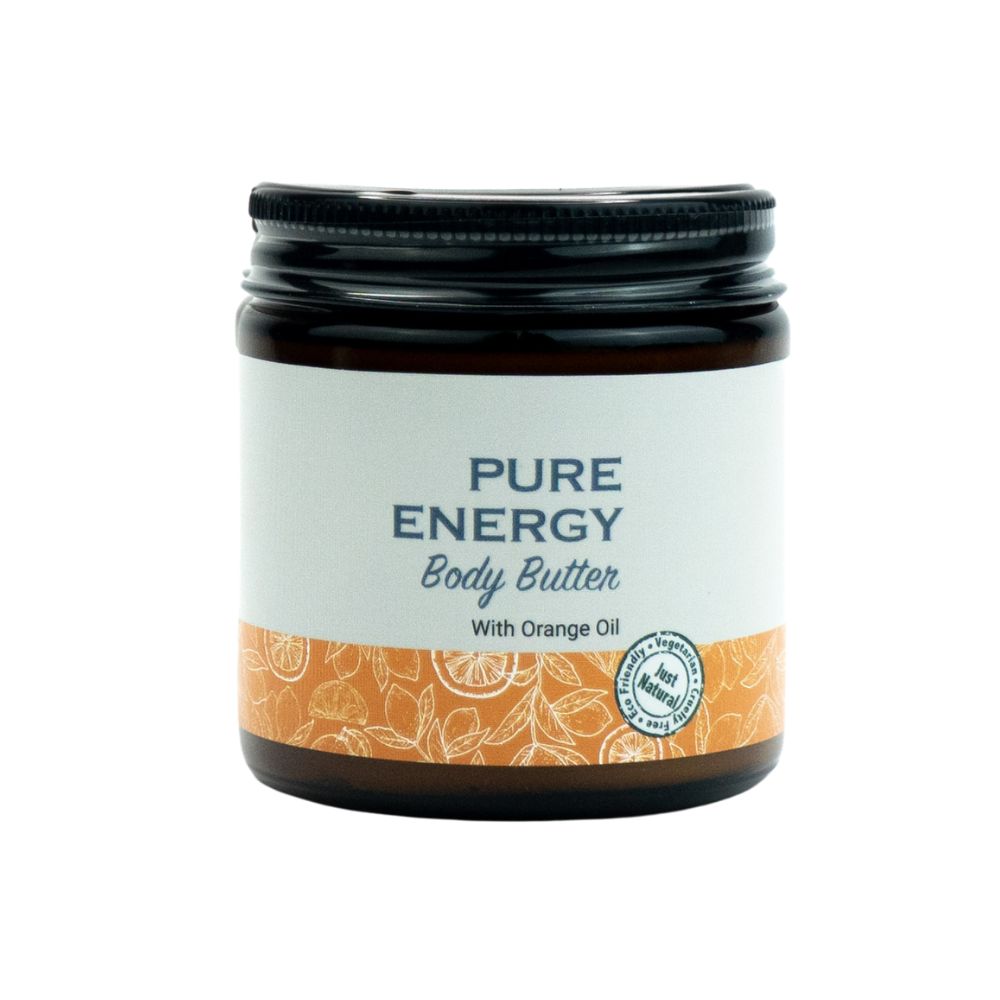
Traceable, not just palm oil free
Pure Energy Body Butter is built on wild-harvested illipe butter from Kalimantan, sourced through the Forestwise partnership that pays forest communities directly. No palm oil, and a sourcing story we can name in full.
Where we source from, plainly stated

So here is our own answer to the questions above, stated plainly rather than implied through a badge. Our illipe butter is wild-harvested in Kalimantan through the Forestwise partnership, paying forest communities directly rather than clearing land for a plantation. Our coconut oil comes through the Aluan partnership from Bali smallholder growers, cold-pressed rather than industrially refined. Our Pure Energy Body Butter is where that illipe butter does its daily work, formulated to restore skin barrier function without leaning on a tropical ingredient we cannot trace back to a name and a place.
We also believe the packaging question matters as much as the ingredient question, which is part of why refill culture sits at the center of how we built this brand in the first place. If this piece has you rethinking what a sustainability claim actually needs to prove, our guide to building a routine that actually refills is a natural next step, and our breakdown of what each natural sunscreen ingredient actually does applies the same label-literacy habit to a different, equally confusing aisle.
None of this is a reason to give up on reading labels, or to decide that every tropical ingredient claim is secretly suspect. It is a reason to hold the simple version of any sustainability story a little more loosely, ours included, and to keep asking the next question when a badge seems to answer too much with too little. A label can start a conversation. It should never be allowed to end one.
What you give, you get back. That is true of a forest and true of a label. A claim that cannot name its source is not giving you the whole story, and we would rather give you ours in full than hand you a simpler one.