Natural cleaning products: how to read the label and clean your whole home honestly
Natural cleaning products promise a calmer home: fewer harsh fumes, softer hands, and a lighter footprint on the water that leaves our sinks. Yet stand in any shop aisle and the word “natural” sits on bottles that share almost nothing in common. Some are thoughtful, plant-based formulas. Others are conventional cleaners with a leaf on the label and a citrus scent added for reassurance.
We hand-blend home-care products in Bali, and over the years we have learned that the honest answer is rarely on the front of the bottle. It is on the back. This guide is a map for the whole home: what the words actually mean, how to read an ingredient list, where homemade cleaners shine and where they quietly fail, and how to build a small, refillable cleaning shelf that genuinely works.
It is not a brand ranking. It is the guide we wish we had when we first started rethinking our own cupboards, written for anyone who reads labels and would rather have truth than trends.
What “natural cleaning products” are actually allowed to mean
Here is the uncomfortable starting point. In most markets, the words printed most boldly on household cleaners have no fixed legal definition. Rules on environmental marketing, such as the US Federal Trade Commission’s Green Guides and newer European rules on green claims, ask brands to back up what they say. But a single word like “natural” remains loose enough to stretch over almost anything.
That matters, because these words do a lot of quiet persuading. Here is what each one can, and cannot, tell us:
- Natural. There is no agreed threshold. A formula can be mostly synthetic and still carry the word if one ingredient came from a plant.
- Non-toxic. Toxicity depends on dose, exposure, and route. Almost anything is harmful in the wrong amount, and almost anything is harmless if diluted enough to be useless. On its own, the word tells us very little.
- Plant-based or plant-derived. Often true in a narrow sense. A surfactant may begin as coconut or corn and then be heavily processed. That can be a sound ingredient, but the phrase does not say how much of the bottle it describes.
- Biodegradable. Look for “readily biodegradable”, which refers to a standard test of breaking down within weeks. Plain “biodegradable” can mean eventually, under conditions that rarely exist in a drain.
- Chemical-free. Impossible. Water is a chemical, and so is lemon oil. This phrase is a signal that marketing is leading and chemistry is following.
Independent marks carry more weight because someone outside the company has checked the formula. The EPA Safer Choice label in the United States, the EU Ecolabel, and certifiers such as Ecocert each review ingredients against published criteria. None of them is a complete guarantee, and many small makers cannot afford the fees. When there is no certification, the next best signal is simple transparency: a full ingredient list, printed on the bottle or published online, with nothing hidden behind a vague umbrella word.
We have written before about why we stepped away from chemical-heavy products in personal care, and the same reasoning applies at the kitchen sink. Most of what is sold as a natural cleaner is a fragrance and a promise. The rest of this guide is about reading past both.
How to read a natural cleaning products label
Once we know the front of the bottle is mostly mood, the ingredient list becomes the real story. Most liquid cleaners, natural or not, are built from the same six families of ingredients. Learning them takes five minutes and changes how we shop for good.
- Water. Usually the first ingredient, and often most of the bottle.
- Surfactants. The workers. A surfactant (short for surface active agent) has one end that loves water and one end that loves oil, so it can lift grease off a pan and carry it away in the rinse.
- Builders and pH adjusters. Ingredients like potassium carbonate or citric acid that make the surfactant work better, soften hard water, or tune the formula to be more alkaline for grease or more acidic for limescale.
- Chelators. Ingredients such as gluconic acid that bind minerals in hard water so they do not leave a film.
- Preservatives. Anything made with water needs protection from bacteria and mould. A water-based cleaner with no preservative at all is either very short-lived or not telling the whole story.
- Fragrance. Named essential oils, or the single word “fragrance” or “parfum”.
A real label, read line by line
It helps to practise on an actual list, so here is ours. The ingredients of our Multi-Purpose Natural Surface Cleaner are: aqua, heptyl glucoside, potassium carbonate, citric acid, phenoxyethanol, lemon peel oil, tangerine peel oil, orange peel oil, pink grapefruit peel oil, bergamot peel oil, gluconic acid, potassium hydroxide, and ethylhexylglycerin.
Read that way, it becomes clear. Heptyl glucoside is a sugar-based surfactant, one of the gentler options available. Potassium carbonate and potassium hydroxide make the formula alkaline enough to shift grease, and citric acid balances the pH. Gluconic acid handles hard-water minerals. The scent comes from five named citrus peel oils rather than an anonymous fragrance. And phenoxyethanol, with ethylhexylglycerin as its helper, is the preservative. It is synthetic, used at low levels, and it is there because water does not stay clean forever. We would rather say that plainly than pretend a water-based spray needs no protection.
Three flags that suggest greenwashing
- No full ingredient list. Phrases like “plant-powered cleaning agents” in place of real names. If a brand is proud of its formula, it will show it.
- An undisclosed “fragrance”. That single word can stand in for dozens of compounds. Named essential oils are not automatically gentle, but at least we know what we are breathing. We explore this difference in essential oil vs fragrance oil and in our older piece on how fragrance can deceive the nose.
- Claims that out-shout the list. “Chemical-free” alongside a long list of chemicals, or a “natural” spray that also promises to kill 99.9% of germs. Strong disinfecting claims usually mean strong disinfecting ingredients, which is fine when we need them, but it is not the same product as a gentle everyday cleaner.
If this kind of label literacy feels familiar, it is the same skill we use for skin. Our guide to skincare ingredients to avoid follows the same logic: read the back, question the front.
Where DIY works and where it quietly fails
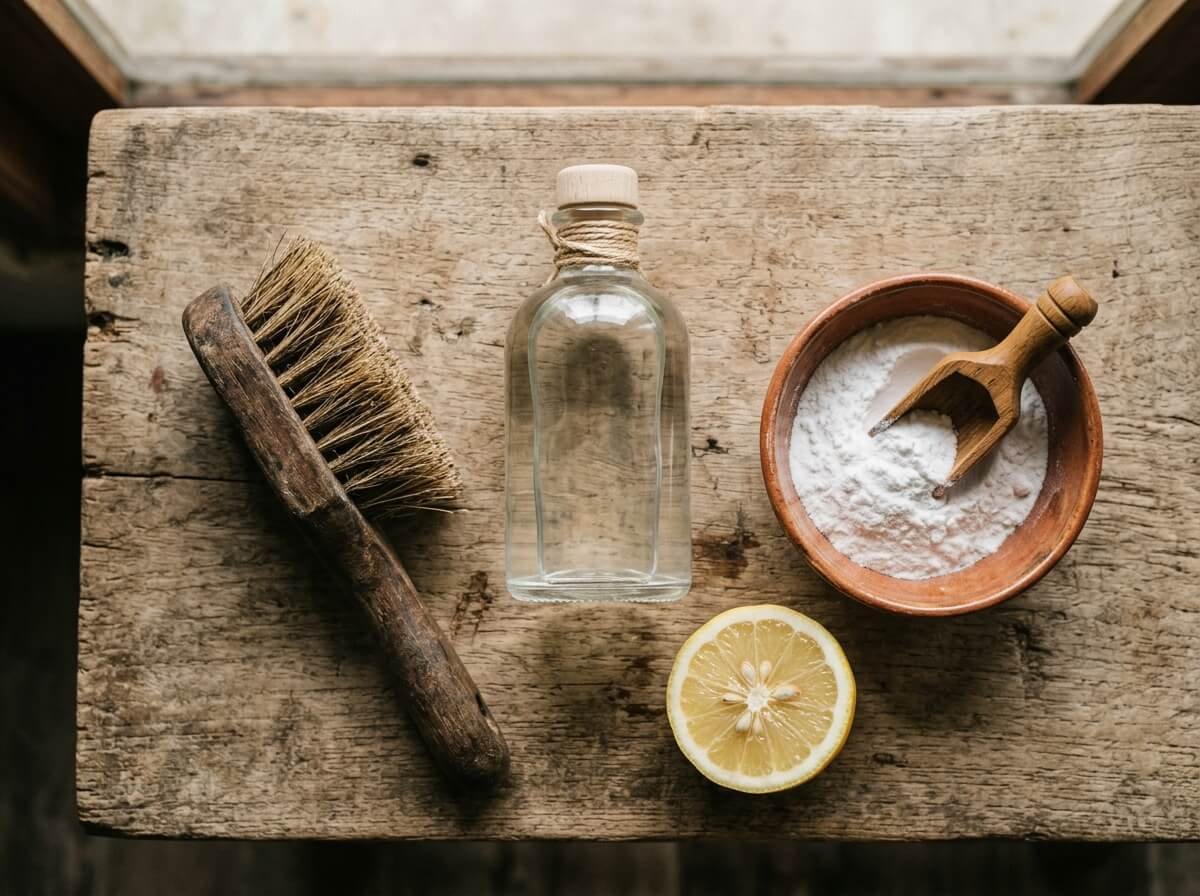
Homemade cleaners deserve their place. A few humble pantry staples handle a surprising share of household jobs, cost very little, and arrive with no new packaging at all. But the internet has also turned a handful of recipes into folklore, and some of them simply do not work, or work against each other.
Where pantry basics shine
- Bicarbonate of soda is a soft abrasive. Made into a paste with a little water, it lifts residue from sinks, enamel baths, oven doors, and stained mugs without scratching most surfaces.
- Diluted white vinegar is mildly acidic, so it dissolves limescale and mineral spots. It suits glass, kettles, tap aerators, and shower screens.
- Lemon and salt refresh wooden chopping boards and lift light odours.
- Hot water and a little soap remain the quiet backbone of cleaning. Physical scrubbing and rinsing remove most everyday dirt and many germs.
Our older guide to creating a natural surface cleaner at home walks through a simple everyday mix, and if you love a homemade scent, our DIY linen spray is a gentle place to begin. A few drops of lemongrass essential oil in a vinegar rinse also softens the sharp smell, a trick we describe in six ways to use lemongrass around the home.
Where it quietly fails
- Vinegar and bicarbonate of soda together. The fizz looks busy, but it is an acid and a base cancelling each other out. What is left is mostly water, a little salt, and carbon dioxide. Use them separately, one after the other if needed, and rinse between.
- Vinegar and castile soap together. The acid splits the soap back into fatty acids, leaving a greasy, cloudy residue on every surface it touches.
- Vinegar on natural stone. Marble, limestone, travertine, and many terrazzo or stone counters etch on contact with acid. The dull marks are permanent.
- Vinegar as a disinfectant. It is not registered as one, and its effect on many common germs is limited. It cleans; it does not reliably sanitise.
Mixes we never make
Some combinations are genuinely dangerous, and “natural” thinking can lead people into them. Never mix bleach with vinegar or any acid, which releases chlorine gas. Never mix bleach with ammonia, which releases chloramine vapours. And never store hydrogen peroxide and vinegar together in one bottle, which forms a corrosive acid. Clean with one product, rinse, and only then use another.
There is also the question of shelf life. A homemade spray made with water and no preservative can grow bacteria and mould within days or weeks. Make small batches, label them with the date, and use them quickly. When a job calls for strong grease cutting, consistent laundry results, or a product that will keep for months, a well-made formula is often the more honest choice. Progress over purity is still progress.
The same thinking applies to delicate gear around the home. Our guide to cleaning a yoga mat naturally shows how material matters more than recipe.
A whole-home system for natural cleaning products, room by room

Most homes do not need a cupboard full of specialist sprays. They need a handful of products matched to the right jobs, plus a few pantry staples used wisely. Thinking room by room keeps things simple and stops the slow creep of half-used bottles under the sink.
Kitchen: dishes and grease
Dishes are where a made product earns its place. Grease needs an efficient surfactant, and a good dish soap should rinse cleanly without leaving film on glassware. Our Natural Dish Soap is plant-based and biodegradable, scented with pure peppermint and lemon essential oils, and works for hand washing or the dishwasher. Two pumps on a wet sponge is enough for most sinks. We share more about why it matters in our guide to all-natural dish soap, and about the refill side in our guide to refillable dish soap.
Surfaces: tables, stovetops, and fridges
One multi-purpose spray covers most hard surfaces. Spray, wipe with a clean cloth, and you are done. A citrus-scented formula like our surface cleaner handles everyday kitchen grime on tables, stovetops, and fridge shelves. Save the bicarbonate paste for baked-on spots and keep acidic mixes well away from stone.
Bathroom: limescale and soap scum
This is where pantry basics shine. Diluted vinegar on glass shower screens and taps, a bicarbonate paste on grout and enamel, and a dry cloth to finish. Wiping surfaces dry after showers prevents most build-up before it starts. For ideas that reduce single-use plastic in the same room, see our plastic-free bathroom guide.
Laundry: everyday loads and stains
Laundry is the one room where we would gently steer people away from pure soap recipes. True soap reacts with hard-water minerals and can leave a dull film on fabric over time, which is why most laundry products use detergents. Our Natural Laundry Detergent is plant-based, citrus-scented, and works by machine or by hand, at about 30 ml for a small to medium load and 60 ml for a larger one. For stubborn marks, an enzyme soak like Bio Bleach uses natural enzymes to lift stains overnight without chlorine. Our earlier article on why natural laundry detergents make sense goes deeper, and using essential oils in your laundry covers scent.
Linen and air: freshness without masking
Fresh air is the first air freshener. Open windows, wash linen regularly, and let sunlight do its quiet work. After that, a light linen spray adds a finishing note rather than covering a problem. Our Natural Linen Spray carries a bright orange and bergamot scent, and the benefits of natural linen spray explains how to use it well.

Mapped out, the whole system looks like this:
- Dishes: one plant-based dish soap.
- Hard surfaces: one multi-purpose spray, plus bicarbonate paste for tough spots.
- Glass and limescale: diluted vinegar, kept away from stone.
- Laundry: one detergent, plus an enzyme soak for stains.
- Linen and air: open windows first, then an optional linen spray.

A cleaner kitchen, one refill at a time
Our Natural Dish Soap is plant-based and biodegradable, scented with pure peppermint and lemon essential oils, and hand-blended in Bali. It cuts through grease on pots and pans, and the bottle is made to come back for a refill.
The refill and concentrate truth
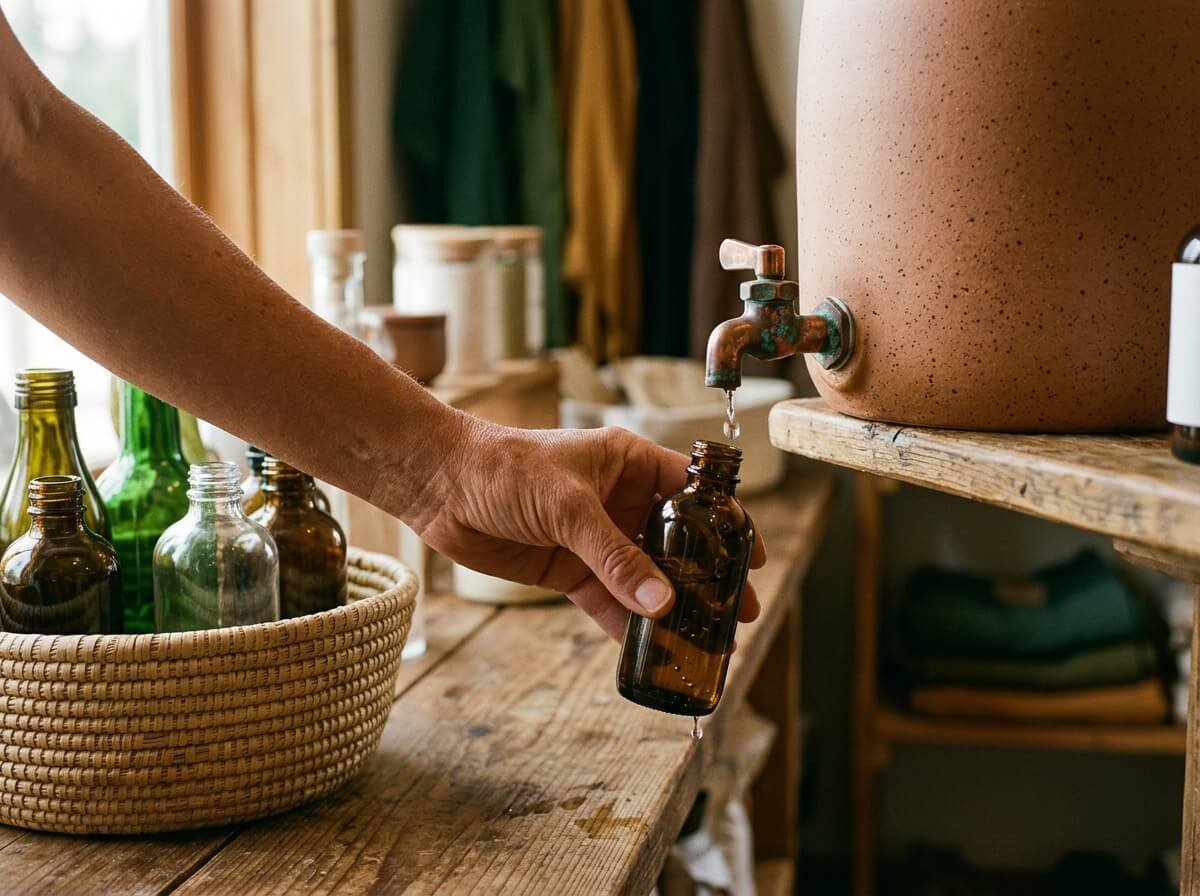
Here is the part of the conversation most brands would rather skip. Look again at almost any spray cleaner and the first ingredient is water. Every time we buy a new bottle, we pay to ship water across a country, or an ocean, inside a new piece of plastic. The formula is often the smallest part of the footprint. The packaging and the transport are the rest.
Recycling does not rescue this as neatly as we are told. Only a small share of the plastic ever made has been recycled, and trigger sprayers and pumps are usually mixed materials with metal springs inside, which most facilities cannot process at all. A bottle that is recycled once still becomes a new bottle that needs recycling again.
This is why refill sits at the centre of how we work. Keep the bottle, refill the contents. We have run refill stations since our earliest days, and in 2025 our community saved 2,245 bottles from landfill. Through our partnership with Seven Clean Seas, we also fund the removal of plastic from the ocean in step with what we produce. These are small numbers against a large problem, and we say so. But they are real, counted, and growing.
If there is no refill station near you, there are still good options:
- Choose concentrates. Less water shipped means less weight and less packaging per wash.
- Buy the largest size you will genuinely use and decant into a bottle you already own.
- Keep spray heads and pumps until they fail. They are the hardest part to recycle.
- Choose glass or sturdy bottles for your everyday decanting, and label them clearly.
Refill culture is not only for the kitchen. We wrote about the same shift in refillable body care, and our note on why refill is cheaper on purpose explains the economics. Refill, reuse, rebel, because care should never be single-use.
Natural is not the same as harmless

A plant origin does not make an ingredient gentle. Essential oils, in particular, are highly concentrated, and the same qualities that make them useful in a cleaner ask for a little respect in the home.
Pets come first
Cats are especially sensitive to many essential oils, including citrus oils, tea tree, eucalyptus, and pine, because their livers process certain compounds very slowly. Dogs and birds can be affected too. In a home with animals, let sprayed surfaces dry fully before pets walk on them, keep cleaners away from food and water bowls, ventilate well, and avoid heavy diffusing in small rooms. If a pet shows drooling, wobbling, or breathing changes after exposure, call a vet. Pure oils such as tea tree essential oil belong on a high shelf, never within reach of curious paws.
Skin, air, and storage
Plant-based surfactants still do their job, which is removing oil. On hands, that means dryness over time, so gloves are worth using for long cleaning sessions. Some citrus and floral compounds, such as limonene and linalool, can irritate sensitive skin, particularly as oils age and oxidise. Our guides to diluting essential oils and storing essential oils cover the details, and our essential oil safety guide gathers the basics in one place.
Store every cleaner in its original or clearly labelled bottle, away from children, and never in a food or drink container. Homemade mixes deserve a label and a date, just like bought ones.
Cleaning is not always disinfecting
Everyday natural cleaning products are designed to clean: to lift dirt, grease, and many germs away. That is enough for most days in most homes. But when someone is ill, or after preparing raw meat, a registered disinfectant used as directed may be the right tool, followed by a rinse. Honest care means using the right product for the job, not the most virtuous-sounding one.
Natural cleaning products: frequently asked questions
Are natural cleaning products as effective as conventional ones?
For everyday cleaning, a well-formulated natural product can perform very well, because the core work is done by surfactants, and good plant-derived surfactants exist. Effectiveness depends on the formula, not the word on the front. Read the ingredient list and judge the product by how it cleans in your home.
Do natural cleaning products disinfect?
Most do not claim to, and that is honest. They clean, which physically removes most germs. Products that legally claim to disinfect have to be registered and tested for it. If you need disinfection, choose a registered product and follow its directions.
Can I use vinegar everywhere?
No. Vinegar is helpful on glass, taps, kettles, and limescale, but it etches marble, limestone, and many natural stones, and it should never be mixed with bleach. Treat it as a specialist, not an all-rounder.
Are essential oils in cleaners safe around pets?
Used lightly and allowed to dry, a citrus-scented spray is generally low exposure, but cats in particular are sensitive to many oils. Ventilate, keep products away from bowls and bedding, avoid heavy diffusing, and ask your vet if you are unsure.
How long do natural cleaning products last?
Bought, preserved products usually keep for many months once opened. Homemade water-based mixes without a preservative are best used within a week or two. If a mix smells off, looks cloudy, or grows anything, discard it.
What is the difference between soap and detergent?
Soap is made by reacting fats or oils with an alkali. Detergents are a broader family of surfactants, many of them plant-derived, that stay effective in hard water. Both can be part of a natural home.
Is refilling really better than recycling?
Yes, in most cases. Reusing a bottle avoids making a new one at all, while recycling still uses energy and loses material each cycle. Refill first, recycle what is truly worn out.
Building your honest cleaning shelf
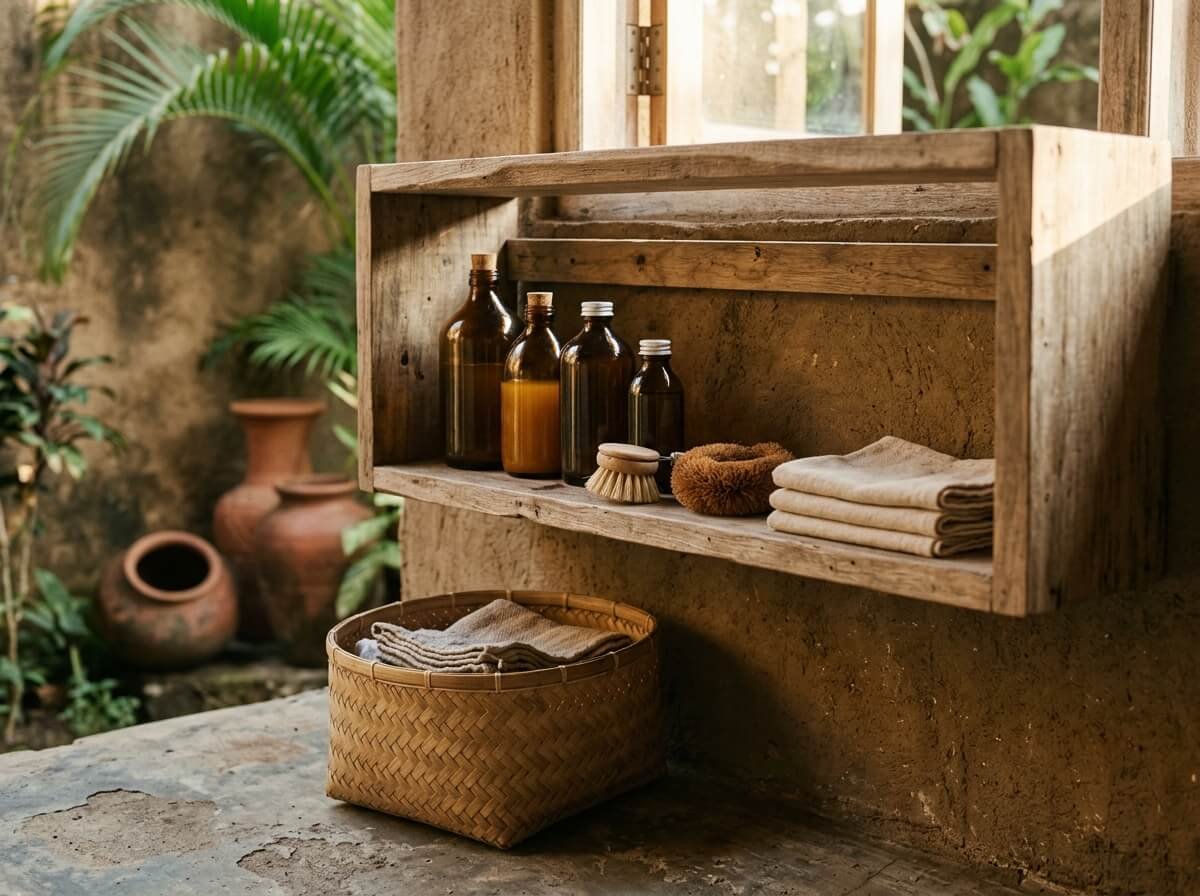
A calmer home does not need a dramatic overhaul. It needs a few honest choices, made one bottle at a time. When a product runs out, replace it with something you have read the back of. Here is a simple starting shelf:
- One plant-based dish soap with a full ingredient list.
- One multi-purpose surface spray for everyday wiping.
- One laundry detergent, plus an enzyme soak for stains.
- A box of bicarbonate of soda and a bottle of white vinegar, always used separately.
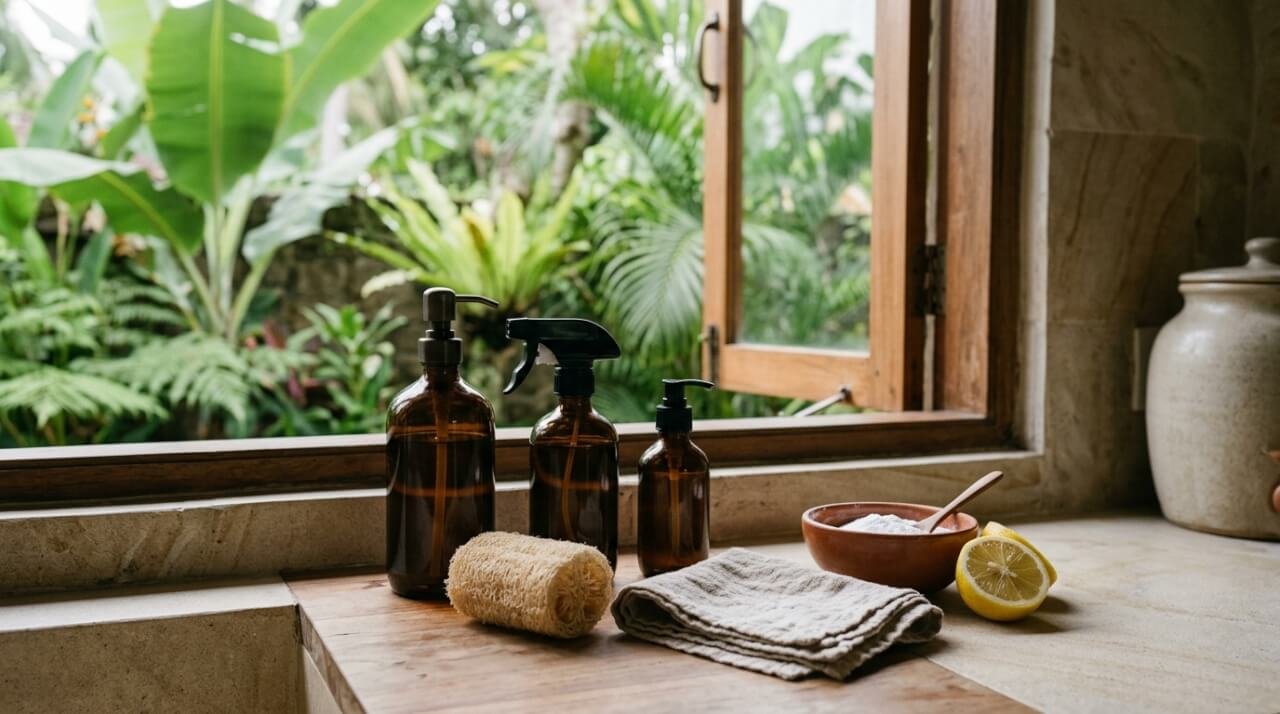
- Washable cotton cloths, a wooden brush, and a natural-fibre scrubber.
- An optional linen spray, used after fresh air rather than instead of it.
If you would like to start with a few made products, our Clean Home range is hand-blended in Bali and designed to be refilled rather than replaced. The Natural Dish Soap is often the easiest first step, because it is the bottle most of us empty fastest. From there, a surface cleaner and a laundry detergent cover most of the home.
Whatever you choose, keep the questions close. What does the label actually say? Is this a job for a pantry staple or a made product? Can the bottle come back to be refilled? Those three questions will serve you better than any word printed on the front.
Real care means rethinking the system, from what we pour down the sink to what we throw away. What you give, you get back.