Natural bug repellent: which botanical actives actually work, how long they last, and the Indonesian plants behind the best ones
Natural bug repellent sits at the intersection of nature’s ingenuity and genuine chemistry. The plants that have coexisted with insects for millions of years did not develop their defenses by accident. They built volatile compounds that confuse, deter, and repel insects from their leaves, stems, and flowers. We are only beginning to understand the full mechanism behind each one.
This guide covers what the science actually says about botanical repellents: which active compounds make them effective, which ones are hollow marketing terms, how long they realistically protect you, and why Indonesia has been growing the most studied natural repellent plants on earth for centuries. If you are reading ingredient labels and feeling uncertain about what you are actually buying, this is the honest breakdown you have been looking for.
What makes a natural bug repellent work
A natural bug repellent does not kill insects. It does not create a chemical forcefield around your body. What it does is disrupt the sensory systems that insects use to locate their hosts.
Mosquitoes, sand flies, and biting midges detect carbon dioxide from your breath, lactic acid from your sweat, and the warmth radiating from your skin. They triangulate these signals to navigate toward you. Botanical repellents work by masking, confusing, or overwhelming those signals. Certain plant-derived volatile compounds bind to the insects’ olfactory receptors or block the CO2 detectors they rely on. The insect cannot orient itself properly. It may hover nearby, but it cannot land and feed with confidence.
The key active compounds in most natural bug repellents fall into a small number of chemical families:
- Citronellal and citronellol — found in citronella oil and some lemongrass varieties. These monoterpenoids create the sharp, citrusy scent most people recognise in botanical repellents. Citronellal specifically has been shown in laboratory studies to deter Aedes aegypti mosquitoes, the species responsible for transmitting dengue and Zika.
- Geraniol — a naturally occurring alcohol present in citronella, palmarosa, and geranium. More persistent on skin than citronellal alone, and effective against a broader range of species. Studies published in peer-reviewed entomology journals have shown geraniol-based formulations offering up to two hours of protection against Aedes species under field conditions.
- Linalool — present in lavender, basil, and coriander essential oils. Documented repellent activity against multiple insect species at concentrations above five percent, though its protection window is shorter than citronellal.
- Camphor — present in cajeput and camphor tree oils. Acts as a co-repellent alongside other actives and carries mild insecticide properties at higher concentrations. Traditional Indonesian use of cajeput oil drew on this compound long before it was characterised in a laboratory setting.
- Eucalyptol (1,8-cineole) — present in eucalyptus, cajeput, and rosemary. This compound underpins the effectiveness of lemon eucalyptus oil, which the US Centers for Disease Control and Prevention recognises as an effective botanical active when formulated at sufficient concentration in topical repellents.
What separates an effective natural bug repellent from an ineffective one is almost always concentration. Studies consistently show that these active compounds need to be present at meaningful percentages to do any real work. A product listing citronella essential oil in a blend at one percent will not protect you. One formulated with ten to fifteen percent active botanical content begins to offer real-world protection, though for a shorter window than synthetic alternatives.
Understanding these compounds is the first step to evaluating any botanical repellent product. Our deeper guide to citronella essential oil benefits covers the full chemical profile of this compound, including how the Javanese variety differs in citronellal content from other origins.
The Indonesian plants behind the best natural bug repellent formulas
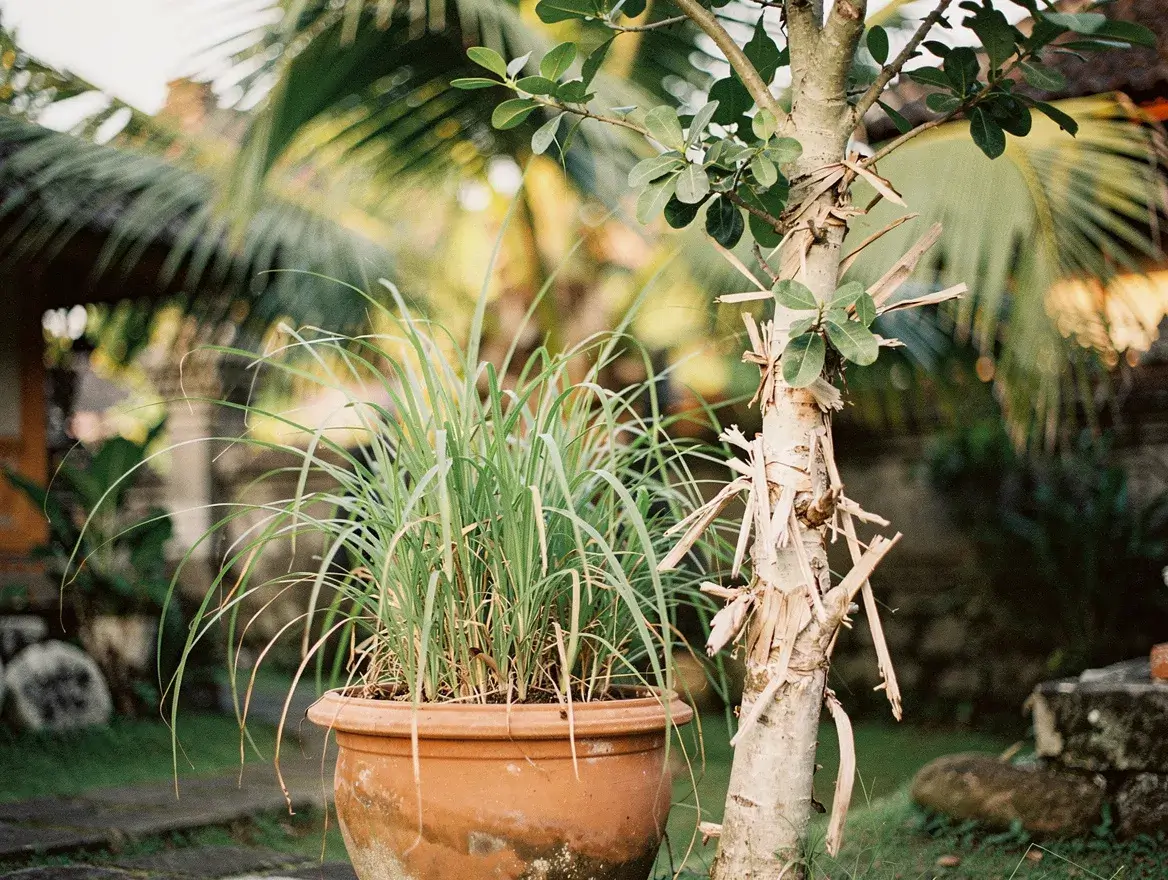
Indonesia grows some of the world’s most studied and most effective natural repellent botanicals. This is not coincidence. The islands experience a humid tropical climate where insects breed year-round. Traditional communities across the archipelago, including in Bali, have cultivated and relied on these plants for generations, not as wellness accessories but as practical tools of daily life.
Citronella (Cymbopogon nardus)
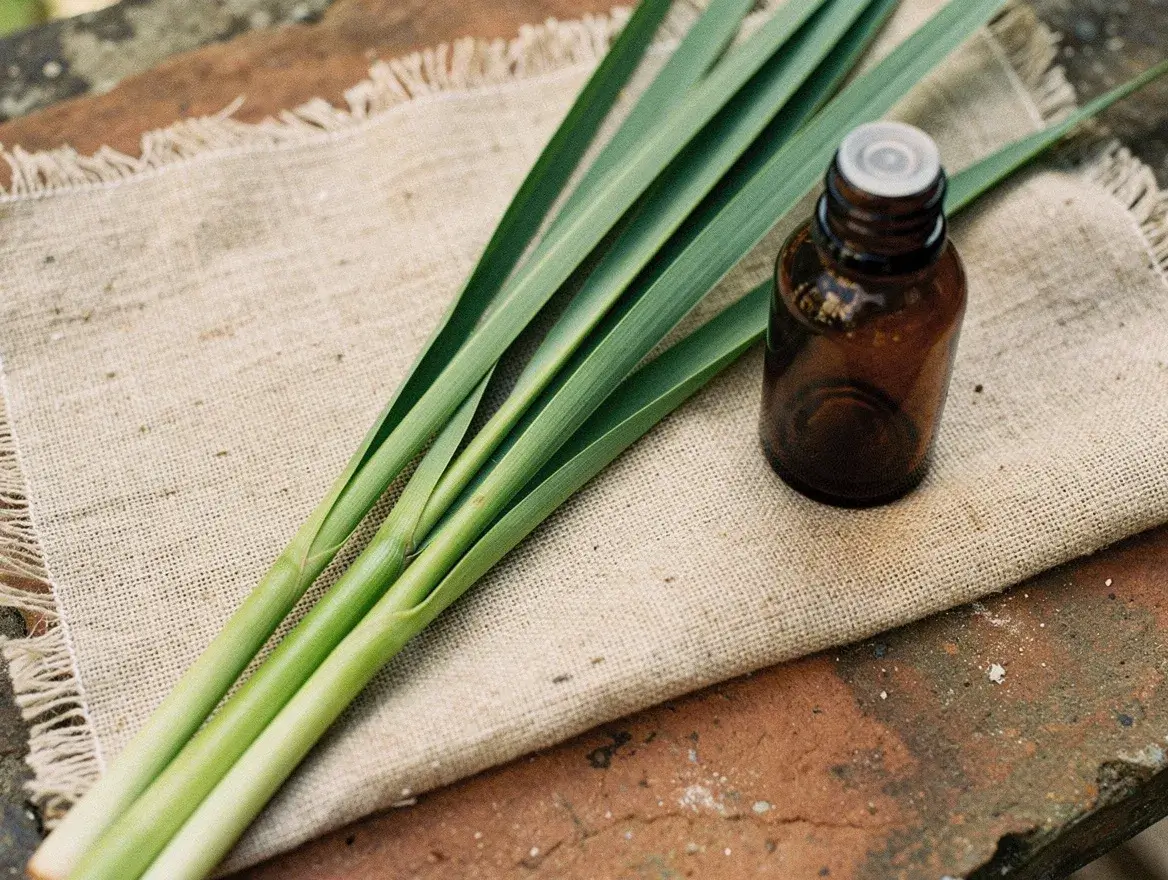
This tall grass, called sereh wangi in Bahasa Indonesia, grows abundantly across Java and Sumatra. The stems and leaves are steam-distilled to produce citronella essential oil, one of the most extensively researched plant-based repellents. The Java citronella variety (var. winterianus) yields higher citronellal content than the Sri Lanka variety, which is why Indonesian-origin citronella is preferred in serious formulation work. In Balinese villages, citronella grass has historically been planted around sleeping areas and rubbed directly on skin before outdoor work in the rice paddies and forest. The volatile compounds release through friction and body heat, two conditions that occur naturally whenever you are outside and active.
Lemongrass (Cymbopogon citratus)
Related to citronella but with a distinct aromatic profile, lemongrass is the most widely grown culinary and wellness plant across Bali. The essential oil contains high concentrations of geranial and neral (collectively called citral), which have demonstrated repellent activity across multiple peer-reviewed studies. Our guide to lemongrass essential oil benefits covers its full spectrum of applications, from traditional Balinese cooking to topical wellness to insect protection.
Lemongrass is often combined with citronella in effective natural repellent formulas precisely because their active compounds complement each other. Citronella leads with rapid release and strong initial deterrence. Lemongrass, with its higher geraniol content, adds persistence. Together, they extend the protection window beyond what either compound achieves on its own.
Cajeput (Melaleuca cajuputi)
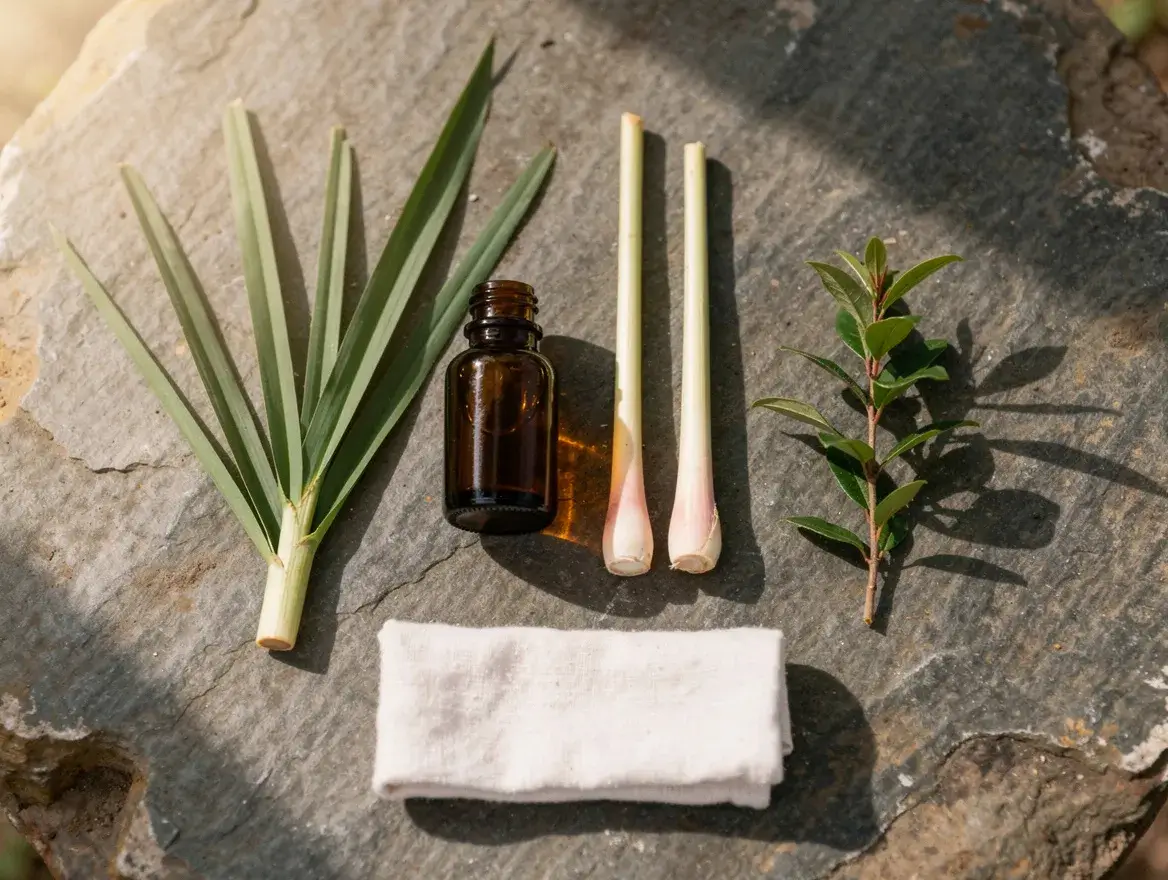
Called minyak kayu putih in Indonesia, cajeput is arguably the most deeply embedded traditional remedy in the archipelago. The oil is steam-distilled from the leaves and terminal branches of a tree native to Indonesia and northern Australia. It sits in almost every Indonesian household as a remedy for skin irritations, muscle discomfort, headaches, and bites, and as a deterrent applied before going outdoors. As we explore in our guide to cajeput essential oil benefits, the eucalyptol content makes it both soothing and protective. Applied topically, it functions as a co-repellent alongside citronella and lemongrass, extending coverage with a cooling sensation that many people find pleasant in tropical heat.
Neem (Azadirachta indica)
Less fragrant but scientifically well-documented, neem is native to the Indian subcontinent and widely cultivated across Bali and Southeast Asia. Azadirachtin, extracted from neem seeds, disrupts insect development and feeding patterns at a biological level rather than simply masking the scent cues mosquitoes use to find us. Neem-based formulations have been recognised by the World Health Organization as effective against malaria-transmitting Anopheles mosquitoes. The practical limitation in topical repellents is the smell: neem carries a distinctive, earthy odour that many people find difficult to wear throughout the day. Most effective formulations blend neem at lower percentages alongside more aromatic oils, using it for protective depth while relying on citronella and lemongrass for the top-note deterrence.
These four plants form the backbone of Indonesia’s traditional insect protection repertoire. A well-formulated natural bug repellent draws on at least two of them, chosen for complementary active compound profiles, not simply because they are local or natural.
How long natural bug repellent actually lasts
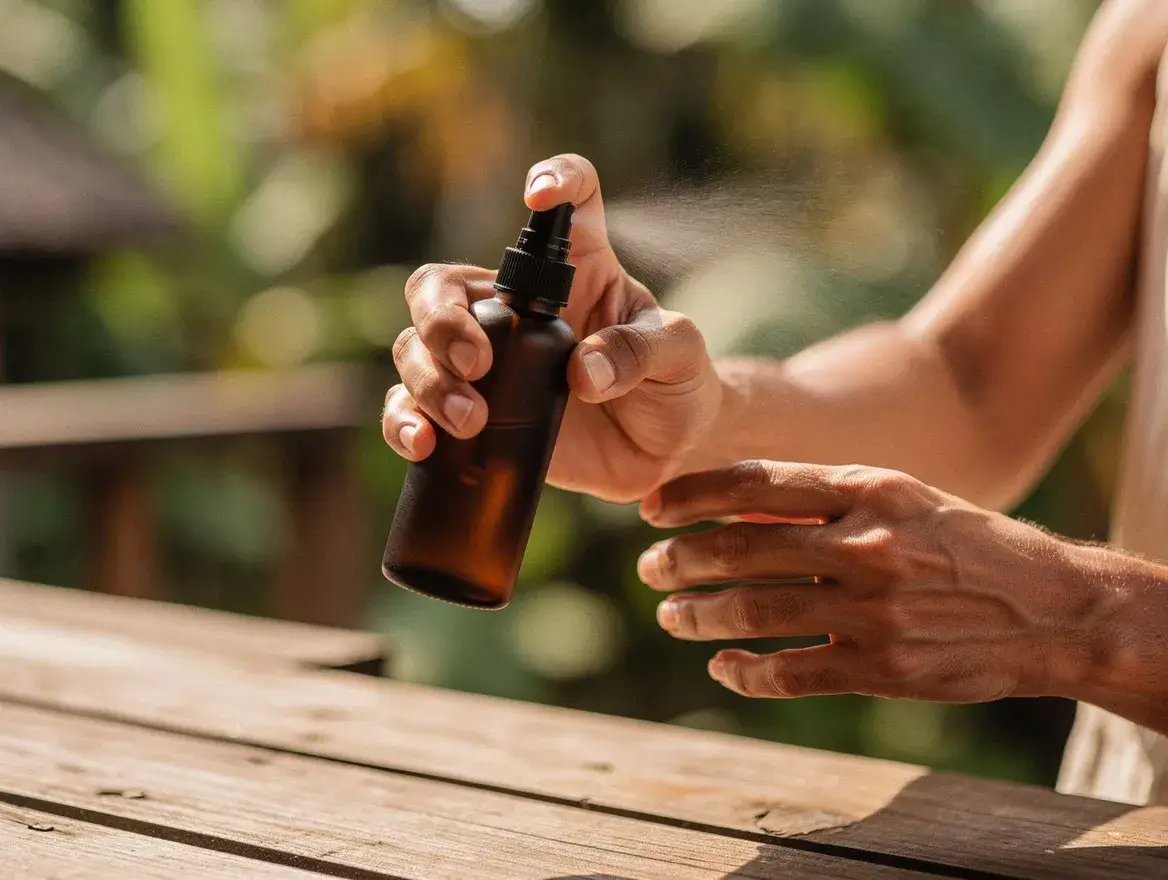
This is where you deserve a straight answer, not optimistic label copy.
Most botanical bug repellents protect for one to two hours under typical outdoor conditions. Products with higher concentrations of active compounds (above ten percent) may extend this to two to three hours. After that, the volatile compounds have evaporated from the skin surface or absorbed into the deeper skin layers where they no longer provide a deterrent barrier.
By comparison, DEET at 20-30% concentration protects for four to six hours. Picaridin protects for six to eight hours. PMD (p-menthane-3,8-diol, the synthetic isolate derived from lemon eucalyptus) sits between three and six hours depending on concentration and formulation.
This is not a reason to dismiss botanical repellents. It is a reason to understand them correctly and use them in appropriate situations. If you are spending two hours in a garden, on a beach terrace, or walking through Ubud’s rice terraces at dusk, a well-formulated natural repellent suits that context well. If you are hiking through dense jungle for six hours in peak mosquito season, you need either a high-concentration PMD product or a DEET-based formulation, possibly with a botanical layer for shorter resting breaks.
Three conditions accelerate the evaporation of botanical actives from skin, and understanding them changes how you use the product:
- Perspiration. Sweat dilutes and carries active compounds away from the skin surface. When you are physically active in tropical heat, reapplication every hour is realistic and not excessive. In shade, at rest, every 90 minutes is more typical.
- Water. Swimming, rain, or even splashing your face and arms removes the repellent layer entirely. Reapply thoroughly as soon as you are dry. No botanical formulation offers meaningful water resistance.
- Heat and direct sun. Volatile terpene compounds evaporate faster at high ambient temperatures. On a 35-degree afternoon in Bali, your protection window shortens meaningfully compared to a cooler morning or a shaded indoor setting.
Effective use means applying thoroughly before going outdoors, paying particular attention to the backs of ankles, wrists, and the nape of the neck where insects consistently target, and reapplying on a schedule rather than waiting for the first bite as your signal.
For more on how botanical formulations behave on skin, including which delivery formats give the longest-lasting coverage, see our guide to natural bug repellent for skin.

Which insects respond to botanical actives, and which do not

Botanical repellents have been studied most extensively against mosquitoes, and that is where the evidence base is strongest. The picture for other insects is less uniform, and knowing the distinction matters for how you plan your protection.
Mosquitoes
Citronella, lemongrass, and cajeput-based formulations show consistent deterrent effect against Aedes aegypti (the dengue and Zika vector) and Culex quinquefasciatus (the common night mosquito). The protection is real, even if the window is shorter than synthetic alternatives. For most casual outdoor settings across Bali and Southeast Asia, a well-formulated botanical repellent applied correctly gives genuine protection during the one to two hours following application. Our more focused guide to natural mosquito repellent covers the evidence base in detail.
Sand flies and biting midges
These tiny insects are harder to repel with anything, including DEET. Their small size and different biting patterns make them less predictable than mosquitoes. Citronella has some documented effect against sand flies, but the protection is less reliable. Covering exposed skin with light, breathable fabric is the most effective additional layer when sand flies are active, particularly at beaches and river estuaries around dusk.
Ticks
Botanical repellents offer limited documented efficacy against ticks. Ticks do not fly or respond to olfactory cues the way biting insects do. They wait on vegetation and attach by direct contact with passing animals or humans. If you are hiking in areas with known tick populations, DEET or Picaridin are the appropriate primary choices, used with protective clothing covering arms and legs.
Bees and wasps
These insects are not attracted to human body chemistry in the same way as biting insects, and no repellent reliably deters them. The more relevant guidance outdoors is avoiding strongly sweet scents and uncovered food, which can draw them. Your botanical repellent is unlikely to affect them in either direction.
The honest takeaway: botanical repellents perform well against the insects that most commonly bite humans in tropical and subtropical environments. They are not the right tool for every situation, but for everyday outdoor life in warm climates, they do what they say when used correctly and reapplied on schedule.
If you want a natural repellent built from the same Indonesian botanicals covered in this guide, our Begone Bug Spray 230ml is formulated with a citronella, lemongrass, and cajeput blend at concentrations designed to deliver real protection in tropical conditions.

Natural bug repellent from Bali
Our Begone Bug Spray is formulated with citronella, lemongrass, and cajeput oil — the three Indonesian botanicals at the heart of this guide. Small-batch, plant-based, and honest about what it does. Available in four sizes, including a refillable aluminium can.
How to read a natural bug repellent label
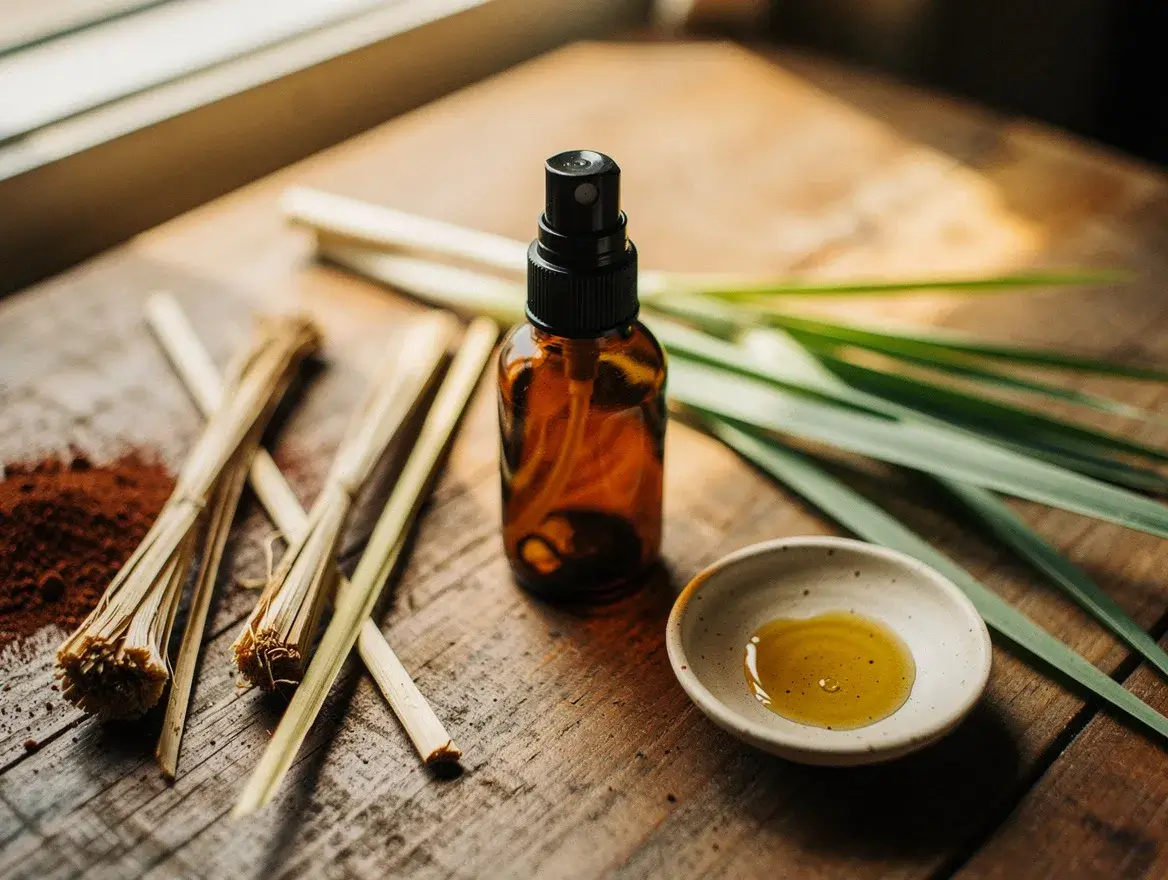
The label on a natural bug repellent tells you nearly everything you need to know, if you know what to look for.
Name the active compound, not just the category
Any effective repellent names its active ingredient and its percentage. For botanical products, look for: citronella oil (not just “essential oil blend”), lemongrass oil, cajeput oil, PMD, or geraniol. If a product’s label lists only “natural fragrance,” “aromatic blend,” or “essential oil complex” without naming specific botanicals and their concentrations, treat that as a meaningful red flag. Fragrance is not protection. A product may smell like a repellent and deliver none of the function.
Concentration matters more than list length
A one-percent citronella oil formula will not protect you. Ten to fifteen percent active botanical content combined with a geraniol or lemongrass co-repellent begins to offer real protection. The concentration should be clearly stated, not buried in a densely packed ingredient list after twelve carrier and filler oils. If you cannot find the concentration stated anywhere on the packaging, that absence is informative.
The carrier matters for efficacy and skin compatibility
Good natural repellents blend their active compounds into a skin-compatible base. Alcohol-based sprays release actives efficiently and dry quickly without residue. Water-emulsion sprays are gentler and suit drier or more sensitive skin. Oil-based balms provide higher concentration at targeted areas like wrists, ankles, and the back of the neck, but they are more difficult to spread evenly for full-body coverage. For children and sensitive skin, alcohol-free formulations with a light water or plant-oil base are typically gentler. The Begone Bug Spray 100ml is a compact option for targeted reapplication throughout the day.
“DEET-free” is not a claim of efficacy
Many natural repellents lead with “DEET-free” as a headline claim. It is a statement about what the product does not contain. It says nothing about what the product does. Look past this to the named actives and their concentrations. A DEET-free product is only valuable if it replaces DEET with something that actually works at the stated concentration.
Format and coverage area
Spray bottles deliver the most even distribution across large skin surfaces. Balms and sticks apply higher concentrations to specific areas. For full-body outdoor protection, a spray is the practical starting point. For top-up applications during the day, a compact balm or the Begone Bug Spray 1L for home use and refilling into smaller travel containers makes sense for households with regular outdoor exposure.
For more on which plants offer genuine protection versus those that appear on labels for fragrance rather than function, our guide to natural bug repellent plants goes deeper into the botanical science behind each species.
Frequently asked questions about natural bug repellent
Is natural bug repellent safe for children?
Safety depends on the formulation and the child’s age. Most botanical repellents using citronella, lemongrass, and cajeput are considered appropriate for children over two years old when applied as directed: on clothing and exposed skin, avoiding the face, hands that go near the mouth, and any broken skin. Cajeput oil at high concentrations should be used more carefully with young children, as it contains camphor, which requires cautious dosing in early childhood. For infants under six months, protective clothing, mosquito nets over sleeping areas, and limiting outdoor time during peak biting hours (dusk through early morning) is the safest approach. Always check the age guidance on any specific product and consult your doctor when uncertain.
Does citronella actually work?
Yes, with qualification. Multiple peer-reviewed studies confirm that citronella oil at sufficient concentration — above ten percent in a topically applied formulation — offers measurable repellent activity against Aedes mosquitoes for approximately one to two hours. The citronella candle is a different case entirely: burning citronella in open outdoor air disperses the compound too quickly and at too low a concentration to provide reliable protection. Topically applied, concentrated citronella is genuinely protective. Diffused into ambient outdoor air, it is more atmosphere than function.
Can I use natural bug repellent while swimming or in the rain?
Water removes the repellent layer. Reapply as soon as you are dry, and do it thoroughly. There is no water-resistant botanical repellent equivalent to certain DEET or Picaridin formulas. If you are spending time in and out of water in a mosquito-active environment, reapply frequently after each water exposure and consider wearing a lightweight rash guard or long sleeves as a physical barrier when in the water.
What is the most effective natural bug repellent ingredient?
Among purely plant-derived options, PMD (p-menthane-3,8-diol, derived from lemon eucalyptus oil) has the strongest evidence base and the longest protection window, up to three to six hours in well-formulated products. The US CDC recognises it alongside DEET and Picaridin as a repellent with proven efficacy against disease-carrying mosquitoes. For formulations using whole essential oils rather than isolated compounds, a combination of citronella and geraniol is the most studied and most reliable pairing. For everyday tropical use, a multi-active formulation drawing on citronella, lemongrass, and cajeput — the plants that Indonesian communities have relied on for generations — performs well and carries the reassurance of long traditional use alongside its scientific backing.
Is it safe to use natural bug repellent every day?
For most adults and children over two years old, daily use of a well-formulated botanical repellent is safe. The active compounds in citronella, lemongrass, and cajeput are volatile and do not bioaccumulate in the body. Skin sensitivity is the more practical consideration: some people find high-concentration essential oil blends mildly irritating on the face or on recently exfoliated skin. If you notice redness or mild irritation, reducing concentration, switching to a lighter spray format, or applying the product to clothing rather than directly on sensitive areas are simple adjustments that resolve most cases. A well-formulated product applied correctly should feel comfortable for everyday use.
The connection between Indonesia’s botanical knowledge and honest modern formulation is at the heart of what a good natural bug repellent should be: clear about its active ingredients, truthful about its protection window, and built from plants with real evidence behind them.