Cajeput essential oil benefits: minyak kayu putih, the Indonesian medicine-cabinet oil the West overlooks
The cajeput essential oil benefits that fill an Indonesian medicine cabinet are the same ones the West keeps rediscovering, then forgetting again. Across Bali, Java, and much of the archipelago, a small bottle of minyak kayu putih sits within reach in almost every home, reached for at the first sign of a blocked nose, an aching shoulder, a mosquito bite, or a restless child who cannot settle. It is not exotic here. It is ordinary, trusted, and worn smooth by generations of daily use. This is the oil we grew up around, and it deserves a clearer, more honest introduction than the one it usually gets.
In this guide we look at what cajeput oil actually is, where it comes from, and what its plant chemistry can and cannot do. We compare it with its better-known cousins, tea tree and eucalyptus, walk through how to use it safely on skin and around the home, and answer the questions people ask most. The tone here is grounded, not hyped. Cajeput is a genuinely useful oil, and useful oils do not need exaggeration to earn a place in your ritual.
What is cajeput essential oil (minyak kayu putih)?

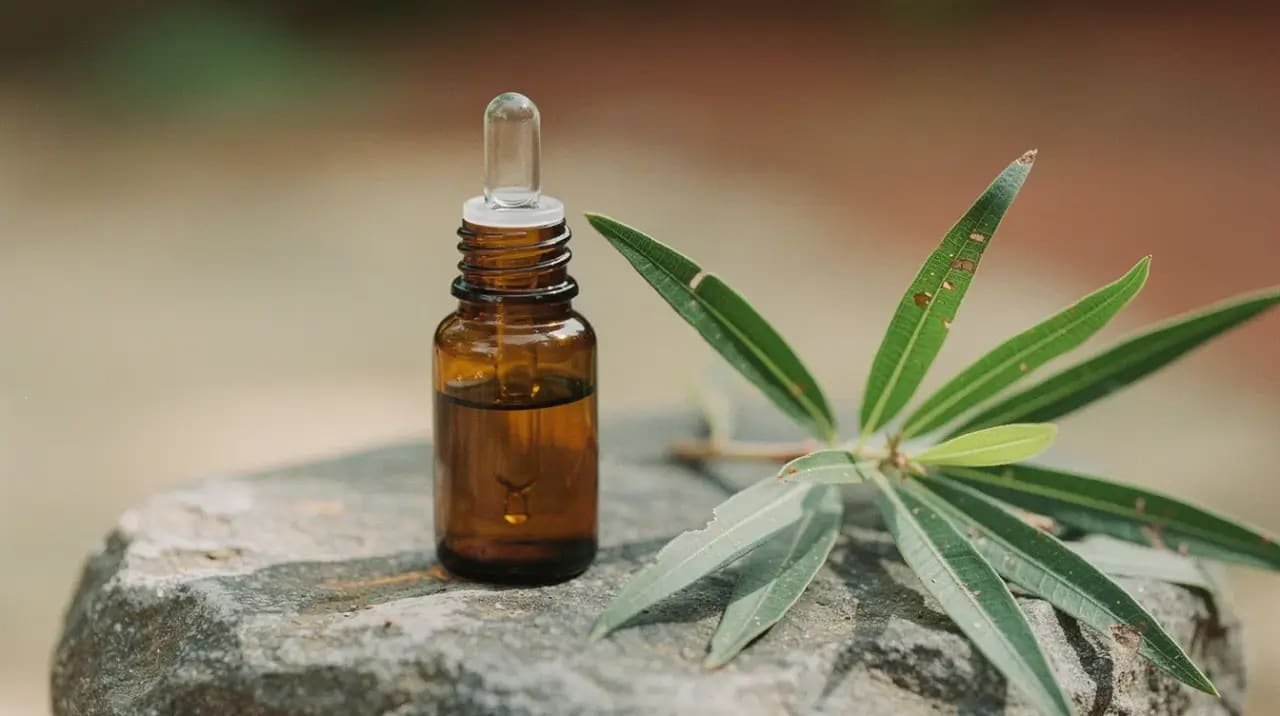
Cajeput essential oil is steam-distilled from the leaves and small twigs of the Melaleuca cajuputi tree, a relative of the tea tree and a member of the same myrtle family. The name traces back to the Indonesian and Malay kayu putih, meaning white wood, a nod to the tree’s pale, papery bark. In Indonesia the distilled oil is known as minyak kayu putih, and it has been part of household and traditional healing here for a very long time, well before it appeared in any wellness catalogue abroad.
The tree grows across Sulawesi, Maluku, and other parts of eastern Indonesia, thriving in warm, humid conditions. Harvesters gather the aromatic leaves, then distil them with steam to release a clear to pale-yellow oil with a fresh, camphoraceous, slightly fruity aroma. That scent is instantly familiar to anyone raised in the region: clean, medicinal, and warming all at once. It is the smell of being cared for when you are unwell, which is part of why the oil carries such quiet emotional weight here.
The way the oil is made is part of its character. Traditional producers harvest the leaves by hand, often from wild or semi-wild stands, then steam-distil them in small batches close to where they grow. This is slow, seasonal work, and it ties the oil to specific places and the people who tend them. When sourcing is done with care, that same bottle supports rural livelihoods rather than stripping them, which is the difference between a botanical that gives back and one that simply takes. It is the same principle that guides how we work with communities across Bali and eastern Indonesia: fair work, real attribution, and respect for the tradition the plant comes from.
It helps to place cajeput within its family. Tea tree, eucalyptus, niaouli, and cajeput are all melaleuca-adjacent oils with overlapping chemistry, which is why they can smell like distant relatives and share some of the same uses. If you want the wider map, our complete A-to-Z reference on essential oils and their uses sets cajeput alongside its neighbours, and our guide to tea tree essential oil benefits covers the cousin most people already know. Cajeput is the one the West tends to skip, which is a shame, because in its home region it often does the everyday work that tea tree gets credited for.
Cajeput essential oil benefits, grounded in the plant’s chemistry
To talk honestly about cajeput essential oil benefits, we have to start with what the oil is made of. Its dominant component is 1,8-cineole, also called eucalyptol, usually making up a large share of the oil, alongside terpinen-4-ol, alpha-terpineol, and various pinenes. Cineole is the same fresh, opening molecule that gives eucalyptus its reputation for clear breathing, and terpinen-4-ol is the compound tea tree is prized for. Cajeput carries both, which is what makes it such a practical, general-purpose oil.
Here is what that chemistry reasonably supports, framed with care rather than promises:
- A sense of easier breathing. Cineole-rich oils are traditionally used in steam inhalation and chest rubs to create that cooling, opening sensation when you feel congested. If this is your main interest, our guide to essential oils for congestion explains how to use them without overdoing it.
- Antimicrobial activity. Laboratory studies on cajeput and its key compounds show activity against a range of common bacteria and fungi, which is the basis for its long use in cleansing minor grazes and freshening the air.
- Warming, soothing comfort. Diluted and massaged in, cajeput gives a gentle warming feel that many people find welcome on tired muscles and stiff joints.
- Insect deterrence. Its aroma is genuinely unwelcoming to mosquitoes, which is why it appears in traditional repellent blends across the region.
The respiratory association is worth a closer look, because it is the use most Indonesians reach for first. A traditional approach is simple: add a drop or two to a bowl of just-boiled water, drape a towel over your head, close your eyes, and breathe the rising vapour slowly for a minute or two. The cool, opening sensation is the cineole at work. It does not clear an infection, but it can make a stuffy evening feel more bearable and a bedtime routine more soothing. Rubbed into the chest in a diluted balm, it does something similar, offering warmth and a comforting aroma as you settle.
There is an emotional dimension too, and we think it deserves naming rather than dismissing. Scent is memory. For many people across the archipelago, the smell of minyak kayu putih is inseparable from being tended to as a child, from a parent’s hand on a fevered forehead. Diffused gently in a room, cajeput carries that grounding, cared-for feeling. Aromatherapy is not only about active molecules; it is about ritual, association, and the small daily acts that tell your nervous system it is safe to slow down.
What we will not tell you is that cajeput cures anything. It is a supportive, comforting oil, not a medicine, and it works best as part of a considered ritual rather than a quick fix. That distinction matters to us. Real care means being straight about what a botanical can do, and letting its steady, time-tested usefulness speak for itself. No greenwashing, no overreach, just an honest account of a genuinely useful oil.
Cajeput vs tea tree vs eucalyptus: the cineole family, sorted
Because these three oils share a family and some chemistry, people often ask which one they actually need. The honest answer is that they overlap, and any one of them will usually do. Still, each has a slightly different character worth knowing.
Eucalyptus is the sharpest and most cineole-forward of the three. It is bracing, cool, and unmistakable, the classic choice when you want a strong clearing sensation. Tea tree leans on terpinen-4-ol and is best known for cleansing and blemish-prone skin, with a greener, more medicinal smell. Cajeput sits in the middle: softer and slightly fruitier than eucalyptus, warmer and rounder than tea tree, and gentler in aroma than both. That balance is exactly why it became the household default across Indonesia. It is the oil you can reach for in many situations without it being overpowering.
If you already keep tea tree essential oil in the house, think of cajeput as a gentler companion rather than a replacement, one that is a little kinder to the senses in a diffuser or a bath. For a broader sense of how oils behave together, our guide to essential oil blends that actually work and our notes on choosing aromatherapy diffuser oils for your space are useful next reads. Cajeput pairs beautifully with citrus and other leaf oils, softening their edges while adding its own quiet warmth.
There is also a practical, budget-conscious case for cajeput that rarely gets made. In much of Indonesia it is the affordable, everyday oil, the one a household keeps in quantity precisely because it does so many jobs adequately rather than one job spectacularly. That versatility is a sustainability point as much as a value one. A single multipurpose oil, diluted differently for different needs, means fewer bottles, less packaging, and less half-used clutter in the cabinet. Choosing one honest, flexible botanical over a drawer of narrow specialist products is a quietly circular choice, and it happens to be how these oils were always meant to be used.
None of this is about ranking one oil above another. It is about knowing your options, so you can choose with intention rather than habit. That is the whole point of learning your ingredients: fewer, better choices, used well.

Cajeput for skin and everyday care
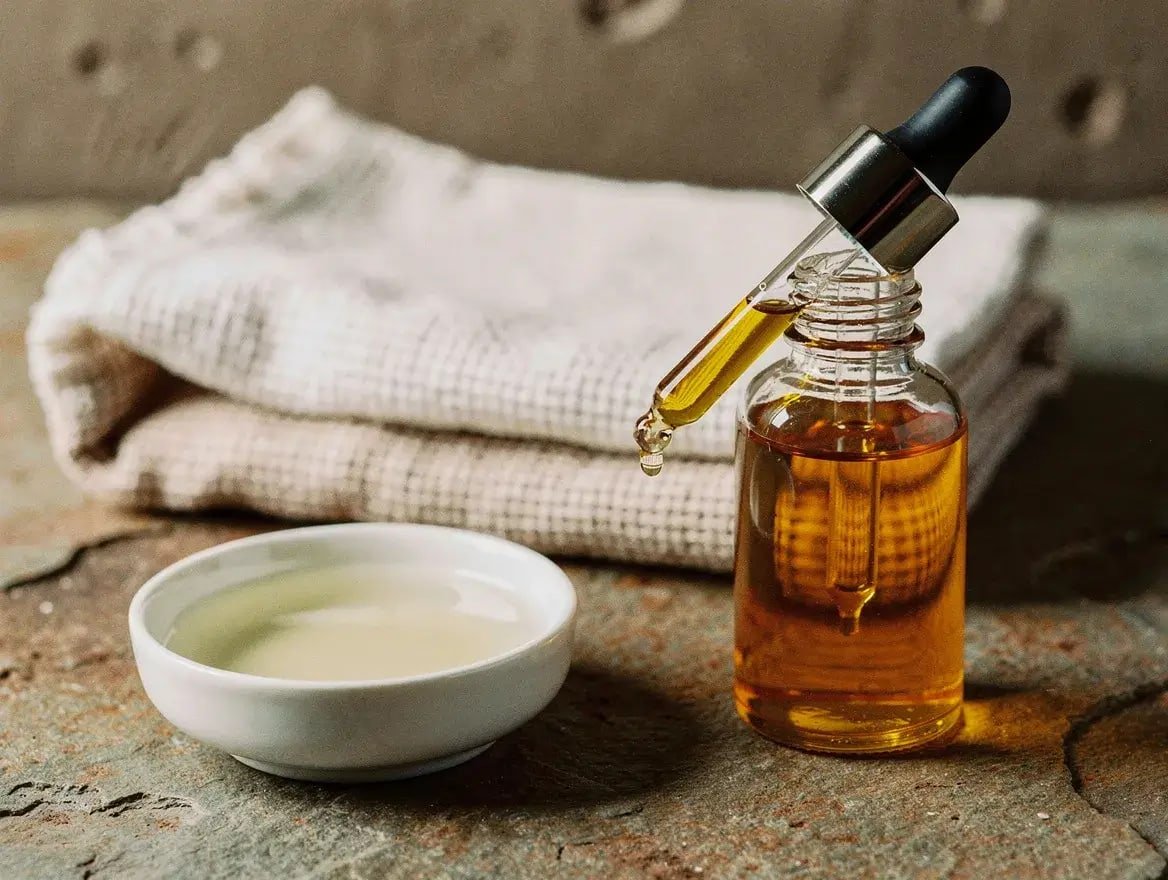
On skin, cajeput is valued for its cleansing, astringent, and lightly antimicrobial nature. Traditionally it has been used, always well diluted, to freshen blemish-prone areas and to help keep minor grazes clean. Its warming quality also makes it a familiar choice in massage oils for tired muscles, where it is blended into a carrier and worked gently into the skin. The key word throughout is diluted. Cajeput is potent, and it belongs in a carrier oil, never neat on the skin.
Understanding why dilution matters helps you use cajeput better rather than fearfully. A carrier oil does two things: it slows how quickly the volatile compounds evaporate off your skin, extending the benefit, and it spreads a small, potent dose across a wider area so no single patch of skin meets too much. Skip the carrier and you get a brief, intense hit that can irritate; use one, and the same few drops become a gentle, even, longer-lasting experience. This is not caution for its own sake. It is simply how you get the most from a concentrated botanical while keeping your skin comfortable.
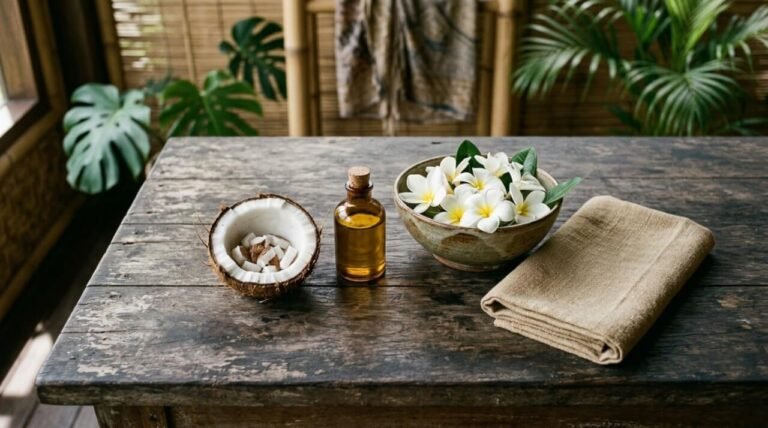
Our preferred carrier is cold-pressed Balinese coconut oil, sourced through our Aluan partnership, because it is light, absorbs well, and carries the aroma without fighting it. A simple approach: a few drops of cajeput in a tablespoon of coconut oil for a warming muscle rub, or a single drop in a larger amount of carrier for a targeted skin dab. To get the ratios right, read our guide on how to dilute essential oils, where the carrier you choose matters as much as the drop count.
The oil’s insect-deterrent side is where cajeput really shows its everyday value here in the tropics. Its aroma helps keep mosquitoes at a distance, which is why it sits inside our Begone Bug Spray, a plant-based repellent built on the botanicals Balinese families have long trusted rather than harsh synthetics. If you prefer a brighter, citrus-forward option, our citronella essential oil plays a similar role, and our post on citronella essential oil benefits explains how the two differ.
Here is a simple ritual to make the oil your own. For a warming evening rub, combine three drops of cajeput with one tablespoon of coconut oil in a small bowl, warm it briefly between your palms, and massage it into shoulders, the back of the neck, or tired calves. For a reviving morning diffuser blend, pair two drops of cajeput with two drops of a bright citrus oil to soften its medicinal edge into something fresh and lifting. Neither recipe is complicated, and that is the point. A single well-chosen oil, used thoughtfully, replaces a shelf of single-purpose products.
If you want to keep the tradition in its purest form, a single small bottle of pure cajeput essential oil is the most versatile place to start. One oil, blended into a carrier, can move from a warming rub to a diffuser to a homemade repellent, which is exactly how minyak kayu putih has always earned its keep.

The medicine-cabinet oil, hand-distilled in Indonesia
Our pure cajeput essential oil is the same fresh, camphoraceous minyak kayu putih Balinese homes have trusted for generations. Diluted into a carrier, it moves easily from warming muscle rubs to diffuser blends to natural insect care.
How to use cajeput essential oil safely
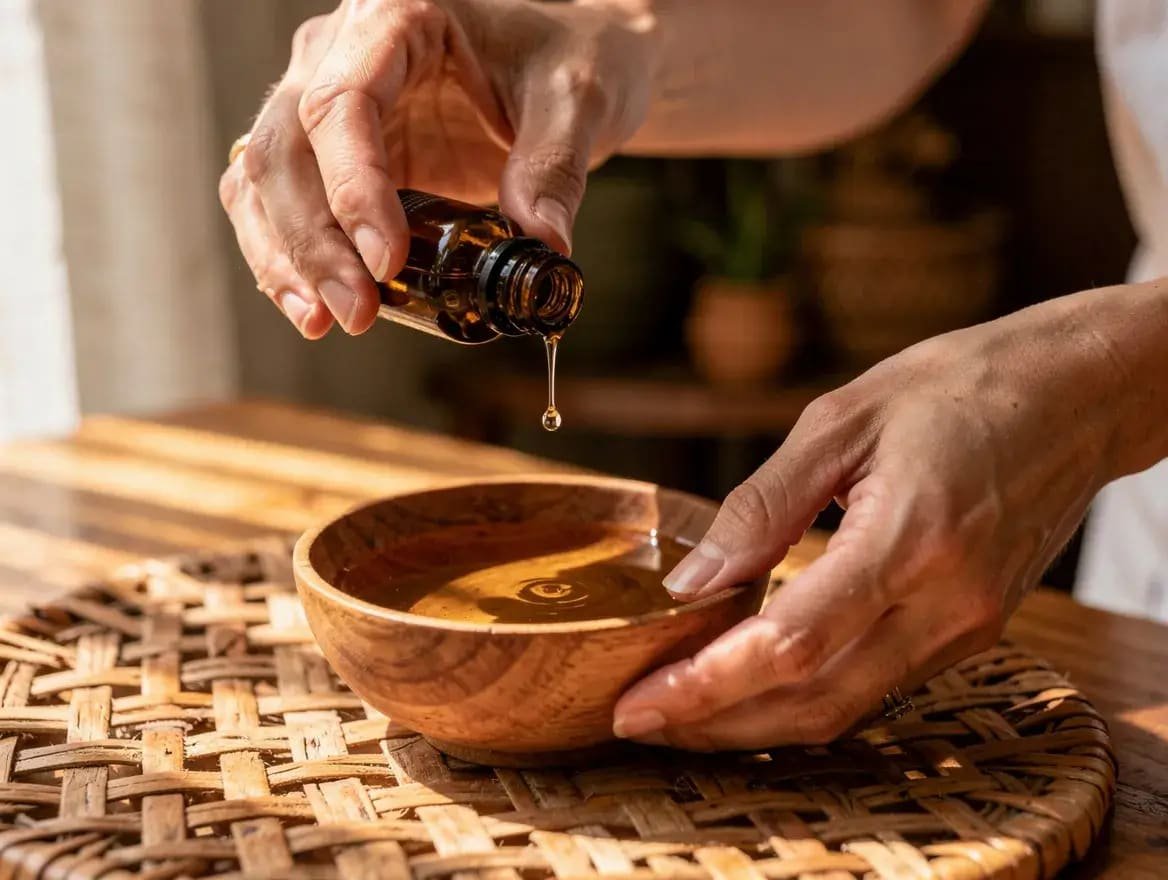
Cajeput is a strong oil, and respecting that strength is what keeps it safe and pleasant to live with. A few simple rules cover almost everything.
- Always dilute. Never apply cajeput neat to skin. A safe everyday range for most adults is roughly 1 to 3 drops per tablespoon of carrier oil for body use, and lighter still for the face.
- Patch test first. Put a small amount of your diluted blend on your inner forearm and wait a day. If there is redness or irritation, stop and reduce the concentration.
- Keep it away from eyes and mucous membranes. The cineole that makes cajeput feel so opening can sting delicate tissue. Keep it clear of the eye area.
- Diffuse in moderation. Short sessions in a ventilated room are plenty. More is not better, and gentle exposure is the point.
Some groups should take extra care or skip cajeput entirely. Because of its high cineole content, cajeput and other strongly cineole-rich oils are not recommended near the faces of babies and young children, where they can affect breathing. If you are pregnant or breastfeeding, have asthma or a respiratory condition, or manage a chronic health issue, speak with a qualified practitioner before use. When in doubt, choose a gentler oil and a lower dilution.
Quality is part of safety, so it is worth knowing what a good cajeput oil looks like. Seek out an oil that names its botanical source, Melaleuca cajuputi, and comes in dark glass with a clear origin. A genuine oil smells fresh, camphoraceous, and slightly fruity, never flat or oddly sweet, which can signal adulteration. Price that seems too low for a hand-distilled botanical usually is. We would rather you buy one honest bottle and use it well than several cheap ones you cannot trust, because transparency about where an oil comes from is the whole foundation of using it with confidence.
Storage matters too. Keep your oil in its dark glass bottle, tightly closed, away from heat and direct light, and it will hold its character for a long time. Treating an oil well is part of the ritual, not an afterthought. If you are building a small home collection, our guide to kaffir lime essential oil benefits and the wider aromatherapy notes across the journal will help you round it out thoughtfully, one oil at a time.
Cajeput essential oil benefits: frequently asked questions
Is cajeput oil the same as minyak kayu putih?
Essentially, yes. Minyak kayu putih is the Indonesian name for cajeput oil, distilled from the Melaleuca cajuputi tree. Some commercial kayu putih products in Indonesia are blended or diluted for direct household use, so if you want the pure botanical to blend yourself, look for an oil labelled as pure cajeput essential oil.
What is cajeput oil good for?
Its most common uses are supporting a sense of easier breathing through steam or a diffuser, warming tired muscles when diluted into a massage oil, freshening blemish-prone skin, and deterring insects. It is a genuinely versatile everyday oil, best thought of as comforting and supportive rather than curative.
Can I put cajeput oil directly on my skin?
No. Cajeput should always be diluted in a carrier oil such as coconut oil before it touches skin, and a patch test is wise before wider use. Applying it neat can cause irritation.
Cajeput or tea tree, which should I choose?
They overlap, so either works for general cleansing and freshening. Tea tree is the sharper, more familiar choice for blemish-prone skin, while cajeput is gentler in aroma and a little more versatile for diffusing and warming rubs. Many households happily keep both.
Is cajeput oil safe for children?
Because of its high cineole content, cajeput is not recommended near the faces of babies and young children, and should be used with caution around them generally. For families, a gentler oil and professional guidance are the safer route.
Cajeput essential oil is a quiet workhorse, an oil that has earned its place through decades of ordinary usefulness rather than any dramatic claim. Learn it, dilute it, and use it with intention, and you inherit a small piece of Indonesian home wisdom that still holds up. That is the kind of care we believe in: rooted, honest, and made to last.