
Natural eye cream: do you actually need one, and what works instead
The search for a natural eye cream usually starts in front of a mirror, with a finger pressing gently at a fine line or a shadow that was not there five years ago. Then come the roundups, the tiny jars, and the price tags that seem to grow as the jar shrinks. We want to offer something different here: an honest answer to whether you need a separate eye product at all, what the skin around your eyes actually asks for, and how to care for it with a few drops of plant oil and a lighter touch.
We have been crafting skincare in Bali since 1989, and we would rather earn your trust than sell you one more jar. So this guide covers the anatomy first, the risks nobody mentions second, and the ritual last. If you leave with fewer products and better technique, we will count that as care well given.
What makes the eye area different from the rest of your face

The skin around the eyes is not just a smaller patch of face. It behaves differently, and that is the one truth every eye-cream claim is built on. Understanding why helps you decide what it needs and, just as importantly, what it does not.
It is the thinnest skin you have
Eyelid skin measures roughly 0.5 mm thick, several times thinner than the skin on your cheeks or forehead. Thin skin shows what sits beneath it. Blood vessels show through as a blue or purple tint, which is one reason dark circles can appear even after a full night of sleep. Thin skin also loses water faster and creases more readily.
It is also more permeable. Whatever you put on it travels in more easily than it would through thicker skin. That makes the eye area a place for fewer, gentler ingredients rather than a stronger formula.
It has very few oil glands of its own
Your cheeks, nose, and forehead are dotted with sebaceous glands that keep the surface supple. The skin around the eyes has far fewer. The glands that do live along the lash line (the meibomian glands) feed the tear film, not the surrounding skin. So the under-eye area tends to be the driest place on the face, even for people with oily skin elsewhere.
It never stops moving
You blink more than 10,000 times a day. You squint at screens, smile, frown, and laugh. Each movement folds the same thin skin along the same lines. Over years, that repetition, combined with sun exposure and the natural slowing of collagen production, is what turns expression lines into lasting ones.
It reacts more easily
Because it is thin and absorbent, the eye area is one of the most common places for irritation and allergic reactions to show up. Dermatologists often trace eyelid dermatitis to fragrance, preservatives, or essential oils, sometimes from products applied elsewhere and carried there by the fingers. The eyes themselves are also close by, and anything that migrates into the tear film can sting.
Put these four facts together and a clear picture emerges. The eye area needs moisture, protection, and gentleness. It does not need complexity.
The honest answer: do you need a natural eye cream?
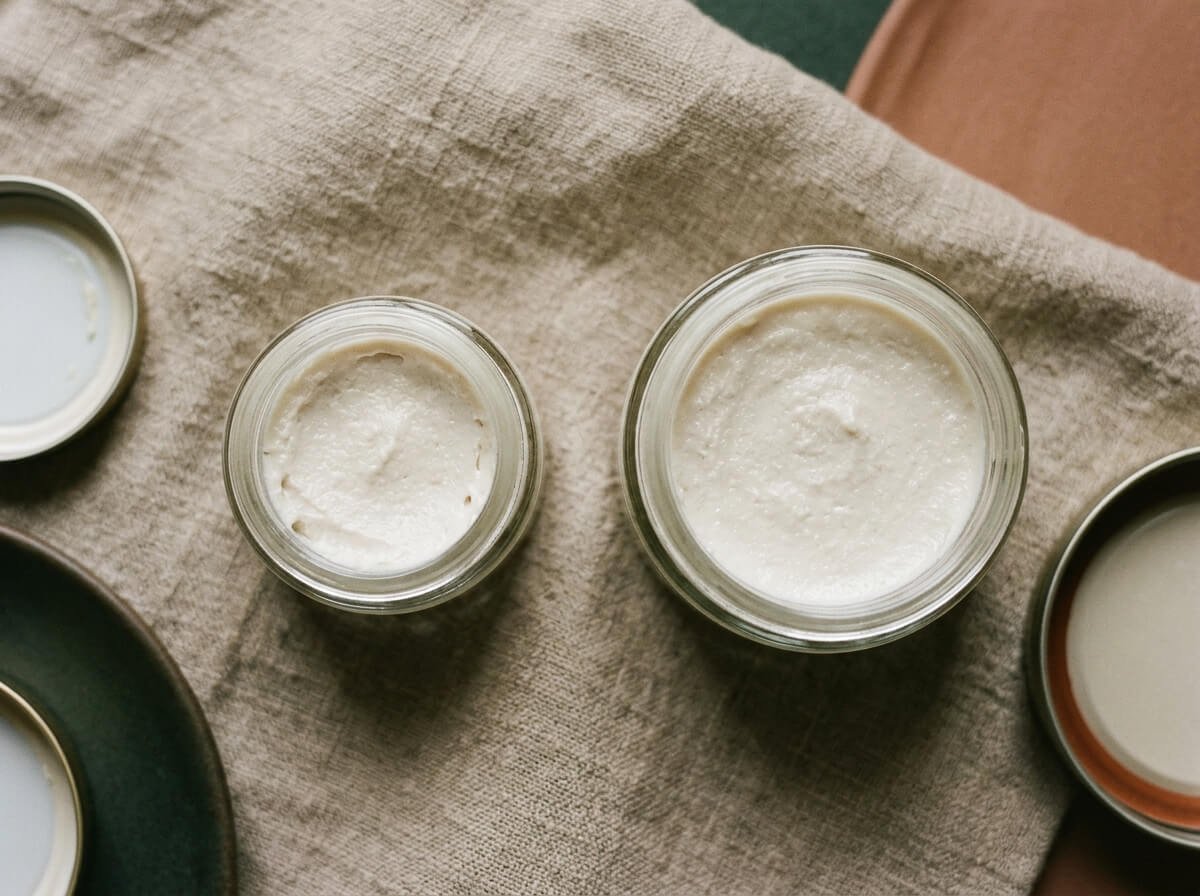
For most people, no. A natural eye cream is usually a face moisturizer with a similar set of ingredients, sold in a smaller jar at a higher price per millilitre. Compare the ingredient lists of many eye creams with their sister face creams and you will often find the same base, sometimes with a little less fragrance or a little more of one featured active.
We say this plainly because the industry rarely does. A separate eye product is often a merchandising decision, not a dermatological one. The skin around your eyes needs the same things as the rest of your face: hydration, a healthy barrier, and protection from the sun. What changes is the amount, the texture, and the way you apply it.
When a separate product does make sense
There are a few honest exceptions. If your regular face moisturizer contains essential oils, fragrance, exfoliating acids, or retinoids, it may be too strong for the eyelids. In that case a simpler, fragrance-free product for the eye area is a sensible choice. People with eczema, very reactive skin, or contact lens sensitivity may also feel better with a dedicated, minimal formula.
But “dedicated” does not have to mean “eye cream”. A single-ingredient plant oil, used in a tiny amount, often does the same job with fewer variables. We will come back to that.
What an eye cream cannot do
No cream will erase genetic dark circles, rebuild the fat pads that create under-eye hollows, or undo years of sun exposure. Puffiness that comes from salt, allergies, alcohol, or poor sleep resolves when those causes change, not when a jar is applied. Cool compresses and caffeine can reduce morning puffiness for a few hours, and that is a temporary effect. Any product promising more deserves a second look.
The most effective thing you can do for the skin around your eyes costs very little: wear sunscreen, wear sunglasses, and sleep. Everything else is supportive care.
When eye creams cause more harm than good

Most eye-cream reviews skip this part. The very traits that make the eye area special also make it vulnerable to the wrong product. Two problems come up again and again.
Milia: the small white bumps nobody warns you about
Milia are tiny, firm, white bumps that form when keratin becomes trapped just under the skin’s surface. They are harmless, but they are stubborn, and they love the eye area. Rich, heavy creams can contribute to them in some people, especially when applied thickly and close to the lash line. Thin skin, few oil glands to clear the surface, and a dense occlusive layer can be a frustrating combination.
If you have noticed small white bumps under your eyes since starting a new cream, stop using it and let your skin settle. Do not try to squeeze milia. They are not pimples, and pressing on them can damage this delicate skin. A dermatologist can remove persistent ones safely.
Prevention is simple: use less product, choose lighter textures, and keep application at the orbital bone rather than right up to the lashes. Our guide to non-comedogenic oils explains why some oils sit more lightly on the skin than others.
Fragrance and essential oils near the eyes
We love essential oils. We have been blending them for decades. But they do not belong on the eyelids. Even well-diluted oils can irritate thin skin, and their vapour alone can make the eyes water. Fragrance compounds, whether synthetic or botanical, are among the most frequent triggers of eyelid dermatitis.
This is also why a beautiful face serum is not automatically a good eye product. Many face serums, including our own blends, contain essential oils that are lovely on the cheeks and forehead but too much for the eyelid. Keep them where they belong. If you want to understand the difference between aromatic oils and synthetic scent, our piece on essential oil vs fragrance oil goes deeper.
Too many actives in too small a space
Retinoids, vitamin C, and exfoliating acids can be valuable on the face. Around the eyes, they often cause dryness, peeling, and stinging. If your routine includes them, apply them away from the orbital area and protect the eye zone with a plain, gentle layer instead. Our guide to skincare ingredients to avoid lists the usual suspects.
What to look for in a natural eye cream, if you want one

Maybe you like the ritual of a dedicated eye product, or your face cream simply is not suitable for the eyelids. That is a fair choice. Here is how to choose well and avoid paying more for less.
A short ingredient list
The fewer ingredients, the fewer chances of a reaction. Look for a list you can read and understand. Plant oils, plant butters in small amounts, glycerin, aloe, and simple humectants are all reasonable. If the list runs to 30 ingredients for a product meant to be used on the most sensitive skin you have, ask why.
No fragrance and no essential oils
This is the single most important filter. “Fragrance-free” should mean no added scent of any kind, including essential oils and “natural fragrance”. “Unscented” sometimes means a masking fragrance has been added to cover the smell of the base, so read the full list rather than trusting the front of the pack.
A light, not heavy, texture
Given the milia risk, choose a cream or oil that absorbs within a minute or two rather than one that sits as a waxy film. Rich balms are fine for very dry patches, but a thin layer is plenty.
Honest claims
Be gentle with your expectations and firm with marketing. “Reduces the appearance of” is a cosmetic claim about how skin looks, not a promise of structural change. Words like “erase”, “reverse”, and “instant lift” are signals to look elsewhere. Sun protection, sleep, and a consistent routine will always do more than any single jar.

Sensible packaging
Airless pumps and dark glass protect delicate oils from light and air. A wide-mouth jar invites fingers in twice a day, which is less hygienic for a product used so close to the eyes. If you choose a jar, use a clean spatula.
Run your current face moisturizer through this same checklist. If it passes, it is already your eye cream. Our guide to choosing a natural face cream uses the same principles for the rest of the face.
How to use a face oil or serum around the eyes
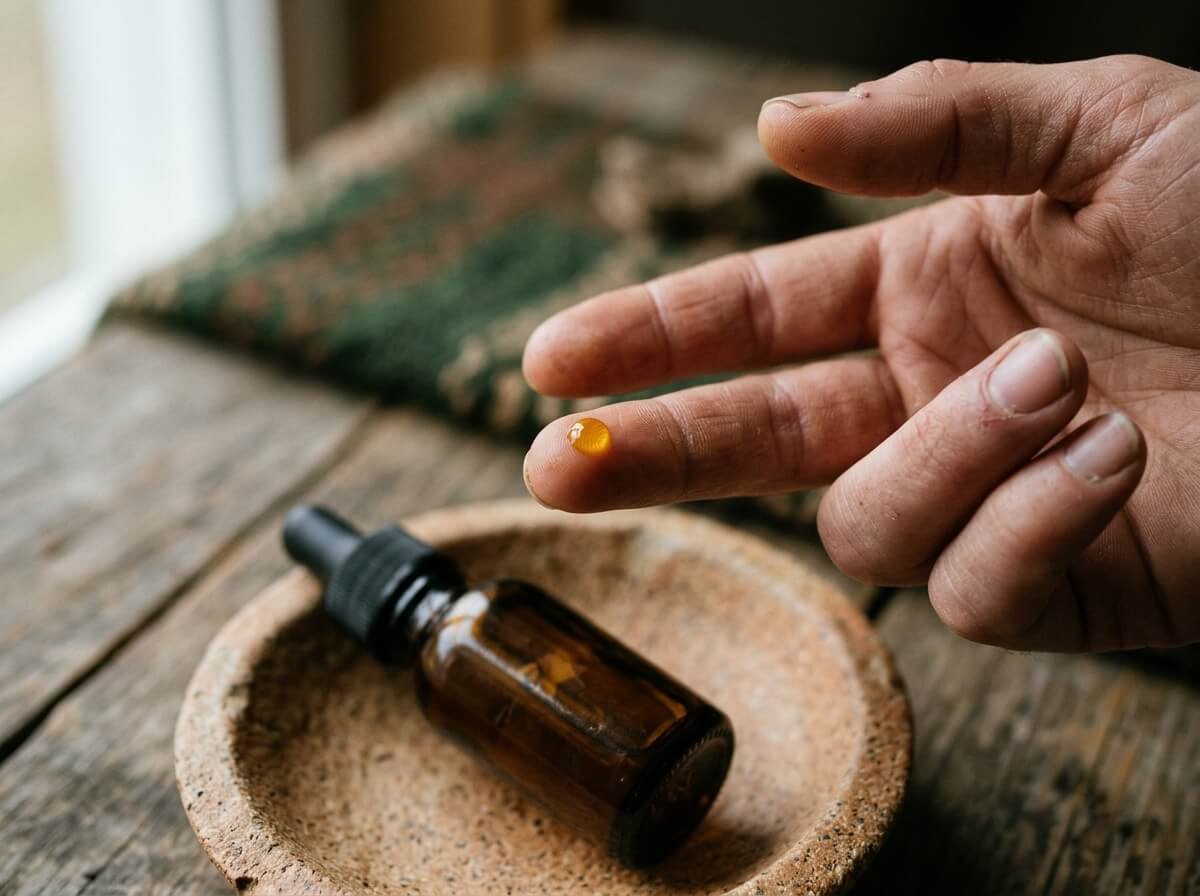
Technique matters more than the product. A simple, fragrance-free plant oil applied well will serve the eye area better than an expensive cream applied carelessly. Here is the approach we teach.
Choose the right oil
Look for a single-ingredient, cold-pressed oil with no added scent. Lighter oils such as argan absorb quickly and work well in the morning. Richer oils such as tamanu suit the evening, when the skin repairs and you are not layering makeup or sunscreen on top. Our Argan Oil is a light choice for daytime, and we explain more about it in our argan oil benefits guide.
Use far less than you think
One drop is enough for both eyes. Warm it between your two ring fingertips rather than in your palm, so you do not lose most of it to your hands. If your skin looks shiny 10 minutes later, use half a drop next time.
Use your ring finger and tap
Your ring finger naturally applies the least pressure. Tap the oil lightly along the orbital bone, the bony ridge you can feel beneath your eye, moving from the inner corner outward. Then tap along the brow bone above the eye. Do not rub, drag, or massage in circles. Pulling thin skin back and forth is exactly the repetitive stress we want to reduce.
Stay away from the lash line
Keep product roughly half a centimetre from your lashes. Oils travel as they warm, and anything applied right at the lash line can migrate into the eye, causing stinging or blurred vision. The skin will draw moisture inward on its own.
Get the order right
Apply eye care after your serum and before your heavier moisturizer, or simply on its own as the final step if oil is your only moisturizing layer. If you use a face serum with essential oils, apply it first everywhere except the eye zone, then add your plain oil around the eyes. Our guide to how to layer natural skincare walks through the full order, and face serum vs face oil explains why the two behave so differently.
For the rest of the face, a fuller formula such as our Natural Face Serum or the HydroBotanic 3-in-1 Hydrating Face Cream brings more to the table. Both contain essential oils, so we keep them on the cheeks, forehead, and along the cheekbone, and away from the eyelids.
The botanical case for tamanu and helichrysum

Two botanicals come up often in honest conversations about the eye area, and both have more behind them than marketing. Neither one is a cure-all, and neither one is a substitute for sunscreen. But both have a place in thoughtful care.
Tamanu: the oil of the nyamplung tree
Tamanu oil comes from the nut of Calophyllum inophyllum, a coastal tree that grows across Indonesia, where it is known as nyamplung. Its seeds are pressed into a thick, green-gold oil with a deep, nutty scent. Communities across the Pacific and Southeast Asia have long used it on the skin, especially for small wounds and irritation.
Modern research has taken a closer look at why. Tamanu contains compounds found in few other oils, including calophyllolide and calophyllic acid, along with a rich mix of fatty acids. Laboratory studies suggest these support wound healing, help calm inflammation, and may encourage healthy skin renewal. The research is still developing, and most of it is lab-based, but it gives a real foundation to a long tradition of use. Our full guide to tamanu oil benefits covers the evidence in detail.
For the eye area, tamanu’s richness is both its strength and its caution. Use it in the evening, use a small amount, and keep it on the orbital bone. If you have a tree nut allergy, patch test on your inner arm first, as tamanu is pressed from a nut. Our Tamanu Oil is cold-pressed and contains a single ingredient, with nothing added.
Helichrysum: the everlasting flower
Helichrysum italicum, often called immortelle or everlasting, is a small, golden Mediterranean flower that keeps its colour long after it is picked. Its essential oil has been studied for anti-inflammatory and antioxidant activity, and herbalists have used it for generations on bruises and scars. We explore its chemistry and its limits in our guide to helichrysum oil benefits for skin.
Here is the honest caveat: helichrysum is an essential oil, and essential oils do not belong on the eyelids. Its place is in a face serum used on the rest of the face, including the outer cheekbone, where it can support the skin around the eye area without touching the lid itself.
How tamanu compares
If you are choosing between plant oils for night care, our comparison of argan oil vs tamanu oil lays out texture, absorption, and best uses side by side. Many people use both: argan by day, tamanu by night.
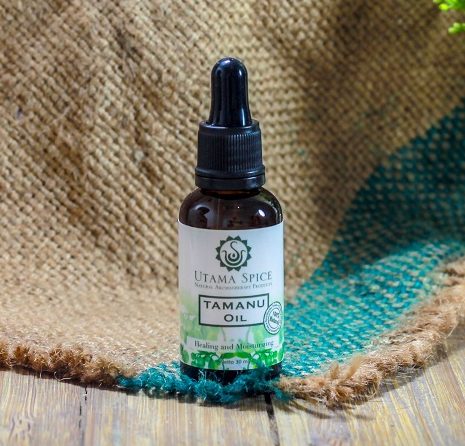
One drop of nyamplung, every evening
Our Tamanu Oil is cold-pressed from the nut of the nyamplung tree and contains a single ingredient, nothing added. Tap half a drop along the orbital bone at night and let the skin around your eyes rest.
Frequently asked questions about natural eye cream
Can I use my regular moisturizer as an eye cream?
Yes, if it is fragrance-free, free of essential oils, and does not contain retinoids or exfoliating acids. Use a smaller amount than you would on your cheeks and tap it on along the orbital bone.
Is coconut oil good for under the eyes?
Coconut oil is a lovely body oil, but it is heavier and more likely to clog pores than lighter oils. On the thin, gland-poor skin around the eyes, it can contribute to milia in some people. Argan or a very small amount of tamanu is a gentler choice.
Do natural eye creams help with dark circles?
Only a little, and it depends on the cause. Moisture can make thin skin look smoother, which softens the appearance of shadows. Genetic pigmentation and hollowness under the eyes are structural and do not respond to creams. Sleep, sun protection, and managing allergies make the biggest difference.
What helps with puffy eyes in the morning?
A cool compress, such as a clean cloth rinsed in cold water, held gently for a minute or two, can reduce morning puffiness. So can sleeping with your head slightly raised, drinking water, and keeping salt and alcohol lower in the evening. These effects are temporary, and that is fine.
At what age should I start caring for the eye area?
There is no right age. Sun protection matters from childhood. A simple moisturizing step becomes more useful as the skin gets drier, which for many people begins in their late twenties or thirties. Start when your skin asks for it.
Is it safe to use essential oils near the eyes?
No. Keep essential oils, including diluted blends and roller bottles, away from the eyelids and the area right beneath the eyes. If an oil gets into your eye, flush it with a plain carrier oil on a cotton pad, then rinse with water, and seek medical advice if stinging continues. Our guide on how to dilute essential oils covers safe use elsewhere on the body.
Does sunscreen around the eyes really matter?
More than anything else on this list. Sun exposure is the biggest outside driver of fine lines and uneven tone. Choose a gentle mineral formula that does not sting, and add sunglasses. Our guide to natural sunscreen for face explains what to look for.
A simple eye care ritual, morning and evening

Care for the eye area does not need a dedicated shelf. It needs a few minutes, a light touch, and consistency. Here is the ritual we return to, morning and night.
Morning
- Splash your face with cool water, or hold a cool, damp cloth over closed eyes for a few breaths.
- Apply your face serum or moisturizer to the rest of the face, keeping it away from the eyelids.
- Warm one drop of a light, fragrance-free oil such as argan between your ring fingers and tap it along the orbital bone.
- Let it settle for a minute, then apply a gentle mineral sunscreen around the eyes, stopping short of the lash line.
- Wear sunglasses outdoors. Squinting is repeated movement too.
Evening
- Remove makeup gently with a plant oil on a soft cloth, pressing and lifting rather than rubbing.
- Cleanse the rest of your face as usual.
- Apply your face serum, again keeping it off the eyelids.
- Tap a half to one drop of tamanu oil along the orbital bone and the brow bone.
- Close your eyes and take three slow breaths before you turn off the light.
That final pause is part of the ritual. Tension in the forehead and around the eyes is real, and a moment of stillness eases it more than any product can. If your skin barrier feels compromised from cold air or over-washing, our guide to how to repair your skin barrier and our winter skincare routine will help you rebuild gently.
The truth we keep coming back to
A natural eye cream can be a pleasant part of a routine, but it is rarely a necessary one. The skin around your eyes needs moisture, protection from the sun, and a gentle hand. A single drop of good plant oil, applied with care, honours all three. Fewer products, better technique, and more rest. That is real care, and it is within reach for everyone.