Natural shampoo for women: what your scalp and hair actually need
Natural shampoo for women is one of those phrases that sounds simple and turns out to be anything but. Walk any aisle, or scroll any store, and nearly every bottle claims to be gentle, clean, and botanical. Few of them explain what that actually means, or what your scalp and hair need from one wash to the next. This guide is written from the other side of the formulation bench. We craft shampoo in Bali, by hand, and we would rather you understand the ingredients well enough to choose well, whether or not the bottle you choose is ours.
Hair care has quietly become one of the most over-marketed corners of personal care. There is a lot of theatre, and not much teaching. So we will keep this grounded: what the words on the label really mean, what your hair is made of, how cleansing works, and which ingredients earn their place. By the end you should be able to read any shampoo label with a clear head, and pick the one that suits the hair you have, not the hair an advertisement wants you to want.
What natural shampoo for women actually means
The word natural is not regulated in cosmetics. That is the honest starting point. A brand can print it on a bottle that is mostly water, synthetic detergent, and fragrance, with a single drop of plant extract added for the label. This is not a reason for cynicism, it is a reason for literacy. Once you can read an ingredient list, the marketing loses most of its power over you.
It helps to hold two ideas at once. Natural is not automatically better, and synthetic is not automatically worse. Water is natural, and so is poison ivy. What we are really reaching for is a formula that cleans effectively, respects the scalp barrier, and is made with ingredients we can trace and trust. That is a higher bar than the word natural alone, and it is the bar worth setting. When a brand clears it, the label tends to be short, specific, and unafraid of plain language.
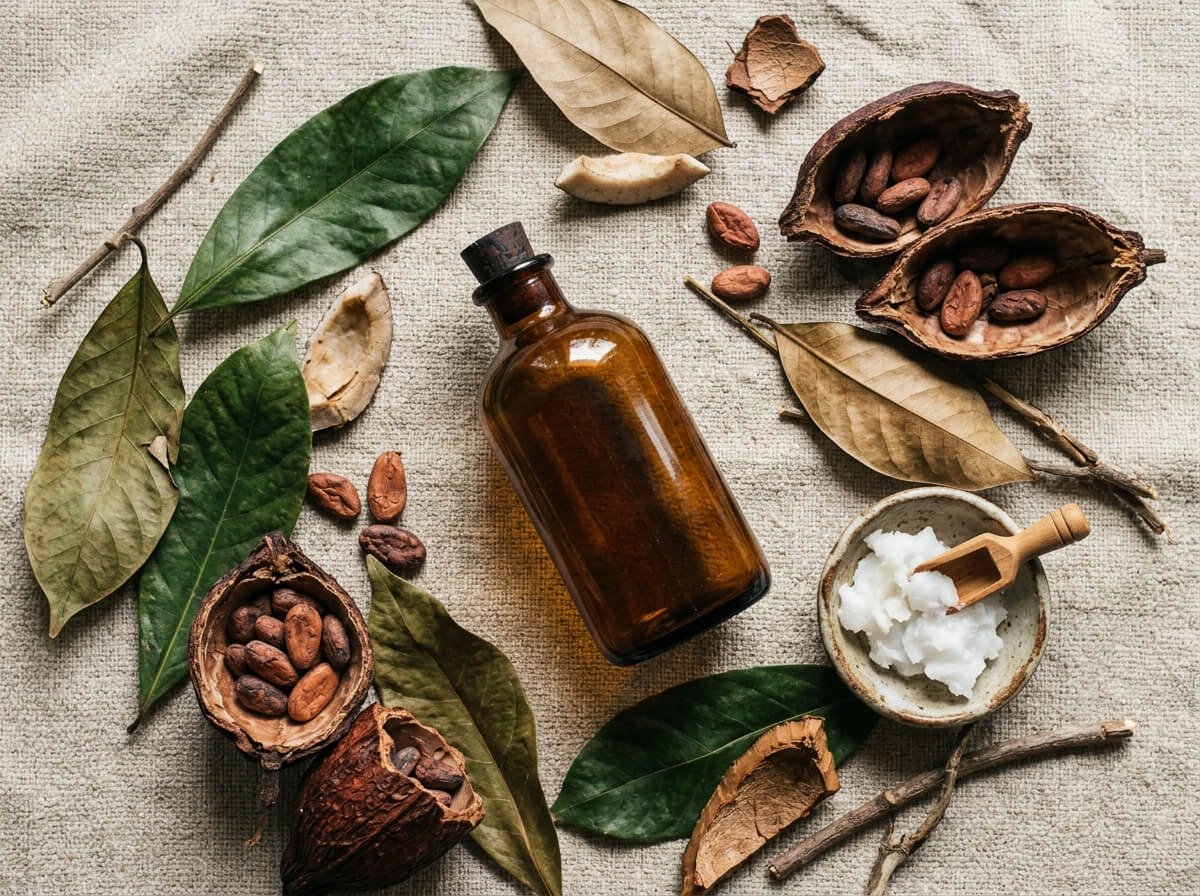
A genuinely natural shampoo for women tends to share a few honest traits. Its cleansing agents come from plant sources such as coconut, rather than harsh petroleum-derived detergents. Its scent comes from essential oils or is left out, rather than from a synthetic fragrance blend hiding under the single word “parfum.” And its ingredient list is short enough to read in one breath. None of this is about chasing a “100% natural” badge, which is usually more slogan than substance. It is about a formula you can understand and trust.
This is also where gendered marketing deserves a gentle challenge. Hair does not have a gender. A scalp is a scalp. The differences that matter are hair type, scalp condition, hormones, and life stage, not the colour of the bottle. We write a separate guide on natural shampoo for men for the same reason we write this one, because the questions people bring differ, even though the biology overlaps almost completely. Read across both if it helps. The science is shared.
What your scalp and hair actually need
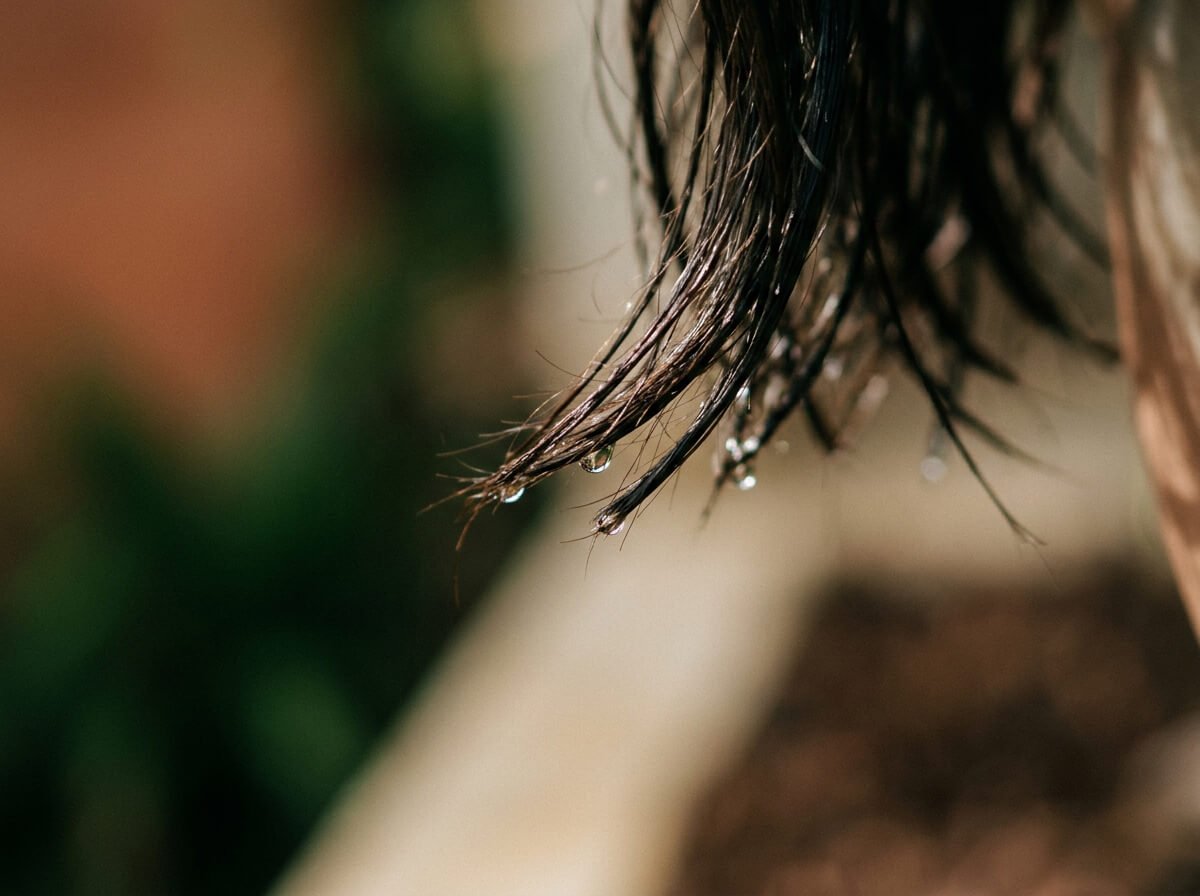
To choose well, it helps to know what you are washing. Each strand of hair is mostly keratin, a protein, wrapped in overlapping scales called the cuticle, a little like roof tiles. When the cuticle lies flat, hair looks smooth and reflects light. When it is roughed up by harsh cleansing, heat, or friction, hair looks dull and tangles more easily. Your scalp, meanwhile, is living skin. It produces sebum, a natural oil that travels down the hair and keeps it supple.
Good cleansing is a balancing act. You want to lift away dirt, excess oil, sweat, and product buildup, without stripping the scalp so completely that it panics and overproduces oil to compensate. Many people caught in a cycle of greasy roots and daily washing are living out exactly this overcorrection. A gentler shampoo, used a little less often, often calms the whole system down within a few weeks.
Women’s hair care carries a few extra variables worth naming plainly. Hormonal shifts across the monthly cycle, pregnancy, postpartum, and menopause all change how much oil the scalp makes and how much hair sheds. Longer hair means the ends are older, drier, and more fragile, since they have survived more washes, more sun, and more brushing. Colour treatment lifts the cuticle and leaves it more porous. If shedding is your main worry, our companion guide on natural shampoo for hair loss goes deeper into the ingredients that support thinning hair. Here, the throughline is simple: match the wash to the scalp, and treat the lengths with more care than the roots.
Porosity is the quiet variable most guides skip. It describes how readily your hair takes in and holds moisture, and it is shaped by genetics, colour, and heat damage. Low-porosity hair has a tight cuticle that resists water, so it can feel coated and heavy if you use rich products too often. High-porosity hair, common after bleaching or years of styling, drinks moisture in and loses it just as fast, which is why the ends fray and frizz. You do not need a laboratory to gauge yours. Notice whether your hair takes a long time to get wet and to dry, or soaks and sheds water quickly. That single observation tells you whether to reach for lighter or richer care after cleansing.
The surfactant question: sulfates, and the gentler way to clean
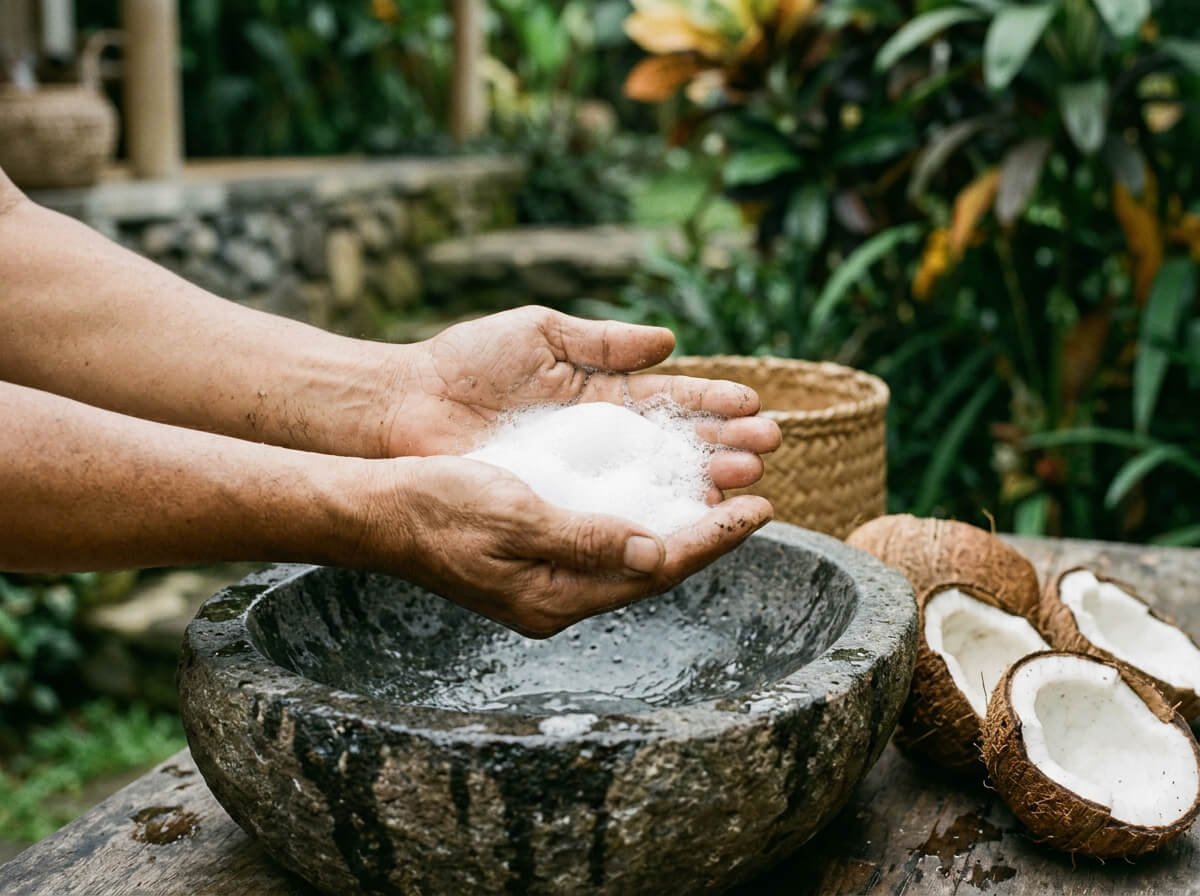
Every shampoo cleans using surfactants, molecules with a water-loving end and an oil-loving end. They surround oil and grime so water can rinse it away. This is not something to fear. It is simply chemistry, and it is the same principle behind every soap ever made. The question is not whether a shampoo contains surfactants, but which ones, and how kind they are to your scalp barrier.
The much-discussed sulfates, usually sodium lauryl sulfate and sodium laureth sulfate, are powerful, cheap, and foam beautifully. That generous lather is largely why they became the industry default. The trouble is that their strength does not stop at dirt. On sensitive scalps, colour-treated hair, or textured and curly hair, they can strip too aggressively, leaving the scalp tight and the lengths thirsty. For a lot of people, the frizz and dryness they blame on their hair is really a response to being over-cleaned.
Gentler surfactants, many of them derived from coconut, clean thoroughly with less collateral damage. You will see them on labels as coco-glucoside, decyl glucoside, sodium cocoyl isethionate, and similar coconut-based names. They foam more modestly, which takes some getting used to, because we have been trained to equate thick foam with clean hair. It is a false signal. A quiet lather can clean just as well. This is the approach we take with our own coconut-based formulas, and it is the single biggest reason a well-made natural shampoo feels different on the scalp.
There is a second, less visible reason gentleness matters, and it is the scalp barrier itself. Healthy skin, including the skin under your hair, keeps a slightly acidic surface and a living community of microbes that help it stay balanced. Aggressive cleansing disrupts both, which can show up as itch, flaking, or that tight, squeaky feeling people sometimes mistake for cleanliness. Squeaky is not the goal. Comfortable is. A well-formulated natural shampoo cleans within a pH range that respects the barrier rather than blasting through it, so the scalp is left calm instead of provoked.
Ingredients that earn their place
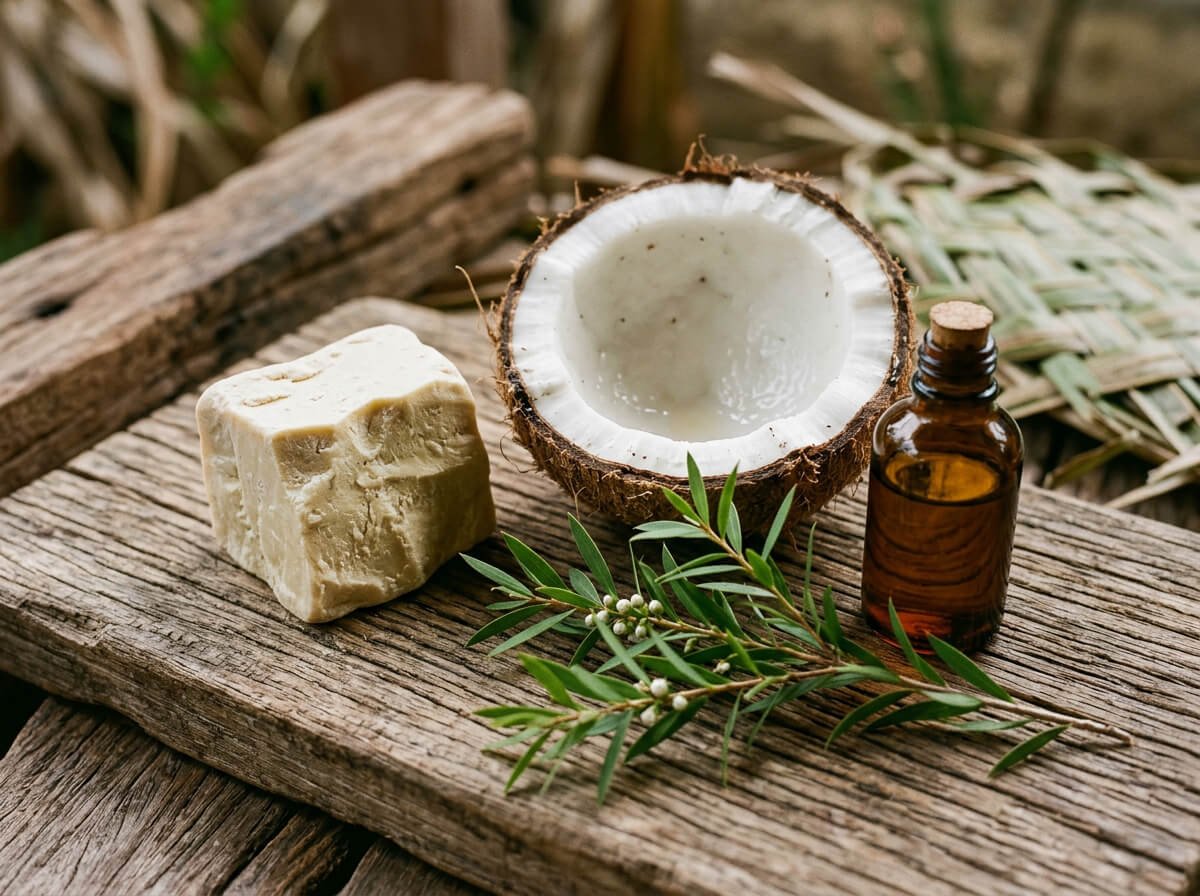
Beyond the cleansing base, a good natural shampoo carries a small cast of ingredients that each do real work. Coconut is the quiet backbone of much of what we make, and for good reason. Coconut oil is one of the few oils shown to penetrate the hair shaft rather than just coat it, which helps reduce protein loss during washing. We write more about why sourcing and extraction change everything in our guide to the best coconut oil for skin, and the same logic applies to hair.

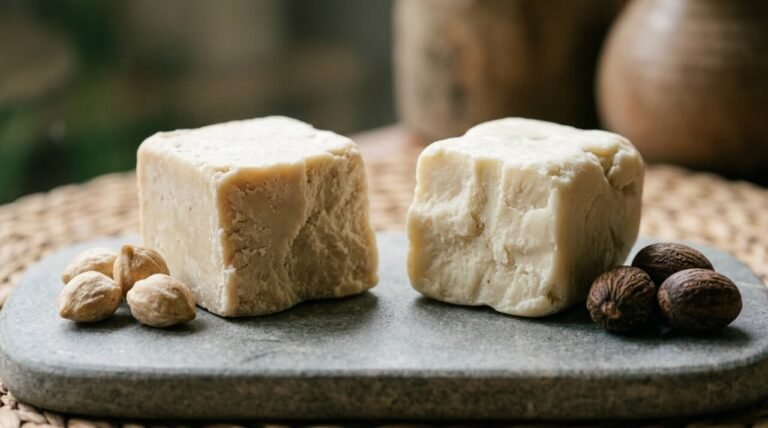
Cocoa butter adds softness and slip, so hair is easier to detangle without a heavy silicone coating. Botanical oils and butters condition the lengths. Essential oils, used honestly and in small amounts, bring both scent and function: tea tree is naturally clarifying and helps a scalp that tends toward flaking, while gentler blends of fennel and citrus simply lift the ritual. Our Herbal Silk Hair Oil and Wellkiss Hair Oil lean on exactly these botanicals for the days your ends want extra care between washes.
It is worth naming what a thoughtful formula tends to leave out, too, because absence is part of the craft. Heavy silicones give an instant, artificial smoothness that builds up over time and can leave hair limp and coated. Drying alcohols high on the list can undo the work of a gentle cleanser. Synthetic fragrance, listed only as “parfum,” can hide dozens of undisclosed compounds and is a common trigger for sensitive scalps. We do not say this to stoke fear, which is its own kind of marketing. We say it because you deserve to know what the words mean, so the choice is genuinely yours.
This is also where honesty matters most. A short, readable ingredient list is a feature, not a limitation. Our All Natural Shampoo #6 is built on cocoa butter and coconut oil, free from sulfates and synthetic fillers, and if a scalp tends toward buildup or flaking, our Tea Tree Shampoo adds that clarifying note. Pair either with the Hydrating Conditioner to smooth the cuticle back down after cleansing. None of these promises a miracle, because miracles are not the point. Consistent, gentle care is.

Wash with something you can actually read
All Natural Shampoo #6 is built on cocoa butter and coconut oil, free from SLS and synthetic fillers. A short, honest formula for hair that wants gentle, everyday care.
Switching to natural shampoo, and what to expect

If you are moving from a conventional shampoo to a gentler one, it helps to know that the first two or three weeks can feel like an adjustment. This is normal, and it is temporary. Conventional formulas often rely on silicones that wrap the hair in a slick, temporary smoothness. When you stop using them, hair can feel different, sometimes coarser, until its own condition reasserts itself. Give it a little time before you judge the result.
A few practices make the transition kinder. Wash less often than you think you need to, letting the scalp find its rhythm. Concentrate the shampoo on the scalp, where the oil and buildup actually are, and let the rinse carry enough through the lengths to clean them without scrubbing. Follow with conditioner from the mid-lengths down, never on the roots. And on the days between washes, a light hair oil on the ends keeps them supple, which is where our guide to using oils for {a(B_GROWTH,”growth and thickness”)} is worth a read.
One practical culprit deserves a mention, because it gets blamed on the shampoo unfairly: hard water. If your water is high in minerals, it can leave a faint film on the hair that makes even a good shampoo feel as though it is not rinsing clean. If your hair feels waxy or dull no matter what you use, hard water may be the quiet reason. An occasional clarifying wash, or simply a longer, cooler final rinse, usually resets things. The point is not to chase a new bottle every time your hair has an off week, but to notice what is actually happening and respond to that.
There is a slower pleasure in all of this that is easy to miss. In Bali, bathing has never been treated as a rushed, functional task. The traditional mandi is a moment of care, not a chore to get through. Washing your hair can hold a little of that same intention, a few unhurried minutes that belong to you. We explore this gentler pace more in our writing on Indonesian wellness at home. Natural care and slow care tend to travel together.
How to choose your natural shampoo for women

Here is the short, practical version, the checklist we would give a friend standing in front of a shelf, unsure. None of it requires a chemistry degree, only a moment of attention.
- Read the first five ingredients. They make up most of the bottle. Look for water plus coconut-derived surfactants, not sulfates high on the list.
- Match it to your scalp, not your ends. Oily or flake-prone scalp: a clarifying option such as tea tree. Dry or sensitive scalp: the gentlest cleanser you can find.
- Be wary of the word fragrance alone. Prefer named essential oils, or an honest unscented formula.
- Do not trust foam. A modest lather is a sign of gentler surfactants, not weaker cleaning.
- Shorter lists win. If you cannot read the label in one breath, ask why it needs to be that long.
- Think about the bottle, too. Refillable or recyclable packaging is part of what natural should mean, not an afterthought.
Frequently asked questions
Is natural shampoo for women different from natural shampoo for men? Not in the chemistry. Scalp and hair biology are shared. The real differences come from hair length, hormones, colour treatment, and personal preference, which is why we match a shampoo to a scalp rather than to a gender.
Why does natural shampoo not foam as much? Because gentler, coconut-derived surfactants foam more modestly than sulfates. The lack of thick lather is a feature. Your hair still gets clean.
How often should I wash my hair? Less often than most routines assume. Two to three times a week suits many people. Over-washing can push the scalp to make more oil, not less.
Will I have a transition period? Often, yes, usually two to three weeks as your hair adjusts away from silicones. It settles. Give it time before deciding.
Is a natural shampoo enough on its own? For cleansing, yes. For dry or damaged lengths, pairing it with a conditioner and an occasional hair oil does the restorative work that a shampoo is not designed to do.
The quiet truth about better hair care
Choosing a natural shampoo for women is less about finding a single perfect bottle and more about understanding what you are doing every time you wash. Gentle cleansing, a scalp left in balance, lengths treated with care, and packaging that respects the planet: these are not trends, they are simply how care was meant to work. We have made products this way in Bali since 1989, guided by the same idea that started it all, that what you put on your body should come from the same place that nourishes it. If you want to see how that philosophy runs through everything we craft, our writing on Balinese skincare is a good place to begin. Choose the wash you can understand. Your scalp will tell you the rest.