Natural bug repellent plants: from garden to skin, the science of botanical insect protection
Every June, the same question lands in our inbox at Utama Spice. Which plants actually repel mosquitoes, and can we just grow them around the house instead of buying a spray? Natural bug repellent plants are a beautiful idea, and there is real science behind them. The catch is that almost every gardening guide on the internet stops half-way through the story. They tell us what to plant, then leave us swatting at our ankles in the garden, wondering why the citronella we bought at the nursery does not seem to be working.
This guide is the part those articles leave out. We will look at why specific plants repel insects (the actual chemistry), why growing them is not the same as being protected by them, and how traditional Balinese practice has used those same plants for centuries, not as garden ornaments, but as concentrated oils applied to skin and burned as incense in the cool of the evening. We will end with how to take that knowledge home: what to plant, what to extract, what to blend, and when to start.
Why bug repellent plants fascinate us, and what most articles miss

The appeal of natural bug repellent plants is honest. We would rather sit in a garden that protects us than spray a chemical we cannot pronounce on our children. Lists of mosquito-repelling plants get shared every summer because the promise is beautiful: plant the right things, and the bugs simply leave you alone. Reality is more nuanced.
Most articles you will read on this topic, from gardening blogs to lifestyle magazines, list the same dozen plants (lavender, marigold, citronella grass, basil, rosemary) and stop there. They are not wrong, but they treat the plant as the product, when the plant is really just where the product comes from. The protective compound is locked inside leaf cells. A whole citronella plant releases a tiny fraction of those compounds into the surrounding air, only when bruised, brushed, or warmed.
This is why a calm evening in a citronella border, with leaves still and air heavy, offers little protection. It is also why the same plant, distilled and applied to skin or burned in a coil, has been a serious tool of insect protection in Bali since long before commercial repellents existed. Tradition knew what science later confirmed. The plant is the source. The oil is the medicine. Our guide to natural bug repellent for skin covers the personal-care side of this story. This article goes upstream to the garden itself.
The chemistry: citronellol, geraniol, and linalool as insect deterrents
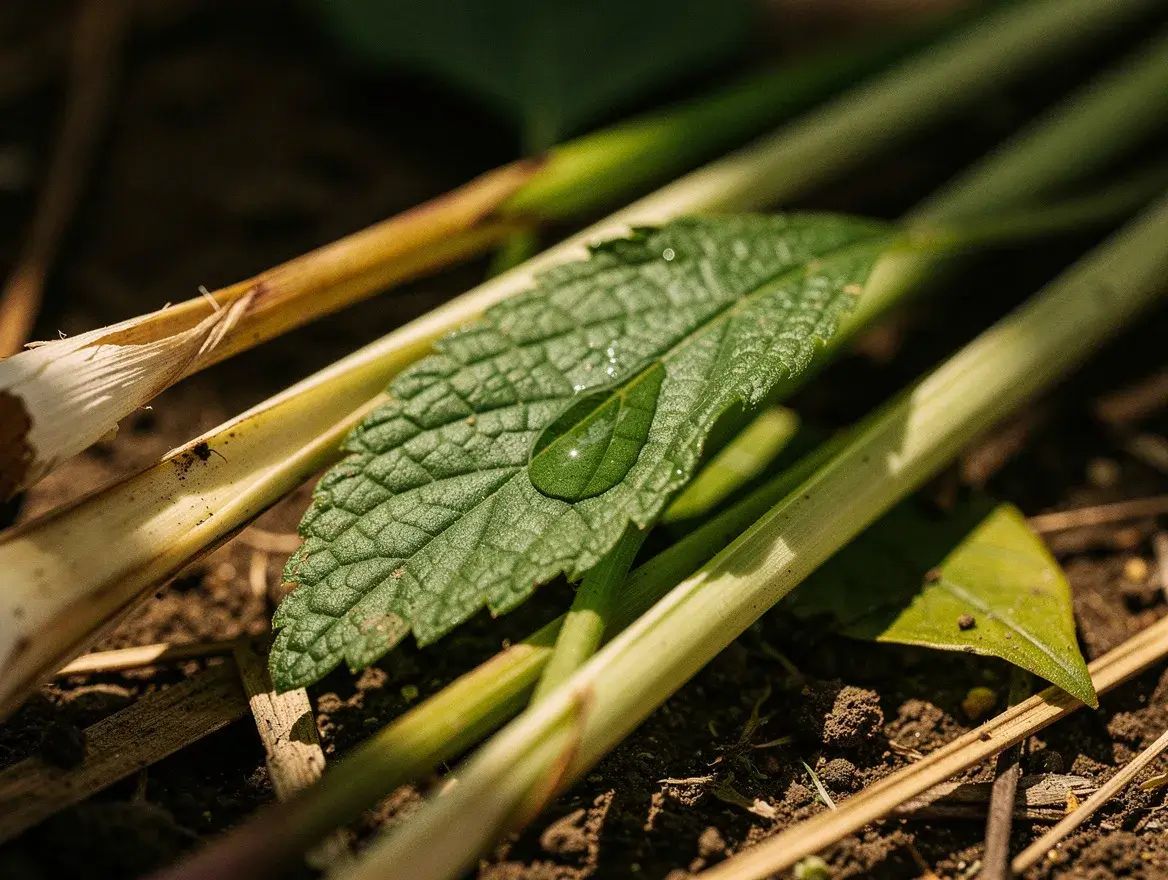
To understand why some plants repel insects and others do not, we need to talk briefly about three molecules: citronellol, geraniol, and linalool. These are monoterpene alcohols, naturally occurring compounds that plants produce as part of their own chemical defence. To a mosquito, a sandfly, or a midge, they smell wrong, and they interfere with the receptors the insect uses to find a meal of warm blood.
Citronellol is the headline compound in citronella grass, lemongrass, and certain types of geranium. Peer-reviewed studies have shown that citronellol-rich extracts disrupt mosquito olfactory receptors, particularly the ones that detect carbon dioxide and lactic acid (the signals that say, here is a person, come and bite). It does not kill insects. It confuses them, and they look for an easier target.
Geraniol appears in rose geranium, lemongrass, and palmarosa. It is one of the most studied natural insect repellents. Several formal trials have shown geraniol-based formulas providing protection times comparable to low-percentage DEET, with none of the synthetic load. It also smells, frankly, lovely (faintly rose, faintly grass), which matters when you are wearing it.
Linalool is in lavender, basil, and rosewood. It is gentler on skin, well tolerated by sensitive users, and shows real activity against mosquitoes, ticks, and certain flies. In Bali we often pair linalool-rich oils with stronger citronellol oils, because linalool also calms the nervous system, so the same blend that repels insects also helps a person settle into the evening.
The wider point is this: bug repellence is not magic, and it is not folklore. It is chemistry that nature has been refining for millions of years, and it lives inside specific compounds inside specific plants. Identify the compound, concentrate it carefully, apply it where insects are looking, and the protection is real.
Growing versus applying: why proximity alone is not enough
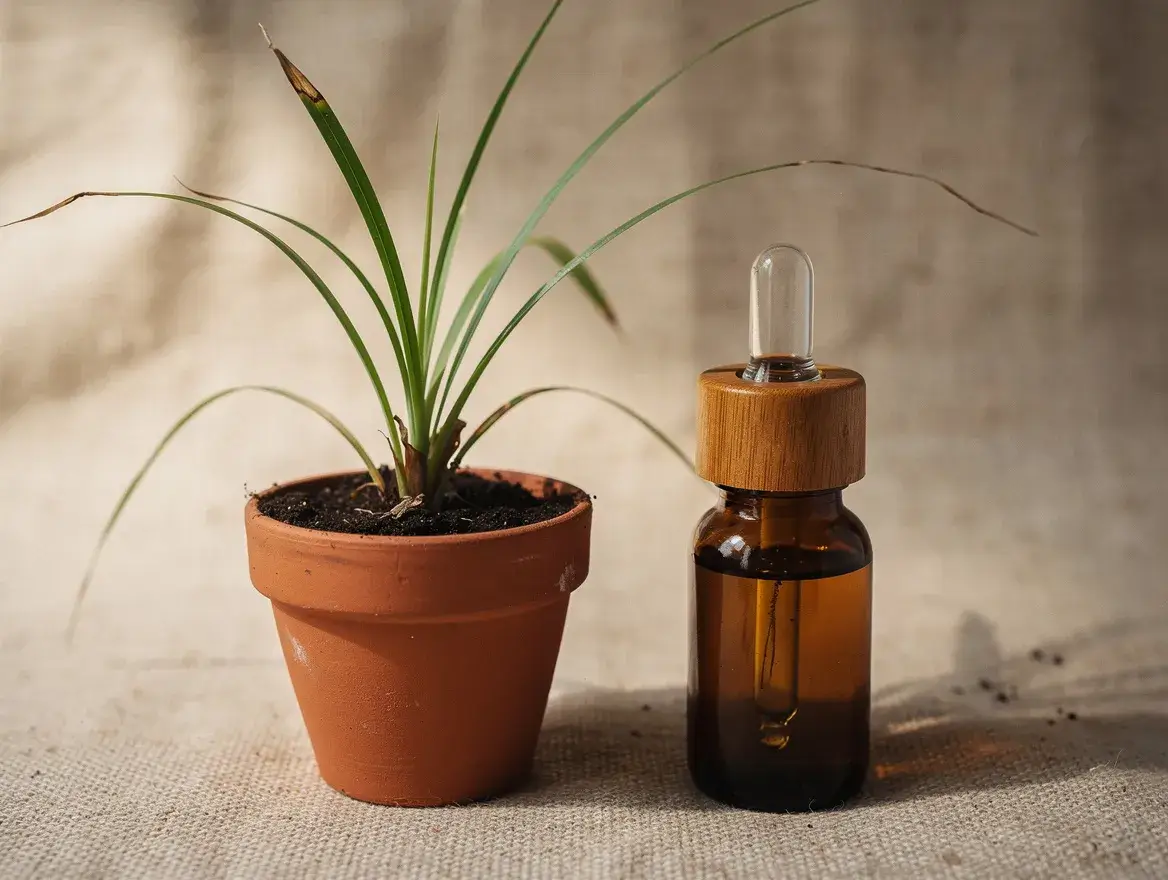
The most common mistake in the natural-repellent conversation is treating proximity as protection. A citronella plant in a pot near the door is a wonderful thing. It is also, on its own, almost useless against a mosquito two metres away in the still evening air. The reason is dosage.
A leaf releases its volatile compounds slowly, in small amounts, into a moving boundary layer of air. Unless that air is being pushed across you (by a fan, by a breeze, by your own hand crushing the leaf), the compounds dilute almost to zero before they reach your skin. Researchers measuring atmospheric citronellol around intact plants have repeatedly found concentrations far below the threshold needed to confuse a mosquito’s antennae. The plant is doing its job. The job is just not at our scale.
What changes the equation is concentration. Steam-distilling a hundred grams of lemongrass leaves yields roughly two grams of essential oil, and that two grams holds the active volatile fraction of the plant in compact form. A few drops, blended into a carrier and applied to wrists, neck, and ankles, places the protective chemistry directly on the skin surface where mosquitoes hunt. Suddenly the same plant that was decorative in the garden becomes a genuine deterrent.
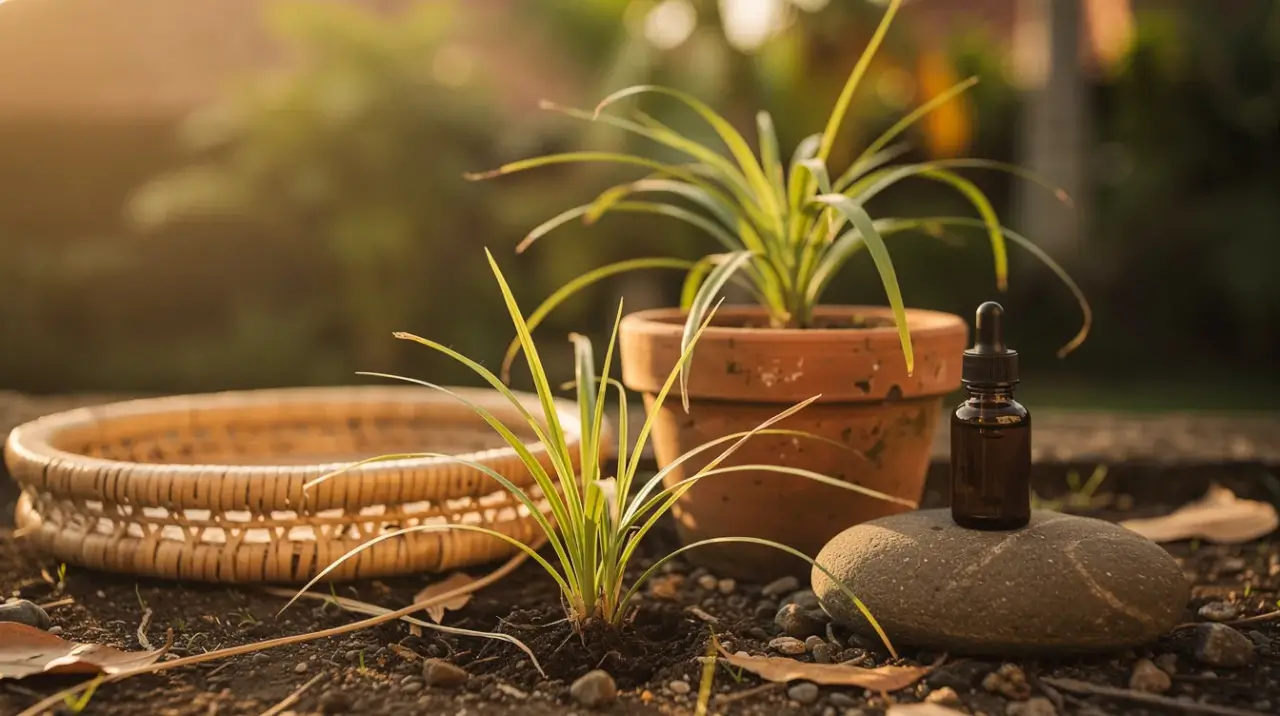
This is exactly what Balinese households have done for generations. The plants are grown for the kitchen, for medicine, for offerings, and for protection, but the protection comes from the extract, not the proximity. A small bottle of citronella essential oil or lemongrass essential oil, kept in the kitchen and reached for at dusk, is the actual tool. The plant outside the window is the source, the ornament, and the cultural memory of where the medicine came from. For a deeper dive into why a natural bug spray is worth making, we have written a separate piece.
There is one exception worth naming. Brushing past a citronella plant, crushing a leaf between fingers and rubbing it onto wrists, can offer a few minutes of mild deterrence. The mechanical bruising releases enough volatile oil to give a noticeable hit of scent. It is a useful trick in the garden, the way a sprig of basil rubbed on the back of the neck can soothe a hot afternoon. But it is a top-up, not a strategy. The strategy still lives in the bottle.
Seven botanicals Balinese communities have used for generations
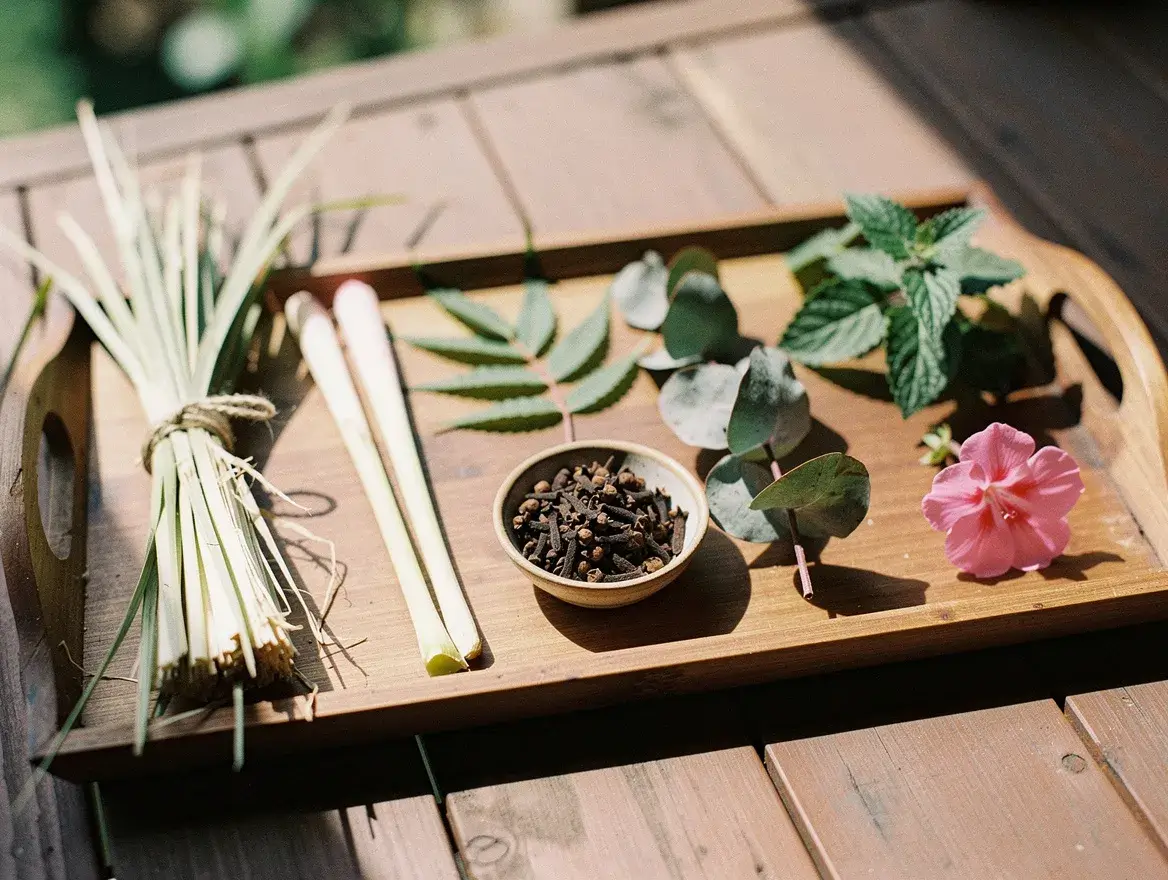
If you walk through a traditional Balinese kitchen garden you will see most of the world’s best-studied insect-repelling plants growing together, often without anyone calling them by that name. They are food, medicine, ritual, and protection at once. These are the seven we lean on most.
What stands out, walking among them, is how integrated they are. Citronella sits next to chillies, neem shades a corner where lemongrass clumps, clove drying on a mat near the door. No one taught us to put them all in one place. They simply belong together because their uses overlap, and over centuries the garden quietly arranged itself around what worked. Each plant below has a Latin name and a measured chemistry, but its place in the household was earned by being useful, repeatedly, generation after generation.
1. Citronella grass (Cymbopogon nardus)
The most famous of the group. A tall, clumping grass with a clean lemon-rind scent. The essential oil is rich in citronellol, geraniol, and citronellal, and it is the most widely used botanical mosquito deterrent in Indonesia. We carry pure Citronella Essential Oil for those who want to blend their own.
2. Lemongrass (Cymbopogon citratus)
A cousin of citronella with a softer, sweeter aroma. Strong in citral and geraniol, well tolerated on skin in dilution, and the workhorse of Indonesian kitchens. Lemongrass tastes good and repels insects in roughly the same proportions, which is part of why it grows in nearly every Balinese garden.

3. Neem (Azadirachta indica)
A small tree, deeply rooted in Ayurvedic tradition and well known across Southeast Asia. Neem oil contains azadirachtin, a powerful insect anti-feedant. Strong-smelling and best used in lower concentrations, often blended with citronella to soften the aroma while keeping the protective edge.
4. Clove (Syzygium aromaticum)
Indonesia’s signature spice, and one of the most potent insect deterrents in the natural pharmacy. Clove essential oil is dominated by eugenol, a phenolic compound with documented activity against mosquitoes, ants, and ticks. We use it sparingly, because it is warming on skin, and we always blend it with a soothing carrier.
5. Eucalyptus (Eucalyptus citriodora)
Lemon eucalyptus is one of the few plant-derived repellents officially recognised by health authorities for serious protection, thanks to the compound p-menthane-3,8-diol (PMD) found in its oil. Cooling, fresh, and effective. In Balinese practice it is also used for clearing congestion, so the household uses are wonderfully overlapping.
6. Patchouli (Pogostemon cablin)
Earthy, deep, and grounding. Patchouli is less known as a bug repellent in the West, but in Indonesia it is a staple of insect-deterrent blends, particularly for fabric and storage. The active compounds (patchoulol, alpha-bulnesene) deter moths, mosquitoes, and storage pests. Patchouli Essential Oil also pairs beautifully with citronella to round off its sharper notes.
7. Rose geranium (Pelargonium graveolens)
A modern favourite, and a strong one. Rose geranium oil is rich in geraniol and citronellol, and several formal trials have placed it among the most effective natural repellents available, particularly against ticks. It is gentle, beautiful smelling, and our preferred starting oil for anyone new to building botanical blends.
From garden to formulation: how essential oils concentrate plant protection
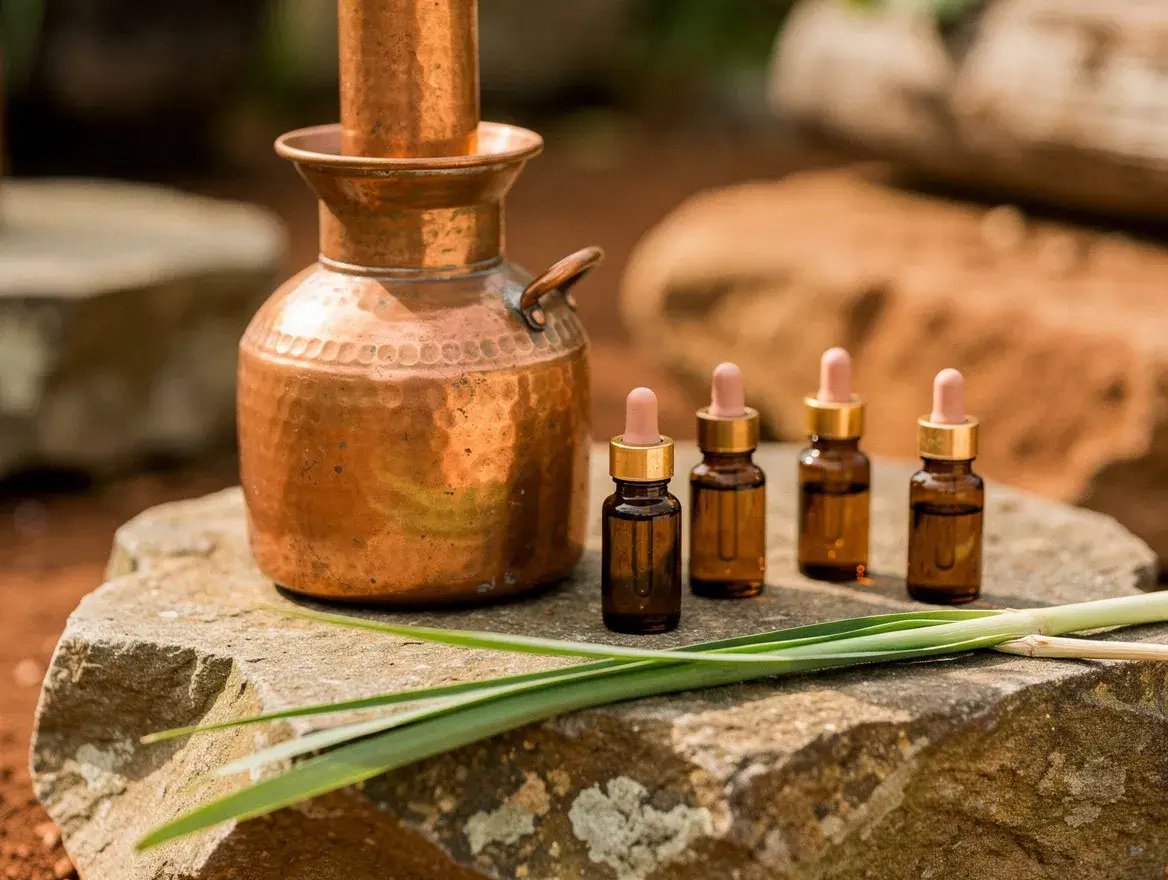
The bridge between a garden of insect-repelling plants and real protection is extraction. Steam distillation, the most common method, passes hot vapour through the plant material, lifting volatile compounds and condensing them back into a small quantity of essential oil and a larger quantity of aromatic hydrosol. The oil is the concentrate. A few millilitres hold the active fraction of kilograms of leaf.
This is also the place where sourcing matters most. The same plant grown in different soils, harvested at different times of day, and distilled at different temperatures produces oils with measurably different chemical profiles. A lemongrass distilled at midday in dry season holds a different ratio of geraniol to citral than the same plant cut at dawn after rain. Tradition encoded this. Modern essential oil blending respects it.
At Utama Spice we source botanicals from small-batch growers across Indonesia and distil in small lots, so the chemistry stays bright and the active terpenes are still doing their job by the time the bottle reaches the customer. Industrial oil, sitting for years in warehouses, loses its top notes and loses repellent power. Fresh oil, kept cool and dark, holds the chemistry the plant intended.
It is worth knowing that essential oils are not the only way to use these plants. Hydrosols (the water phase of distillation) are gentler and lovely for room sprays and pillow mists. Cold-pressed extracts retain heavier waxes. Each form has its place. For most insect protection, the oil concentrate is what does the work.
Building your own botanical bug protection
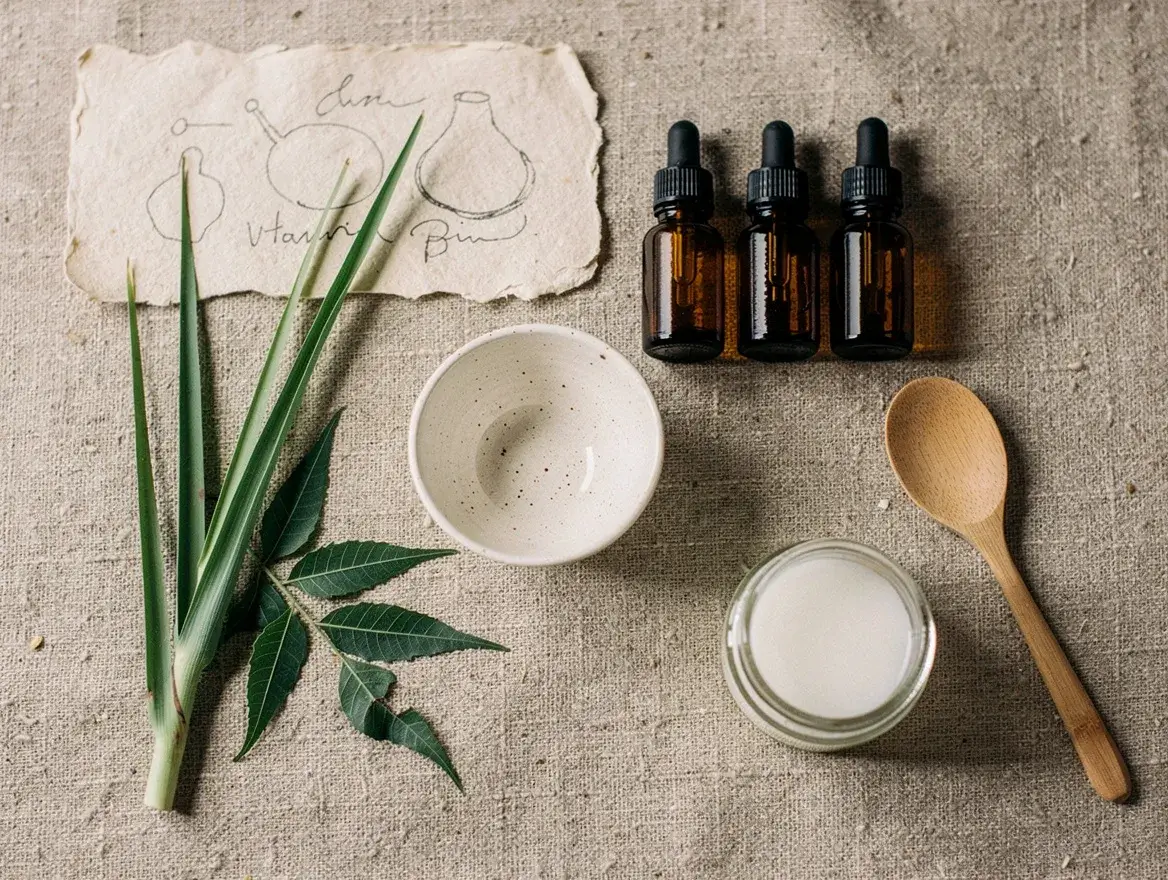
Once we understand the chemistry and the sourcing, the rest is craft. Here is the simplest workable framework for a home-built botanical bug protection routine.
A starter skin blend (10 ml)
- 8 ml of a light carrier oil (fractionated coconut or sweet almond)
- 10 drops citronella essential oil
- 10 drops lemongrass essential oil
- 6 drops rose geranium essential oil
- 4 drops eucalyptus citriodora essential oil
- 2 drops clove essential oil (warming, use lightly)
Shake, patch-test on the inside of the wrist, and apply lightly to ankles, calves, neck, and behind the ears. Reapply every two to three hours of active outdoor time. Avoid eyes and broken skin. This blend follows the same proportions our team uses internally before formulating a finished product.
Garden and patio layer
For the area itself, the most reliable approach is heat plus oil. A natural incense stick, a slow-burning coil, or a candle with citronella and lemongrass in the wax all warm volatile compounds into the air around them. Place several at the perimeter of the space rather than next to one person, and let the protective fog settle. Our own Begone Bug incense and candle lines were built on exactly this principle (warmth plus traditional Balinese botanicals).
Indoor pillow and fabric layer
For evenings indoors, a light hydrosol or oil-water spray on curtains, pillow edges, and screen doors creates a passive deterrent. Patchouli is wonderful here for its long staying power, and it blends warmly with lemongrass. Avoid spraying oil directly onto bedding or skin without dilution.
One small craft note. Essential oils oxidise over time, especially the lighter, more volatile compounds. A blend mixed today is sharpest in the first month, still strong at three months, and beginning to soften at six. Store the bottle in a cool, dark cupboard, away from the bathroom heat and the kitchen sun. A small dropper in dark amber glass extends a blend’s working life considerably. We replace ours seasonally, which conveniently lines up with the start of mosquito season anyway.
If blending feels like a lot, that is fair. Most of our customers want the protection without the labwork, which is why we make pre-blended sprays, candles, and incense in the first place. Those products are exactly the same chemistry, calibrated by our formulators and stable in the bottle for the long evenings ahead.
Seasonal timing: when to start a natural bug repellent routine
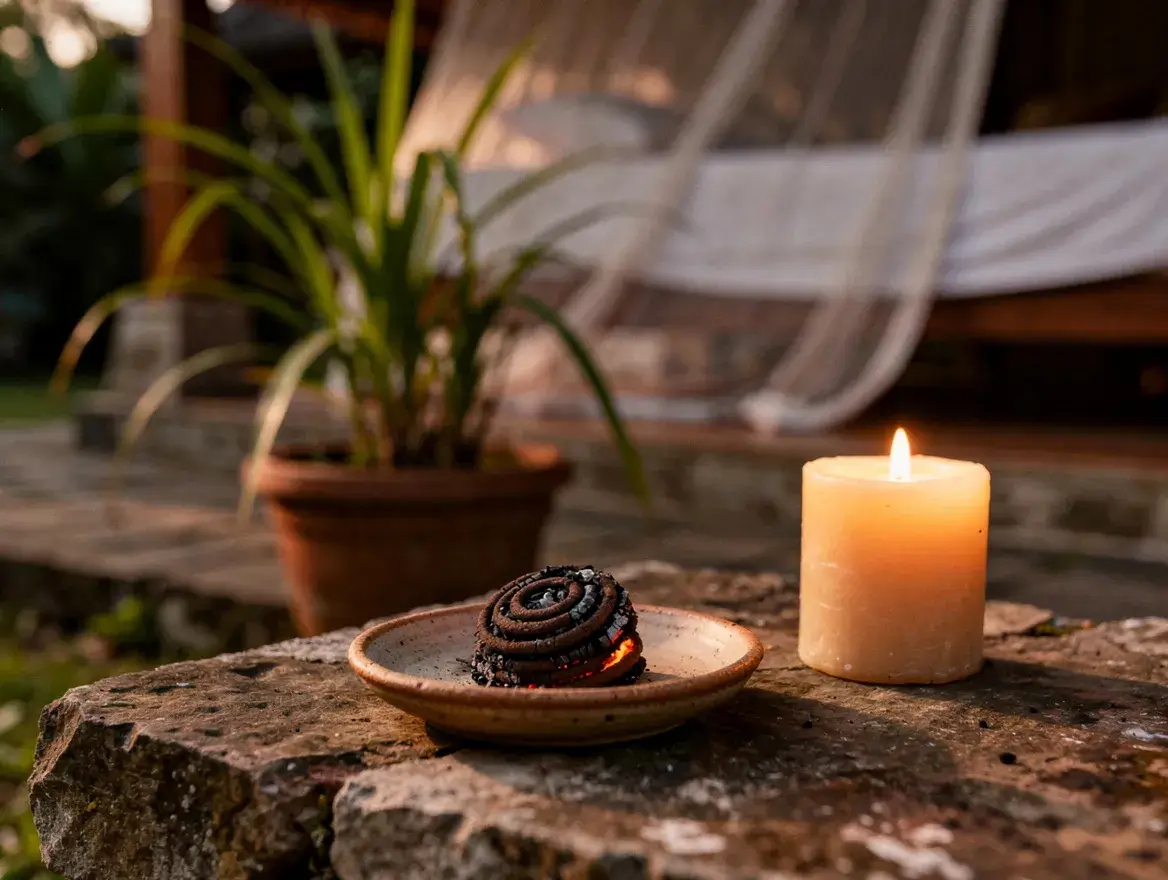
One of the quiet truths of natural protection is that it works best when started early. Mosquito populations build through warm, damp weeks. By the time we feel them, the local population is already large. Beginning a botanical routine in late spring (or, in the tropics, at the first edge of monsoon) is more effective than waiting for the first bite.
In Bali we cycle naturally with the seasons. In the cooler dry months, the routine is lighter (an occasional candle, a wrist dab before evening offerings). In the wet season, when mosquitoes peak, we layer everything: skin blend, candles at dusk, incense at dinner, patchouli mist on pillows. The plants in the garden are still there, beautiful and useful, but they are the source of the medicine, not the medicine itself.
The reward for treating these plants seriously is real. A working botanical routine is gentler on skin, kinder to children and pets, and a daily reminder that small, intentional choices add up to a different kind of summer. Care, again, is what gets returned.

The blend, already made
If you would rather skip the labwork, our Begone Bug Spray is the same chemistry, calibrated by our Bali formulators. Citronella, lemongrass, clove, and patchouli in a coconut-oil base, ready for ankles, wrists, and the patio at dusk.
If you would like to keep exploring the wider world of botanical care, our essential oils for aromatherapy and relaxation and natural candles guide sit naturally alongside this one. Each starts in a plant, ends in a ritual, and shows what nature was always doing on our behalf, in case we wanted to pay attention.