Butter skin: the trend just got a name, Bali gave us the ingredient decades ago
Butter skin has a name now. Search interest is up by roughly 300% in the past few months, TikTok has turned it into its own genre of get-ready-with-me video, and every beauty editor on the internet has a five-step routine ready to sell you. What almost nobody selling butter skin will tell you: the result they are describing, skin that looks fed rather than just hydrated, dense rather than glassy, is what a real, single-ingredient body butter has always done. Bali has been making that case since 1989. We did not need a trend name for it. We needed a jar.
This is a practical, honest guide to butter skin: what the look actually is, where the routine-max version of the trend goes wrong, the one ingredient that was doing this work decades before anyone filmed it, and how to build a version of the ritual that costs you fewer steps, not more. We will also cover the part almost every ranking article skips: what to check on a label before you buy into a trend that is already attracting products built for the name rather than the formula.
What butter skin actually looks like, and how it differs from glass skin
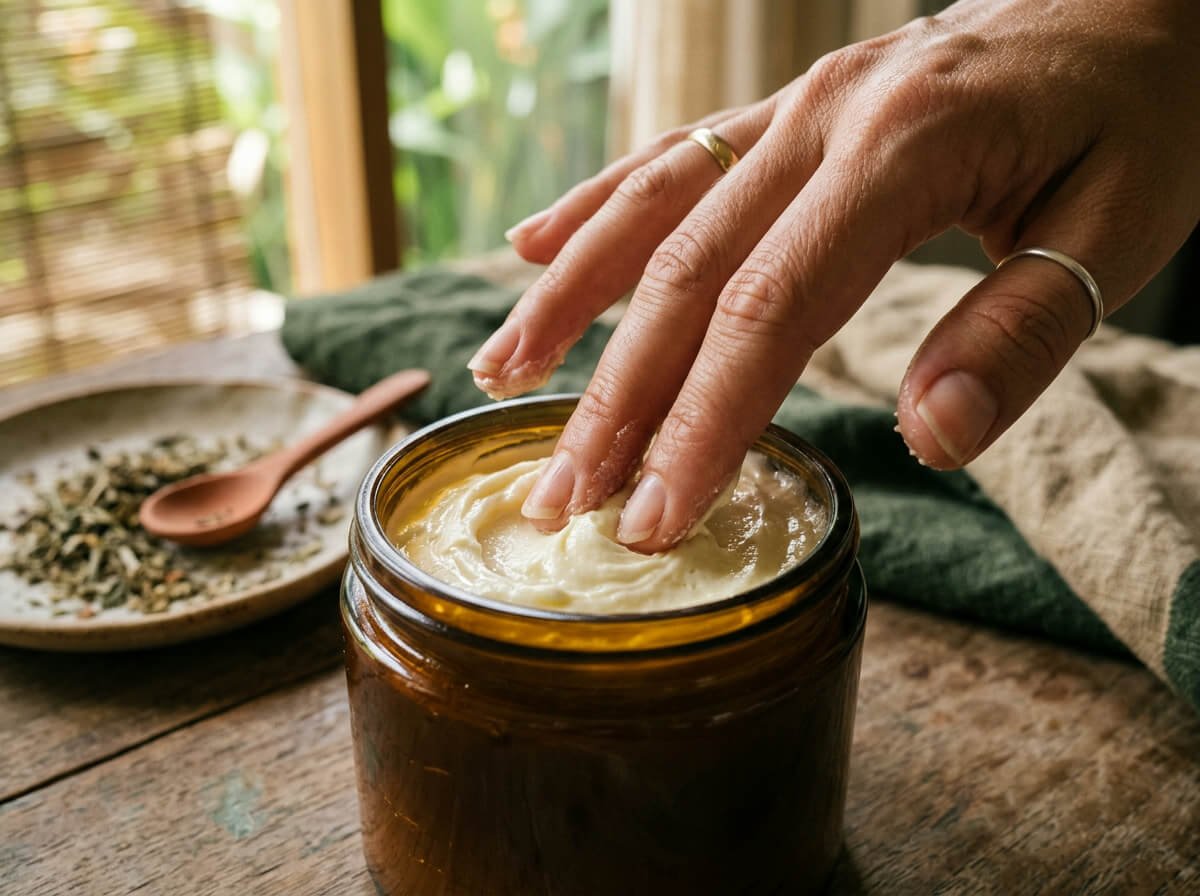
Glass skin, the trend that came before it, asked for a high-shine, almost reflective finish: thin layers of hydrating serum stacked until the surface catches light like poured resin. Butter skin asks for something softer and, we would argue, more honest. The finish is matte-satin rather than mirror-bright. The skin looks plush, slightly raised, the way it looks after a genuinely rich cream has had 10 minutes to settle in rather than 30 seconds to absorb. It photographs less dramatically than glass skin. It feels different under a hand entirely.
The mechanism is not mysterious. Glass skin leans on humectants, ingredients like hyaluronic acid and glycerin that pull water to the surface. Butter skin leans on emollients and occlusives, the fatty, wax-adjacent compounds that fill the gaps between skin cells and slow water loss from underneath. Both can coexist on the same face. But the visual signature of butter skin, that dense, cushioned look, comes specifically from lipid-rich ingredients sitting in and on the skin barrier, not from water sitting on top of it. A body butter, by definition, is built almost entirely from that category of ingredient. That is the whole reason this trend and this product were always going to end up in the same conversation.
There is also a texture difference worth naming honestly. Glass skin rewards skin that is already fairly balanced, since heavy layering on oily or congested skin can tip into a greasy look rather than a luminous one. Butter skin is more forgiving of texture and tone variation, because the cushioned finish reads as evenness even where the skin underneath is not perfectly smooth. That makes it, in our view, the more realistic goal for the widest range of skin types and climates, including the humidity Bali lives in year-round.
Why every routine guide reaches for ceramides and squalane, and what that skips
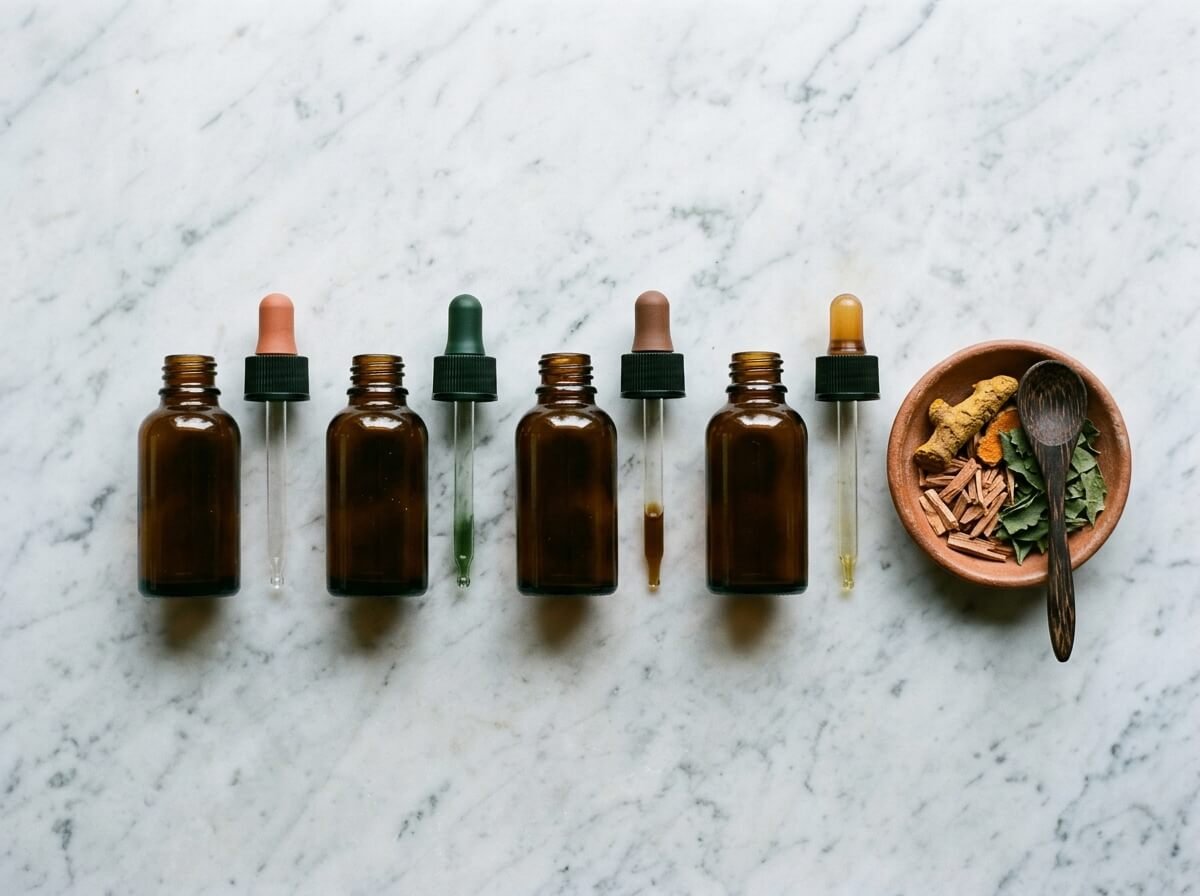
Search “butter skin routine” and the pattern repeats across nearly every result: a ceramide serum, a squalane oil, a peptide moisturizer, sometimes a fifth product layered underneath a facial oil, applied in a specific order and warned to avoid anything “too oily” or “mattifying.” The logic is not wrong, exactly. Ceramides do rebuild parts of the skin barrier. Squalane is a genuinely well-tolerated emollient. But the routine-max framing treats richness as something you have to assemble from five separate purchases, in a precise sequence, with a warning label attached to the one ingredient category, oils and butters, that could do most of the job on its own.
What the five-step version skips is simpler than it sounds: a single wild-harvested botanical butter already carries fatty acids, natural waxes, and a cushioning texture that a synthetic serum stack is trying to reconstruct piece by piece. Ceramide serums are formulated to mimic what the skin barrier already contains. A butter like illipe supplies a version of that structure directly, alongside antioxidants and a fatty acid profile that a lab-built serum has to synthesize ingredient by ingredient. We are not against ceramide serums. We are against the idea that plush, fed-looking skin requires more products rather than a better one.
The order that matters in a natural routine is usually shorter than the routine-max version assumes, and the reason has less to do with minimalism as an aesthetic than with what a good single-ingredient formula is already carrying. There is a cost dimension too, one the trend coverage rarely mentions: five specialty serums, each with its own packaging, shelf life, and price point, add up fast. A single well-formulated body butter, used consistently and refilled rather than repurchased in fresh plastic each time, does the same visible work for a fraction of the cabinet space and a fraction of the spend.
This is the quieter version of a stance we hold across the brand: skincare theatrics, the idea that a longer routine signals more care, usually signals more marketing rather than more result. A five-step stack is not wrong because it is complicated. It is wrong when the complication is doing the same job a single honest ingredient already does, at a fraction of the cost and the counter space. Butter skin, read this way, is less a new trend than a rediscovery of a much older idea: that richness applied consistently beats richness assembled from a shelf of separate steps.
The one ingredient that was doing this before it had a name
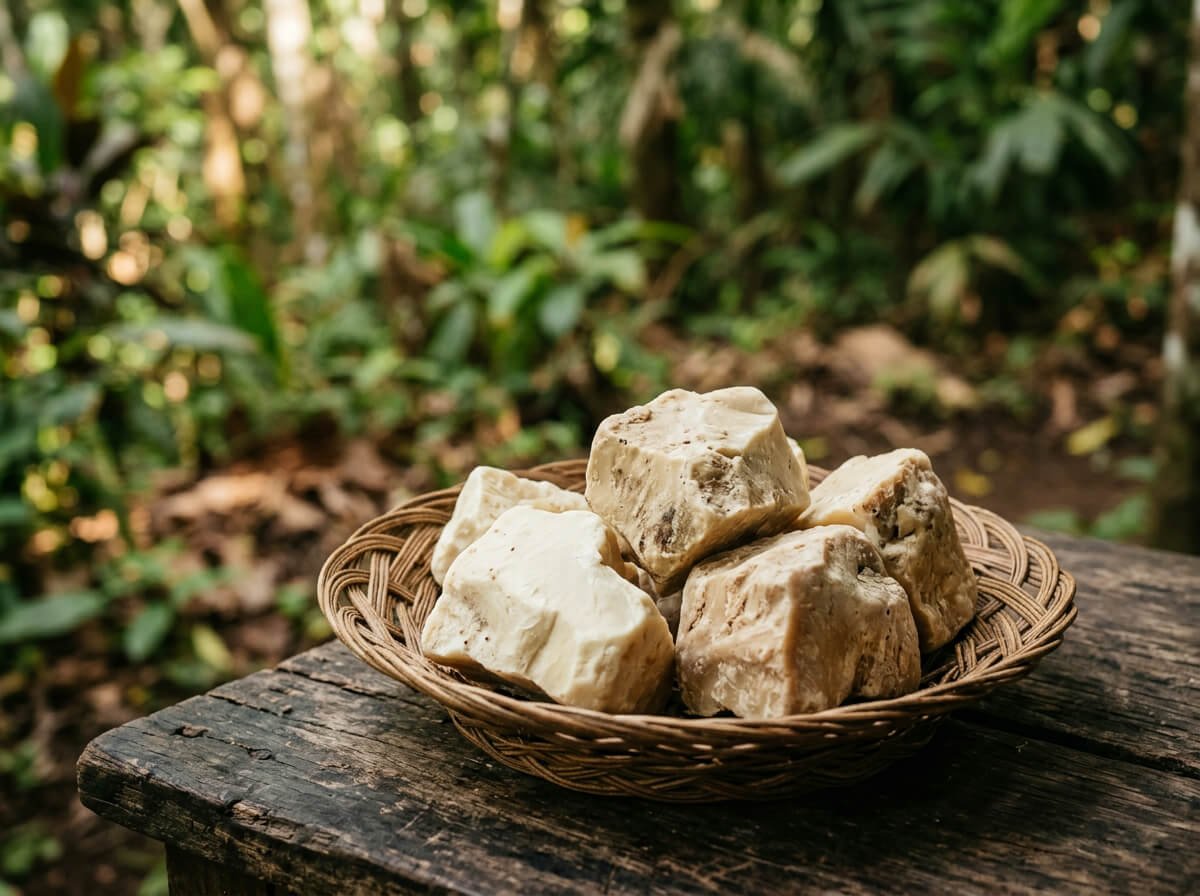
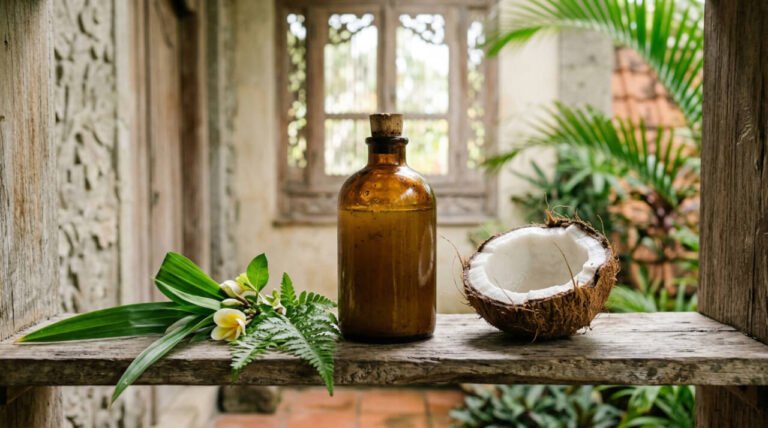
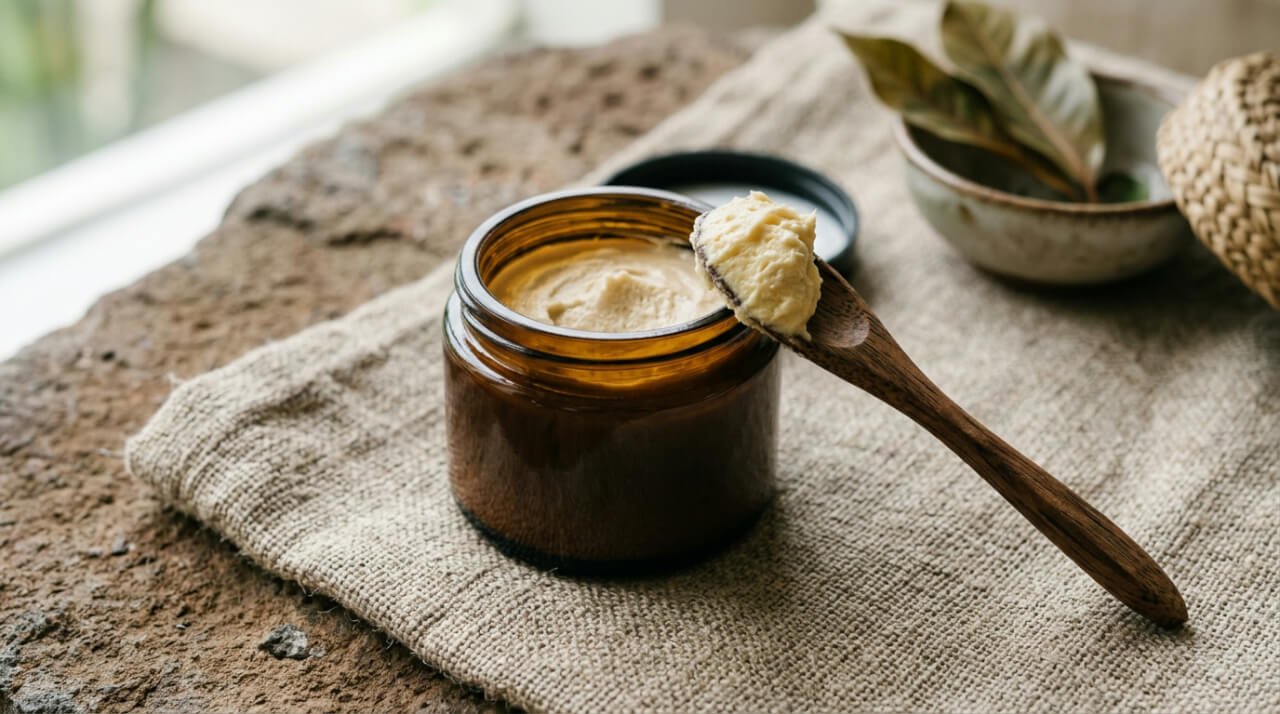
Illipe butter, wild-harvested from Shorea stenoptera trees in the rainforests of Kalimantan, is the ingredient we would point to first. Families who have worked the same groves for generations gather it through our Forestwise partnership, which means the income from every jar supports the same forest the butter comes from, not a plantation that replaced it. The fat itself is dense and stable, higher in stearic and oleic acid than most tropical butters, which is part of why it holds its structure at room temperature instead of melting into a thin film the way some lighter butters do. That structure is what gives skin the raised, cushioned look the butter skin trend is chasing.
We compare it honestly to its more famous cousin in our guide to illipe butter versus shea butter, and to the lighter, more everyday oil we blend alongside it in coconut oil versus illipe butter. The short version: illipe butter is the richer, slower-absorbing base, the one built for the plush finish this trend is naming. Coconut oil is the faster, lighter carrier that layers well underneath it, sourced through our Aluan partnership with Bali’s coconut farmers. Neither needs a ceramide serum standing in for what it already does.
None of this is new science dressed up as a discovery. It is generational knowledge: Balinese households have relied on dense botanical butters and oils for skin, hair, and ritual for far longer than any of us have been formulating professionally. What has changed is not the ingredient, it is the audience. A trend gave a global name to a practice that was already complete. If you want the full origin story, our illipe butter benefits guide covers the sourcing and the science in more depth than we have room for here, including how the Forestwise partnership protects the specific groves this butter comes from.
It is worth being specific about what “wild-harvested” means in practice, since the phrase gets used loosely elsewhere. It means the illipe trees are not planted in rows on cleared land. They grow as part of an intact forest canopy, and harvesters gather fallen nuts on a seasonal cycle rather than cutting anything down. That is the difference between an ingredient that funds deforestation and one that funds forest protection, and it is the reason we can say, without hedging, that a jar of this butter does two things at once: it feeds your skin, and it keeps a Kalimantan forest standing.
Butter skin is not just a face thing
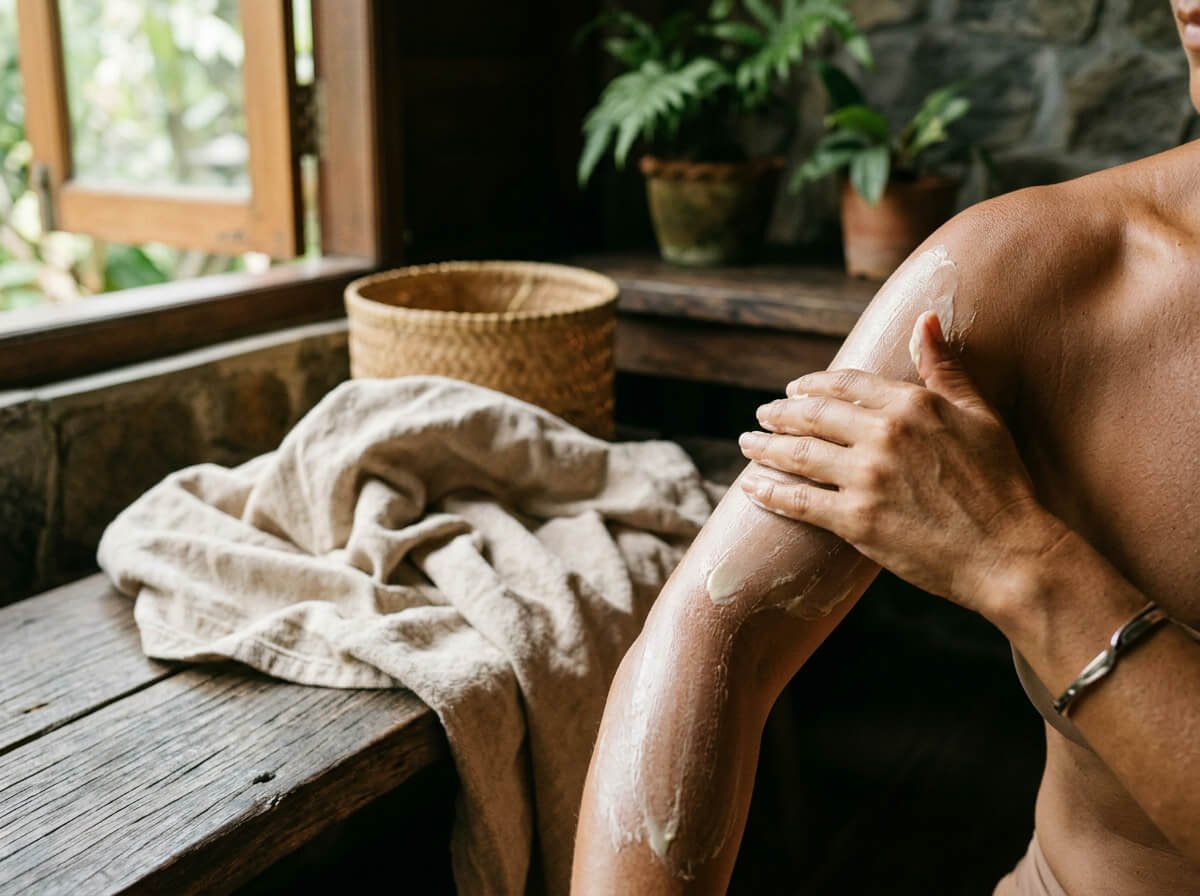
Every ranking article we researched for this piece stopped at the jawline. That is a strange place to stop, because the body carries more surface area, more daily friction from clothing and washing, and, honestly, less attention than the face gets in most routines. If butter skin describes a look and a feel rather than a list of face-specific ingredients, there is no reason it belongs only above the collarbone.
This is where the ritual has lived in Bali for 35 years: hands, forearms, shoulders, the backs of knees, the parts of the body that dry out fastest and get noticed last. Elbows and heels crack before cheeks ever do. Shoulders spend all day under fabric, losing moisture to friction most people never think about. A body-wide approach to butter skin is not an extravagance, it is closer to the original, practical version of the idea: skin that is consistently fed everywhere it is exposed, not just in the places a camera happens to focus on.
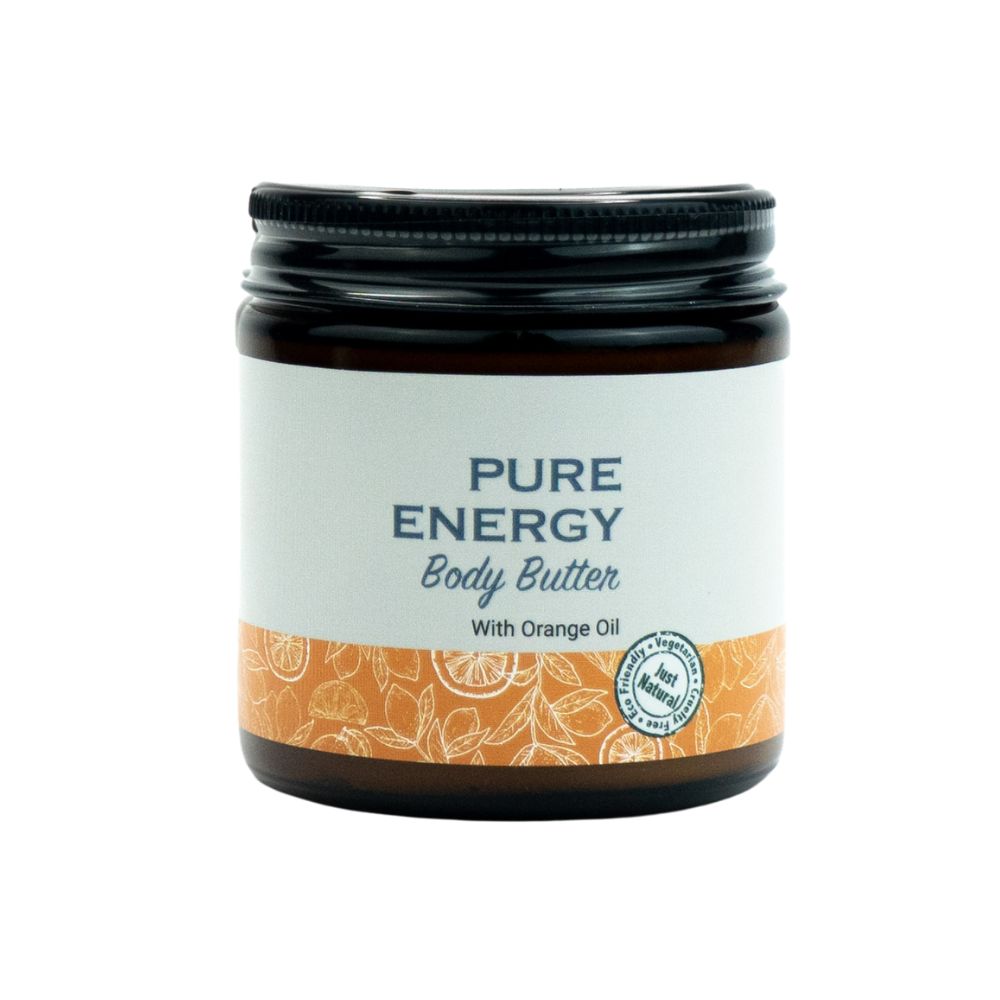
Our Pure Energy Body Butter and Bliss Body Butter are both built on that same illipe and coconut base, formulated for exactly this kind of full-body application rather than a single facial step. Applied after a shower, while skin is still slightly damp, either one delivers the cushioned, fed look the trend is chasing, on the parts of the body most routines forget about entirely. Pure Energy leans brighter and more citrus-forward for a morning ritual; Bliss leans warmer and calmer, better suited to an evening wind-down. If you are choosing between formats for your skin, our body oil versus body butter guide walks through when each texture actually makes sense, and when the two work best layered together.

The butter behind the butter skin trend
Pure Energy Body Butter is built on wild-harvested illipe and cold-pressed coconut oil, the same dense, cushioning base this whole trend is describing. One jar, whole body, no five-step stack required.
A minimalist butter-skin ritual: fewer steps, not more
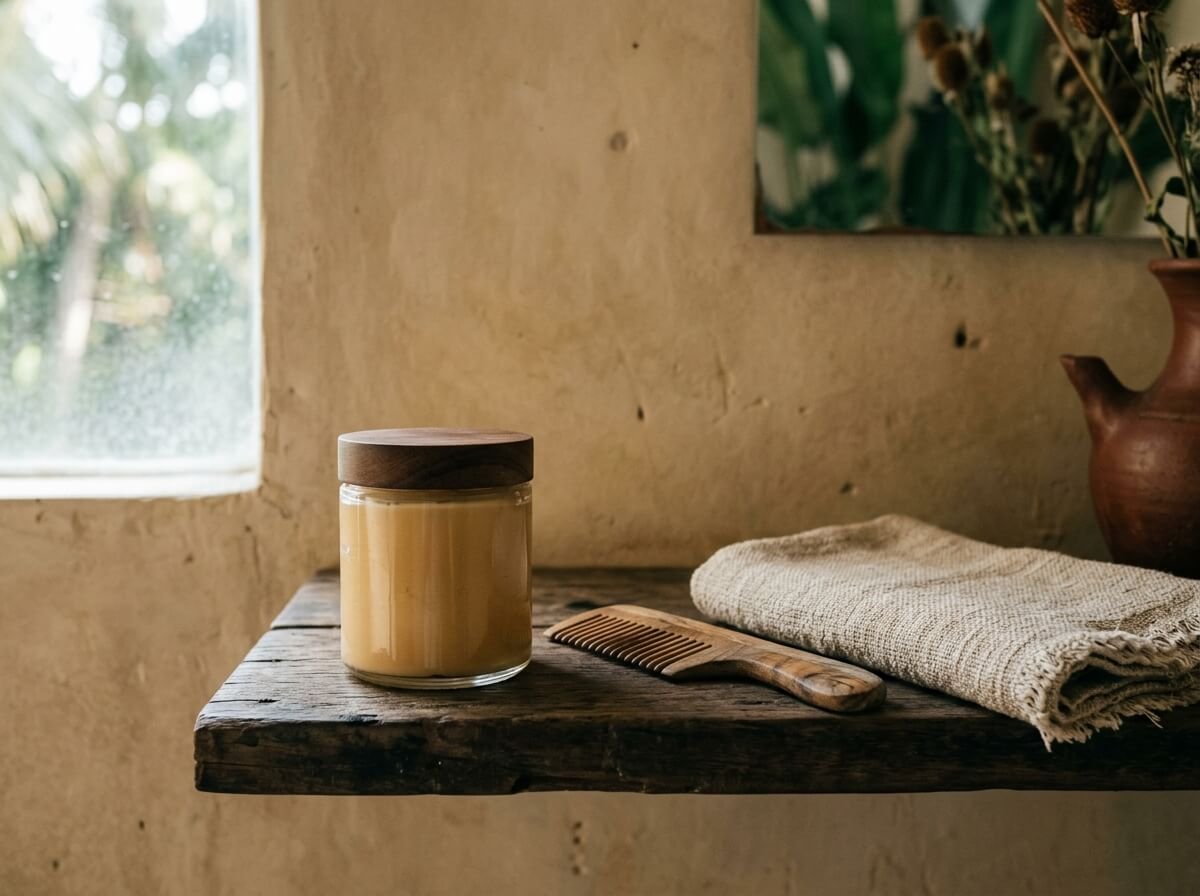
Here is the version we would actually recommend, three steps instead of five, built around consistency rather than complexity.
- Cleanse while skin is dry or barely damp. A gentle cleanser, nothing that strips the barrier you are about to feed. Harsh sulfates undo in seconds what a butter takes minutes to rebuild.
- Apply a lightweight oil first, if your skin wants one. Our Rose Allure Body Oil works well here, a thin carrier layer for the butter to seal in, especially on drier body zones like shins and forearms.
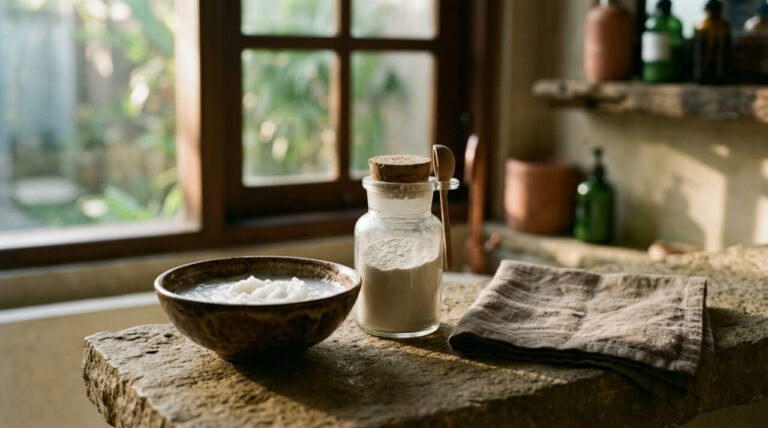
- Press, do not rub, a butter into damp skin. Warm a small amount between your palms first so it spreads rather than sits, then press it into skin in sections rather than dragging it across the whole body at once.
That is the entire ritual. No sequencing chart, no waiting between steps for absorption, no serum you have to remember to reorder before it runs out. Once or twice a week, a gentle exfoliating step, our Face and Body Clay works well for this, clears away the buildup that would otherwise sit under the butter and dull the finish you are working for. Skip the exfoliation step on the same day you apply a heavier butter; back to back, the two can feel like too much for skin that is still adjusting to the new routine.
Everything else is repetition, which is the actual truth behind a plush, well-fed complexion: consistency over complexity. Most people notice the visible shift after roughly two weeks of daily application, not after a single dramatic session the night before a photo. That timeline matters, because it is the opposite of what a five-step routine implies, that more product, applied once, produces the look. It does not. A simpler routine, repeated, does.
Refill culture fits naturally into this shorter routine, too. A three-step ritual built around one refillable jar is easier to sustain for months than a five-product stack with five separate reorder dates and five separate packaging footprints. Simplicity, in this case, is not a compromise on results. It is what makes the ritual something you will actually keep doing past the first two weeks of trend-driven enthusiasm.
What to actually check on a body butter label
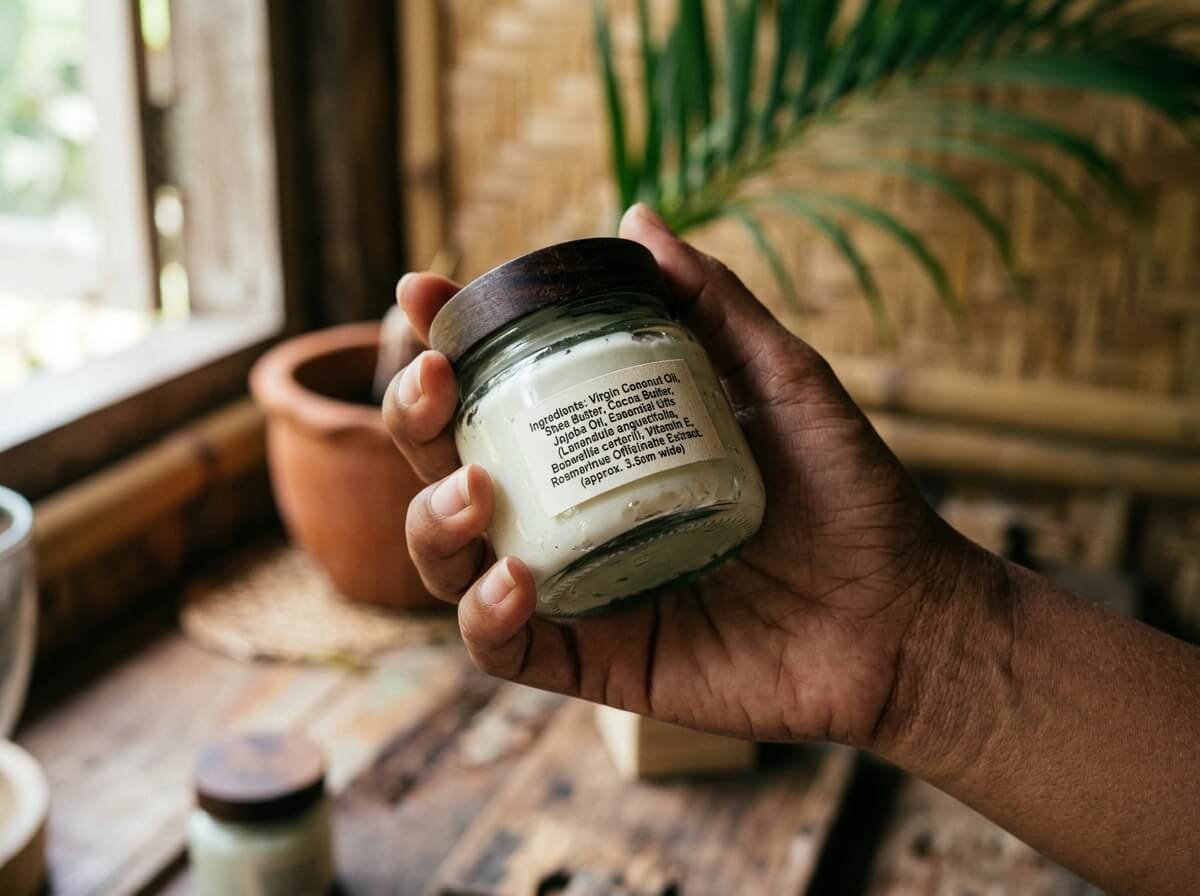
Butter skin’s sudden popularity means the shelf is filling with products chasing the name rather than the formulation behind it. Before buying into the trend, three things are worth reading on the back of the jar.
The base oil. Look for the actual named butter or oil near the top of the ingredient list, not buried after a page of preservatives and fragrance compounds. If illipe, shea, coconut, or cocoa butter is not in the first five ingredients, the product is unlikely to deliver the cushioned finish the label promises. We wrote a longer breakdown of this in our guide to reading a skincare label honestly, including which filler ingredients tend to crowd out the botanical that is doing the actual work.
The comedogenic rating. Not every rich oil belongs on acne-prone or congestion-prone skin. Our non-comedogenic oils guide covers which botanical oils sit low on the scale, so you can get the butter skin look on the body without triggering breakouts on the face. Body skin and facial skin behave differently here: a heavier butter that would clog facial pores is often perfectly comfortable on the arms, legs, or torso.
The fragrance load. A short, transparent ingredient list, closer to 10 named botanicals than 30 unnamed ones, is a reasonable proxy for a formula built around one or two working ingredients rather than a marketing story. Seed oils have become a genuine point of confusion here too. Our seed oil free skincare guide explains what the controversy gets right, and why Balinese formulation has quietly avoided the ingredients under debate for decades, not because of a trend, but because heavier tropical butters simply worked better on skin that lives in humidity.
Refill culture matters here too. Choosing a butter you refill rather than repurchase in a new jar every time keeps the honest version of this ritual affordable over months, not just for one trend cycle, and keeps another plastic tub out of a landfill. We tracked 2,245 bottles saved from landfill through our refill program in 2025 alone. Small choices, real accounting, and a habit that outlasts whatever the next skin trend turns out to be called.
Frequently asked questions about butter skin
Is butter skin the same as glass skin?
No. Glass skin describes a high-shine, water-driven finish built from layered humectants. Butter skin describes a plush, matte-satin finish built from lipid-rich emollients like body butters. They can be combined, but they are not interchangeable goals, and chasing both at once with the wrong products can leave skin feeling heavy rather than fed.
Will a body butter make oily skin worse?
Not inherently. The comedogenic rating of the specific base oil matters more than the category “butter” as a whole. On the face, choose a lighter, lower-rated oil; on the body, richer butters like illipe are generally well tolerated because body skin produces less of its own oil than facial skin does and loses moisture faster through daily friction.
How long does a butter skin look actually last?
A single application typically holds its cushioned finish for eight to 12 hours, depending on climate and how damp your skin was at application. Consistent daily use, rather than one dramatic application, is what builds the lasting texture change people notice over two to three weeks.
Do I need the ceramide serum too?
Not to get the look. If you already use one and like how your skin responds, there is no need to drop it. But it is an addition, not a prerequisite, for the plush finish a good body butter delivers on its own.
Can butter skin work in a humid climate like Bali’s?
Yes, and arguably better than it works in a dry one. The trend’s ceramide-and-serum version was largely developed for drier climates that need help retaining water. A dense botanical butter behaves differently in humidity: it still cushions and protects the barrier without the same risk of feeling heavy, because ambient moisture is already doing part of the water-retention work the serum stack is built for elsewhere.
What is the single fastest way to try butter skin without buying five new products?
Start with one rich body butter and apply it to damp skin right after a shower for seven consecutive days. That single change, without adding a serum, an oil, and a peptide cream on top of it, is enough to see whether the cushioned, fed look works for your skin before you invest in anything else.
What you give, you get back. That is true of skin and it is true of sourcing. A trend built a new name around an old, honest practice. We are glad to see it get attention. We would just like the ingredient list, and the forest behind it, to get some credit too.