Body oil vs body butter: which one your skin actually needs
Body oil vs body butter is one of those small choices that turns out to matter. Both promise softer, more comfortable skin. Both sit on the same shelf, often from the same brand. Yet they work in genuinely different ways, and the right one depends on your skin, your climate, and the ritual you will actually keep. This guide cuts through the marketing. We look at how each one behaves on the skin barrier, what goes into an honest bottle or jar, and how to choose without ending up with both by accident.
We have been hand-blending natural oils and butters in Bali since 1989, so we have watched closely how these two textures perform on real skin, in a humid climate and in dry ones. What follows is the calm, no-greenwashing version: the science, the sourcing, and a simple way to decide. By the end you should be able to look at any oil or butter, read its label, and know whether it belongs in your routine.
Body oil vs body butter: the honest difference
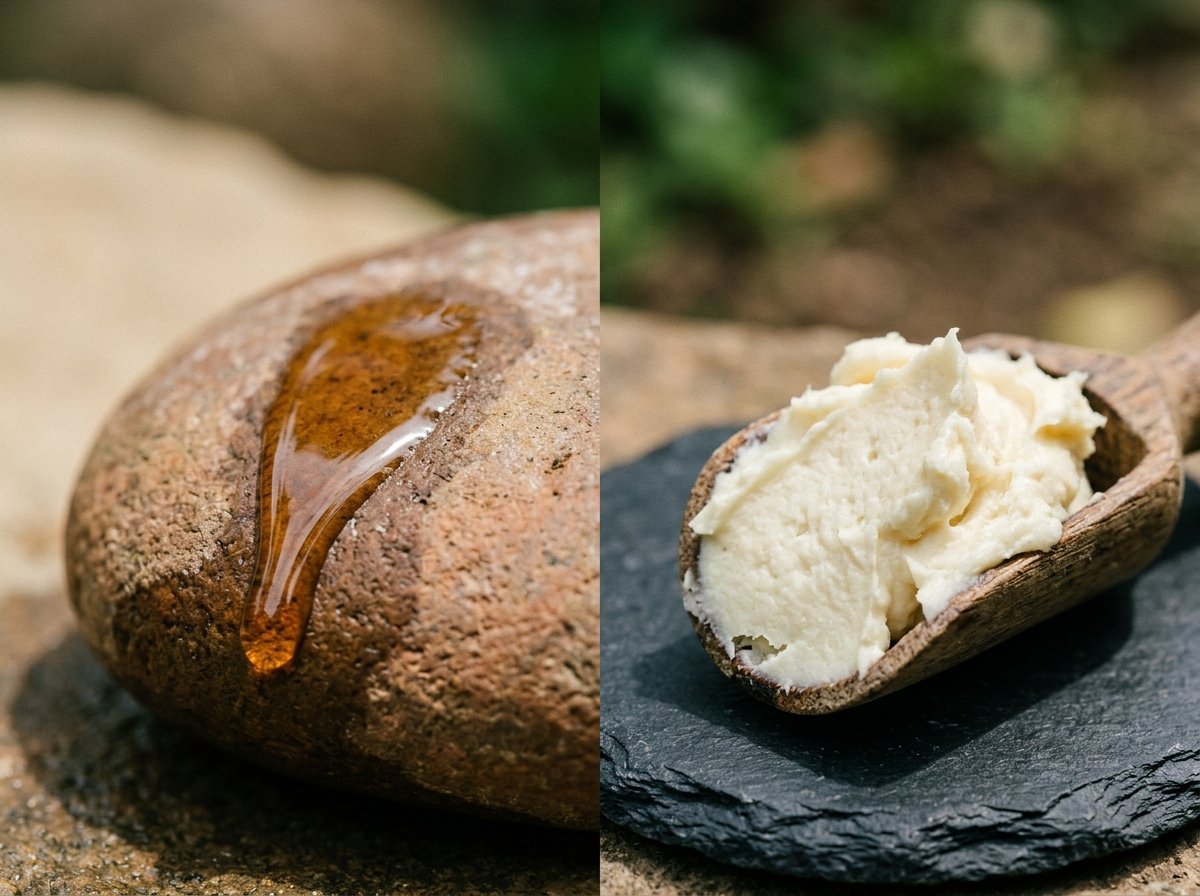
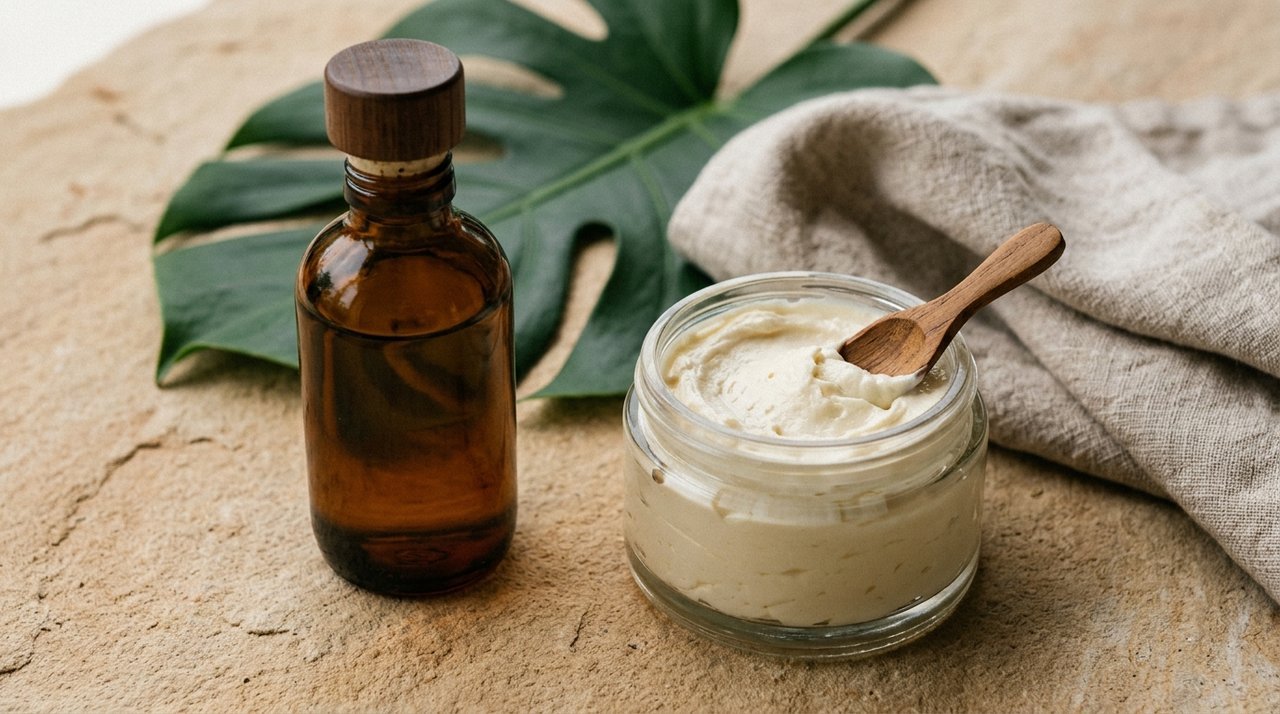
The clearest way to understand body oil vs body butter is to feel them. A body oil is liquid. It is a blend of plant carrier oils, sometimes carrying a few drops of essential oil for scent and benefit. It pours, it spreads thin, and it sinks in with a light sheen. A body butter is a whipped, semi-solid cream. It is built from plant butters like shea, illipe, or cocoa, usually softened with oils and sometimes a little water, then whipped into something you scoop rather than pour.
That difference in texture is not cosmetic. It changes how much sits on the skin, how long it lingers, and how it feels an hour later. An oil tends to feel weightless and sink quickly. A butter feels cushioned and stays present, forming a soft, protective layer you can still notice by evening. Neither is better in the abstract. They are two different tools, and knowing which job each does well is the whole point.
There is a third texture you will see on the same shelf, a body lotion, which is an emulsion of oil and water thinned into something pumpable. It is worth knowing where it sits, but our focus here is the two richer options, because they are the ones people most often confuse. A body oil holds no water at all. A body butter may hold a little, but its character comes from the fats, not the water. Once you understand that, the choice between them stops being about which feels nicer in the shop and starts being about what your skin actually needs.
Body oil vs body butter at a glance
- Body oil: liquid, light, fast-absorbing, mostly emollient with a light seal. Suits normal to oily skin and humid weather.
- Body butter: whipped, semi-solid, cushioned, more occlusive. Suits dry or mature skin and dry seasons.
- Both: lock in moisture rather than adding it, so both work best over damp skin. In our range both are hand-blended, small-batch, and refillable.
How body oil and body butter actually work on your skin

Here is the truth most product pages skip. Moisturising is really three separate actions, and it helps to name them. Emollients soften and smooth by slotting into the tiny gaps between skin cells. Occlusives sit on top and slow the water your skin loses to the air, a process called transepidermal water loss. Humectants draw and hold water in the upper layers. A good routine uses more than one of these, and understanding which is which takes the mystery out of every label you will ever read.
Body oils are mostly emollient. They fill and smooth, leave the skin supple, and give a light seal that varies with the oil. Some plant oils, like coconut, are more occlusive than others that sink faster and feel drier. Body butters lean more occlusive across the board. The plant butters build a richer barrier that holds moisture in for longer, which is why they feel protective on wind-chapped or air-conditioned skin. The fatty acid makeup of each oil and butter, how much oleic, linoleic, and stearic acid it carries, is what decides whether it feels light or rich, but you do not need the chemistry to feel the result.
What neither one does, on its own, is add water. This is the honest part: oil and butter both hold moisture, they do not create it. That is why they work best applied over slightly damp skin, or layered over a humectant, so there is water there to seal in. Put a butter on bone-dry skin and you seal in dryness. Put it on damp skin and you seal in comfort. Your skin also does much of its repair work overnight, when water loss naturally rises, so a richer layer before bed often earns its place even for people who prefer an oil by day.
So the emollient-versus-occlusive distinction is not academic. It is the reason a body oil can feel perfect in July and a body butter can feel like a rescue in a dry, heated room. Same goal, different mechanics, and the difference is written into their textures.
What goes into a good body oil
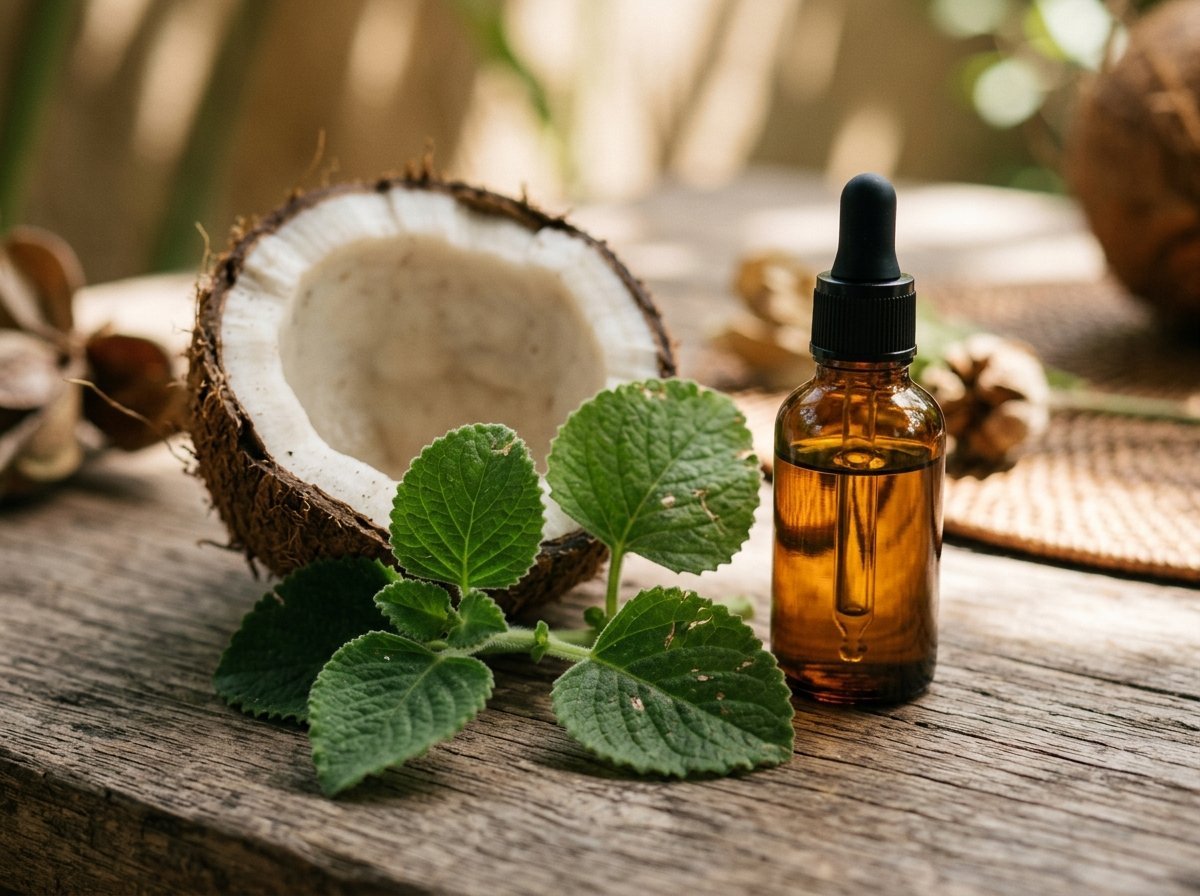
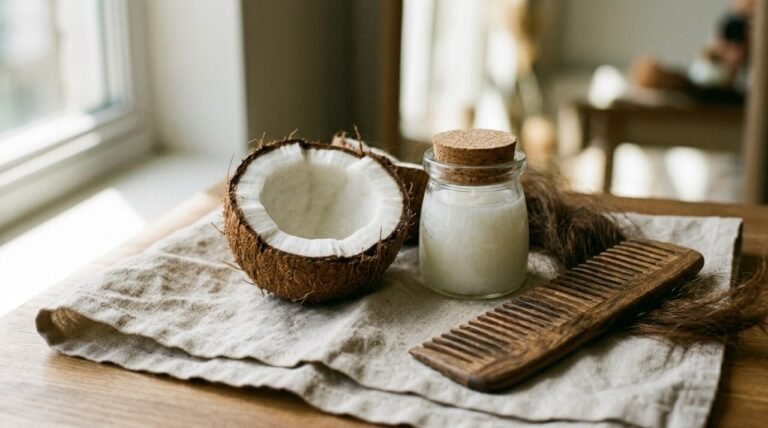
A body oil is only as good as the oils inside it, and where they come from. The base of most of our oils is cold-pressed Bali coconut oil, sourced through our Aluan partnership from plantations we can actually name. Coconut oil is light, quick to absorb, and one of the most versatile carriers in natural skincare. It is often blended with other plant oils that each bring something of their own, whether that is slip, a particular fatty acid profile, or a scent. If you want to understand how two Balinese carriers differ in weight and finish, kukui oil against coconut oil is a comparison worth reading.
Scent and balance come from botanicals like rose geranium, a plant we love for how it settles both skin and mood. It is often mistaken for rose, when in truth it is its own quieter, greener thing. If you are curious, we wrote about rose geranium oil and why it is so often misunderstood. Our Rose Allure Body Oil pairs that rose geranium note with coconut oil for a finish that is nourishing without feeling heavy, made to be pressed into damp skin straight from the shower.
For a single-ingredient option, argan oil is a classic: rich in fatty acids and vitamin E, prized for slip without grease, and a good example of how one well-chosen oil can do a lot on its own. When you are reading any body oil label, the useful habit is to look for named oils rather than a vague blend, and to notice how short the list is. A short, legible list of real oils usually signals a maker who has nothing to hide.
The questions to ask of any body oil are the ones we ask of our own: where did the oil come from, who harvested it, and what tradition does it belong to. An oil that cannot answer those is just a liquid in a bottle. Provenance is not a marketing flourish, it is the difference between an ingredient with a story and an ingredient with only a shelf life.
What goes into a good body butter
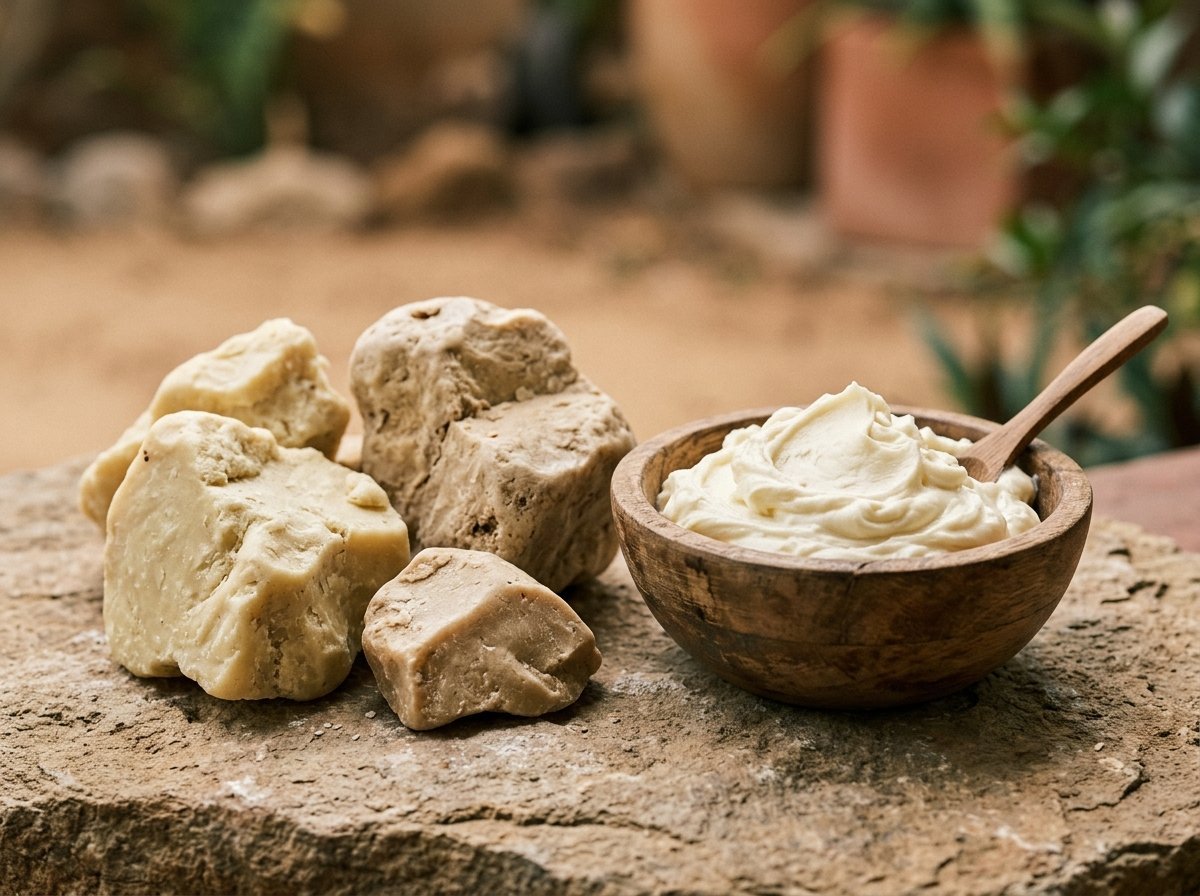
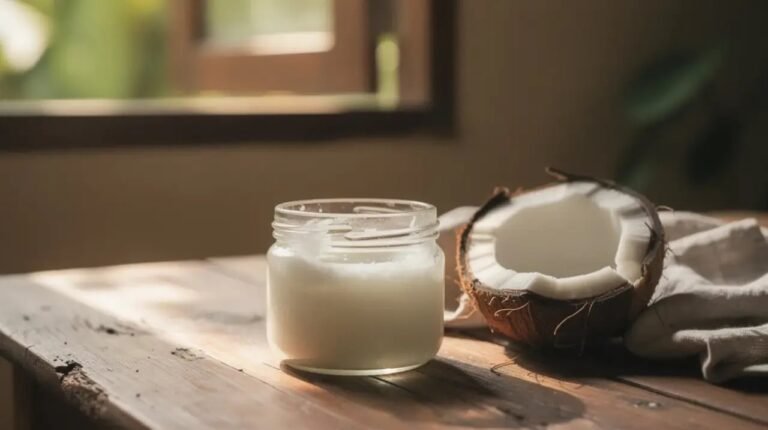
A body butter starts with butter, meaning the fat pressed from nuts and seeds that stays solid at room temperature. Shea is the familiar one. Cocoa butter is another. The one we hold closest is illipe butter, wild-harvested in the rainforests of Kalimantan by families who have worked the same groves for generations, through our Forestwise partnership. Illipe is deeply conditioning, close to cocoa butter in feel but with its own character, and harvesting it gives those communities a reason to protect the forest rather than clear it. Protecting the forest so the forest protects us is not a slogan here, it is the supply chain.
Those butters are softened with oils and whipped until they turn light and scoopable. Whipping matters more than it sounds: it folds air through the fats so a butter that could feel dense instead feels cushioned and spreads without dragging. The result holds moisture in for longer than an oil, which is why a butter suits drier skin and drier seasons, and why it tends to be the texture people reach for in winter or in a home that runs its air conditioning around the clock.

Our Rose Allure Body Butter is the richer sibling of the body oil, the same rose geranium warmth in a cushioned form, which makes the two an easy pair to switch between as the weather changes. Bliss Body Butter blends bergamot, rose geranium, sweet orange, and patchouli into something grounding, while Pure Energy Body Butter leans bright and uplifting with bergamot. All of them are hand-blended in small batches, which is the only way we know how to keep the quality honest, and all of them are built to be refilled rather than thrown away.

Meet the lighter half: Rose Allure Body Oil
Cold-pressed Bali coconut oil blended with rose geranium, made to smooth into damp skin and sink in without weight. Hand-blended in small batches, refillable by design.
How to choose body oil vs body butter for your skin and climate
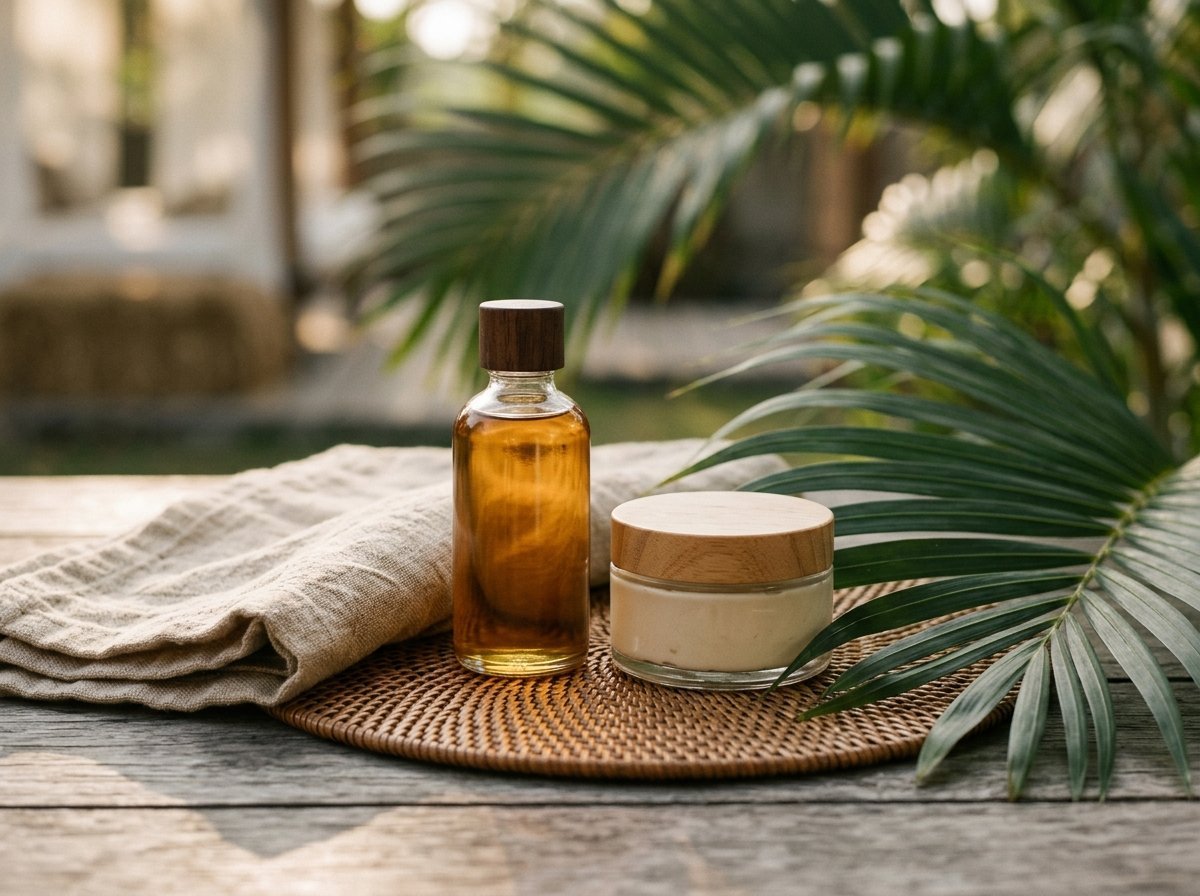
Most guides stop at skin type. That is only half the answer, because the same skin behaves differently in a humid tropical morning and a dry, heated winter night. Choose for both, and the decision gets much easier.
By skin type
- Normal to oily skin: a body oil is usually enough. It softens without the heavier seal that can feel like too much.
- Dry or mature skin: a body butter gives the richer, longer-lasting barrier this skin tends to want.
- Sensitive skin: either can work, so choose the simplest formula with the fewest, best-sourced ingredients and the least added fragrance.
- Combination skin: zone it. Oil on the areas that run normal, butter on the parts that stay dry, such as elbows, knees, heels, and shins.
By climate and season
In warm, humid weather, the air is already helping your skin hold water, so a light body oil often feels ideal and a butter can feel like too much. In dry heat, winter cold, or a room with constant air conditioning, water leaves the skin faster, and a body butter earns its keep by slowing that loss. This is why the same person can genuinely need both across a year: an oil for the humid months and a butter for the dry ones. That is not indulgence, it is matching the tool to the conditions, and it is the honest reason so many routines quietly hold one of each.
It also helps to start clean. A gentle, well-formulated wash leaves the barrier ready to absorb what comes next, rather than stripped and reactive, which is why we care as much about a natural body wash as we do about what follows it. The oil or butter is only ever as good as the skin you put it on.
How to use each one as a daily ritual
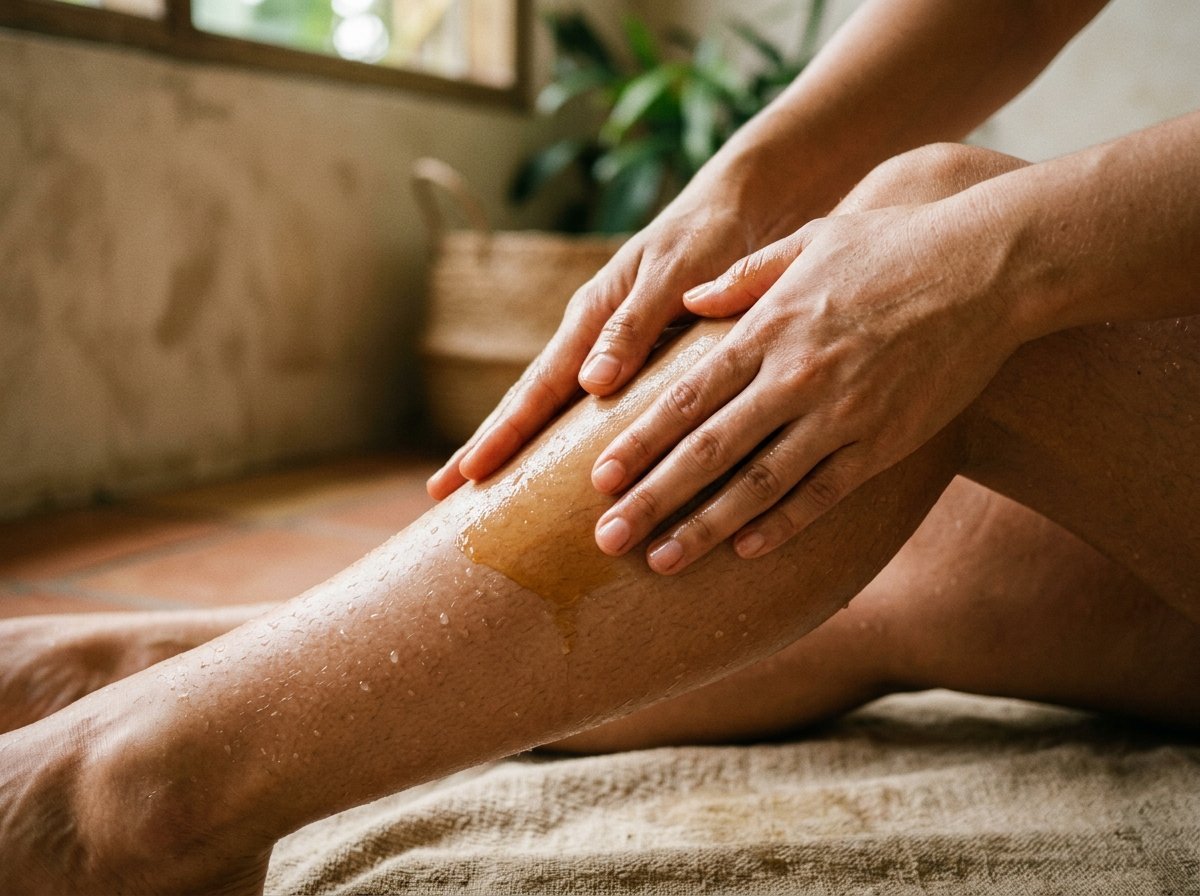
The application matters as much as the product. Because neither oil nor butter adds water, the single most useful habit is to apply to slightly damp skin, straight after a shower, while there is still moisture to seal in. We wrote a whole piece on oiling damp skin because it is the small change that makes the biggest difference, and it costs nothing to try tonight.
For a body oil, warm a few drops between your palms and press, then glide over damp skin until it disappears. For a body butter, take a small scoop, let your body heat soften it, and massage into the drier areas until it turns from cushioned to absorbed. For very dry skin or very dry weather, layer: oil first to soften, butter on top to seal. This is the one time using both at once is clearly worth it.
Slow down while you do it. A minute of unhurried massage moves the blood, warms the product, and turns a chore into a ritual, and that is the version you will actually keep. Care that feels like a pause rather than a task is care you repeat, and repetition is what changes how skin feels over a season. The best product in the world does nothing in a jar.
Body oil vs body butter: frequently asked questions
Can you use both a body oil and a body butter?
Yes, and layering is one of the best uses for both. Apply the oil first to soften and smooth, then the butter on top to seal it in. This suits very dry skin and very dry seasons. For everyday use, most people find one is enough, and many switch between the two as the weather changes rather than using both at once.
Which absorbs faster, body oil or body butter?
A body oil absorbs faster and leaves a lighter finish. A body butter sits longer and feels more cushioned, which is the point, since that lingering layer is what slows water loss. If you dislike waiting before you dress, an oil applied to damp skin is the quickest route to feeling done.
Is body butter greasy?
A well-made body butter feels rich, not greasy. Whipping lightens the texture, and applying a small amount to slightly damp skin helps it absorb evenly rather than sitting on the surface. If a butter feels greasy, you are usually using too much, or applying it to skin that is too dry to take it in.
Which is better for very dry skin?
A body butter, usually. Its more occlusive barrier holds moisture in for longer. For the driest skin, layer an oil underneath the butter, and apply both while the skin is still damp so there is water to hold.
Can I use a body oil on my face?
Some body oils are gentle enough, but facial skin is thinner and more prone to congestion, so a product formulated for the face is the safer choice. Match the oil to the area rather than assuming one bottle does everything.
Do body oils and body butters expire?
They do. Natural oils and butters have a finite life and are best used within their stated window, kept away from heat and direct light. Buying a size you will finish, and refilling rather than stockpiling, keeps what you use fresh.
Final thoughts: choose the one you will actually keep
Body oil vs body butter is not a contest with a single winner. An oil is your light, fast-absorbing everyday companion, kindest to normal skin and humid days. A butter is your richer, longer-lasting shield for dry skin and dry seasons. Read the ingredients, ask where they come from, apply to damp skin, and let your skin and your climate make the call. Most of the confusion around these two products disappears the moment you stop asking which is better and start asking which is right for now.
Whichever you choose, choose to keep it going. Both our oils and butters are made to be refilled rather than replaced, because real care means rethinking the system, not just the bottle. What you give, you get back, and that is as true of your skin as it is of the way we make things. If you want the fuller thought behind that, we said it plainly in what you give, you get back.