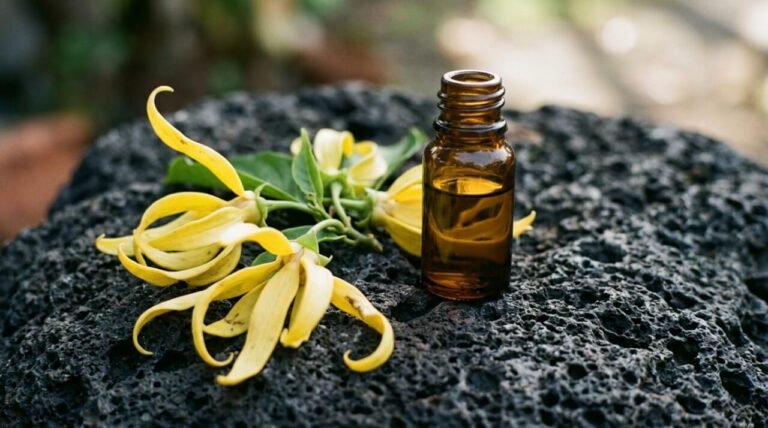
Kukui oil vs coconut oil: which Balinese botanical your skin actually wants
Kukui oil vs coconut oil is one of the most useful comparisons in natural skincare, because these two Balinese botanical oils look similar in a bottle and behave almost nothing alike on your skin. One is light, quick to sink in, and rich in the fatty acids a stressed barrier is missing. The other is dense, protective, and one of the most versatile oils in the natural world. Choosing between them is not about which oil is better. It is about matching the oil to your skin, your hair, and the ritual you are trying to build.
At Utama Spice we have worked with both since 1989, when Melanie Templer first blended botanicals in her Ubud kitchen. Kukui, known across Indonesia as candlenut or kemiri, and coconut, cold-pressed from Bali plantations, are two of the ingredients we know most intimately. This guide compares them honestly: where they come from, how their fatty acids decide their behaviour, which one suits your skin type, and how to use each without wasting a drop.
Kukui oil vs coconut oil: the short answer
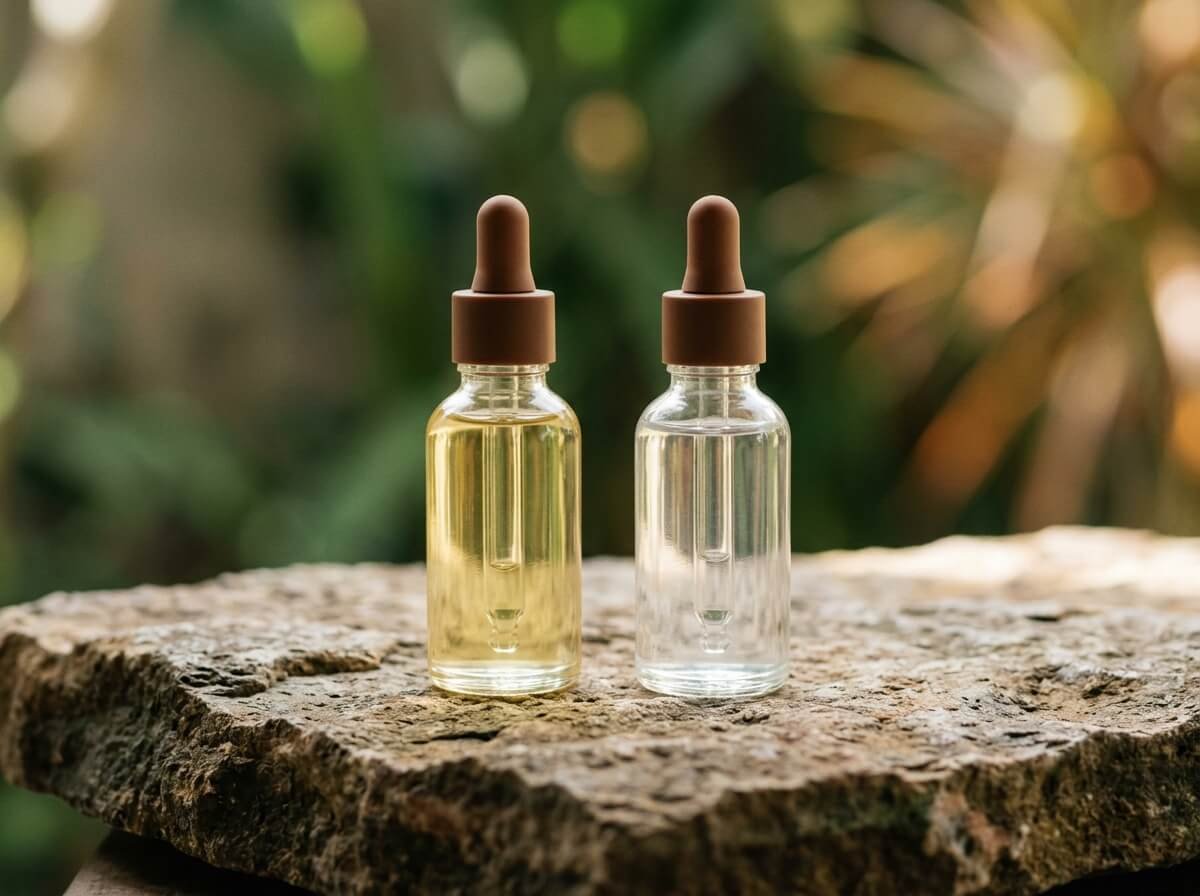
If you only have a minute, here is the honest summary. Kukui oil is the lighter, faster oil. It is high in polyunsaturated fatty acids, absorbs quickly, and rarely clogs pores, which makes it a friend to facial skin, oily or combination skin, and anyone who dislikes a greasy finish. Coconut oil is the richer, more occlusive oil. It sits on the surface longer, seals in moisture, and shines on the body and in the hair, though it can be too heavy and pore-clogging for many faces.
- Choose kukui oil for the face, for oily or acne-prone skin, for fast absorption, and for a barely-there finish.
- Choose coconut oil for the body, for very dry skin, for a hair treatment, and for a protective seal over damp skin.
- Use both if you want a light daytime facial oil and a nourishing weekly body or hair ritual. They are partners more than rivals.
The rest of this guide explains why, so you can make the call for your own skin rather than taking anyone at their word. If you want to feel the difference straight away, our Virgin Coconut Oil is the simplest place to start, and kukui lives inside several of our blends, including the Herbal Silk Hair Oil.
Two oils, two homes: candlenut and coconut
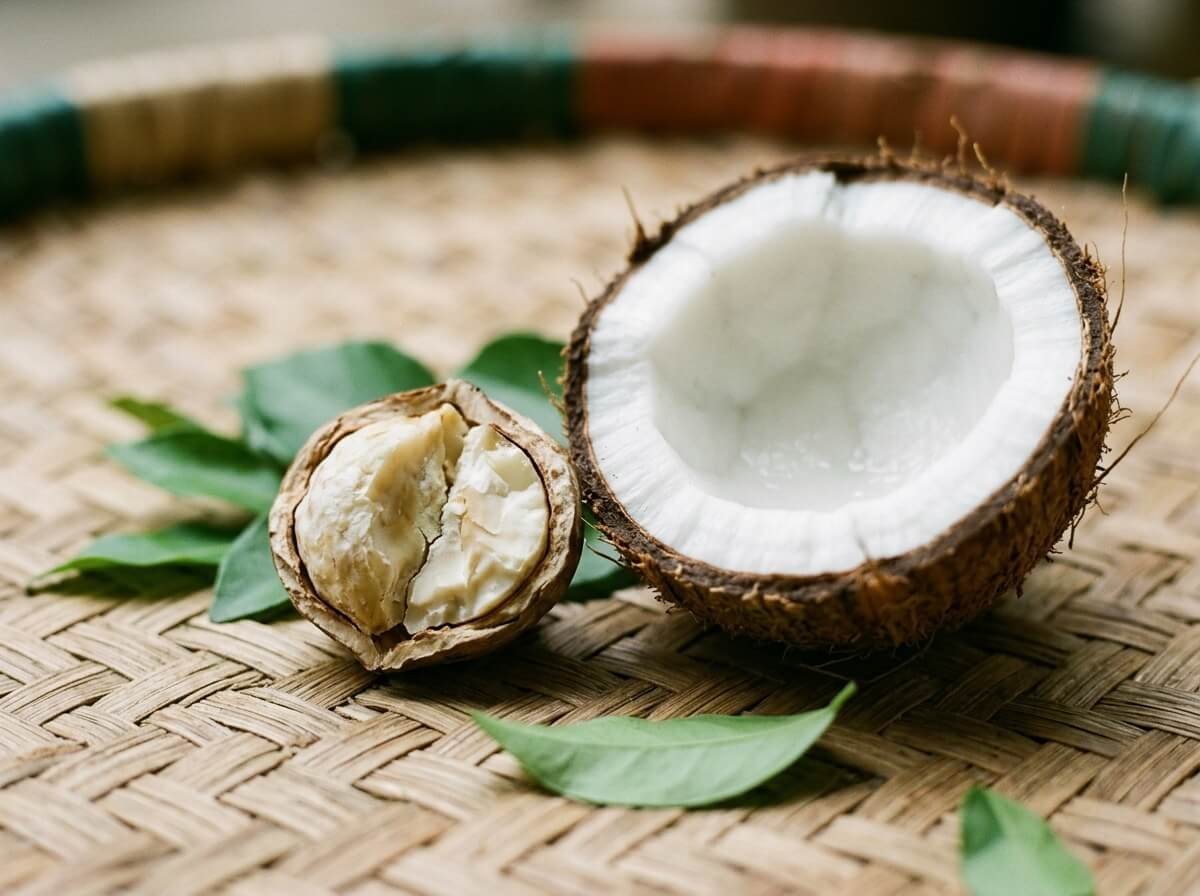
Every oil carries a story of where it came from and who harvested it. With kukui and coconut, those stories run through the same islands we call home.
Kukui, the candlenut of Indonesia and the Pacific
Kukui oil is pressed from the nut of the candlenut tree, Aleurites moluccanus. In Hawaii it is called kukui, and most articles online frame it as a purely Hawaiian oil. That is only half the tree. Across Indonesia the same nut is kemiri, a kitchen and remedy staple for generations, ground into Balinese spice pastes and warmed into oils for skin and scalp. The nut is so rich in oil that dried kernels were once threaded and burned as candles, which is where the English name comes from. When we talk about candlenut, we are talking about a botanical that Balinese and wider Indonesian tradition has used for a very long time, not a novelty.
The kukui in our blends belongs to the same family of wild-harvested oils as our illipe butter, gathered from rainforest groves rather than plantations. That wild origin matters for both the oil and the forest, and we return to it near the end of this guide.
Coconut, the versatile carrier of Bali
Coconut oil is cold-pressed from the flesh of Cocos nucifera, the coconut palm that lines so much of the Balinese coast. It is the most versatile carrier oil in our range, and one of the most used oils on the planet for good reason. It is stable, affordable, gentle enough for most bodies, and it carries scent and botanicals beautifully, which is why it forms the base of so many balms, lotions, and massage oils. Our Balinese massage oil tradition leans on coconut for exactly this reason: it glides, it protects, and it holds the aromatics of a blend without overpowering them.
The two oils even smell and feel like their origins. Kukui is close to scentless, thin, and slippery, the kind of oil that disappears into skin. Cold-pressed coconut carries a soft, sweet warmth and a buttery texture that melts as you work it in. Neither is right or wrong. They simply belong to different moments: kukui to a quick morning, coconut to a slow evening.
The fatty-acid science that decides everything
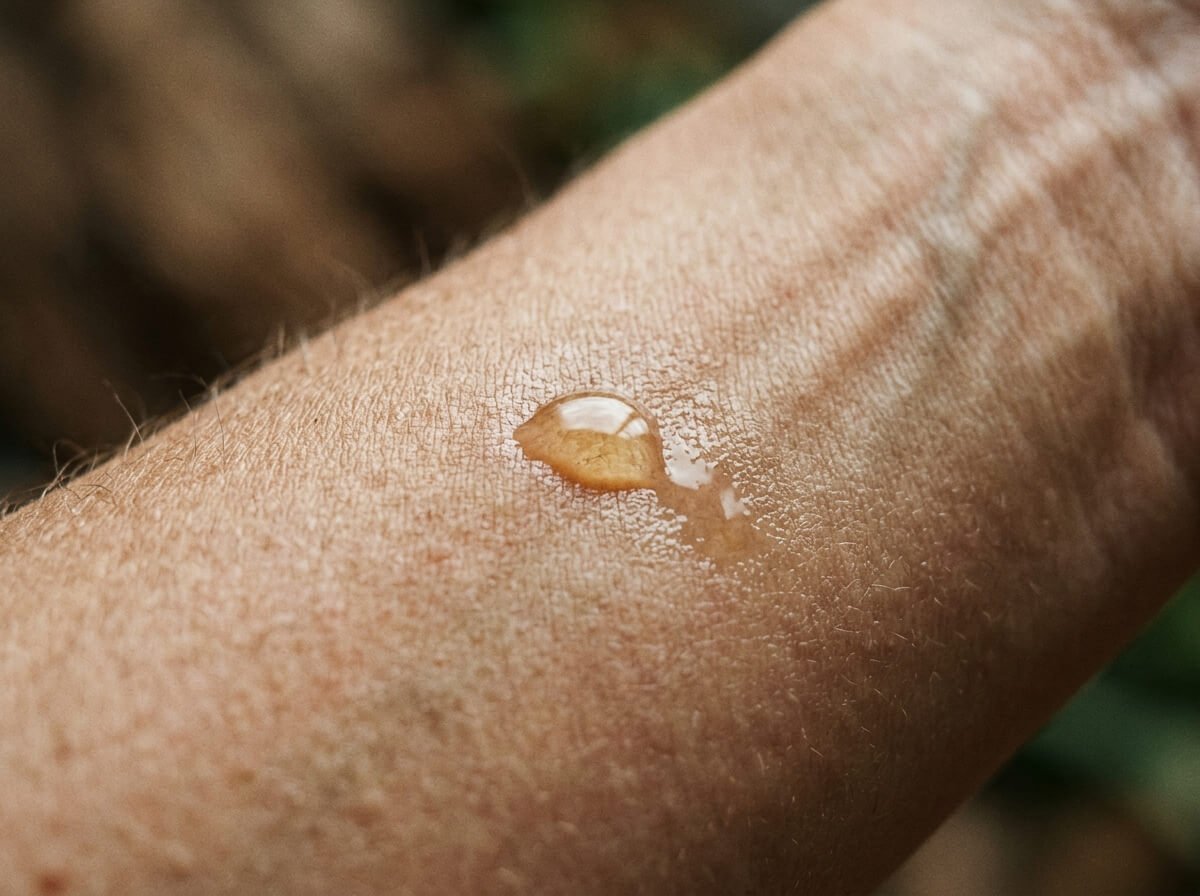
The single most useful thing to understand about any plant oil is its fatty-acid profile. This is what determines whether an oil feels light or heavy, absorbs fast or sits on top, supports the barrier or risks clogging pores. Kukui and coconut sit at almost opposite ends of that spectrum, which is the real reason they behave so differently.
Kukui is a high-linoleic, polyunsaturated oil
Kukui oil is dominated by polyunsaturated fatty acids. Roughly 40% is linoleic acid and close to 30% is alpha-linolenic acid, with oleic acid making up much of the rest. Linoleic acid is the fatty acid our skin barrier is partly built from, and research has linked low-linoleic sebum to clogged, acne-prone skin. Oils high in linoleic acid tend to feel dry and light, absorb quickly, and leave little residue. This is why kukui suits the face, and why it rarely triggers breakouts. On the widely used comedogenic scale of 0 to 5, kukui sits low, generally rated non-comedogenic.
Coconut is a high-saturated, lauric oil
Coconut oil is the mirror image. It is roughly 45% to 50% lauric acid and high in other saturated fats, which is why it turns solid below about 24 degrees Celsius and melts on contact with warm skin. Saturated, occlusive oils form a film that slows water loss, so coconut is excellent at sealing and softening. That same richness is the catch. Coconut oil rates around 4 on the 0 to 5 comedogenic scale, meaning it can clog pores on many faces, especially acne-prone ones. Lauric acid also gives coconut a mild antimicrobial quality, one reason it has such a long history in body and hair care.
So the science gives us a clean rule of thumb. Light, fast, barrier-feeding, low pore-clogging risk points to kukui. Rich, occlusive, sealing, higher pore-clogging risk points to coconut. Hold that rule as we move to your actual skin.
Which oil for your skin type, face, body, and hair
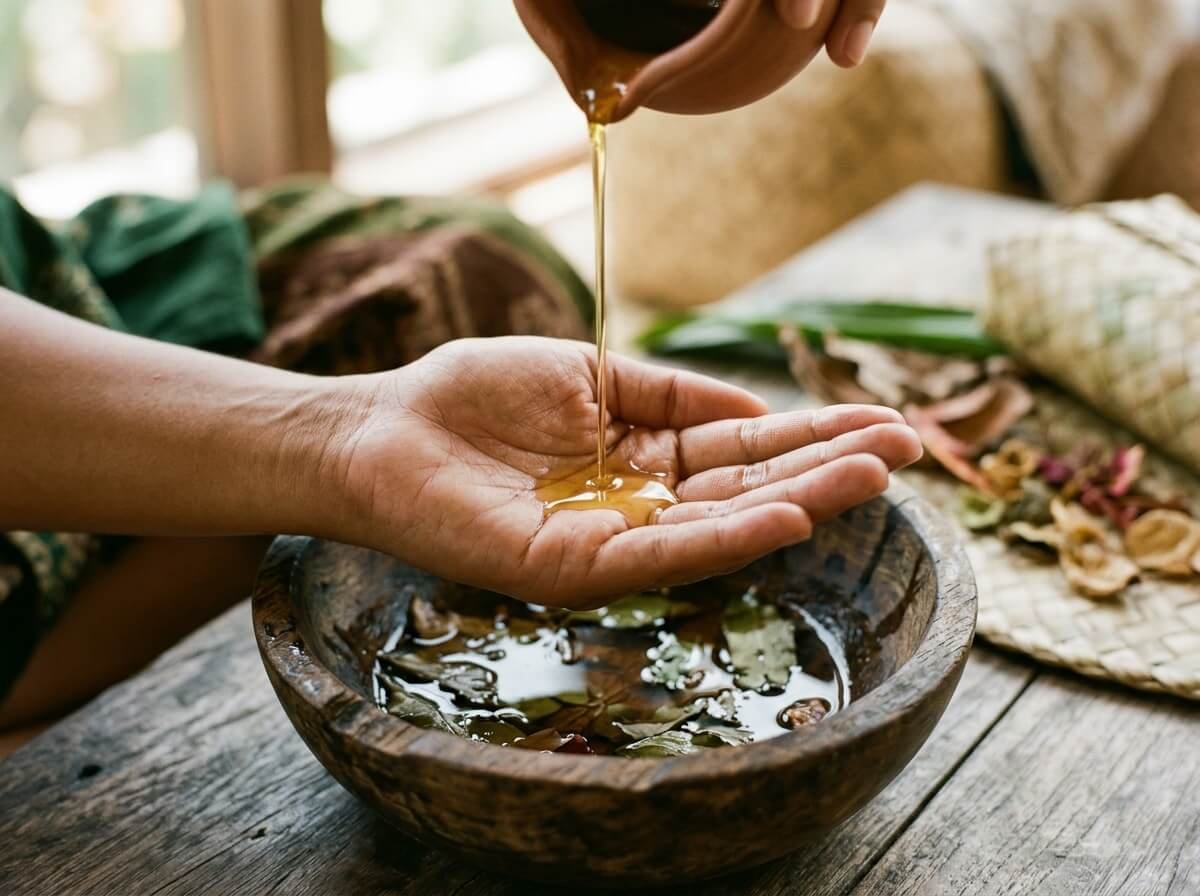
Fatty acids are theory. Your skin is the test. Here is how kukui and coconut land across the three places most people use an oil.
On the face
For most faces, kukui is the safer daily choice. Its light, non-comedogenic feel suits oily, combination, and acne-prone skin, and it absorbs without the heavy sheen coconut can leave. If your skin is very dry and not prone to breakouts, a thin layer of coconut oil at night can work, but watch your pores for a couple of weeks before committing. If you would rather not gamble, a purpose-built facial blend is the calmer route. Our Balinese face oil is formulated for facial skin specifically, balancing lighter oils so you get nourishment without congestion. Other high-linoleic options such as argan oil and tamanu oil behave more like kukui than coconut on the face, and you can read more about the latter in our tamanu oil guide.
On the body
The body is where coconut oil shines. Larger surface area, thicker skin, and fewer pore concerns mean the richness that troubles faces becomes an asset. Coconut seals in moisture after a shower and leaves skin soft and protected. If you love the feel of coconut but want it in a spreadable, refill-friendly format, a lotion is often easier to use daily than neat oil, which is where something like our Cocoa Love Lotion earns its place. Kukui still has a role on the body for anyone who dislikes grease, since it absorbs faster and suits warm, humid climates where heavy oils feel like too much.

In the hair
Hair is the one place coconut oil has a genuine, well-documented edge. Its lauric acid has a low molecular weight and a straight shape that lets it penetrate the hair shaft rather than just coating it, which helps reduce the protein loss that leaves hair brittle. That is why coconut is a classic pre-wash treatment, something we cover in depth in our guide to coconut oil for hair. Kukui, being lighter, is the better pick for fine hair, oily scalps, or a leave-in finish that will not weigh strands down. Our Herbal Silk Hair Oil blends kukui with other botanicals for exactly this lighter, everyday feel.
If this guide has convinced you to keep one honest, unfussy oil on the shelf, coconut is the versatile place to begin. Our cold-pressed Virgin Coconut Oil is a single ingredient, nothing added, ready for body, hair, and the occasional dry patch.
How to use kukui oil and coconut oil in a daily ritual

An oil only works if you use it well. Both kukui and coconut reward a little care in how and when you apply them.
Applying kukui oil
- Use it on slightly damp skin after cleansing, so it seals in a little water as it absorbs.
- Two to four drops are enough for the whole face. Warm them between clean palms, then press into the skin rather than rubbing.
- For the body, apply after a shower while skin is still soft. For hair, smooth a small amount through mid-lengths and ends as a leave-in.
Applying coconut oil
- Scoop a small amount and let it melt on your fingertips before spreading. It liquefies at body temperature.
- On the body, apply to damp skin after bathing to lock in moisture. A little goes a long way.
- As a hair treatment, work it through dry hair from mid-length to ends, leave it for 30 minutes or overnight, then shampoo out. This pre-wash ritual is where coconut does its best work.
- On the face, use sparingly and only if your skin tolerates it, ideally at night.
Layering the two oils
You do not have to pick a side. A common approach is to treat coconut oil as an occasional deep treatment for the body and hair, and kukui as the light daily oil for the face and scalp. If you use both in a single routine, apply the lighter kukui first so it can absorb, then use coconut on the body afterward to seal. Thinking of them as partners rather than rivals is usually the honest answer for real skin.
Storage and shelf life
Because kukui is high in polyunsaturated fats, it oxidises faster than coconut. Keep it cool, capped, and out of direct sun, and use it within its shelf life rather than stockpiling. Coconut oil is far more stable thanks to its saturated fats and keeps well at room temperature. If your coconut oil turns solid in a cool room, that is normal, not spoilage. Warm the jar in your hands and it returns to liquid.
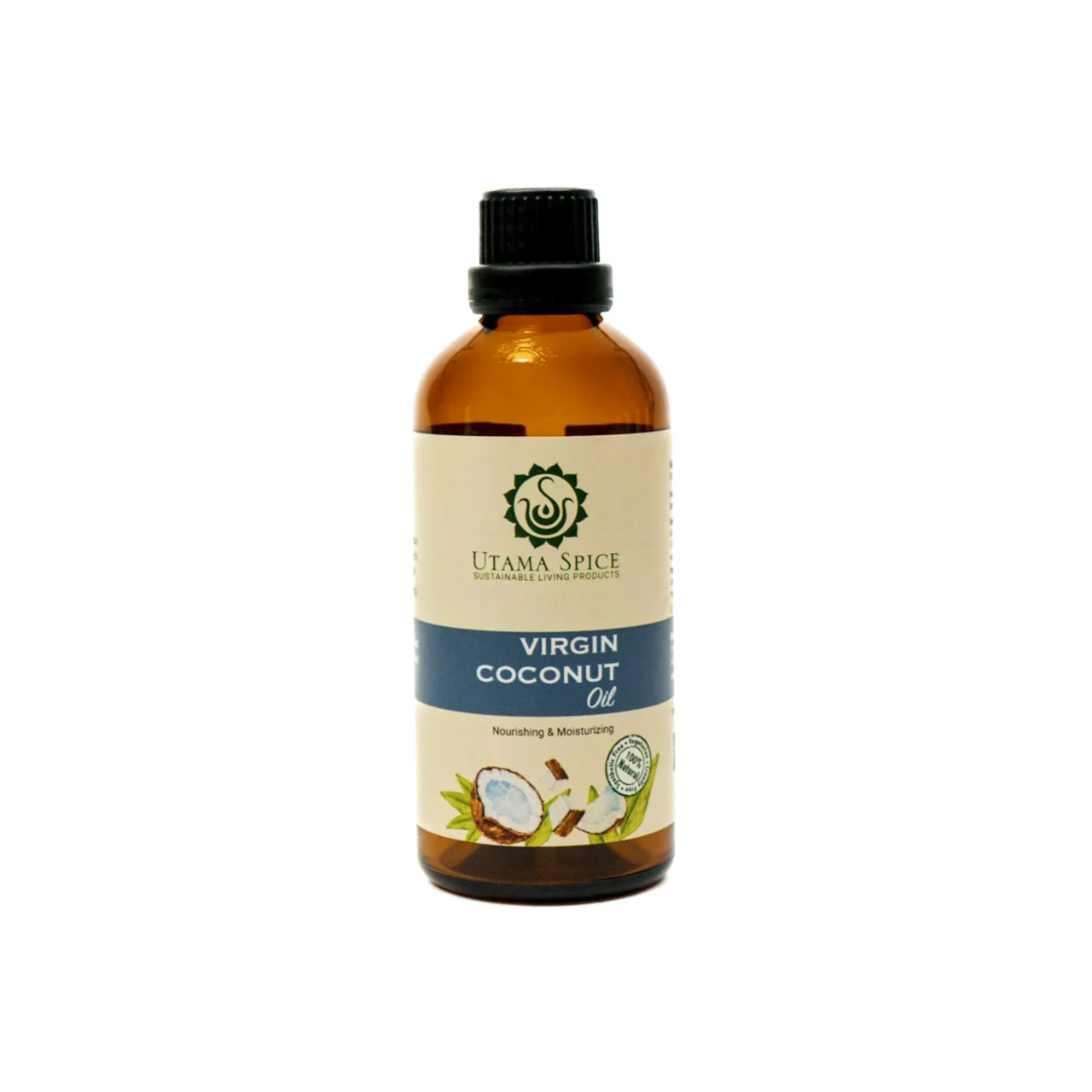
Start with one honest oil
Cold-pressed in Bali from a single ingredient, our Virgin Coconut Oil is the versatile carrier behind so many rituals: body, hair, and the occasional dry patch. Sourced with care, made to be refilled.
Sourcing and sustainability: what your choice supports

Here is the part most kukui vs coconut comparisons leave out entirely. An oil is not only a set of fatty acids. It is a supply chain, a forest or a plantation, and a community that either benefits from your purchase or does not. This is where we ask the harder question, because real care means rethinking the whole system, not just the ingredient list.
Our candlenut and other wild botanicals are gathered through the Forestwise partnership in Kalimantan, where families harvest from rainforest groves they have tended for generations. Wild harvesting gives the forest an economic reason to stay standing, so protecting the trees and earning a fair income become the same act. Our coconut comes through the Aluan partnership from Bali plantations, cold-pressed and traceable rather than anonymous and industrial. For every gram we produce we remove an equivalent weight of plastic from the ocean through our Seven Clean Seas partnership, and our refill program has kept thousands of bottles out of landfill.
That last point is the quiet heart of it. The most sustainable oil is the one you finish and refill rather than replace. You can read how we think about this in our guide to refillable body care, and see the same principle at work in Balinese rituals such as the lulur scrub, where nothing is wasted and everything has a purpose. Choosing kukui or coconut is a small decision. Choosing how it was sourced is the larger one.
Frequently asked questions
Is kukui oil or coconut oil better for acne-prone skin?
Kukui oil is the safer choice for acne-prone skin. It is high in linoleic acid and rated non-comedogenic, while coconut oil rates around 4 on the comedogenic scale and can clog pores on the face. If you are breakout-prone, keep coconut oil to your body and hair.
Can I use coconut oil on my face at all?
You can, but carefully. If your skin is very dry and not prone to breakouts, a thin layer at night may suit you. Patch test, watch your pores for two to three weeks, and stop if you see congestion. For most faces, a lighter facial oil is the calmer option.
Which oil is better for hair?
Coconut oil has the edge as a deep pre-wash treatment because it penetrates the hair shaft and helps reduce protein loss. Kukui is better for fine hair or as a lightweight leave-in that will not weigh strands down. Many people use coconut before washing and kukui afterward.
Why does my coconut oil keep turning solid?
That is normal. Coconut oil is high in saturated fats and solidifies below about 24 degrees Celsius. It is not a sign of spoilage. Warm the jar in your hands or a warm room and it melts back to liquid.
Are these oils gentle enough for sensitive or babies skin?
Coconut oil is widely used on babies and sensitive skin for its soft, protective feel, and kukui has a long traditional history in gentle skin and scalp care. As with any botanical, patch test first, since nut-derived oils can be a concern for anyone with a tree-nut allergy. When in doubt, choose a purpose-made blend formulated for delicate skin rather than neat oil.
Do kukui and coconut oil expire?
Both have a shelf life. Kukui, being high in polyunsaturated fats, oxidises faster, so store it cool and dark and use it within its window. Coconut oil is more stable and keeps well at room temperature. If either smells sharp or off, it has turned.
Final thoughts
Kukui oil vs coconut oil was never really a contest. They are two Balinese botanicals with different gifts: kukui the light, barrier-feeding oil for the face and fine hair, coconut the rich, protective carrier for the body and deep hair treatments. Match the oil to your skin and your ritual, store each one well, and you rarely need to choose only one. What matters more than the oil you pick is the care behind it, where it was grown, who harvested it, and whether you finish the bottle rather than forget it. That is what real care looks like, and it is what we have crafted in Bali since 1989.